


Dear Fiona,
Would you please consider writing an article about living on a base or in a military quarter? It is the type of accommodation where you are limited in your décor – and in your budget? While it’s similar to a rented property, there are even more restrictions: we cannot hide pipes, or touch doors, add skirtings, and it often looks quite, well, institutional. Unattractive curtains are standardised lengths, and there are ugly radiators underneath the windows. There’s usually brown carpet throughout, and every room in every house is painted the same non-colour – and must stay that colour. I always wonder what some of my favourite decorators would come up with if they had to live on those premises for three years and try to make them a home - and then move on again, leaving them exactly as they found them!
Thank you so much,
Love, Involuntarily Institutionalised XX
Dear I.I.
Thank you for your letter, describing a situation I’m only too familiar with, having grown up in a succession of the same. I remember well the expanses of magnolia, stainless-steel sinks, tired Formica countertops, oddly short-yet-too-long curtains at view-less windows, and decidedly unattractive lever door handles. Nearly all of us are operating with restrictions - which might be due to planning permission, budget, or what a landlord will allow – but military accommodation is an extreme instance. Sure, we can throw out any notion about decoration chiming with architectural style, and remind ourselves of writer and poet G.K. Chesterton’s observation that ‘art consists of limitation.’ However, while certain houses afford the structural basis for a sonnet, others are a botched scaffolding of zero rhyme and unequal metre. I too have often wondered how interior designers might cope with such circumstances and, assuming that the initial emphasis on function has been met, how they might pursue beauty given such an unpromising premise. You’ll be glad to know that they have ideas.
The essential thesis of approach for all such situations, begins Brandon Schubert, is to identify what can be changed, and when you need to employ the alternative powers of disguise and distract. More testing for you is the fact that change needs to be reversible, and you will mostly be employing the same stuff in every new configuration of rooms, rather than acquiring new items that are going to specifically work for the proportions. True, you could sell and re-buy every time, but it’s time consuming. More pertinently, an itinerant life inevitably sees us finding home in our belongings more than the house itself, their value only increases as they accumulate further memories, so you’ll want to hang on to everything. And in their retention is a pleasing echo of past practice. Once, ‘when warfare and brigandage shaped the conditions of life, and men camped in their castles as much as they did in their tents, it was natural that decorations should be portable,’ detailed Edith Wharton in her 1897 treatise The Decoration of Houses.

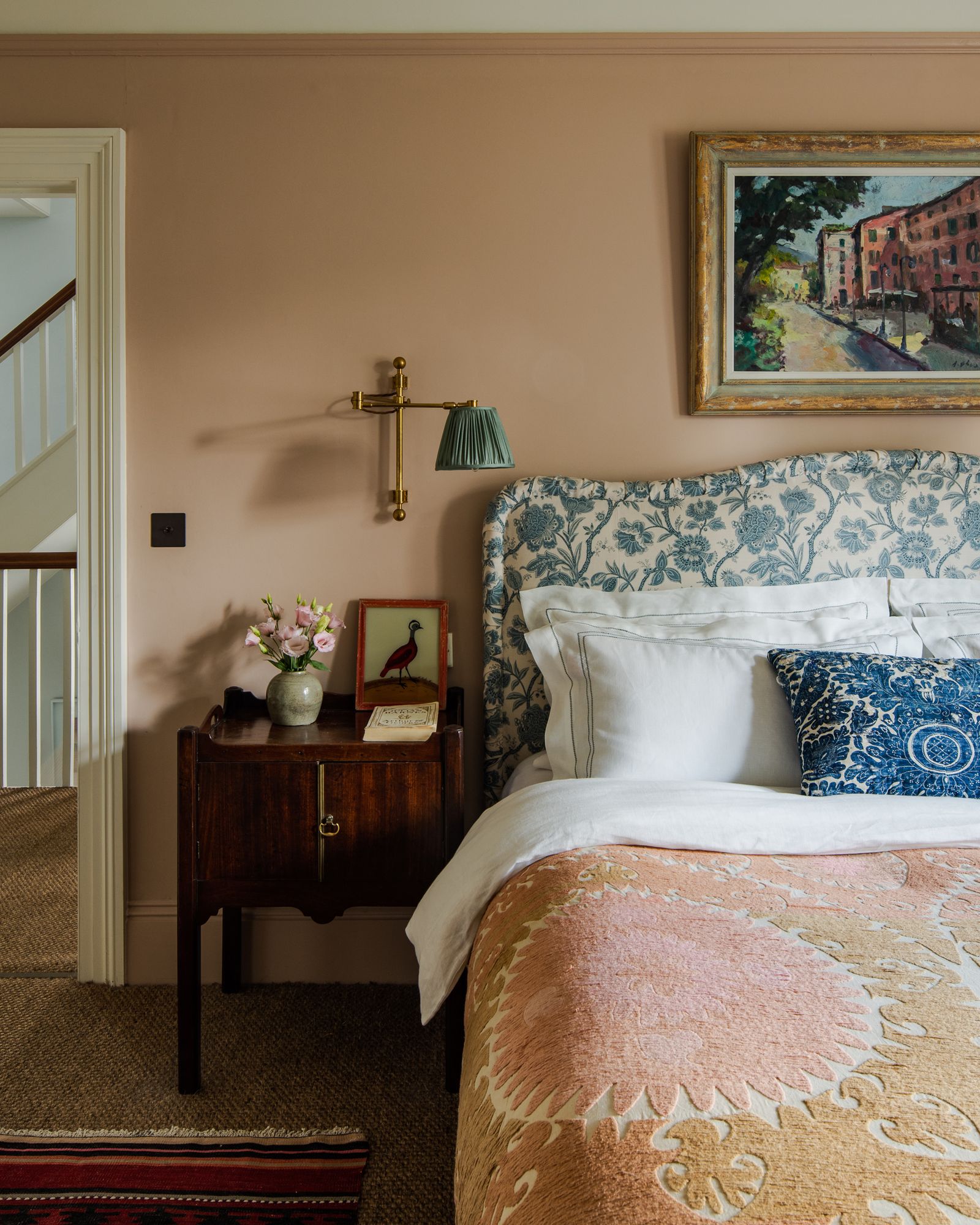
So, knowing that the trajectory of promotion generally means each house is larger than the last, and realising that another reader might be at an early stage, there are things worth bearing in mind. Firstly, art, which both decorates and elevates, is vital, reckons Tamsin Saunders of Home & Found. And happily, I know that when it comes to vacating a property, Housing Officers will clear the associated filled-in holes – though if you’re worried, Tamsin nominates larger pieces in place of several smaller ones, or propping pictures on shelves. Secondly, furniture, though ‘you don’t actually need much for a room to feel comfortable,’ says Tamsin, emphasising the importance of only buying what you love (to reiterate: the house might look institutional, but nothing else needs to) and prioritising the essentials: a table to eat at, chairs, a bed, a sofa. I haven’t mentioned wardrobes as, often, these are built-in – which leads onto the next directive: this type of accommodation, far from being castle-like, tends to be designed to standard dimensions. A Super King-sized bed might not allow you to open the wardrobe doors or have bedside tables, and no one’s sitting room looks better for housing a giant American-style fridge-freezer that can’t be wedged into the current kitchen. On the other hand, modular shelving that can be altered for a space, whether mid-century or Ikea’s Kallax, is a safe investment; ditto a gate-leg table or one with leaves, and ‘make sure the legs can come off a sofa,’ says Tamsin. The final point is a return to Edith Wharton; she proposed textiles as being prime pieces of kit for the nomad – advice reiterated by everyone. For like art, textiles allow expression of style, while simultaneously being a significant aid to Brandon’s thesis of change, disguise, distract.
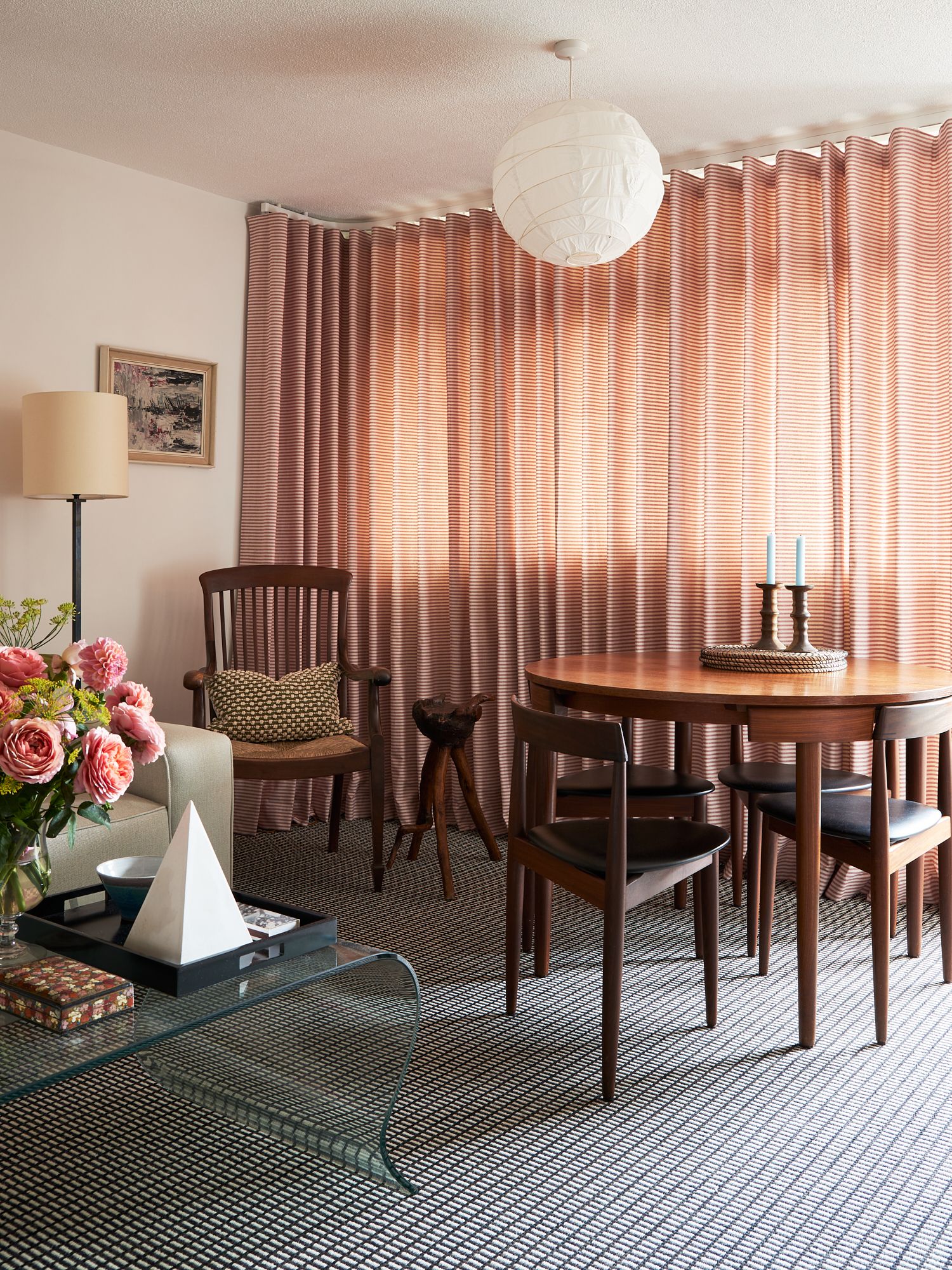
Let’s start with change, and look at those curtains: some of them, points out Brandon, could be taken down and stored while something else is put at the windows, whether chintzy or plain. The curtains my mother had made for the sitting room and her bedroom had such generous hems they worked in every next house, too – and experience has taught me that curtains are easier to re-use than blinds (unless you are very nimble with a sewing machine) as they’re more forgiving when it comes to inexact dimensions. Then, those brown carpets can be disguised via rugs. We know the importance of the right size rug, but that can be fudged with layering – while Victoria Wormsley of French-Brooks Interiors points out that flatweaves can be folded over if they don’t quite fit the space. For a kitchen or any other room where you’ve got heavy traffic, Victoria recommends Weaver Green who make kilim-style rugs from recycled plastic bottles that can be washed. Another idea is to buy seagrass or jute rugs made up in squares that can be stitched together, and then re-stitched, according to future requirements. As for distract, all rooms need a focal point, and Victoria makes a case for – besides art - ‘a bold headboard, a vintage bedcover, an ottoman covered in a beautiful fabric.’
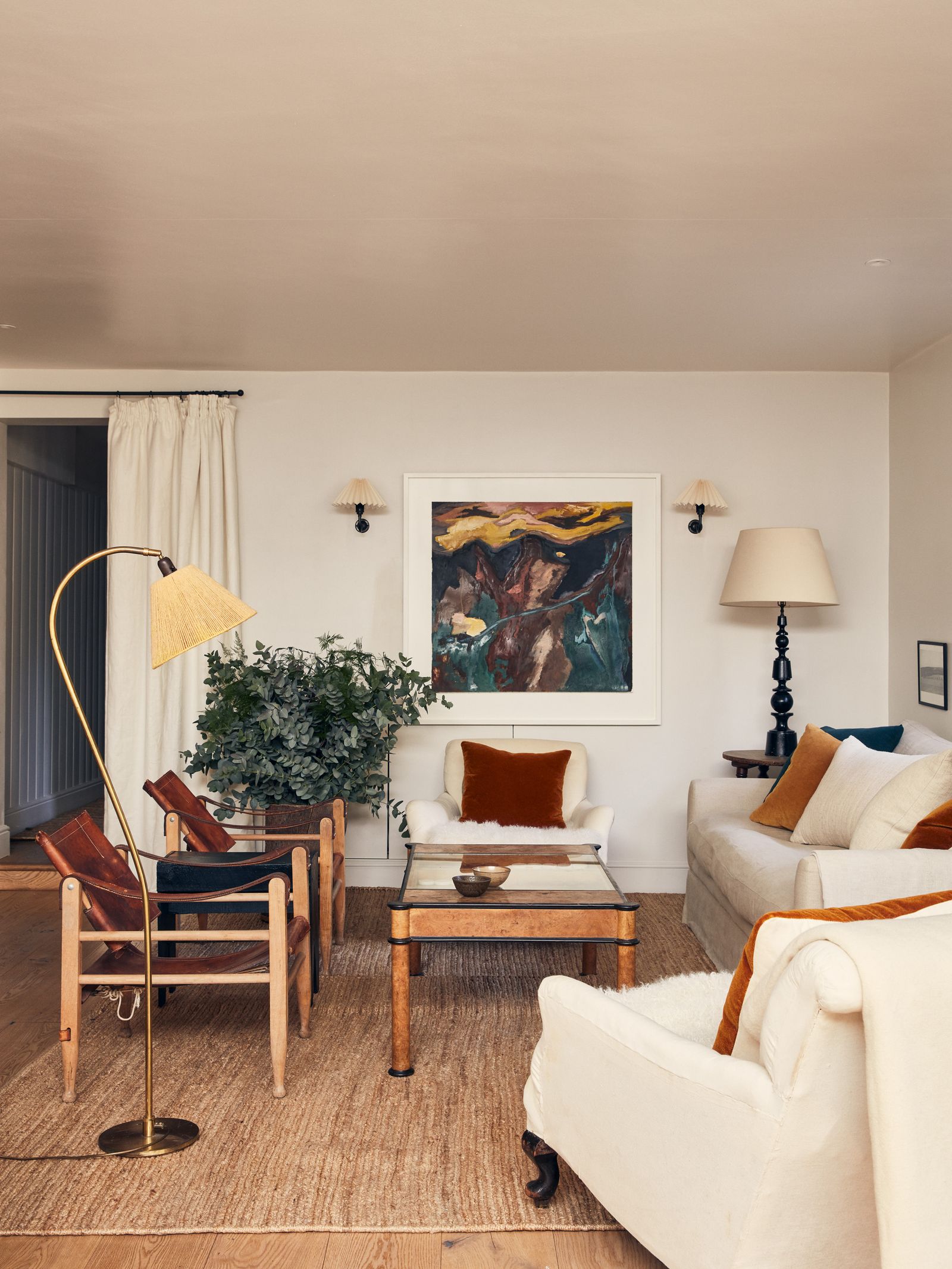
The idea can be extended: temporarily change the overhead light fittings if you can, otherwise disguise them by never switching those lights on, and distract with lamps – floor lamps and table lamps. These not only create a softer atmosphere when lit, ‘but can anchor a scheme,’ notes Victoria, via shape, colour, size and shade. Carrying on, you might decide to change the wall colours, even though they’ll have to be changed back: I know a current user of military housing who justifies some repainting by dividing the cost by the length of time she’ll reside there and deciding that 70p a day for an Edward Bulmer Paint Ethereal Blue kitchen and Farrow & Ball Setting Plaster bedroom is a price worth paying. Otherwise, disguise and distract, remembering that art and textiles are going to bring colour and pattern into a room, and that the warm tones of magnolia can prove a versatile backdrop. We could continue indefinitely - for the exercise is almost never ending, and it is possible to swap door handles and radiators, wrap Formica countertops to look like marble, and turn bland white tiles into approximations of antique Delftware via stickers.
The experimentation can be exciting – and one of the benefits of the short-term nature of postings is that it’s possible to view each house a little like a theatre set. The execution doesn’t need to last, hems don’t have to be properly sewn, and it doesn’t matter if you realise you might not love something forever. I know of a tented dining room installed with a staple gun, and elaborate curtain pelmets fashioned from painted cardboard - and they’re wondrous triumphs. The blandness you begin with is an opportunity to play with ideas, to practice applying the rules of symmetry and proportion to awkward shaped rooms, to research and learn, while all the time honing your taste ready for when you do have a more permanent home. Moving frequently can be excellent training. And generally, House & Garden’s advice would be to make the most of it, citing the inextricable link between our interiors and our mental health. In that vein, I’d recommend a couple of books: Katherine Ormerod’s Your Not Forever Home, and Diana Phipps’s Affordable Splendour.

But I’m also a realist, and I know just how effectively ten moves in fifteen years can sap momentum. Few are those who – potentially also juggling children, a job, and other relationships - haven’t at some point decided that they simply can’t face de-2* hotel-ing another bathroom, or unscrewing all the doorhandles, again. And when that moment is reached, the only approach is to lean in to distract, which is in fact a superpower. It is extraordinary how effectively a beautiful painting can pull the eye from ill-chosen tiling around an electric fire, and a vintage soap dish do the same for even the most clinical basin. See too the grandeur implied by a bow-fronted Georgian corner cupboard, the frivolity transmitted by a ruched-edged tablecloth, the charm awarded by generous fringing on a couple of cushions and an antique Persian carpet. And ultimately, advises Brandon, it is here that it is most important to allocate the budget that you have, rather than in temporary wall-colour, or tile decals. For, chosen well and with care, furniture and furnishings – imbued with personal meaning and value - really can ‘do the heavy lifting for you.’ And with this, remember that home is also about how you live. It’s about good quality sheets and pillows, familiar china, prettily-scented soap and Santa Maria Novella pot pourri, and routines and repetition and a positive attitude – which it sounds very much like you have.
I hope that this has helped – and good luck!
With love
Fiona XX


.jpg)


