


Dear Fiona,
I know that this is covered annually, by everyone, but what on earth do you buy someone who has everything? I’ve been through all the gift guides in the colour supplements, but nothing sticks out. I wish I could tell you more about the person, but it’s people plural – everybody in my life seems to have everything.
Which leads to me wonder if I actually have to buy them anything at all? I don’t mean my husband and my children, or even necessarily my nephews and nieces and Godchildren. It’s all the others, all the associated grown-ups. Can I just donate to some charity that’s helping people who don’t have everything? The wastage of everything – of buying people things which might well just end up in landfill – is genuinely making me feel quite ill. Especially when I think about the wars, and the suffering, and the sheer number of people who are homeless. But everybody gives me presents – so if I don’t give back I’ll offend them. And yet I so often feel that I get it wrong, that I misjudge the value (I feel bad when somebody gives me something worth, say, £80, when I’ve give them something worth £10 – but then I feel resentful when it’s the other way around. We all earn similar amounts, incidentally.) Can I suggest that we stop? Is there a way of exchanging gifts in a more considered fashion? And then – back to the original question – what do I buy them? I get stuck trying to find something perfect – but have a tricky relationship with one of my siblings, and don’t actually know some of my in-laws as well as I could, so don’t even necessarily know what would be ‘perfect’.
Love,
A Conflicted Gift-Giver XX

Dear Conflicted,
I hear you. The long-established largesse of Christmas can become utterly overwhelming – while equally being a minefield. I wrote a list sometime back in November of all the people outside of my immediate family that I have to shop for and found it so daunting I promptly put it in the drawer of dread. Hoping I could trim my tally – and this is applicable to one of your questions - I mooted the idea of cessation of gift-exchange to one my sisters, genuinely thinking she’d embrace it. Let me tell you, it did not go down well at all. It transpires that the practice of giving and receiving presents is really important to a lot of people – and perhaps exploring why is the best place for us to start, for the solution to your question is evidently not going to be immediately provided by yet another list of stuff.
If you’ve got or have ever had a cat, you’ll doubtless be familiar with feline offerings, suggesting that the desire to give is innate. Certainly – I’ve done some research – it appears to date back to the beginning of humanity; archaeologists have found evidence of prehistoric man gifting each other unusually shaped rocks or animal teeth. Its being fraught dates back almost as far: the historian Andrew Hann reveals that in ancient Rome, during the festival of Saturnalia – celebrated at pretty much the same time as Christmas is now – “token gifts of low value were a measure of the high esteem you had for your friend, whereas expensive gifts were a sign you were trying too hard.” You do have to slightly wonder why we do it – because upping the stakes at Christmas is that we are not necessarily, as the three kings did for Christ, enacting a devotional tribute. Unconditional love is one of the reasons for giving presents, but I’m not sure that it’s something that we can be expected to feel immediately (or ever) for the people our siblings marry, or our own partner’s family, so perhaps this type of gift-giving is only applicable to what we buy our children, partners and maybe parents. (There’s an interesting short story by O. Henry on the subject, entitled The Gift of the Magi, in which a husband sells a beloved watch to purchase combs for his wife’s beautiful hair, and she sells her hair so to acquire a chain for his watch.) However, these aren’t the presents that you’re struggling with.

Anyway, back to contemporary Christmas – and another reason for giving, explored by French sociologist Marcel Mauss in his book, The Gift, which is to reinforce relationships, hence the obligatory reciprocity – i.e. it’s an unwritten social contract in which you absolutely give to receive. The gist is that we only do this with people that we care about, ergo, not doing it is essentially rejection, or at least could feel that way to some – which might explain why my sister got so upset when I suggested we stop giving each other presents, and also explains why you feel resentful when receiving things of lesser value to what you gave. (Though this can be to do with hierarchy; it is normal, for instance, for parents to give their children things of greater value than they receive in return, and it can also be affected by earnings – a billionaire brother probably won’t begrudge his sister spending less than him, etc.) So by all means feel free to suggest that you refrain going forward or replace physical stuff with charitable donations in each others’ names (which is a lovely idea), but don’t go into the conversation blind to how the idea could be received. An alternative could be to agree a spending cap (if necessary citing our Royal Family, who do not go in for expensive presents); either way, you might be a bit late for this year.
Continuing, I don’t want to ignore your point about the wars and suffering in the world; right now things are happening that are almost unspeakably horrific. However, I’ve spent enough birthdays and other feast days on paediatric oncology wards – and, like so many will have done, have lost people that I’ve loved not knowing, months previously, that something would be a ‘last’– to have become a firm believer in what Christ’s apostle Paul wrote to the Romans: “Rejoice with them that do rejoice, and weep with them that weep.” But that’s not to say that you can’t find a way of paying some service to both groups simultaneously – which I’ll come back to shortly.

For having established that you do need to buy presents, we’re finally onto what to buy – and, specifically, what to give someone who seemingly has everything. Presents, I’ve noticed, broadly fall into four categories. The first says something about the giver – which is precipitous territory, unless you’re famous and happen to know that your brother-in-law is your biggest fan and thus will appreciate a signed photo, and even then you’re straying into category two in considering the person you’re giving to. My point is that you could be JK Rowling, but if your sister doesn’t read fiction, she won’t appreciate an advance copy of your new book. Nor, if she doesn’t like marmalade, will she be glad of a jar of your home-made concoction (though obviously there are others who will.) So onto thinking about the recipient, which only works if you know them really quite well. Even then it can be tricky – especially when you think you’ve thought of them, and, for instance, knowing that they love interiors, bought them a cushion while not being sure of their taste – and so is potentially best avoided unless you are certain.
Category three, on the other hand – presents which refer to the occasion or the season – are some of my favourites, for I would include not only ornaments for the Christmas tree (which I find to be a repeat winner) but anything that makes the dark days brighter. In not trying to give anybody anything that they need or anything that appeals to their interests, you’re taking the pressure off finding something ‘perfect’. I tend towards luxurious bath oils, scented candles, Charbonnel et Walker Pink Champagne Truffles, a Chanel nail varnish in the latest colour, really good cheese, any Virago Modern Classic, pots of bulbs, Verden handcream, etc. Except that there are people I have to buy for who do not share my tendency to frivolity, and those are the presents I most struggle with, or did, until it occurred to me that if I wasn’t certain what I was giving was going to be liked, I could make sure that I like where I’m buying it from – that way, at least someone wins. To that end – and referring back to your point about wars and waste – let me direct you to our Assistant Decoration Editor Rémy Mishon’s rather brilliant 2023 gift guide, which has a focus on sustainability and social enterprise. There’s also Brandon Schubert’s genius attitude, which combines whimsy with practicality; he recommends replacing humdrum items with a version that is the best of the best, verging on evangelical when describing his favourite nail clippers, which come from Japan.
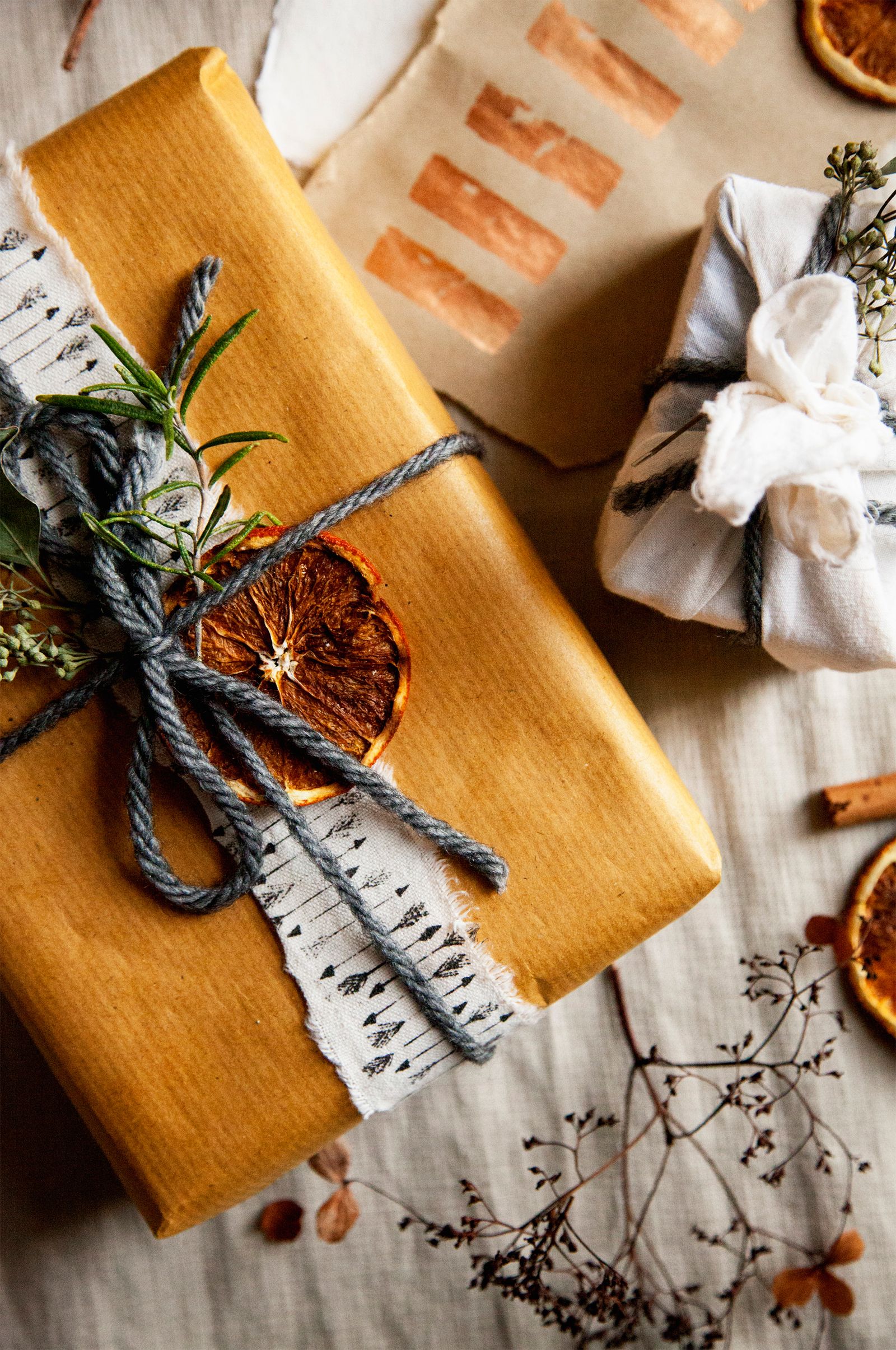
Finally, there’s category four – gifts that manage to speak of the giver and the receiver and of the symbolism of the occasion (which, with Christmas, could be seen as love and togetherness.) I’m not sure I’ve yet successfully determined the exactitudes of this holy grail, though I will say that I love being taken to things – whether that’s ballet, opera, theatre, the circus, a Surrealist tea party, or simply dinner – because with that, the person doing the taking is giving the additional gift of time with them. (Though it appears that something of the palaeolithic remains within me, for I also love interestingly shaped stones and prettily marked shells. The children and I spent the summer collecting hag stones, and I’m planning to gild them and give some of those as presents – but I know that not everybody on my list will appreciate their appeal – see category one.)
I hope that within this you’ve found something that is helpful - and good luck!
And all my best wishes for a very Happy Christmas,
With love,
Fiona XX


