There are no hard and fast rules to making your home beautiful. Every room should reflect something of yourself and be individual.
Do reference the heritage and architecture of a building
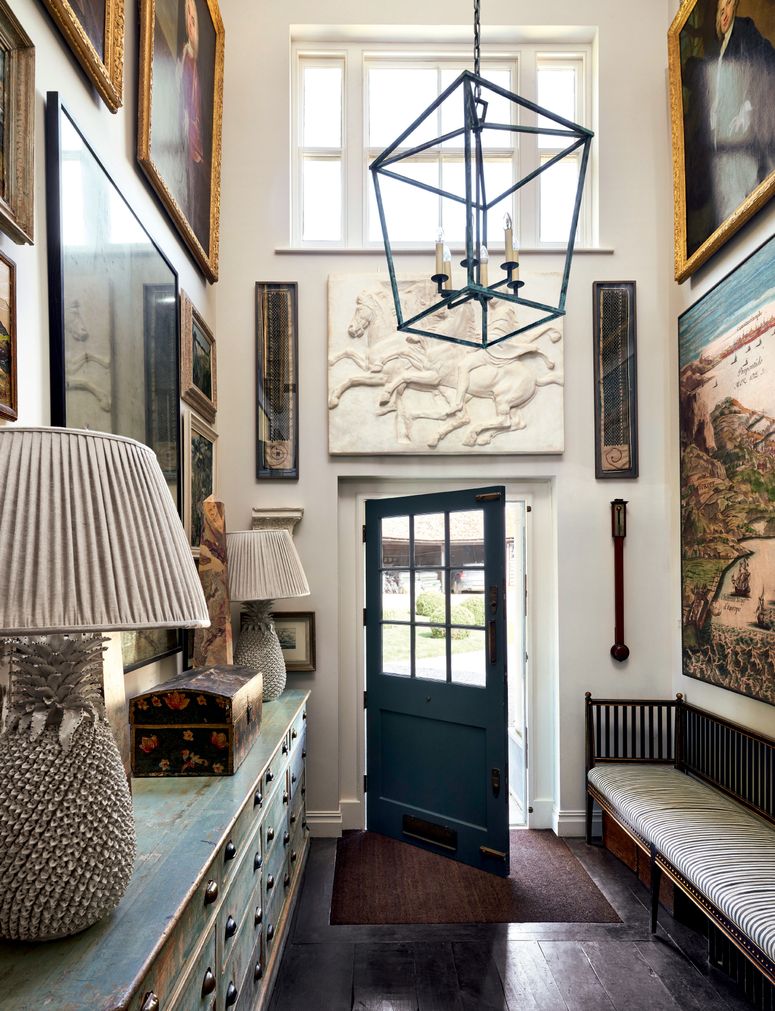
Researching the history and local area of a house can inform the design scheme and create key details. Conservation is extremely important to us as a studio, we always try to keep original features, such as doors and floorboards choosing to restore existing features rather than replacing them. When this is not possible, we select cornicing, architrave & skirting details that honour the tradition of the house.
Do incorporate natural textures
We are inspired by the surrounding landscape of a project, so incorporating natural materials is essential for us. Embrace raw textures such as wood, stone and linens which last a lifetime and age beautifully. We often work with lime paints to create a soft chalky wall finish; these combinations create warmth and form the foundation of an interior that you can add layers to.
Do source antiques
We love the thrill of trawling local flea/antique markets to source antiques for our projects. It’s the excitement of never knowing what you might find, and each piece is unique and has a story. It provides a sustainable way to add authenticity to a space. Wake up early and explore the markets to find your favourite things. As well as furniture and lighting, we enjoy sourcing antique textiles, which we then have made into cushions, or drape over sofas & chairs to add richness and colour to a space. Whilst travelling we always research the antique markets ahead of arriving.

Do work with craftsmen & makers
Working with small ateliers is rewarding and supportive of small businesses. Seek out artisans who produce quality pieces that have longevity. Being part of the process is incredibly gratifying; a beautifully made, generous armchair or sofa is an investment purchase and something that you will cherish daily.
Do choose paint colours that you love and think about how you want them to make you feel in a space
It’s important to consider how colour can influence the atmosphere of a room. Painted walls can look different in different spaces and at different times of the day. Think about how you want to use the room and how you want to feel in the space so that you choose a shade that reflects this mood. For example, decorating a small space in a dark hue embraces its cosiness and warmth. A bedroom should be your haven so think about choosing a colour that you find calming and tranquil.
Don't go overboard with spotlights
Think carefully about where you want spotlights and if you need them. Low-level lighting creates a cosy, romantic feeling in a room. You can never have too many table or floor lamps with soft fabric shades.

Don't follow trends, be true to your own values
Be timeless and classical. Create a room that could last a lifetime in your eyes. Trends fade and make your house look dated. Collect things for your home that you love, regardless of whether they are in fashion or not. It is important to trust your instinct and create something personal that reflects your identity, others will warm to it.
Don't install too much built-in joinery
Take joy in finding unique, reasonably priced antique storage solutions. Discovering a lovely old sideboard to use in your kitchen, or wardrobes for bedrooms is often a cost-saving solution and a lifetime piece that you can take with you. We also try to avoid high-level built-in cabinets in kitchens; they are heavy in a room and can be overpowering - stick to low level where you can.
Don't hang artwork too high
We are passionate about art and work closely with our clients to curate their existing collections in projects. There is sometimes a temptation to hang paintings high on a wall but positioning pieces at eye level can work well. When curating artworks, it’s important to consider the proportion of the piece in relation to the room, so that when the picture is in place it has a connection with the space and the viewer.
Don't rush the process
Try not to worry about rushing to finish a house. Once you have the bare bones in place, finding the right pieces to layer can take a while: it’s worth waiting to find the additions that really work. This is also an opportunity to live in the space and to explore exactly how you use it. Some of our favourite projects have evolved organically over time and feel the most considered.