
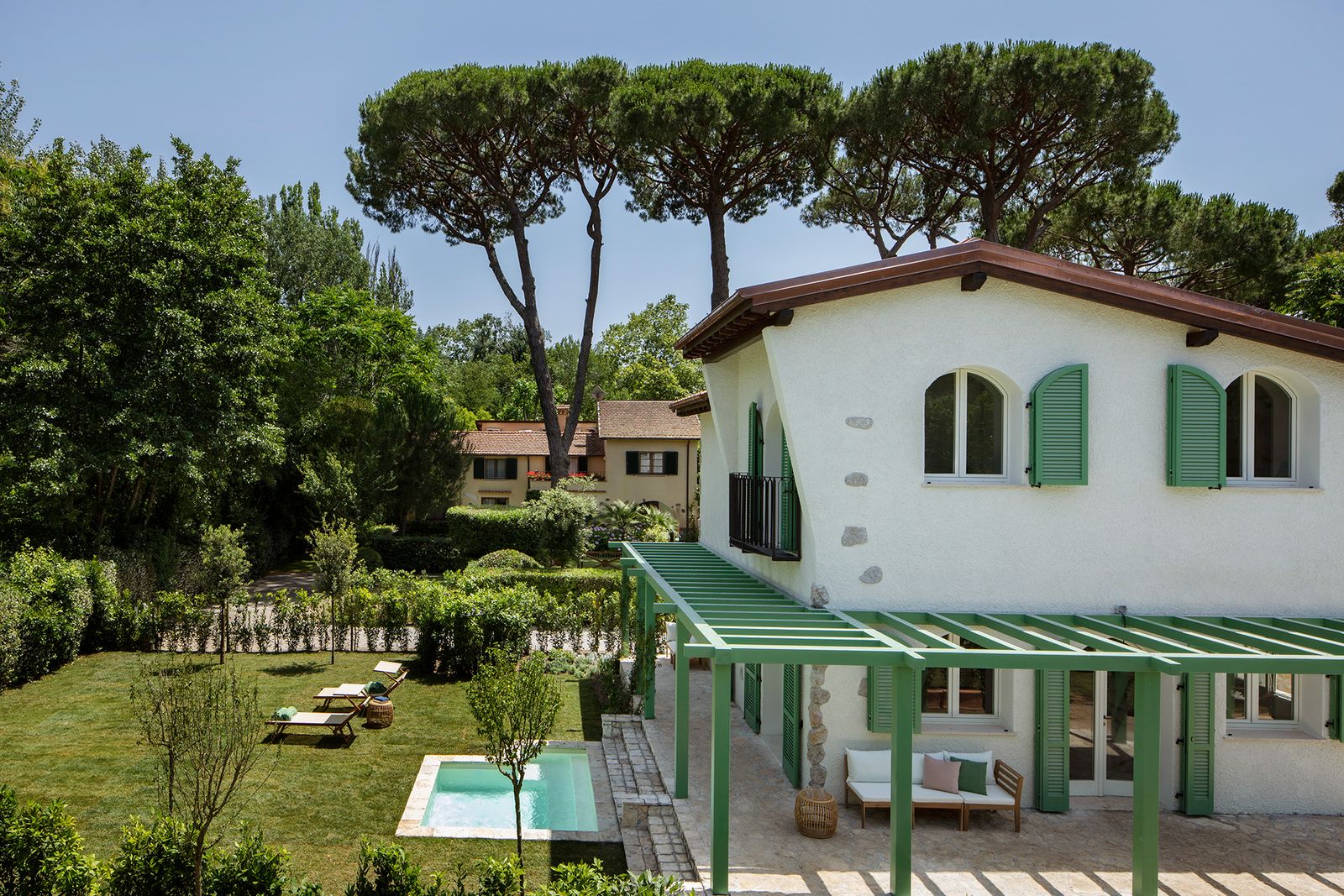
We arrived at the Augustus Hotel & Resort in Forte dei Marmi just as the resort stirred from its winter rest. Parasols were still stowed away and a heavy Tuscan sky blanketed the coast. Wind and rain greeted us rather than the sunny Easter we were hoping for. Yet, that subdued sort of weather proved to be a blessing in disguise. It offered a slower pace and the freedom to explore the hotel and the surrounding region of Versilia without the usual push to be beachside. From the moment we stepped into the grounds, the Augustus felt like a place to settle into rather than simply to stay in.
Our room was in the main building, a villa originally constructed for the Pesenti family in 1930. Designed by Osvaldo Borsani, this rationalist structure was transformed into a hotel by the mid-1950s. The villa’s striped awnings, climbing greenery, and shuttered balconies speak of a classic Riviera charm that time has mellowed. It is glamorous, yes, but in contrast to Forte dei Marmi’s more overtly polished outposts which cater to yacht owners and weekenders in crisp white linen. There’s an old-school confidence rooted in its character.
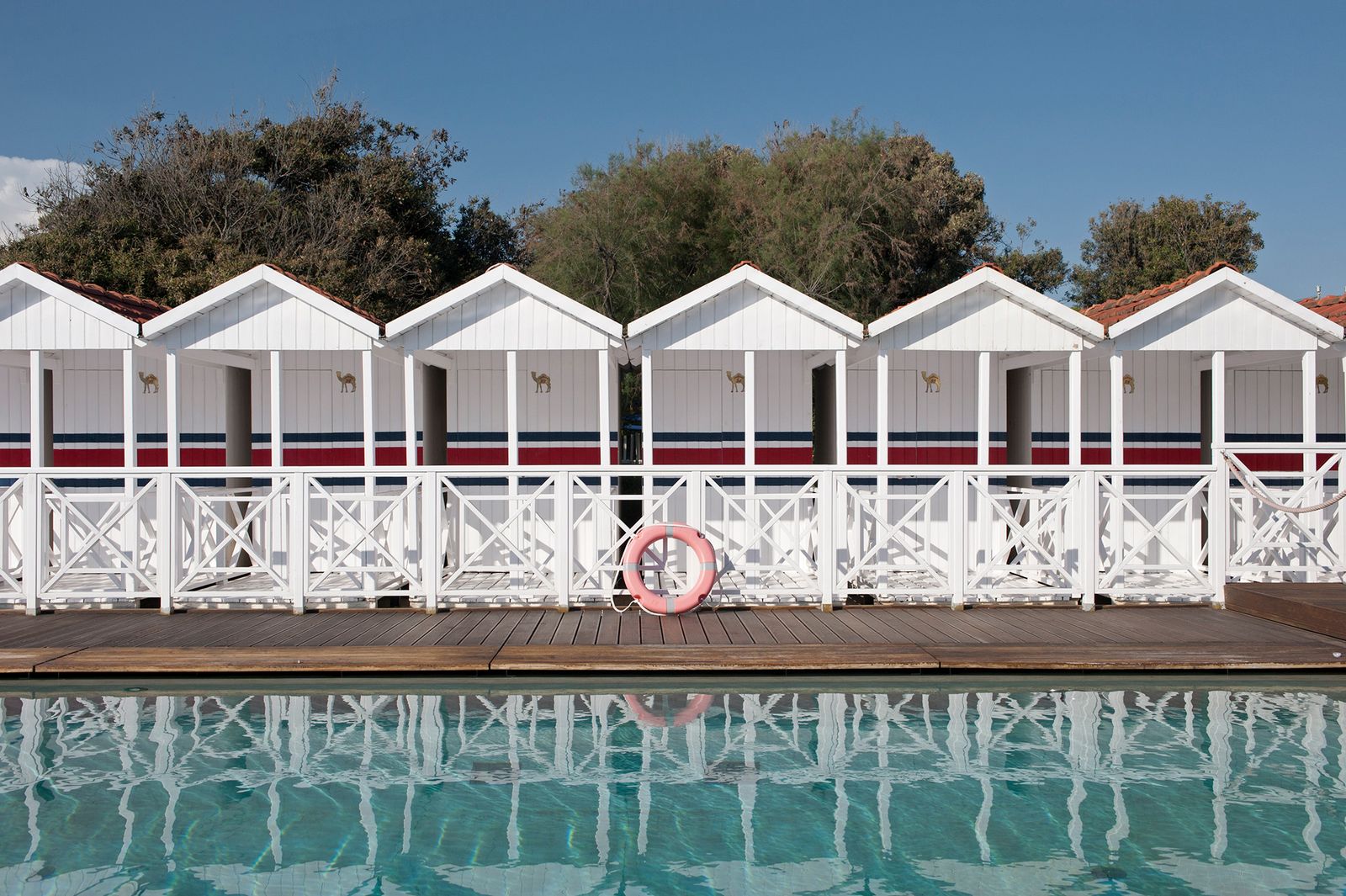
The Augustus is actually a network of villas and pavilions set among umbrella pines and oleander, and each contributes its own distinctive note. The main villa reads like a grand seaside home. Behind it is La Nave, added in the 1960s and carrying a breezy, retro optimism with its low horizontal lines and sweeping terraces, and more modern interiors. Then there is the neo-Renaissance Villa Agnelli across the street, once the private summer residence of the Fiat dynasty. Acquired by the hotel in 1969, it still carries an aristocratic hush. On the one sunlit afternoon of our stay, we followed its garden’s hydrangea-lined path to a hidden tunnel that emerges on the other side of the busy Viale Morin and into the Augustus Beach Club. It was a scene that might have been mid‑July: striped cabanas neatly aligned along the sand, the salt‑water pool uncovered, lounge music drifting between the pines. Aperol spritz in hand, it felt like the romantic, glamorous Italian summer of times gone by. It was brief, but vivid.
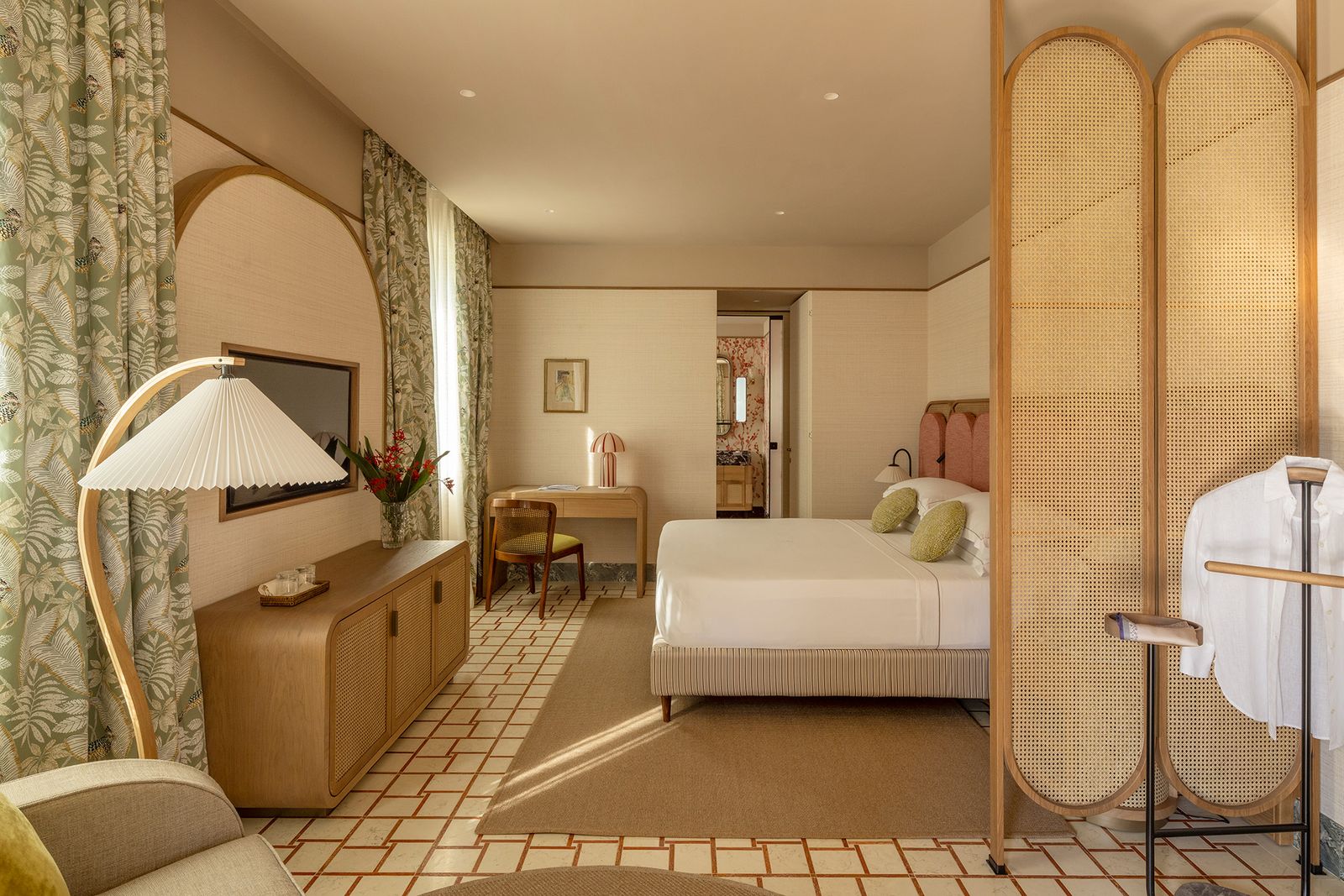
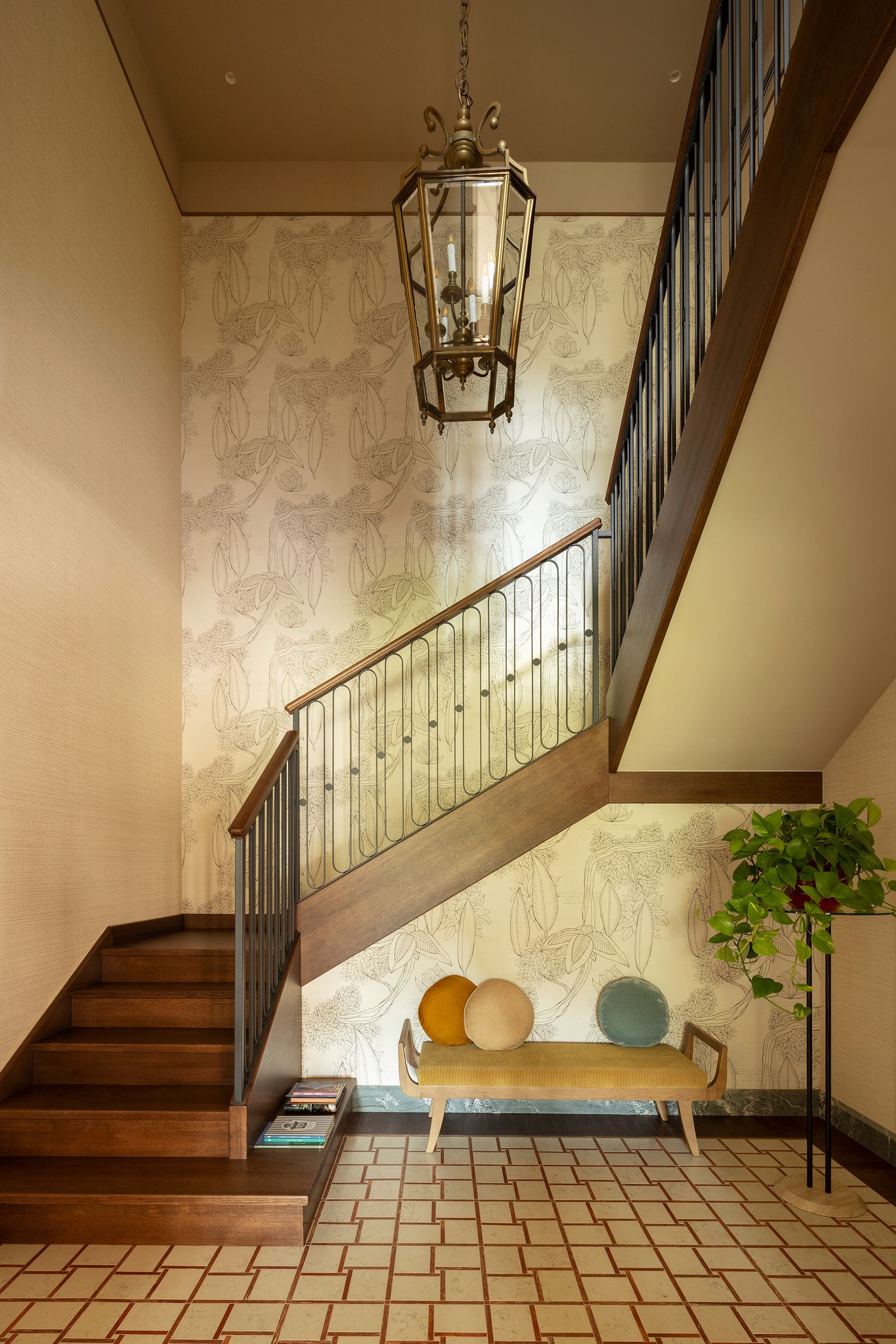
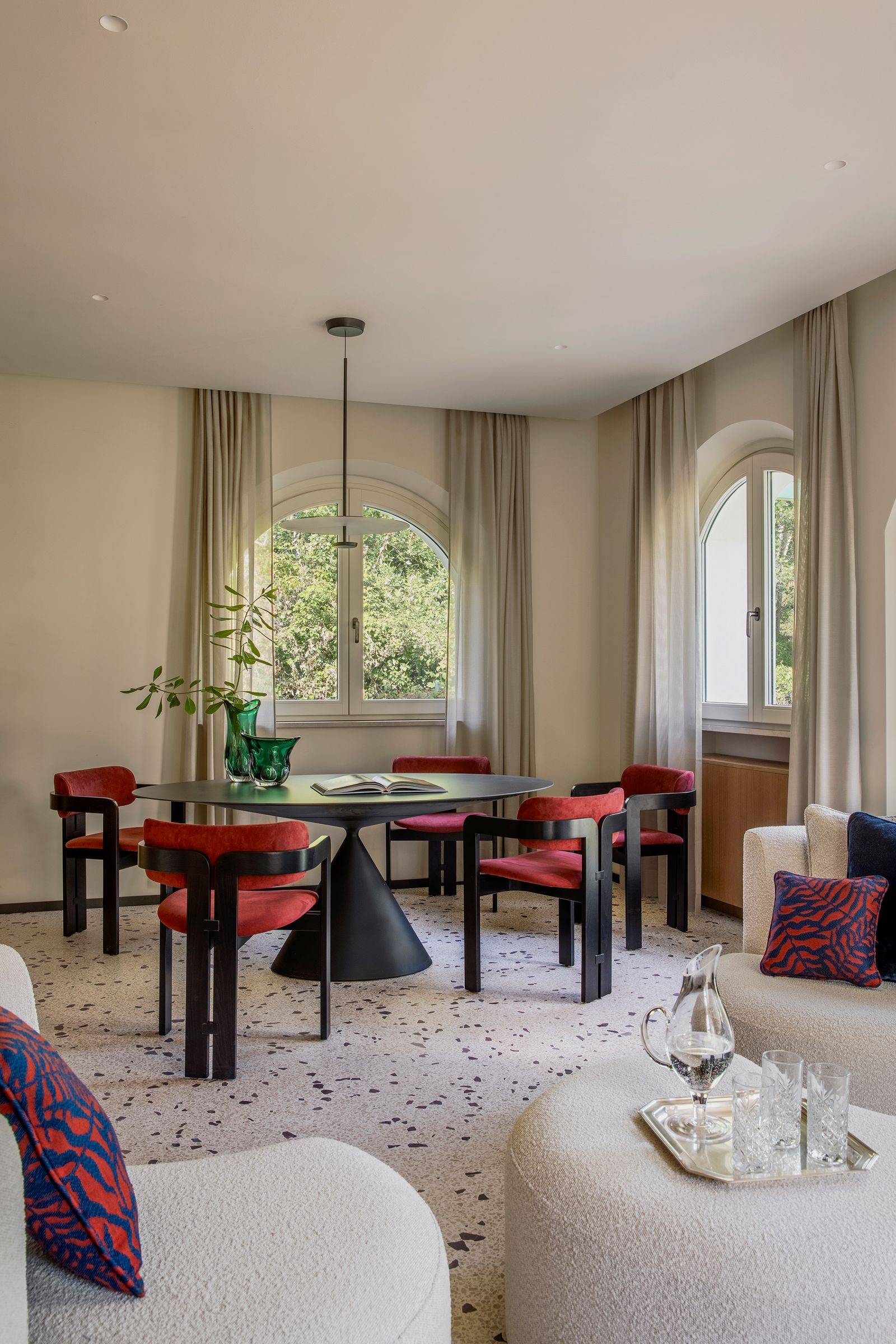
In the main villa, interiors are not overly stylised ‘hotel design’, but rather a layered curation that feels like a personal collection. Warm-toned marble floors anchor the public spaces, where walls are finished in soft peach or softly grained plaster: surfaces that catch the light and throw it back with warmth. In one sitting room, a gallery wall composed of landscapes, portraits and abstracts frames a white-brick fireplace. The furniture is a studied mix: plush terracotta velvet armchairs, patterned cushions, antique dark wood tables, and a scatter of modern pendant lights. Our room continued the story. A terracotta-accent wall, vintage bedside lamps, and floral curtains offered a hint of chintz. It felt like a space arranged by someone with taste and well-stamped passport.
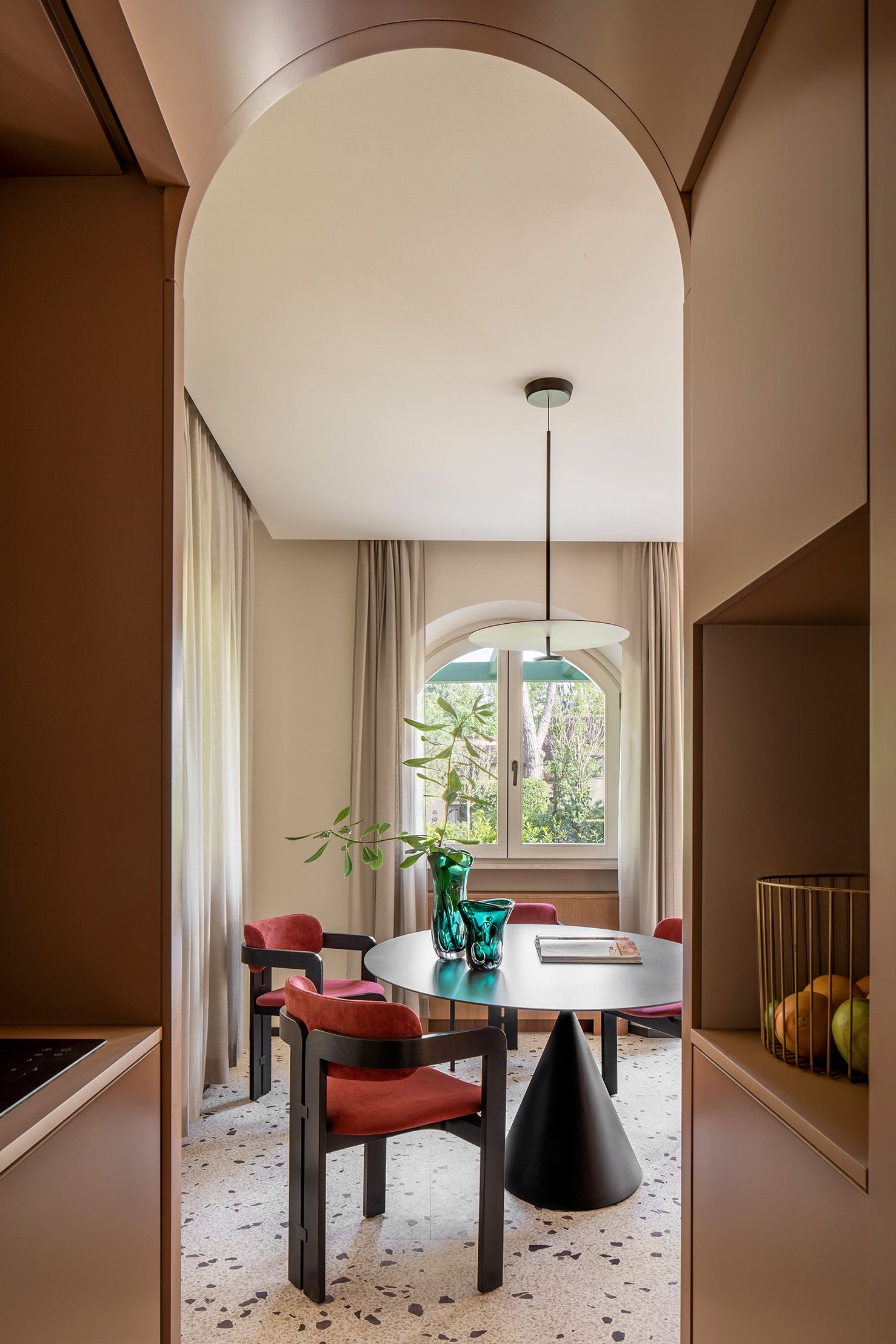
Adding a bold new note to this legacy is Villa Radici, the resort’s most recent unveiling. Tucked discreetly along the red-brick entrance drive and set within the verdant canopy of the pine forest, Villa Radici was built in the 1930s. It offers an entirely fresh interpretation of Tuscan resort living. Spread across two floors, the villa houses seven rooms and suites that blend the nostalgic elegance of the Italian Riviera with contemporary flair. a sun-washed palette of sea green and terracotta is elevated by rich natural textures: woven raffia, brushed brass, soft velvets. Though not yet open during our last visit, Villa Radici’s atmosphere is palpable even from its threshold.
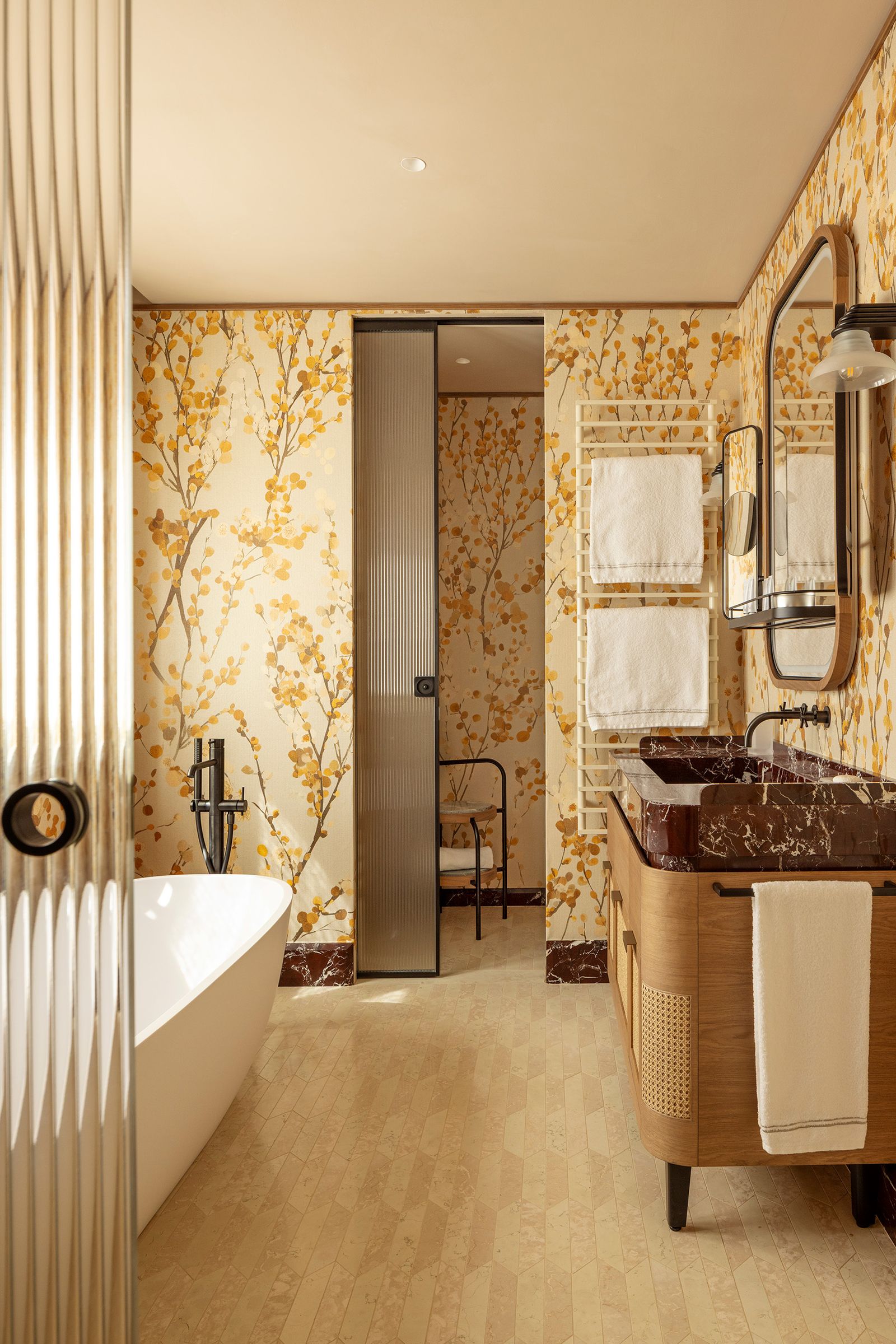
While the weather may have kept us from lounging on the sand, it also granted the pretext to discover the spa and gym—small spaces with a refined simplicity, ideal for stealing away between courses. Speaking of which, food here is quite excellent. At Bambaissa, the beachside restaurant, dishes are thoughtfully prepared and unfussy. I had lobster with cherry tomatoes: bright, clean, perfectly composed. Breakfast too was a slow ritual: strong espresso, freshly baked pastries, a selection of fruit and cheeses. The eggs were so good that it was impossible not to ask the chef’s secret. As with so many things in life, the answer was ‘add fresh double cream’.
One evening, the clouds broke enough for us to head to Pietrasanta. Ten minutes by car, it feels like a slightly worn, more bohemian cousin to Forte. We wandered among boutiques (Bobbins Riviera for great menswear), galleries (Susanna Orlando is a must visit) and lively restaurants (try Volatile for small plates and natural wines), and finished with gelato in the main square. Another afternoon took us to Viareggio, where Liberty-style façades and a graceful seafront promenade recalled a gentler era of Italian coastal life.
What is most unforgettable about the Augustus is how it maintains style without self-consciousness. Its design is rooted in history but not anchored to it. Its decorative details feel personal and its glamour is quiet. It is the sort of place where discovery unfolds room by room, garden by garden, meal by meal. As we publish this story, temperatures have hit over 30C and there isn’t a cloud in the sky over the Augustus. But I don’t think its current inhabitants will have a better time than I did.
Standard double starts from £318, suites from £600, villas from £1280.


.jpg)


