
I recently bought a desk second-hand on Facebook Marketplace – a mid-century, faded but perfectly functional desk. Open the drawers though, and it's a different story: musty smells, doodles of hearts in Sharpie pen, stamps of an address, and even, to my mild disgust, some strands of human hair.
Opening up furniture can reveal a fuller picture about its provenance and purpose as well as the identity of its former owners. So believe The Wallace Collection, whom for Open Furniture Month have invited visitors to look inside some of their highly precious 17th and 18th century armoires, consoles and cabinets of curiosity whose doors are normally closed. ‘Everything in here is a museum piece and we don’t touch anything without gloves,' says Felix Zorzo, Curatorial Assistant at the Wallace Collection. The aim of the display however, is ‘to entice the visitor to imagine how it would have been to live with these object,’ which whilst ‘very luxurious, were also meant to be used somehow, as showpieces though – not to store spices,' he explains.

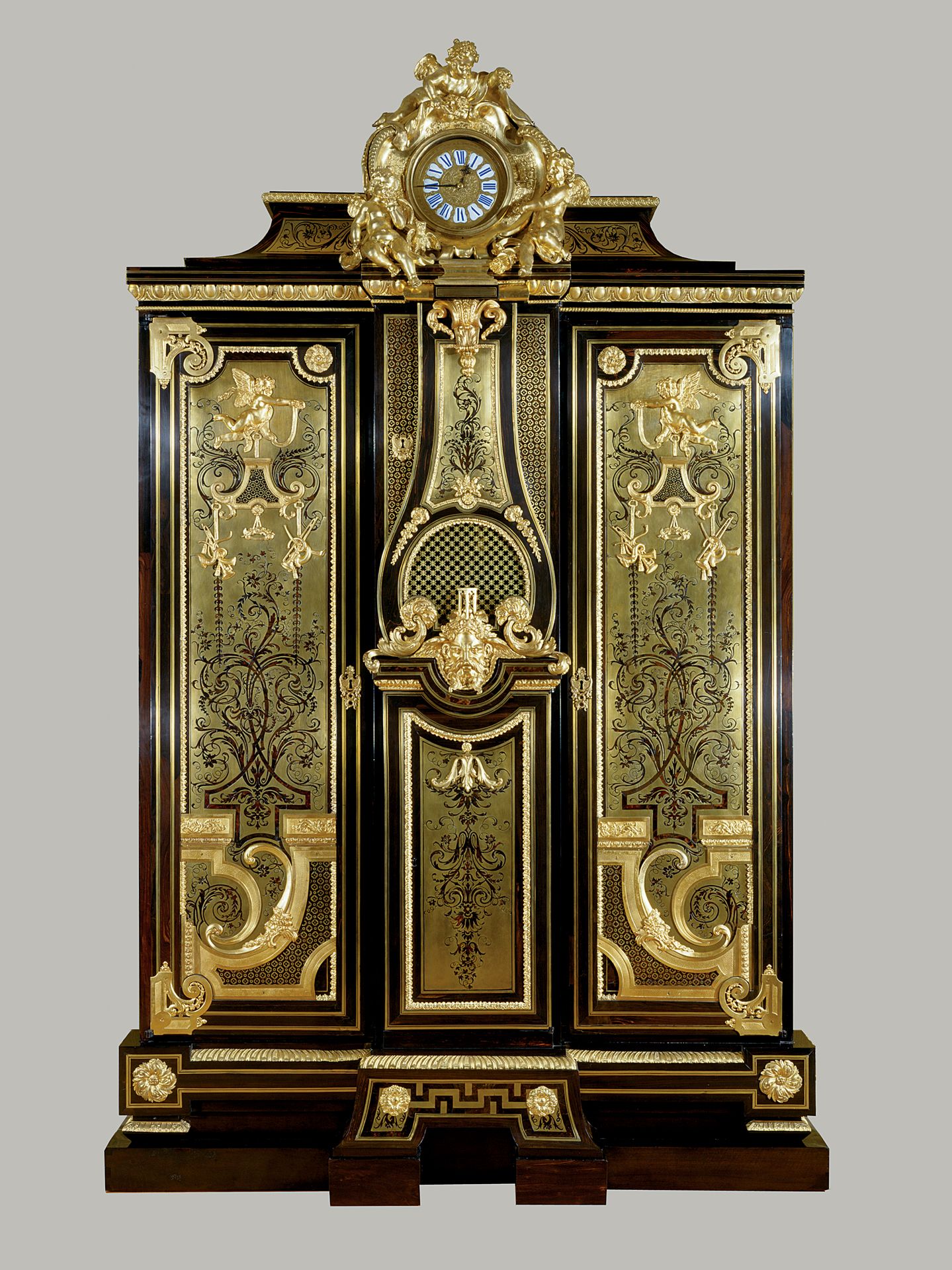
Central to the display are a pair of c.1690 Japanese lacquer cabinets depicting an aureated Mount Fuji – originally a gift from the Ambassador of Sian (now Thailand) to Versailles. An ostentatious display of grandeur for grandeur's sake, the motif even continues on the back – normally up against a wall, one of the cabinets has been duly turned around. The inside of the drawers are decorated with particles of gold dust. ‘Everything just glitters,’ says Félix. ‘It was certainly meant at some point to be open and shown.’ Next to it the plain interiors of an equally gilded 1715 wardrobe by André-Charles Boulle, cabinet maker to the King, seem dowdy in comparison. Even when closed, however, one interior element would be visible through a mesh screen – a gold pendulum depicting Apollo – a 19th century addition which served as a relentless reminder of the passing of time.
MAY WE SUGGEST: The best places to buy affordable vintage art online
From the outside, a late 17th-century cabinet, also attributed to Boulle, with its natural, Classical and mythological references, acted as a high-class conversation piece: ‘You would show off that you could distinguish your daffodils from your roses,’ says Félix. ‘Or that you knew your Ovid quite well.’ On the inside, however, it offers a more intimate formation – its central door opening to reveal a small space where a sculpture would most likely be displayed – a triangle of mirrors behind it allowing it to be viewed at a 360-degree angle: ‘It was a sort of theatre,’ says Félix. ‘But they were only opened in front of very special guests – it's almost giving access to the inner sanctum of a person – the owner might hand you a little trinket from inside it.'

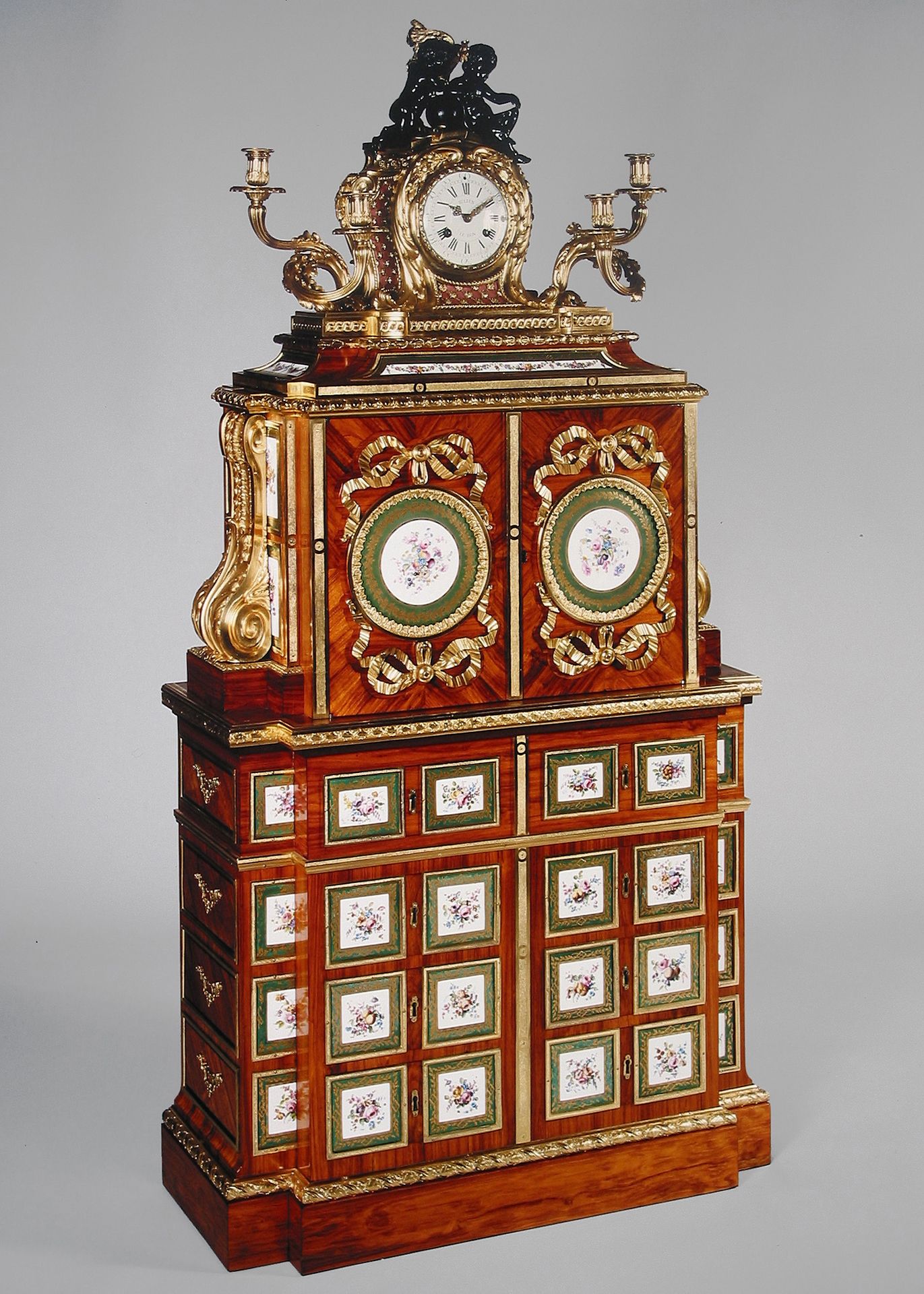
A piece of furniture's cavities can also reveal more practical considerations. One of the featured objects on display is a c.1730 chest-of-drawers – without its drawers. The piece is currently in restoration. ‘All of the mounts are very dirty – dust has accumulated over the years,' says Jürgen Huber, Senior Furniture Conservator at the Collection, who points out current patches of masking tape which have been coloured in with brown. A neighbouring 1766 French filing cabinet by Jean-François Leleu looks straightforwardly attractive, but it has had nothing short of a facelift over the years. Previously attached with a writing desk and open-fronted – for women writers to store away their files in decorated boxes – it was adapted for a 19th century audience who, whilst preferring not to have their possessions on show, still had a soft spot for Sèvres porcelain. The newest piece to be opened up is a late 17th century cabinet. Outside it is almost unremarkably ornate in the wider context of the museum. Inside, however, it reveals a particular kind of frame and bolt: ‘it had been constructed with the idea of being dismantled, moved from one property to another,’ says Félix. ‘The pieces would slot together,' says Jürgen, ‘like early IKEA.’
With so much to be learned from looking on the inside of furniture, you may wonder why the Wallace Collection doesn't open it up more often, and why in particular they have picked the shortest month to do it. The reason is elementary. ‘Light levels are lower in the winter months because there are less hours of daylight and that daylight is less intense,’ says Jürgen. 'Damage caused by light is cumulative, the longer the exposure, the higher the risk for the furniture.' Open Furniture Month then, is a brief window of opportunity to enjoy furniture's interior life – to jump inside – before the doors are closed again.


