
Whilst walking down a street in De Beauvoir in North London last weekend, I saw a woman clipping roses and foliage from people's front gardens and tucking them away in a bag-for-life. Whilst I don't necessarily condone her behaviour, I certainly admire her brazenness and couldn't help but imagine what an interesting, story-filled (and inexpensive) display the flowers would make in her home.
It got me wondering if, rather than go to Tesco or a local florist for my seasonal hit of peonies, daffodils or tulips, I could be foraging them myself. Particularly in springtime when – even in London – the whole world seems to be in bloom. Rather than head straight to Kensington Palace Gardens with my clippers, I spoke to Katie Smyth who, with Terri Chandler founded Worm, a creative floral design studio based in East London. Their exquisite floral arrangements combine the nobility of a Dutch still life, with something more sculptural, textural and wild, which celebrates the imperfections as much as the perfections of different flowers. Here Katie tells me about the influence of wild flowers on Worm's work, as well as her advice for creating a foraged bouquet yourself.
"We have always been drawn to wild flowers. Growing up in Ireland and going on holidays to the Irish countryside we were surrounded by wild flowers and grasses which grew haphazardly from rocks and wild abandoned fields. There was something about the beautiful chaos of it all that drew us in. We love how nothing there is too perfect or manicured. When we started Worm both myself and Terri realised that we wanted to bring a sense of this into what we do. We were never that interested in the flowers that were considered ‘the most beautiful’ or ‘perfect’. We liked the ones with wonky stems – they have more personality. We also like the shapes they give to bouquets and arrangements. When we started there was a heavy emphasis on tight and neat looking flower displays. We didn’t feel like this style of floristry connected with us. We liked the idea of working with the seasons and trying to incorporate flowers which were maybe seen as secondary, making them the hero.
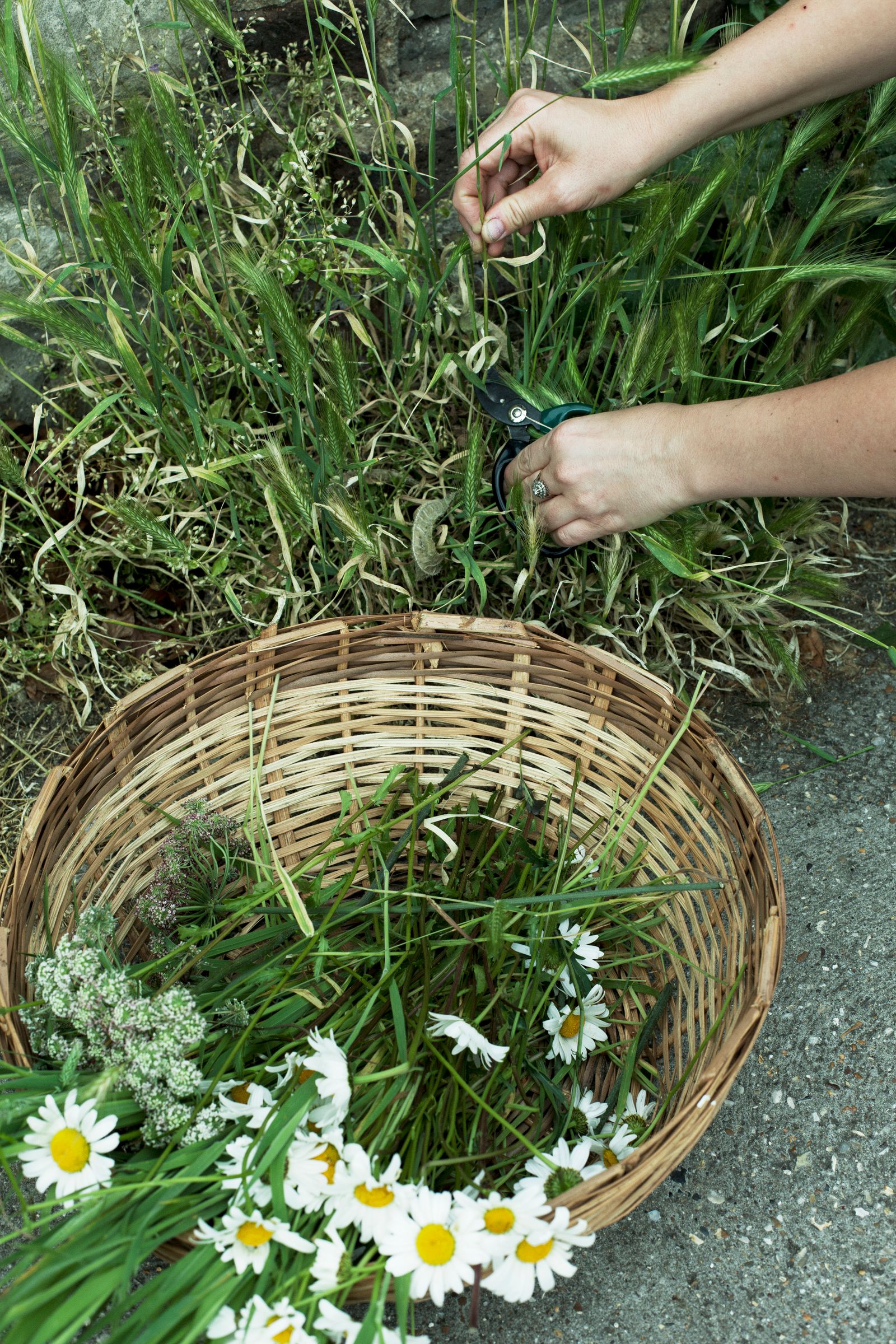
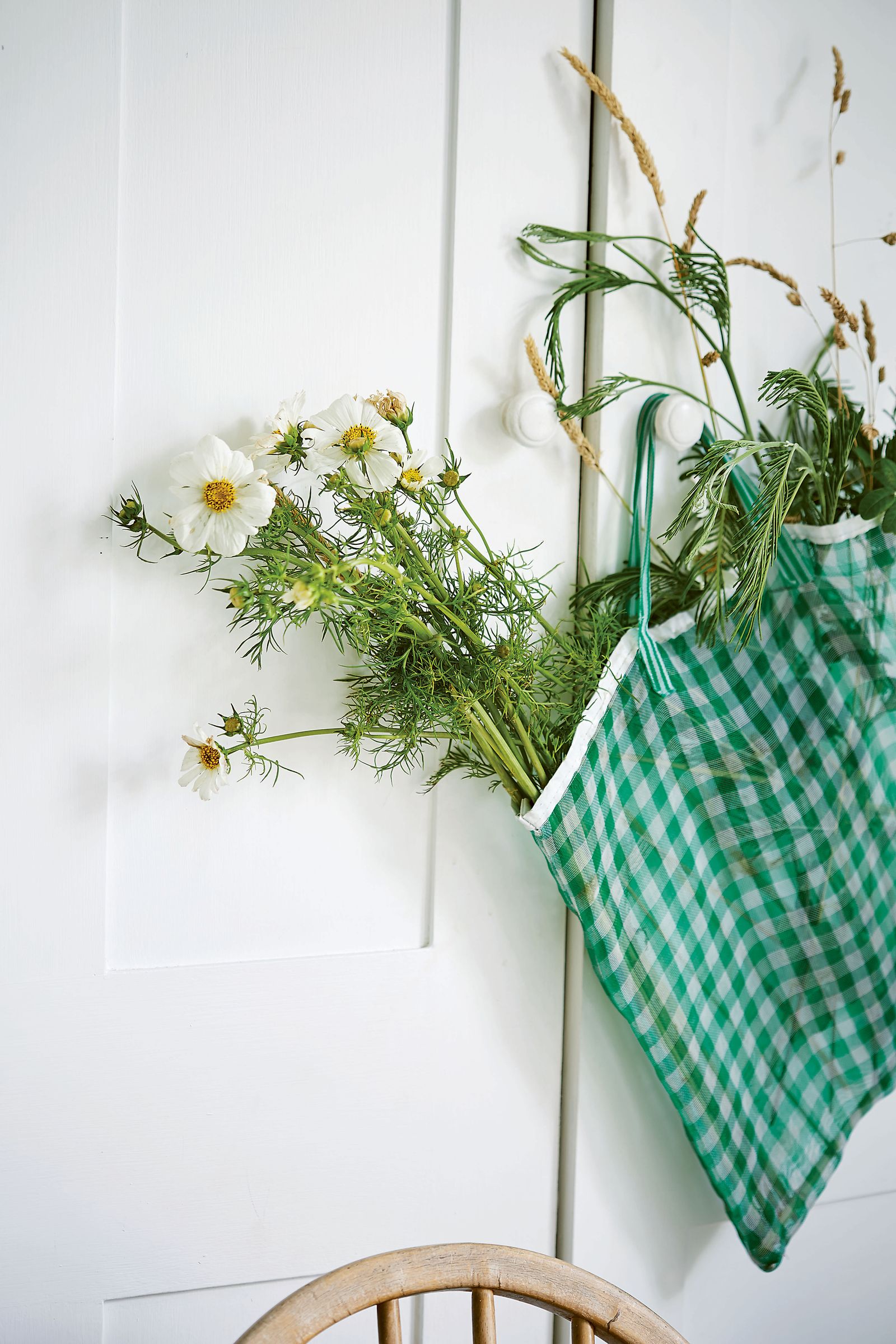
We were also drawn to the idea that floristry can be accessible for all. The idea that you don’t need the most expensive rose or peony to make a beautiful bunch of flowers. We loved the idea that you can make a bunch of flowers by just picking some wild flowers and foliages from your garden. We live in London and don’t even have gardens, but often sneak into a friend's garden to gather a few stems. It is difficult to forage for wild flowers in the city. There are rules in most green spaces which prevent you from being able to pick flowers. Sometimes you can walk along the canal or into the marshlands and pick some flowers, but it is limited. If you are in the countryside you have more scope to forage. Whilst you shouldn't over pick, you can take enough to make a small bunch. You just need to make sure you are taking flowers from places where there is abundance, not leaving spaces bare. If you have a garden though, you have nothing to worry about!
A lot of our bunches end up having a small amount of flowers and are filled out with various foliages and sticks or twigs we have found. To make an interesting bunch, it’s useful to think about texture. For us, texture is the most important aspect. We tend not to worry about colour, as it feels more wild and natural when there is a mix of colours. When we are picking our flowers and foliages we think about trying to find lots of different textures. We try to have hard, soft and fluffy textures. We will generally pick a few seasonal wild flowers. We love using weeds and often try to include flowers like dandelions into our bunches. We will then look for some foliages. There are so many gorgeous foliages and we try to get a good mix. Our favourite part is then looking for some small branches and grasses as we always feel this helps give lots of texture. Any winding branches or fluffy grasses work great here. We love to incorporate some seed heads. Our favourites to use are clematis seed heads or poppy seed heads.
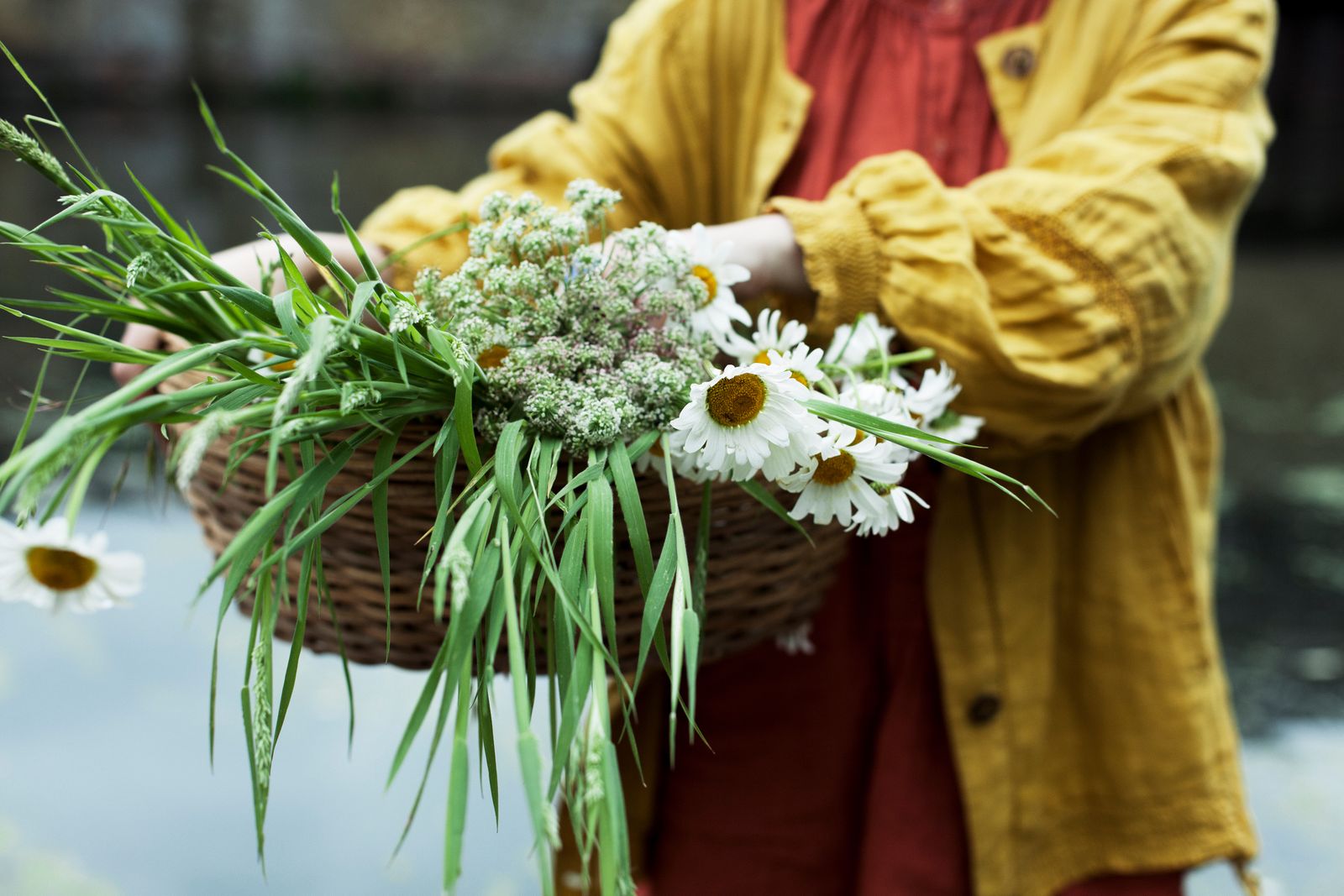
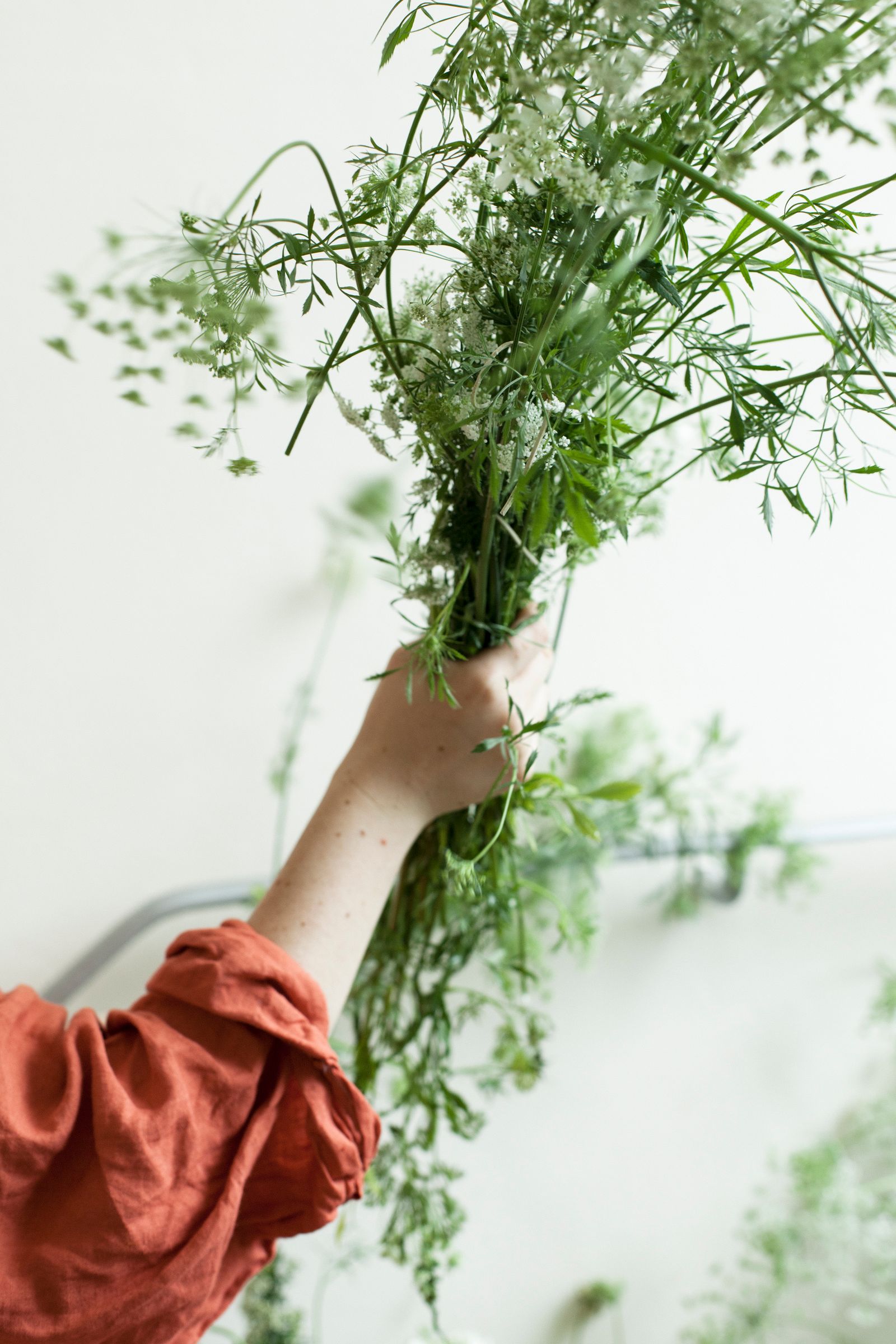
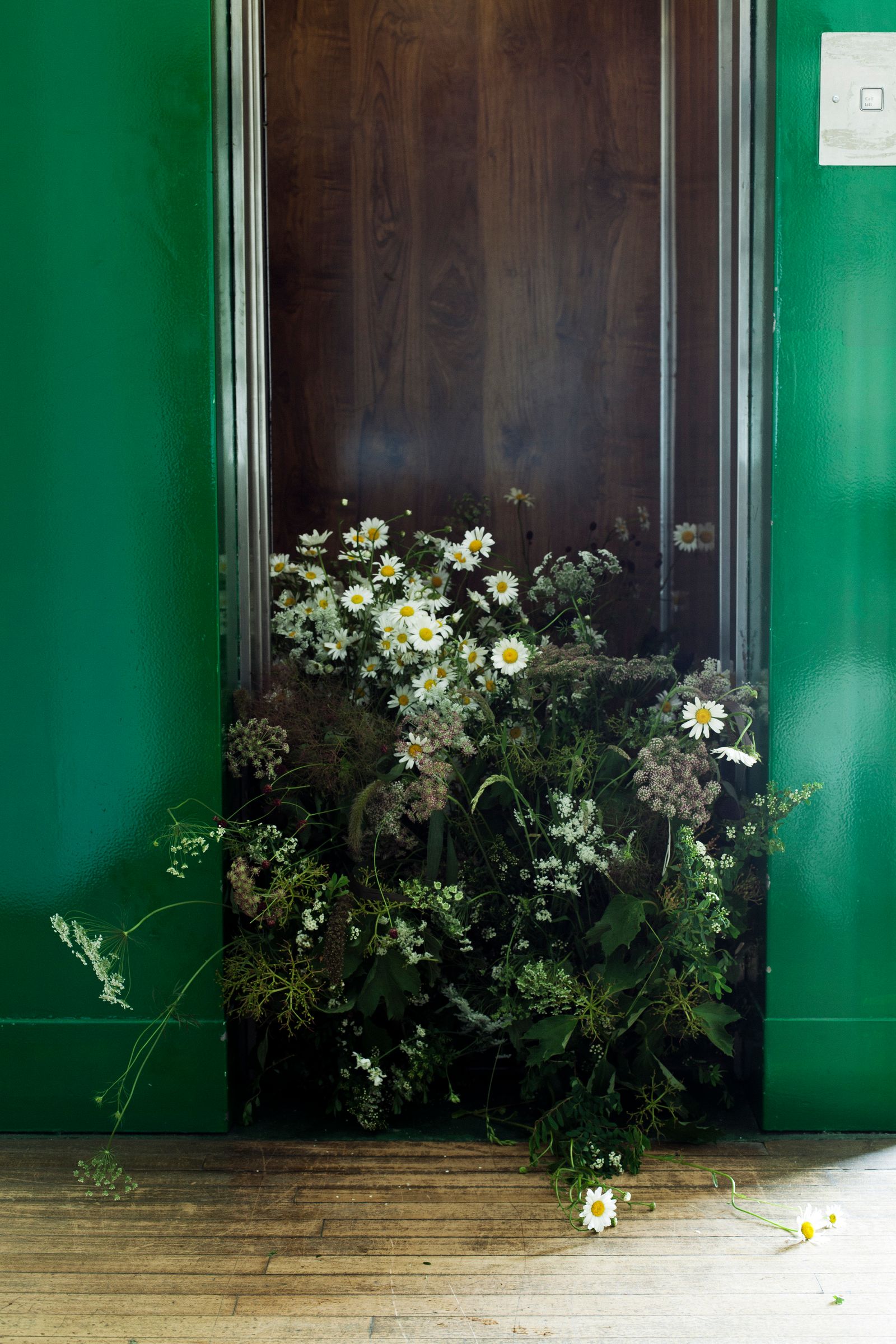
When you have gathered enough to make a bunch, bring it home and snip the ends of everything before putting it in water for a good drink. You don’t need to worry much about how to construct your bunch, if you have a good mix of flowers and foliages they should naturally work well together. The wilder everything looks the better in our opinion. While there are specific techniques for making a hand-tied bouquet, you can sort of throw caution to the wind when making a wildflower style. We just like to put it together by starting with a flower and then adding a different texture such as a grass then picking another different texture such as a foliage, adding one texture onto another. You just need to constantly change textures as you add. The more wild and wayward it becomes the better. When you are done, you can either put it in your vase if it is for your home, or wrap it if it is a gift. Tying it with a piece of string and wrapping it in some old newspaper is a nice sustainable way to wrap it. One thing to note is that in many cases wild flowers tend to wilt quicker than other kinds of flowers, so it is important that they should not be out of water for too long.
Spring and summer are the best times to make a wild flower bunch. In autumn and winter we tend to use more branches, berries and some dried materials which we have kept to dry out. For us sustainability and seasonality are so important. It starts with us all using what we have around us, which means trying to use flowers which are in season, and being creative in how we put them together."


