
Since receiving the title of Britain's Youngest Etiquette Expert at the tender age of 16, William Hanson has – through his work as an etiquette coach – shared his wisdom with Royal and VIP households, diplomats and multi-national brands, and in 2019 founded etiquette training school The English Manner. His steadfast approach to the often labyrinthine world of English manners has earned him some 135,000 followers on Instagram, where he shares humorous, instructive videos on how best to conduct oneself when socialising in the UK, and this month he is publishing his first book; Just Good Manners: A Quintessential Guide to Charm, Courtesy, Grace and Manners.
Ahead of the festive season – which is creeping ever closer – we asked William to offer his valuable advice, answering those etiquette-related questions you never knew the ‘correct’ answer to. If you've ever wondered how to make a swift but polite exit from a party, or what to do with your napkin at dinner, don't fret: we've got the answers.

When someone invites you for dinner, what time should you actually turn up?
A big change in British etiquette in the last decade has been the near dropping of the ‘ten minutes late’ rule, which was once so dutifully observed by older generations. Much of my childhood was spent sitting in one of my pathologically punctual parents’ cars, clock- watching, waiting so we could arrive exactly ten minutes after the appointed hour. Their generations and the ones before created this rule to allow hosts to have a small buffer time where they could take a breath and do all those small jobs they may have missed before the onslaught of guests arrived. Now, more anxious millennials don’t see any reason to observe this rule, worrying that if guests don’t arrive on the dot of half seven that means they aren’t coming at all and have stood their hosts up. My suggestion for a happy compromise is – hardly revolutionarily, I grant you – arrive only five minutes late.
What's a good conversation starter with someone you don't know, other than 'what do you do'?
Strictly speaking, if you're at a party, you shouldn't really ever ask someone what they do for a living as it's a social engagement, not a professional one. Not to say that people won't, however. What you are trying to do with small talk is establish common ground. ‘How do you know the host?’ is unimaginative but works – allowing your interlocutor to (hopefully) provide some amusing or interesting anecdote that you can match. If the host line of questioning won’t work, the common ground you definitely share is the room you are standing in. ‘What a beautiful ceiling!’ you could exclaim, gesturing upwards. ‘Have you tried any of the canapés yet? Any recommendations?’
If you are served something which is against your dietary requirements - do you mention this or politely pick around the bits you can't eat?
If you have not flagged your dietary requirements in advance, then more fool you! But if you have and the host has ignored them, one can only presume without any malice, then yes, just eat what you can. A dinner party is, most importantly, about the general ambience and conviviality of the occasion, rather than the food.

How do you know if it's the correct time to leave?
This all depends on what sort of party it is. A cocktail party doesn't need you there for every waking moment, unless you want to be. For a dinner, you should stay until the host has stopped offering more food and drink. As a host, if your guests aren't taking the cue to leave, it's fine to drop some passive aggressive but polite hints, such as, ‘Can I get anyone anything else?’
If you want to leave but there are no signs of the evening winding down, what is the polite way to do this? Is a French exit ever acceptable?
For a dinner party, leaving before it's finished is rude, unless you have flagged well in advance that you have to make the last train and what time that is. For any other sort of party, you need to say goodbye to the hosts before you leave – whether you like it or not. Just vanishing is plain rude and the coward's way out.
What should you do with your napkin between courses and when you're finished with dinner?
Napkins are unfolded and placed on the lap, and do not go back on the table until you are finished eating and everyone leaves the table – leave them in a neat heap to the left of the place setting. If you are a house guest, resist the urge to fold the napkin back into a neat shape. While you may be trying to show your host you can use that napkin again for breakfast, no decent British host would dream of providing any guest with a dirty napkin for a new meal. Should you be leaving the table in between courses but will be returning, for whatever reason, the napkin is placed neatly on the seat or arm of the chair.
When out for dinner and you want to catch the waiter's eye without ignoring your friends, how is this best done?
Waiters are called over to the table by non-verbal communication alone. There should be no noise, either by calling out ‘waiter?’ (those who think using the French garçon adds charm are dramatically misguided) or by clicking your fingers. Keep your hand at the level of your eye and lean back slightly, drawing yourself away from the epicentre of the table, and that should work on well-trained staff.
Should you Instagram someone else's party?
Only with permission. It is best practice to ask the host before you post. That said, if the host has shared the official hashtag for the event (yes, I am groaning too as I write that) then this is a clear signal they are not shy about social media.
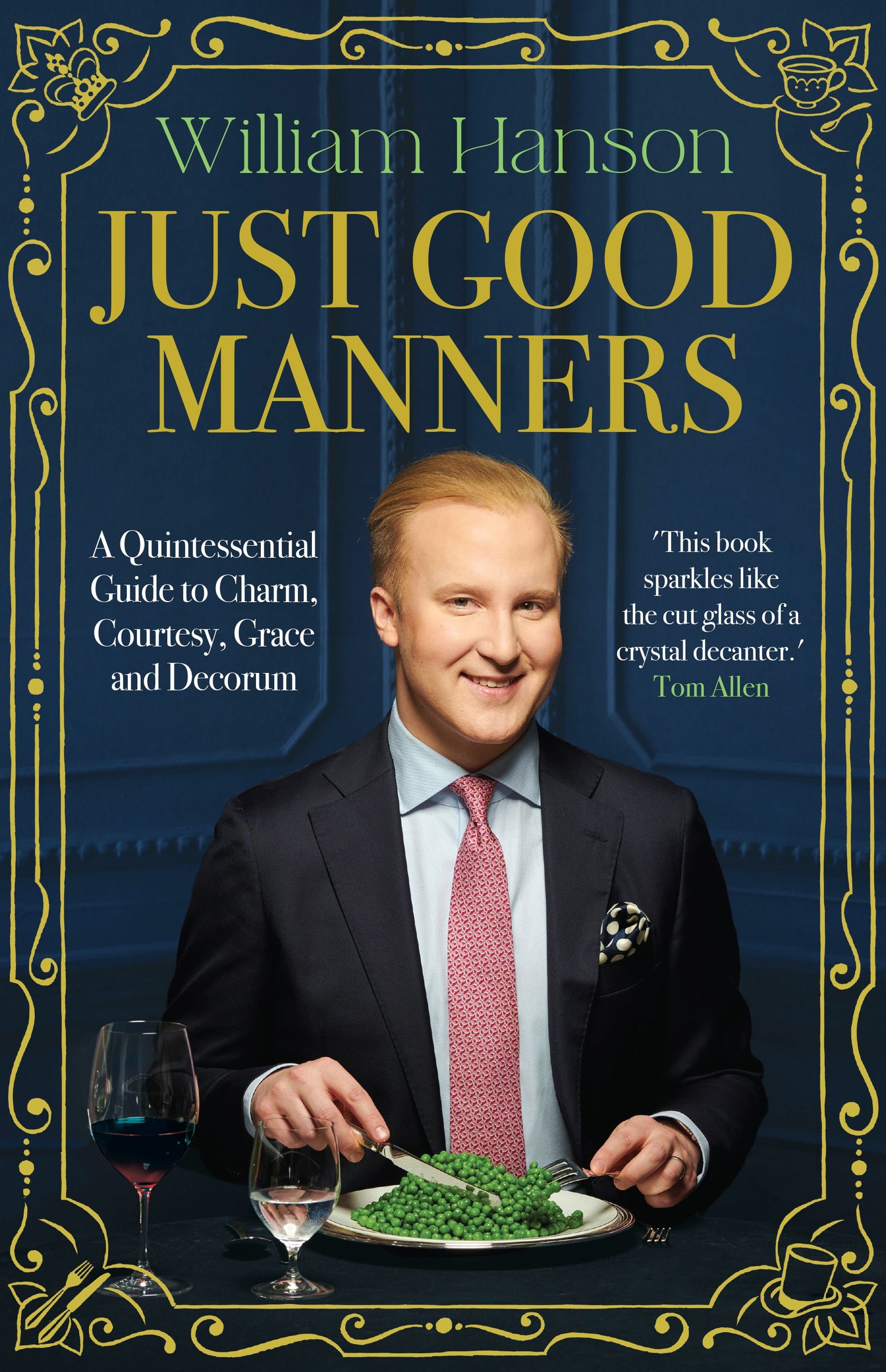
Just Good Manners: A Quintessential Guide to Charm, Courtesy, Grace and Manners is published by Century, Penguin Random House in hardback, out now for £20.


