
The owner of fabric house Claremont turns a Sixties house in London in to a slice of America's west coast

Adam Sykes grew up in an eighteenth-century weaver's cottage in Yorkshire. Unlike the original inhabitants of the house, his family did not weave by the light provided by its rows and rows of windows, but good quality cloth had long played a role in their lives and continues to do so in Adam's. His grandfather was a Jewish émigré from Vienna who found great success as a textiles manufacturer in Huddersfield, making knitted jersey used by Parisian couture houses Yves Saint Laurent, Givenchy, Balmain and Patou. Adam's father was the director of a mill that provided cloth for the tailoring industry. Since 1997, Adam has owned Claremont, one of Britain's most prestigious fabric houses, which works with small manufacturers to produce its own designs, as well as those from the Warner archive.
When Adam was 12, his mother took him to meet a teacher about getting some extra maths tuition. It was a life-changing experience, but not because he mastered the mysteries of fractional equations. 'She lived in this amazing Fifties house,' Adam recalls. 'I couldn't believe it; it was like seeing something from another planet. Suddenly, I saw there is a different way of living.'
He saw far more evidence of this a dozen or so years later when, with a ceramics degree in hand, he lived in Los Angeles for a year. He worked in a fabric showroom, immersed himself in the world of interior design, and revelled in the Mid-century Modern architecture on America's west coast. It wasn't until 2014 that Adam finally secured a bit of that for himself, in a leafy south London suburb not known primarily for its Modernist architecture.
Until then, Adam had been living in a fabulous Thirties penthouse in South Kensington (featured in House & Garden in March 2002). He decided it was time for a change and although he could not picture himself living in the countryside, he did want a detached house with a garden. 'I remember clearly: it was June 4 and I should have been working, but instead I was looking at houses online. That day, at 3pm, I came to see this house and before I even got up the drive, I thought, yes that's it. Whatever it takes, I want that house.'
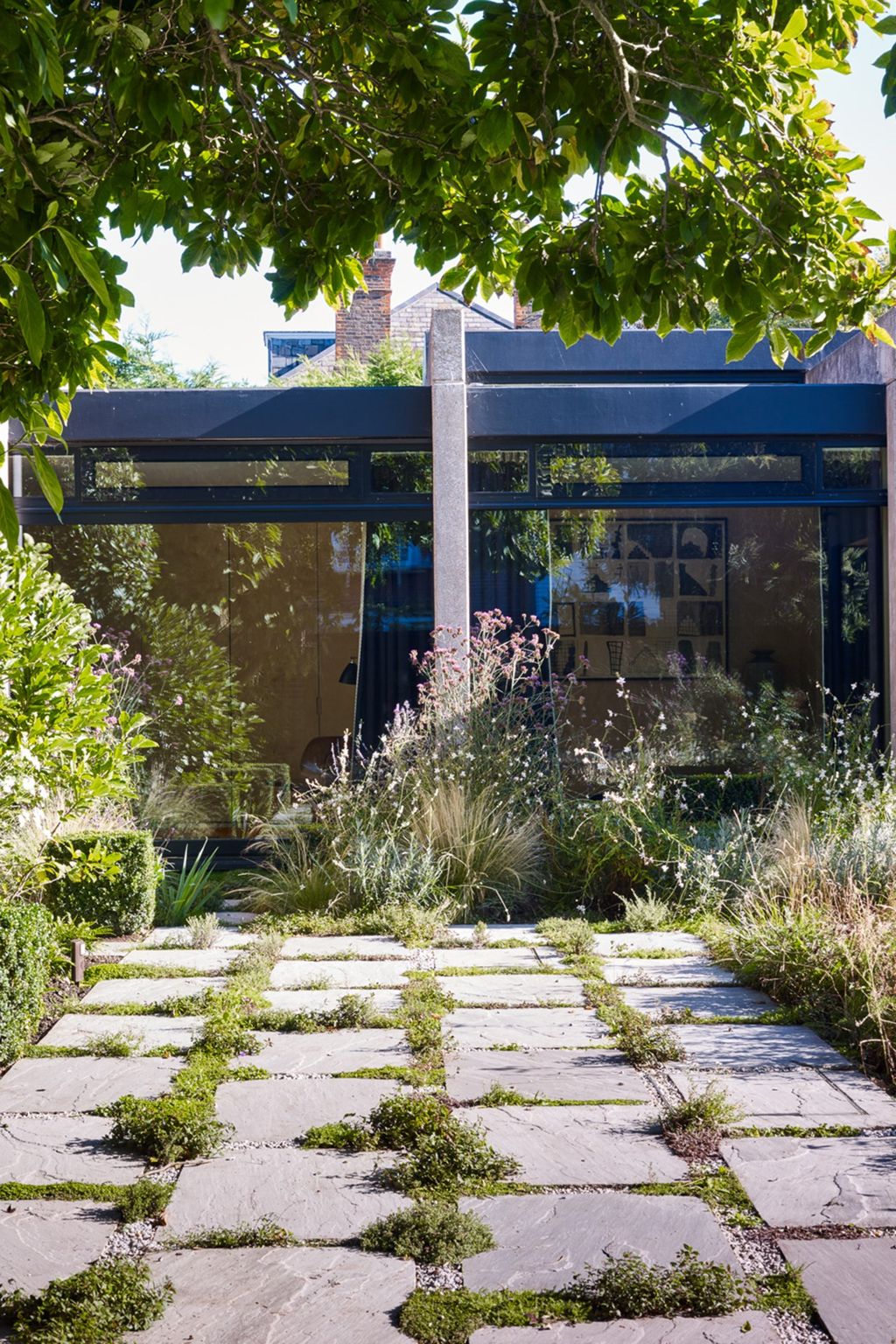
Designed in 1963 by architects Peter Foggo and David Thomas, the single-storey dwelling adheres to Mies van der Rohe's idea of 'skin and bones' architecture, where a largely glass shell hangs around a steel or concrete framework. It has been said that the private houses that Foggo and Thomas designed were among just a handful in Britain that were in the same league as the experimental Case Study Houses built by the likes of Eames, Neutra and Ellwood in California from the Forties to the Sixties. This comparison is significant, and not lost on Adam.
'It might sound ridiculous, but my whole thing was to create a house that might have been in California,' he says. 'The mid-century houses in Palm Springs and Los Angeles were gentler than those built in Europe, where it was often just white walls, downlights and wood floors.' Adam preferred the American version of the movement: 'There were carpets everywhere, and curtains. I very much wanted that more relaxed look.'
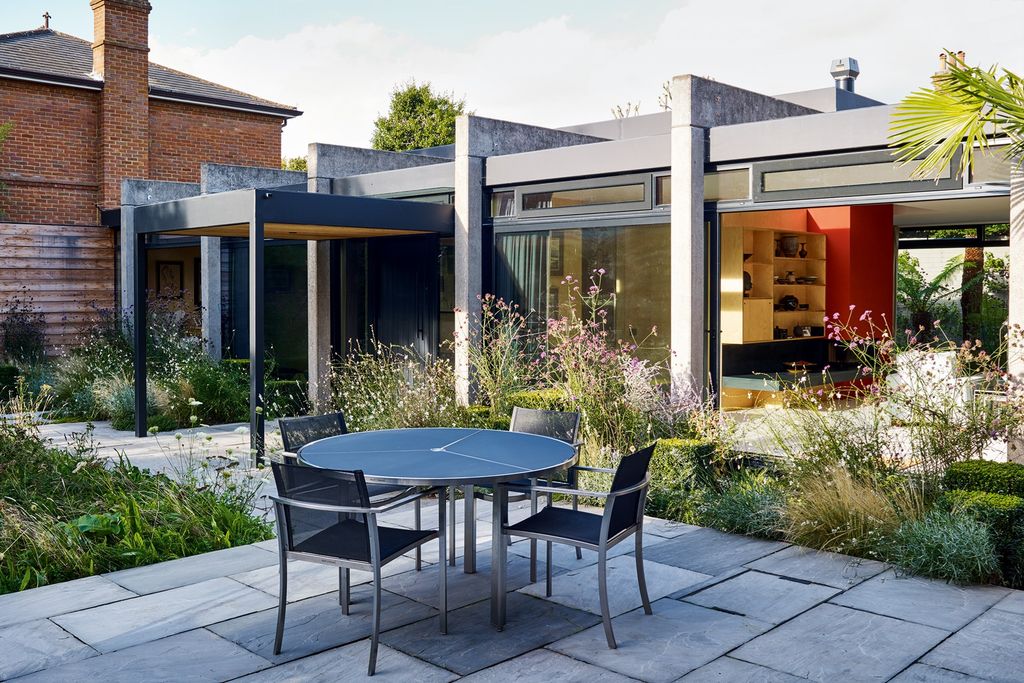
The work that ensued was extensive. A 'dark, ugly and badly built' extension housing a single garage and the main bedroom and dressing room were immediately torn down, leaving the original rectangular house. This itself was completely gutted, while a new extension, with a large kitchen and entertaining area, spare bedroom and utility room, was added, creating an L-shape footprint. While its shape and proportions and the use of glass are all in keeping with the rest of the house, the extension has not been built to blend seamlessly with the original. Instead, it is clad in Siberian larch, marking it out clearly as a new addition.
'I wanted that feeling that you could walk right through the house,' Adam explains. Enormous panes of glass slide open allowing you to walk from the front courtyard through the sitting room and into the back garden. There are pocket doors throughout, which are rarely closed, making the entire house essentially open plan. The layout totally changed, with five small bedrooms replaced by only three.
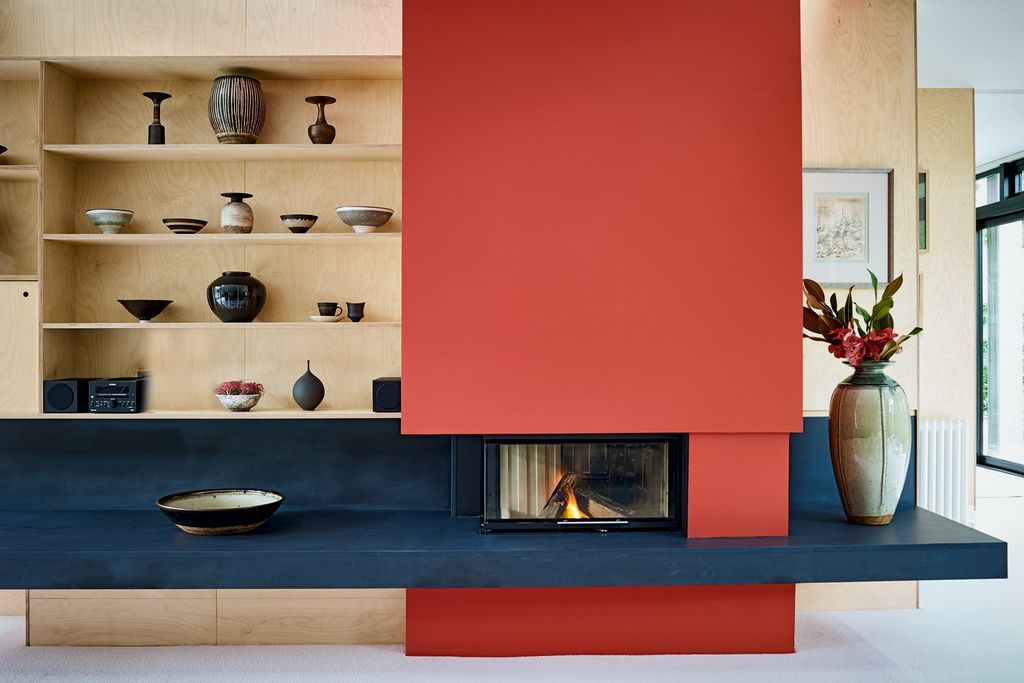
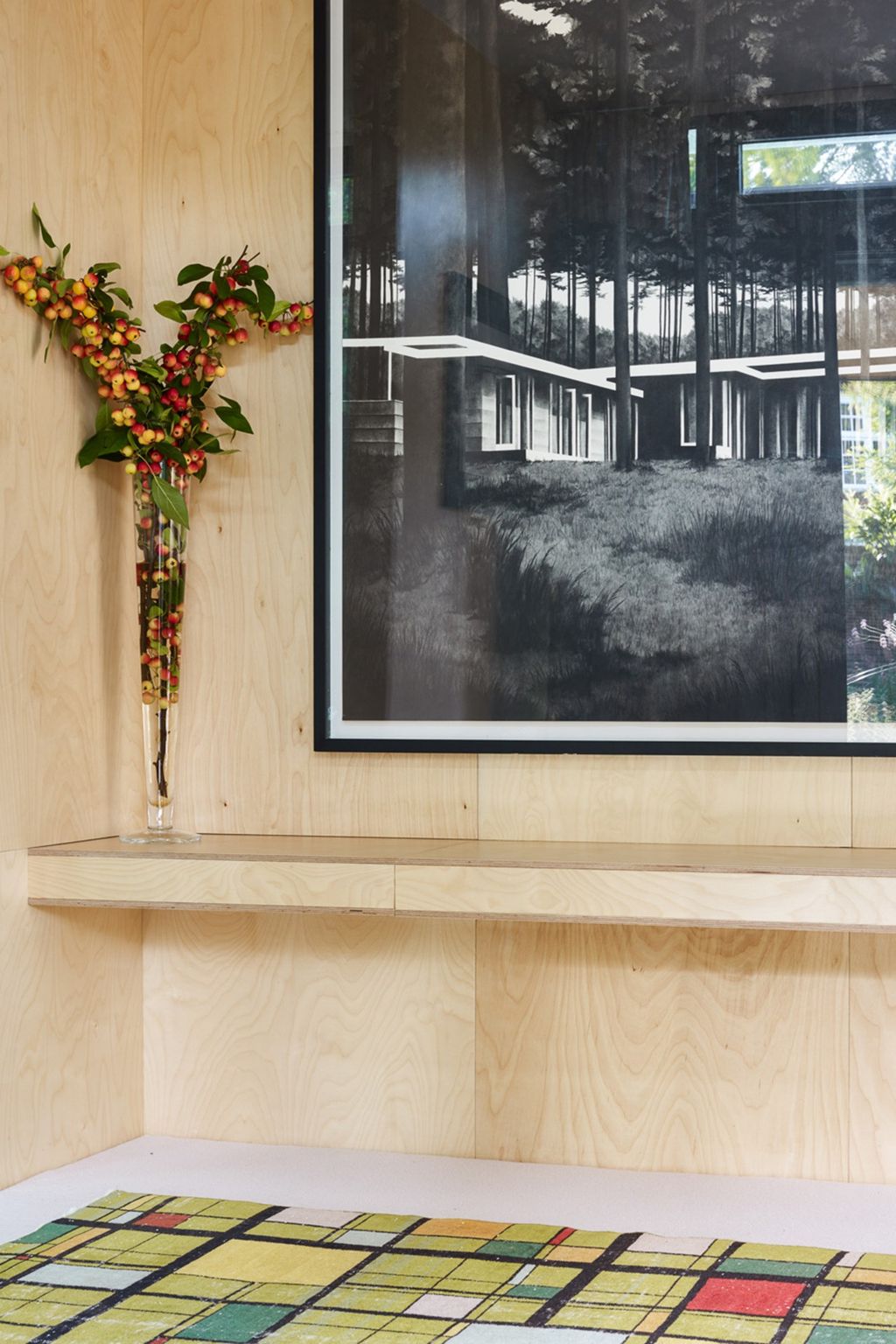
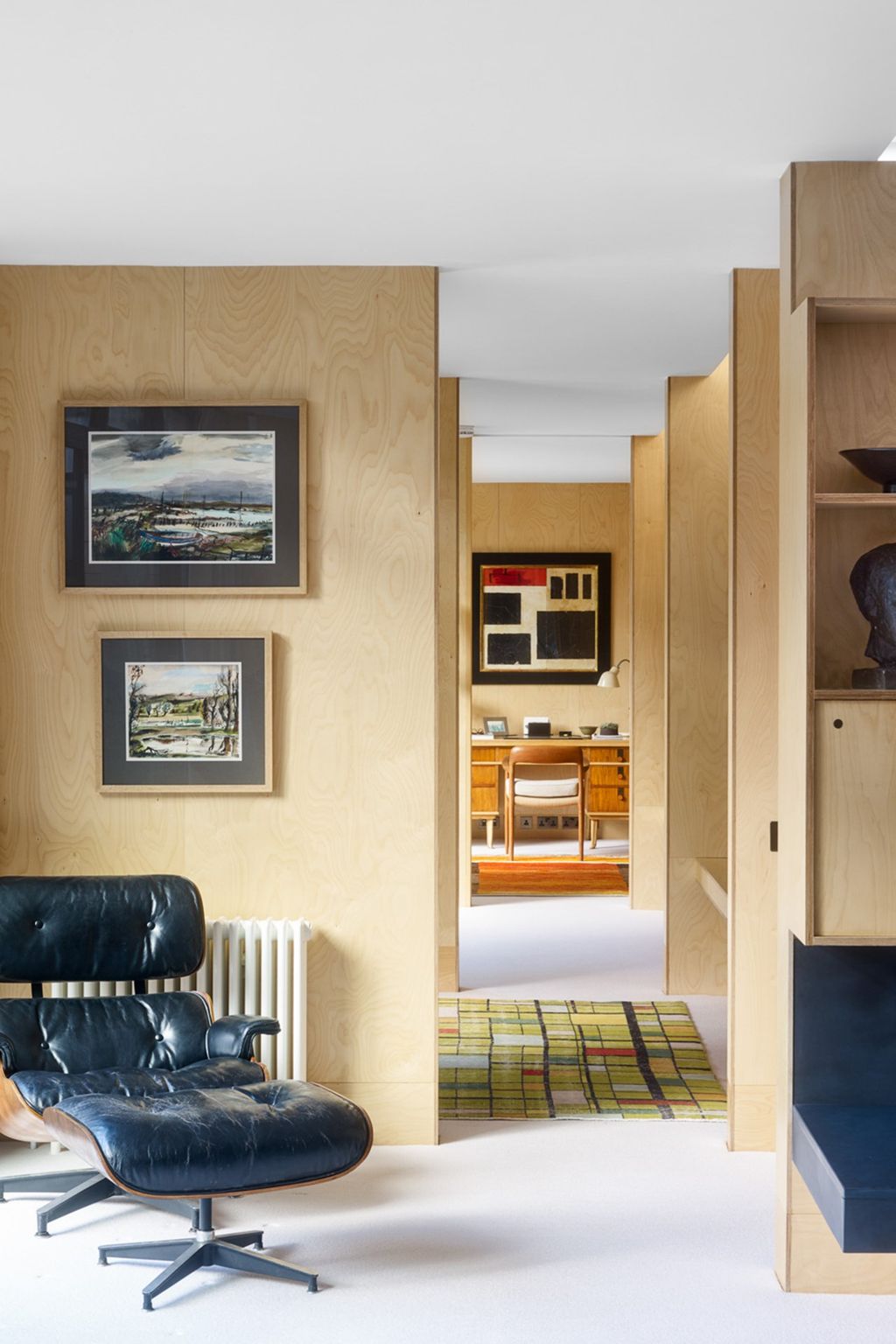
Where interior walls are not glass, they are mostly clad in birch plywood. 'The architect had wanted to use some expensive veneer panelling. We ended up using cheap builder's ply, and oiling and finishing it properly,' he explains with satisfaction. This material has also been used to make the kitchen cabinets, as well as copious shelving units. Filling most of these is Adam's collection of pots, which includes pieces by Lucy Rie and Hans Coper, as well as a few he has made himself.
At the suggestion that clients of Claremont might be surprised to see its chairman's own house so determinedly modern, Adam sighs. 'I sometimes think of Claremont as an old galleon in full sail. It's wonderful, but it is often perceived as very traditional,' he says. 'I wanted to show Claremont in a different way.' Every fabric used in the house is Claremont. The velvety textile that covers the kitchen sofas is the company's popular 'Cunard' weave, while the curtains here are in a fabric from the Warner archive. The ones in the sitting room and main bedroom are made from a matt linen - Claremont's first - which has just been launched. 'That's my plug for Claremont done,' he says with a smile.
In truth, the house is far more than just a showcase for the company's fabrics. Its evolution has been a deeply personal and ambitious project, which finds its roots in Huddersfield in the Seventies. Some things are truly worth waiting for. 'I've always known that this is what I wanted to have,' he says. 'I just didn't expect to find it here'
 Jason Ingram1/15
The exterior of the extension marks it out from the rest of the house, with its Siberian larch cladding. It includes the kitchen, which leads out to the garden, designed by Town & Country Gardens.
 Jason Ingram2/15
Built-in shelving made of birch plywood displays Adam's collection of pots. The orange paint was specially mixed to match a Claremont fabric.
 Jason Ingram3/15
A patio outside the house.
 Jason Ingram4/15
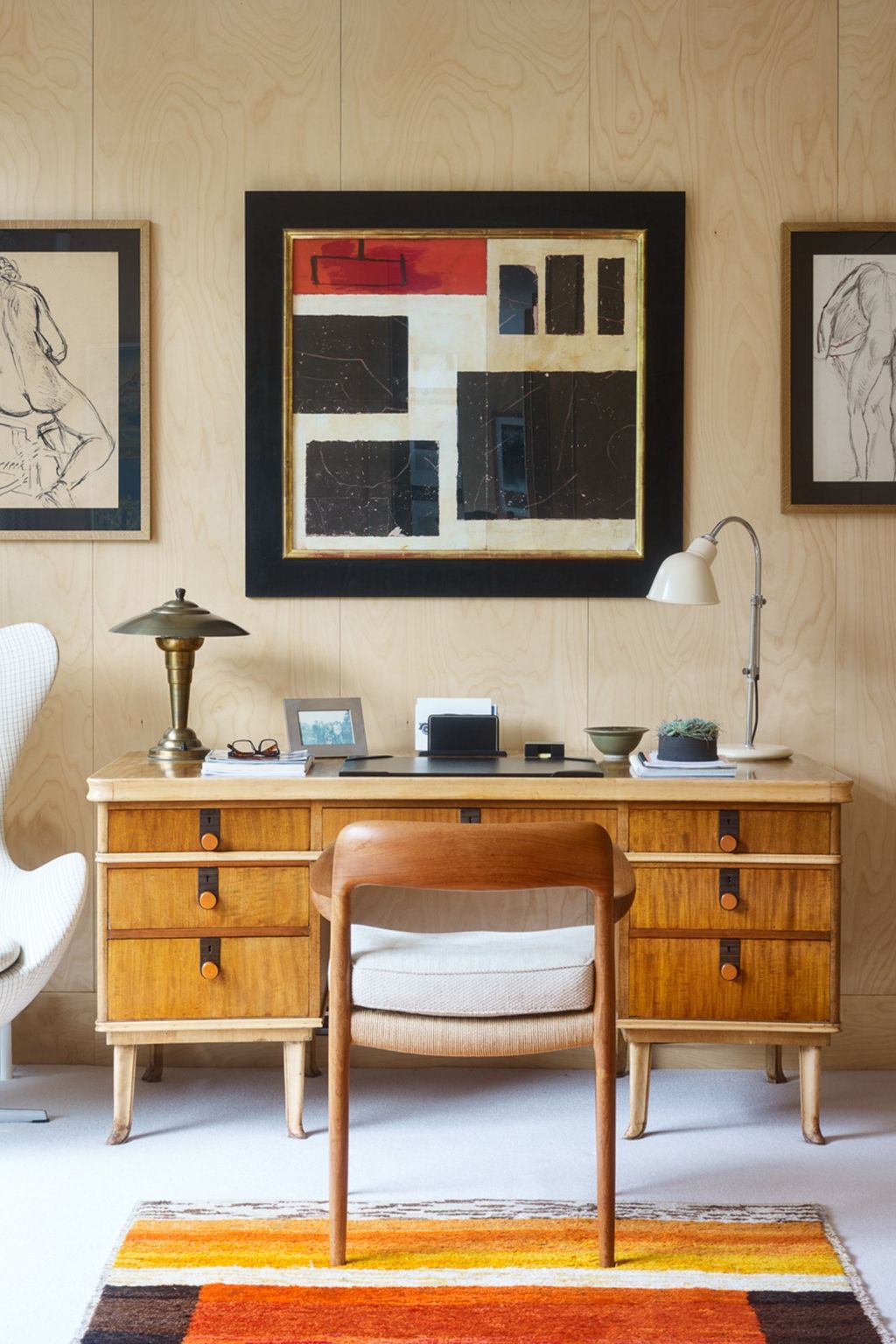
A brightly coloured wooden desk brings out the room's colour.


 Jason Ingram5/15
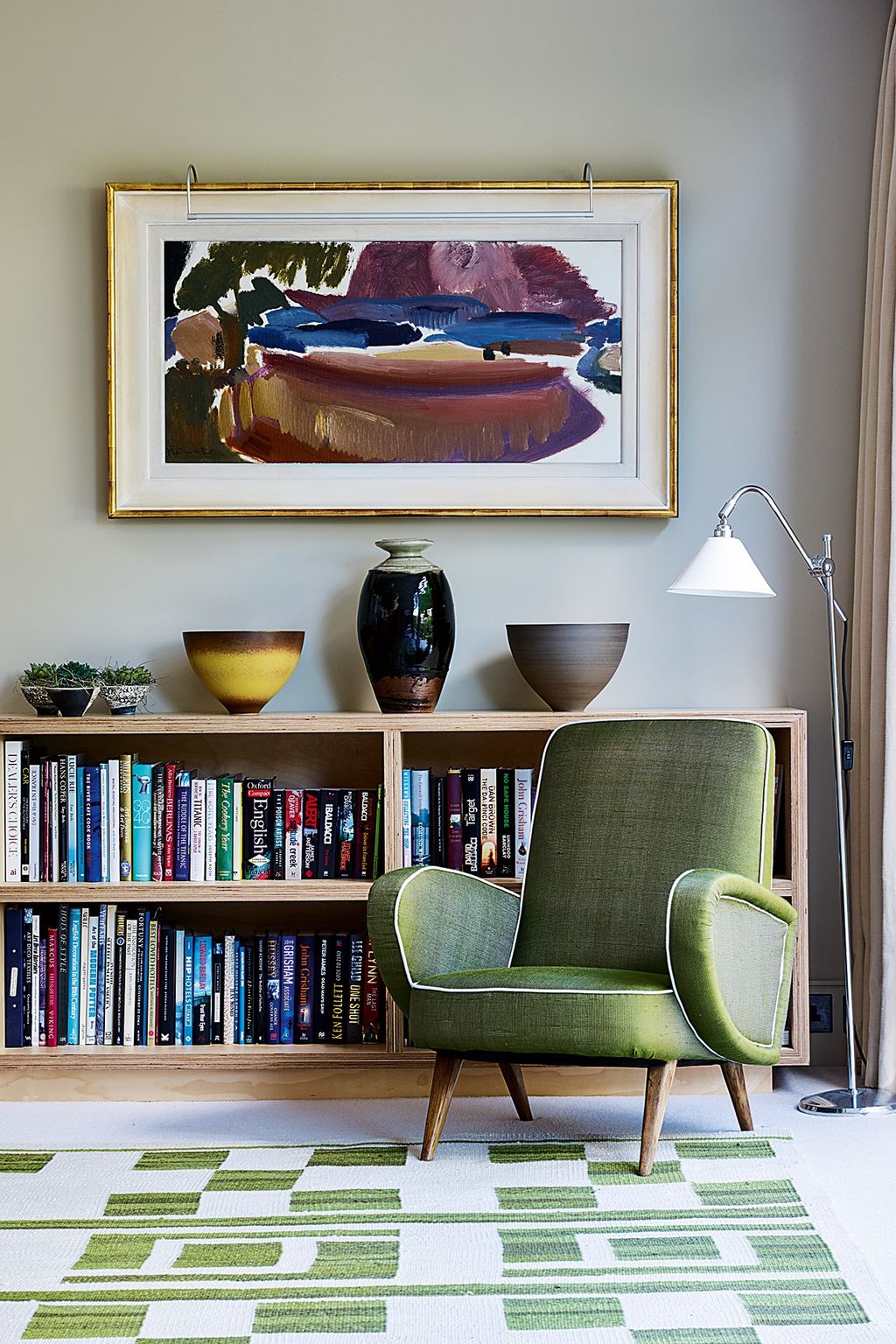
The armchair, bought at a mid-century show at Lord's cricket ground, is covered in Claremont's 'Drap de Soie'.
 Jason Ingram6/15
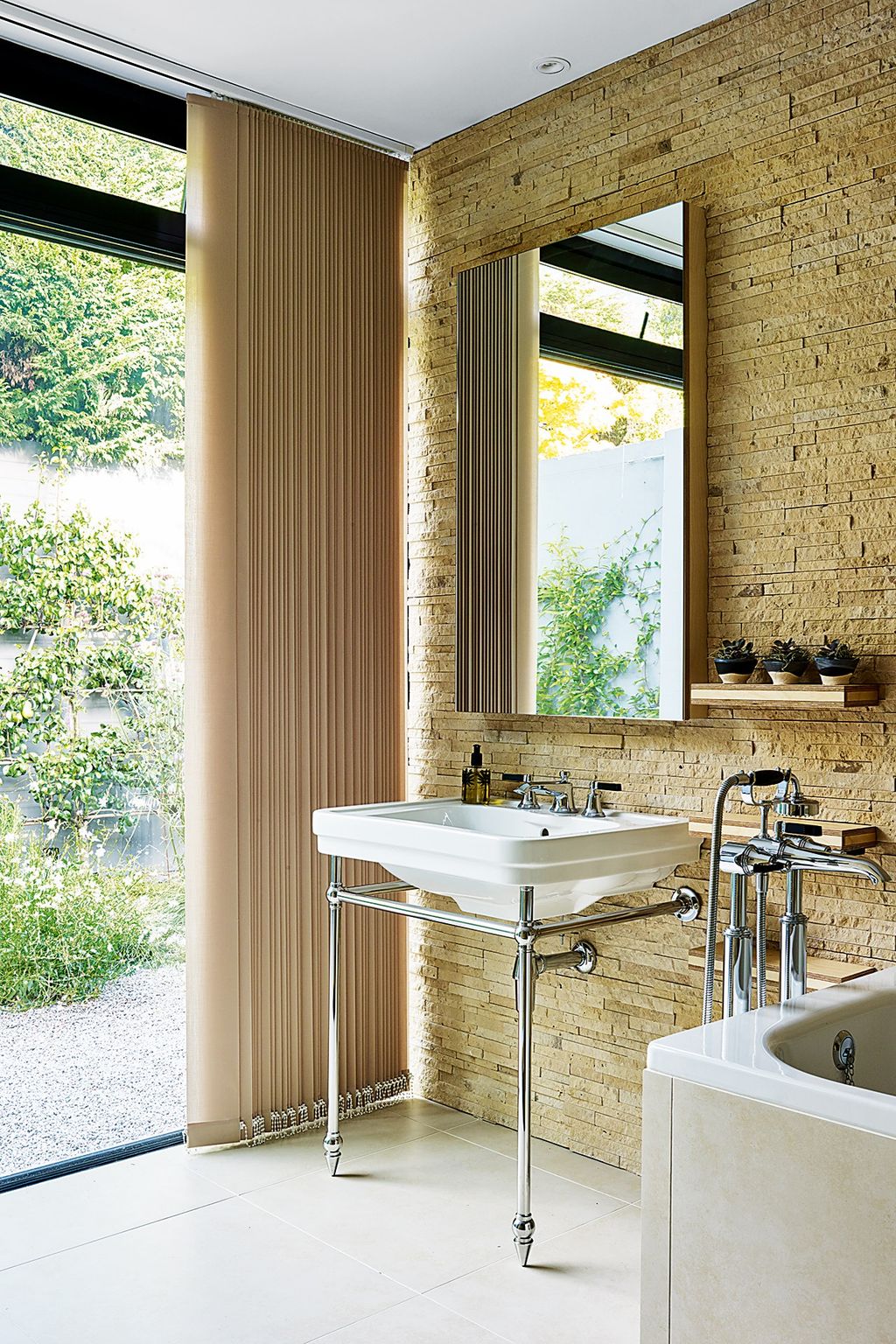
A mirror made by the building company, Horizon Construction, hangs on a stone wall in the bathroom.
 Jason Ingram7/15
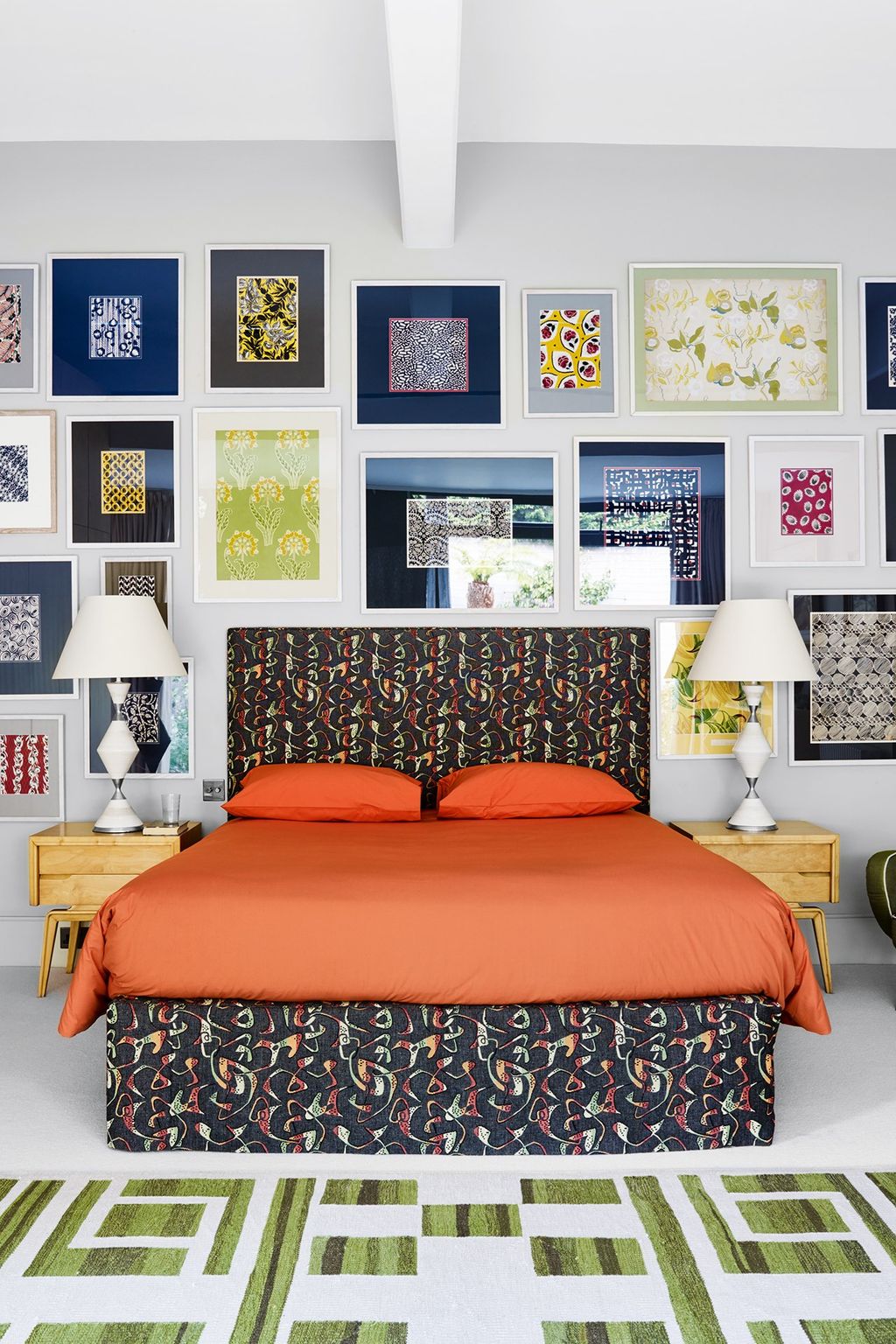
Above the bed hangs a framed assortment of original textile designs, mostly by Louis Lang and from the archive of a silk weaver called Bianchini-Férier. There are also three original Thirties designs by English designers, which Adam found in a junk shop. The bed is upholstered in 'Toile Miro' from Claremont.
 Jason Ingram8/15
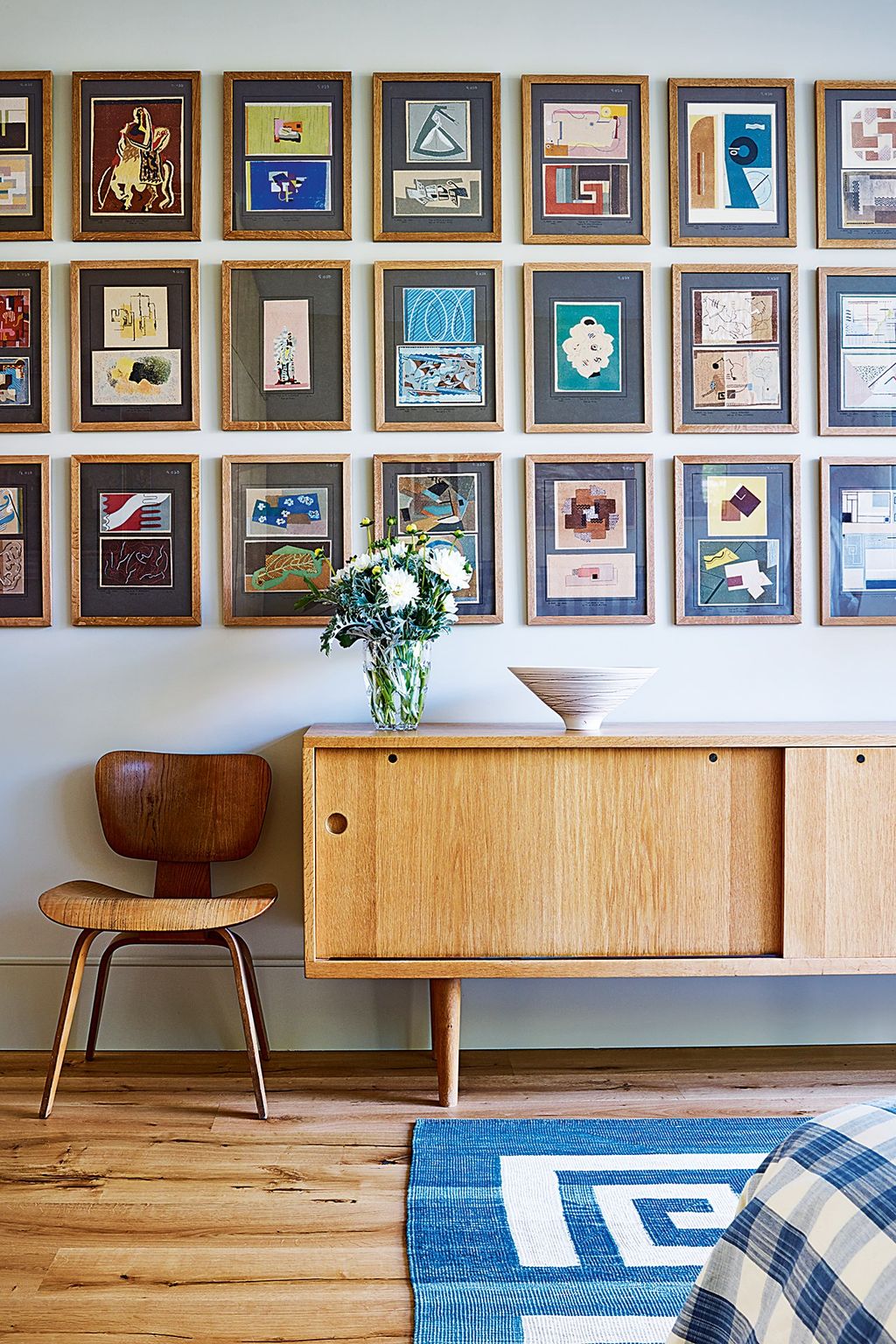
Modernist pieces, including a Charles Eames side chair and a Hans Wegner sideboard, and a geometric rug bought from Robert Stephenson furnish the spare bedroom.


 Jason Ingram9/15
Hall | Adam Sykes' London House
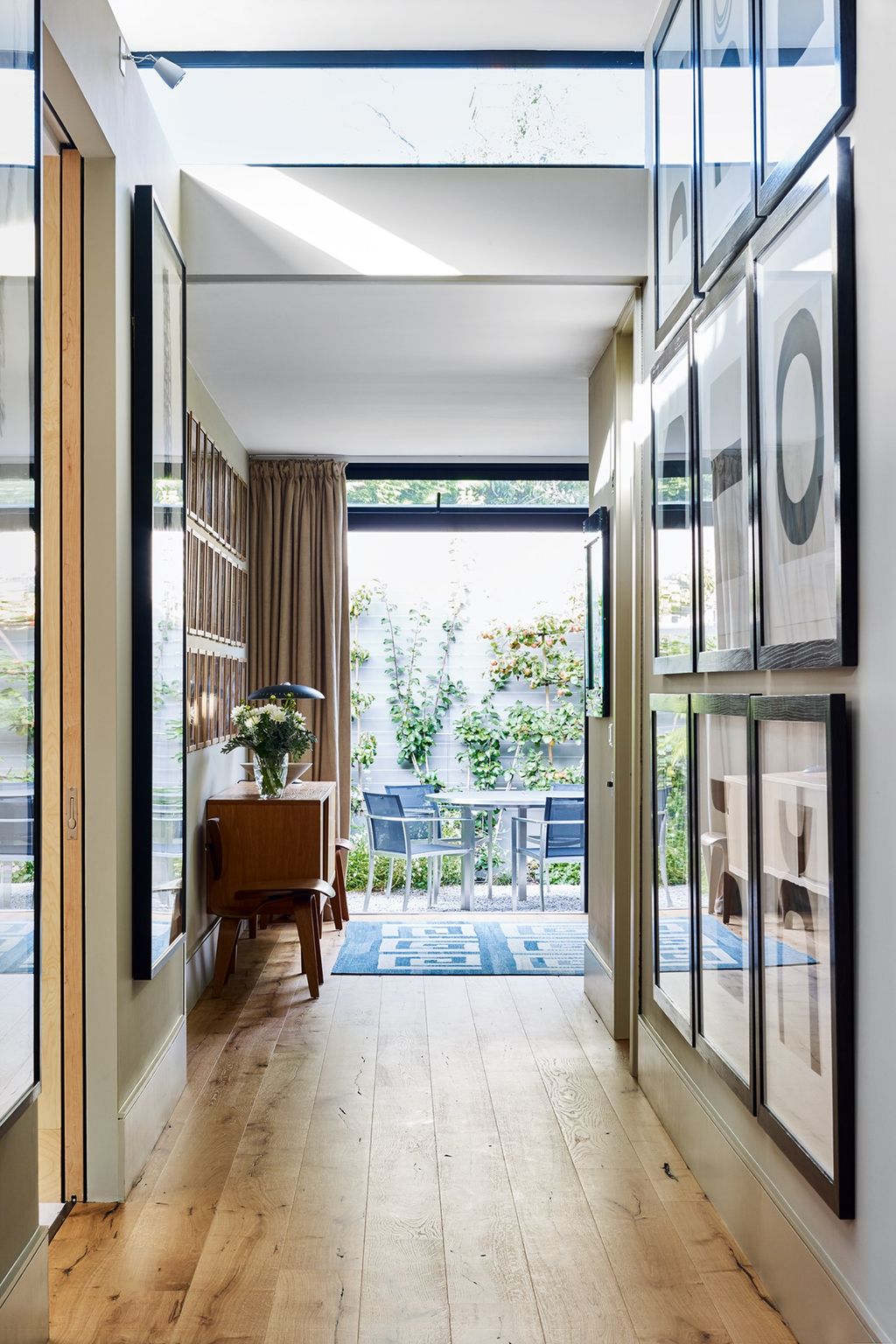
The hall in the new extension leads from the kitchen to a spare bedroom and out to the garden. Black and white artworks by Jasia Szerszynska line a wall.
 Jason Ingram10/15
A table and chairs from Encompass Furniture reflect the steel structure of the house.
 Jason Ingram11/15
A wall-fixture holding flowers and a photograph decorate the hall.
 Jason Ingram12/15
A 'Lounge Chair and Ottoman' by Charles Eames, bought in Brooklyn, sits beside a corridor leading from the sitting room, past the front door, to a study.


 Jason Ingram13/15
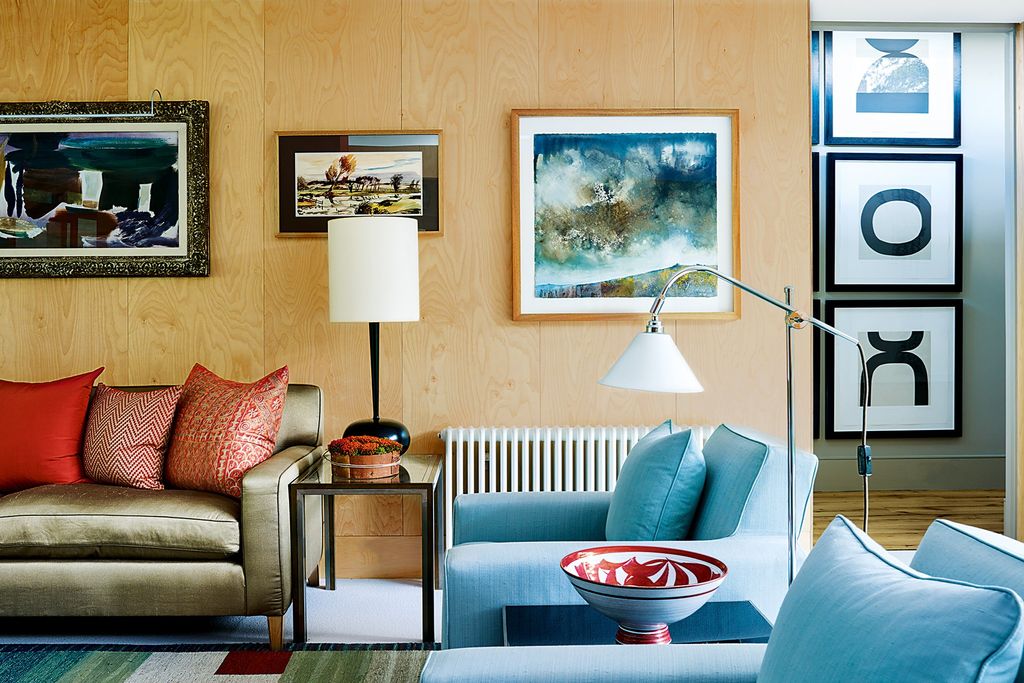
Claremont's 'Milano' linen covers two armchairs, with artwork by Ivon Hitchens, Rowland Suddaby and Stewart Edmondson on the walls.
 Jason Ingram14/15
A u-shaped sitting area for dining.
 Jason Ingram15/15
Seating in the kitchen is covered in Claremont's 'Cunard' weave in the ivory colourway; the mid-century Scandinavian rug is from Robert Stephenson.


