
Arabella Lennox-Boyd's magical garden is a rare and worthy tribute to a lifetime's work

Gresgarth Hall in Lancashire is the most magical place. Created over a period of nearly 40 years by its owner, Arabella Lennox-Boyd, this is a garden to get lost in, whether you are sitting and dreaming by the dancing river, wandering in the dappled shade of the arboretum or looking at inspired planting combinations in the formal borders. A garden like this is a rare thing, combining both design and horticultural excellence with a passion for plants that can only come from many years' experience.
Although you absolutely would not know it from her sprightly demeanour, Arabella is in her seventies and still works full-time, as well as finding time to go on intrepid plant-hunting trips, most recently to Kyrgyzstan and Kazakhstan. Having begun her career designing gardens for friends, she went on to study landscape design in the Seventies and since then has enjoyed a burgeoning career in garden design, with high-profile clients ranging from Sting to the late Duke of Westminster.
MAY WE SUGGEST: A captivating garden grown from a few acres of farmland
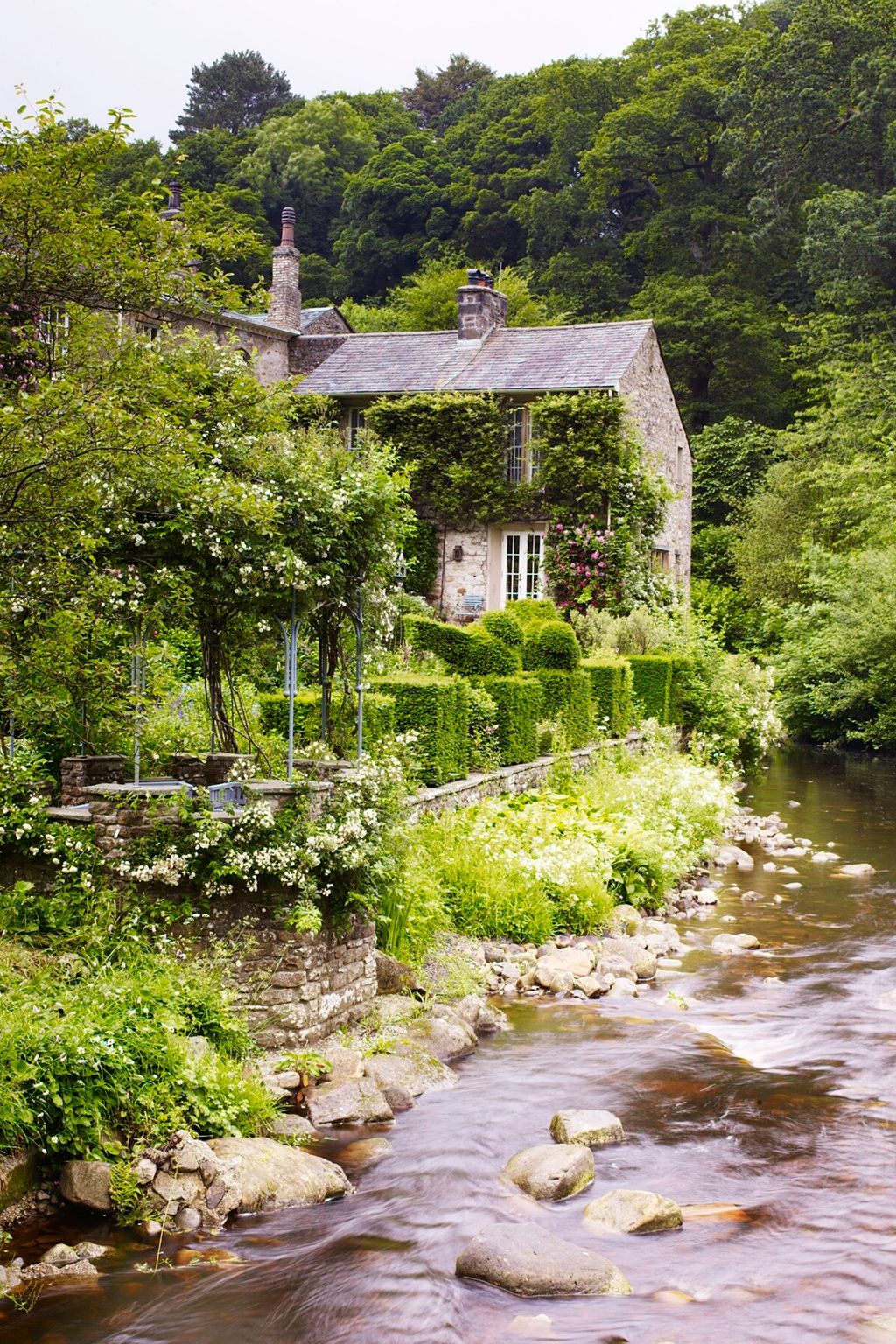
Her own garden is a worthy tribute to a lifetime's work. Spanning roughly 10 acres, it is set in an enchanting steep-sided valley cut by a tributary of the River Lune called Artle Beck. It is a garden of marked contrasts, with formal terraces and garden rooms around the house giving way to wilder areas in the further reaches of the garden, including an expanding arboretum with rare specimens of trees and shrubs. But it wasn't always so. 'It was like Wuthering Heights,' says Arabella, describing her first impressions of Gresgarth Hall when she and her husband arrived in 1978.
Mark Lennox-Boyd, then an MP, had just won the local parliamentary seat of Morecambe and Lonsdale and Arabella, Italian by birth, was less than convinced about the dour, grey-stone house that Mark had found for them to live in. 'It was grim and depressing,' she says. 'The garden had been ignored because the house had been let for many years. It was overgrown and dark - very claustrophobic - and there was very little garden around the house; it was all on a slope.'
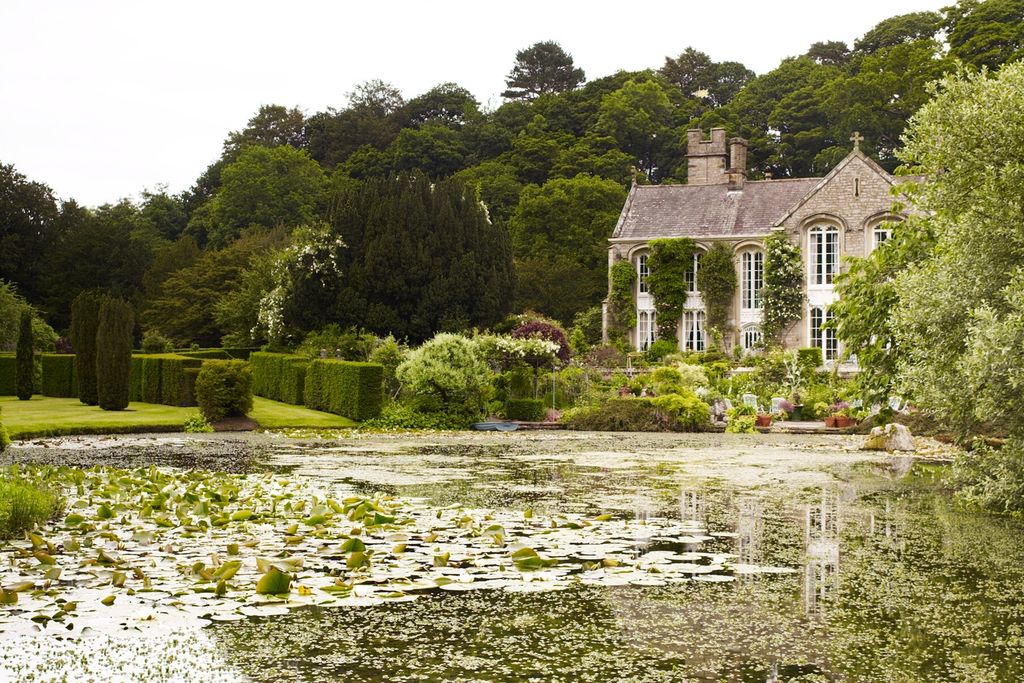
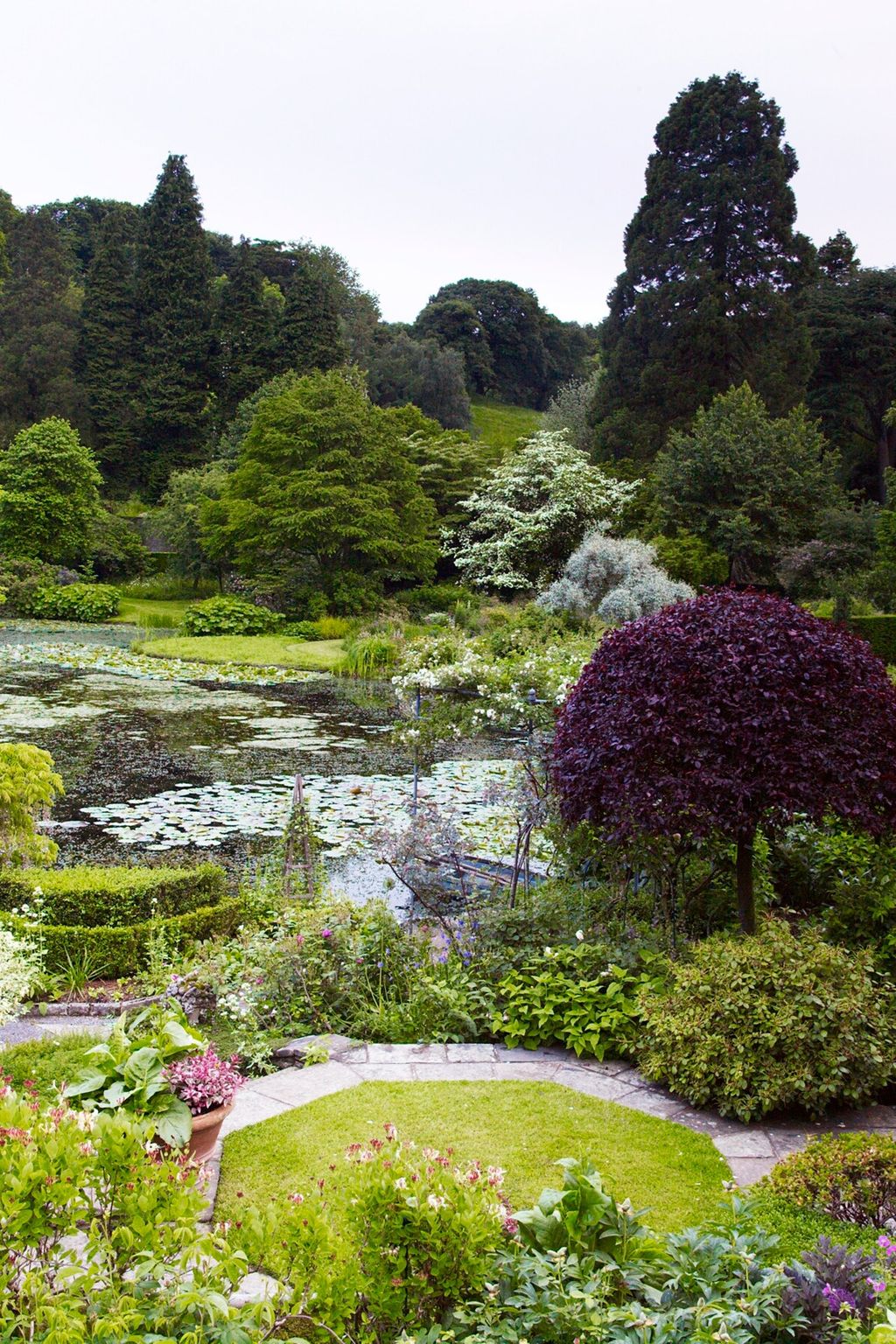
Once Arabella had come to terms with the place, she set about redesigning the garden, starting with the flower borders around the house. 'It was like a jigsaw puzzle,' she says. 'I was limited by the space, so I played around with heights and levels, dividing it up into terraces and extending the lake.' The lake is a crucial part of the design, bouncing light into the garden and reflecting the sky and trees, opening up the landscape. Unusual in its proximity to the house - literally a few steps down the terrace and you are at the water's edge - it curves away into the folds of the garden, 'like a comma', as if the river had overflowed into the garden, says Arabella.
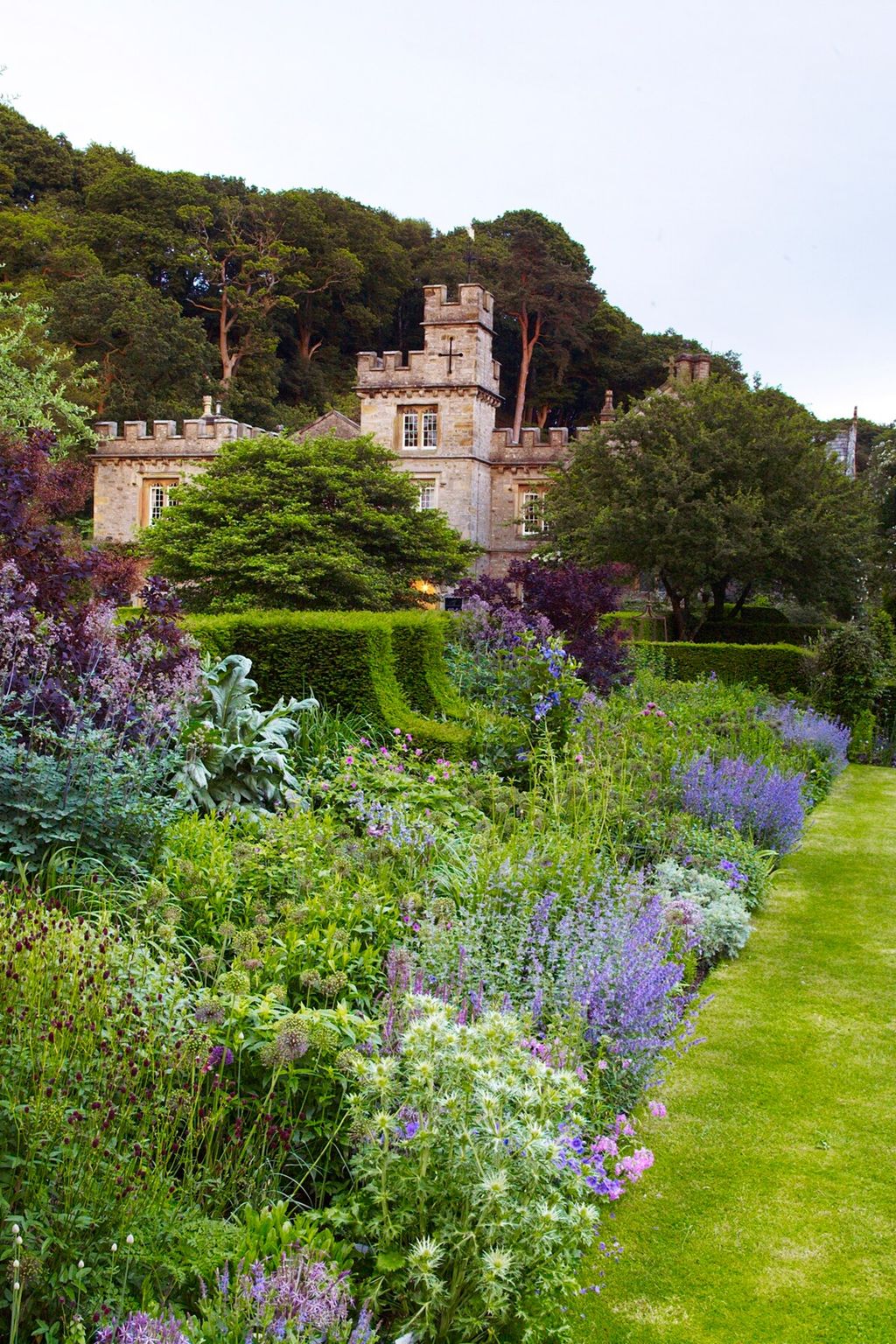
She is known for her beautiful herbaceous borders, often colour-themed, and those at Gresgarth are typical of her style. Overflowing with the flowers she loves, from roses to hostas, they demonstrate her eye for colour and form. 'I have never done planting plans for this garden,' she insists. 'I have to be so precise and professional in all my work, but I prefer to be more relaxed here.' The areas around the house are divided up into a series of rooms with a hedge structure that grew more complex as time went on, partly installed for shelter from the cold winds that whip through the valley in winter. Yew-enclosed antechambers revealing deep, densely planted borders contrast with a large semi-circular grassy space edging the lake - a full stop to the lake's comma. 'I don't like gardens that immediately present themselves to you,' says Arabella. 'I want to walk through different spaces, with the vistas always changing. There has to be a sense of mystery.'
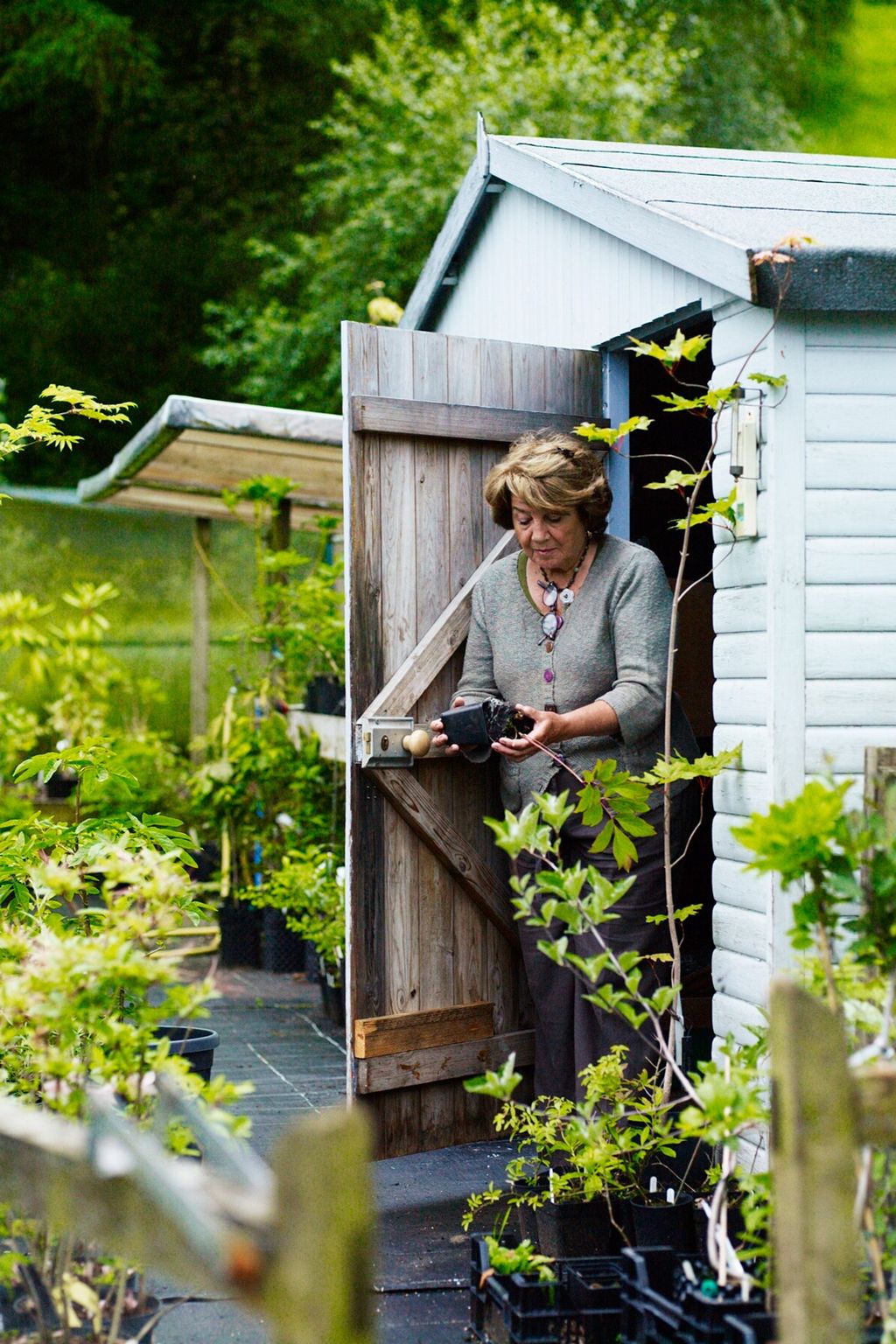
If the herbaceous borders provide the visual drama in this garden, it is the hillside arboretum and riverside plantings that reflect Arabella's true passion: rare trees and shrubs. A long-standing member of the RHS Woody Plant Committee, she is part of a network of collectors and plantspeople who exchange ideas, knowledge and seeds, so she is able to grow plants that are rarely seen elsewhere in the UK. 'Growing things from seed is my passion,' she says. 'I particularly like to grow shrubs from seed because it's so difficult to buy rare and interesting specimens in this country. My one criterion is that they have to be beautiful. I grow things I love; I'm not academic about it.' When she is at Gresgarth, usually Thursday to Sunday, she retreats to her potting shed, puts the radio on and works through her list of tasks. She points out a tree peony from Italy, an oak seedling found in Japan and rare species of magnolia, camellia and cornus. 'They all have a memory attached to them, so I can never throw anything away,' she says.
MAY WE SUGGEST: The fascinating story of the gardens of St Giles house
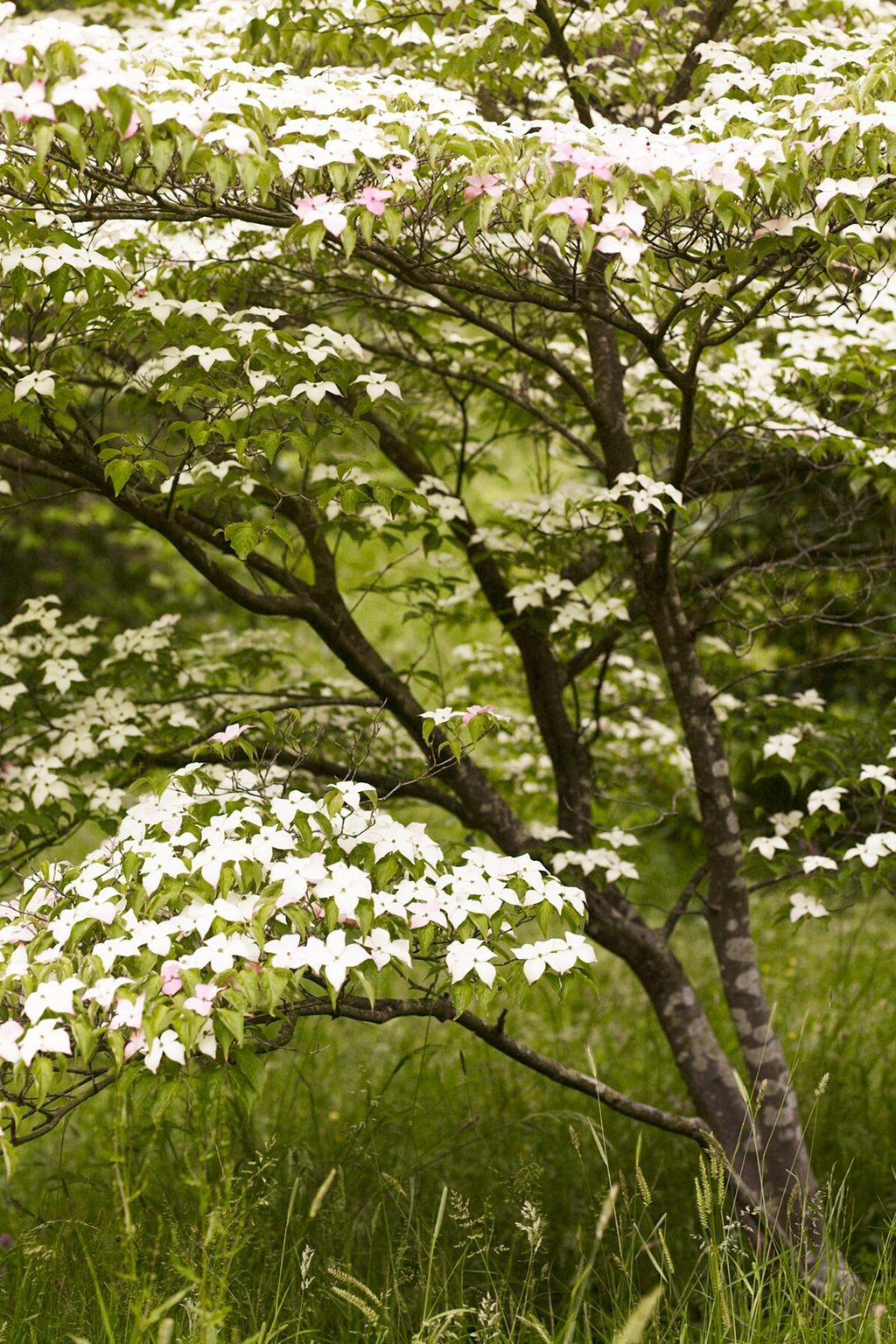
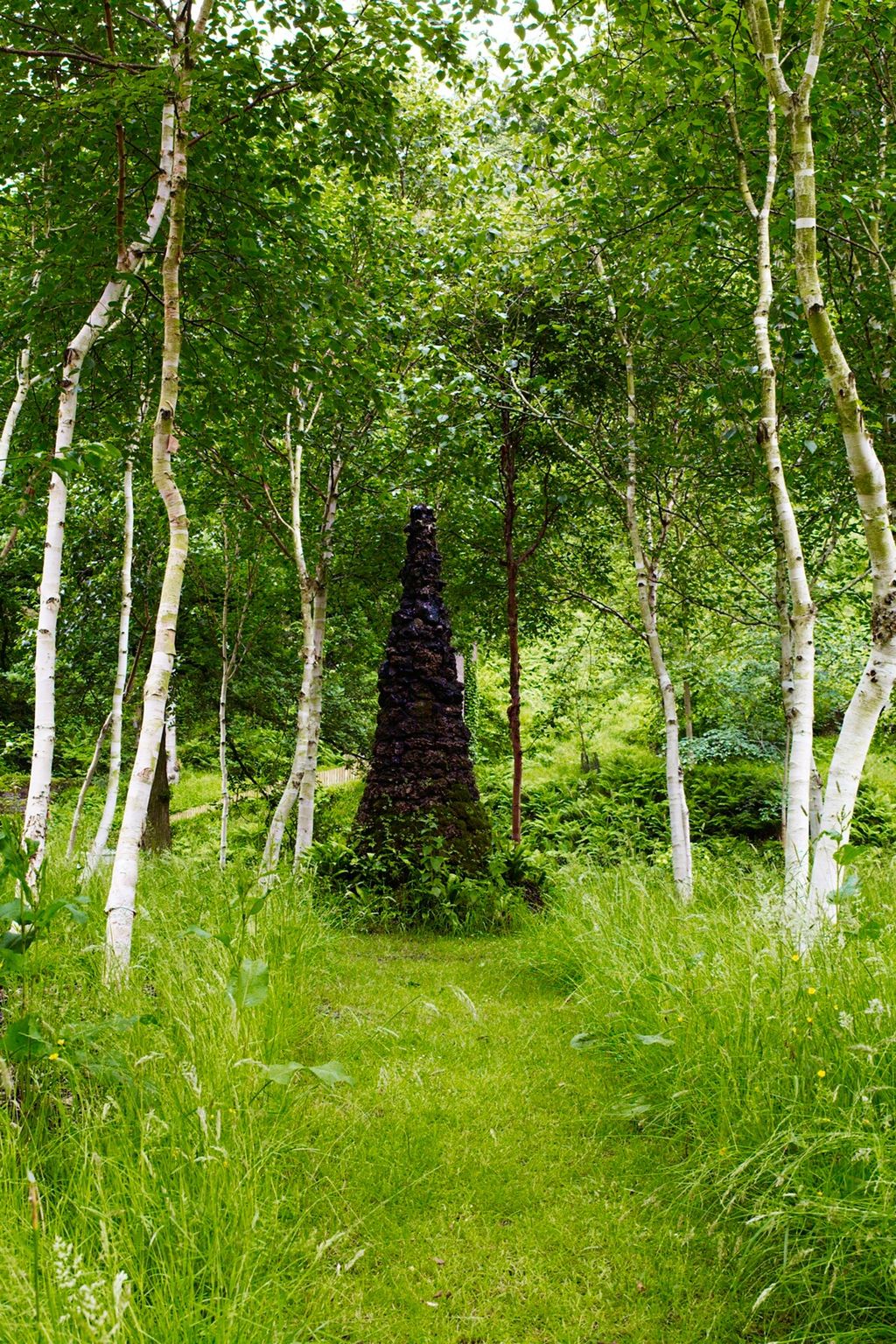
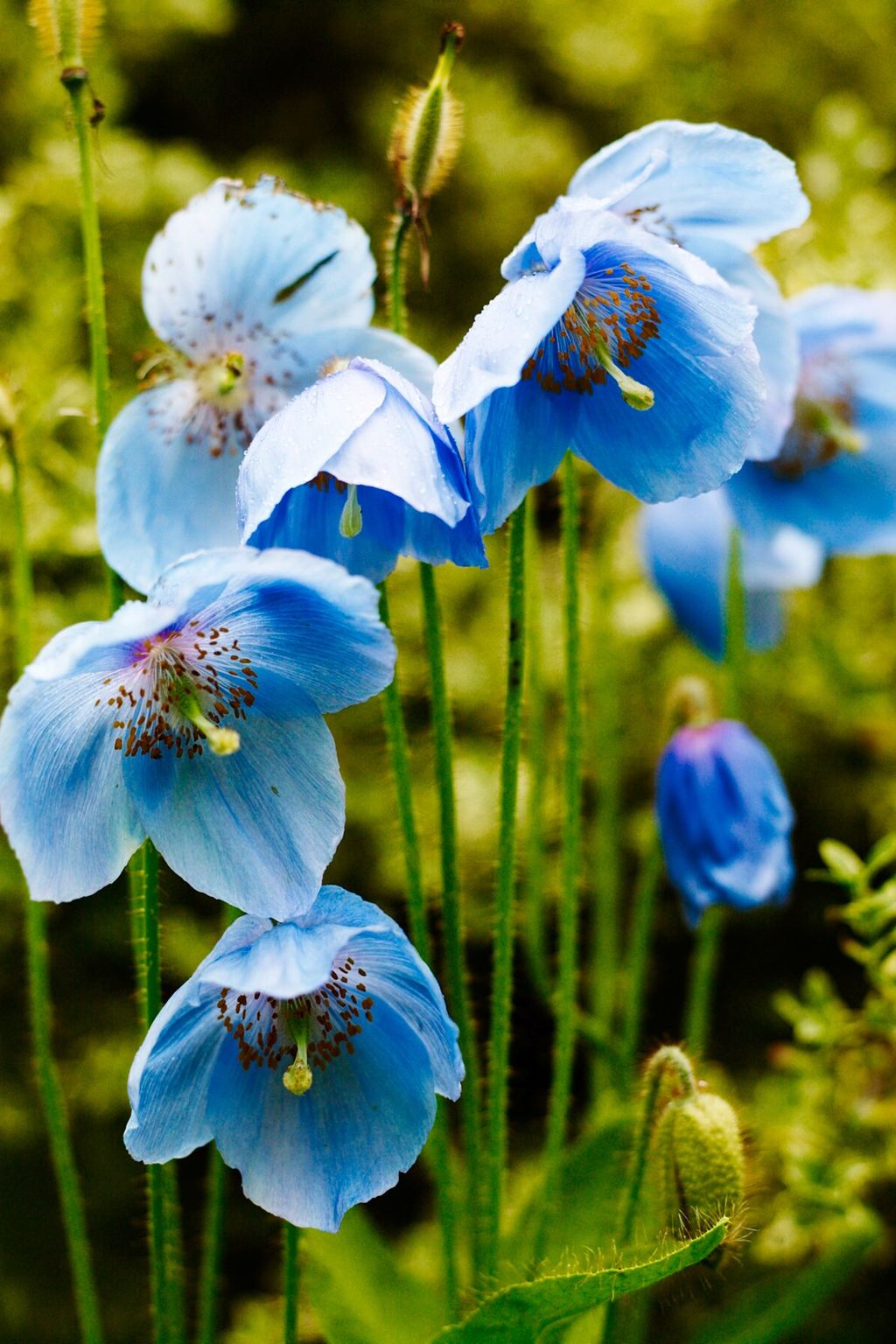
The valley slopes on both sides of the river have been planted with over 7,000 trees and shrubs, with more being propagated and planted out each year. Having cleared the slopes and planted the arboretum, Arabella's next task, as things get bigger, is to ensure that there are proper vistas back down to the house and garden, and to the countryside beyond. On the other side of the river, there are more surprises: a wild, grassy area with a beautiful handkerchief tree (Davidia involucrata), flowering dogwoods in white and pink, and delicate Stewartia pseudocamellia, a small tree from Asia with summer flowers and wonderful autumn foliage. A newly planted grove of silver birch with a central conical sculpture sits on a little promontory above the river and, round another corner, a nursery bed of china-blue meconopsis bursts into view. And so it goes on, with something interesting to see in every season.
Arabella has gardeners and volunteers to help her run this labour-intensive garden, but the vision is hers alone and she rarely drops a ball. 'I never in my wildest dreams imagined I would have a garden on this scale,' she says. 'And to be honest, I wouldn't ever suggest anyone embarks on something like this. But I do love it, and I don't think I'll ever get to the stage of wanting to stop. It's an obsession'.
 Andrew Montgomery1/17
The view over the lake to the front of the house.
 Andrew Montgomery2/17
A view over the lake from the back of the house.
 Andrew Montgomery3/17
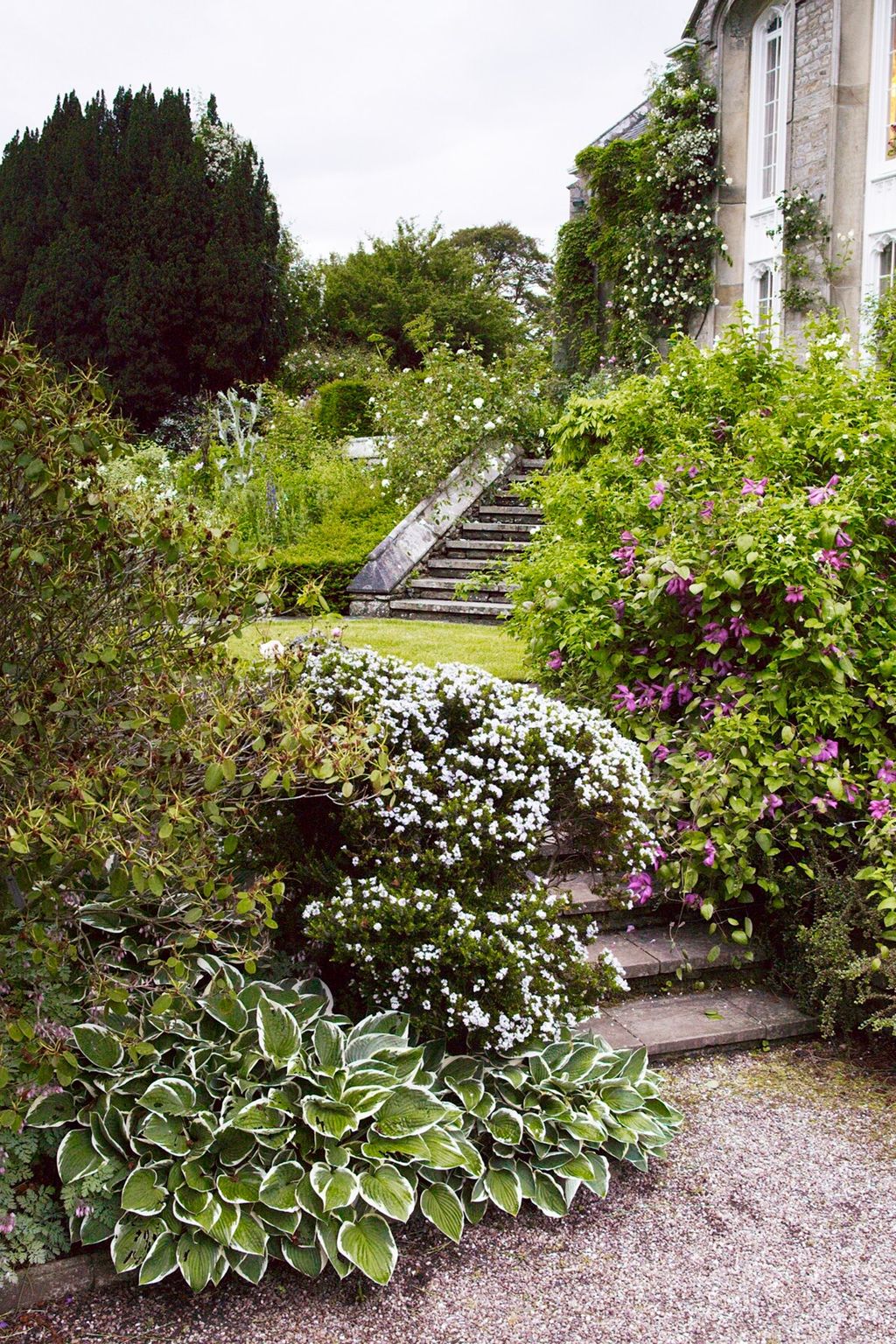
A series of steps leads down from the house to a terrace and the garden beyond.
 4/17
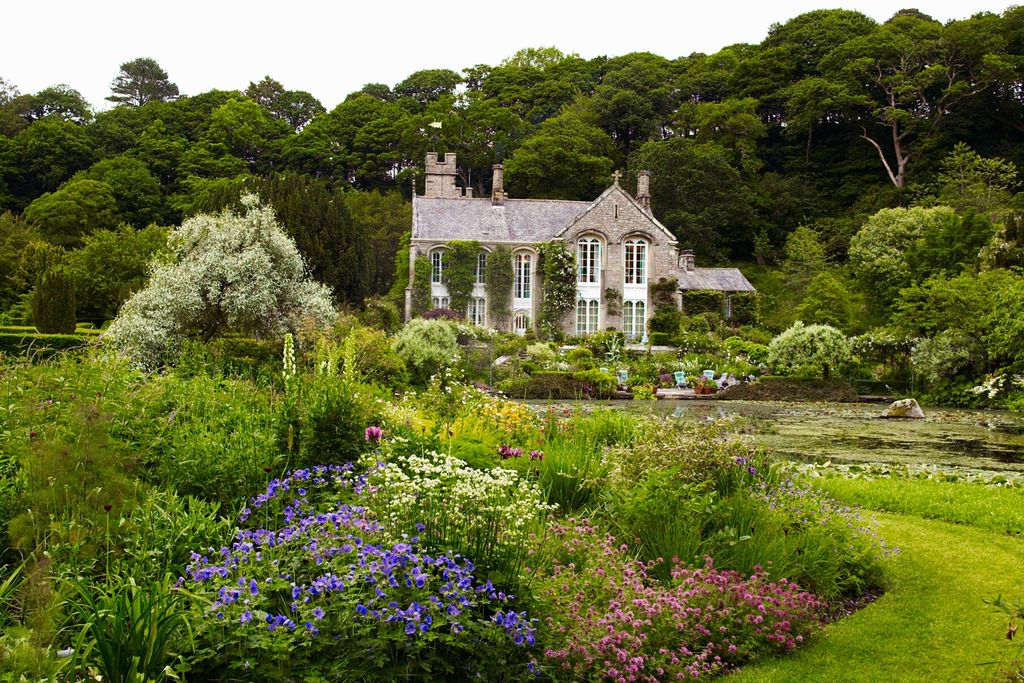
4/17Viewed from across the lake, the fourteenth-century house was remodelled in the Gothic style in the eighteenth century. Curving herbaceous borders are full of colour from spring through to autumn.


 Andrew Montgomery5/17
The castellated façade of the house is softened by deep borders divided by yew buttresses. Repeat plantings of salvia at the front of the border are echoed by purple thalictrum towards the back, and buttony sanguisorba.
 Andrew Montgomery6/17
Flowering trees add height and texture to the borders.
 Andrew Montgomery7/17
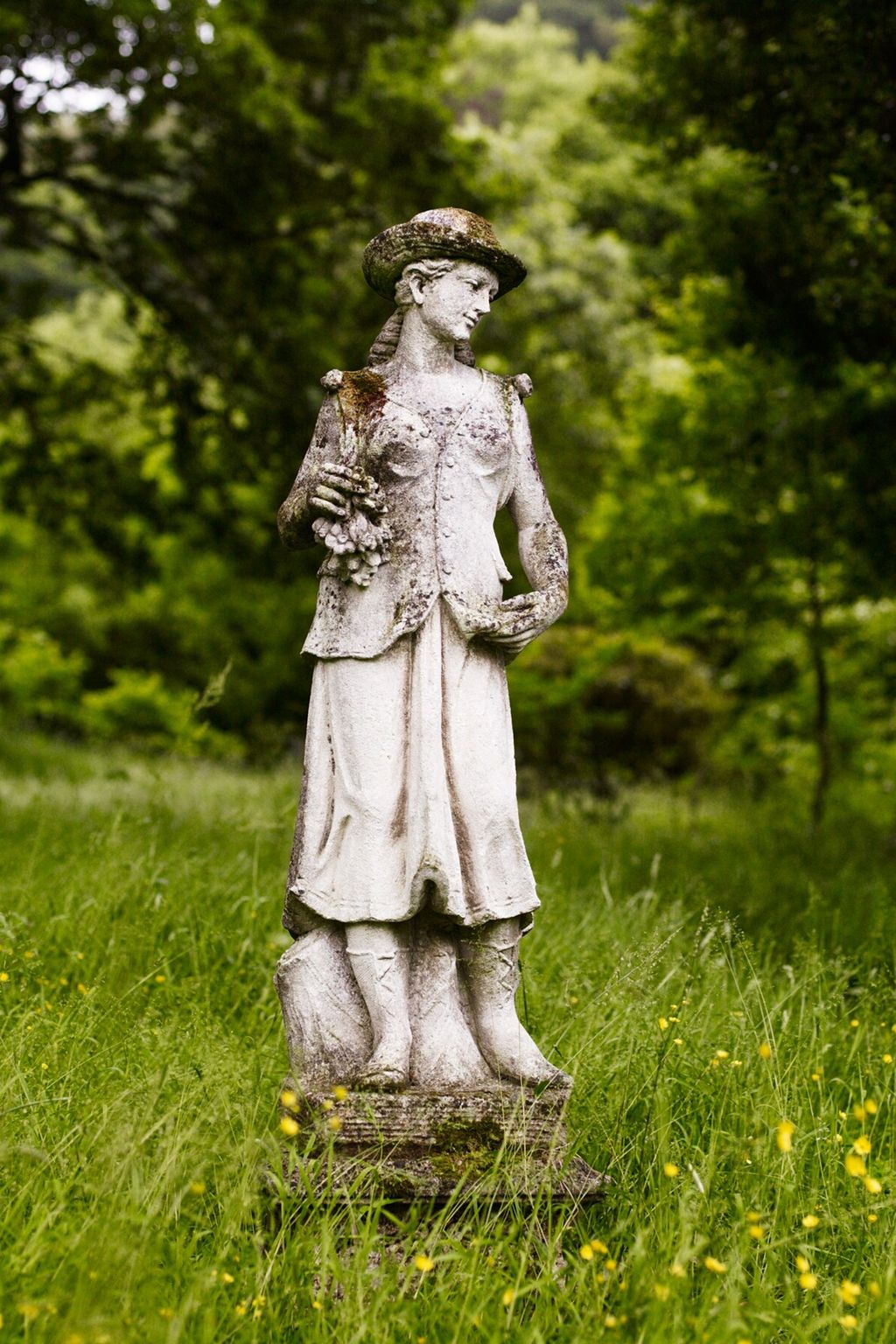
A statue on one of the lawns.
 Andrew Montgomery8/17
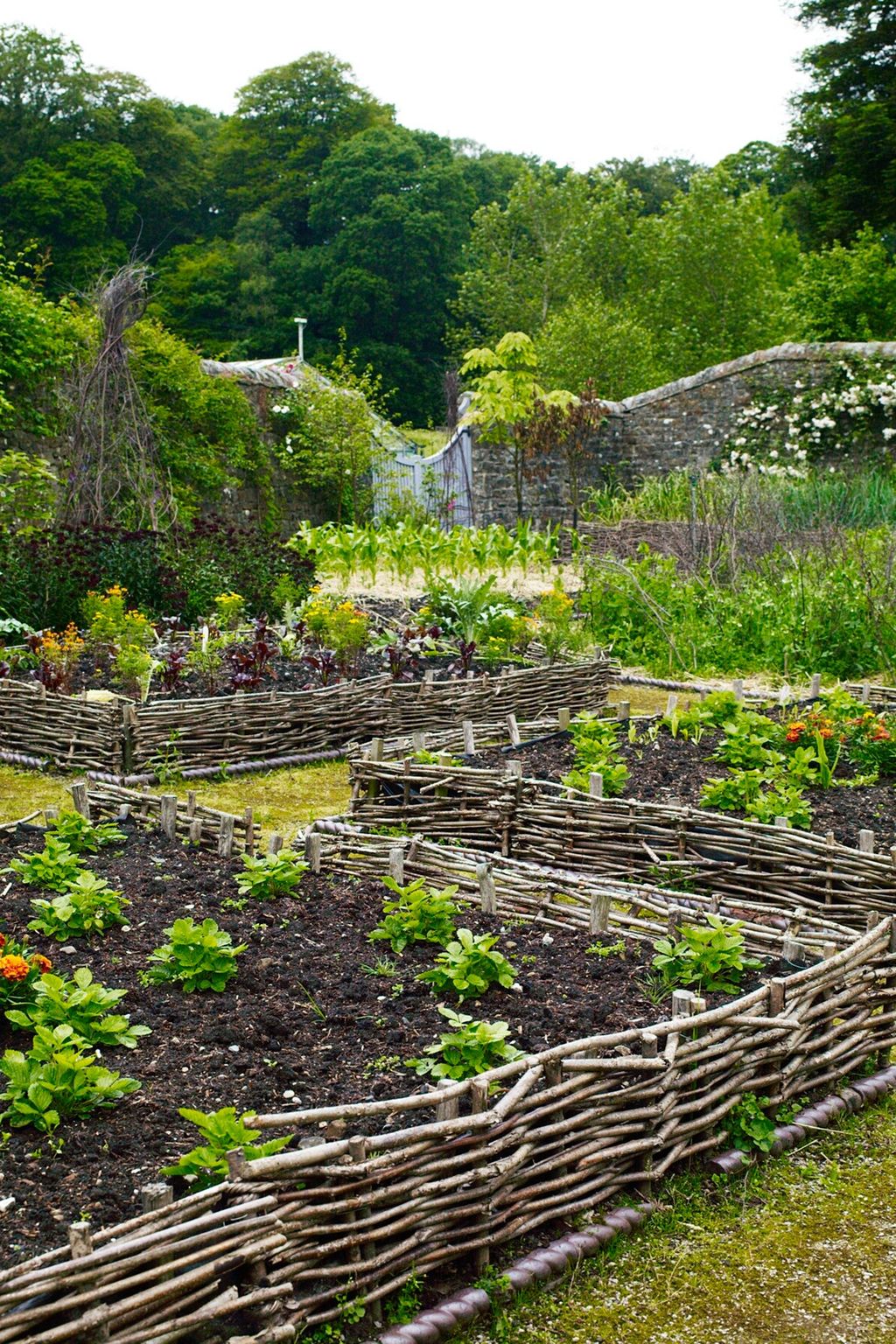
The planting area in a walled section of the garden.


 Andrew Montgomery9/17
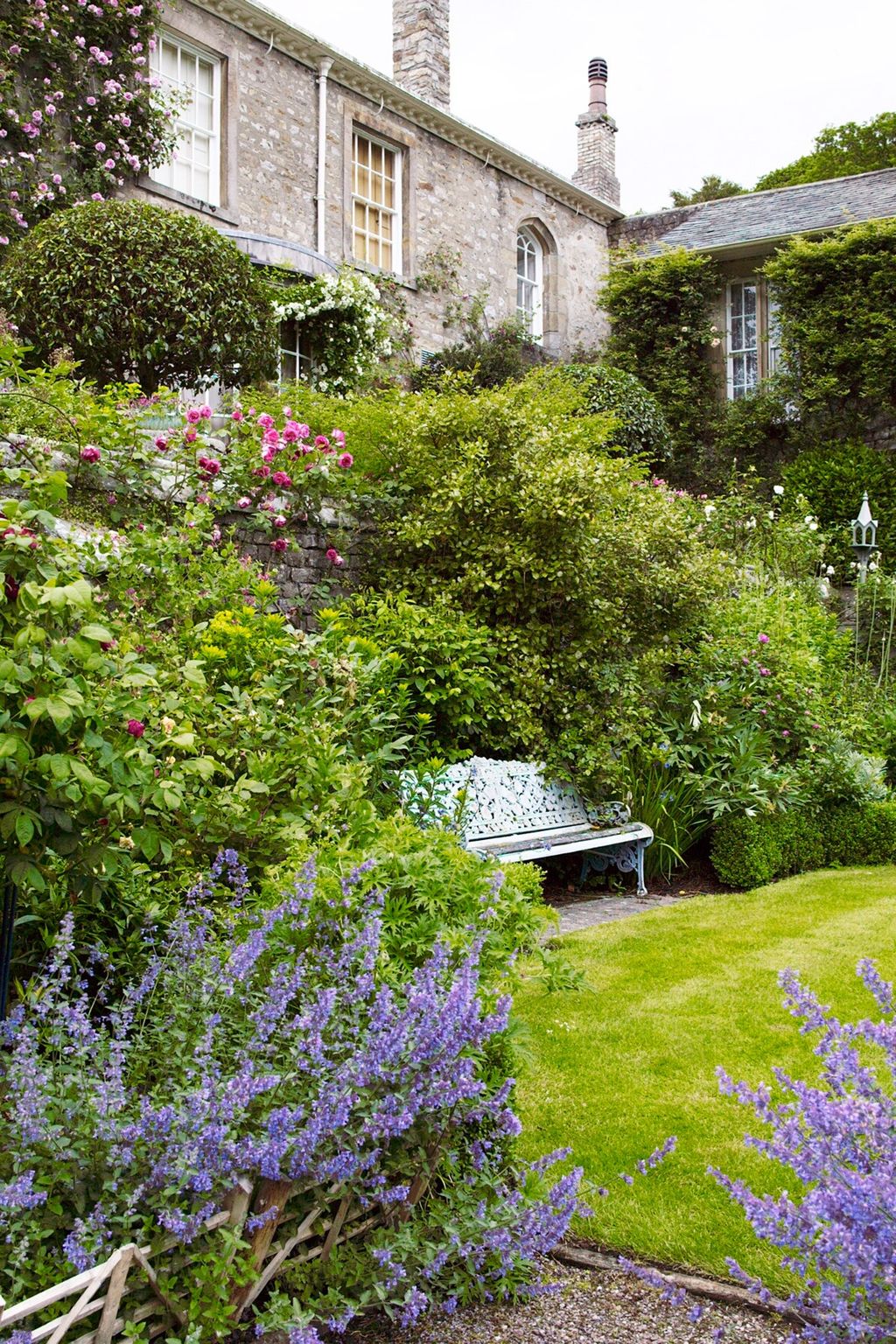
A bench nestled in the corner of the lush borders.
 Andrew Montgomery10/17
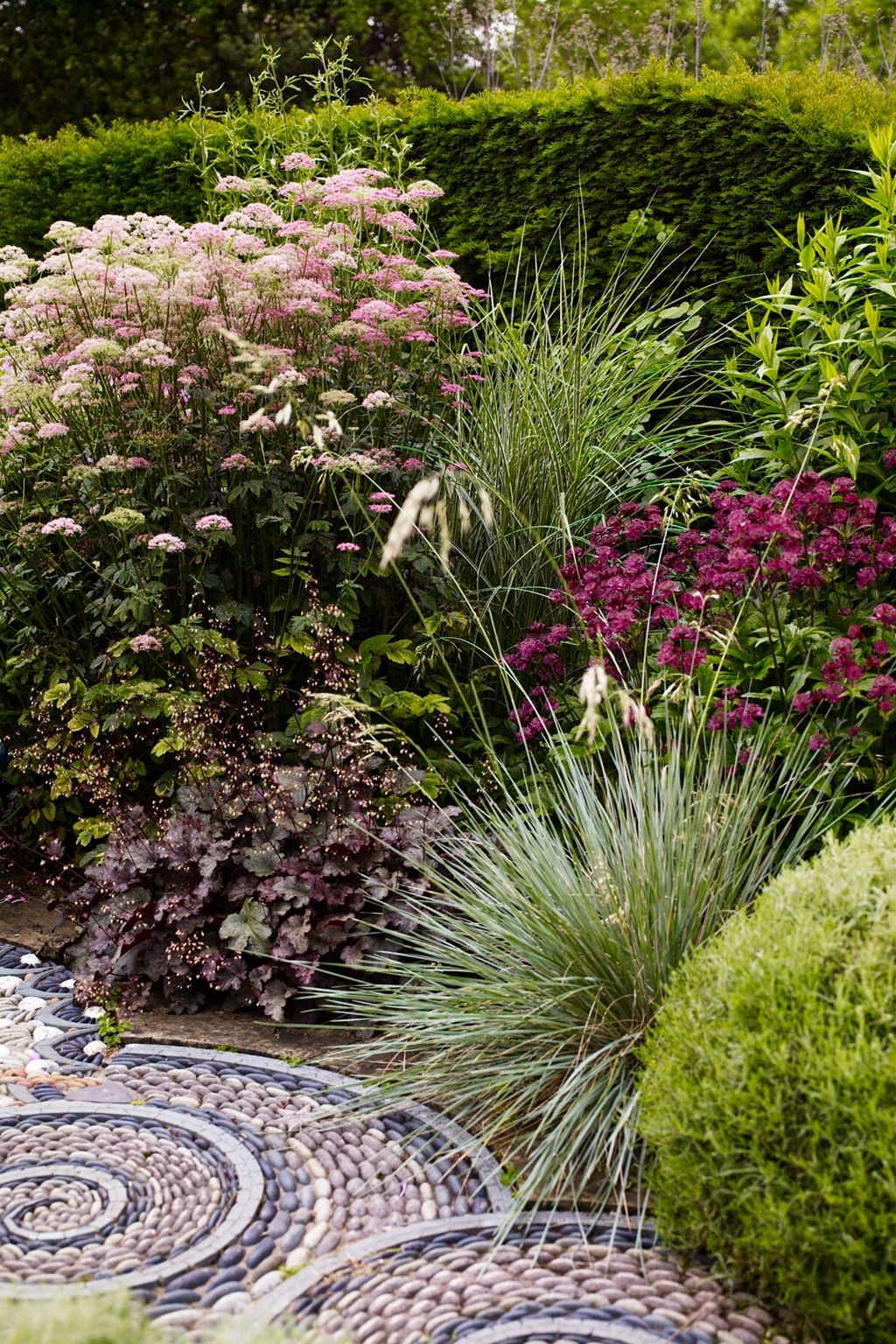
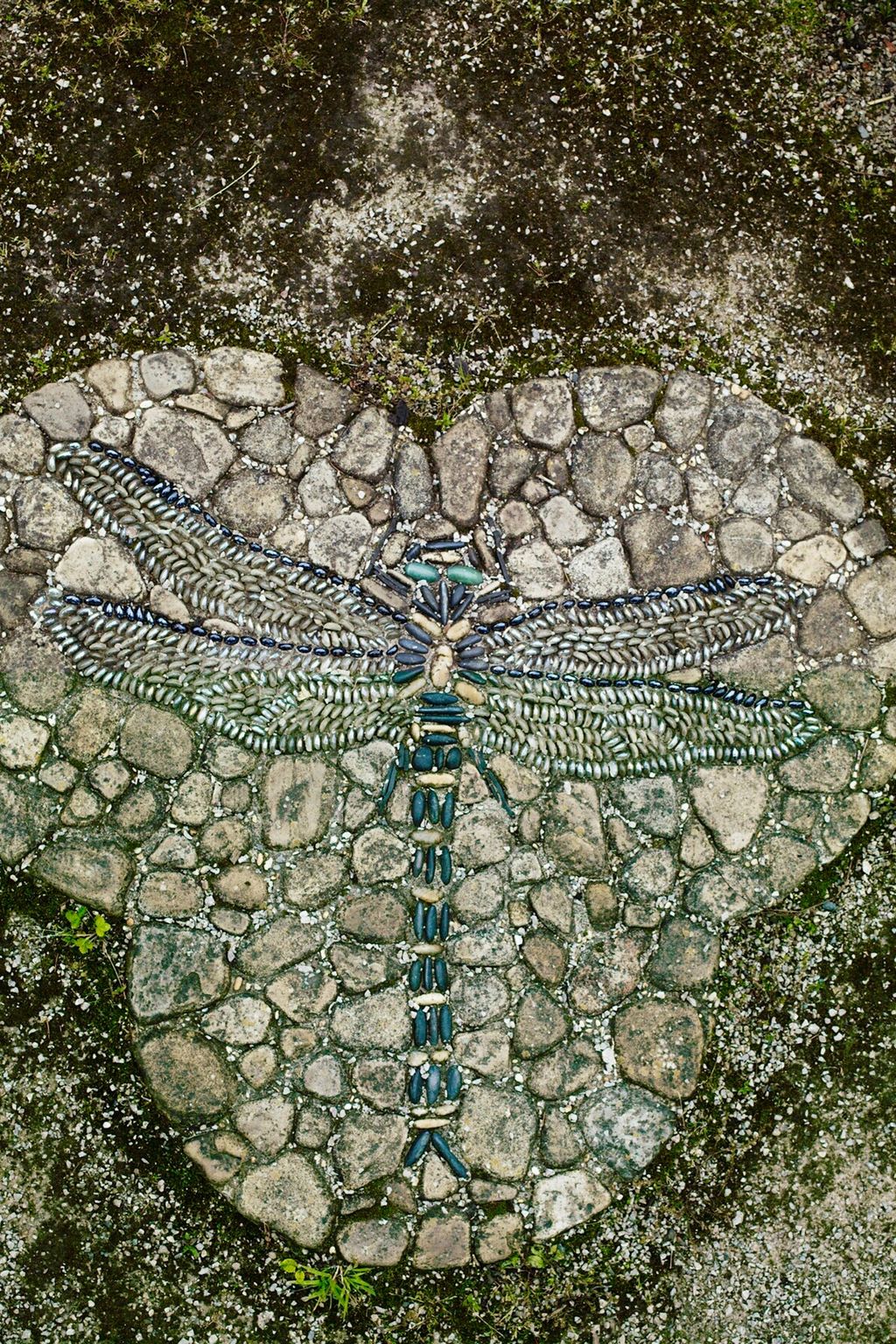
A richly textured border contrasts with a pebble mosaic.
 Andrew Montgomery12/17
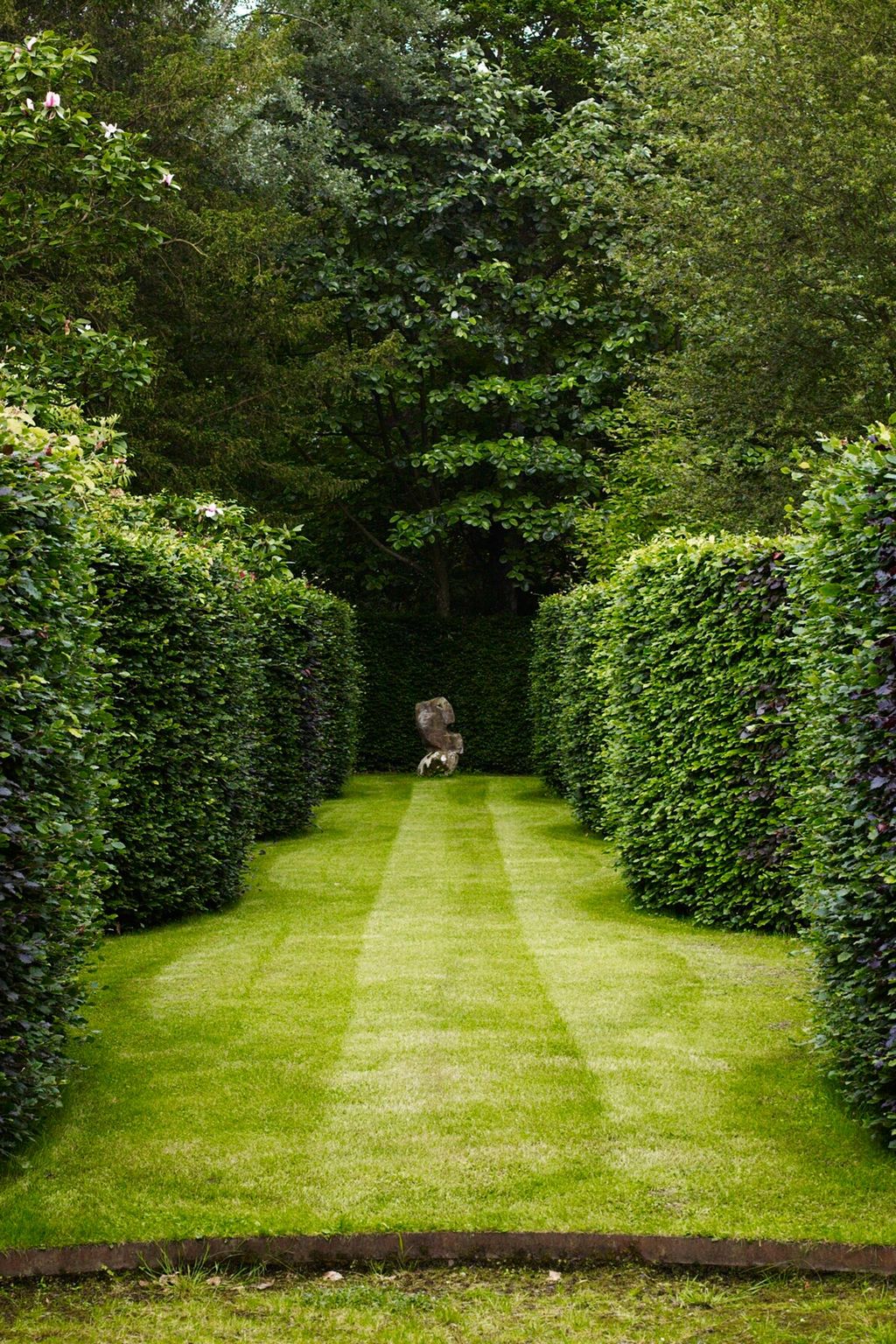
Serpentine hedges lead to a simple sculptural stone recovered from the river bed.


 Andrew Montgomery13/17
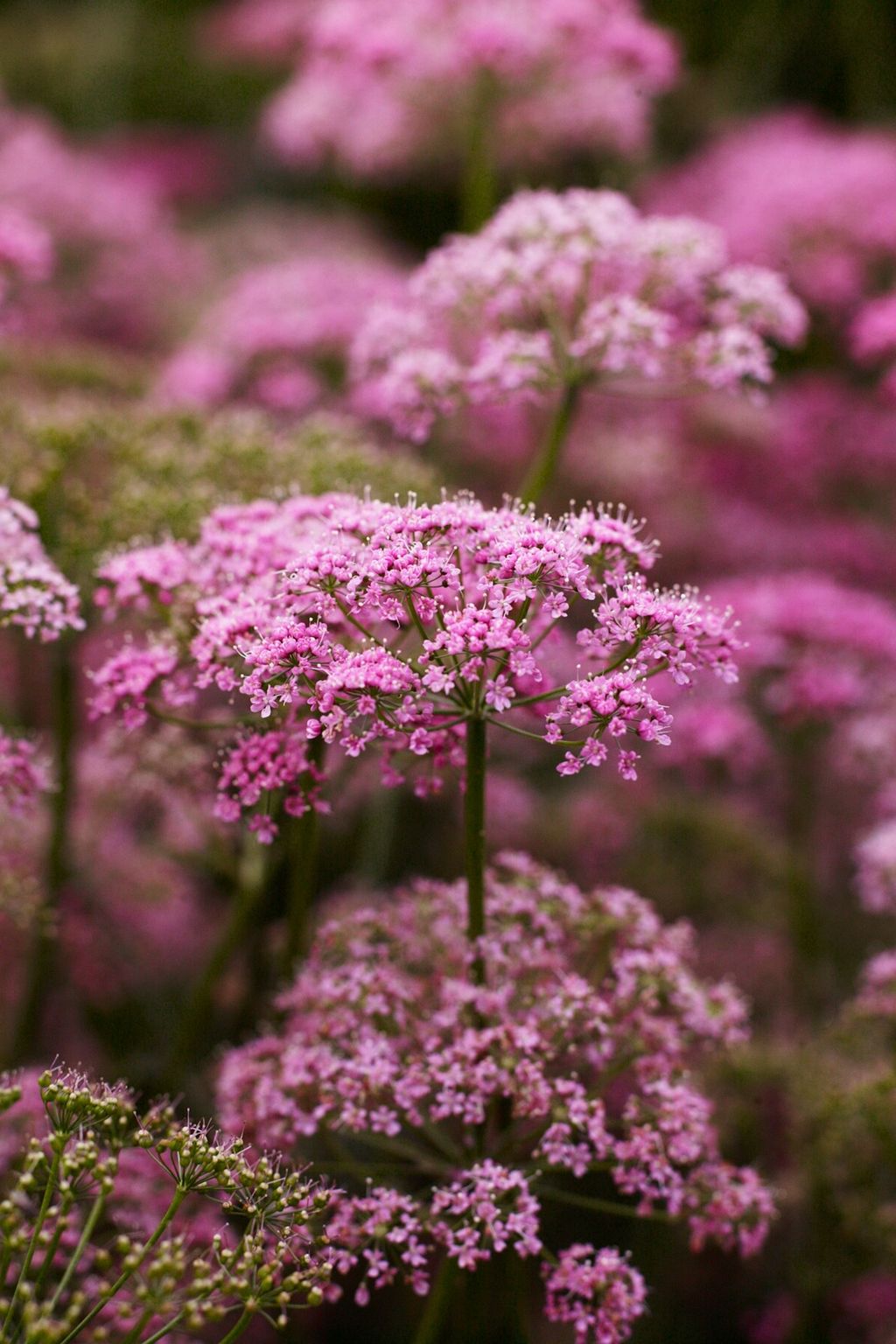
Chaerophyllum hirsutum 'Roseum'.
 Andrew Montgomery14/17
Arabella in her potting shed.
 Andrew Montgomery15/17
Birch trees surround a conical sculpture.
 Andrew Montgomery16/17
Meconopsis in a trial bed.


 Andrew Montgomery17/17
The river, a tributary of the River Lune, is fully integrated into the garden, with a rose-clad arbour overlooking the water.


