
At home in Sussex and Cairo with creative director Cruz Wyndham

Ever since she was a child, Cruz María Wyndham has been in the business of making and inventing worlds. Today, that takes the form of her involvement in Anūt Cairo, the Egyptian lifestyle brand that was founded by Goya Gallagher in 2024, where Cruz’s role as creative director sees her dreaming up new collections of linens, glassware and ceramics. ‘It is about honouring the crafts and people of Egypt,’ says Cruz. ‘We’re trying to achieve excellence in quality, while encouraging the craftspeople we collaborate with to go to the next level.’
As a little girl growing up in Chile, Cruz’s life was all about costumes and performances. ‘I was the bossy older sister, and my four younger sisters were my props,’ she recalls with a laugh. Unlike her parents – her father was an engineer and her mother a hard-grafting housewife – Cruz has always been artistic. When the family moved from the buzzing centre of Santiago to its suburbs, her response, aged 15, was one of horror. ‘I’m always battling the practical. I’m more of a dreamer,’ she admits.
The upside was that the move taught her to be creative, without much outside influence: ‘My parents were good at allowing us to be who we are.’ Even a family holiday to an isolated beach in the north of Chile proved fertile ground for creative endeavour, when Cruz took a low-key sandcastle competition to the next level, dressing up her cousins and presenting a show around her creations. ‘I even made pyramids,’ she says, pointing out that it was actually several years later that her fascination with Egypt took hold.
After spending five years studying architecture at the Pontifical Catholic University of Chile, in Santiago, she embarked on the mission she had set herself aged 15 – to escape. A chance to guide tours of Chile’s pavilion at the Expo 2010 Shanghai China seemed ideal and off she went. Six months turned into six years, in which she not only flourished creatively – eventually setting up and running an events company – but also met her now husband, George Wyndham, who had moved to China from England after university. Their first encounter was at a gig where George was playing harmonica with his then band – he still plays. ‘We’ve been together ever since,’ says Cruz.
By 2016, the time had come for a change and the couple decided to put down roots in London. George grew up at Petworth House, which, along with the West Sussex estate, he will one day inherit. But, keen to carve out their own life in the UK, they decided to buy a house in Shepherd’s Bush.
Cruz enrolled on an MA in Narrative Environments at Central Saint Martins, which provided what she describes as ‘the entry point into embroidery and textiles’. Her final project involved an embroidery collaboration with Latin American women based in London: ‘Somehow the threads of life took me there.’ That rich tapestry of threads also took her to Goya Gallagher, a fellow South American who previously co-founded Malaika Linens. Born in Ecuador, Goya has spent most of her life in Egypt and now lives between there and London. ‘We got along immediately,’ says Cruz. ‘I’d been missing that Latin American soul and she brought this wonderful new chapter into our lives.’
She is referring to Egypt, which Cruz first visited with Goya in 2020, just before she started working as a designer for Malaika Linens, where she began expanding the offering and working on collaborations with brands like Cabana. On that first trip, Goya took Cruz on a deep dive into Egyptian crafts, visiting the Malaika Linens factory, the workshops it uses and the many places that inspire her.
One of these is the Ramses Wissa Wassef Art Center, a tapestry weaving school on the outskirts of Cairo, which was set up in 1951 by the Egyptian architect of the same name, with the aim of getting local people to experiment. It was founded on a utopian ideal – that weaving can give people a voice – and his vision continues today at the centre, where 11 weavers make tapestries that are collected by museums across the world. ‘I’ve never seen such expressive and free depictions of life, and it made me want to cry,’ explains Cruz, referring to the fact that the weavers are given the freedom to create and are not formally taught. ‘Cairo has that same sense of possibility that China had and its functional chaos reminds me of home.’
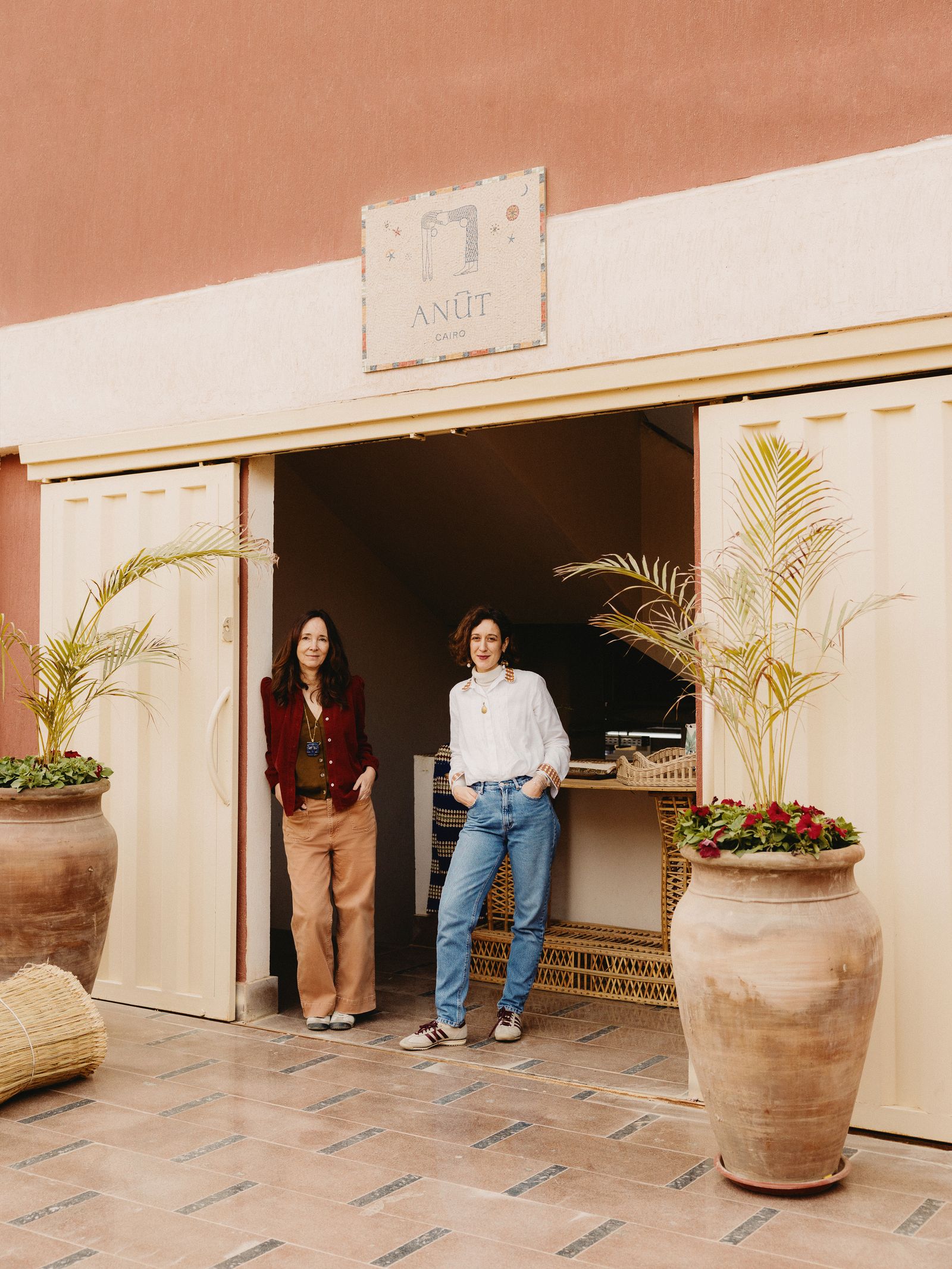
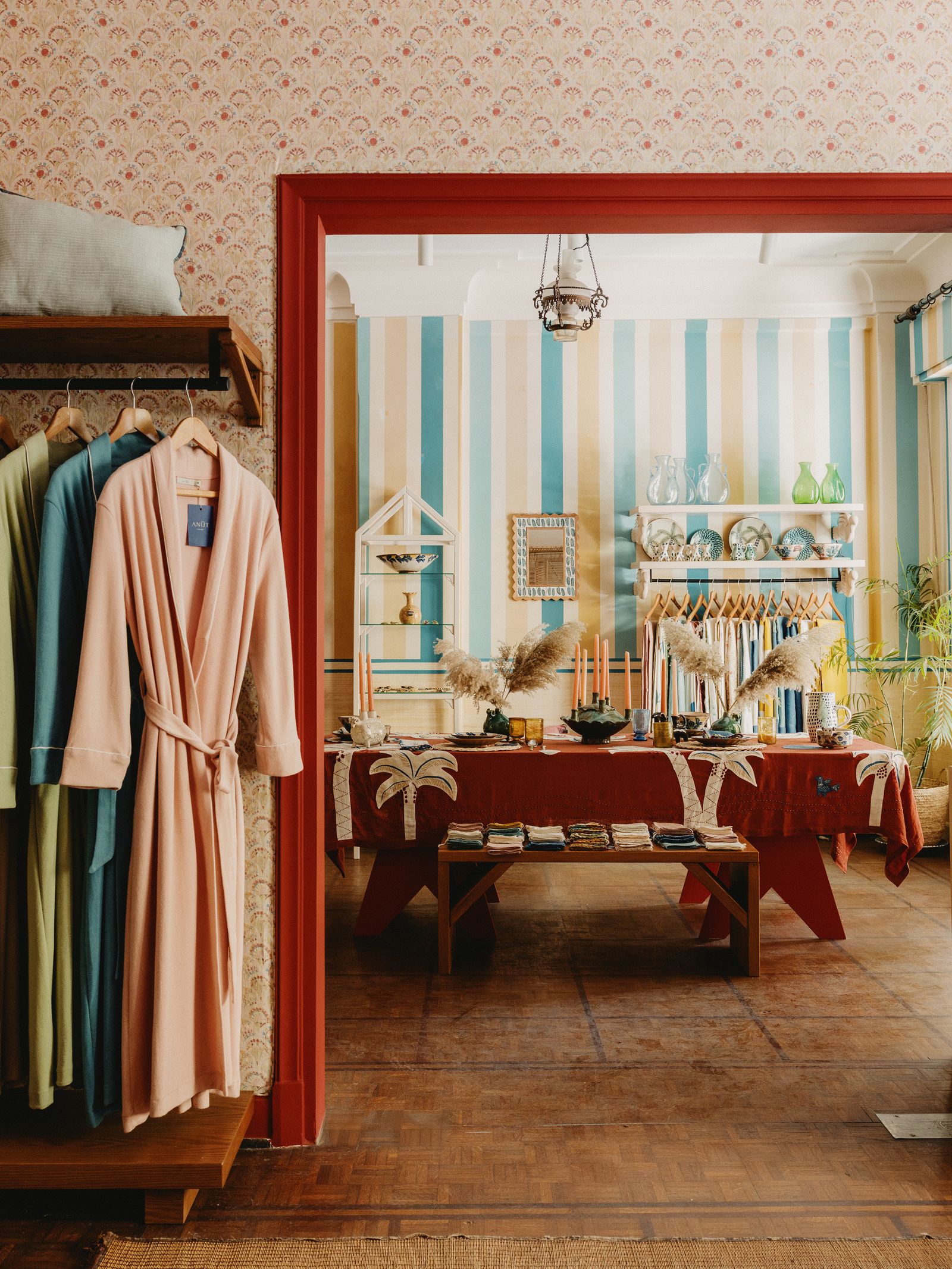
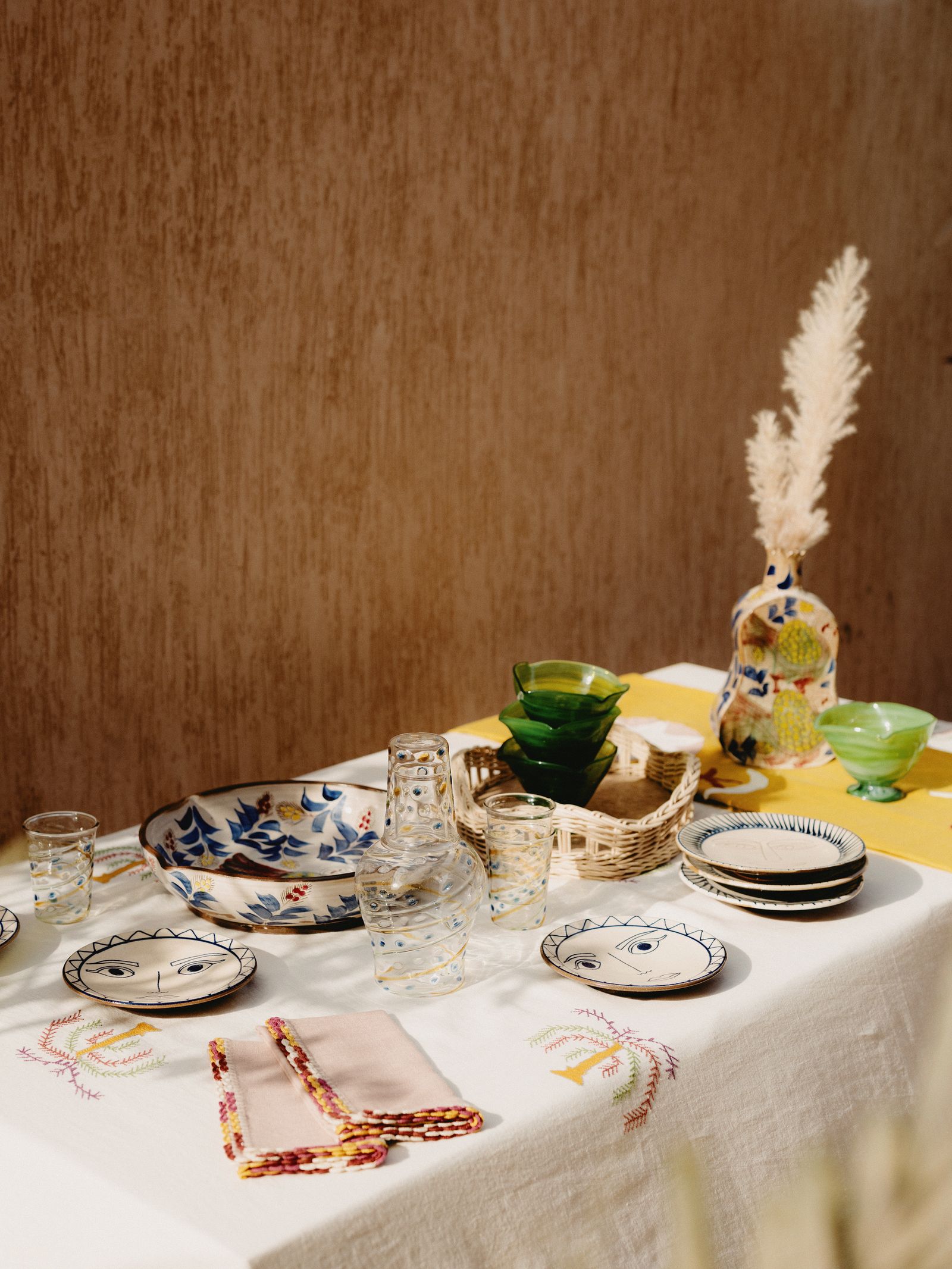
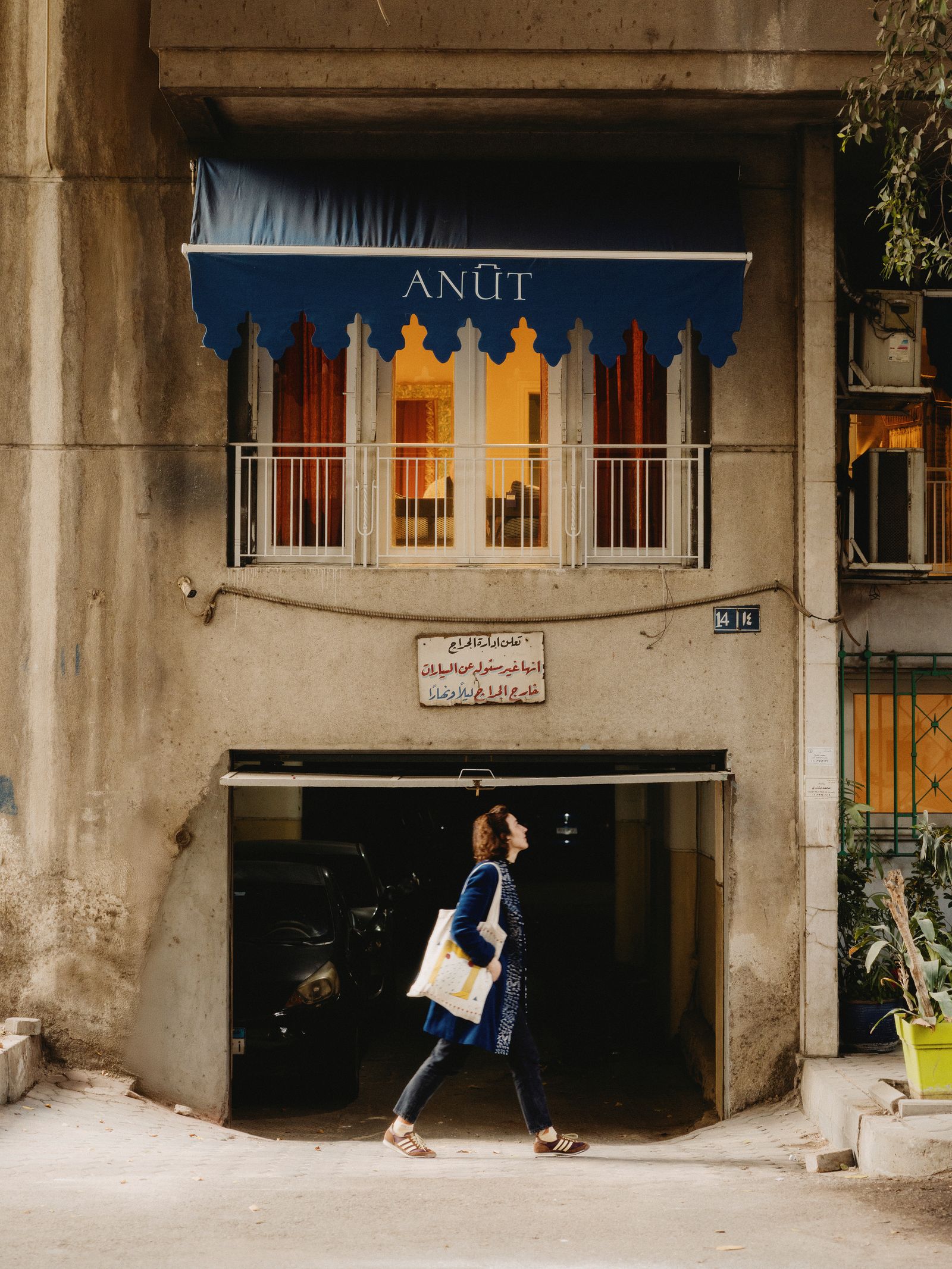
Twenty years after co-founding Malaika Linens, Goya decided the time had come to start a new venture and who better than Cruz to be her wingwoman? ‘We both approach design as if it’s limitless. As well as being super creative, Goya has a great business mind,’ says Cruz. The brand launched in February 2025 with a party at the Egyptian Museum in Cairo, and a collection of linens, glassware, ceramics and accessories. Pieces are sold in its flagship store in Zamalek, on Gezira island, on the Anūt Cairo website and through Abask, which offers a curated edit.
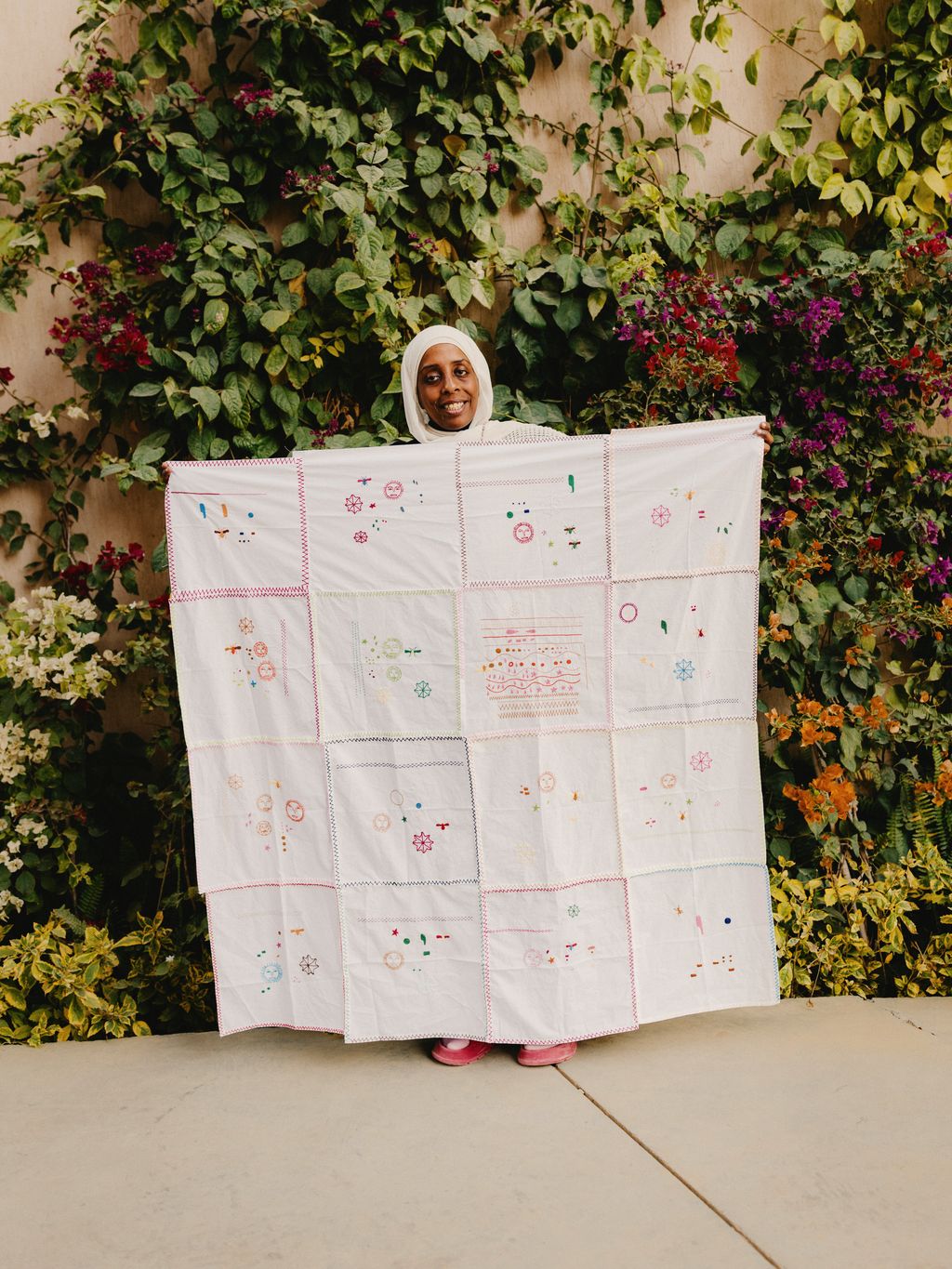
Cruz describes it as a ‘dream-big scenario’ and the hope is that the brand will go in many different directions. At its heart is the textile factory outside Cairo in 6th of October city, which employs almost 100 people – many of them women – to create its linens. Anūt also runs an embroidery school, offering courses for 25 women every few months, teaching skills such as hemstitch and Palestinian stitch. The factory operates in tandem with surrounding social housing, employing local women, who can work from home once they have completed the training. ‘We want to offer an environment in which women can earn an income while balancing family responsibilities,’ says Cruz.
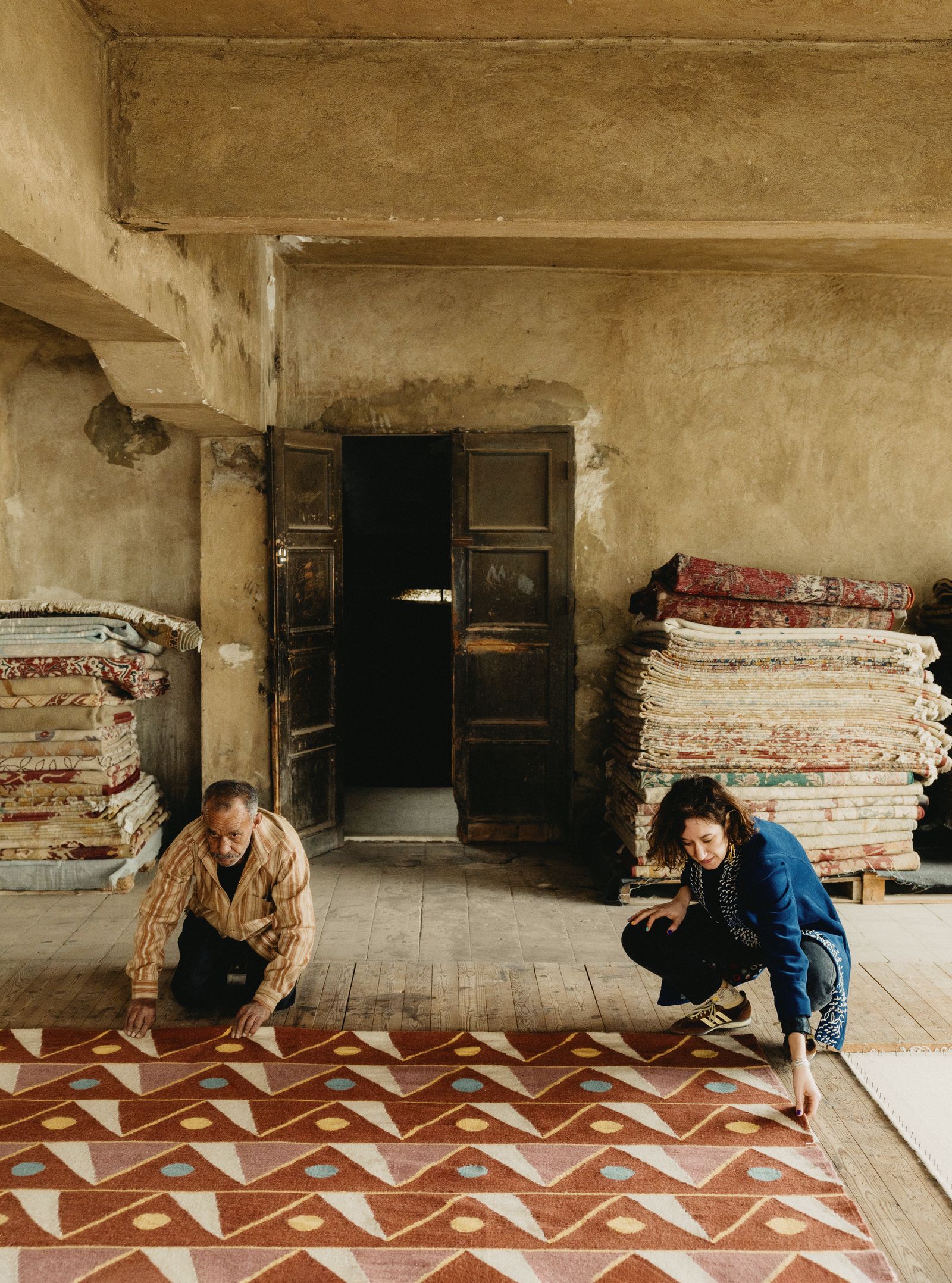
Goya and Cruz collaborate with recycled glass makers in Old Cairo, potteries in Fustat and Faiyum, and the Cairo-based carpet specialist Kahhal Looms. The duo are also establishing a creative residency programme that will be held yearly on Goya’s traditional dahabiya sailing boat on the Nile, aimed at bringing Egyptian – and, eventually, international – artists and Anūt craftspeople together. Poet and photographer Mahmoud Khattab will launch the programme with an exhibition of his photographs documenting the potters with whom Anūt works, alongside a selection of new pottery pieces the artisans have made in response to his work. ‘Our plan is to mix different crafts and create products that are unique,’ says Cruz. ‘The idea is that artists might push the craft to the next stage.’

Alongside all of this, Cruz has been juggling family life, often taking her and George’s two young children, Arturo, now three, and Ramona, one, along for the ride. ‘Bringing them all out to Cairo for the launch of Anūt was quite something,’ recalls Cruz, who has an infectious energy and keeps multiple plates spinning with apparent ease. West London is still home, in a house that is just a few minutes’ walk from George’s bookshop, Special Rider Books & Records, where he sells an enticing collection of used and new books, from stall 64 on Shepherd’s Bush Market. ‘It’s a huge part of our lives in London and we love being in an area that feels so dynamic,’ says Cruz.
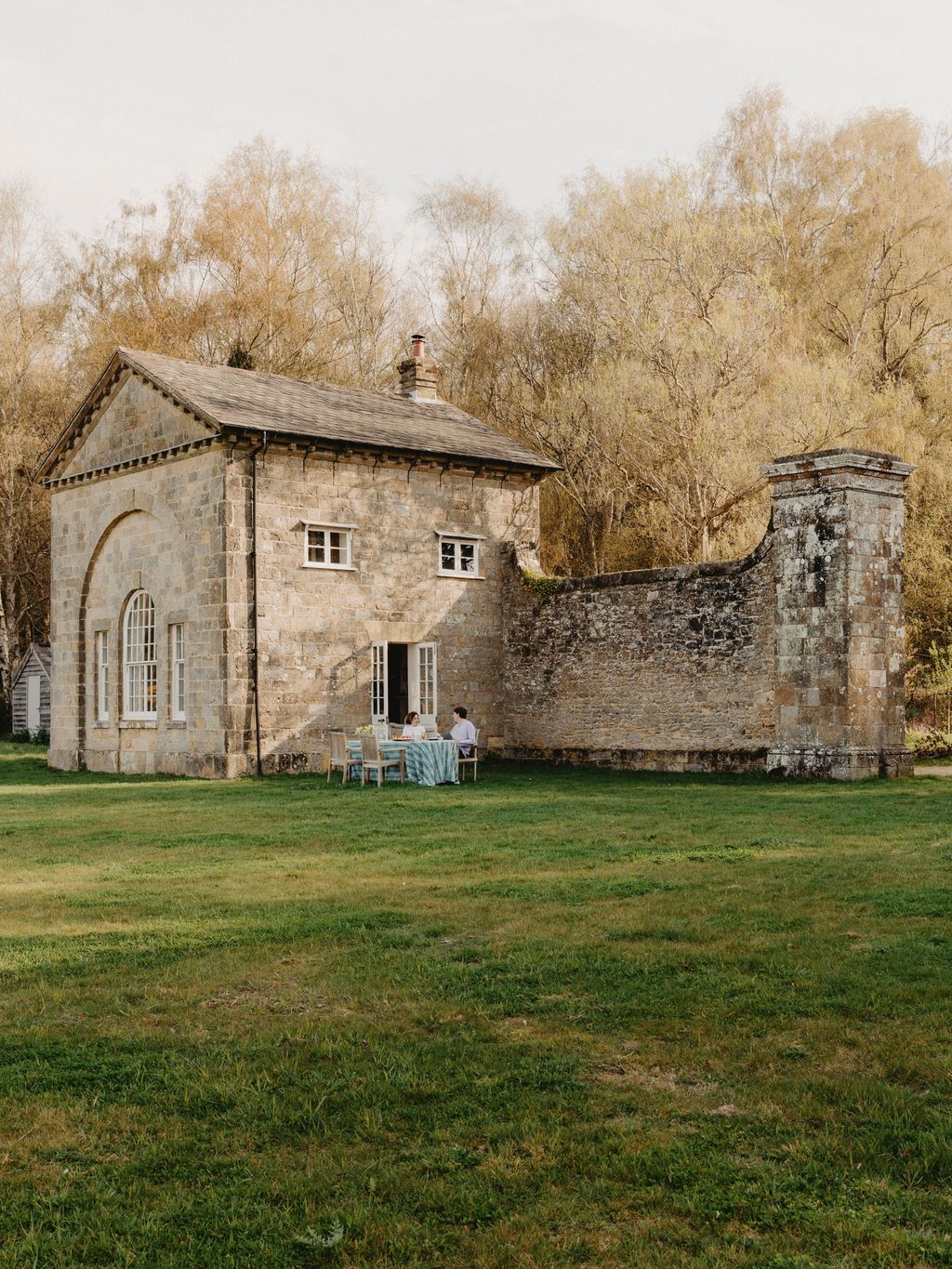
The family have found the ideal counterpart to frenetic city life in a pair of gatehouses on the Petworth estate, perched on a hill in woodland above the town. Built between 1756 and 1763 by Matthew Brettingham the elder, they were commissioned by the 3rd Earl of Egremont for ornament and recreation. When the lodges, known as Gog and Magog, became available after lockdown, Cruz and George jumped at the chance to transform them into a weekend bolthole, working with architect Giles Jollands to restore them.
‘It felt like a perfect folly for a recently married couple,’ says Cruz, referring to the eccentric set-up that sees one lodge contain a kitchen, small dining area and mezzanine bedroom, and the other an impressively proportioned, double-height entertaining and sitting area with its original domed ceiling. ‘It is quite a challenging set-up with the children,’ she admits, referring to the fact that they camp out in the tiny dressing room off the bedroom.
Now, the place that was likely used by the 3rd Earl of Egremont to conduct many a dalliance – rumour has it he had 15 mistresses – is where children bounce on sofas and Cruz and George entertain guests below Flemish tapestries discovered in the attics at Petworth. That Cruz had their bedroom painted in Edward Bulmer’s ‘Cuisse de Nymphe Emue’ – named, as chance would have it, after the shade George’s grandmother had the family rooms at Petworth House decorated in – only adds to the story. ‘It is such a magical escape for us all,’ says Cruz. It turns out she is pretty good at casting her magic wherever she goes.
Anūt Cairo: anutcairo.com | See more of the house online here.
 MARK ANTHONY FOX1/19
Cruz with Mohamed El Kahhal, a fifth-generation rug trader who established Kahhal Looms in 2002 with his sister.
 MARK ANTHONY FOX2/19
At the Anūt Cairo factory Ahmed Fares screenprinting a design for a beach bag.
 MARK ANTHONY FOX3/19
Samples department manager Jehan Magdi with work from the embroidery school.
 MARK ANTHONY FOX4/19
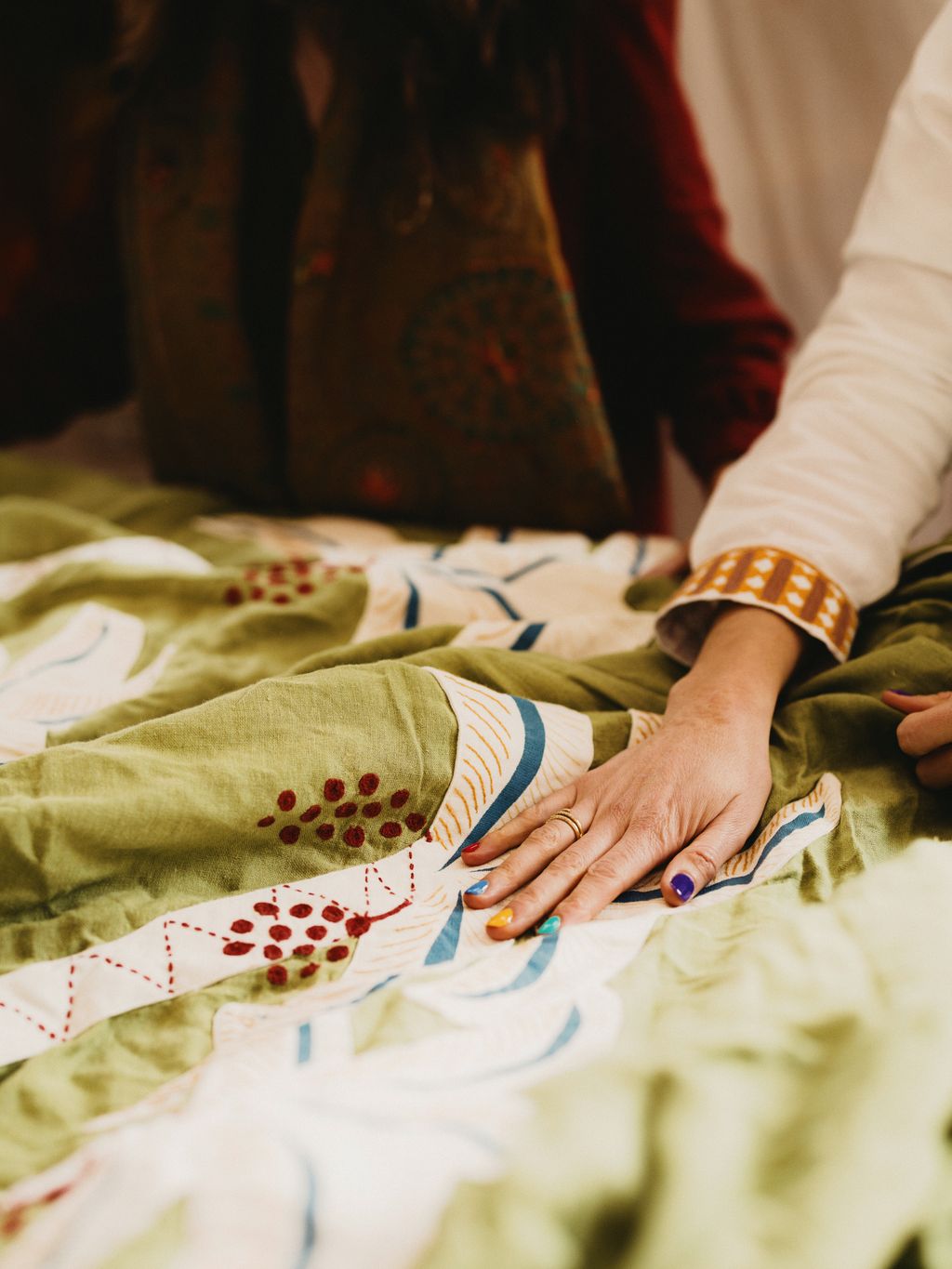
One of the Anūt textiles in progress.


 MARK ANTHONY FOX5/19
Embroidery specialists (from left) Heba Tolb, Ragaa Hussein and Somaya Emam.
 MARK ANTHONY FOX6/19
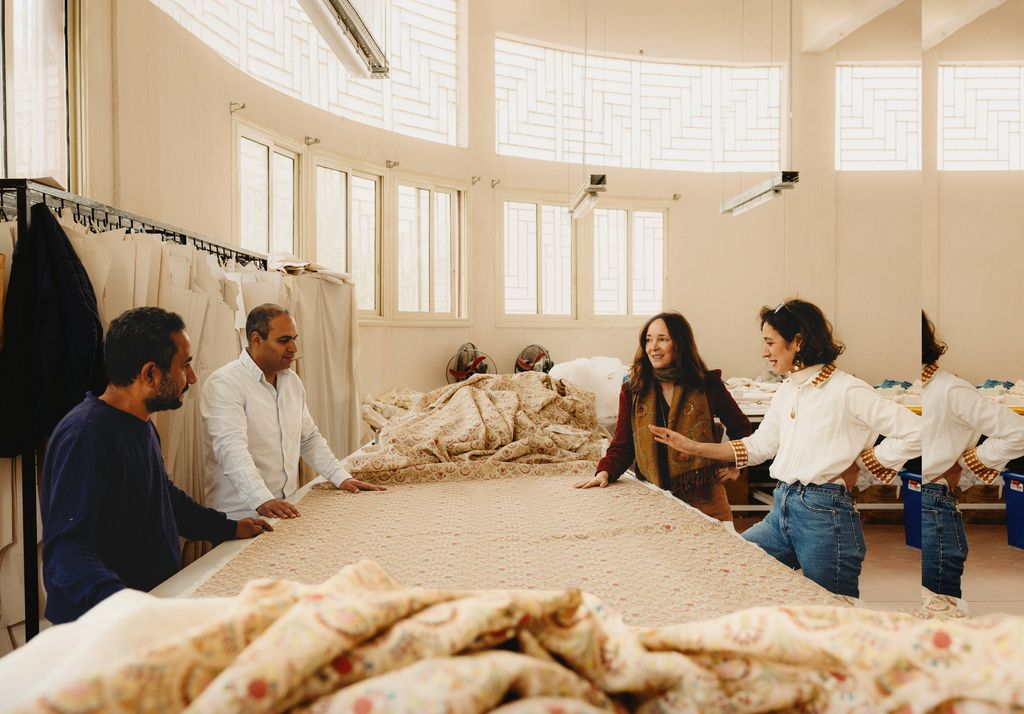
Goya and Cruz with their factory manager Shenouda Lourance Younan (left) and production manager Magdy Anwar Helmy.
 MARK ANTHONY FOX7/19
The pyramids.
 MARK ANTHONY FOX8/19
Warda Ali Hassan painting plates.


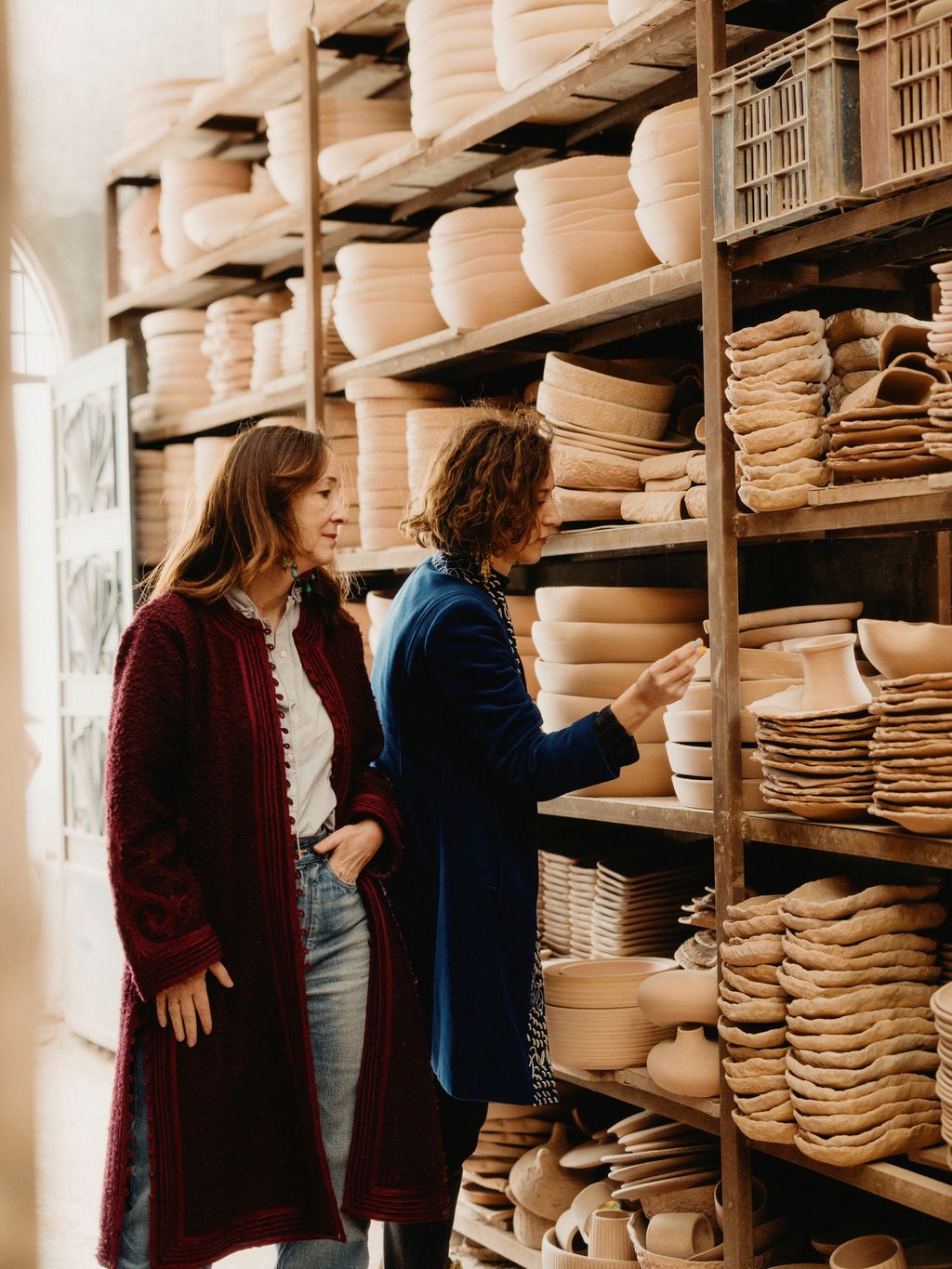 MARK ANTHONY FOX9/19
At AbraCadabra pottery.
 MARK ANTHONY FOX10/19
Kahhal Looms’ master dyer Mounir Aziz Awad.
 MARK ANTHONY FOX11/19
Cruz at Ramses Wissa Wassef Art Center with Suzanne Wissa Wassef, the daughter of its founder.
 MARK ANTHONY FOX12/19
A large Salah Elmur painting hangs in Goya’s sitting room.


 MARK ANTHONY FOX13/19
The gatehouse known as Gog, which has a soaring domed ceiling, now serves as a distinctive living and entertaining space.
 MARK ANTHONY FOX14/19
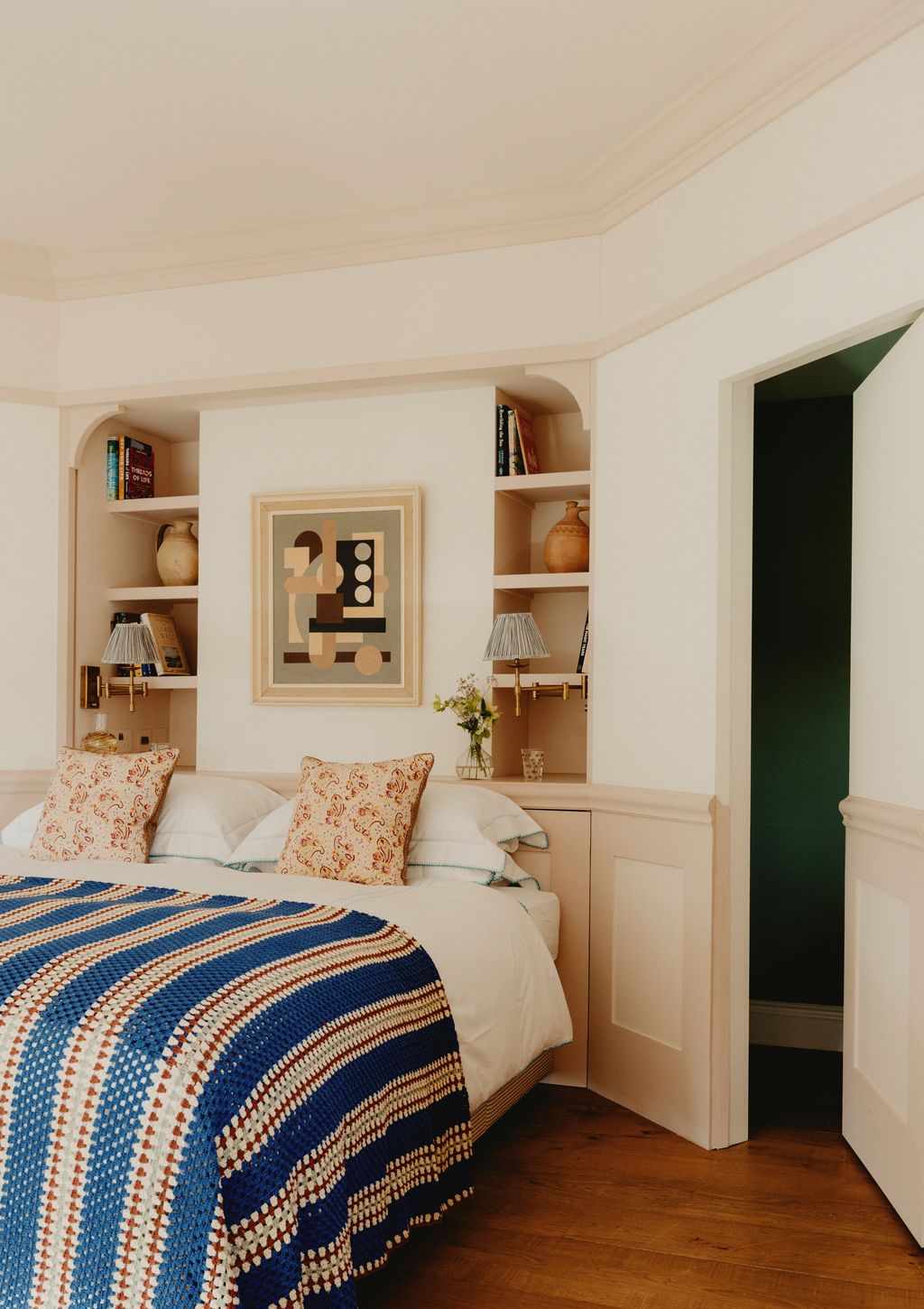
The other gatehouse, Magog, houses a small kitchen, a family dining area (above which hangs a painting by Chilean artist Nicolás Morrison) and a bedroom painted in Edward Bulmer’s soft pink ‘Cuisse de Nymphe Emue’.
 MARK ANTHONY FOX15/19
House & Garden 'People Lifestyle' feature: 'Cruz Control'. Feature interviewing Cruz Wyndham, creative director of Anūt Cairo. Image of Cruz and her family sat at a dining table together.
 MARK ANTHONY FOX16/19
House & Garden 'People Lifestyle' feature: 'Cruz Control'. Feature interviewing Cruz Wyndham, creative director of Anūt Cairo. Image of a bedroom in Cruz's home. The room features soft pink walls, built in shelves filled with mismatched pottery, and a blue, white and red striped bedspread.


 MARK ANTHONY FOX17/19
House & Garden 'People Lifestyle' feature: 'Cruz Control'. Feature interviewing Cruz Wyndham, creative director of Anūt Cairo. Image of Cruz and her family sat outside the gatehouse.
 MARK ANTHONY FOX18/19
Cruz and George in his shop in Shepherd’s Bush Market, W12, Special Rider Books & Records.
 MARK ANTHONY FOX19/19
Walking in the hills above Petworth House with their children Arturo and Ramona.


