
Beata Heuman's showroom is a nostalgic, imaginative distillation of her work
.jpg)
'I don’t really want to call it a showroom, because it’s more than that. It’s a studio, an office and it’s like a home for the team, a place for us to feel inspired,’ explains Beata Heuman. She is still working out precisely what it is that she has created within the impressive, Grade II-listed, late-Georgian building shown on these pages. The house, at 188 Hammersmith Road, W6, is also a laboratory – somewhere for the interior designer to experiment and to try out new ideas. It is a place of learning: for herself, her team and her clients. It is the result of an effort to create a feeling.
Beata and her team of 15 – which includes her husband John Finlay (a former corporate legal counsel, who is now managing director of the business) – work hard. ‘I can be quite demanding and quite an intense boss sometimes,’ she says. ‘But I think a lot about people being happy, and feeling at home and close to the rest of the team. That was always a key part of what I wanted to do here.’
.jpg)
Since launching her own studio in 2013, Beata has grown into a hugely sought-after designer with no shortage of high-profile and highly publicised projects. Sure, each project looks different, thanks to her clever layering of influences, which can range from early Arts and Crafts and modernism to Swedish folk art and beyond. But there is a feeling that runs through so many of the spaces she has created for her clients: they are completely and utterly uplifting.
A couple of years ago, Beata’s previous studio space was bursting at the seams. Shoppa, the product design side of the business, had taken off and more space was needed for staff and samples. It is primarily an online business, but she wanted to have somewhere to showcase the furniture, fabric, lighting and home accessories. So the search for a new home began.
It was a classic case of designer meets rundown house – with a bit of added interest by way of the building’s history. Built in 1820 on what was then the outskirts of London, it has had various incarnations, including a stint as the home of the now dissolved Constitutional Club, a gentleman’s club associated with the Conservative Party. And, much like the Conservative Party, in recent years the house had fallen on rather hard times: unoccupied, in disrepair and suffering from damp.
Slowly but surely, Beata and her team began breathing life back into the early-19th-century building. ‘It has been really exciting, but a far bigger project than I had anticipated,’ she admits. ‘In a lot of ways, it was about doing the right thing by the building. And once I start something, I just want to do it properly.’ Beata has gone to considerable lengths (not to mention cost) to do so, which is laudable considering she has taken on a long lease rather than actually buying the building. She explains that she has just finished reading a biography of Daphne du Maurier. ‘She restored Menabilly, the house she rented in Cornwall for 25 years, so I feel like I’m justified in my actions,’ she says with a laugh.
Beata’s appetite for learning is voracious. She loves the research stage of a project and admits to getting ‘quite geeky’ about things like the qualities of nitrate stains on plywood. She brought in a historian to walk her through the house, to help her understand the details – both existing and missing – so that she could respect, restore and replace where needed. Not that Beata felt she had to follow everything slavishly. ‘Though if I’m going to do something slightly differently, I want it to be an informed decision,’ she explains. This attitude comes from her formative years spent working under Nicky Haslam, who not only taught her the rules of classical English decorating but also encouraged her to break them when she saw fit.

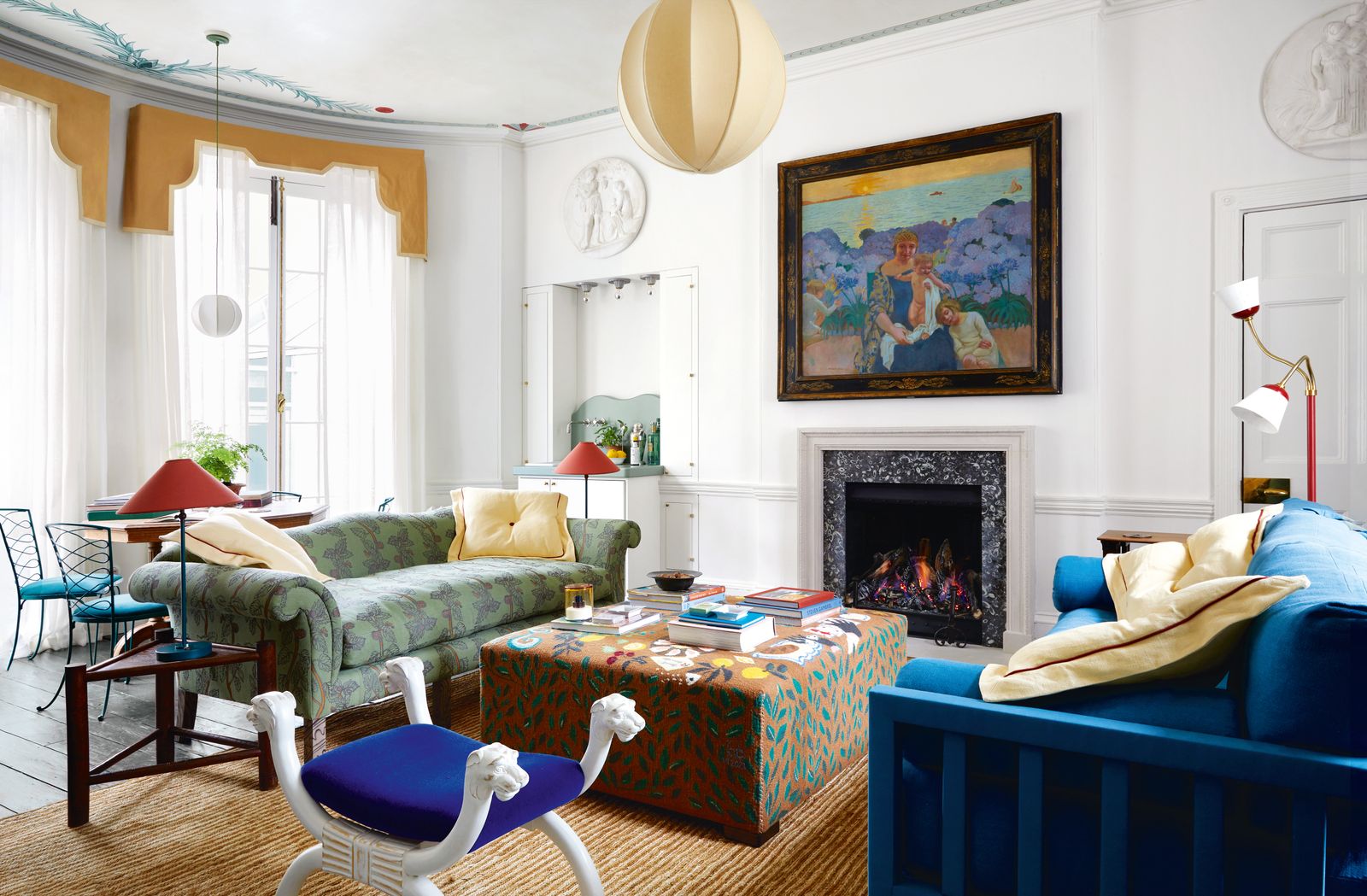
On one side of the double-fronted house, the ceiling of the drawing room features a frieze for which she took inspiration from the elaborate painted ceilings of the farmhouses of Hälsingland, a World Heritage site in Sweden. This allmoge (19th-century Swedish folk art) style is simpler and more naïve than the more widely known Gustavian tradition and is a constant influence on her work. Directly under it is something contemporary and completely original: an ottoman covered in a tapestry created from an artwork that Beata commissioned from Los Angeles-based artist Andie Dinkin. Almost everything in the room – the camelback sofa, the stool based on Ancient Roman designs, the cherry-red floor lights, the lengths of newly launched plain fabrics hanging from one wall – has been designed by Beata.
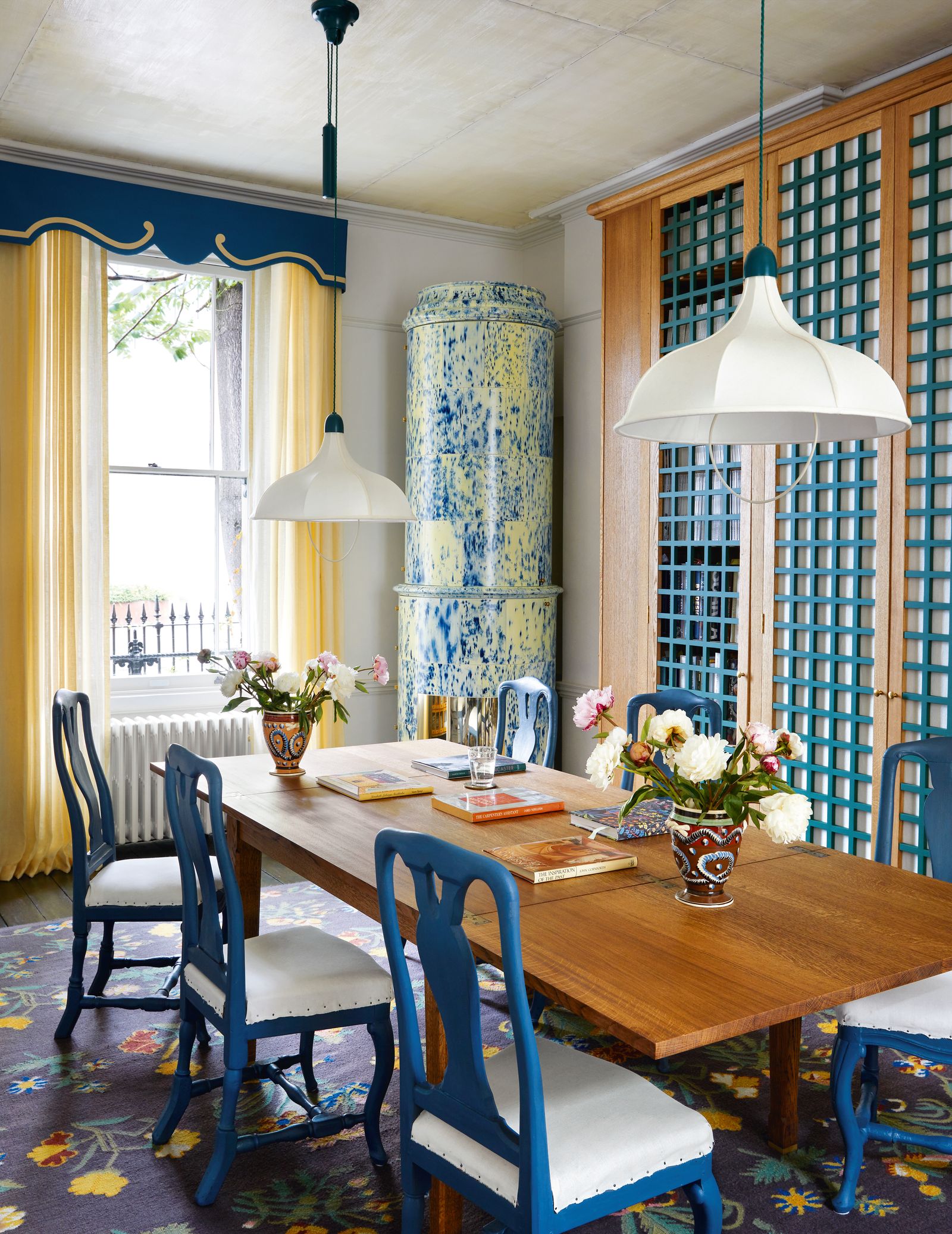
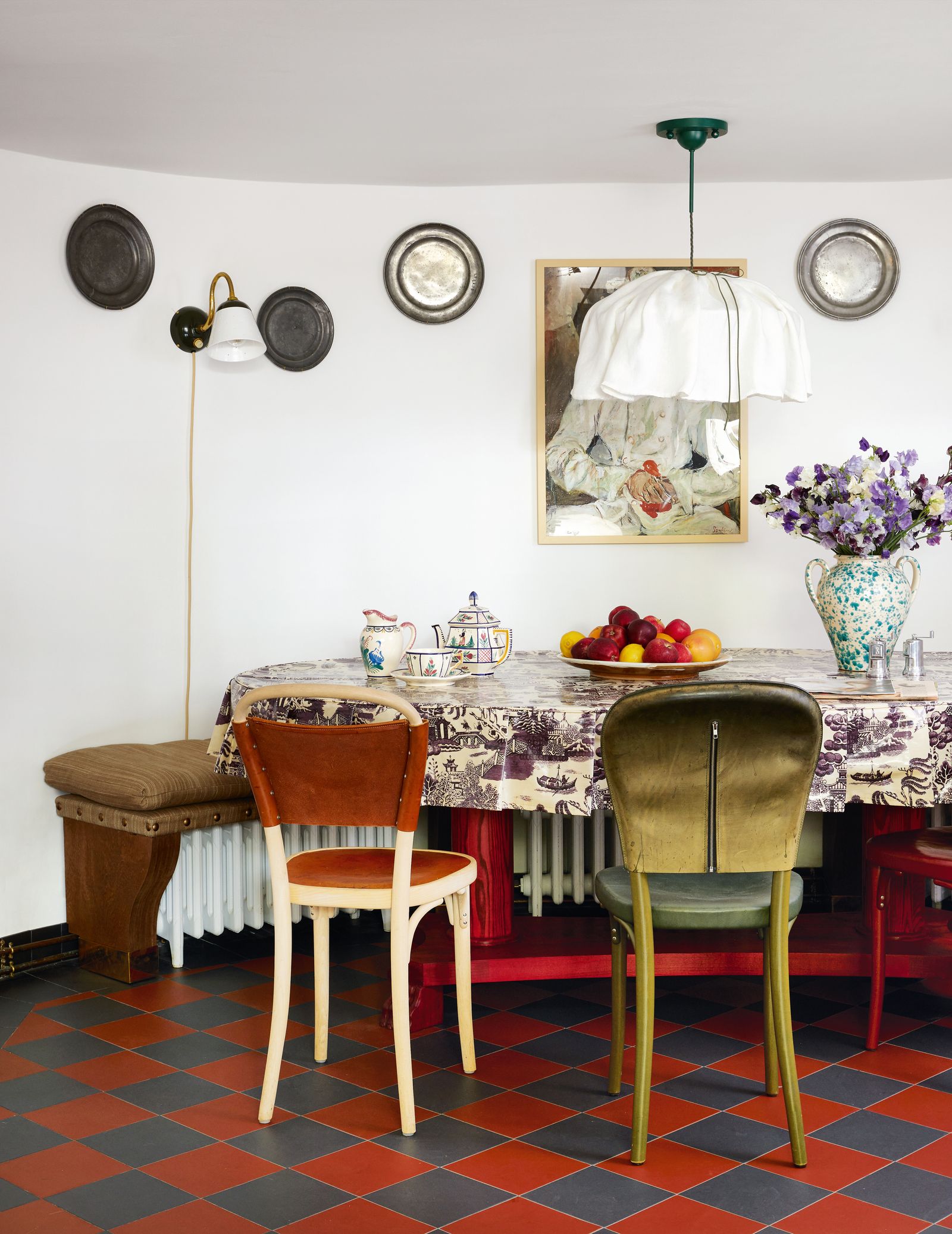
‘So much of what I do is bespoke, but I would never create an interior that only included my designs,’ she says. This is where art and antiques come in. In the library, on the other side of the ground floor, is a set of beautiful, reupholstered 18th-century Swedish chairs gathered round a long table she has designed. A notable piece in this room is what looks like a kakelugn, a type of Swedish stove traditionally clad in hand-made tiles. This one is made of wood and is hand-painted: it is actually a folly of a cupboard. In the basement, meanwhile, she has replaced a large communal loo – presumably there since the time the building was a gentleman’s club – with a simple and surprisingly light kitchen with a dining area.

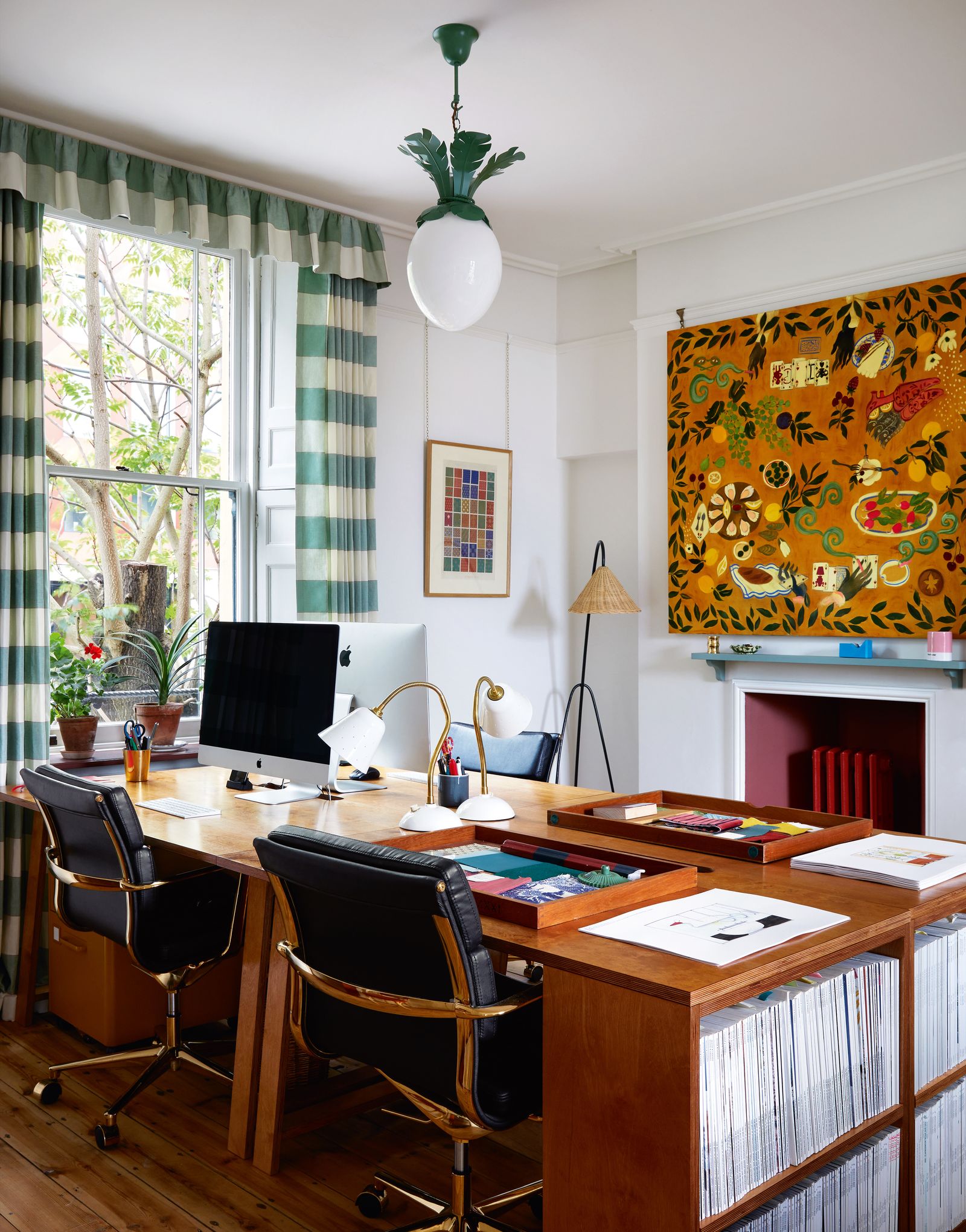
Upstairs, two simple-with-a-decorative-flourish studios now inhabit the spaces that would once have been bedrooms, with Beata and John each having their own office. The walls of his are covered in distinctive ‘Florentine Flowers’, one of Shoppa’s bestselling patterns. Her office walls are lined in paper-backed ‘Willow’ fabric – like an 18th-century willow-pattern plate on steroids, which she has also used in their bedroom in their house in Sweden. ‘It feels a bit like being in a sugar bowl, which I love,’ she says.
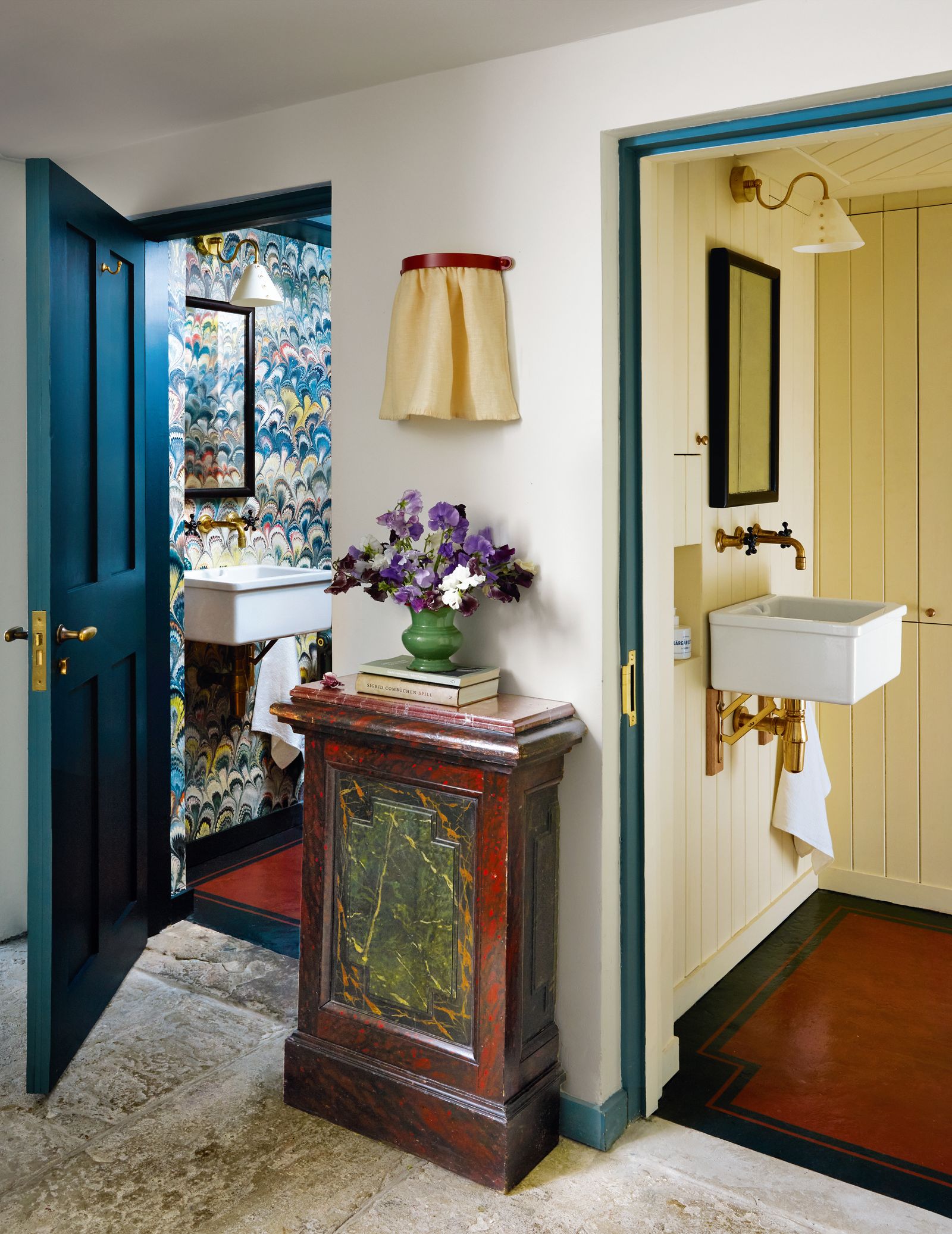
This is now a place to bring clients, to show them Beata’s ideas in the flesh – whether it be a joinery detail, a decorative paint finish, a piece of furniture, or the way a length of fabric drapes. As a shop, it will operate by appointment only, though there are plans for open days and events to welcome the local community and share good times with colleagues.
You could say that 188 Hammersmith Road is Beata’s version of German writer and philosopher KFE Trahndorff ’s Gesamtkunstwerk – a synthesis of her ideas and philosophy for design, her attitude towards what a space should feel like, whether it is a home or a place of work. She would not flatter herself to say that the current incarnation is a perfect one: it is an evolving space and she is a creative who continues to evolve. But she is clear in her ambitions to make things better. She is a designer who cares deeply about the process and who seems very aware that it can be just as important as the result.
Beata Heuman: beataheuman.com


