
Bunny Williams reveals how she created her glorious Connecticut garden
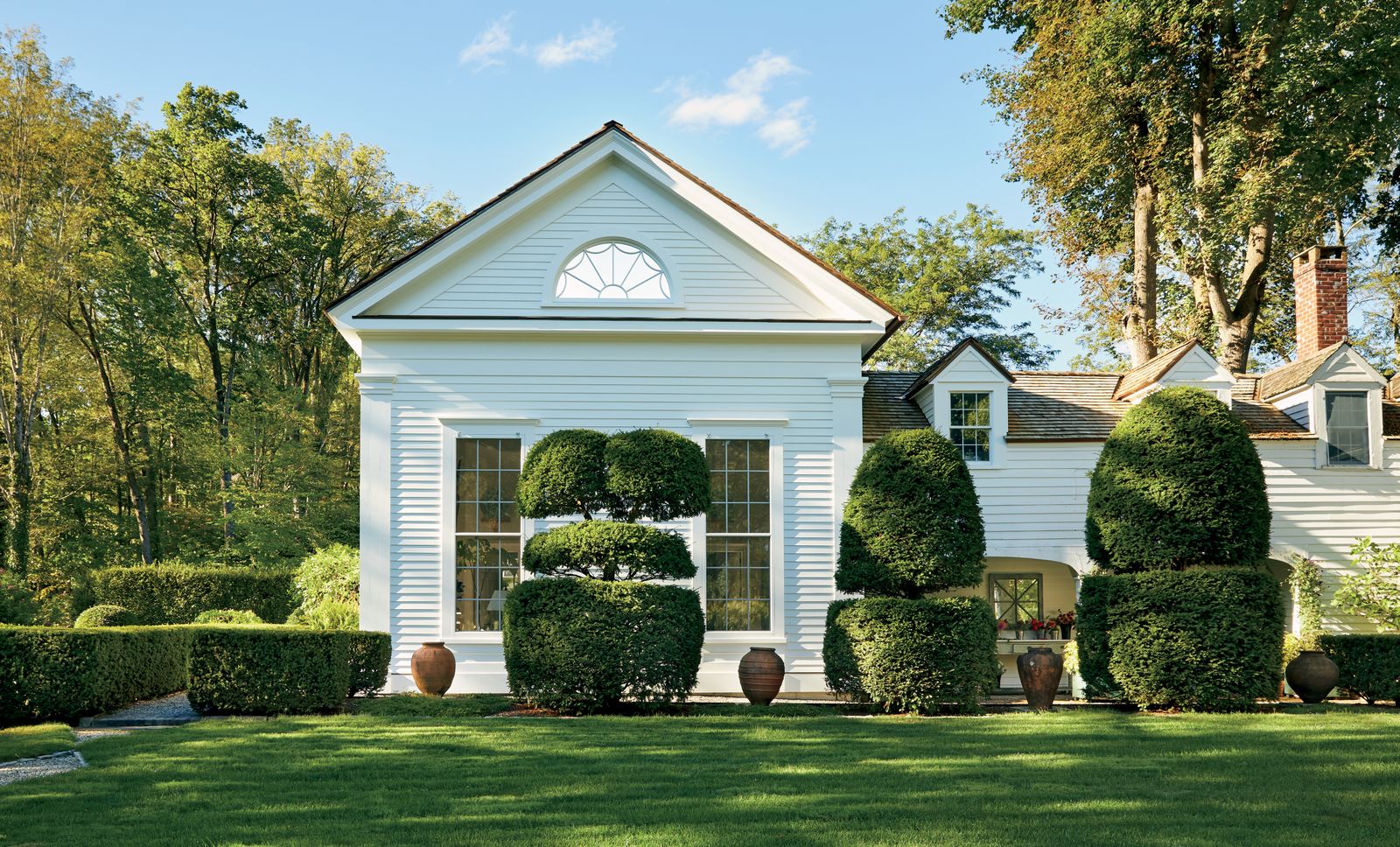
After college, I wanted more than anything to move to New York City to pursue a career in interior design, a dream that I had in the back of my mind since I was a teenager. Living in the city was exciting and stimulating for the first few years, but when I married in my late twenties, I longed for a small place in the country because I missed the open space and the feeling of being a part of nature. We were very lucky to be able to rent an 18th-century farmhouse on a big piece of property in Massachusetts, just over the Connecticut border, where I planted vegetables and created my first cutting garden. We lived there for several years, but as I became more serious about gardening, I realised that I should do it on property we owned. Thus began the hunt for a permanent home.
For two years we searched and searched, and it wasn’t until I turned into the driveway of One Point of Rocks Brewster Road, that I found what I’d been looking for. Whether it was the large allée of mature locust trees that lined the driveway ending at a huge catalpa tree, or the two imposing sugar maples that flanked the white house sitting on a slight knoll, it was love at first sight and, as such, I saw no faults. Little did I know – or want to know – what upkeep these magnificent old trees would require, or that some presented hazards that would necessitate their removal at a significant cost to our limited funds. But eager as I was to start planting, tree maintenance was the first order of business.
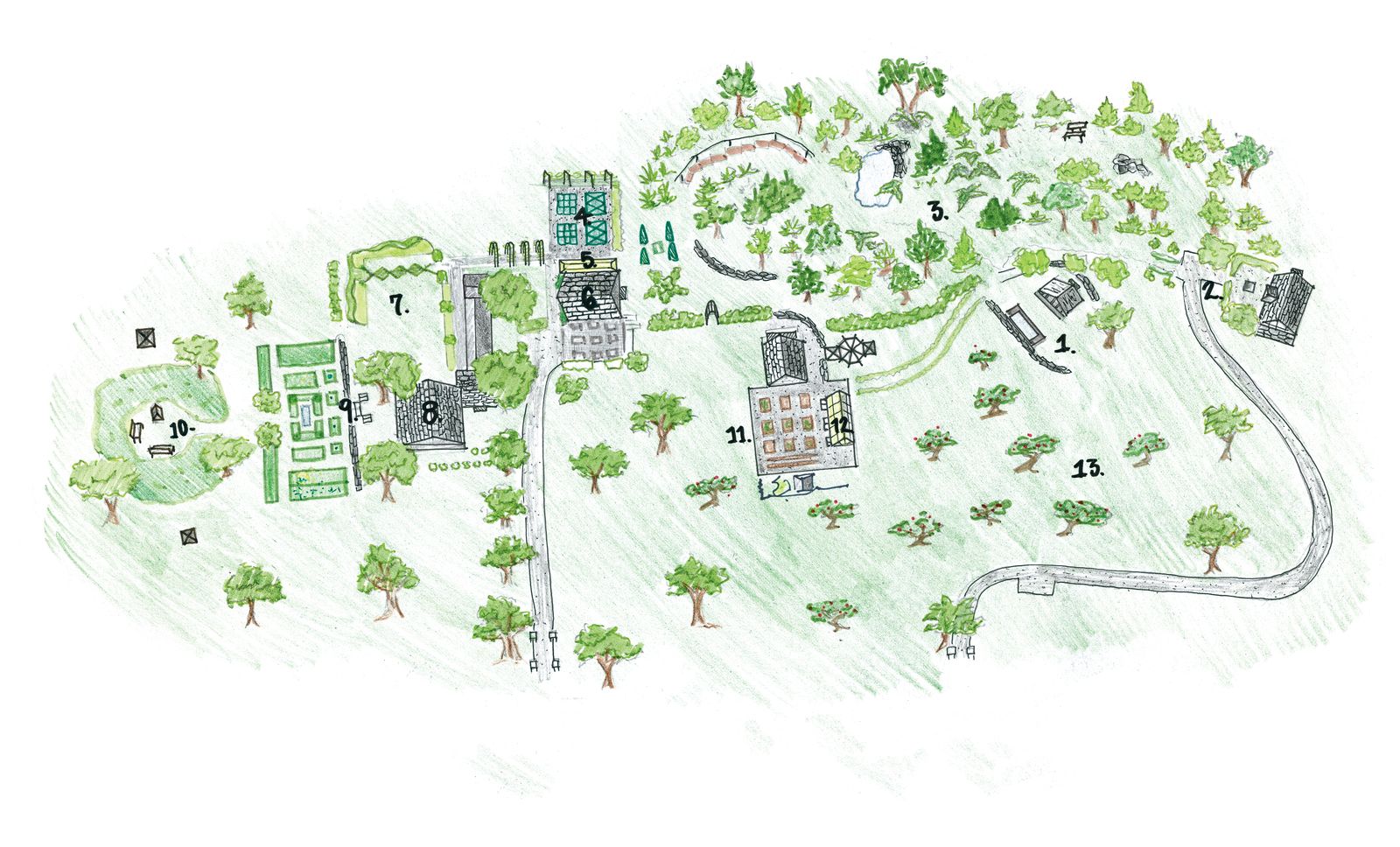
As a fledgling interior designer, I arrogantly thought that designing a garden for myself would be easy. I had to take a step back and become a student again, and although I made – and corrected – many mistakes over the years, the process was never dull. One thing I learned is that it’s just as well that I didn’t have a clear plan at the outset, because nature had a plan of its own.
Since I was in a hurry at first, I began with a flat, sunny spot on the south side of the house. This area, formerly a lawn tennis court (I learned this from older villagers who had been guests in the house formerly owned by Mr and Mrs Knowlton), provided a lovely view from the screened porch.

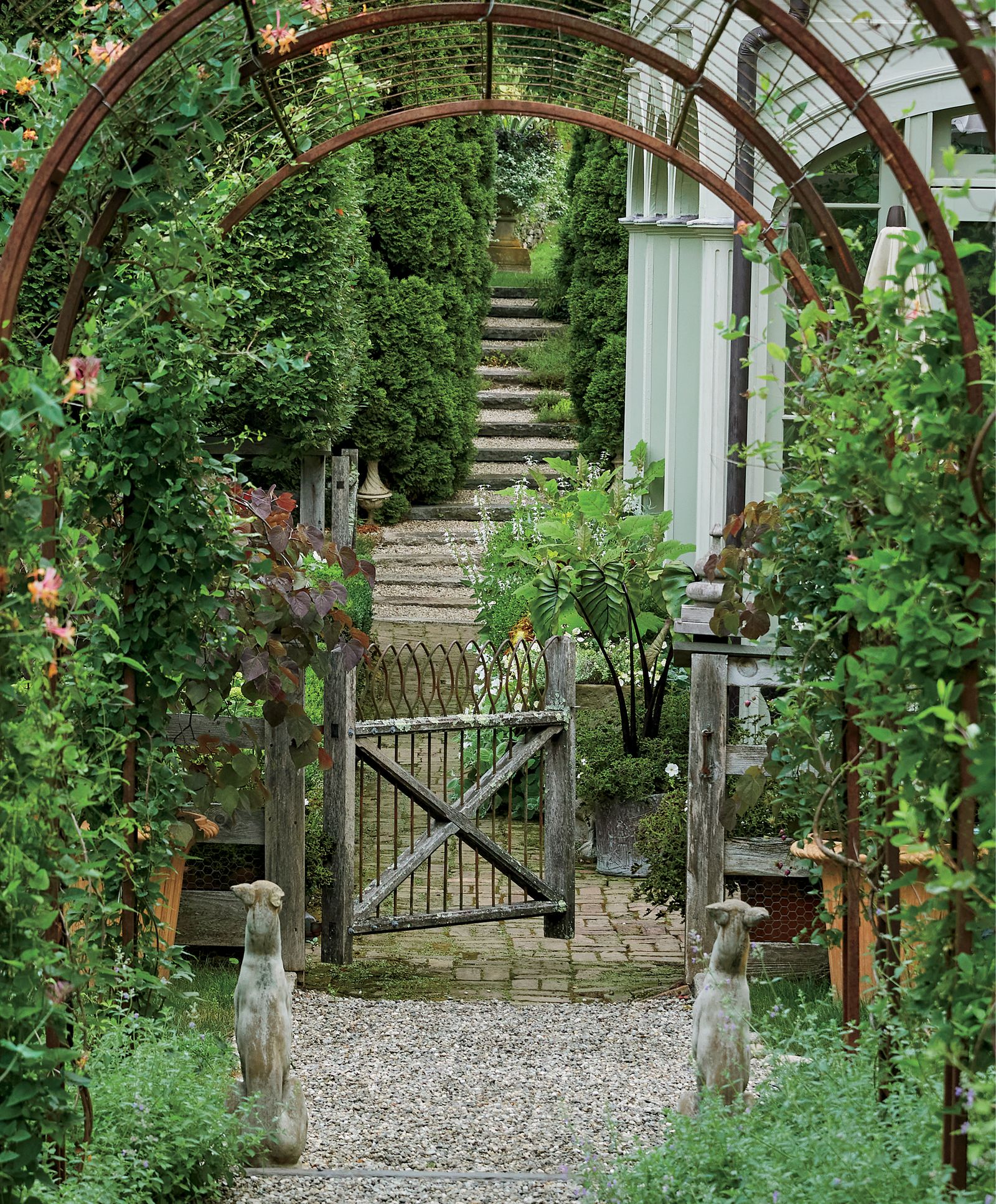
As there were two large crabapples along the south border with a scrubby hedge on each side, I immediately envisioned my first garden ‘room’, but it would need some structure. The land also sloped into the space, so I felt it should be terraced with gracious steps. Our dear friend the artist Christopher Hewat, who grew up nearby and had a passion for the stone walls you see all over the countryside in northwestern Connecticut, built a wall along the north edge for us. On each end I had tall lattice fences built to form the back wall of the perennial border and to create a doorway to the area beyond. I designed a rounded arch to be placed between the two crabapples, and in front of the lattices I dug two 40-foot-long, five-foot-deep beds so I could begin planting. I filled the beds with some of my favourite flowers: peonies, roses, foxgloves, lilies, and lavender. Each weekend I rushed to our house in the country to weed, water, deadhead, and see what was in bloom. As I had no planting plan per se, I often bought whatever looked good in the nursery. The joy was in the process, but as the summer went on, I found that my beds were not fabulous – height and colour were wrong, and textures were not complementary. That is when I realised I needed to educate myself. With the help of my wonderful bookdealer friends Timothy Mawson and Mike McCabe, I started a gardening library and spent my evenings devouring the writing of Vita Sackville-West, Gertrude Jekyll, Christopher Lloyd, and Russell Page, to name a few. I also knew that even though I had visited many American gardens with my mother when I was young, I needed to travel and see other gardens. My first trip to England was like searching for the holy grail. Walking through the gardens at Sissinghurst and Hidcote for the first time was exhilarating.
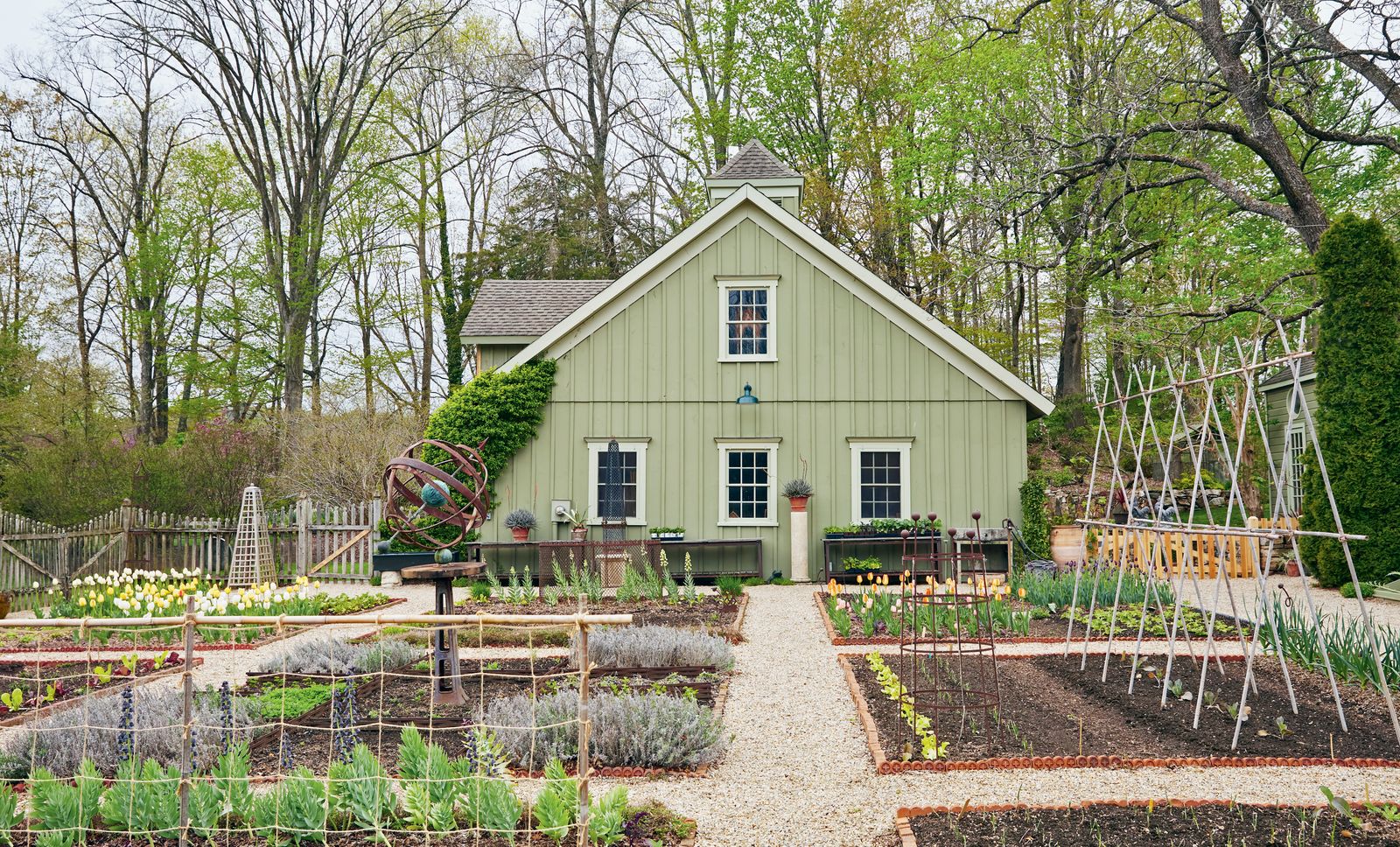
It was while touring Sissinghurst that I really began to understand the importance of a plan that would create a ‘room’ for each garden space. At Sissinghurst, one garden room leads to another, just as rooms in a house are connected by halls. After each visit, I returned home to rethink my own garden. I moved on from the sunken garden to relocate the vegetable garden so it would connect to the original barn on the property. We enclosed the spaces by adding a board fence along the three sides and crafting a rustic arbor of oak branches on the end to grow trailing roses and clematis. I eventually added a hornbeam hedge on the north side to enclose the space even more. Because this was where my compost pile had been, it became a very rich planting area.
Years later, I found an amazing set of 19th-century windows and used them to replace a tiny greenhouse that was attached to the barn to create the ‘conservatory’. It wasn’t until John decided that we should renovate the barn (we turned it into a large space for entertaining and created a guest room in the old hayloft) that the conservatory became an additional dining room. At this point we had to build another working barn to hold all the gardening equipment we had accumulated, so I began to develop the area I call the ‘working garden’. I added a large greenhouse on the north side of a new larger vegetable and cutting garden, and nearby I built a chicken pavilion consisting of two henhouses connected to an octagonal cage in the centre. Since the old vegetable garden outside of the conservatory needed a redo, I decided to create a parterre garden within the original space. Small boxwoods were laid out in geometric shapes for the early spring, and annuals for the summer.
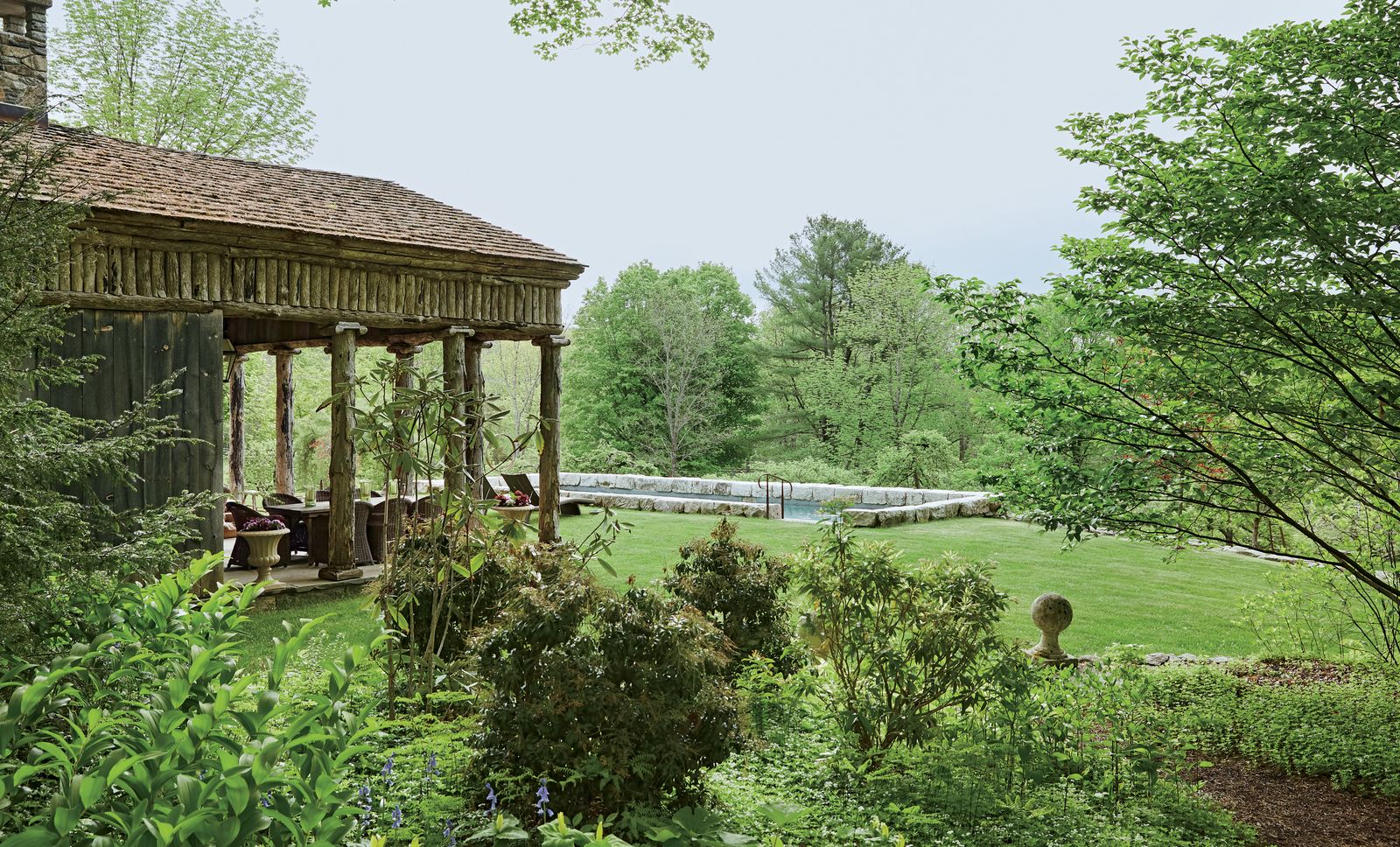
Eventually I was able to buy an adjacent piece of property that became a fruit orchard with apple, pear, and cherry trees. Later I created a path to our pool, which I placed on a high knoll to have a view of the hillside beyond. When John and I were shopping in the South of France for our store, Treillage (now closed), we came upon a large set of coping stones from a 19th-century basin that John immediately said should become our pool. When we chose this site for the pool, we also needed a pool house with a powder room, a small kitchen, and a large open space to sit in the shade. One day, the design for the pool house just came to me. The nearby town of Falls Village is filled with Greek Revival architecture, and it dawned on me that it should look as though out of the woods a great temple had emerged.
Each year I planned a garden trip to another country, and wherever I travelled, I visited the local botanical gardens and attended countless lectures by garden experts and designers, all in the hope of educating myself. The Elizabethan gardens at Hatfield House, the hedge garden rooms at Hidcote, and the parklike gardens at Rousham, Great Dixter, and Iford Manor are just a few of the places that have influenced me. It was in Italy that I saw the beautiful garden ornaments that punctuated the more-architectural designs favoured there and where I fell in love with the cypress tree. Since the cypress cannot grow in Connecticut, I’ve used arborvitae in its place for an “Italian moment.” The potagers in France blew me away with their plantings of vegetables and herbs creating beautiful rhythms of pattern, colour, and texture. However, as much as I loved the wall tiles of Portuguese gardens, I knew they had no place in my Connecticut garden, so I refrained from painting all my pots in the fabulous blue that I had seen at the Majorelle Gardens in Marrakech.