
A wonderful Highlands garden planted with lush and exotic species
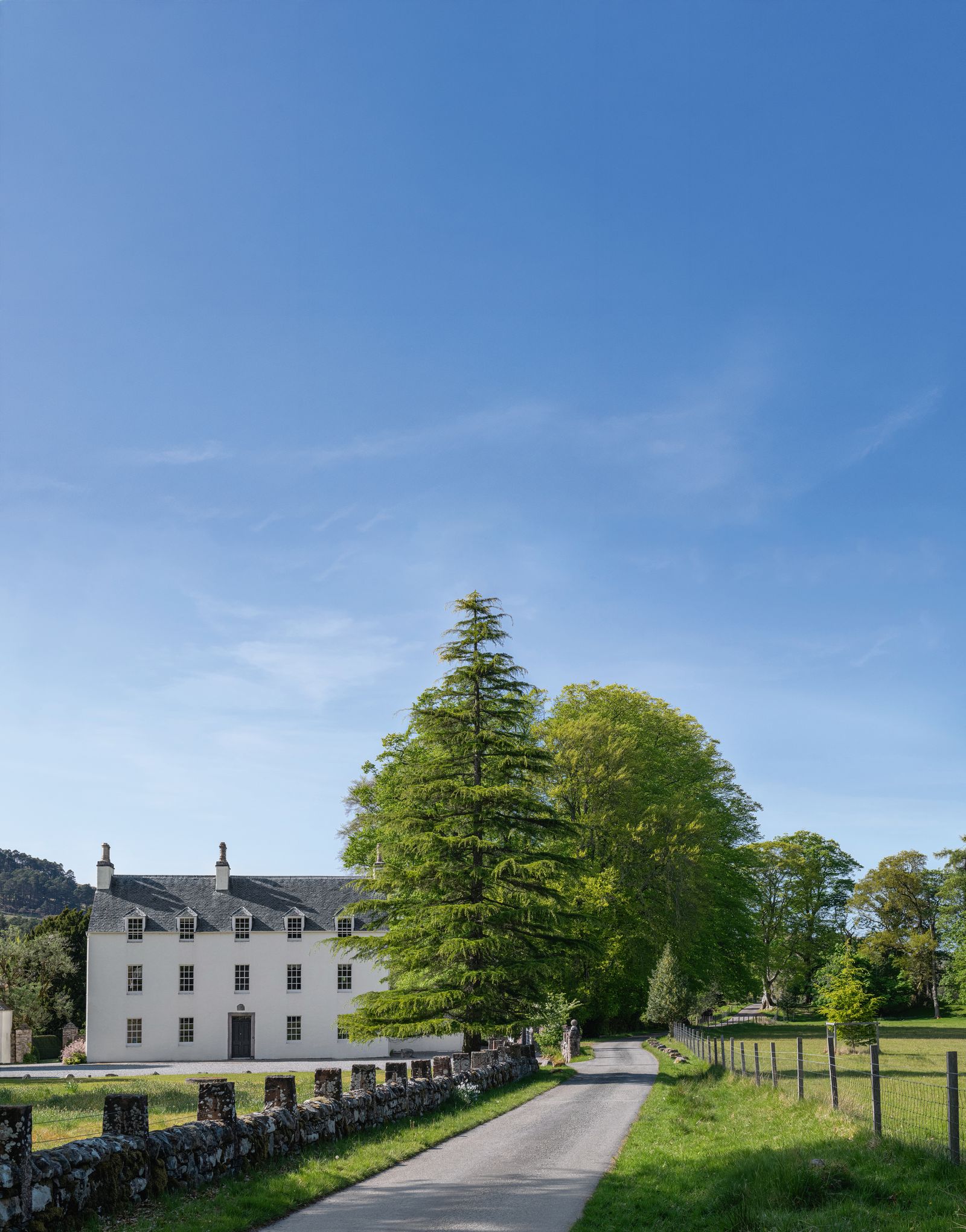
The gardens of the west coast of Scotland have something of the mythic about them. If you have never visited, they seem unlikely, maybe even impossible. The geography, the latitude, the weather; all would seem to conspire against any garden of note, let alone ones with such rich diversity of rare species as Dundonnell House. Visiting this garden, bordered by high mountains and a vast sea loch in north west Scotland, is like stumbling across a different country, tucked away within one you thought you already knew. The elemental landscape is much more typical of Scandinavia than Britain, but within the high 18th-century walls is a garden of gentle beauty and lush planting that has echoes of the temperate rainforests of China or Nepal, all set within something much more recognisable: a quintessential country garden of lawn, borders and box hedging. The genius of the place is that none of these parts clash. One minute you are bending down admiring the exotic planting, the next looking up and catching sight of the jagged peaks of An Teallach - which, in spring, can still have snow on it - as impressive as any Himalayan mountain.
The garden is owned by the Rice family, who bought Dundonnell Estate in 1998. Jane and her son Donald have taken a huge interest in the conservation of their land, which spans more than 33,000 acres, but the real passion for all of them is the garden. The family spend as much of the year here as their busy schedules allow and, each time that Jane returns, she says, she opens the garden gate and thinks of the words of the Danish author and gardener Karen Blixen, ‘Here I am, where I ought to be.’
The awakening of the garden after the long and often fierce Highlands winter is pure joy and this is when Dundonnell reveals the first of its sleights of hand. The two-acre walled garden is right next to the lively upland Dundonnell River, so has very thin soil, no more than about 18-20cm deep, with gravel below. In a less wet area, this would mean the garden drying out quickly. Conversely, without the good drainage, the garden would be a bog. This happenstance of climate and geology means it can support a wide variety of plants that have their origins in many parts of the world. Perhaps it is this that makes the garden feel so expansive.
The man who oversees it all is Will Soos, who has worked here for the Rice family almost from the start. There is a long tradition in the Highlands of calling in on gardens and Dundonnell was certainly on the lists of horticulturally minded visitors from its earliest days. But, at the end of the 20th century, dwindling funds and a drawn-out sale of the property meant the grounds fell quickly into a shaggy wildness, as many such gardens do. 'When we arrived, you could see it had been a good garden, with interesting specimens from plant-hunting trips to China and Korea, but you couldn't walk along the paths as they were so overgrown,' Jane remembers.
Will was then working at nearby Inverewe, a superb Victorian botanic walled garden owned by the National Trust for Scotland. He had trained at another exceptional garden, Threave, and also worked for two specialist nurseries run by knowledgeable plants-people - Cally Gardens and Elizabeth MacGregor Nursery in Dumfries and Galloway. Jane met him at Inverewe and thought straight away, 'This is our man.' His approach from the outset at Dundonnell has been of patient stewardship, taking his lead from the land rather than imposing a set of ideas upon it.
It has worked in some style. Plants that were not thriving have been gradually replaced by ones that do well, and Will's depth of knowledge and daily contact with the garden means that, once they are well established, he can let plants have their head. One section of the garden weaves seamlessly into another, linked by several hundred metres of meticulously clipped box hedging. None of the plants are staked, though Will makes sturdy hazel obelisks for the climbers. In the middle of the walled garden is a vegetable garden, used enthusiastically by the family during their visits and planted up by Will to be most productive at these times. And he has expanded the planting. 'He'll say, “It would be good to have a border here,”' Jane says, laughing, and I reply, "Won't that be more work?" He responds, "It'll be fine." And it always is.' Scent is very important to Jane. From early spring, the witch hazels (Hamamelis x intermedia 'Jelena' and 'Diane') light up the garden with their fiery colours and spike the air with their fragrance.
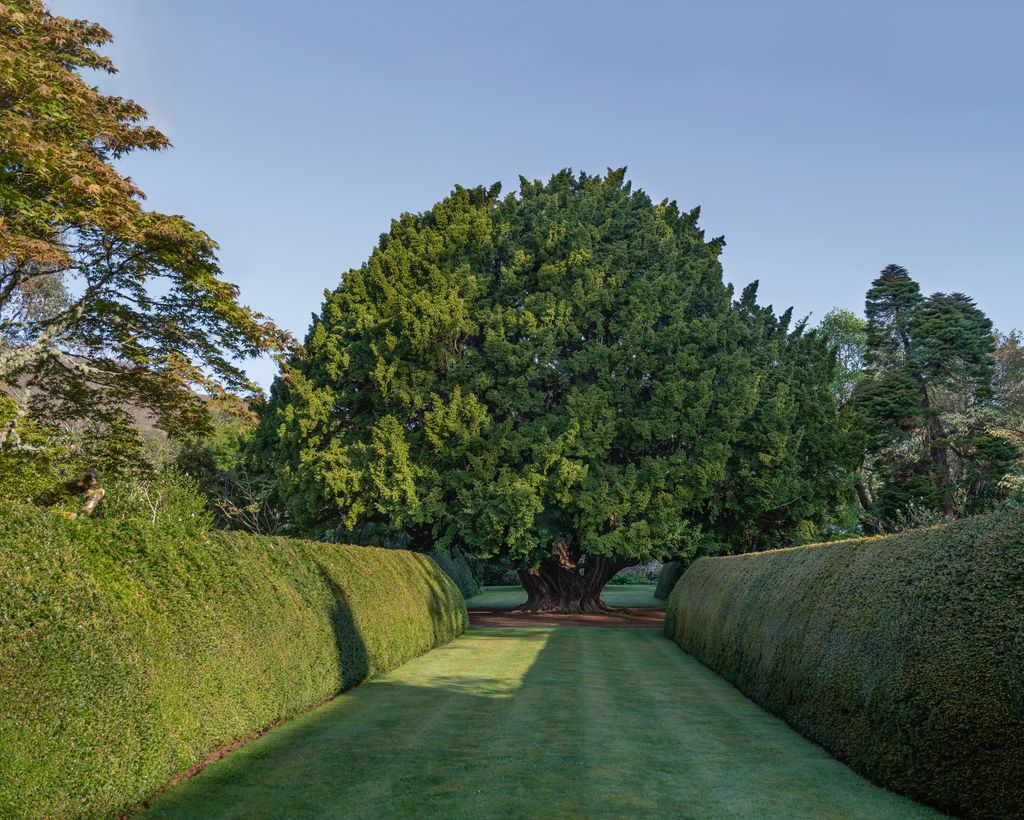
Amid this slow change, certain markers remind you not only of the longevity of this garden, but also its ancient setting. To Will's delight, many different species of lichen have jumped the walls and taken up residence, notably tree lungwort (Lobaria pulmonaria), providing a kind of alchemy to the garden, a reminder of the ancient forest that is lichen's natural home. In the middle of the garden is a yew, thought to be the second oldest in Scotland at more than 1,000 years old. As seen from the house, it billows out as though it has been expertly cloud-pruned by a master Japanese topiarist, yet it is only the weather that fashions it. Underneath, the long limbs stretch up into the dense evergreen foliage, offering a perfect hiding place for Jane's many grandchildren when they come to stay. In fact, the whole garden invites exploration and play, like a Caledonian stage setting of A Midsummer Night's Dream, where to get lost in the woods is also a route to finding yourself.
 Andrea Jones1/11
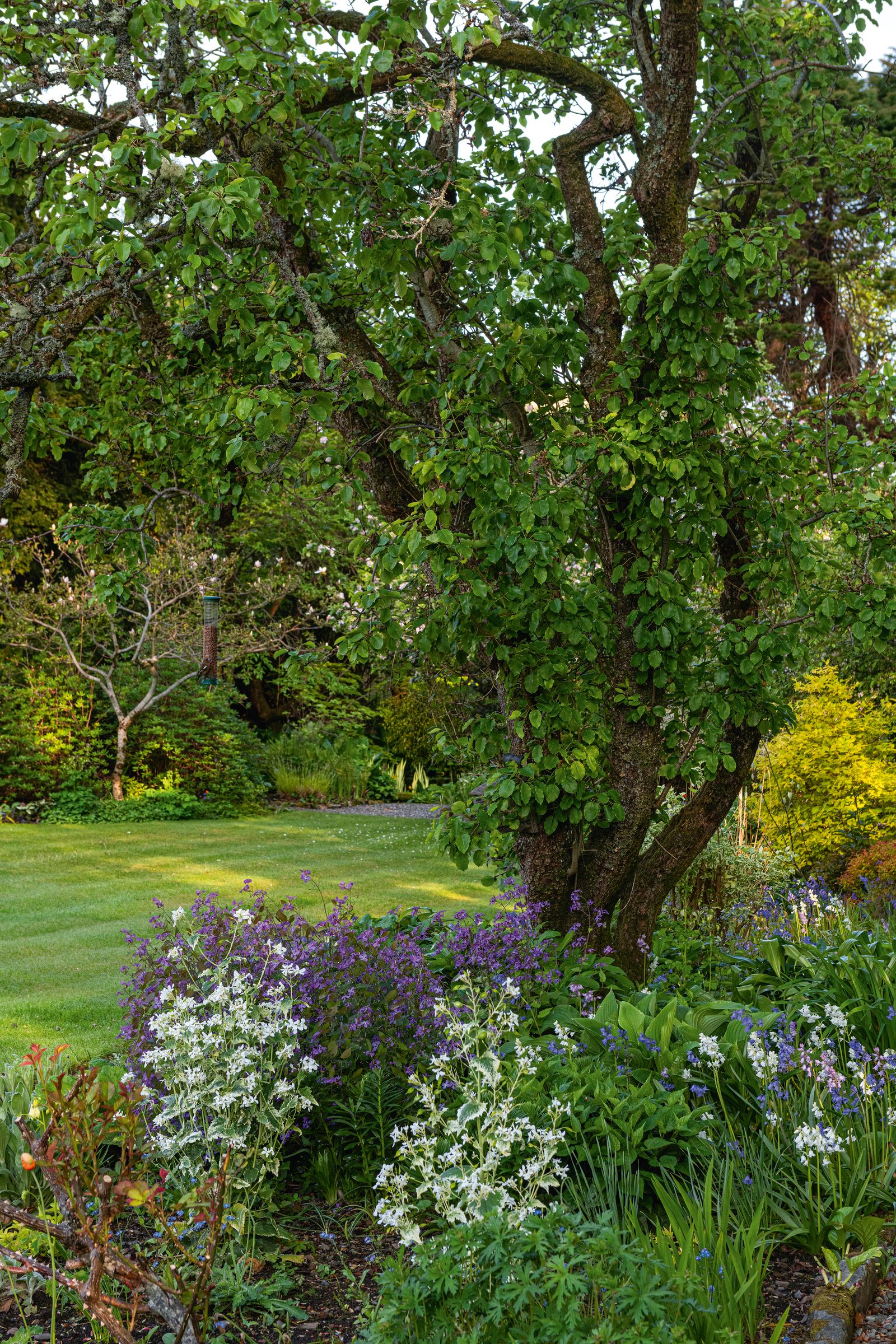
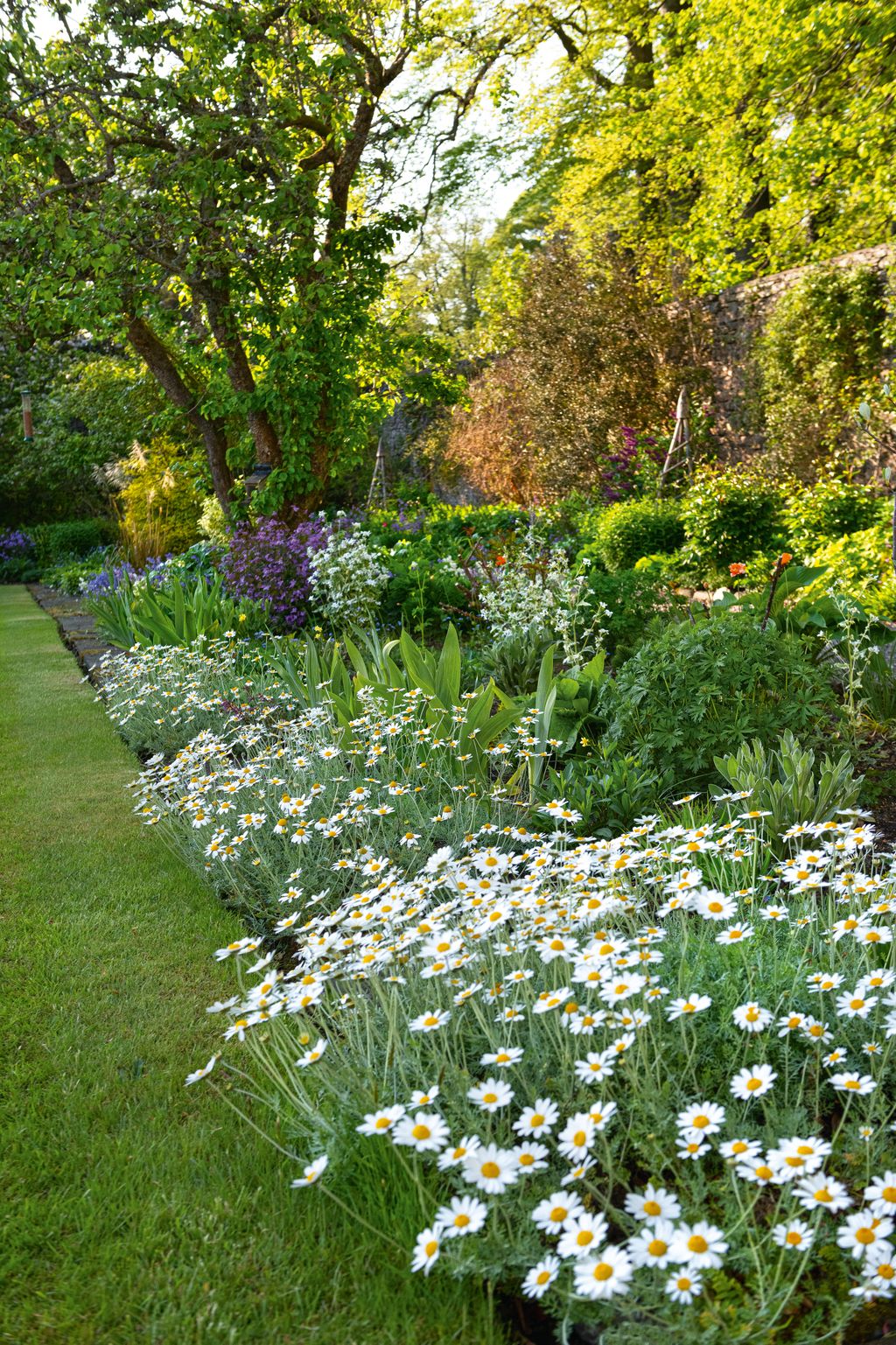
Long border near the conservatory including Anthemis punctata subsp cupaniana, beared Iris, Pyrus - pear tree, Lunaria annua 'Alba Variegata', Lunaria annua 'Corfu Blue', Hostas, Hyacinthoides non-scripta - bluebells and Geranium 'Johnson Blue'.
 Andrea Jones2/11
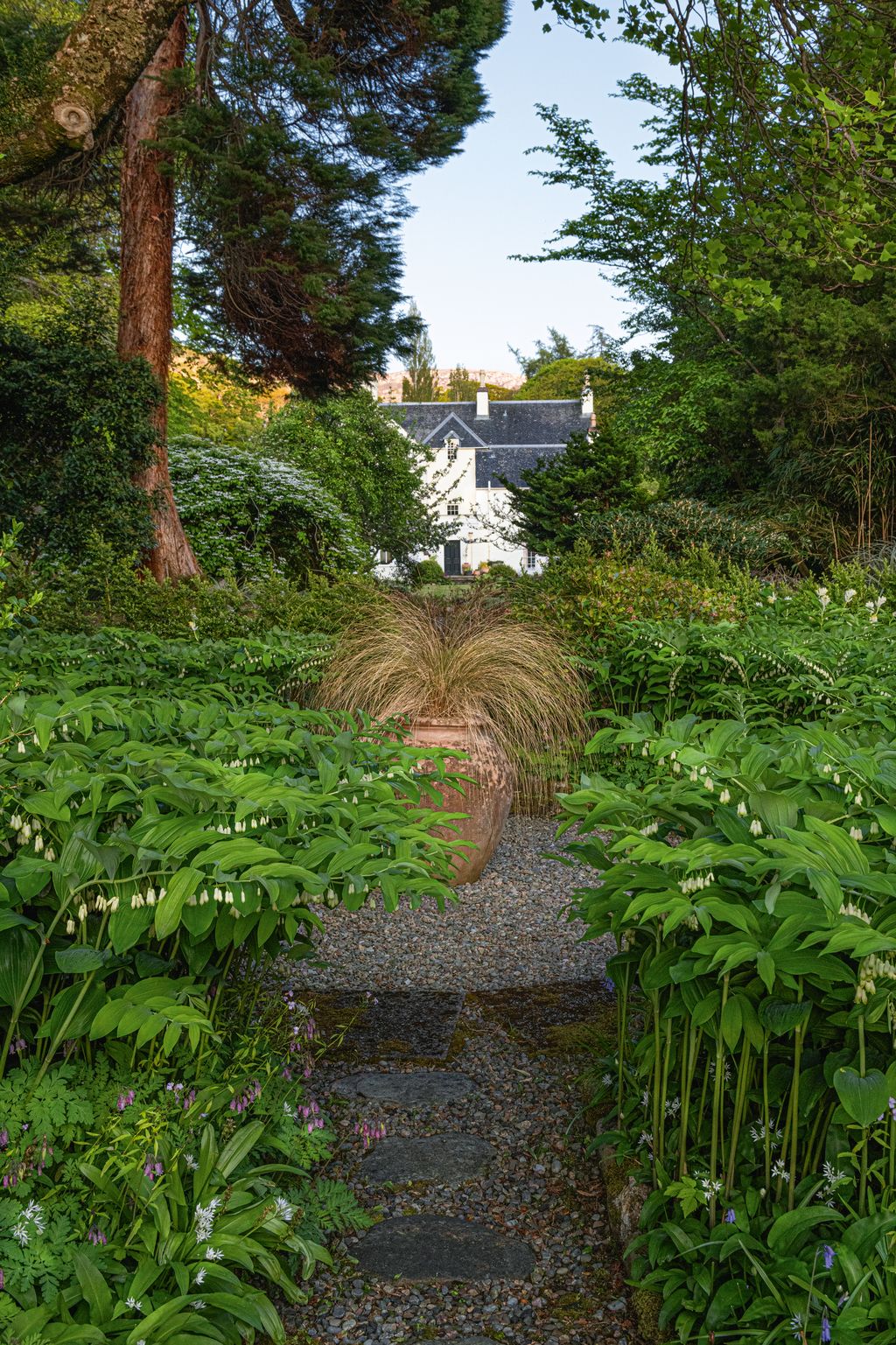
Solomon's seal encircles a terracotta pot containing Chionochloa rubra.
 Andrea Jones3/11
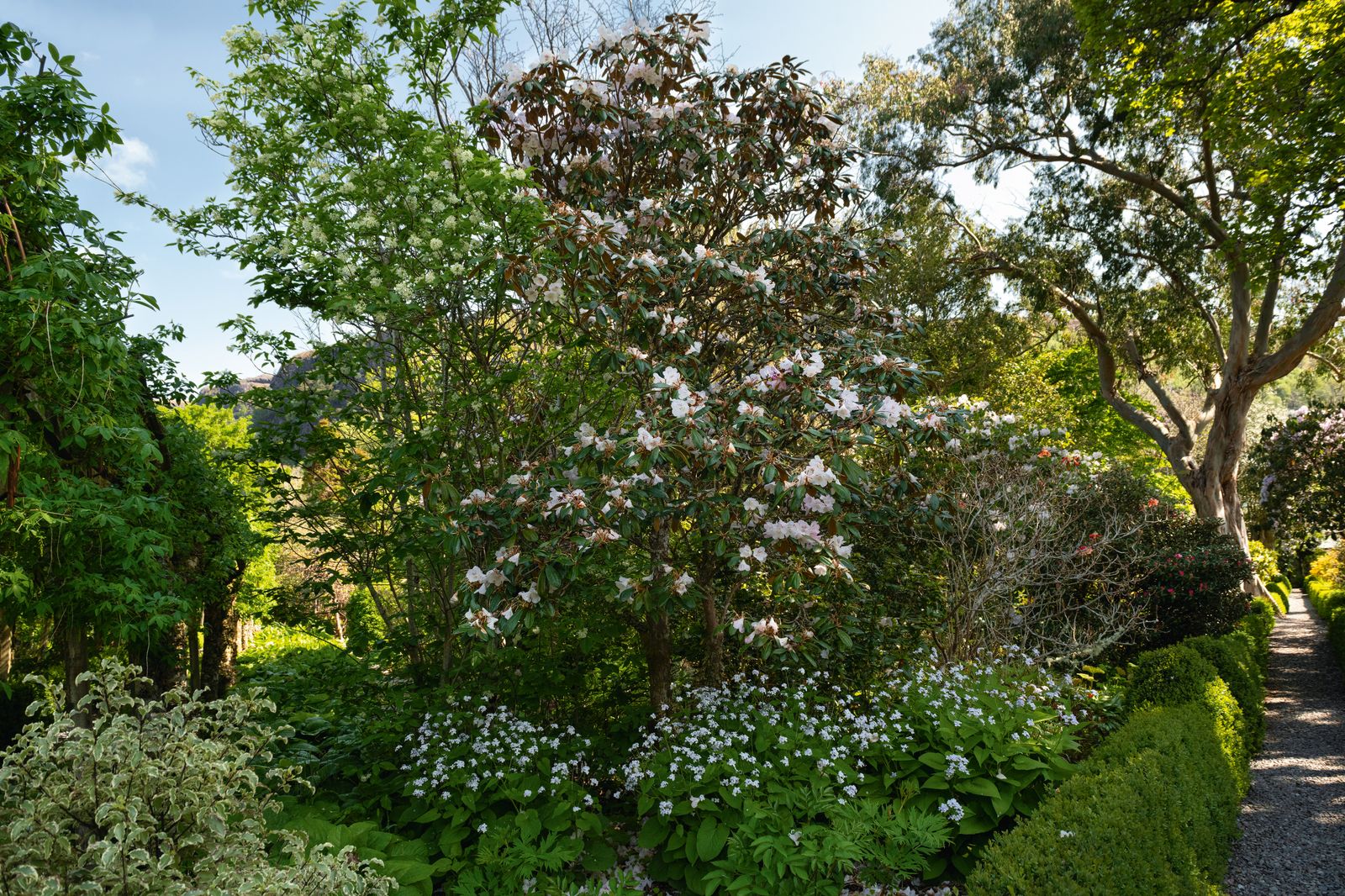
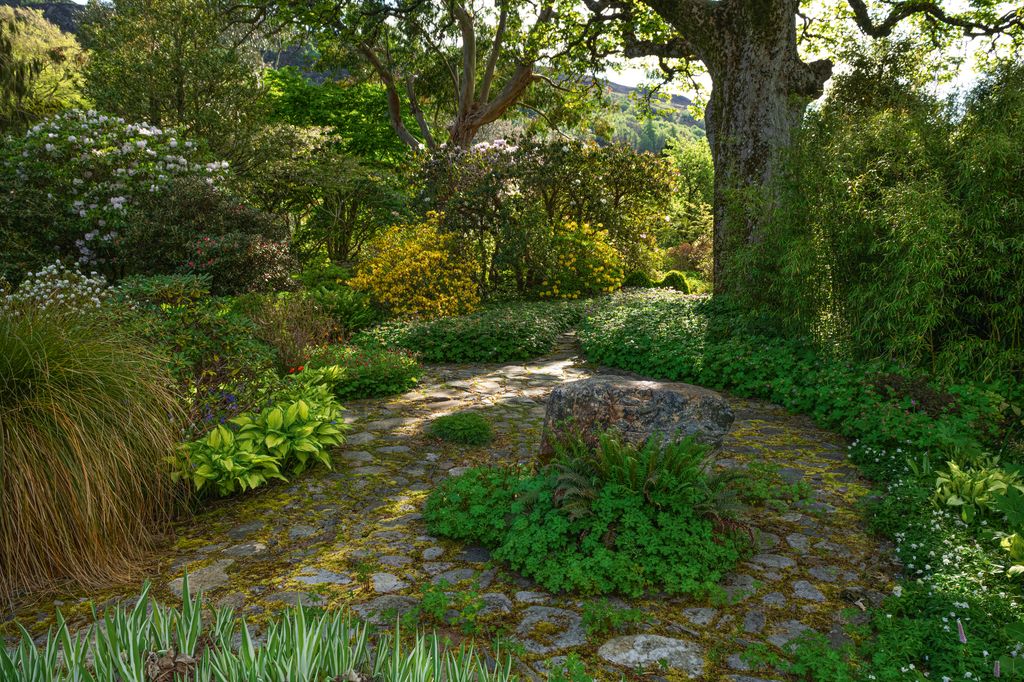
Ferns and geraniums grow beside a rock in a shady cobbled area, edged on the left by yellow leaved hostas, bluebells and shaggy Carex secta with pale rhododendrons behind. Iris ensata foliage in the foreground picks up on white Anemone nemorosa 'Vestal' on the right.
 Andrea Jones4/11
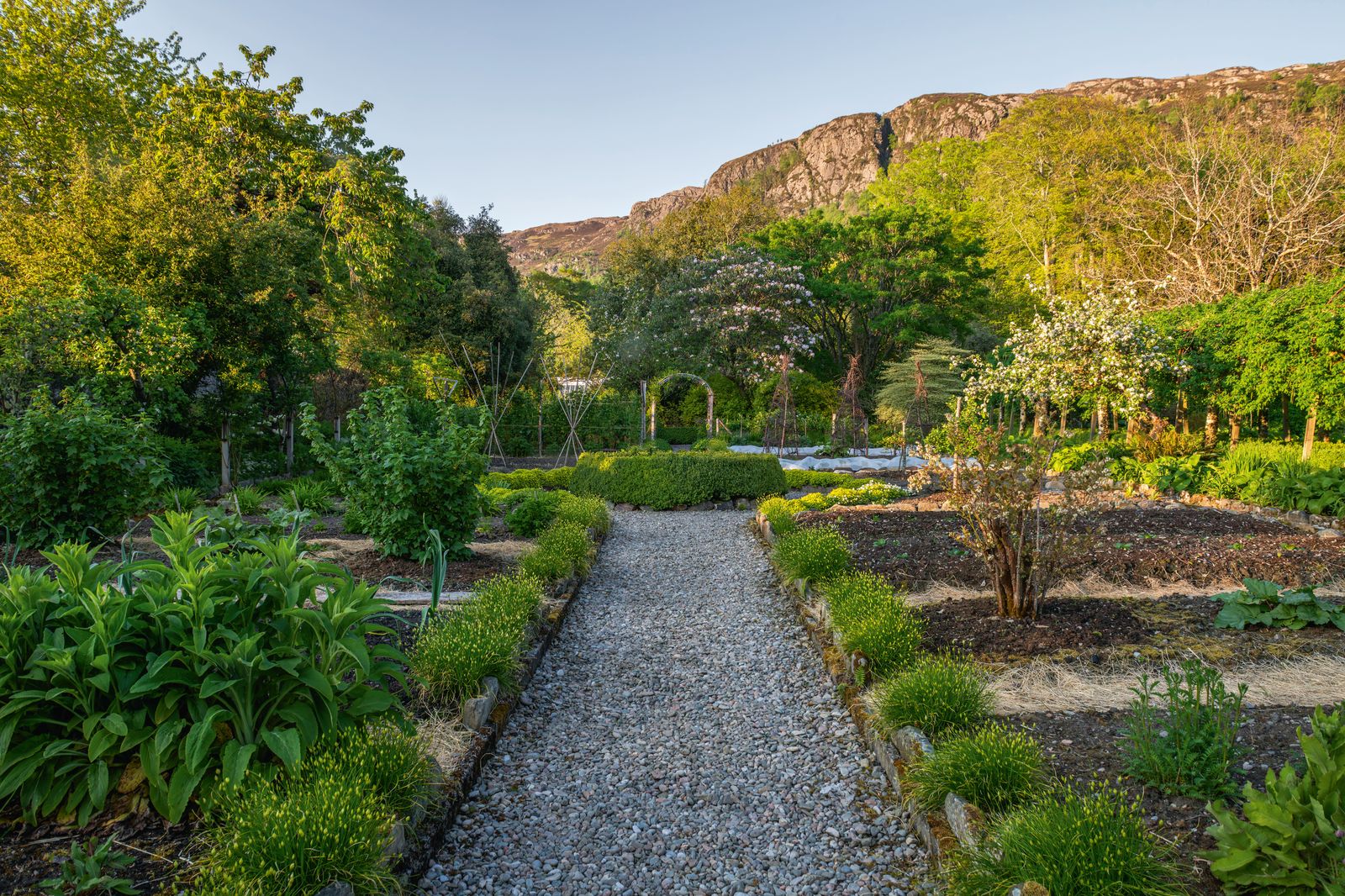
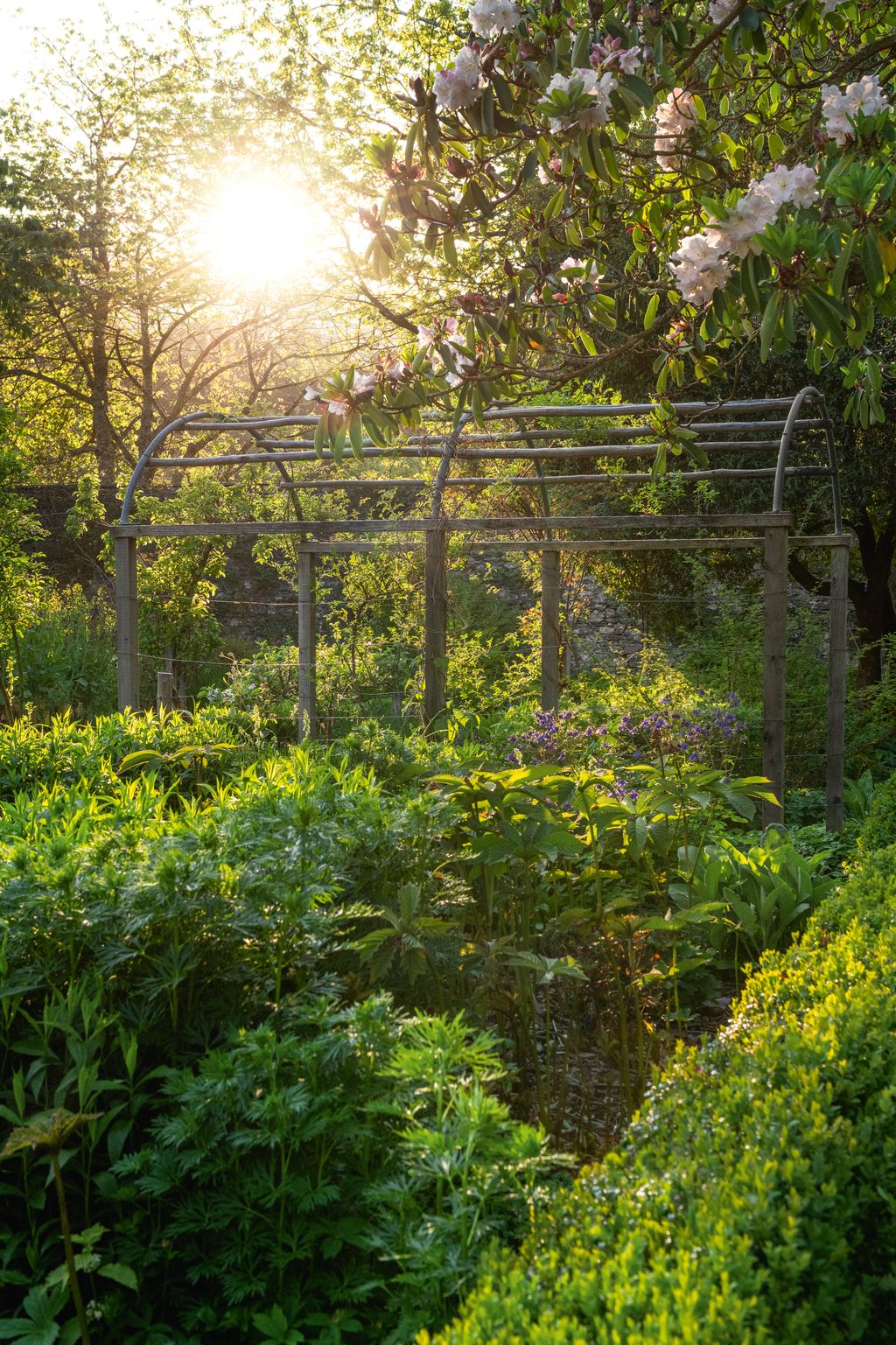
Branches of Rhododendron (Loderi Group) frame a view of the vegetable garden entrance and arched pergola.


 Andrea Jones5/11
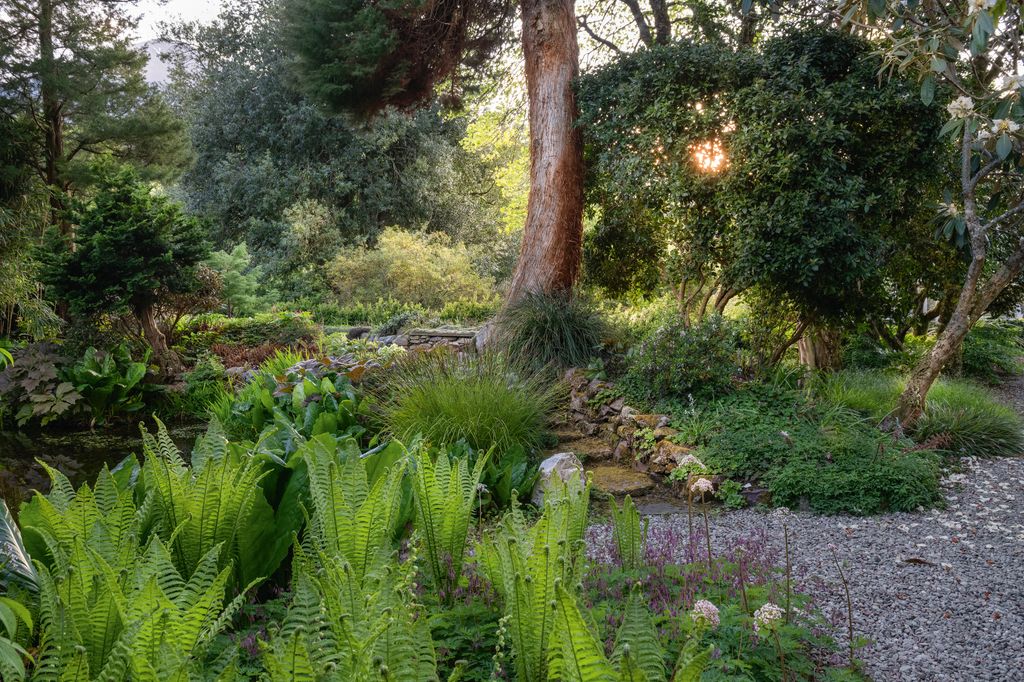
Shuttlecock ferns and Dicentra formosa thrive beside the pond, where a tall Japanese cedar 'Elegans' contrasts with white Viburnum plicatum 'Mariesii'
 Andrea Jones6/11
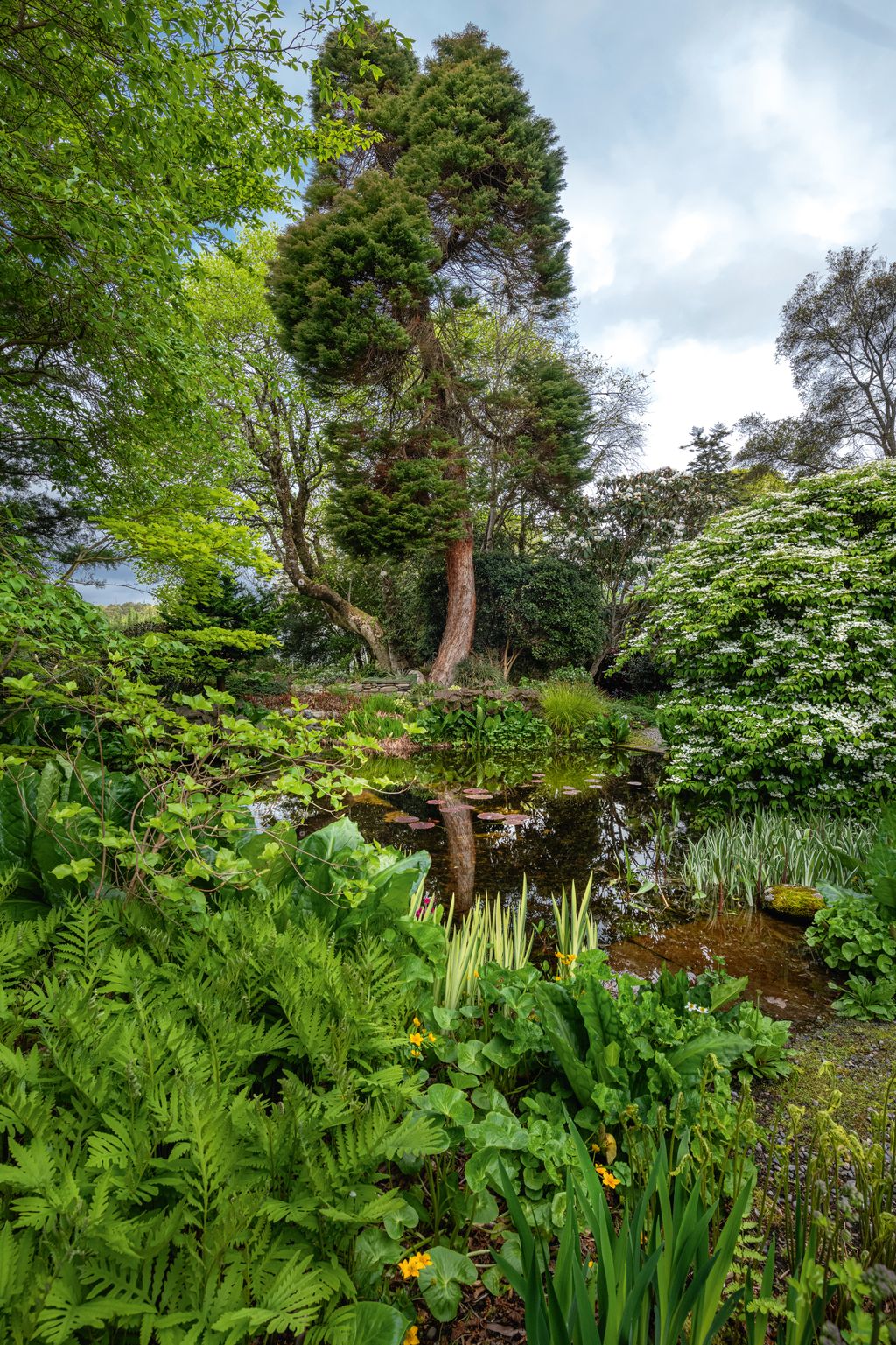
Planting around the pond including a Cryptomeria japonica 'Elegans',(back), Lysichiton americanus - skunk cabbage, Onoclea sensibilis, Iris pseudacorus 'Variegata' - yellow flag 'Variegata', Camassia, Hostas, Primula pulverulenta, Matteucia struthiopteris - shuttlecock fern, Tellima grandiflora - Fringecups, Viburnum plicatum 'Mariesii- Japanese snowball.
 Andrea Jones7/11
Tapering hedges of neatly clipped yew lead the eye to the majestic ancient yew at the heart of the garden, thought to be more than 1,000 years old, which has been shaped entirely by the elements.
 Andrea Jones8/11
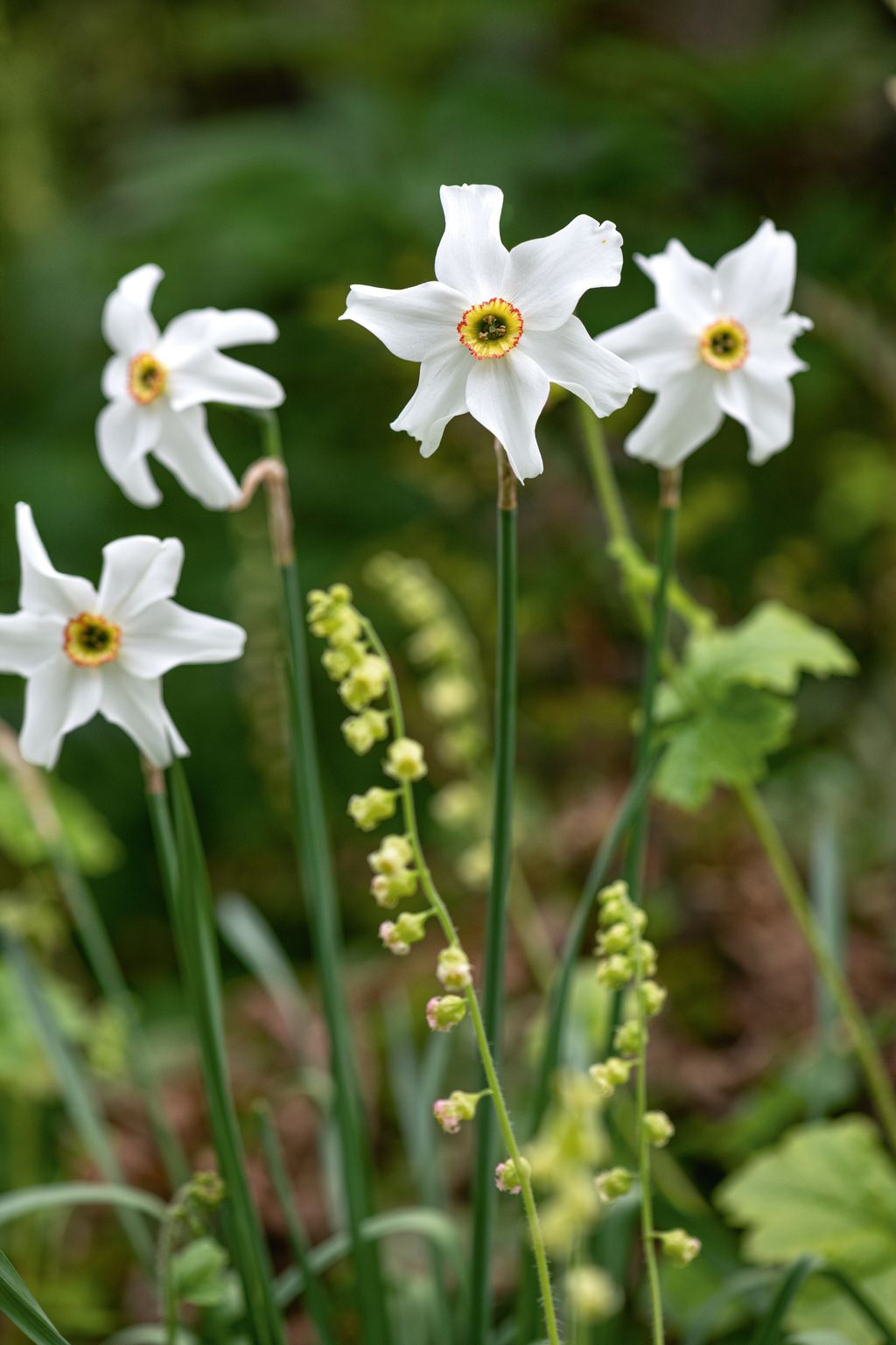
Narcissus poeticus - poet's narcissi or pheasant's eye with Tellima grandiflora - Fringecups


 Andrea Jones9/11
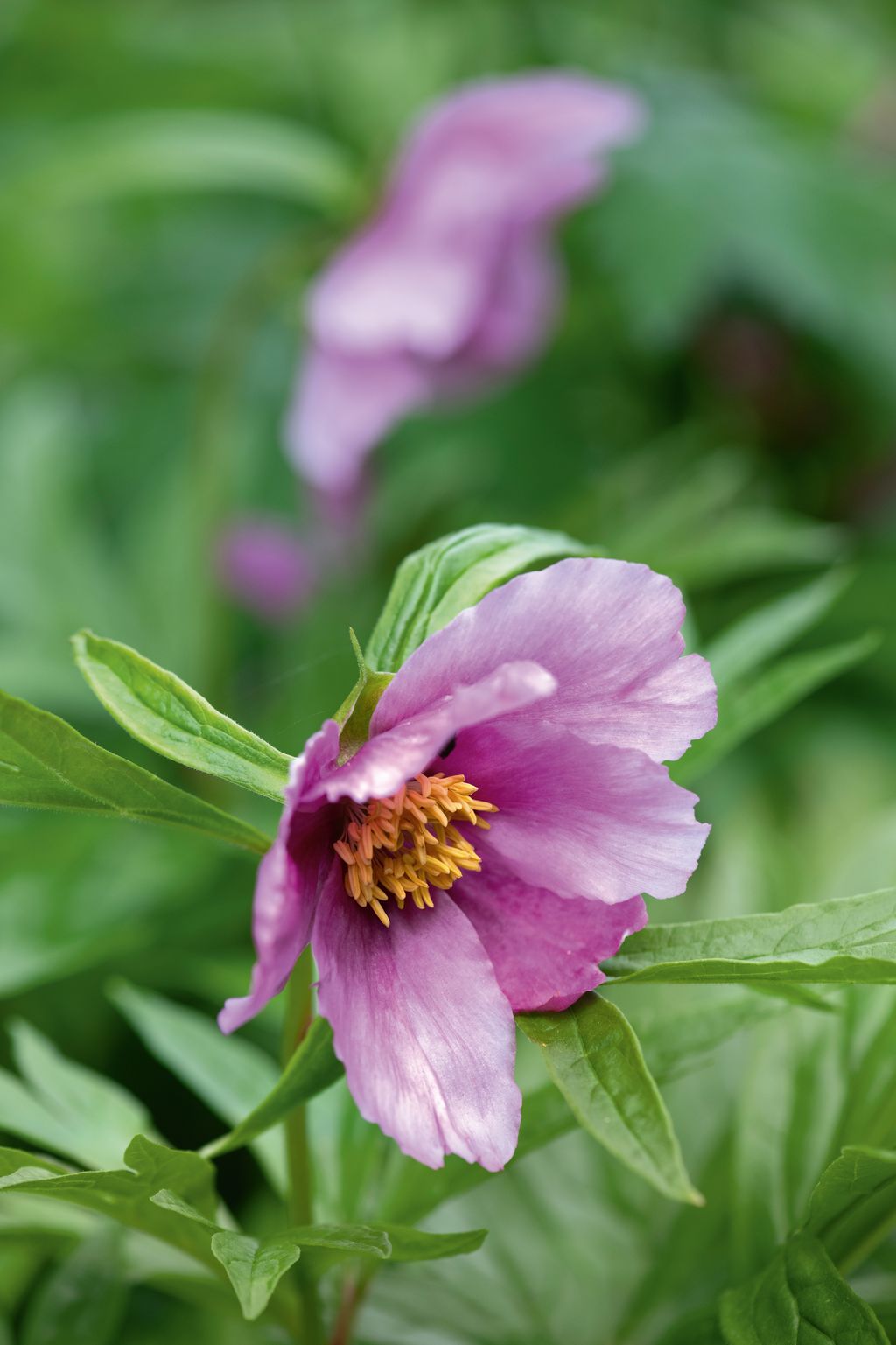
Paeonia veitchii
 Andrea Jones10/11
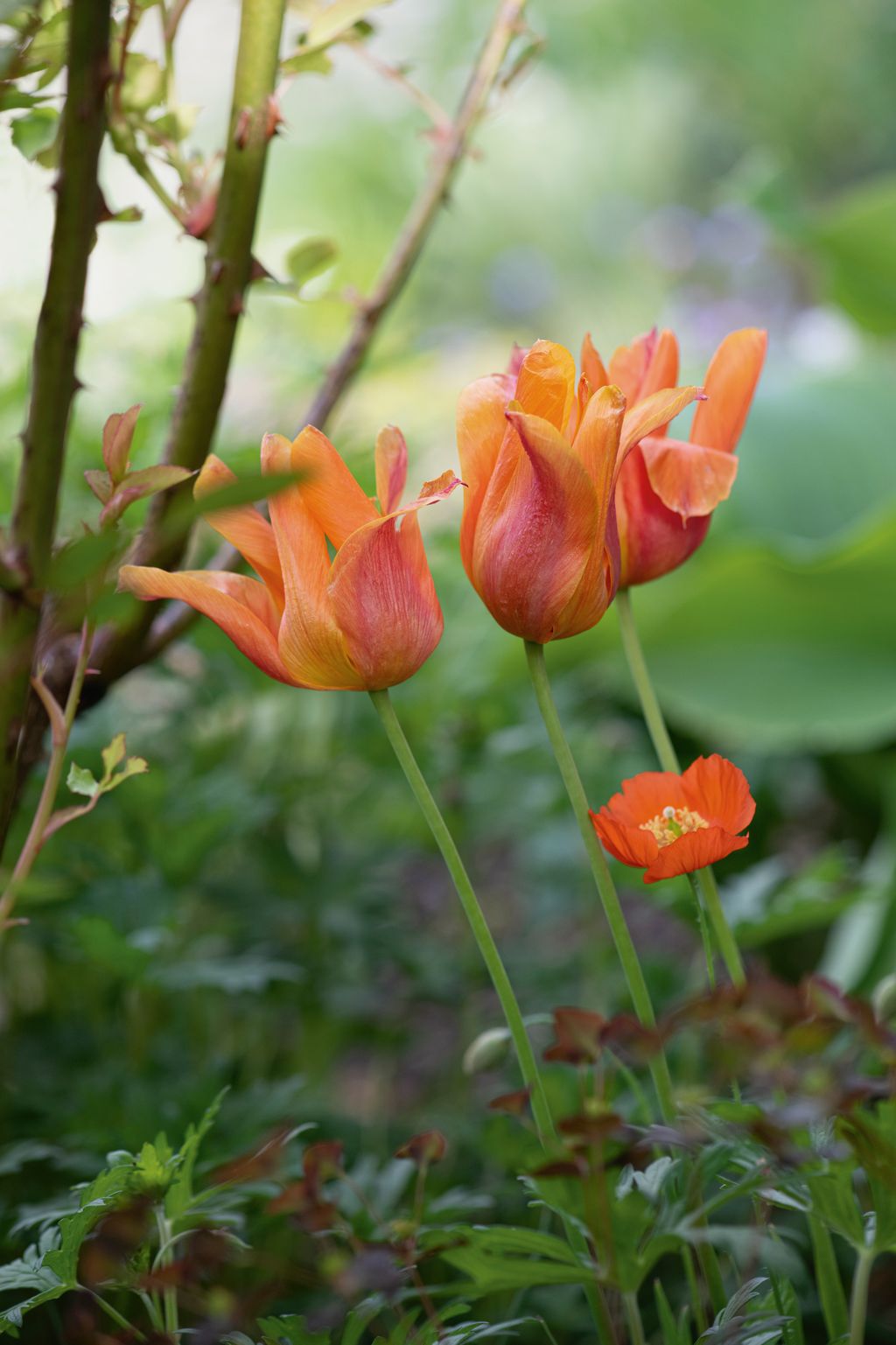
'Fidelio' tulips with Papaver cambricum 'Frances Perry'.
 Andrea Jones11/11
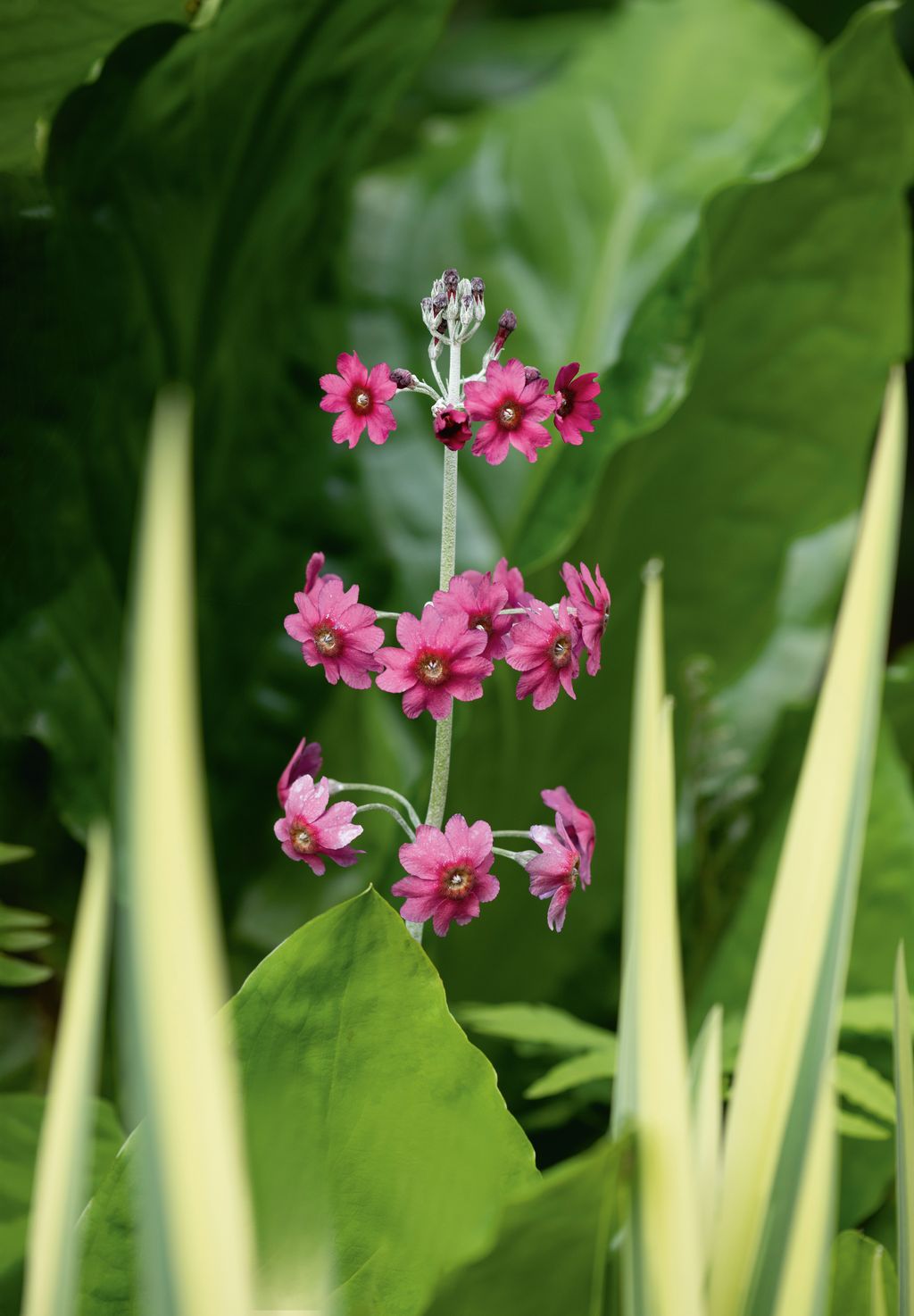
Primula pulverulenta bears whorls of reddish-purple flowers.


