
A mother & daughter's restoration of a 16th-century Tuscan convent
Henry James once described his friend Edith Wharton as a ‘great and glorious pendulum’ swinging back and forth across the Atlantic. In a similar fashion, Holly Lueders, a designer from New York, has returned to Greece every year since she first visited the country as an 18-year-old student. Holly grew up in a sleepy town in Missouri with little in the way of culture or local craft, but her family was artistic and good with their hands. ‘Anything we wanted, we made for ourselves,’ remembers Holly. She studied art history and archaeology at Columbia University and completed her studies in Athens.
‘I went to Greece for the ancient world,’ she explains. Indeed, in Holly’s life, the past is always present. She has collected and worn antique Greek traditional clothing since her teenage years and was inspired by classical statuary to create her own fashion label in New York. Summers were spent on the Greek island of Patmos with her three children, restoring two houses that she had bought there in the Seventies. It was the sort of household where if you required a Byzantine mosaic floor, you created it yourself.
In 2000, Holly turned her sights on Italy, where she has always wanted to live. Her youngest daughter Venetia Sacret Young, then 18, shared her mother’s passion for old houses and agreed to help her find a restoration project. ‘I thought that it would only take a couple of years at most,’ says Venetia. ‘But, in fact, it took far longer.’ Holly and Venetia’s search for an untouched and inexpensive house involved driving all over Italy. Finally, in 2006, a friend told them about a derelict convent outside the tiny medieval hill town of Pitigliano in southern Tuscany. It was rumoured to be the work of the Florentine architect Antonio da Sangallo the Younger, who designed Palazzo Farnese and Villa Madama in Rome.
Holly remembers their first visit to the convent, which had been uninhabited for 60 years. ‘It was late summer, the ground was dry and there were no trees. The building had no glass in the windows, running water or electricity.’ They thought it was perfect. ‘We both had the same feeling that this was the best version of the fantasy we had in mind,’ adds Venetia.
Having bought the place, they moved in at once. They used only two rooms, even when Holly’s partner Bill Gruy came to stay. ‘The dogs slept in suitcases in the fireplace,’ she recalls. Holly found a drawing in the Uffizi archives dated 1522, which showed where Da Sangallo had sited the original walls. Digging down to the original level of the building made it appear taller and slimmer, and its proportions more elegant.
MAY WE SUGGEST: The Tuscan monastery of sculptor Emily Young
While waiting for planning permission, Holly and Venetia started work on the 26-acre garden. They planted concentric rings of lavender around an ancient fig tree, and roses in the cloister and outer courtyard. They also planted cypress trees near the house and olive trees in the fields. Eventually, work on the house began. ‘We ended up being our own project managers, putting together teams of contractors and working alongside them,’ says Holly.
Their aim was not to restore the house to its original state, but to reveal its intrinsic character. ‘We took away everything that had been added in the past 100 years. Beauty was more important than any amenity.’ Because of the cold, for two winters they had to sleep in a friend’s house in town until the windows were installed. The internet proved invaluable. In order to age the areas of new plaster on the exterior walls and grow lichen on their surface, Venetia found a recipe online for a potion of live yogurt, which was boiled for two days and then sprayed on using a water cannon.
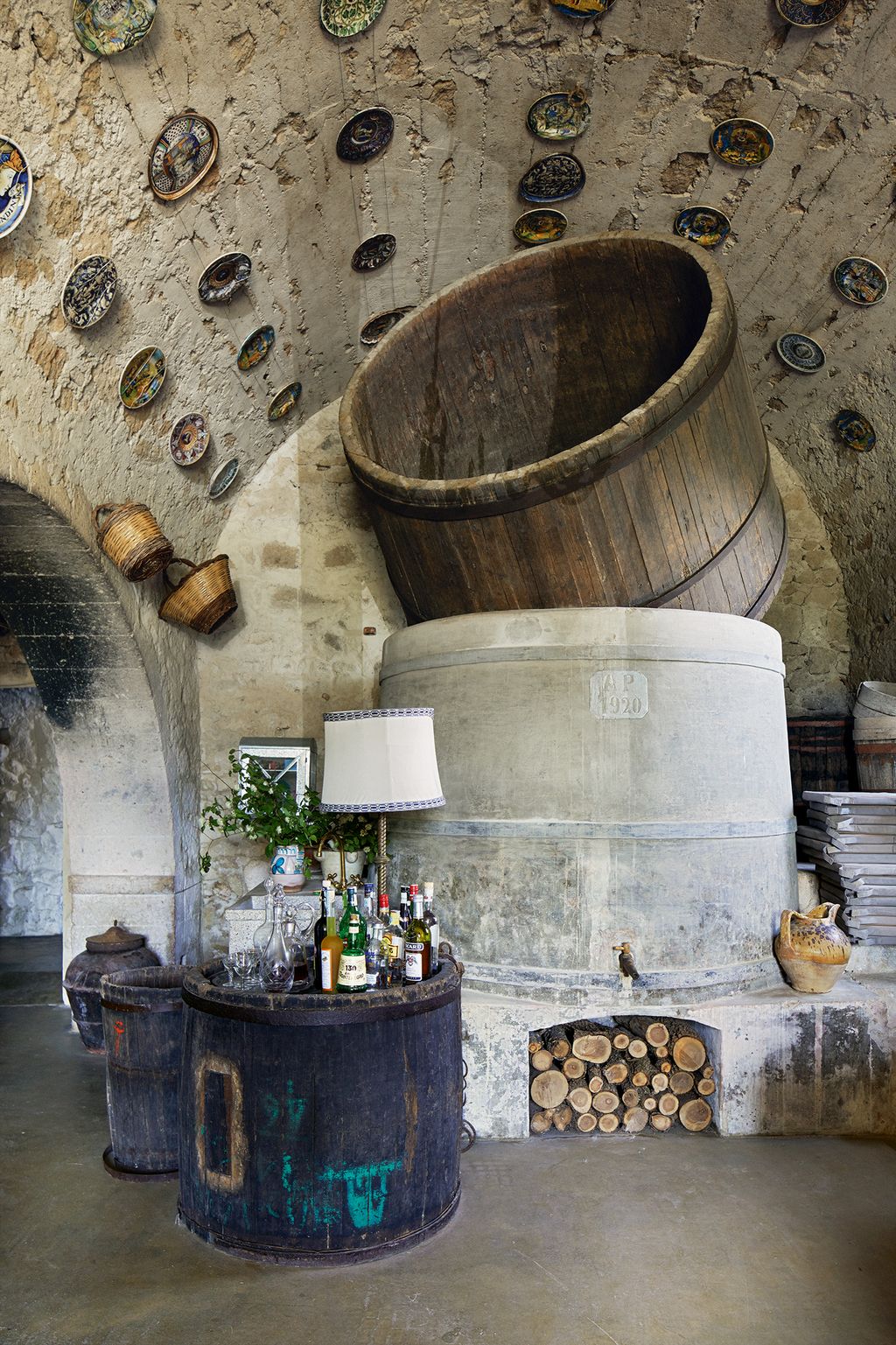
The house is still entered through a tinaio – the place where monks traditionally stored wine in huge vats, which have been left in situ. ‘My theory of decoration is that every room should be filled with as many places as possible for people to lie down,’ says Holly. Other hallmarks of her style include small sinks, which are conveniently placed throughout the house to facilitate flower arranging. For the kitchen, however, she prefers to use a capacious additional tub with a wooden lid ‘to hide washing-up until someone else comes to do it’.
Venetia’s bedroom is on the ground floor, where there is also a darkroom, a kiln and a corridor with a doorway opening onto the garden. Upstairs, there are 10 bedrooms (formerly monastic cells), nine bathrooms, a sitting room and a studio. As was the case with proponents of the Arts and Crafts movement, Holly and Venetia have made most of the objects, ceramics, artworks and furniture themselves. The latter even painted a cloudscape on one of the bathroom ceilings. ‘If I had my way,’ she says, ‘I’d still be lying on my back on the scaffold perfecting it.’
Now, at last, the convent is completed. Holly is producing lavender oil from her own plants and plans to host various exotic retreats, which she describes as ‘immersive orgies of beauty for the senses’, as well as organising hands-on workshops on topics such as sustainable earth-based architecture. Venetia is working on a photographic book of contemporary Greek interiors and restoring a house for a client in Athens.
They look back with a sense of wonder at the number of years they spent working together on the convent. ‘I am amazed every time I turn a tap on and hot water comes out,’ jokes Venetia. ‘It has undoubtedly been a positive experience. My mother was a career mother and this project gave us the opportunity to spend lost time together.’ ‘We are strong personalities and were in conflict a lot of the time,’ recalls Holly. ‘But I must admit that most of the best ideas were Venetia’s’.

Holly Lueders: hollylueders.com
Venetia Sacret Young: venetiasacretyoung.com
Ex Convento di San Francesco: exconventodisanfrancesco.com
 Simon Watson1/20
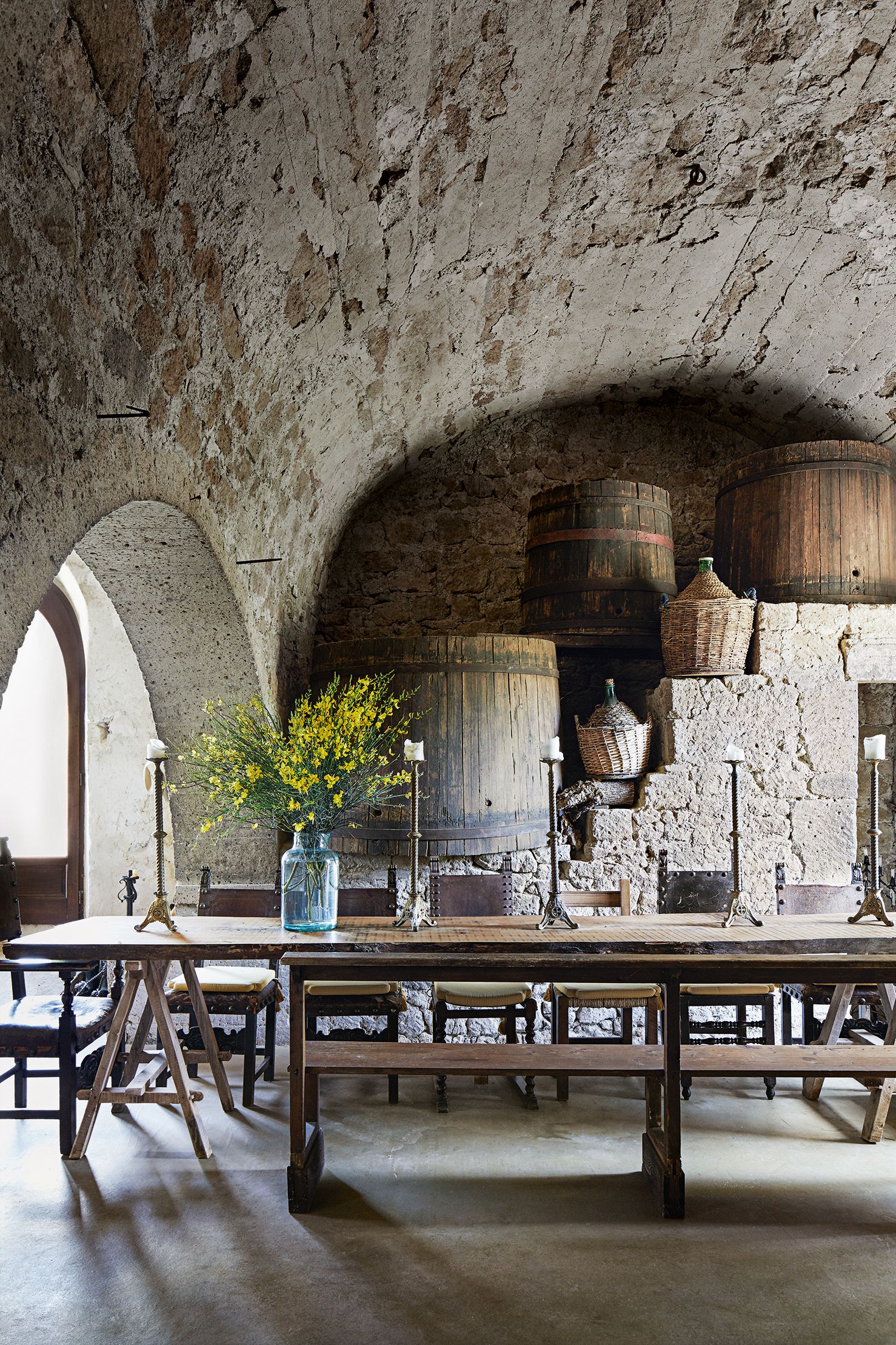
The building is still entered from the garden via the tinaio, where the monks used to make and store wine. Some of the original wine barrels can be seen in the dining area, where the table is also made of chestnut.
 Simon Watson2/20
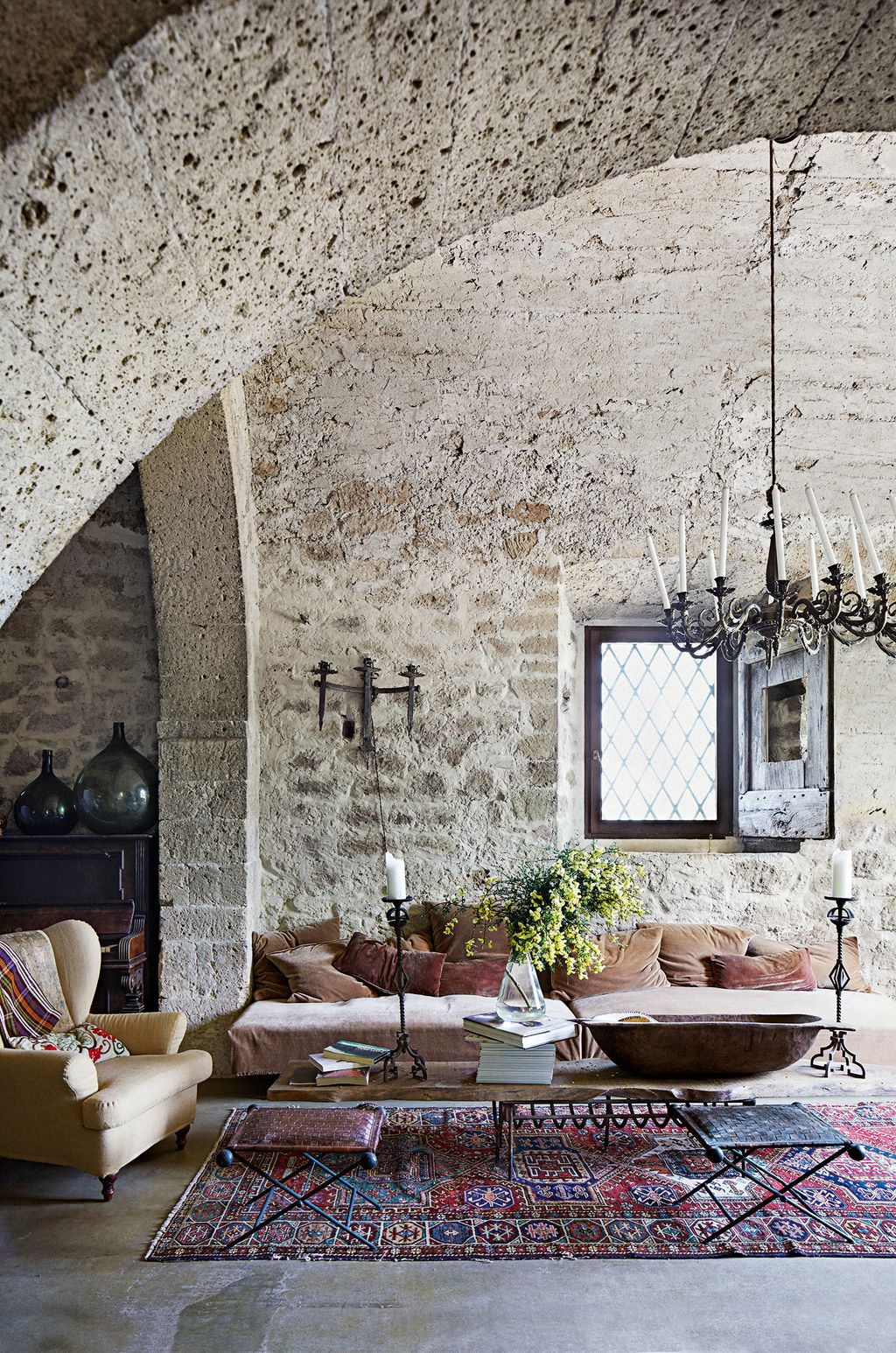
The coffee table in the seating area is a slab of chestnut wood supported by an iron ember grate.
 Simon Watson3/20
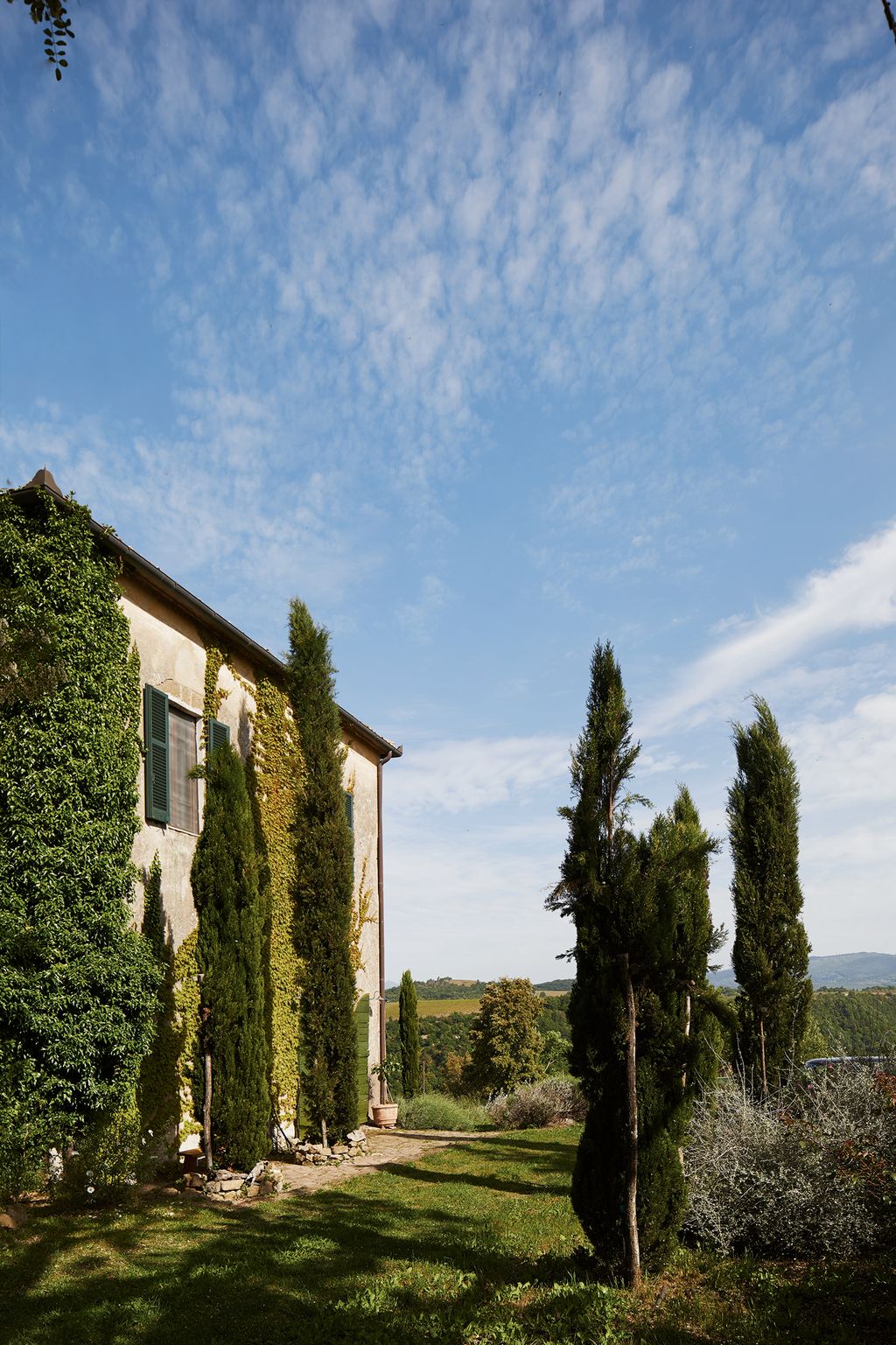
The sixteenth-century building has been revitalised after 60 years of neglect.
 Simon Watson4/20
The original wine barrels in the tinaio have been left in situ but rearranged for dramatic effect.


 Simon Watson5/20
A travertine staircase joins the ground floor to the corridor of bedrooms upstairs.
 Simon Watson6/20
Holly in the garden with her Jack Russell terrier Ziggy.
 Simon Watson7/20
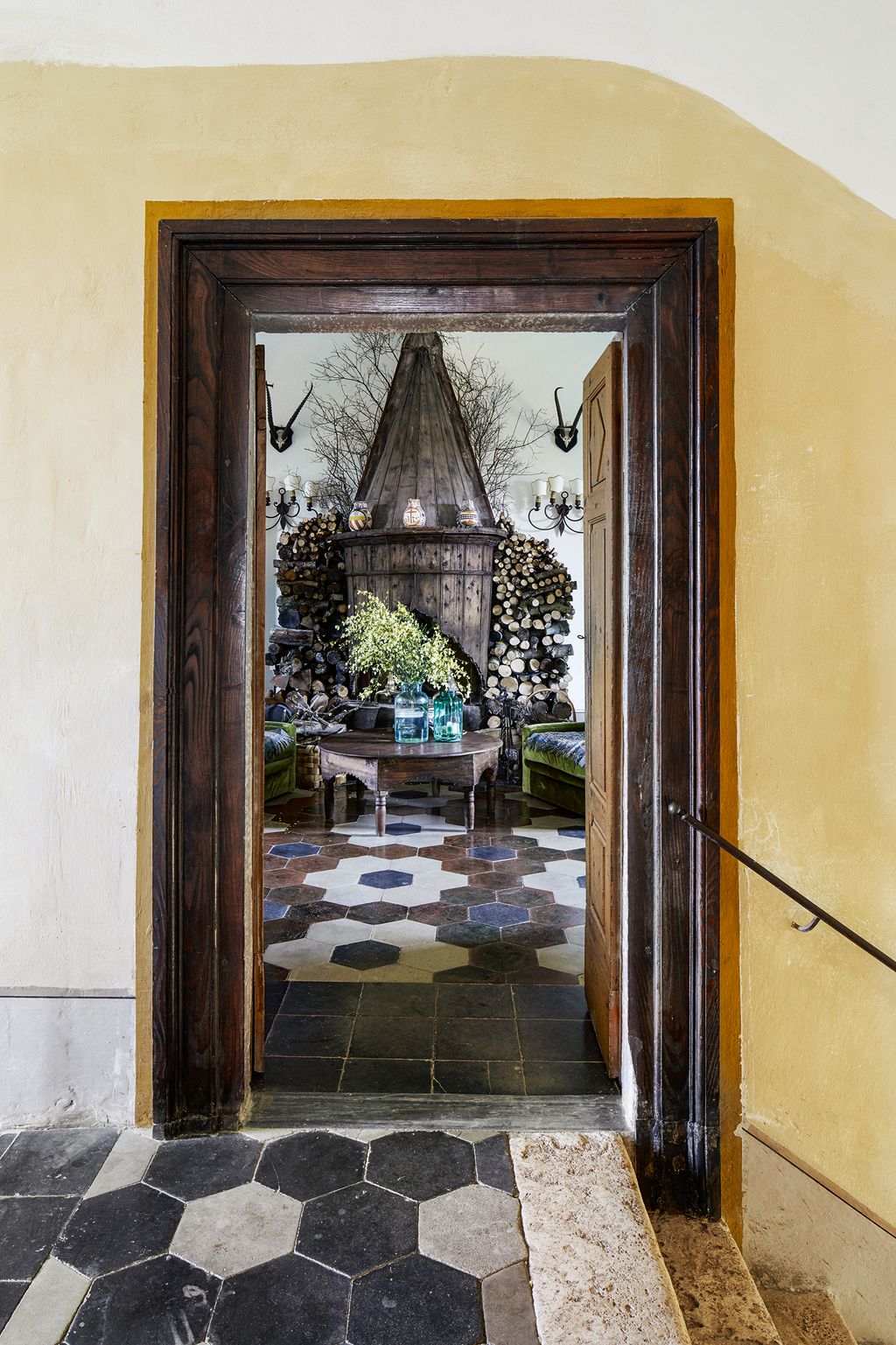
A door at the top of the stairs opens into the drawing room, where the concrete tiled floor dates from the early twentieth century; the chimneypiece is an antique from northern Greece.
 Simon Watson8/20
Roses in the cloister.


 Simon Watson9/20
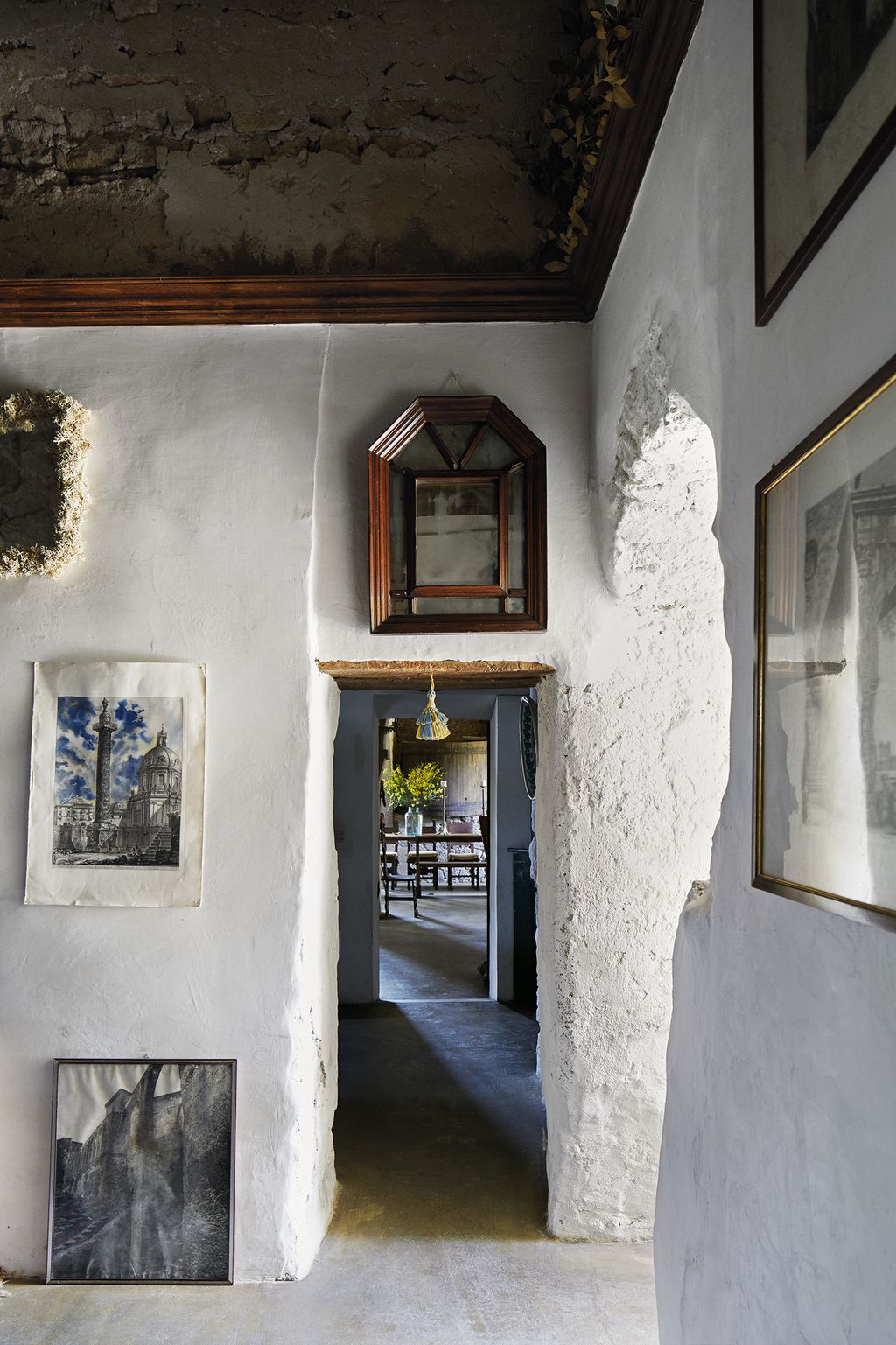
In the library, hand-coloured prints stand out against the white walls.
 Simon Watson10/20
The modern sofa in the drawing room is covered in silk velvet. A collection of prints on the wall depicts Franciscan monks.
 Simon Watson11/20
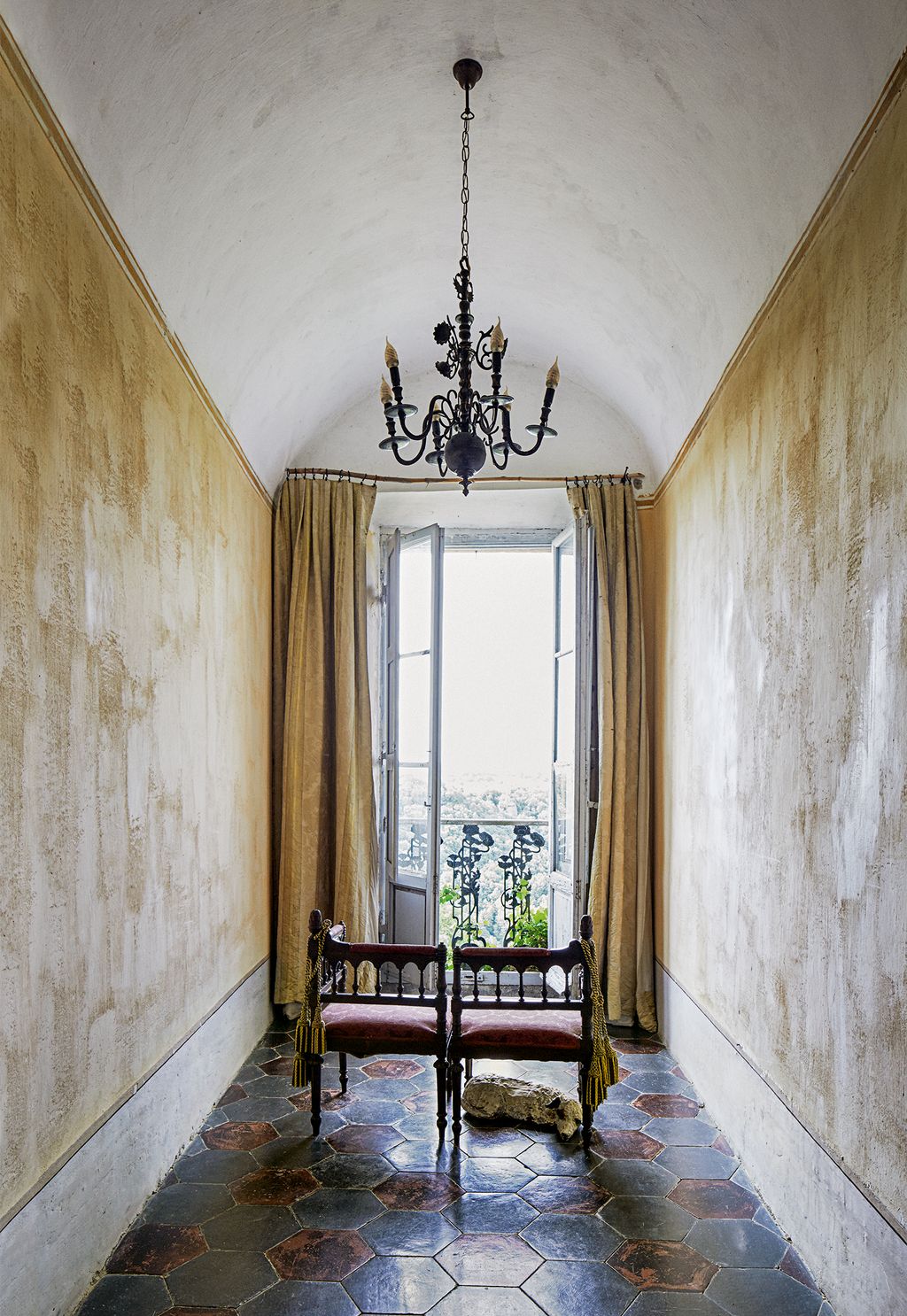
A balcony at the top of the stairs offers views of the vineyards across the ravine. A sleeping ceramic dog rests under a pair of wooden chairs found in a nearby antique shop.
 Simon Watson12/20
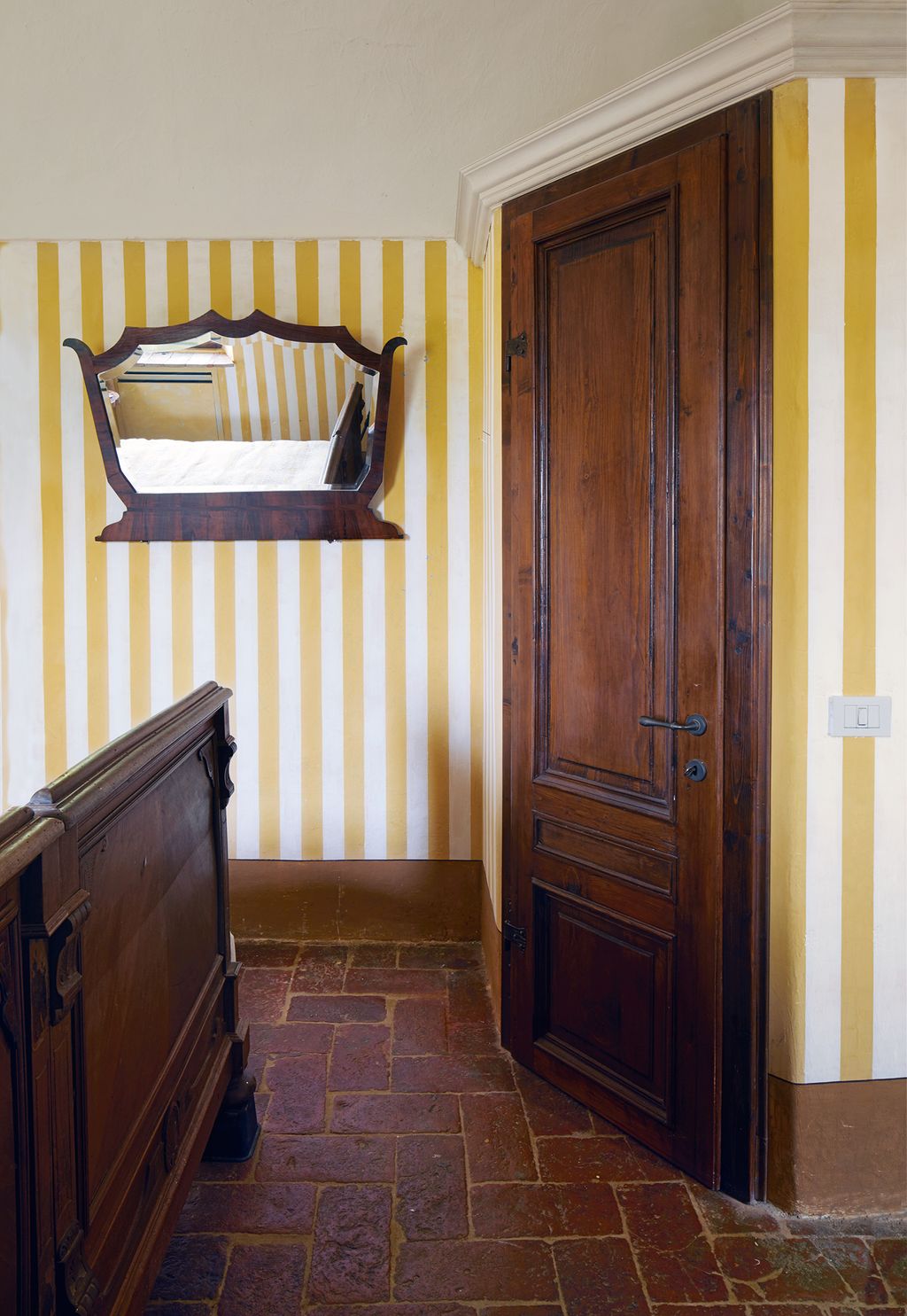
All the rooms have been painted by hand with pigments and lime wash, including this striped bedroom.


 Simon Watson13/20
Venetia painted an abstract watery cloudscape on the ceiling of one of the bathrooms; the ceramic lion’s-paw feet for the bath were made by Holly.
 Simon Watson14/20
The house has 10 bedrooms; Holly covered the headboard in this one using a local red and white woven wool blanket.
 Simon Watson15/20
A combined sitting room and bathroom with hand-painted floor tiles has a shower behind a screen – the loo is concealed in a painted cupboard.
 Simon Watson16/20
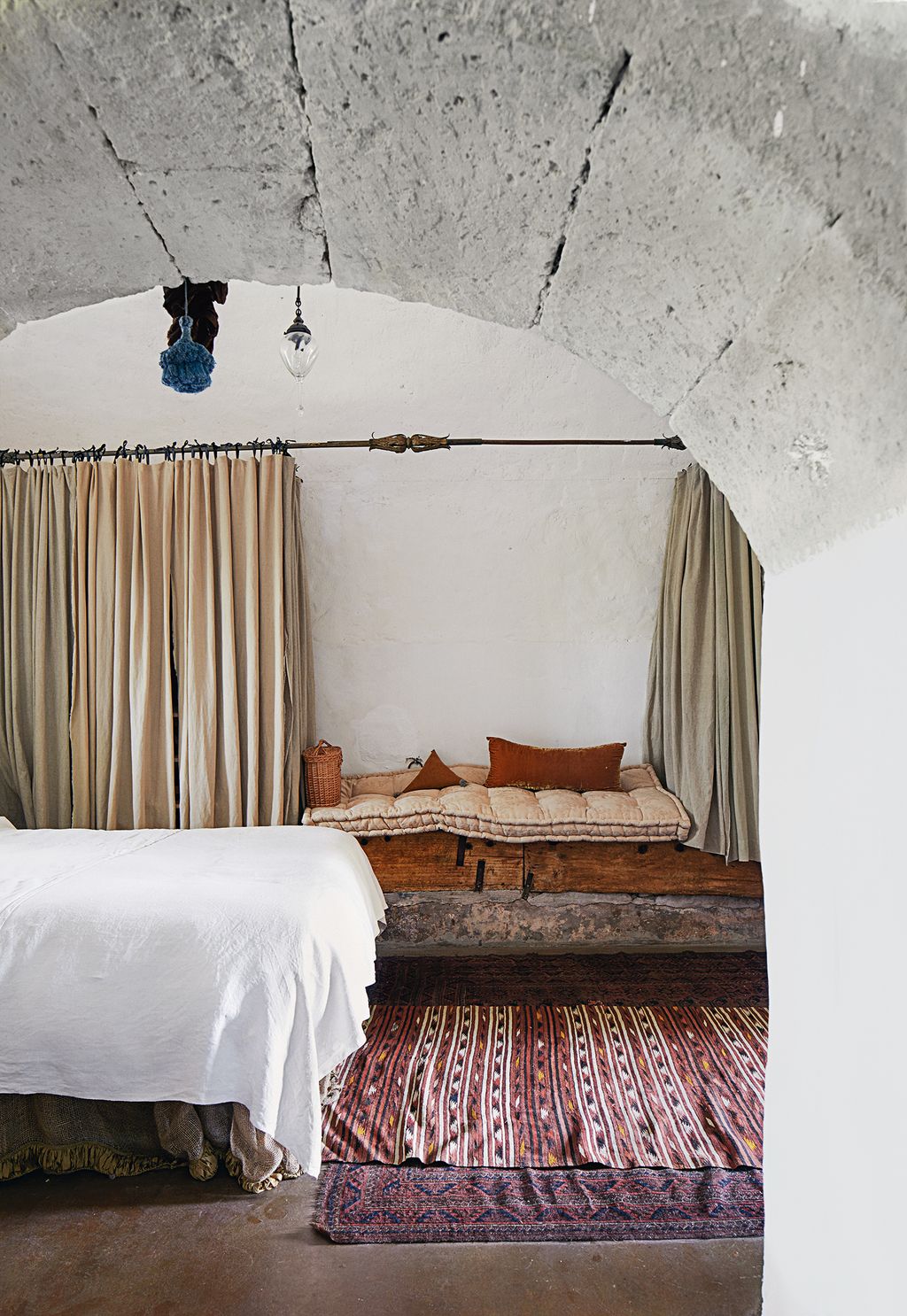
Holly and Venetia combined an Italian candelabra with a Turkish blown-glass lantern to create a light for a ground-floor bedroom that used to be a stable.


 Simon Watson17/20
In the downstairs corridor, just off the garden, Holly installed a Turkish marble sink for flower arranging.
 Simon Watson18/20
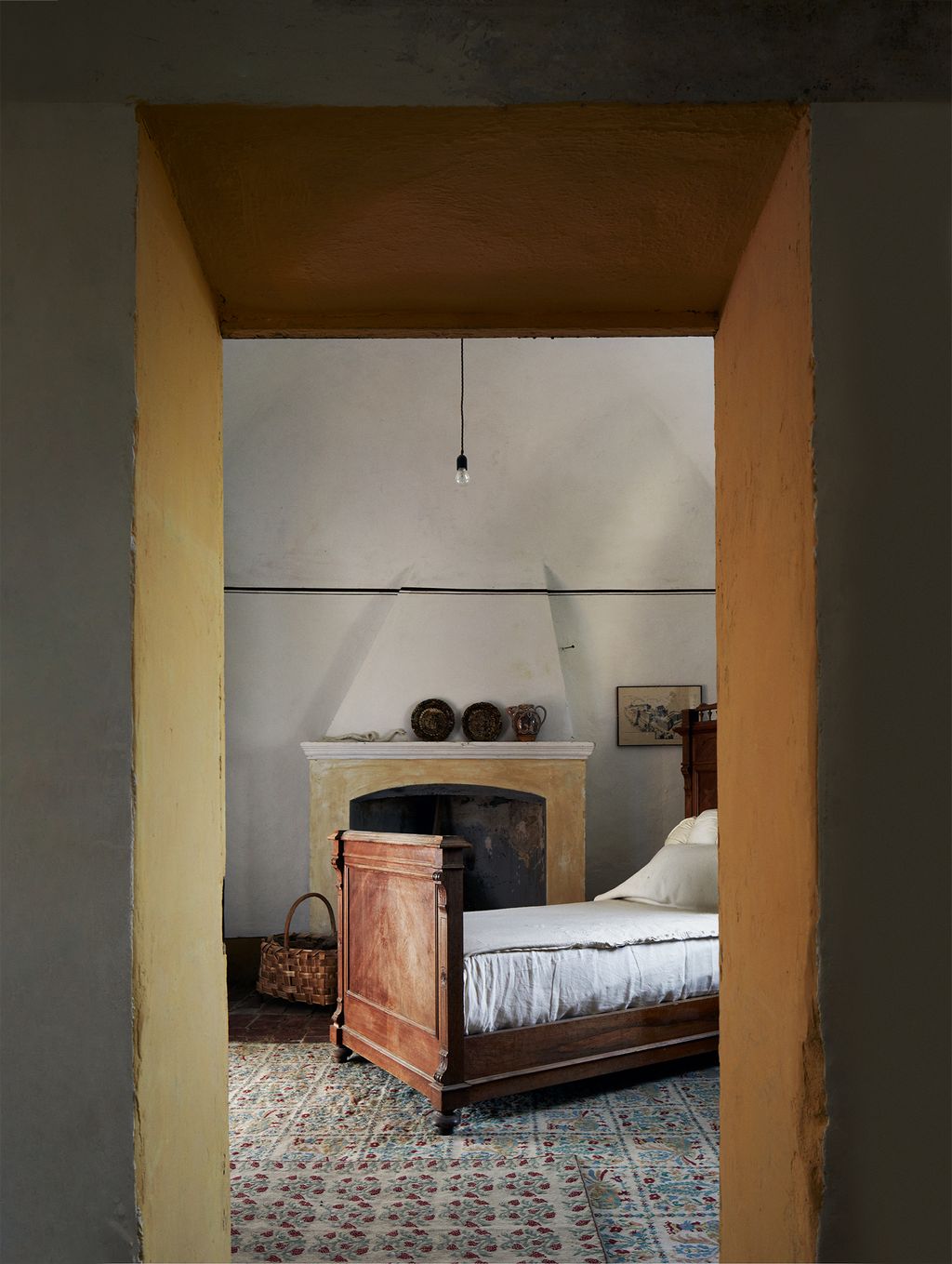
Yellow paint was applied to the doorway and chimneypiece of one of the single bedroom.
 Simon Watson19/20
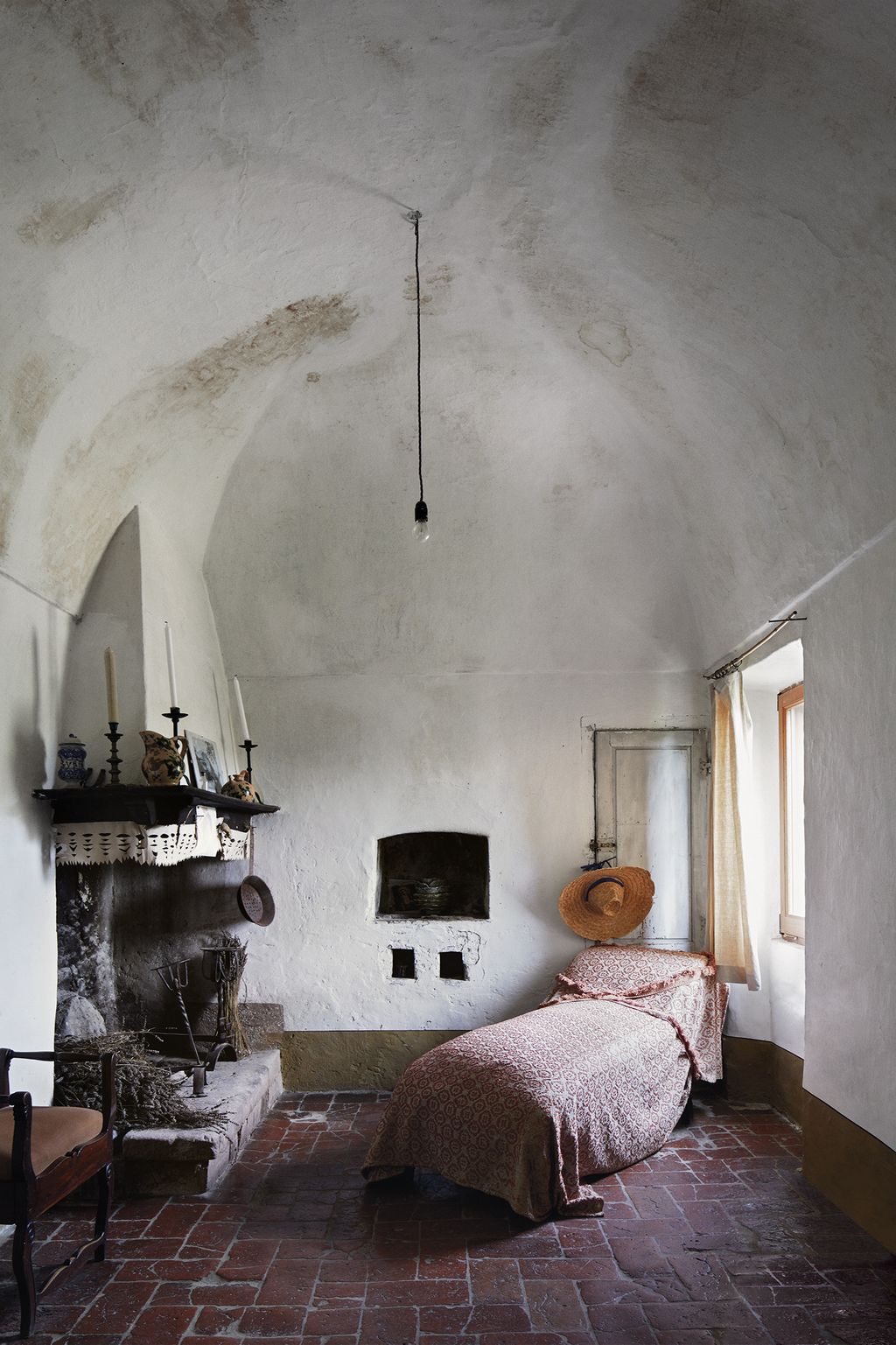
Another bedroom has an open fireplace trimmed with a lacy paper cutout.
 Simon Watson20/20
This ground-floor room was once a stable – the original wooden troughs are now used as a bench and storage space. Holly and Venetia sewed the heavy linen curtains, silk velvet cushions and rustic burlap valance. A Taimani Aimaq rug from Afghanistan is layered over an old Bokhara rug.


