
Our favourite houses with royal connections

Behind the door of every flat, cottage and castle is a story. Certain houses, however, are positively teeming with them – especially those with royal connections. We all know about the official residences of many a king, queen, prince and princess – Kensington, Balmoral and Buckingham Palaces, ‘Nott Cott’, Frogmore Cottage (if only those walls could talk!) and many, many more – but there are others whose interiors and royal histories are lesser-known (yet still endlessly fascinating). We've collected our favourites among them, from the Castle of Mey, the Scottish home of the late Queen Mother to King Charles III's cosy Welsh cottage, Llwynywermod.

Discover our favourite houses with royal connections
 Anthony Denney1/7
The Castle of Mey, Scotland
Royal connection Queen Elizabeth the Queen Mother
The late Queen Mother's Scottish castle was featured in House & Garden's February 1959 issue, where it was described by Loelia, Duchess of Westminster “as a traditional, severe Scottish Castle—that is what the world sees—but, within, an utterly captivating home showing that, despite its regal background and purpose, the Castle of Mey is also essentially a well-loved house in the country.”
 Jefferson Smith2/7
Astley Castle, Warwickshire
Royal connection Lady Jane Grey
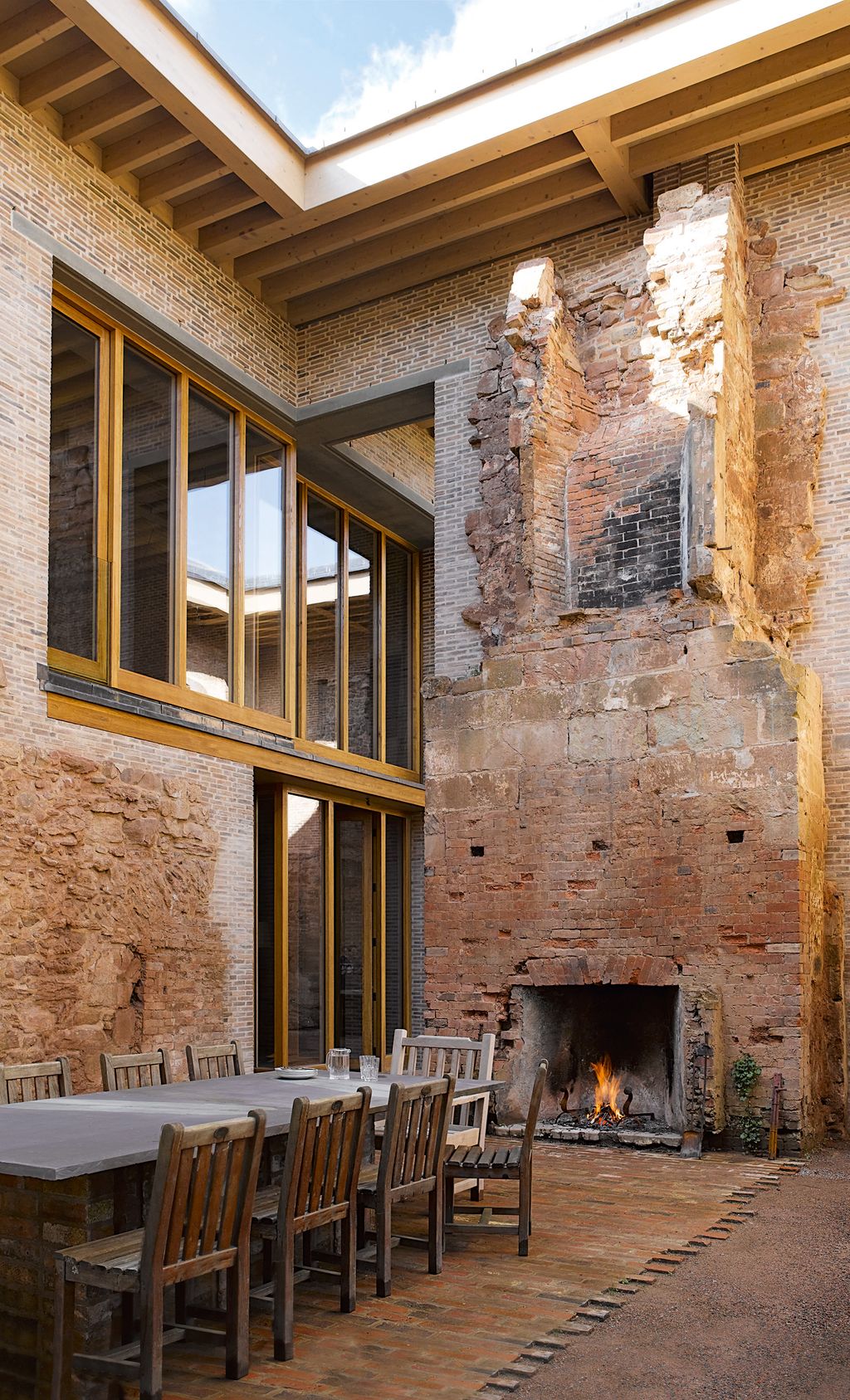
The landmark Astley Castle has a storied past, having hosted and been home to many names recognisable from history textbooks, including Elizabeth Woodville, who lived here in the mid fifteenth century as Sir John Grey's wife until he was killed fighting for the Lancastrian cause in the Wars of the Roses. Her daughter, Elizabeth of York, married Henry VII and their great granddaughter Lady Jane Grey became Queen of England for nine days in 1553, on the death of Edward VI.
Following centuries of neglect and being gutted by fire, Astley Castle in Warwickshire now offers comfortable accommodation in a modern structure sympathetically inserted inside the medieval and Tudor shell.
 Simon Brown3/7
Sudeley Castle, Gloucestershire
Royal connections Edward the Confessor, Henry VIII and Charles I
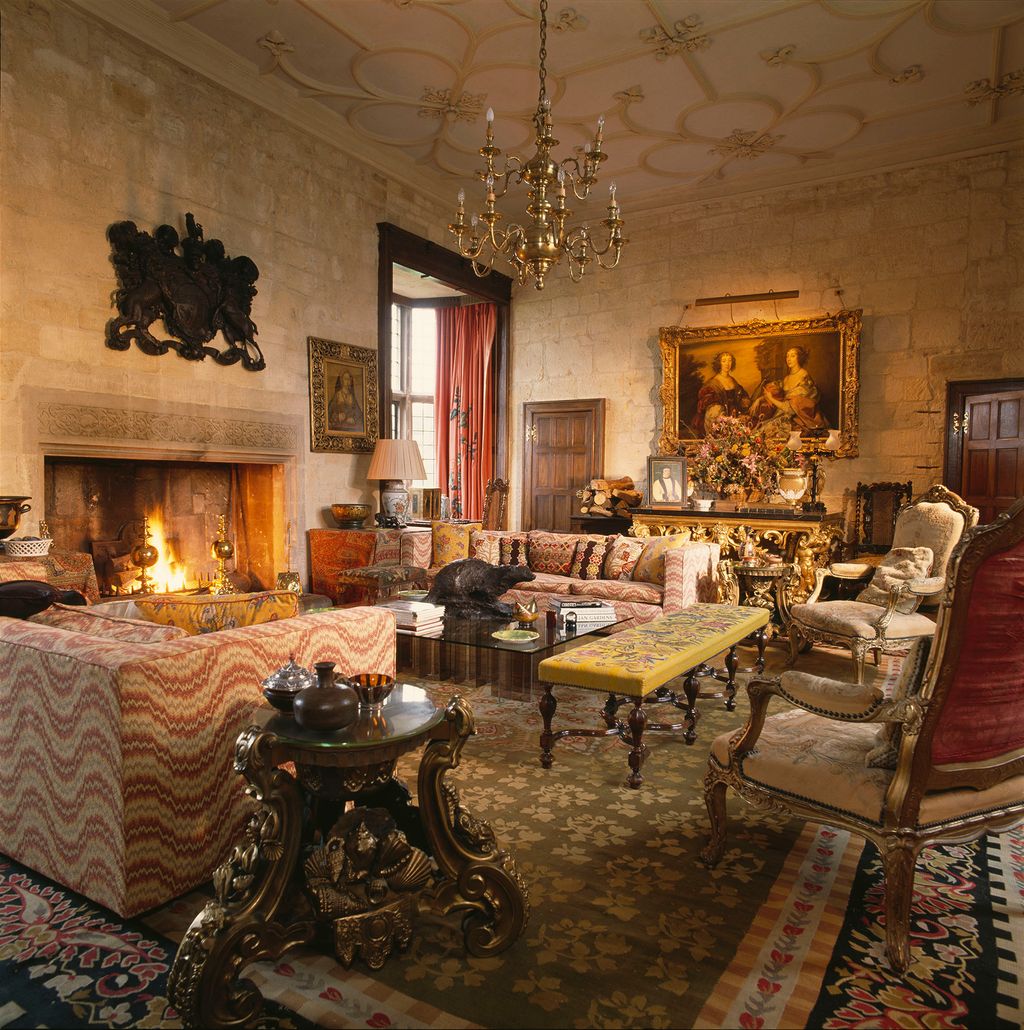
From as early as the tenth century, Sudeley Castle has been an important feature on the historical map of England. A highly-prized estate which included a Royal deer park, it became the property of Ethelred the Unready, who subsequently passed it on to his daughter, Edward the Confessor's sister. Henry VIII abandoned the castle to ruin but, during the civil war, it became the Royalist headquarters and Charles I took refuge there. In 1643, the castle finally surrendered to the parliamentary forces, and was left plundered by the enemy and badly damaged by cannon fire: the Octagon Tower still displays the gaping evidence of a cannon ball. Over the next two centuries, Sudeley fell into ruin but, in 1837, John and William Dent purchased the estate and began to restore the house, which has remained in the same family ever since.
 Simon Brown4/7
Llwynywermod, Wales
Royal connection King Charles III
King Charles's first Welsh home, adapted from a former model farm in Carmarthenshire, bears witness to his philosophy of sustainable building, with a structure traditionally made from existing and locally sourced materials, an ecologically sound heating system, and elegant interiors that harmonise perfectly with the architecture. Architect Craig Hamilton transformed the property into what now comprises three cottages and a grade II-listed threshing barn as well as the main house for the use of the newly proclaimed King Charles III and the Queen Consort. The property has an air of retired quietude; a mansion that used to occupy the property is now a picturesque ruin, the lake has long since silted up, a small river runs through the valley around which sheep graze amongst ancient trees.


 Paul Massey5/7
Restormel Manor, Cornwall
Royal connections King Charles III and Camilla, Queen Consort of the United Kingdom
Built in the 1540s and restored in the eighteenth century, Restormel Manor is an elegant house with a crenellated façade. It is divided into a central hub and two outer wings, each with its own entrance. Today, with its inviting interiors by Annabel Elliot, King Charles’s sixteenth-century house in Cornwall is at the centre of a community regeneration project that includes a sustainably designed plant nursery. ‘His Royal Highness was extremely keen that this estate should be brought into the twenty-first century,’ said Annabel. All have been furnished with an eclectic mix of British brands, stylishly combined with market finds, country antiques and the odd armchair upholstered in a vintage Moroccan textile. Annabel has the inside track on the royal couple’s taste, as she happens to be Camilla, the Queen consort's sister.
 Davide Lovatti6/7
Lamb's House, Leith
Royal connection Mary, Queen of Scots
Like so many ports, Leith has enjoyed high days, heydays and some spells in the doldrums. The same could be said about Lamb's House, which, when it was built in 1610, was one of the finest merchant's houses in Scotland. It was built by a Hanseatic merchant called Andrew Lamb and has enjoyed similar fortunes to those of its setting. In the seventeenth and the eighteenth centuries, it was the grandest house in the Edinburgh port of Leith. But by 1930, it was semi-ruinous and, by the Seventies, had become an old people's day centre leased from an overburdened National Trust for Scotland. Three decades on, the house was in desperate need of attention. Thankfully for its ghosts, things came full circle when, in 2010, following a narrow escape from a property developer, it was bought by the conservation architects Kristin Hannesdottir and Nick Groves-Raines.
 7/7
7/7Althorp Estate, Northamptonshire
Royal connections Princess Diana, King George V, Alexandra, Princess of Wales, King Edward VII, King Charles III
Since 1508, the Spencer family has been the gatekeepers of the vast property, which spans 13,000 acres (550 of which are the main house and surrounding gardens, the rest houses another property and woodland). The main manor house has over 90 rooms with gilded cornicing, pelmet curtains and four poster canopy beds, the property features a portrait hall with gallery walls of gilt-framed paintings and incredible chandeliers are commonplace in every room. The grand home also has an impressive library, a dining room for state dinners, several sitting rooms and sweeping staircases. Many royal members have stayed in the house; the Queen Mary bedroom hosted King George V and his wife in 1913, while the Princess of Wales Bedroom was named after Alexandra, Princess of Wales, the wife of future King Edward VII, who stayed there in 1863.
The list of important people who have passed through its doors and into the grand interiors is imaginable, given the close links that the Spencer family has long held with the royal family, most recently between Prince Charles and Princess Diana. The latter grew up on the estate, learning to tap dance in Wootton Hall and spending her formative years in the gilded interiors. She is now buried on the estate, on the island in the middle of Althorp's lake.


