
Now's the time to collect seeds from your garden for next year – here's how

Saving seed from your own flowers is one of life’s simple pleasures. Infinitely rewarding and easy to do, it enables you to grow more of the flowers you love for free, perpetuating the species that thrive in your own garden.
Cut-flower farmer Rachel Siegfried has been harvesting her own cut-flower seed for decades - and, since 2020, she has sold the seeds on the Green & Gorgeous website. ‘There are benefits from saving your own seed,’ she says. ‘You’re developing plants adapted to your specific microclimate, so that, over successive generations, they’ll be happier growing in your garden. But you’re also getting a real quantity of seed – much more than you’d buy in a packet. If you grow cut flowers, you’ll know the frustration of direct sowing and the seed packet running out before you get to the end of the drill.’
Another advantage of saving your own seed is that you can sow it soon after harvesting. ‘A lot of people think that perennials in particular are hard to grow from seed, but I believe that’s because perennial seed generally likes to be sown as soon as it’s ripened, usually at the start of autumn,’ Rachel says. ‘If seed is stored for too long, it starts to go dormant – that’s when germination rates go down.’ She recommends beginning with easy annual or perennial seed that is simple to harvest, clean and sow, like Orlaya grandiflora, Calendula officinalis, Daucus carota or perennial foxgloves such as Digitalis parviflora or D. grandiflora. Other easy perennials include Catananche caerulea, Dianthus carthusianorum and Scabiosa caucasica.
‘It’s better to save seed from species you know are going to come true from seed. If it’s a cultivar, it may come back with different characteristics the following year,’ Rachel notes. For example, if you save seed from the cosmos variety ‘Apricotta’, it’s likely it will revert back to one of the parent plants. So you might get random flowers that are bright pink and completely different from the original plant.’ If you don’t mind the lottery of not quite knowing what you will end up with, however, it is possible to experiment by saving seed of anything you like, from opium poppies to dahlias. Over time, you can refine your mixes. Rachel has been working on her own mix of Icelandic poppies. ‘There used to be a lovely seed mix called “Meadow Pastels”. Then it wasn’t available any more and I could find only very bright colour mixes that I didn’t like,’ she recalls. ‘So I started to grow my own and rogue out any plants that were too bright. As soon as the flowers opened in the morning, I would cut them off, so they didn’t get pollinated. It takes four or five years to get quite a reliable pastel range.’

An important element of seed saving is to not exhaust your plant by cutting too many flowers from it before harvesting. ‘By the time you let it go to seed, all the flowers will be weaker and smaller. So the seed is not going to be good quality,’ Rachel explains. Instead, she recommends earmarking one or two healthy and strong plants for each flower species to use as your seed crop right at the start of the flowering season.
Rachel harvests seeds any time from July to October, collecting them on a dry day when the seed heads have completely matured on the plant. Most plants will fade and turn brown as they go to seed. Keeping an eye on the plants as they mature is important, as you need to harvest at the optimum time before the plant has naturally dispersed it.
The mechanics of harvesting the seed by hand are simple. Rachel uses large paper bags and cuts long stems of her plants with ripened seed heads straight into the bags, before she tips them out into wooden trays and leaves them to continue drying in the greenhouse for a few days. She then uses a homemade winnower – a large plastic water barrel with a drill fixed with cable ties – to separate the seeds from the chaff. ‘At home, you can do the same by hand just by blowing gently over the seed,’ she advises. ‘Cleaning the seed is important, as the chaff can harbour disease and cause rot.’ She stores the seeds in Tupperware boxes with silica gel in a cool, dry place until they are ready to be sown and the whole cycle can begin again.
You can buy seed by mail order from the Green & Gorgeous website from September to April and then start harvesting your own from those plants: greenandgorgeousflowers.co.uk
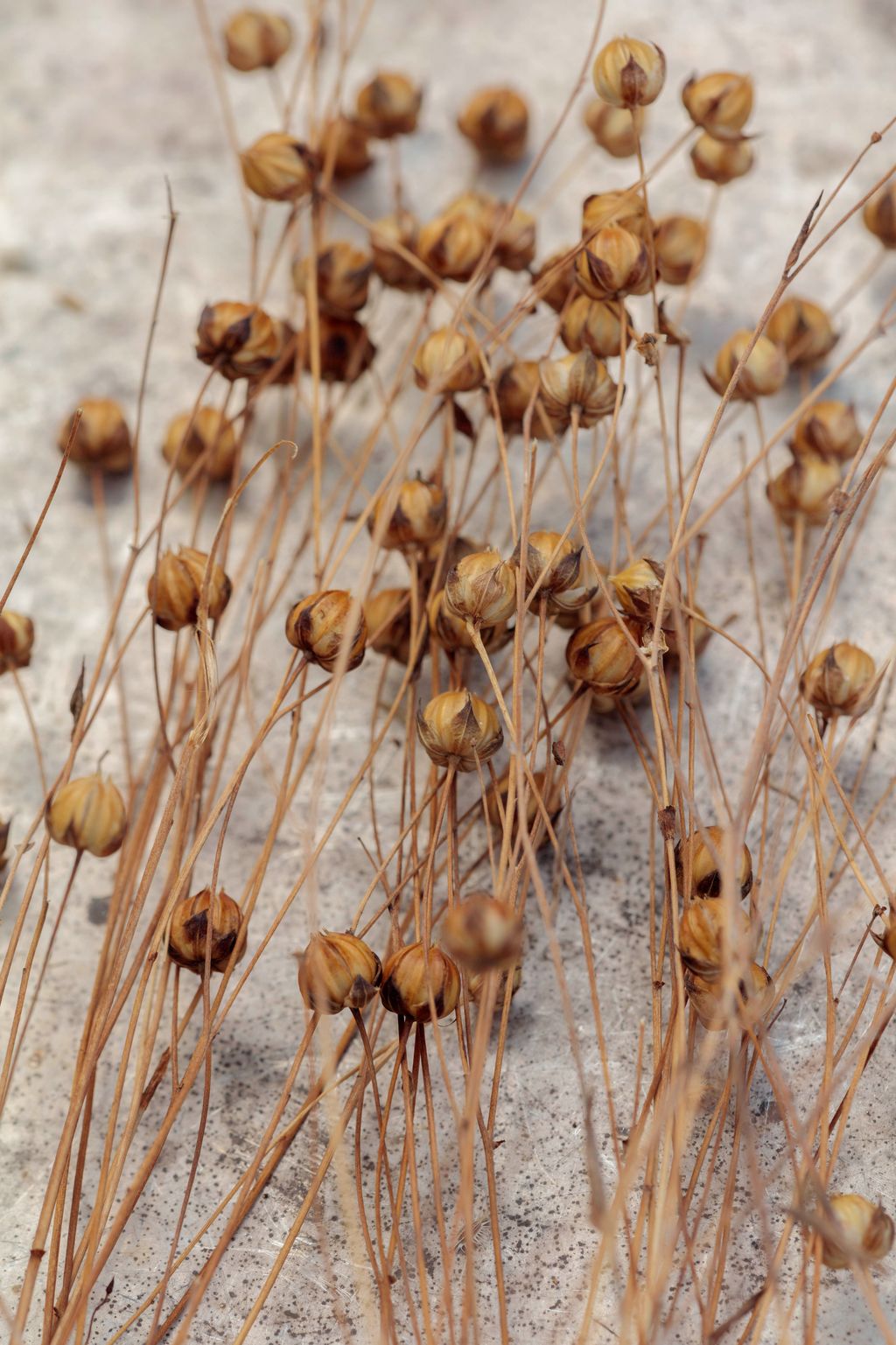 Clive Nichols1/8
Linum usitatissimum (common flax).
 Clive Nichols2/8
Orlaya grandiflora (white laceflower).
 Clive Nichols3/8
Daucus carota ‘Dara’ (ornamental carrot).
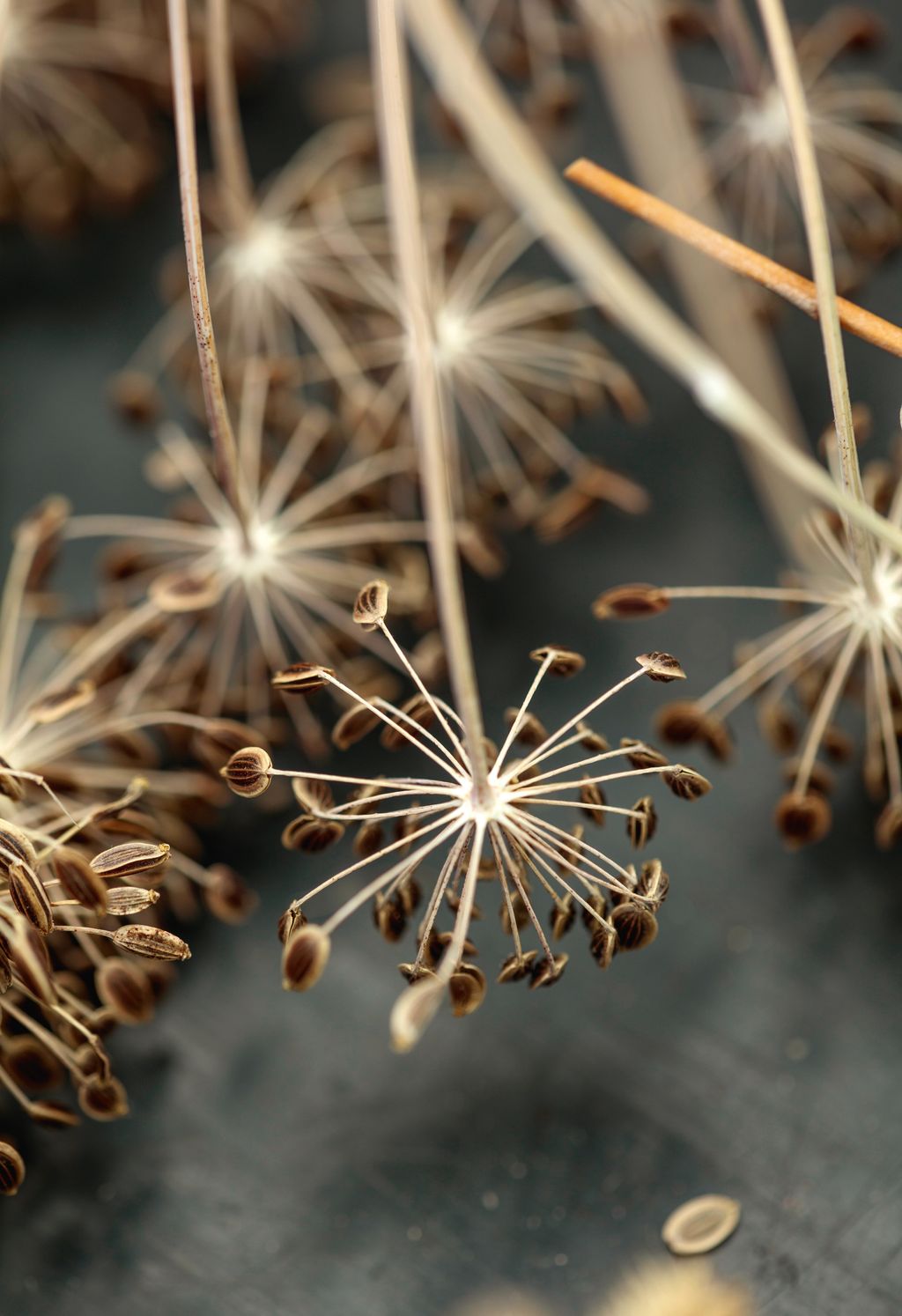 Clive Nichols4/8
A close-up of florist’s dill – Anethum graveolens ‘Mariska’.


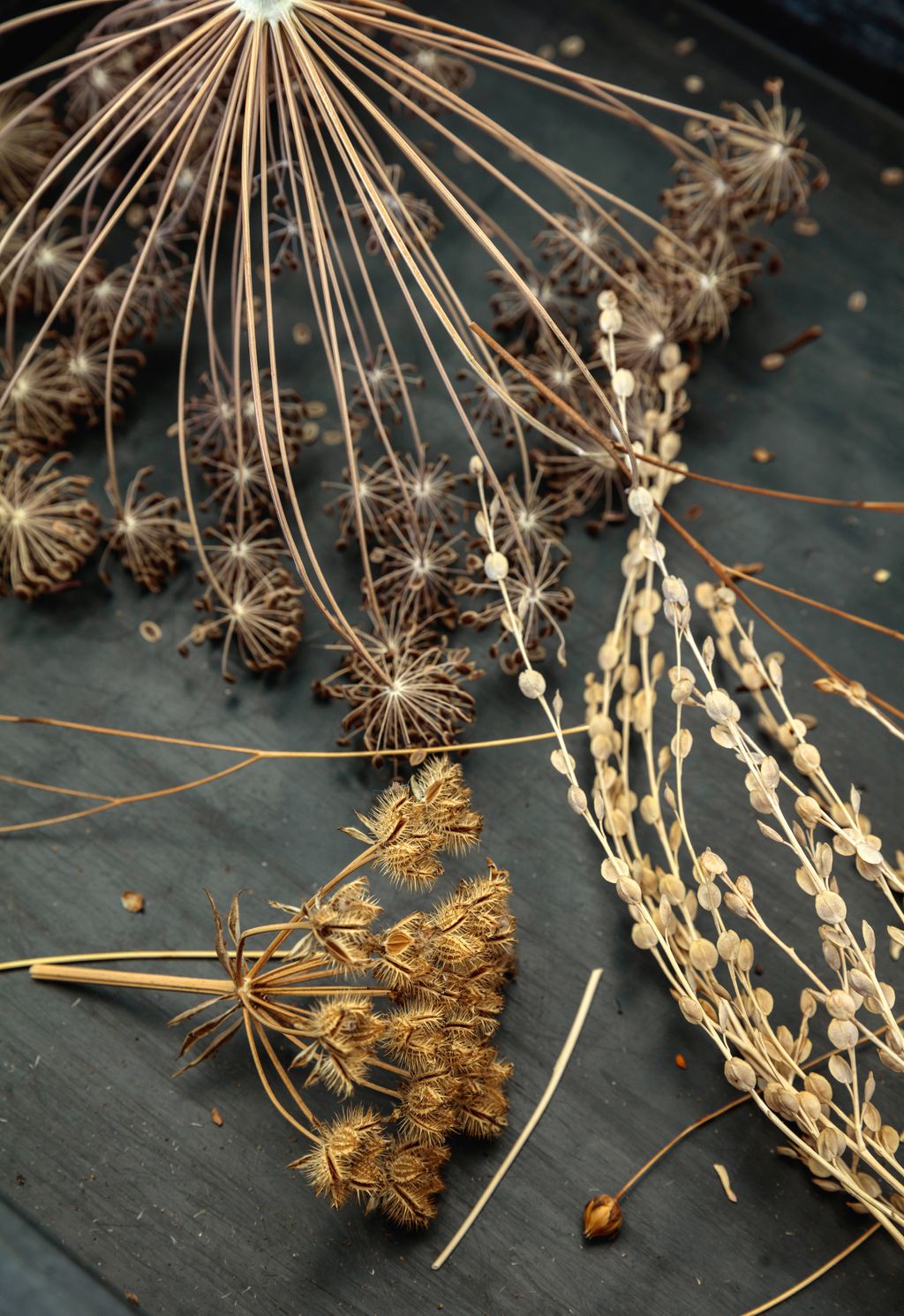 Clive Nichols5/8
Anethum graveolens, Orlaya grandiflora and Lepidium sativum (garden cress).
 Clive Nichols6/8
Daucus carota ‘Dara’.
 Clive Nichols7/8
Lunaria annua ‘Corfu Blue’ (honesty).
 Clive Nichols8/8
Linum usitatissimum.


