How to sow sweet peas
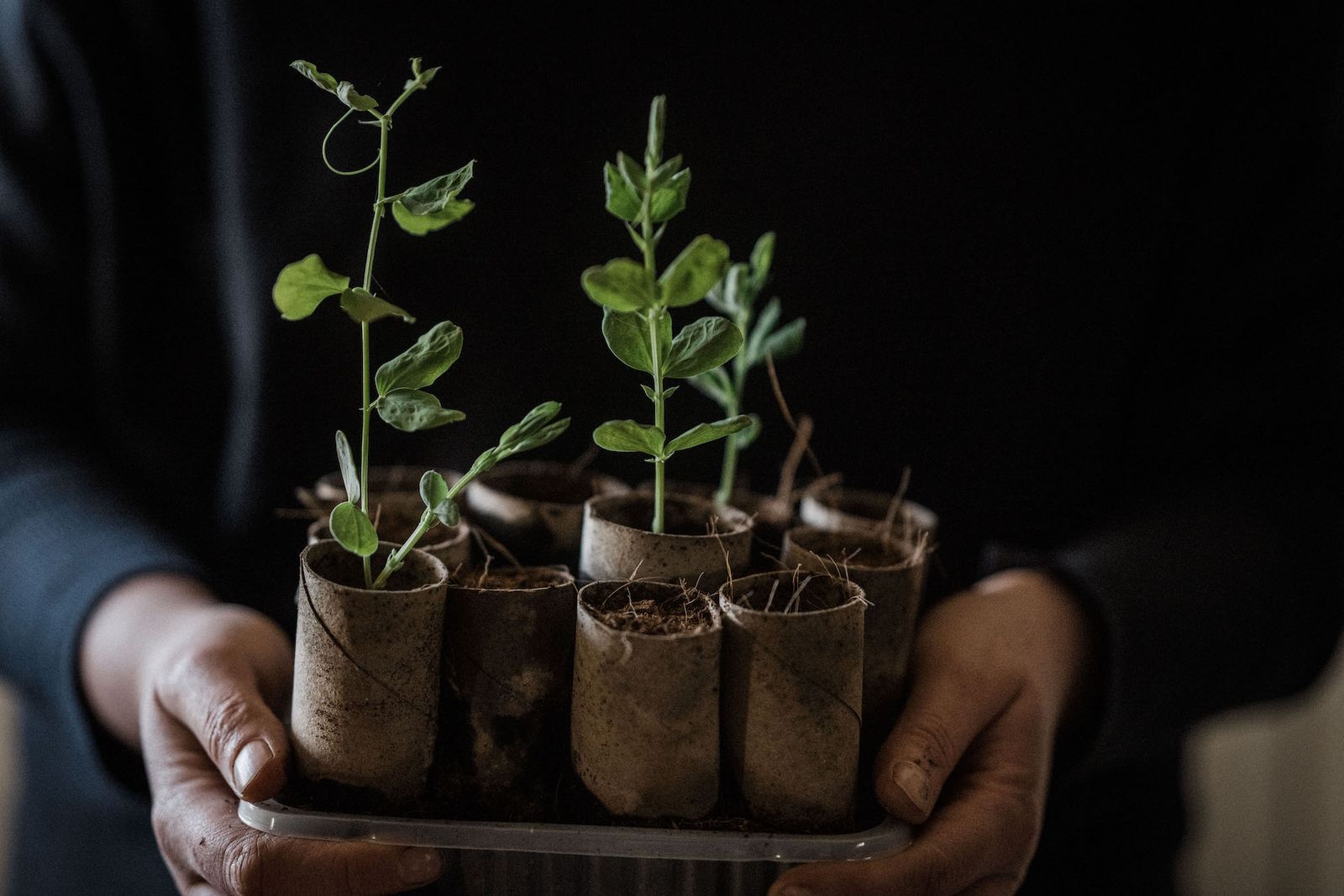
Sweet peas are one of those magical flowers. The scent alone merits their inclusion in any garden, whatever size or inclination, and the fact that you can sow them in the darkest days of late winter makes them all the more special. If you are thoroughly over the gloom and dreaming of spring (and I know I am), then sowing sweet peas provides a glimmer of hope for the coming season. A few hours with your hands in soil is likely to be just the thing. You will need:
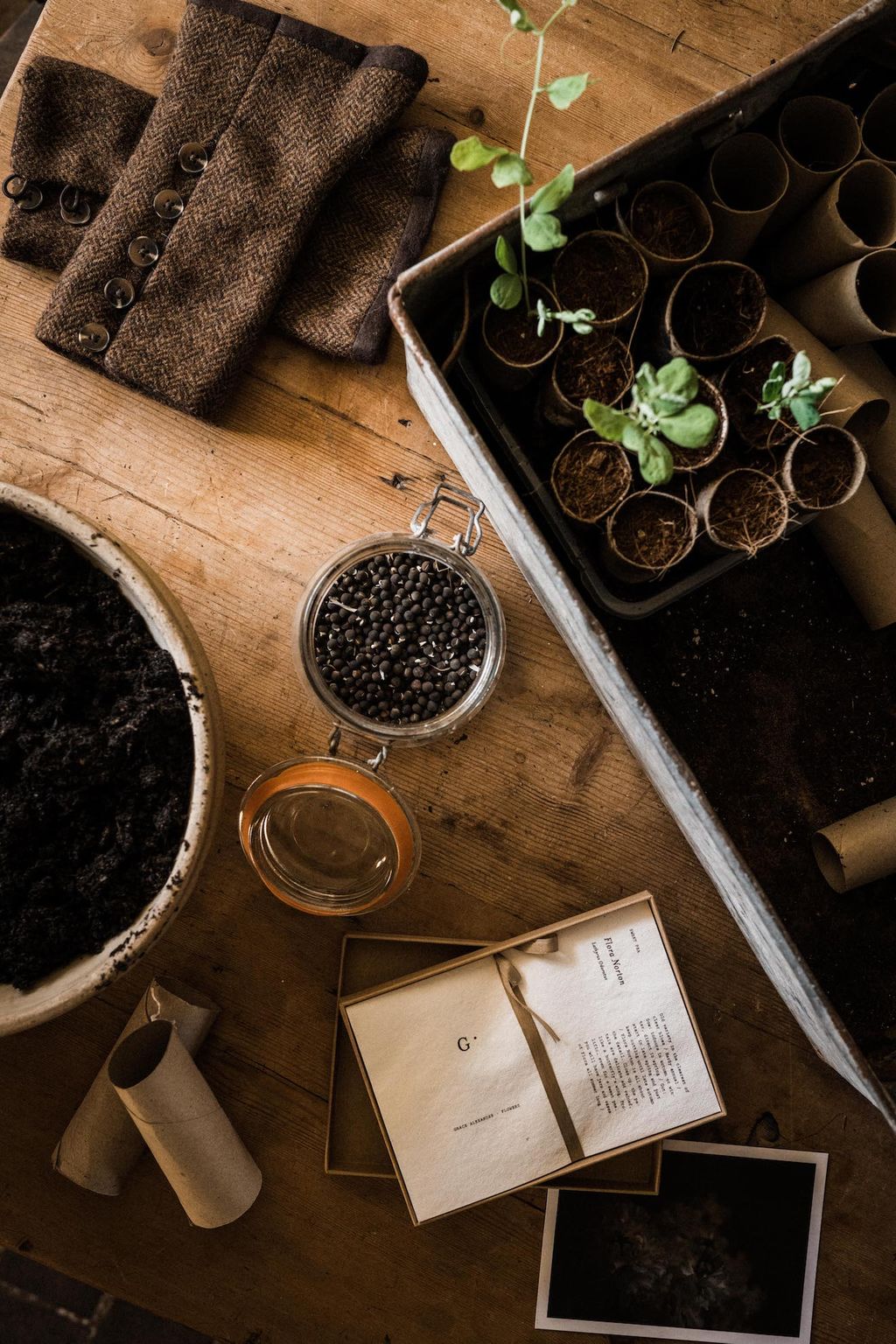
- Peat-free compost – not the seed compost, a good multi-purpose instead
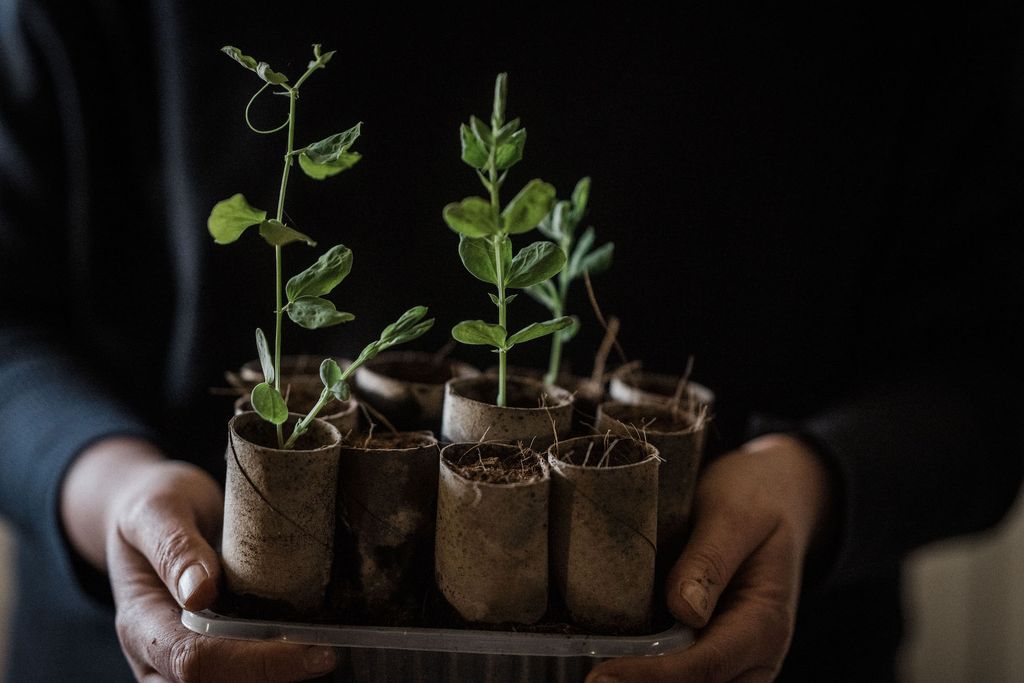
- Cardboard inners or, if you are going to reuse, good quality plastic root trainers
- A container to hold the inners – one of those plastic trays that mushrooms come in is perfect
- Labels
- Seed
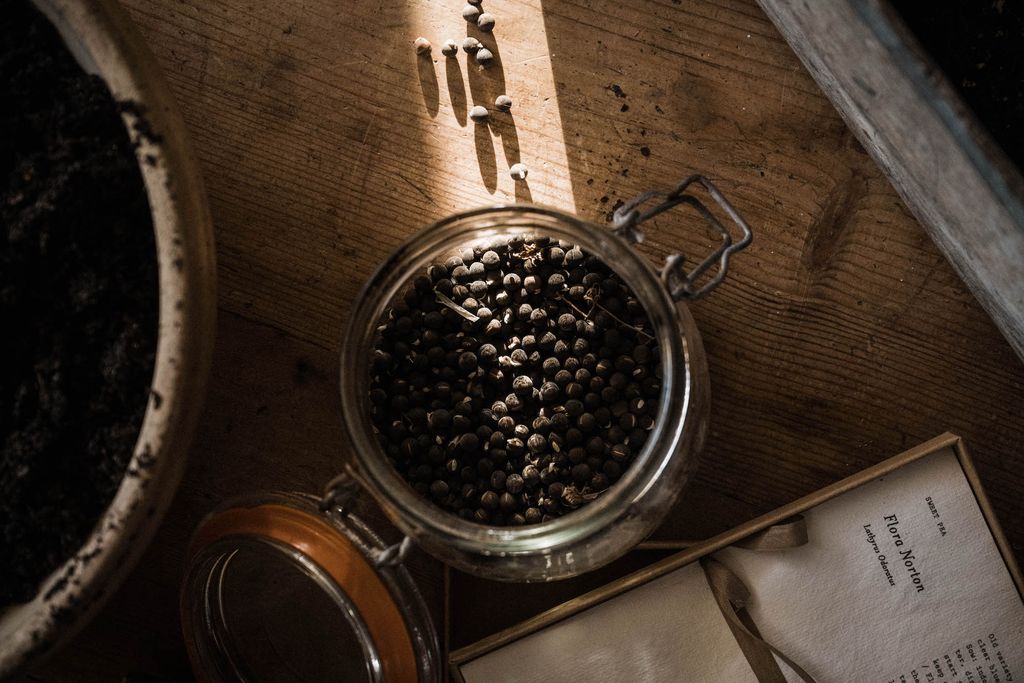
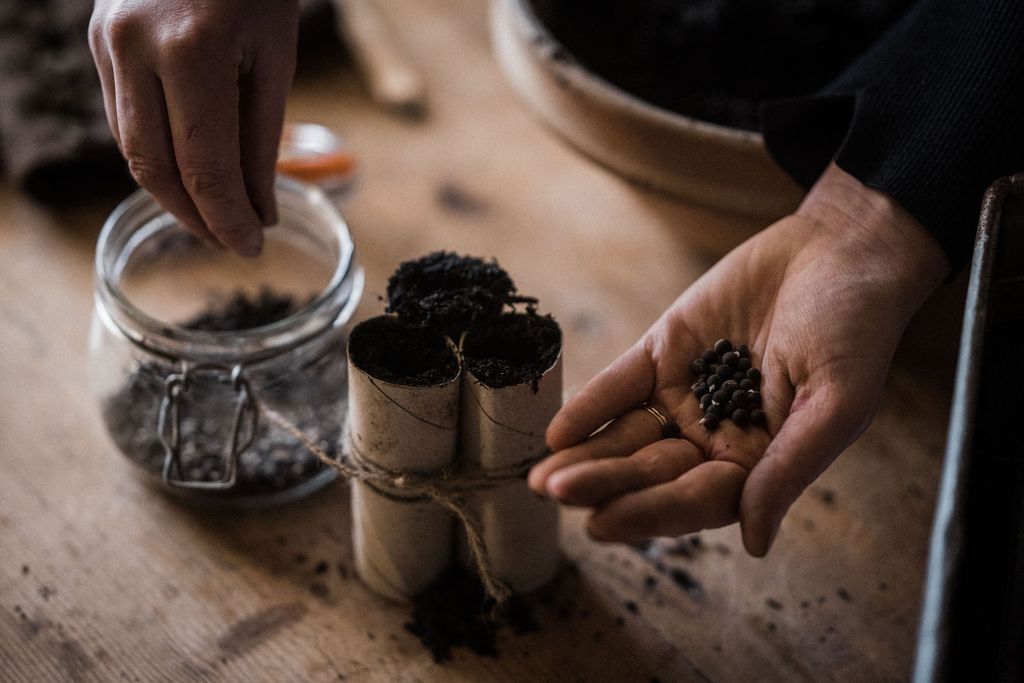
There is also a bit of a debate about pre-soaking seeds before sowing and, like so many of these gardening dichotomies, it inspires strong feelings in some. Not in me, I hold a pragmatic view. If the seed is over a year old and looks a bit wrinkled, soak it. If they are plump and look smooth and round, they probably don’t need it. The initial watering will suffice.
How to sow sweet peas
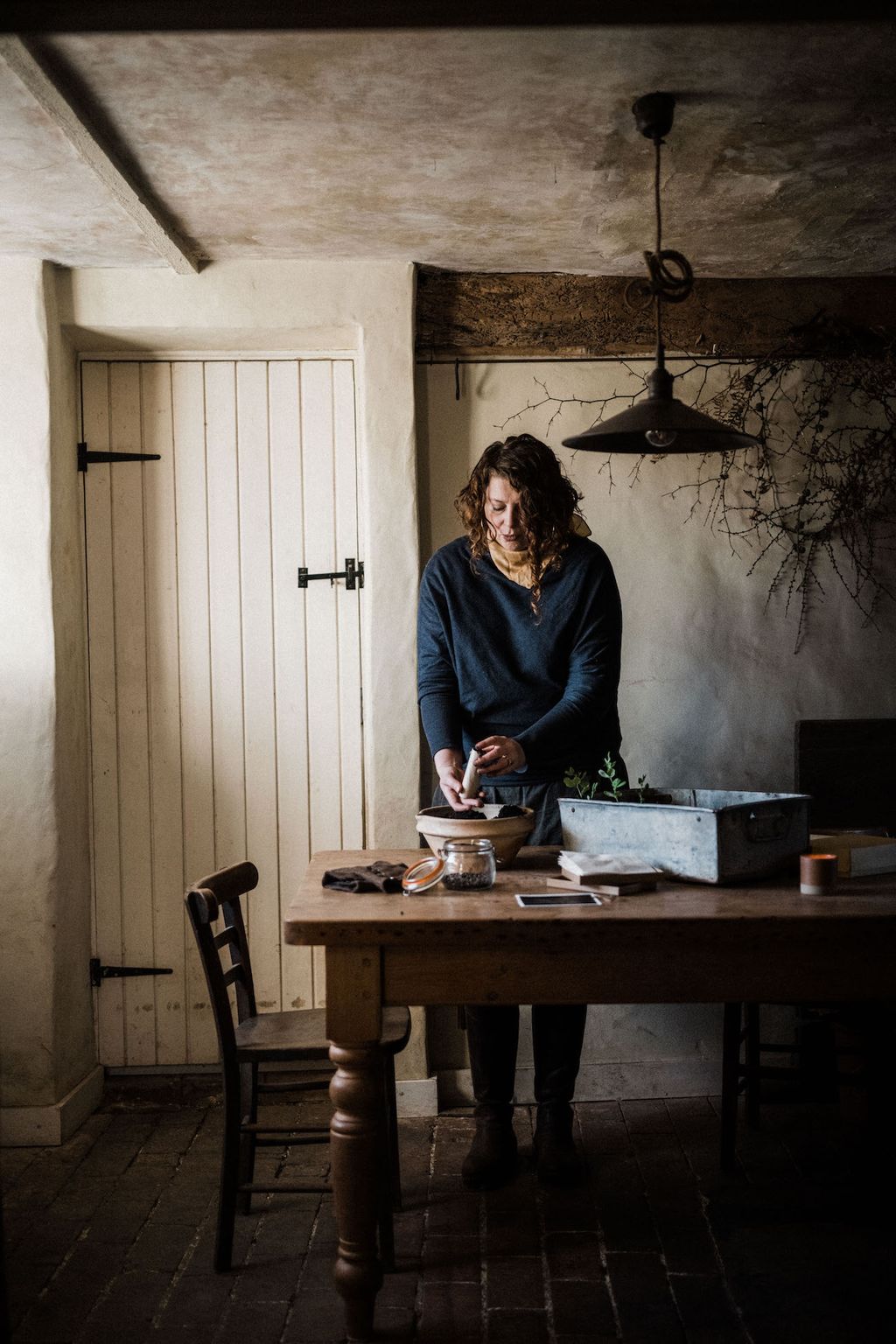
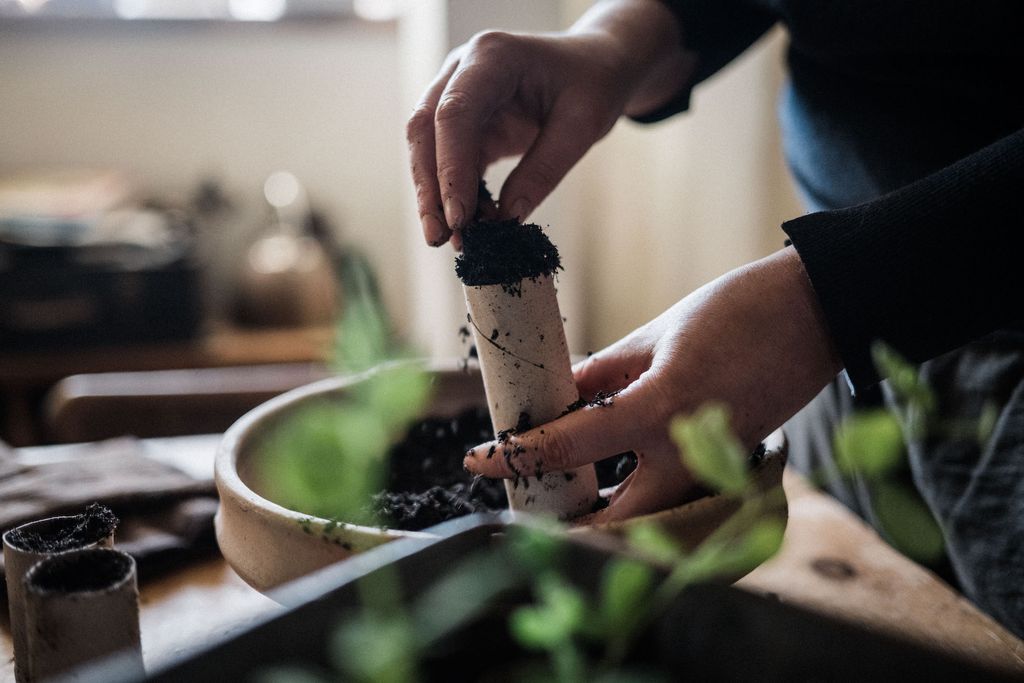
Fill your pots with good quality compost. Sweet peas produce tap roots, so they do need a bit of depth underneath them. This is why cardboard tubes or root trainers are better than small pots, but the deeper 9cm pots can be used if that is what you have. You will probably find out sooner or later so I may as well tell you, it is remarkably fiddly to fill tubes and compost does tend to go everywhere. You can either put the tubes in the container and try and fill them in situ (this does mean you get a lot of compost in between but that’s not a bad thing, the roots are likely to come through the cardboard before you come to plant them out) or put the tube into the bag of compost and fill it there, keeping a hand over one end.
I always used to say sow two seeds per tube because most sweet peas germinate at around 65%. However, my seed has proven to be so good, I think I am going to say one seed for each tube. Sweet peas do like space and I am never going to thin out a perfectly healthy sweet pea seedling. I am just not that person.
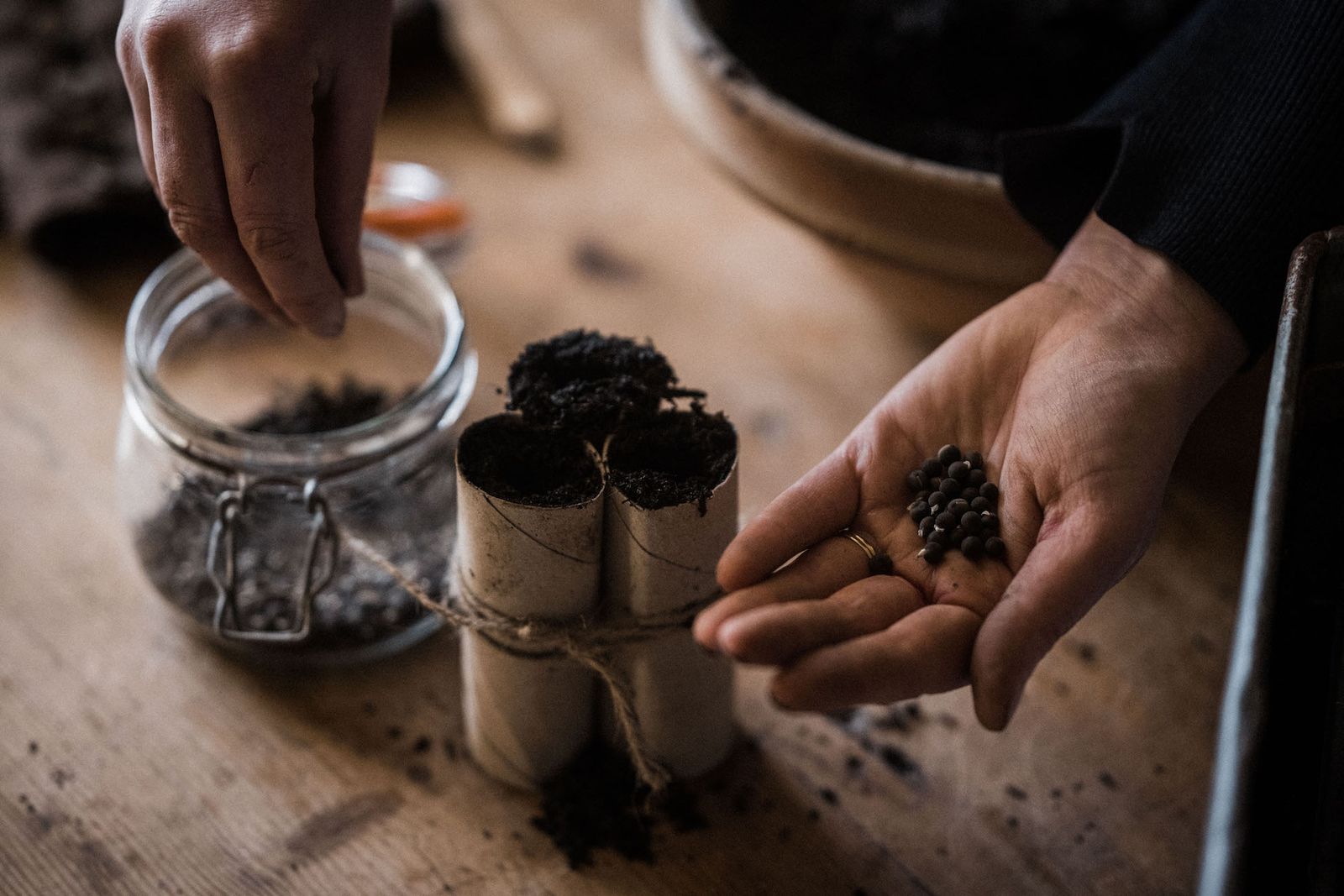
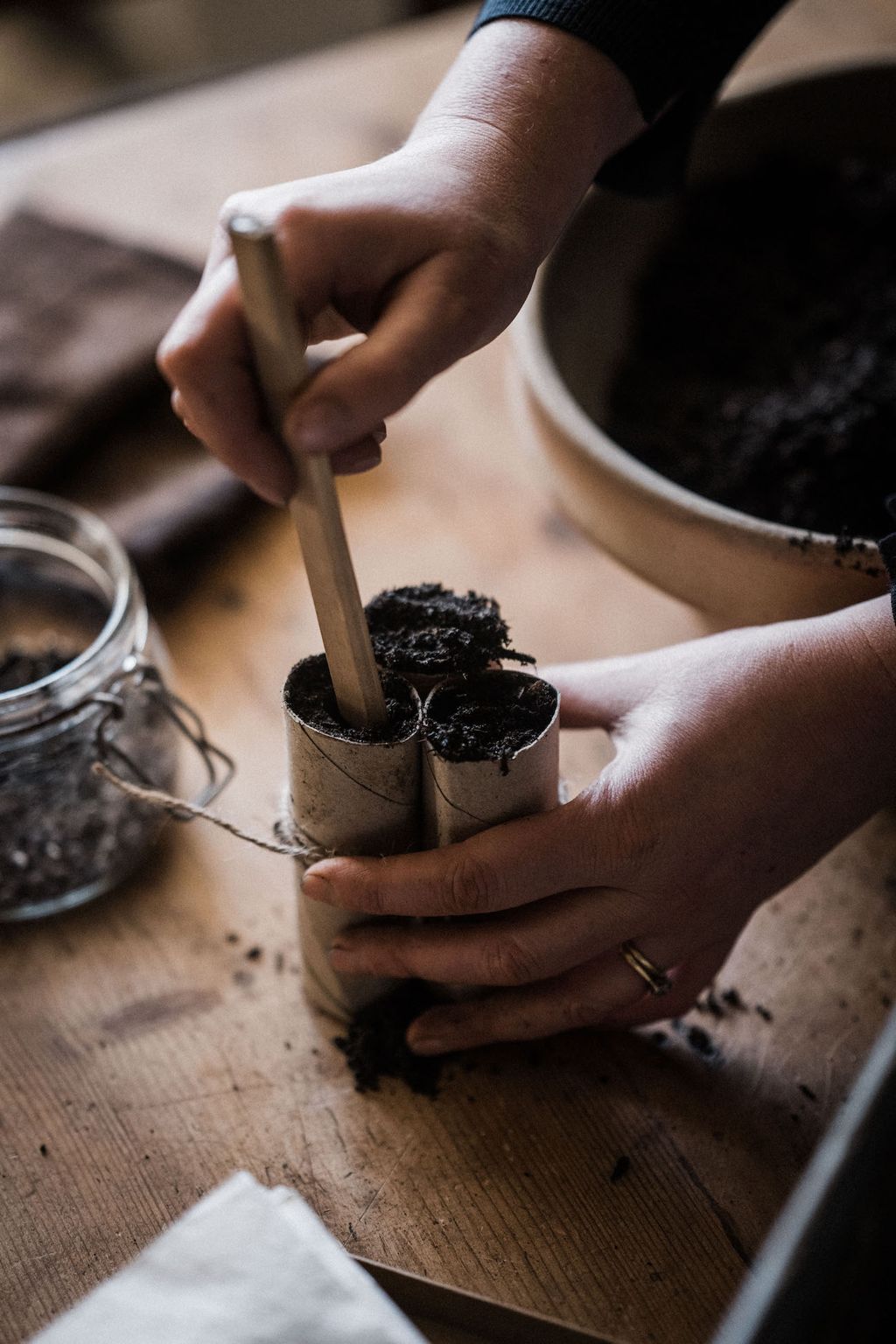
It is important to make sure the seed is not buried too deep. You are aiming for about a centimetre. I find dibbing with a pencil and dropping the seed in is incredible satisfying, but it is hard to keep track of the depth and everything sinks again when you water. Filling with compost to very nearly the top and then adding the seed and covering is safer in terms of knowing how deep they are, but also doesn’t compact the compost.
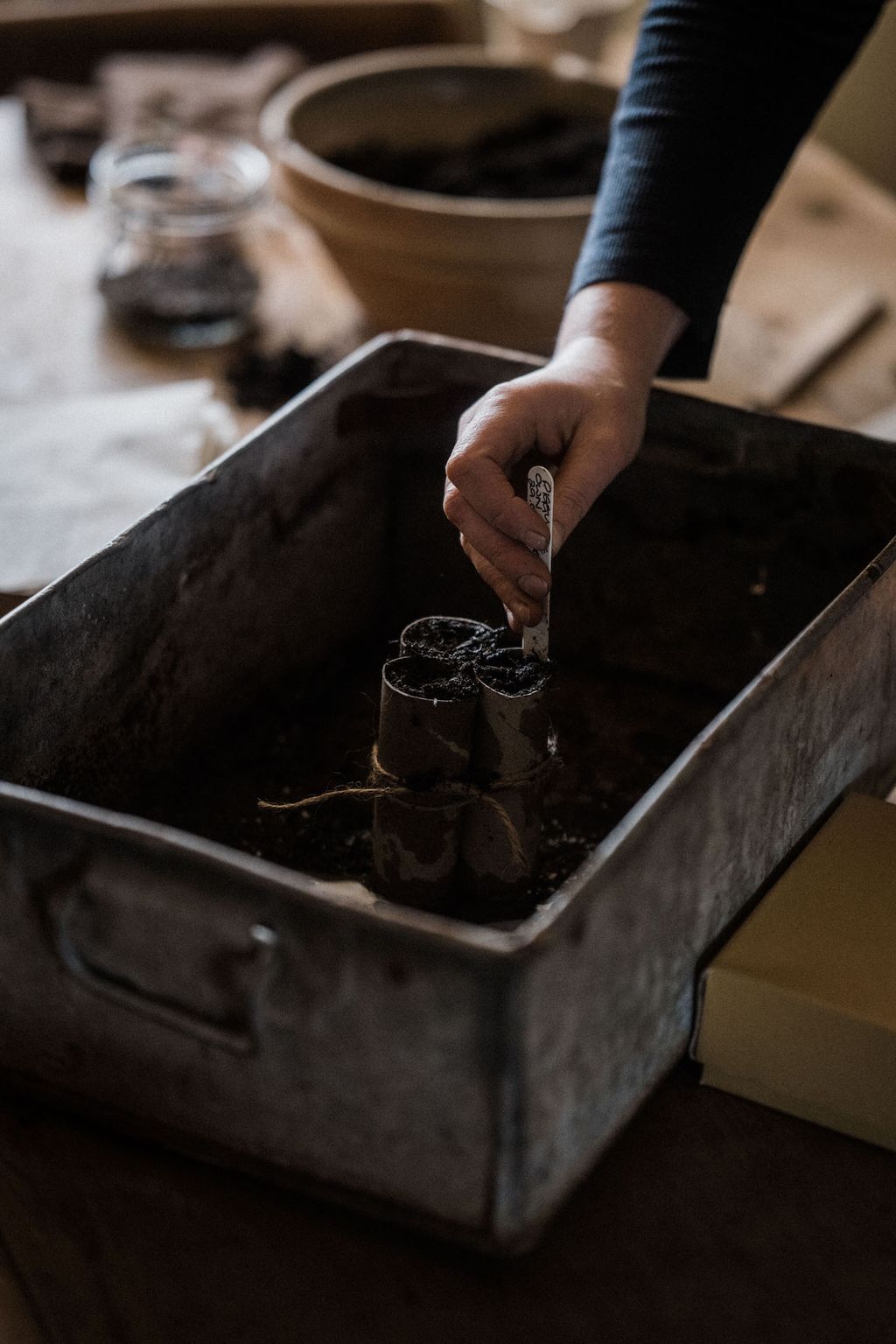
Label each of the tubes unless every single tube in the container is the same variety. I know, I have tried to get around this will saying that ‘from this row is Jilly’, or ‘this is half Nimbus and half Burnished Bronze’. I promise you that when spring arrives, all this means is that you have a lot of identical, unidentifiable plants.
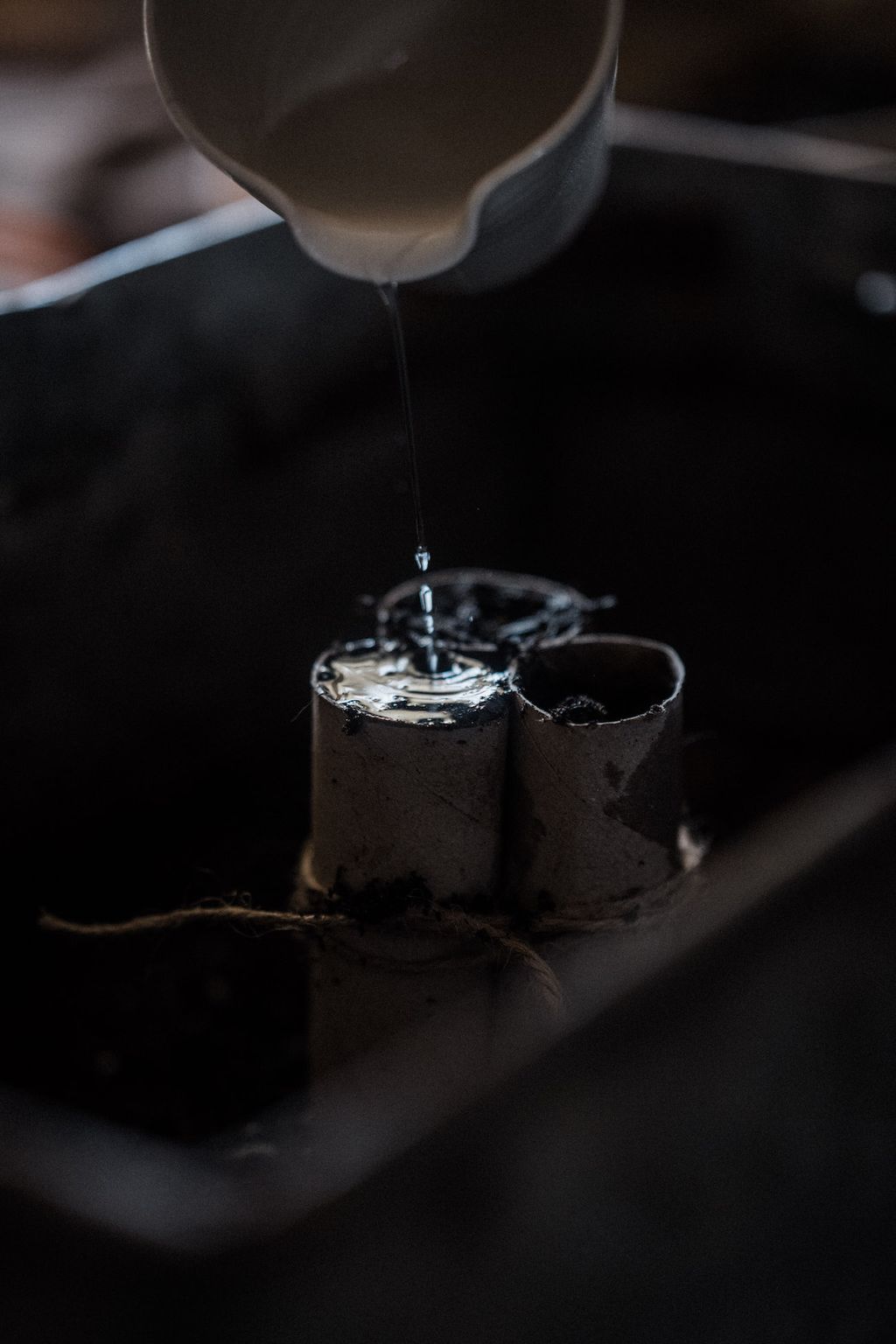
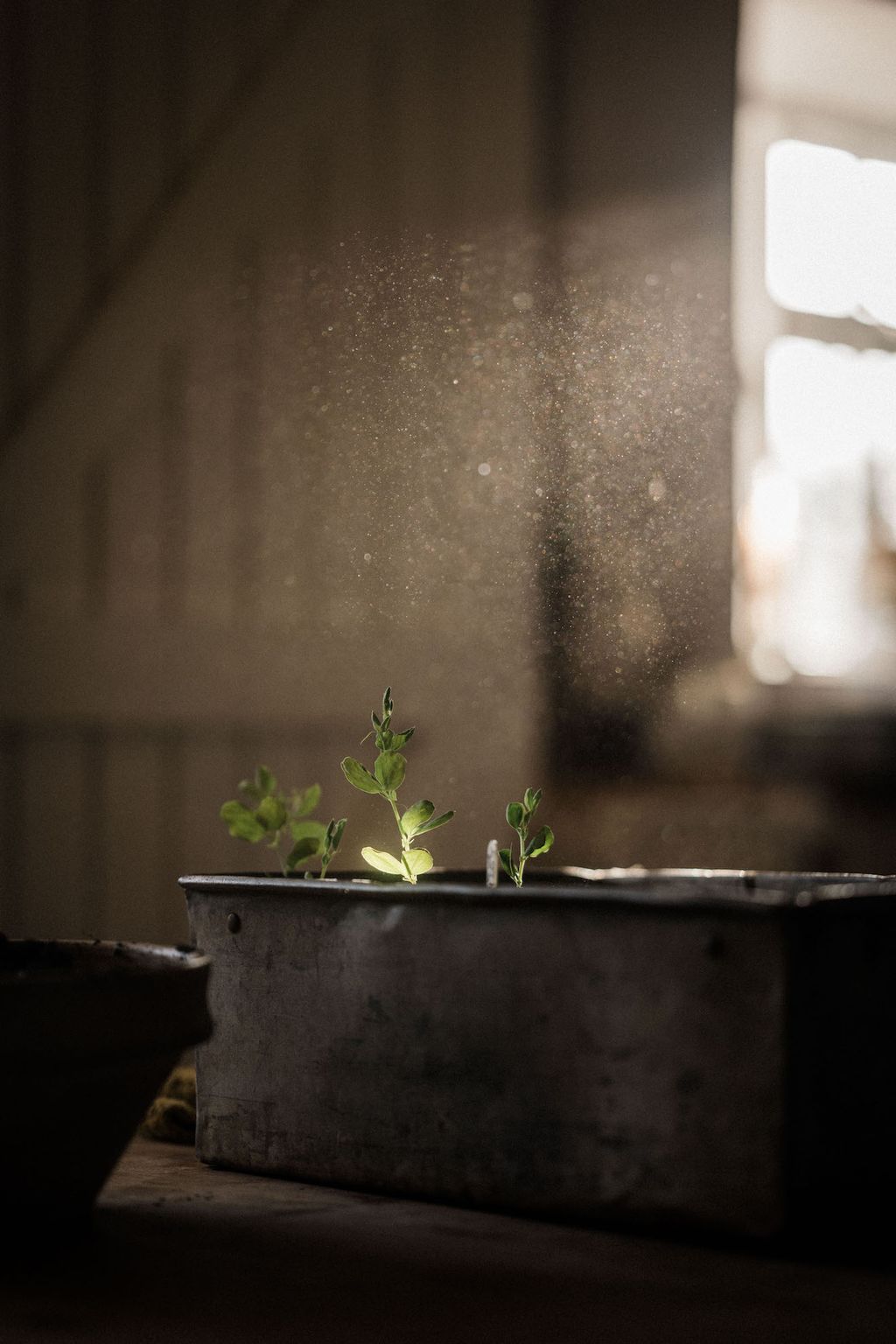
Water your seedlings very gently but very thoroughly. When I say gently, the water will bounce out of the container and splash everywhere, particularly when the compost is dry. Do it in a sink or outside. I haven’t found a way of doing this without water spurting off in strange directions so I just accept that it will and take precautions. The first water should be quite a comprehensive one as it takes the place of the soaking step that we have missed out (if you have) and there needs to be enough moisture in the compost to soften the seed coating.
When to plant out sweet peas
The mantra to remember for most seeds, but particularly sweet peas, is warm and dark for germination, cool and light for growing on. Around 15 degrees Celsius is about right according to the experts but I think a kitchen windowsill, or any place out of a draft indoors, is fine. One of the most important reasons for doing this indoors is that (hopefully) you don’t have mice inside the house and mice love sweet pea seeds. They will generally ignore plants so once they are up and growing, they are fine.
Keep them moist but not wet. Once the shoots are up and through, get them out in the cold. If you molly coddle them, you get weak, leggy plants. Once the plants are 4–6 inches tall, pinch out the central growing tip, just above a leaf joint, leaving just two or three leaf nodes. This will encourage the plant to branch vigorously from the base. If they are growing really well, it might be worth putting the individual tubes into a pot.
Plant seedlings out after the last frost, roughly 8 inches apart, against a support, trellis or netting. Tie them in to get them started. Sweet peas are heavy feeders and require a little extra pampering to produce abundantly. Prepare planting beds by applying bone meal, a thick layer of compost or well rotted manure and a generous dose of natural fertilizer. They grow rapidly and require a strong structure to climb. Hazel teepees are perfect.
How to care for sweet peas
Sweet peas love water, and without consistent moisture they will fail to thrive. Keeping their thirst quenched during warm weather is crucial. Feed plants weekly with diluted seaweed emulsion.
To prolong blooming, it’s important that plants don’t set seed, so be sure to harvest and deadhead the flowers frequently. For the longest vase life, pick when there are at least two unopened flowers at the tip of a stem.
Grace Alexander is a writer, flower grower, seed-merchant and psychologist from Somerset. Her monthly membership, Gather, provides escapism and an immersion in a world of flowers, thatched cottages and dogs.

 Matt Austin1/10
 Matt Austin2/10
 Matt Austin3/10
 Matt Austin4/10


 Matt Austin5/10
 Matt Austin6/10
 Matt Austin7/10
 Matt Austin8/10


 Matt Austin9/10
 Matt Austin10/10