
The six elements you need for a perfect flower arrangement
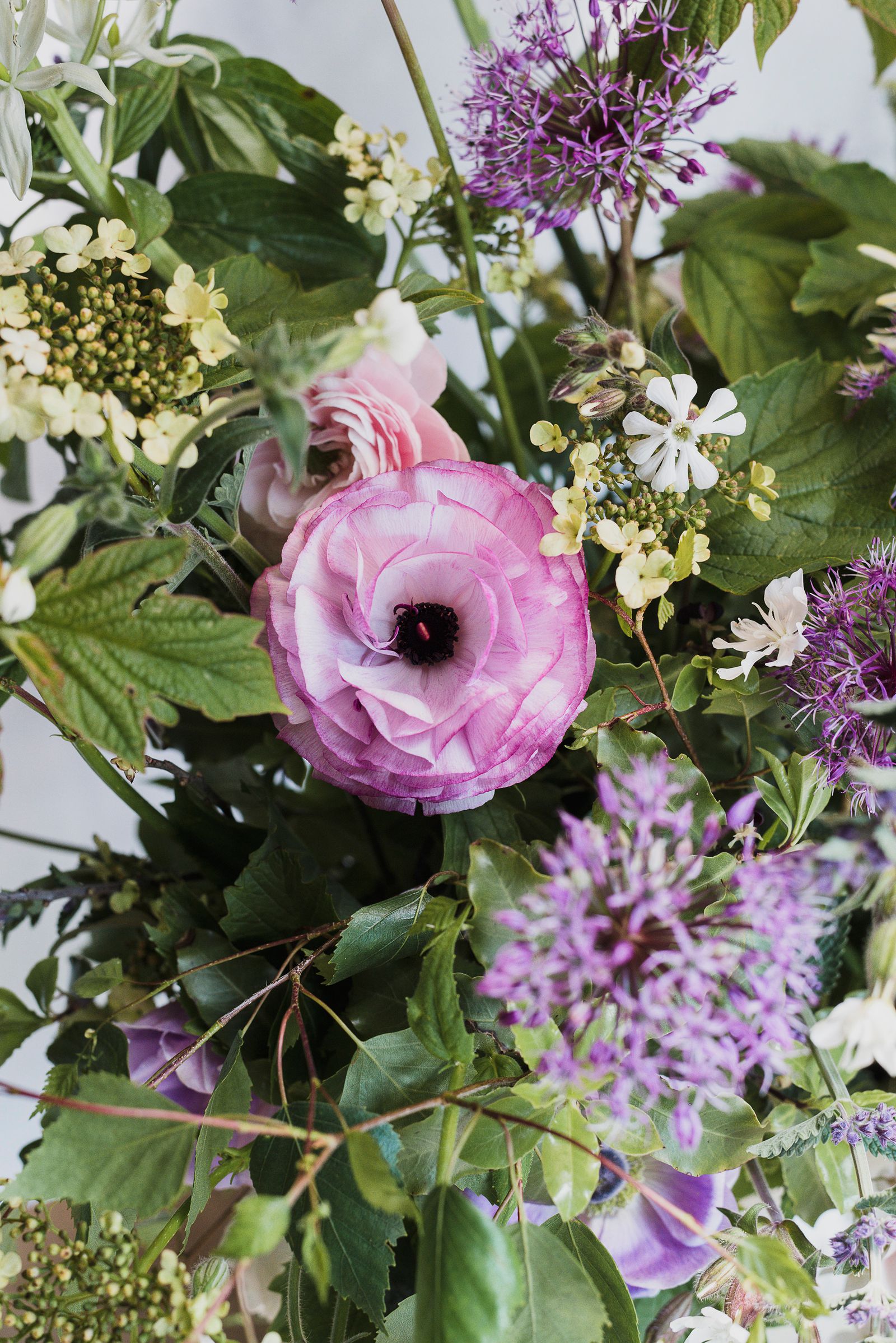
When deciding which plants you would like to grow for the vase, you need to consider that you are growing for a purpose. A good starting point is to think about the various forms of the floral material that you will be using and how these can be combined to create dynamic arrangements.
There are six main types of material used for floral design: structural plants; focal and supporting flowers; filler flowers; textural material; and airy elements. Within the constraints of conventional floristry, these forms would be used to create structured, geometric arrangements abiding by strict design rules and stem counts. Recently, a more natural aesthetic has grown in popularity and this looser approach to design allows the seasonal material to lead your creativity. However, you will still need to think about the principles of balance and proportion, and how different flower forms can be used to create something pleasing to the eye.
For the most part, foliage from woody plants represents the structural element of floral design. The structure provides the leafy framework for all of your other blooms, in much the same way as trees and shrubs are used to provide structure in garden design.
The stems of shrubs and trees, sometimes in full leaf, sometimes flowering, and perhaps with coloured stems or catkins in winter, are all valuable. This structural material doesn’t just have to be green or evergreen foliage — deep purple cotinus can create a sense of drama, while the changing colours of autumn foliage can set the whole tone of a floral design.
The use of mixed foliage and branches in a garden-gathered arrangement are what makes a piece feel ‘of the garden’, and will instantly give you an indication of the season. You are unlikely to see a branch of flowering cherry blossom in a shop-bought bouquet, but a vase full of branches cut from the garden in spring is the absolute epitome of the season and will look wonderful indoors. From flowering blossom branches in spring, via philadelphus and physocarpus in summer, to the arching abelia stems in autumn, the structural elements are your first link to the time of year and will be instrumental in defining the shape and flow of your arrangement.
Focal and supporting flowers
Focal flowers are the showstoppers of your arrangements. Taking inspiration from the principles of garden design, the focal point in a garden is used to draw and rest the eye, and this is exactly the same for floral arranging.
Focals tend to be large, blowsy blooms that instantly catch your attention: think double tulips and ranunculus in spring; peonies, roses and sunflowers in summer; and chrysanthemums and dahlias in autumn. These focals are often rounded in shape and the colour choice can determine the colour scheme for a design. Typically you will need a smaller proportion of focal flowers than fillers and foliage for an arrangement (unless you are creating an opulent, luxurious display); just a few of these blooms can make a big impact.
Supporting flowers in your arrangements can be broken down into different groups by shape. They are used as a contrast to your focal bloom. Spikes and spires will include varieties such as delphiniums, foxgloves and antirrhinum — their linear form creates a vertical accent, adding height, drama and dynamism to your floral arrangement. Disc-shaped flower heads such as ammi, echinacea and daucus add another layer of interest. When using supporting flowers, consider their size and shape in relation to the focals and how the colour supports and enhances them.
Fillers, texture and airy elements
Filler flowers are essential to bulking out a display, filling the space between the larger blooms and knitting the design together. This type of material will often have smaller flowers and branching heads like autumn-flowering asters or the perennial rudbeckia ‘Henry Eilers’. Some fillers can be used to provide another shade of green to enhance that sense of the garden: alchemilla, bupleurum, cerinthe and mint fit into this category. Using a mixture of filler material can help to develop a colour scheme and add scent to arrangements.
In a shift away from traditional floristry dominated by hybrid tea roses, chrysanthemums and carnations, the addition of textural elements will completely change the aesthetic of your floral arranging. Our gardens are filled with buds, seedheads and grasses throughout the year, and you can make use of this material to add texture, light and rhythm to your displays. Poppy seedheads together with roses in early summer or sparkling grasses with dahlias in autumn can give a more natural, garden-like sensibility to a design and nod to the abundance of each season you are gathering the flowers in.
The joy of using such a wide range of plants for cutting is that there are unusual varieties you can use from the garden that you wouldn’t typically be able to find in a traditional florist’s shop. Airy elements are those dancing blooms on long thin stems that add movement and that final bit of magic to an arrangement. Aquilegia float like butterflies with their long-spurred flowers in late spring, delicate panicles of Stipa gigantea (golden oats) look like drops of shimmering gold come midsummer, and sanguisorba can add a pop of lightness when paired with dahlias in late summer. Playful, whimsical and wild!
Taken from Cut Flowers by Celestina Robertson, £12.99 (Frances Lincoln)
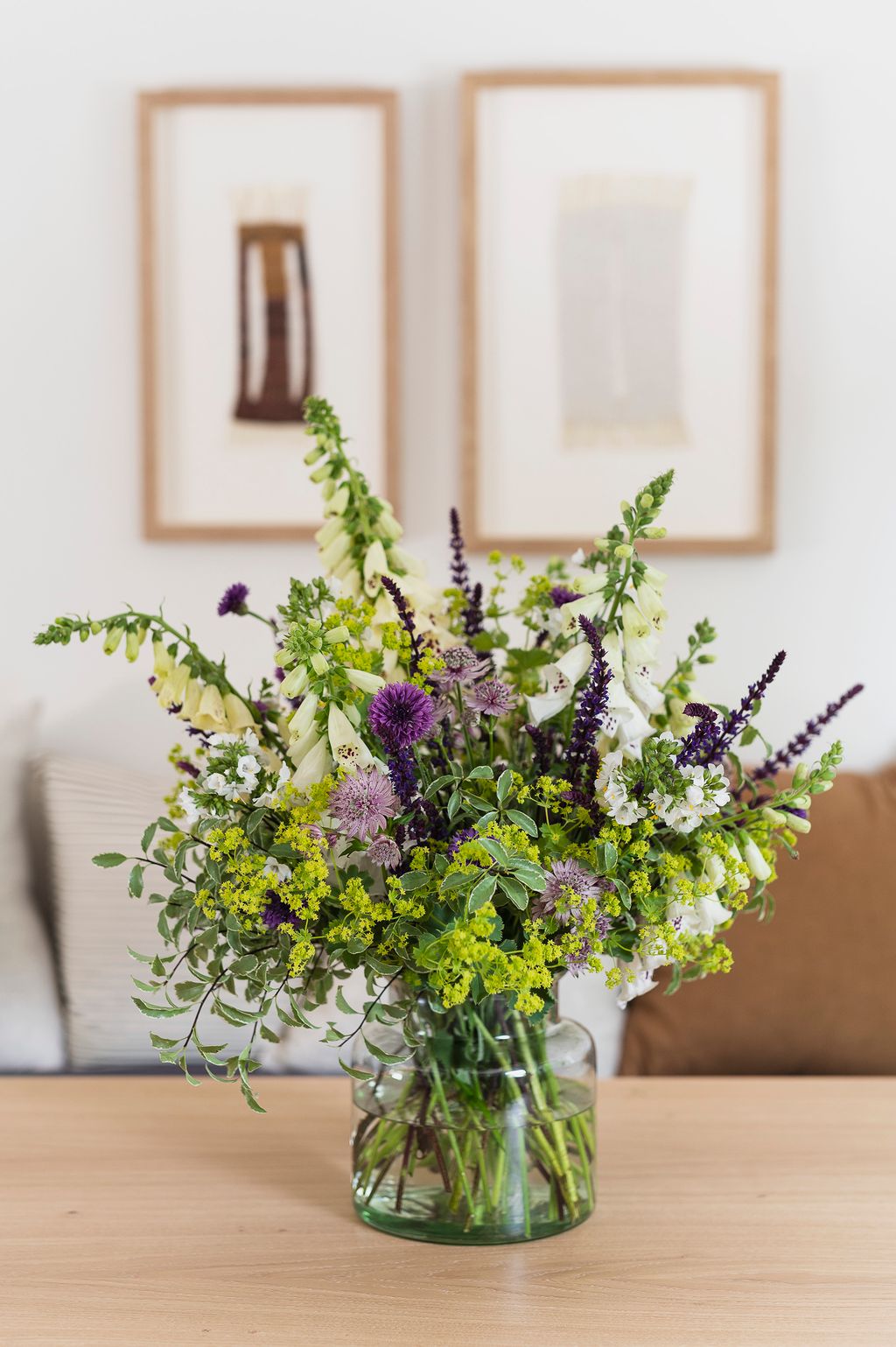 Salsabil Morrison1/5
Filler flowers such as Alchemilla mollis (lady’s mantle) and salvias bridge the space between focals and add another layer of interest.
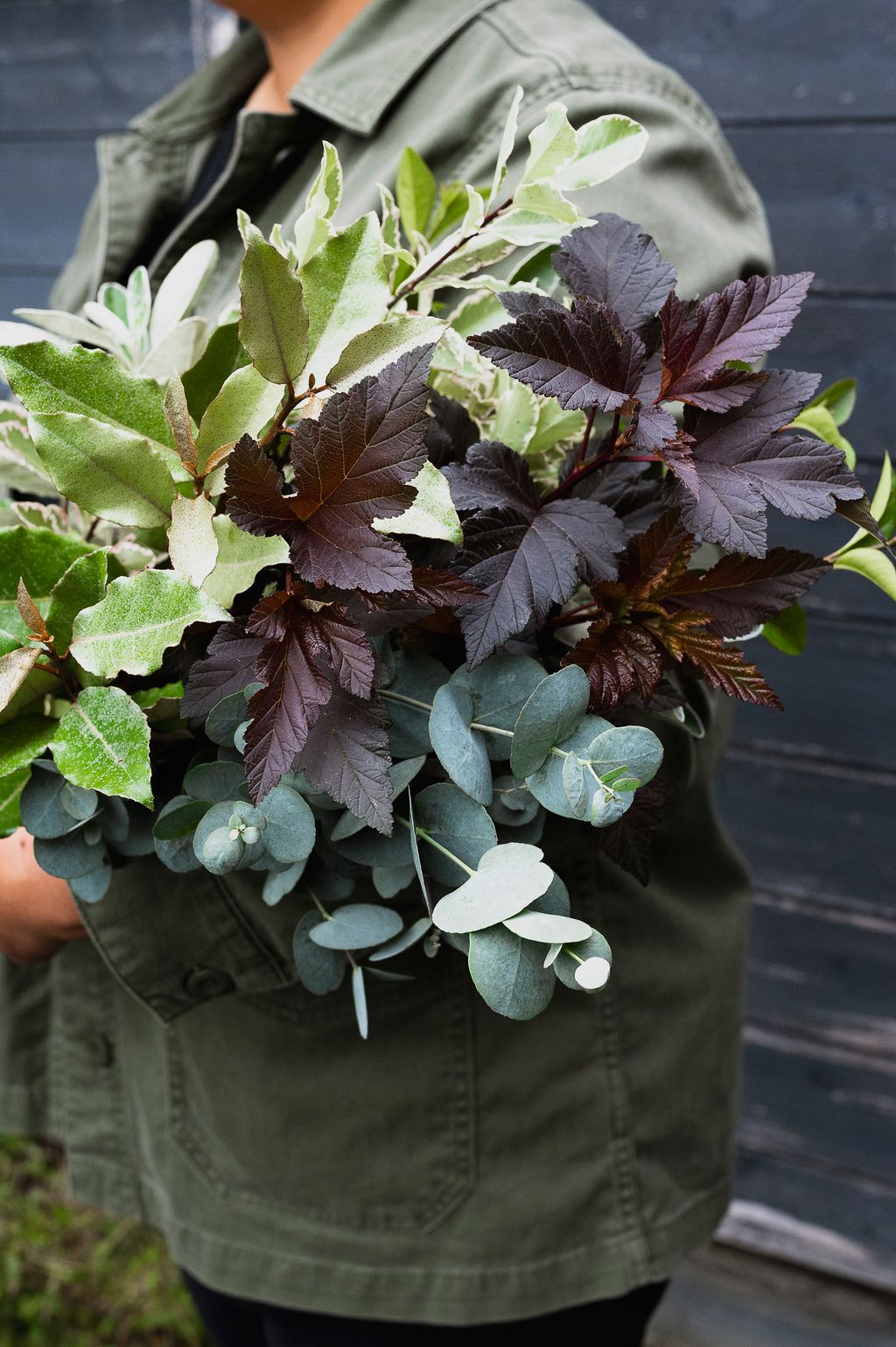 Salsabil Morrison2/5
Using interesting foliage such as eucalyptus, elaeagnus and physocarpus can support and enhance the flowers in your arrangements.
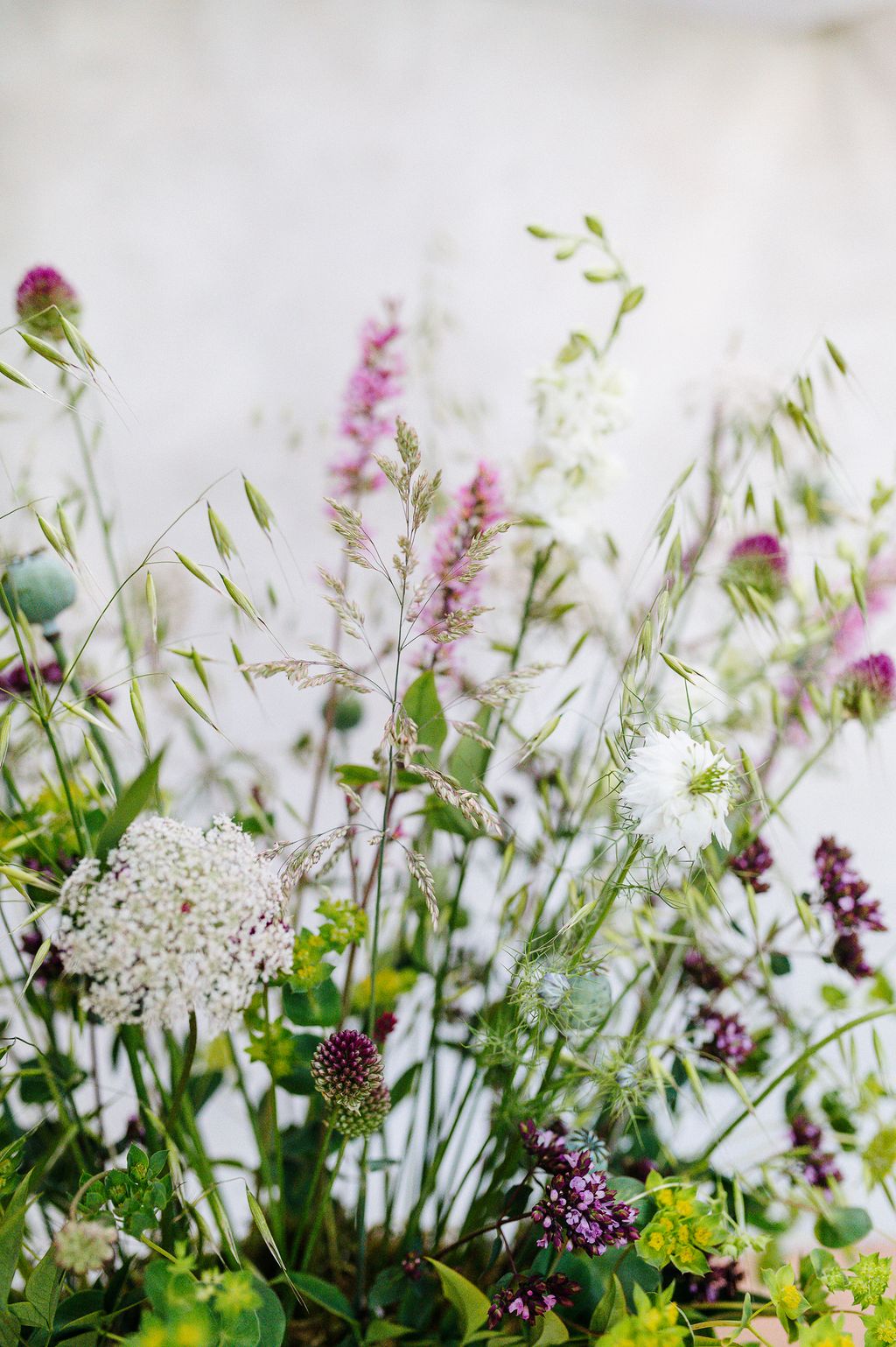 Salsabil Morrison3/5
Delicate grasses such as Avena sativa (oat) and Briza maxima (greater quaking grass) add another dimension of light and texture
 Salsabil Morrison4/5
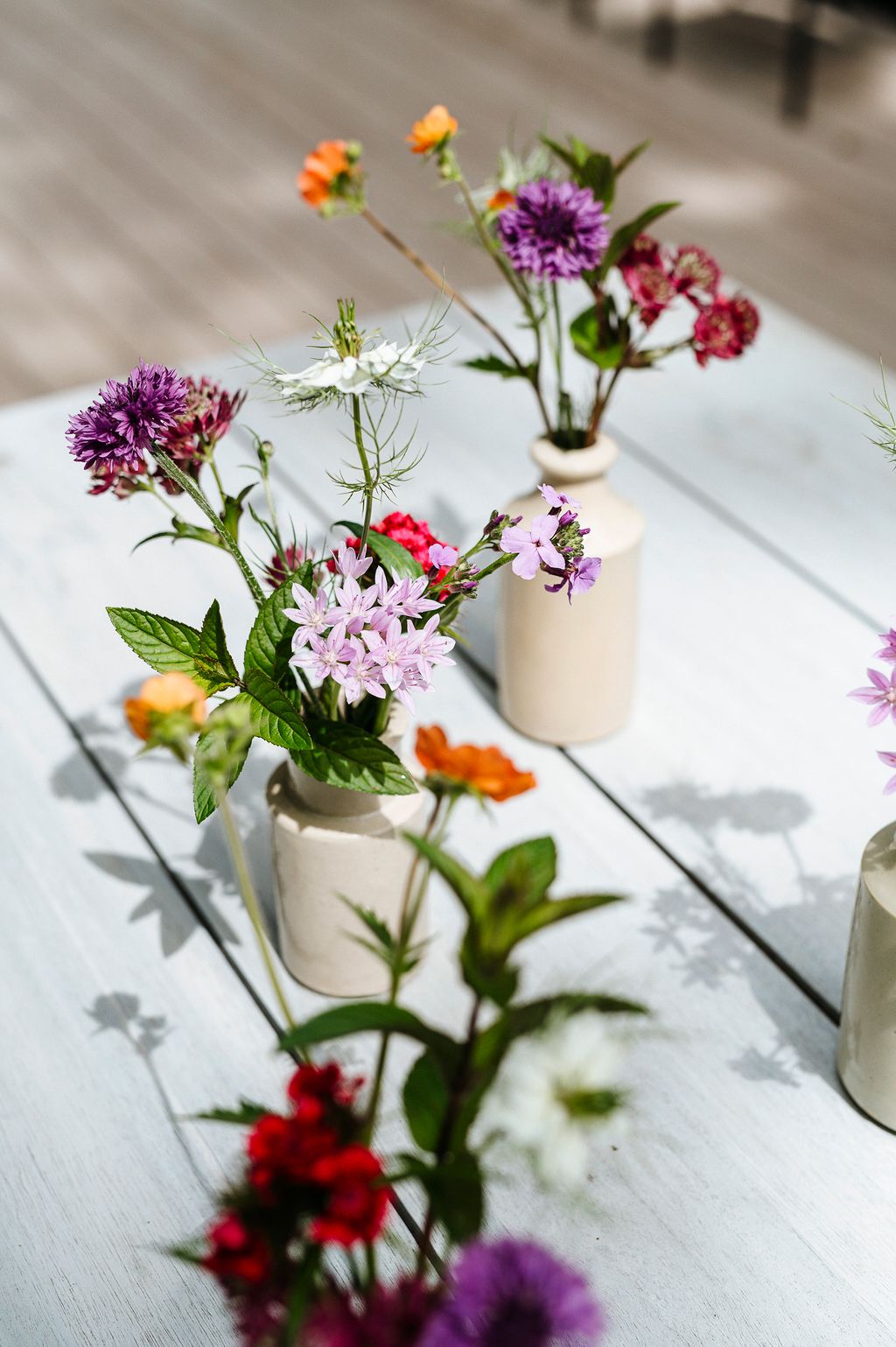
Using a mix of flower shapes will create dynamic arrangements with layers of texture and interest.


 Salsabil Morrison5/5
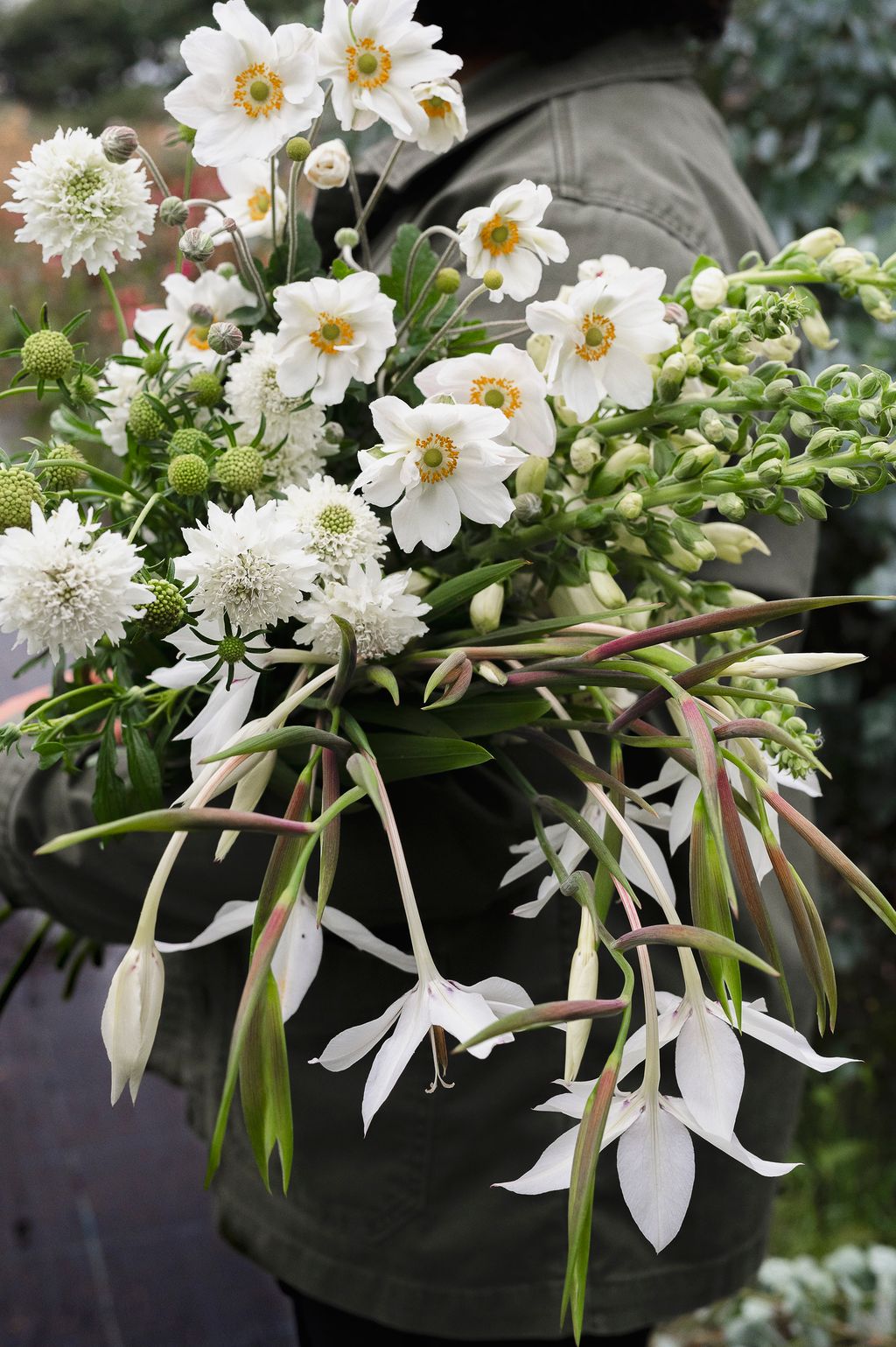
A monochrome palette and interesting flower shapes combine in this group, which includes Anemone x hybrida (Japanese anenome), Digitalis purpurea ‘Bondana’ (foxglove ‘Bondana’), scabious and Gladiolus murielae (Abyssinian gladiolus)


