
Inside Knole, home to the same family for over 400 years
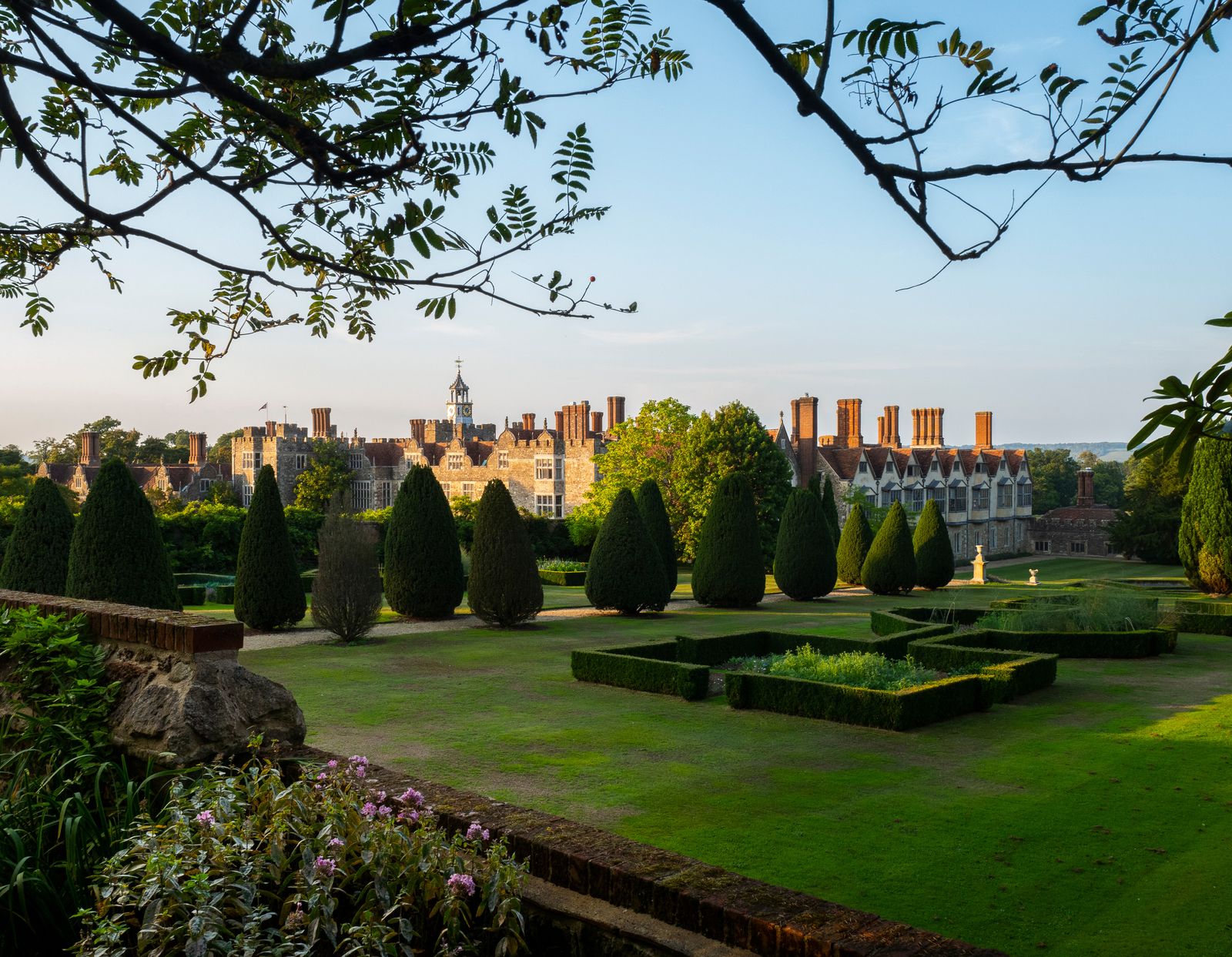
The Sackville family has lived at Knole, one of Britain’s great treasure houses, for more than four hundred years. Throughout its history, Knole has lured generations of heirs with the promise of an ancestral place, an aristocratic life, a sense of unearned esteem and belonging. Many of these Sackvilles have revelled in the opportunity. But others, once seduced, have found such a huge
inheritance hard to manage. The place has ground them down, becoming a curse, a burden, rather than a privilege or a glory. I am the thirteenth generation to live here, and—after this personal tour of the “calendar house” with its legendary 365 rooms, fifty-two staircases, and seven courtyards, which sprawl over four acres—I invite you to form your own opinion of our challenge.
Knole has always excited a range of different reactions, and not just among members of the Sackville family. It’s a love-it-or-loathe-it sort of place. King Henry VIII liked it so much that he forced Thomas Cranmer, his Archbishop of Canterbury, to hand it to him in 1538. And yet, in the following century, the diarist John Evelyn was so depressed by the greyness of this “greate old fashion’d house” that he scuttled out into the sunshine. Knole was built and then furnished to impress, and it has been a show house ever since Thomas Sackville acquired it in 1604 (the year after James I, the first Stuart monarch, ascended to the throne). It is precisely this that can make it so impenetrable, such a difficult place to understand. Some people are put off by its sheer size.
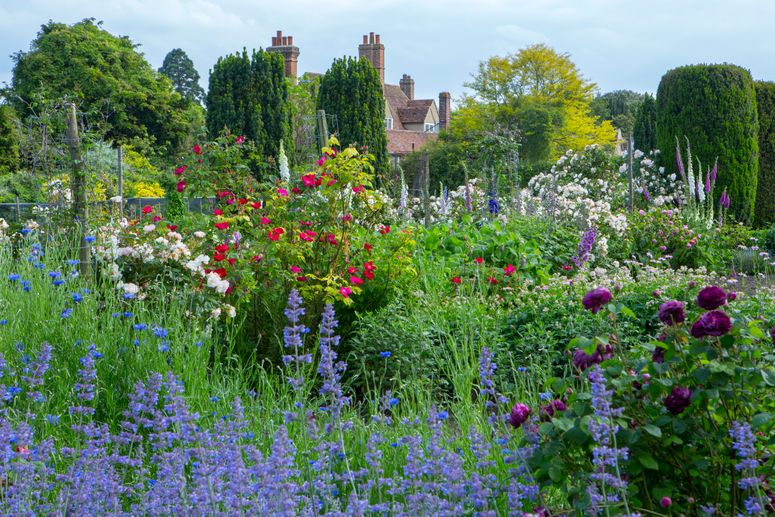
In her diary for July 1924, the novelist Virginia Woolf recorded a visit to Knole, where she had been invited to lunch with my granduncle, the 3rd Baron Sackville. “His lordship lives in the kernel of a vast nut. You perambulate miles of galleries; skip endless treasures—chairs that Shakespeare might have sat—tapestries, pictures, floors made of the halves of oaks; & penetrate at length to a round shiny table with a cover laid for one.”
Potentially even more overwhelming than its size, and its role as a show house or museum, is the extent to which people living at Knole feel oppressed by the past, followed wherever they go by the flinty, watchful gaze of their Sackville ancestors in portraits on the walls. The writer Vita Sackville-West grew up at Knole, and in her novel The Edwardians, the main character Sebastian is made aware that he is as much a slave to his inheritance as he is a free agent. “A place like Chevron [Knole] is really a despot of the most sinister sort,” she wrote. “It disguises its tyranny under the mask of love … Then there is another danger which you can scarcely hope to escape,” she continued. “It is the weight of the past … That is real atrophy of the soul.”
The characters who people the pages of the book—the grave Elizabethan statesman; the good-for-nothing gadabout at the seedy Court of King James I; the dashing Cavalier; the Restoration rake; the 3rd Duke, that magnificent and melancholy representative of the ancient régime; the whiskery and dark-hearted Mortimer, who caused three nights of rioting in 1884 by closing the park to visitors—are all representative of their eras. They are also all members of a family, my family, described by Vita Sackville-West as “a race too prodigal, too amorous, too weak, too indolent, and too melancholy”: in short, “a rotten lot, and nearly all stark staring mad.” Many of their stories are told in this book. They share not only a genetic history but also a common predicament, their eerily identical experiences of the house and its estate across the centuries.
This is an extract from Knole: A Private View Of One Of Britain's Great Houses by Robert Sackville-West
 1/7
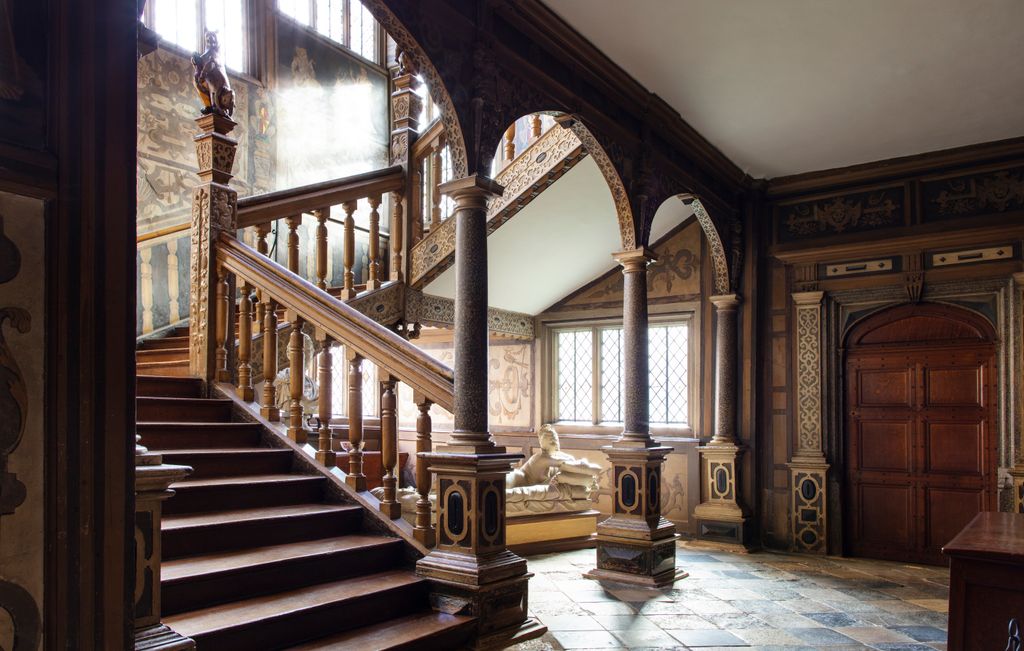
1/7Thomas would have found a number of spiral stairs at Knole, most of them set into the corners of courtyards, and to these he added at least two very fine new staircases. Made possible by greater sophistication in joinery, cantilevered open-well staircases, such as the two at Knole, provided surfaces that invited splendid painting. Climbing the stairs represents not just a social ascent— toward the splendour and exclusivity of the upper floor—but a spiritual one as well: a metaphor for the journey through temporal life and toward an eternal one beyond. The architectural scheme was influenced by the Renaissance revival of the classical orders, with Doric at the bottom, Ionic in the middle, and Corinthian at the top.
 2/7
2/7The more imposing of the two stairways, the Great Staircase, led from the Great Hall to the Great Chamber on the upper floor, where Thomas Sackville would have intended to do most of his entertaining. Here, the craftsmen of the King’s Works installed a plasterwork ceiling (by Richard Dungan), and carved paneling and a frieze around the walls (by William Portington). Richard Dungan’s plasterwork ceiling is particularly accomplished, its broad flat bands in a complex geometrical pattern complementing the paneling. Delicate bunches of flowers and foliage decorate the intervening spaces.
 3/7
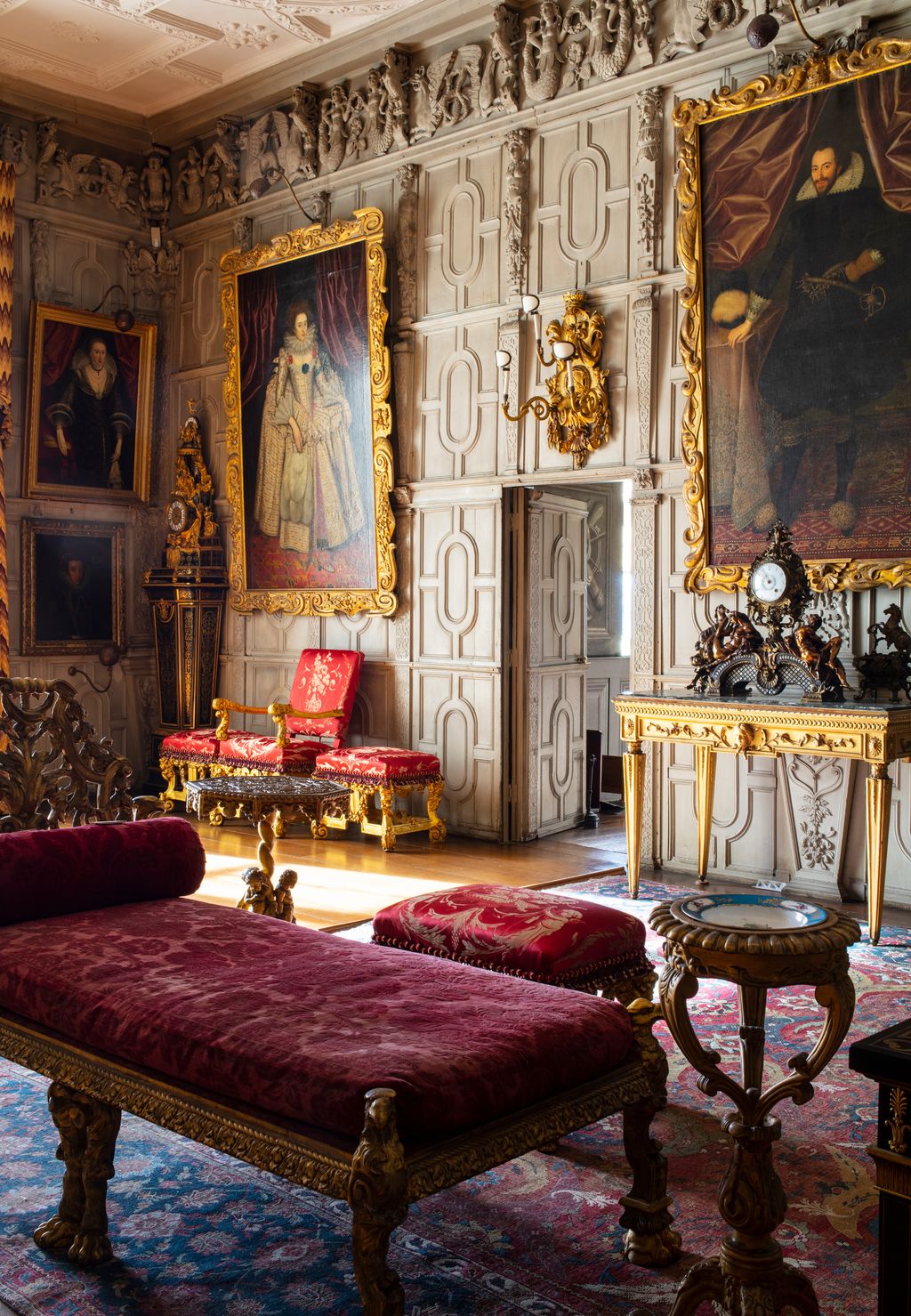
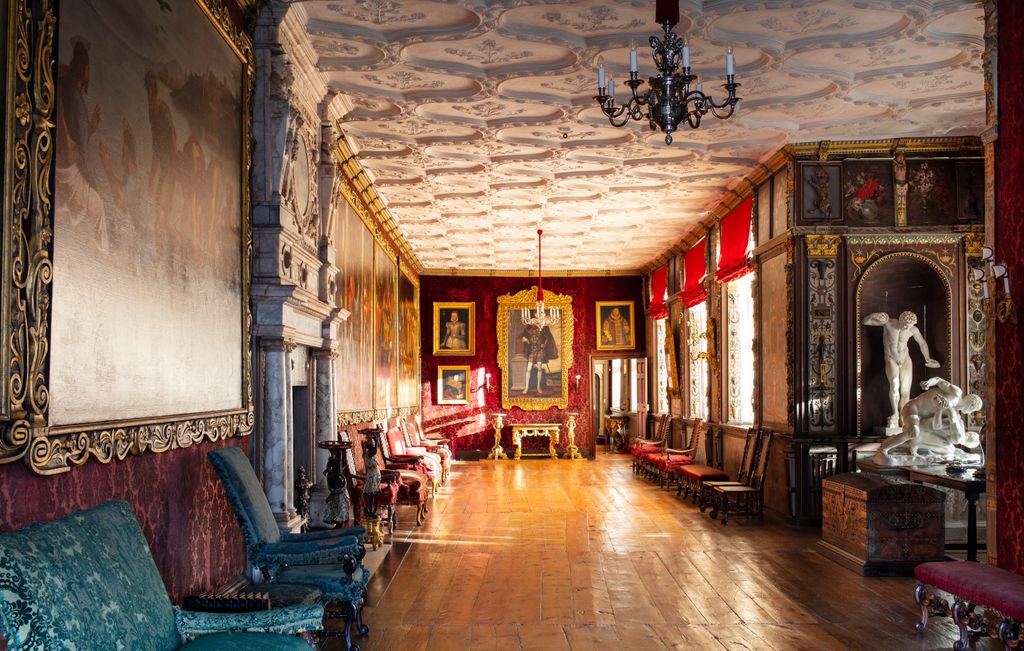
3/7Gilt sconces, bearing the duke’s coronet and Garter, grace the walls of the Ballroom. Designed by William Kent, they would have cast a flickering light on the dancers as they performed their minuets. The long galleries and reception rooms of Knole would have been infused with the light from a hundred candles reflecting off the polished wood floors and the gilt mirrors and picture frames, smouldering in the fluttering décolletages of the women, and picking out the beauty spots against the pallor of their powdered faces.
 4/7
4/7On very grand occasions, the host would have escorted a particularly distinguished guest in a ceremonial procession along the Cartoon Gallery (with its floorboards then covered in rush matting) to the master bedchamber, the King’s Room.


 5/7
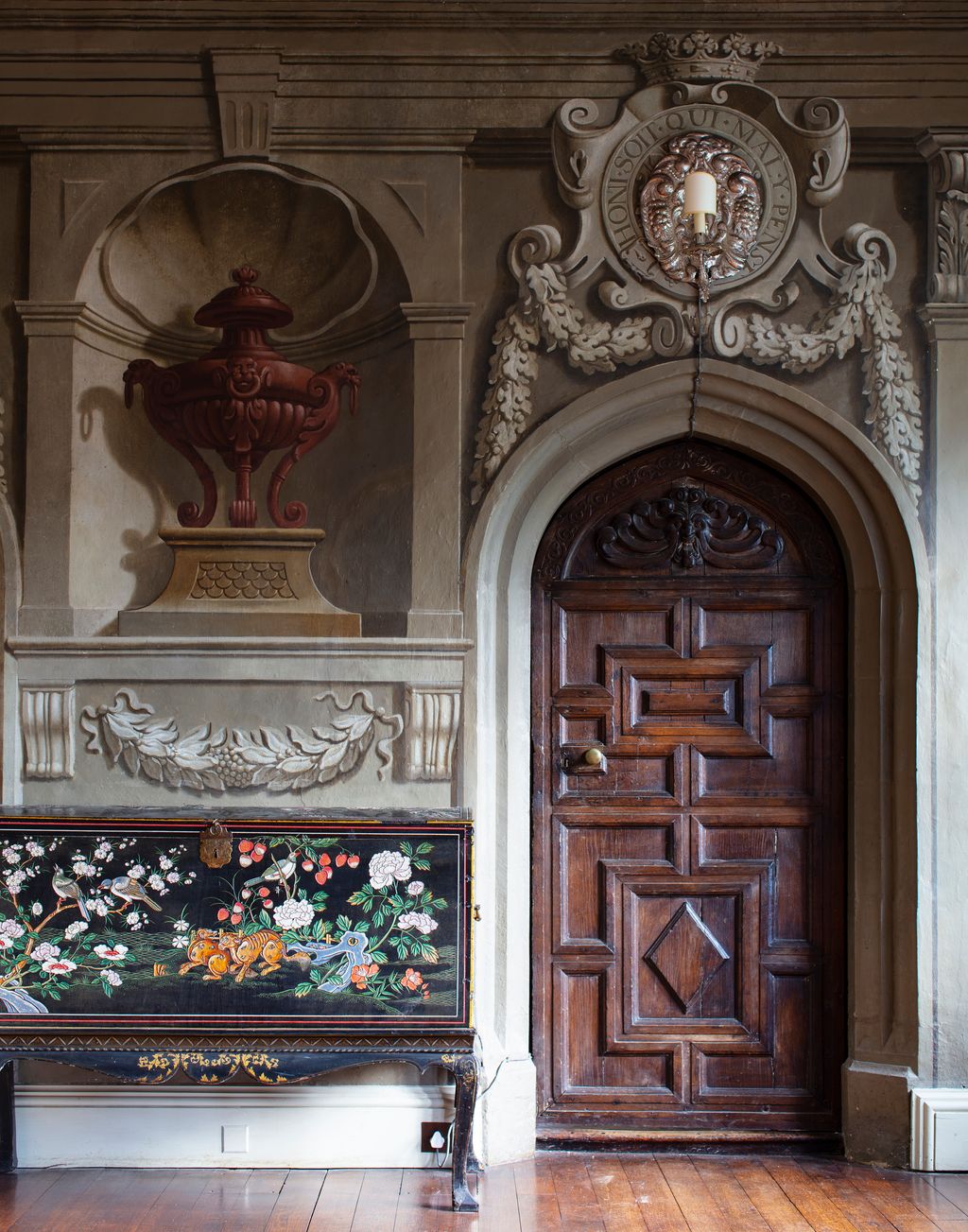
5/7The Colonnade, which has to be one of the most beautiful rooms at Knole, was glazed, and its walls decorated with trompe-l’oeil arches and niches containing giant urns. The sun streams though the windows, framed by the seven marble columns, bleaching the wood floors and the pink silk of the chairs and sofa. An enfilade of rooms, designed for entertaining, now connected the foot of the second painted staircase to a suite of south-facing rooms: an Armoury, a Boudoir whose new bay window gave an even finer view of the garden, and a Music Room with a Queen Anne mantelpiece made around the time Lionel was moving into Knole with his young wife.
 6/7
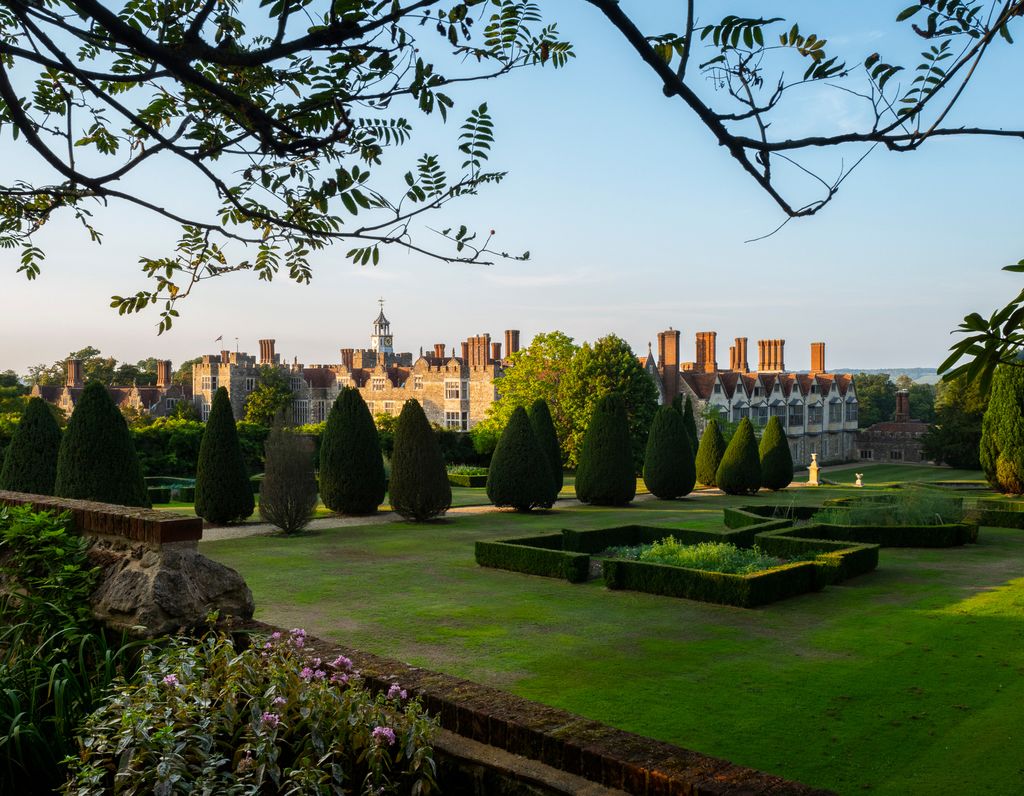
6/7Here is Knole, as described in Orlando: “There it lay in the early sunshine of spring. It looked a town rather than a house … here was a chapel, there a belfry; spaces of the greenest grass lay in between and clumps of cedar trees and beds of bright flowers; … while smoke from innumerable chimneys curled perpetually in the air. This vast, yet ordered building, which could house a thousand men and perhaps two thousand horses, was built, Orlando thought, by workmen whose names are unknown. Here have lived, for more centuries than I can count, the obscure generations of my own obscure family. Not one of these Richards, Johns, Annes, Elizabeths has left a token of himself behind, yet all, working together with their spades and their needles, their
love-making and their child-bearing have left this.” Vita particularly liked this passage, and so do I— capturing, as it does, the essence of the house in which I, too, was brought up and where I now live. 7/7
7/7More great stories from House & Garden
- Lucy Williams brings her signature sense of style to her west London house
- The 30-year evolution of Lucinda Chambers' London house
- An interior designer’s perfect chocolate-box cottage in the Cotswolds
- Catherine FitzGerald and Dominic West's home in Ireland
- A cowshed in rural France transformed in to a stylish home by the owners of Pinch


