
A French garden full of fantastical topiary
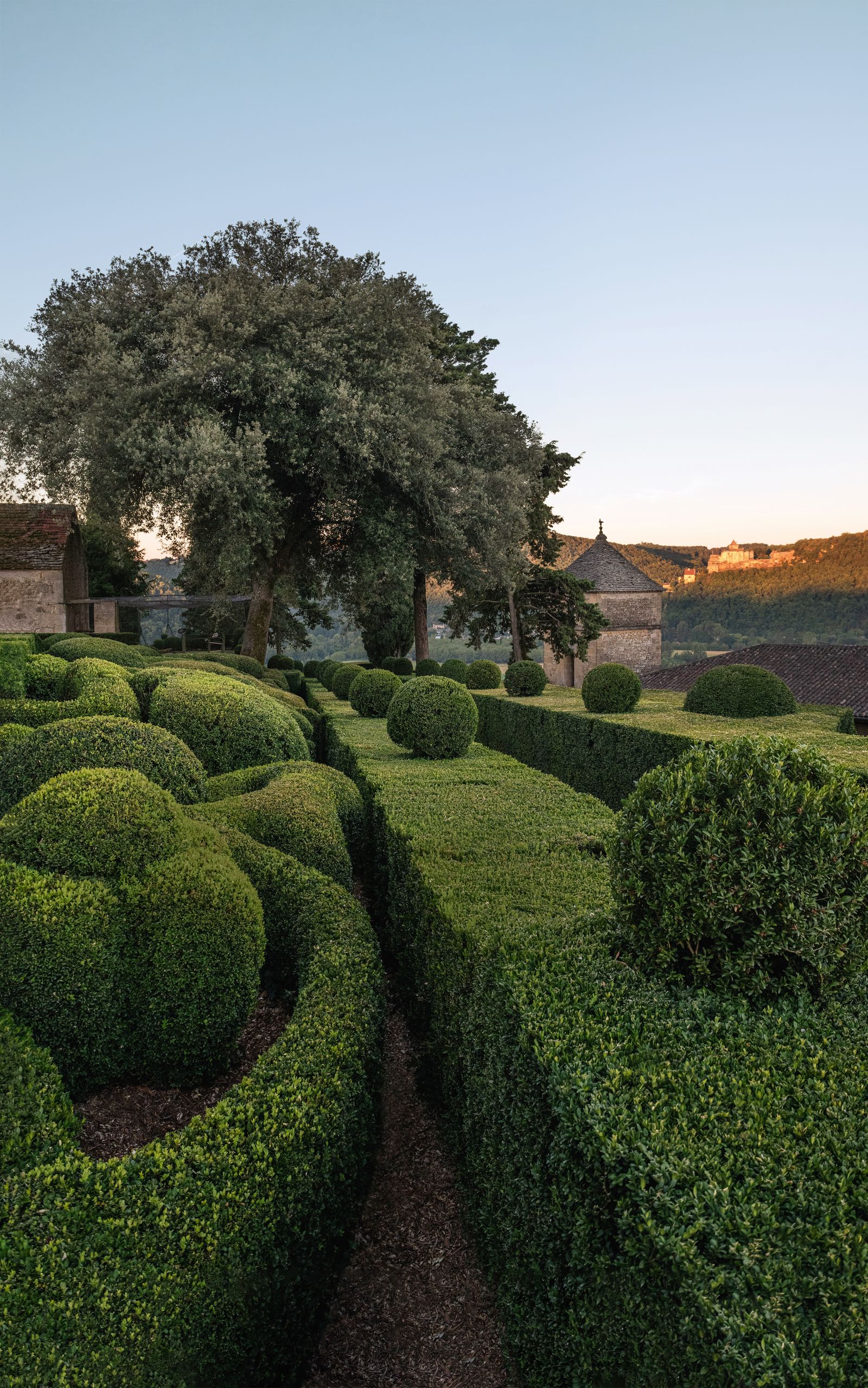
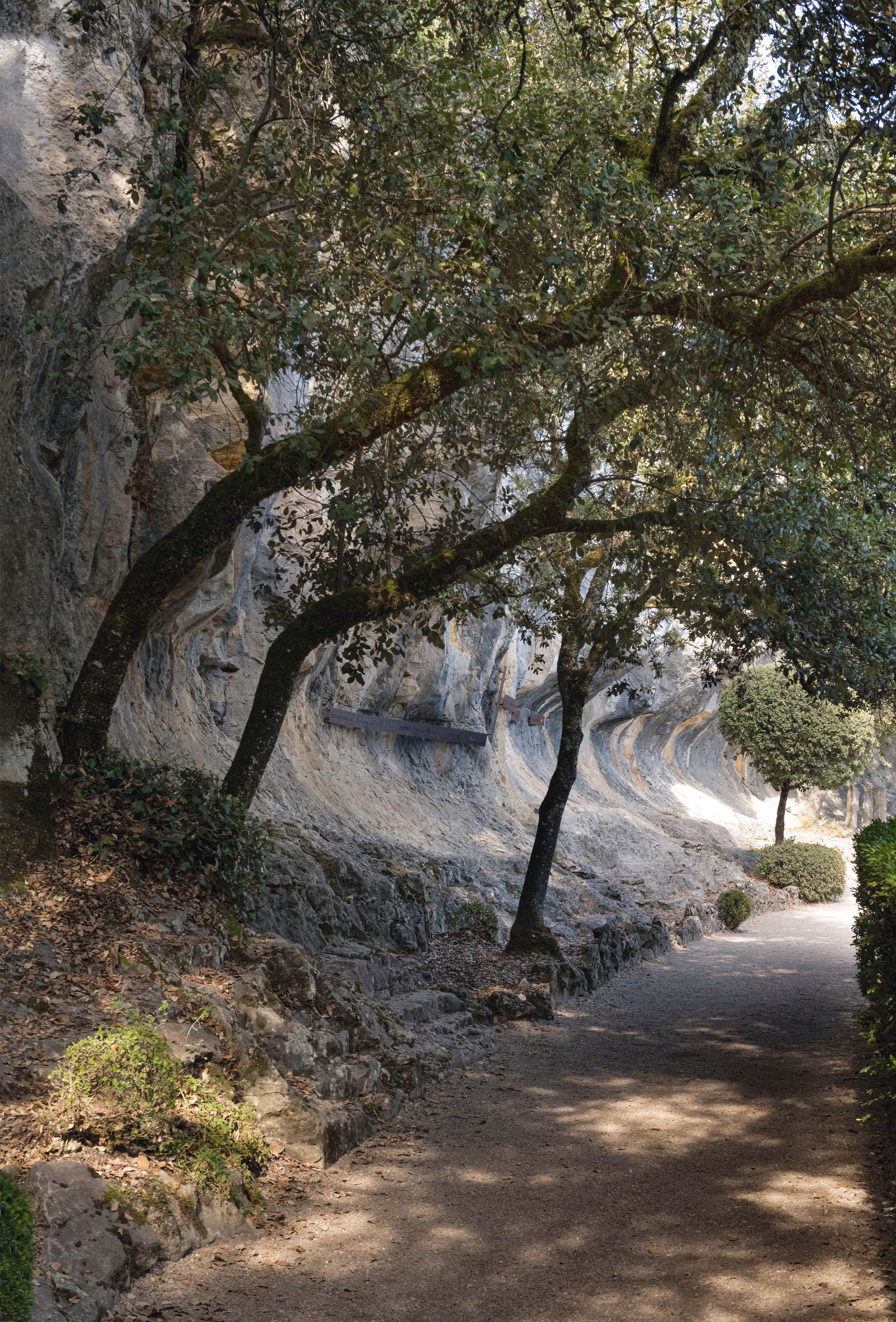
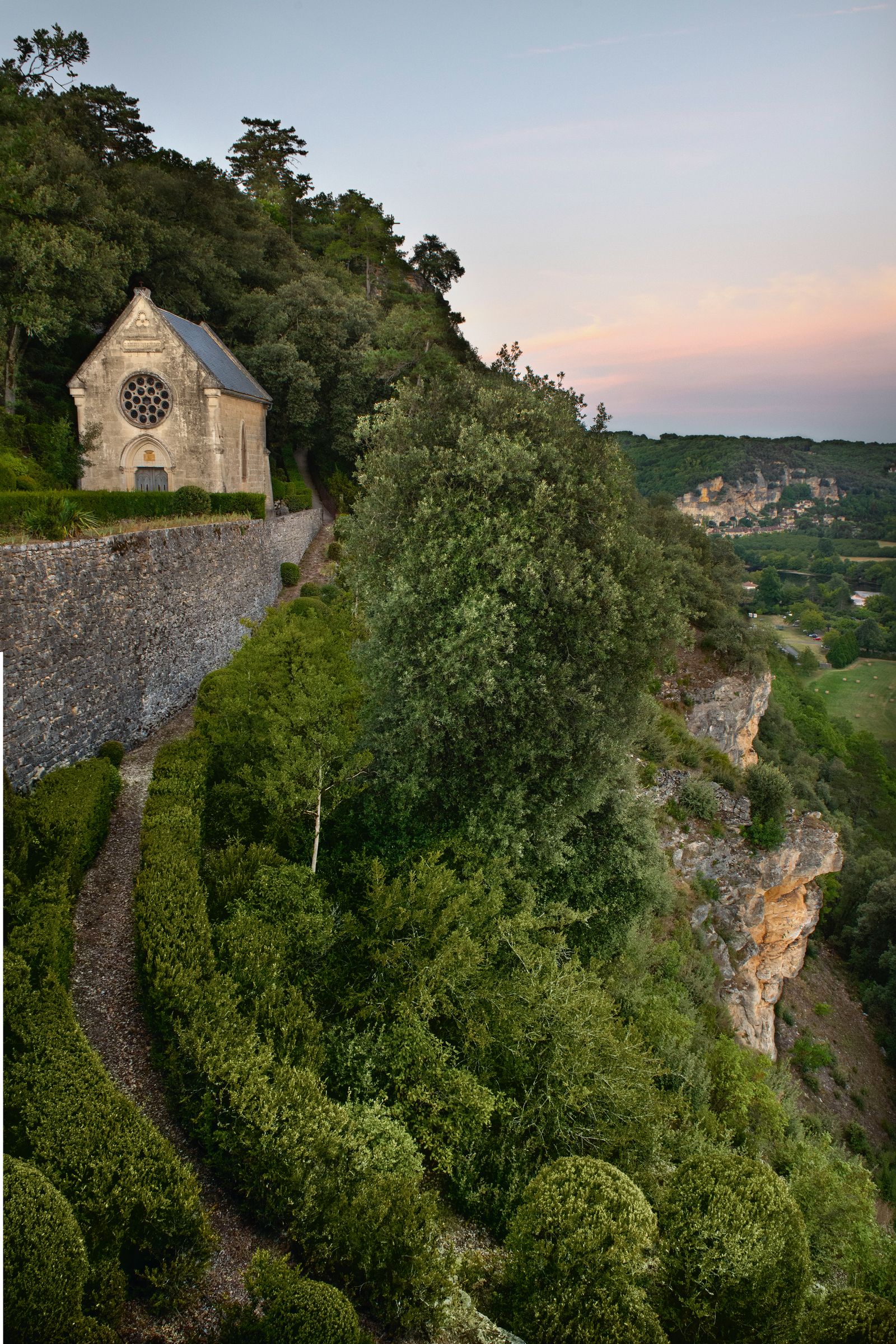
The garden of Marqueyssac, overlooking the Dordogne Valley between La Roque-Gageac and Beynac-et-Cazenac, has to be among the most spectacular in the world. The 22 hectares are laid out along a rocky spur, culminating in a belvedere with a magnificent panorama over the Dordogne river 130 metres below and glimpses of neighbouring chateaux tucked into the surrounding hillsides. The six kilometres of pathways, comprising three separate walks, take visitors along meandering routes from the pretty, stone-roofed early-19th-century chateau near the entrance to a viewpoint at the far end, passing enchanting little buildings and numerous different areas. Each has a distinct character but is clearly part of the wider scheme.
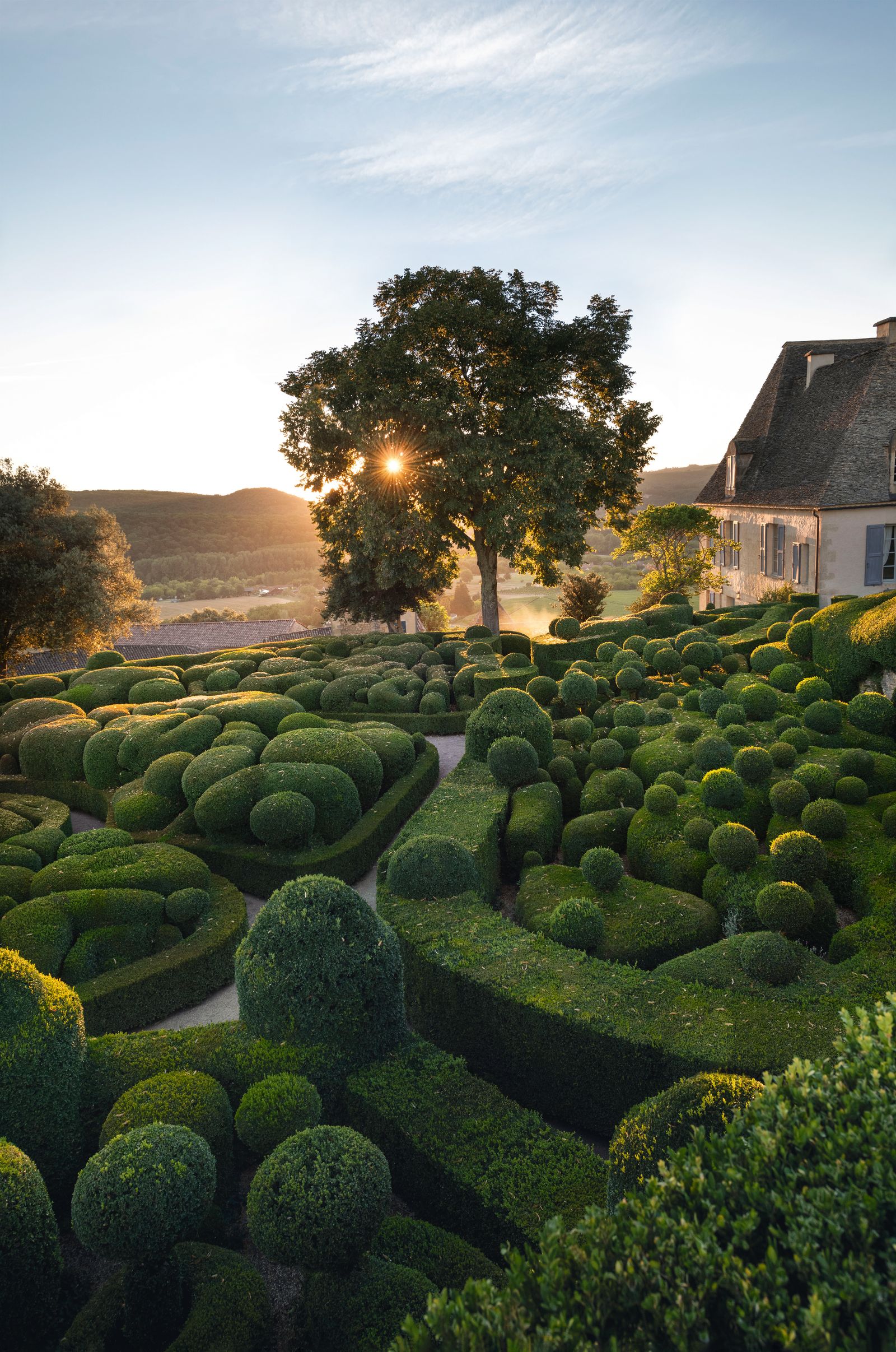
Primarily, it is the use of topiary that sets this garden apart – as if one has been transported into a fantastical Alice in Wonderland landscape of swirls and pompoms, lollipops, waves, buns and cubes of perfectly clipped box. Although the garden is predominantly green, the sculptural forms are dynamic, and the chiaroscuro effect created by the clever positioning of trees and hedging helps to draw visitors along as if by an invisible thread.
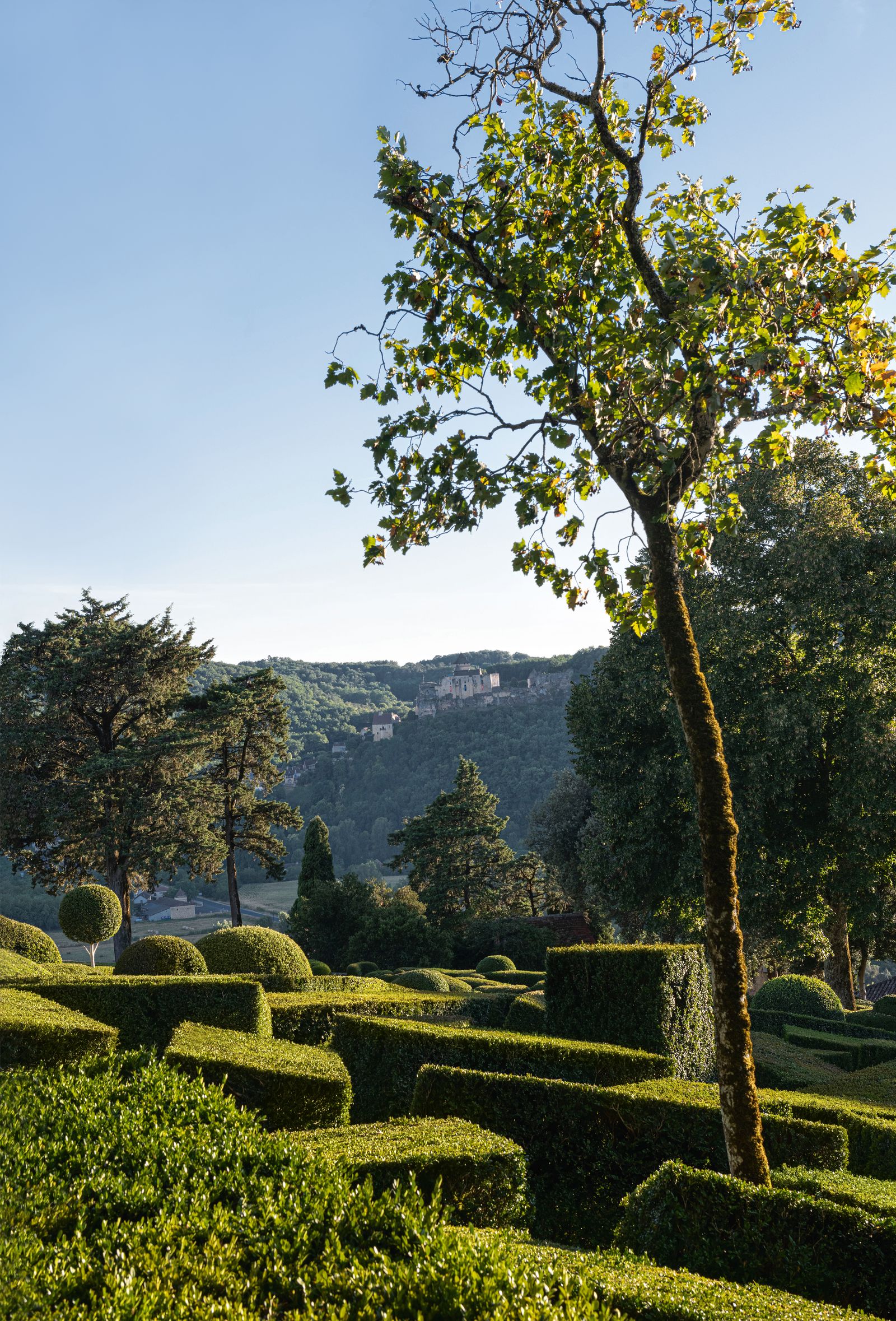
The story of Marqueyssac began in 1692 when Bertrand Vernet, an advisor to Louis XIV, began creating an estate here, transforming the land into a park with a series of vast terraces. The original garden is thought to be the work of Porcher, a disciple of legendary French landscape architect André Le Nôtre (1613-1700), who designed the gardens at the Palace of Versailles. At Marqueyssac, Porcher created a formal garden à la française, with terraces, allées and a kitchen garden. Later, between 1830 and 1840, the scientist and diplomat Julien Bessières built a stone chapel and a delightful 100-metre-long grande allée for horseback rides.

However, it was not until 1861 that the garden began to develop the unique character that exists today. The then owner, Julien de Lavergne de Cerval, inspired by his time spent travelling in Italy, planted 150,000 boxwoods, along with stone pines, linden trees and cypresses, and also introduced ivy-leaved cyclamen from Naples. He redesigned the flowerbeds, too, and added in more walkways. Importantly, he had the box clipped into fantastical shapes, often in groups of rounded forms – a highly original move, even by today’s standards. In addition, he built rock gardens and rustic stone structures, and imbued the distinctive space with an extraordinary sense of romanticism.
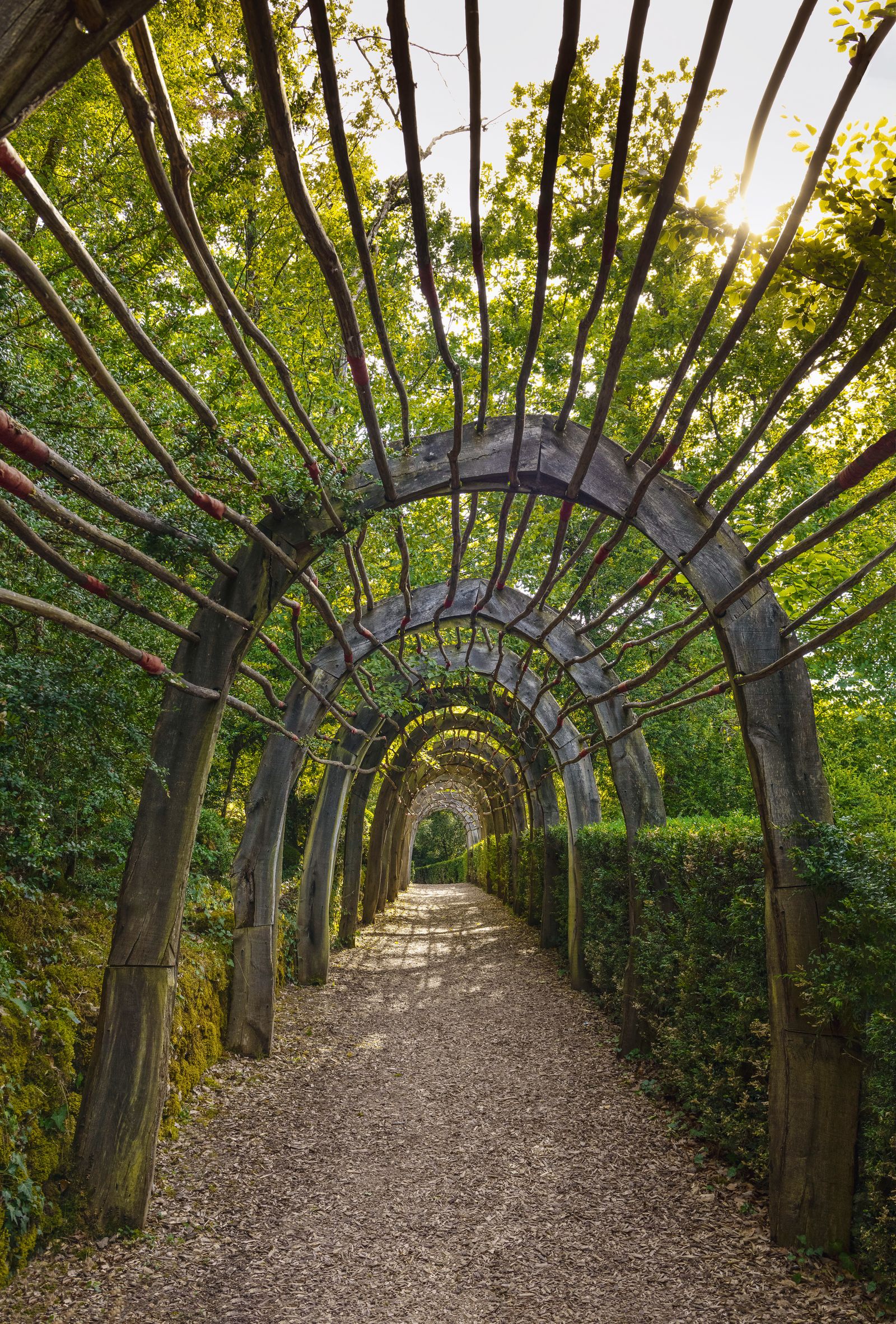
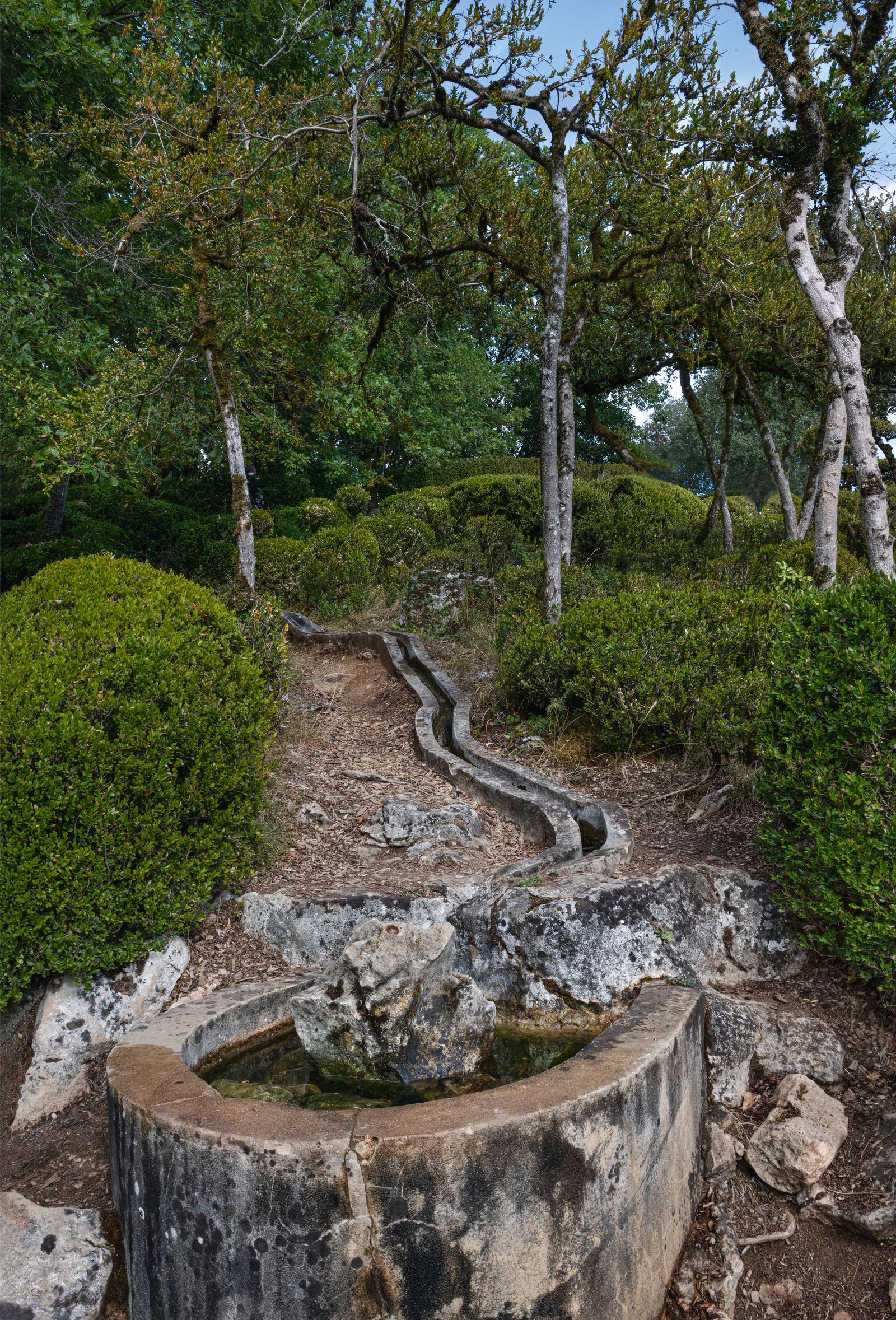
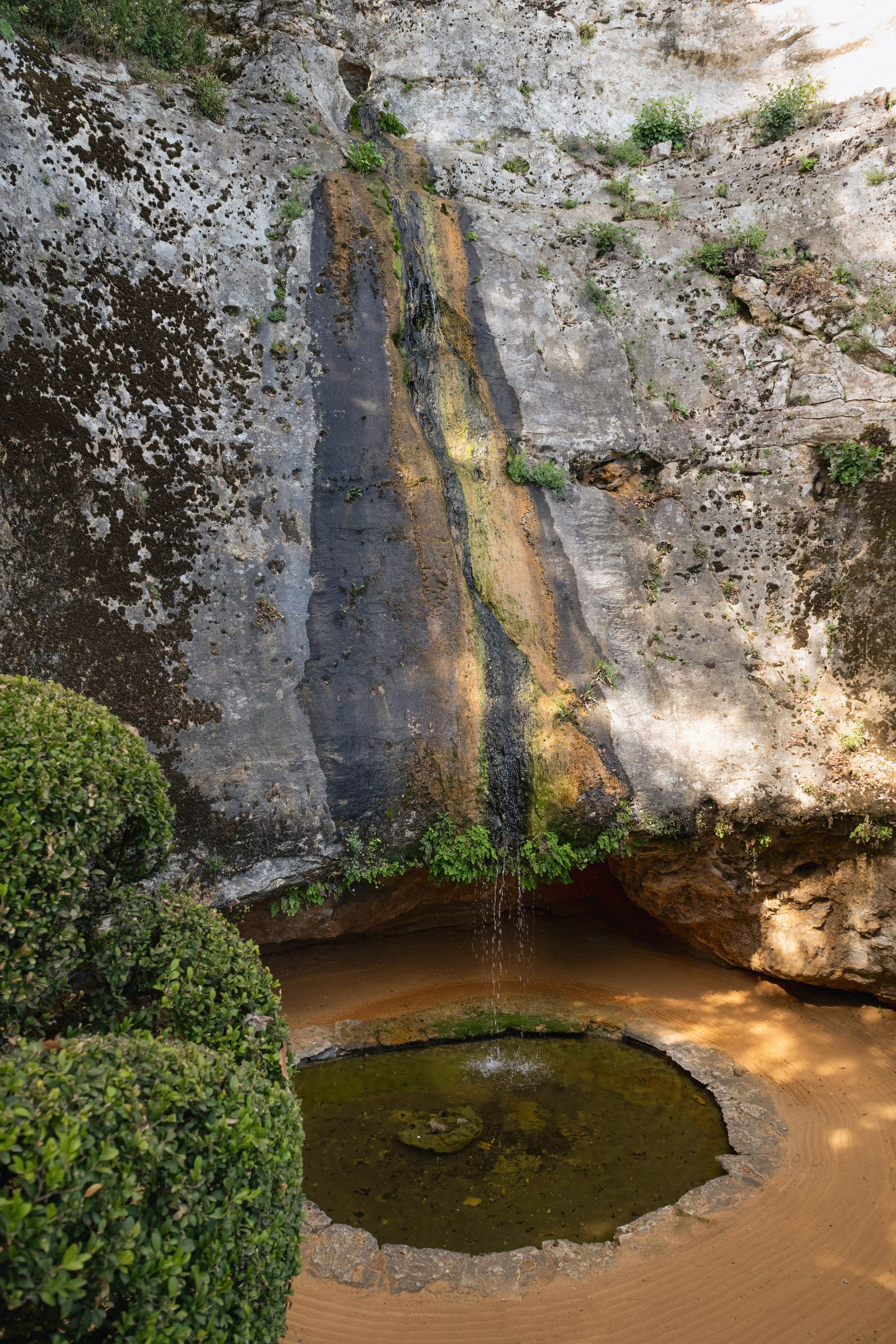
Over the ensuing decades, the estate gradually fell into decline – no doubt due to the high level of maintenance involved. But, in 1996, Kléber Rossillon, the grandson of the illustrator Marius Rossillon (renowned for creating the Michelin mascot, Bibendum) bought Marqueyssac and was keen to restore it to its former glory. Overgrown vegetation was cleared to reveal the views, the original layouts of the parterres were reinstated and new features were added. These include an elegant walkway of santolina and rosemary, a chaos de buis in topiary boxwood, which resembles a mass of sugar cubes tumbling down a bank opposite the chateau, and a water feature that ends in a dramatic cascade. Having recaptured the garden’s spirit, Kléber opened it to the public in 1997.
Today, the garden is tended by six full-time gardeners, helped by four additional sets of hands from May to July. The pruning regime begins around the end of February and continues until mid-July. All pruning is done by hand using shears, which means that each box plant is closely inspected and any signs of malady are quickly addressed. And, as Jean Lemoussu, head gardener for over 25 years, points out, ‘There is minimal noise, which is important in a garden open to the public 365 days a year. If we do need to use mechanical equipment, such as lawn mowers, we work before the garden opens.’
Box is undeniably one of the most versatile shrubs, its small evergreen leaves perfect for clipping into topiary. However, in recent years, it has come under attack from blight (the boxwood-specific fungus called Cylindrocladium buxicola) and also from box tree caterpillar (Cydalima perspectalis). The fungal disease, which thrives in mild, humid weather and from a lack of winter frost, causes plants to have bare patches and ultimately to die back, while the larvae of box tree caterpillars can strip off the leaves and damage the bark in just a short time.
With boxwood being such an intrinsic part of the design at Marqueyssac, the gardeners have become experts in keeping the plants in as good a state as possible. Jean says scrupulous hygiene is imperative, along with good air movement, so secateurs are kept ultra clean, and pruning is done not only for shape but also to encourage air to flow freely. He recommends avoiding the following: contact between infected and healthy plants, watering the foliage and over-feeding. That said, the team does occasionally use a potassium-rich fertiliser to encourage strong, healthy growth. It is important to remove and destroy all affected plant matter, and they have found that mulching can also reduce rainwater splash and thus limit fungal development.
To counteract box caterpillar, the team systematically sprays with a biological control. Jean believes it is particularly important to treat plants at the end of winter in order to get rid of as many overwintering caterpillars as possible. Depending on how bad the situation is, the team treats them again at the end of June/early July and also at the end of August/start of September. During the worst infestation they encountered, in 2017, they treated plants every fortnight for almost three and a half months. Fortunately, the biological control is ingested only by the box tree caterpillar, so other insects are not affected.
Immaculate, elaborately designed formal gardens have been seen traditionally as symbols of the aristocracy. Now open to the public, with an inspiring calendar of events, activities for all ages, a restaurant, cafés and a tasteful gift shop, Marqueyssac is a well-loved, much visited French national treasure and is classified as a Jardin Remarquable. With such a beautiful design, distinct atmosphere and fascinating history, it is sure to enchant for years to come.
Les Jardins de Marqueyssac: marqueyssac.com


