
A designer's fairy-tale house in Biarritz filled with dramatic flourishes and a sense of playfulness
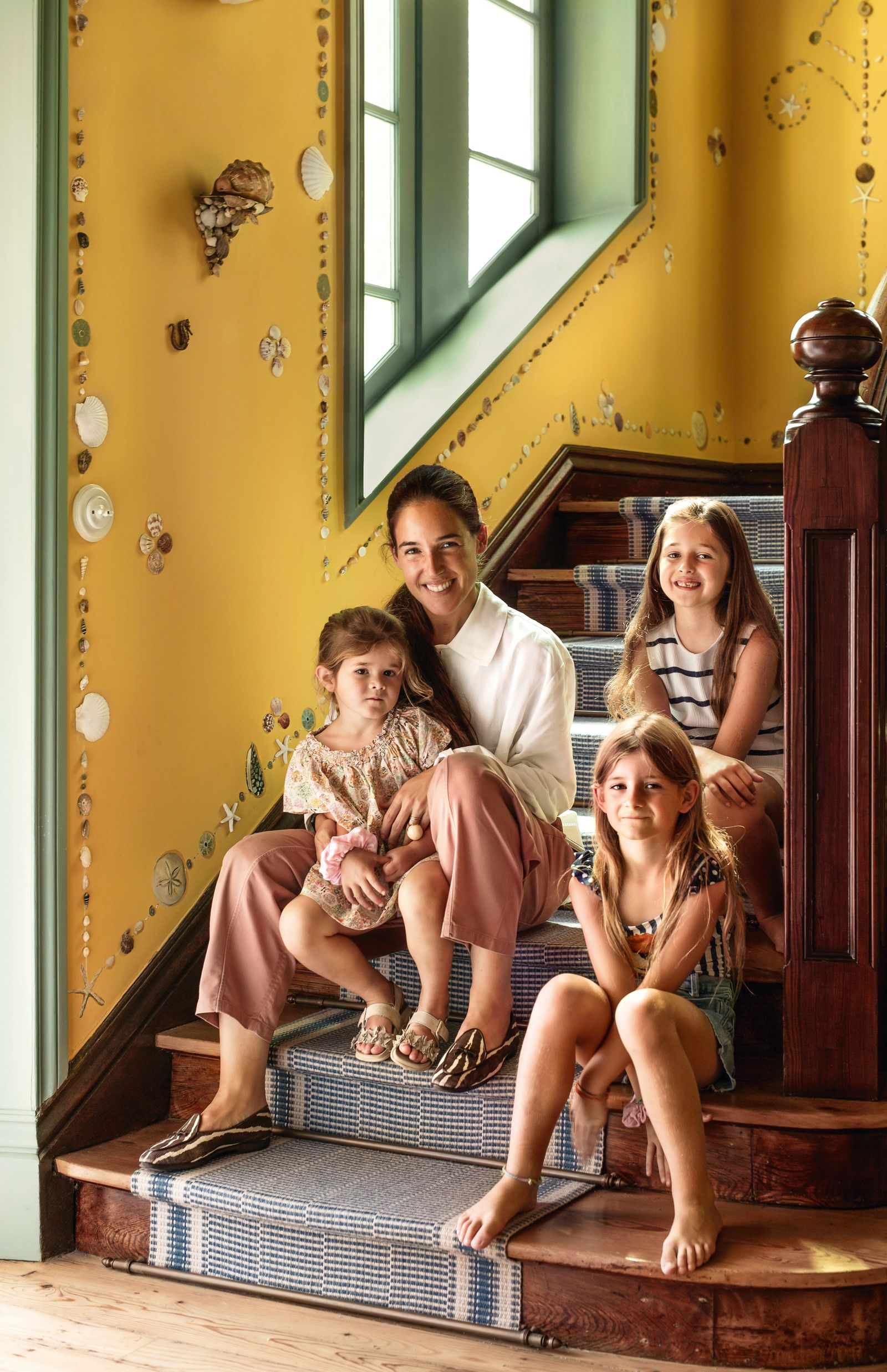
The best holidays make you feel a million miles from home. But the best holiday homes? Less holiday, more home ought to be the mantra. If you need convincing, Marta de la Rica's house in Biarritz should do the trick. When the Spanish interior designer bought this villa in 2020, the last thing she wanted was 'for it to feel like a summer house. Perhaps that is surprising, since Marta has summered in Biarritz since she was a child, when her father fell in love with the Basque seaside town. He still has a house here, as well as the restaurant-cum-florist-cum-antiques emporium Gaztelur in a former house on a country estate, six miles inland. But from the outset, Marta was clear that, if she was going to buy a house here, she would use it - for high days and holidays, certainly, but also for weekends away from Madrid, where she lives with her husband and three daughters.
For many years, Marta's father owned a large house two doors down from here. Later, he downsized to another just behind it, and Marta and her brothers took over his old villa, uniting the gardens into one. It was, she says, great fun, but she always had one eye on a place of her own.
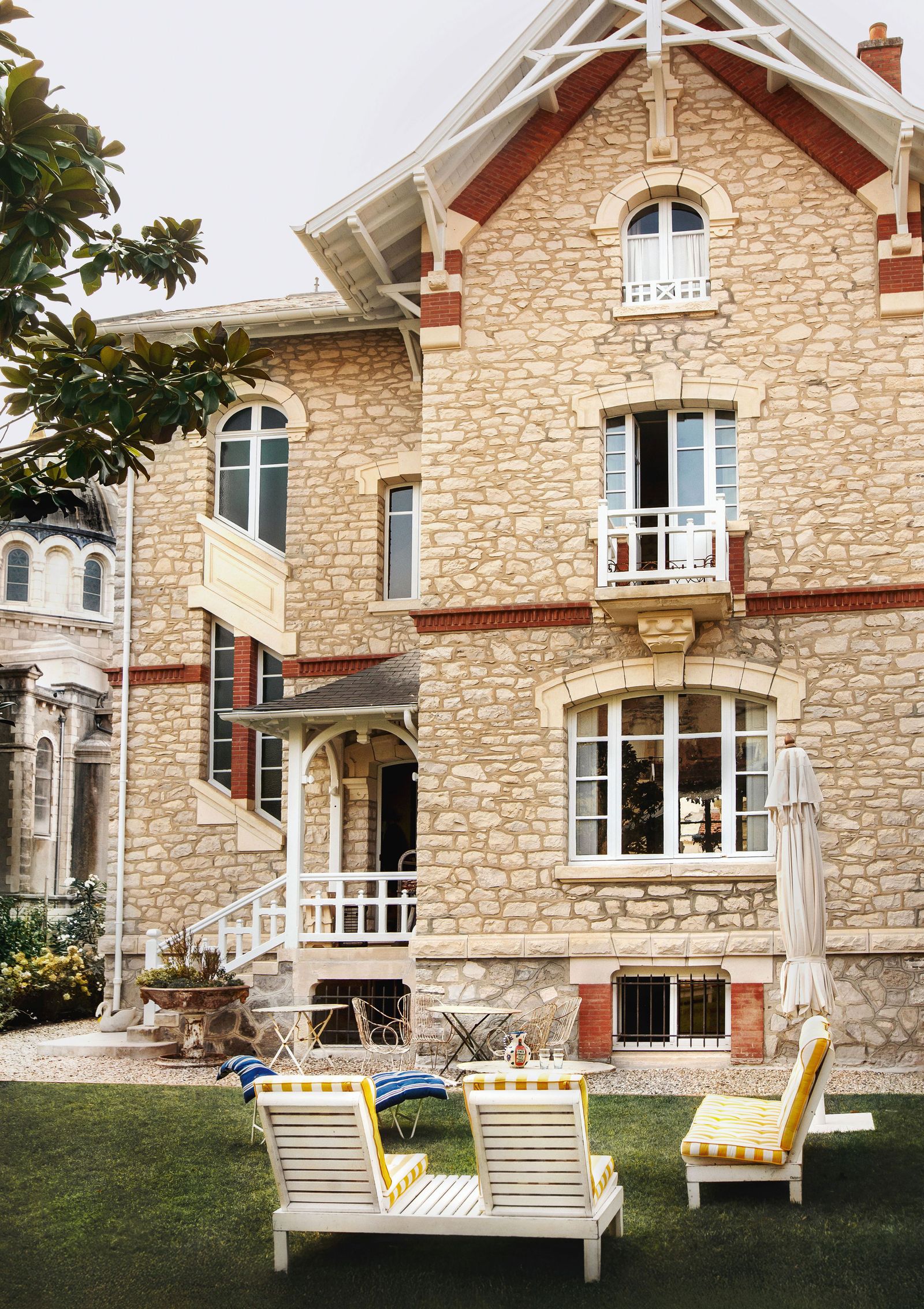
She had long admired this confection of a house, built for a Russian at the beginning of the 20th century, when Biarritz was deluged with European aristocrats hot on the silk-slippered heels of Eugénie de Montijo, Empress of France, whose husband, Napoleon III had built her a palace there. With its steeply pitched roofs, tessellated timber gable trusses and decorative bargeboards, it feels unusual in this part of the country, having more of the storybook appearance of buildings in northern French towns like Deauville or Honfleur, rather than the Art Deco drama or Belle Epoque grandeur associated with Biarritz.
When, after the death of the previous owner, it became available to buy, there was competition. It was so tight that the estate agent asked for sealed bids. Happily, Marta won. Finally, after a year and a half, she had the house. 'It was horrible,' she says, with a laugh. 'The garden was a forest, there was no electricity, and it was full of stuff, having been lived in by a hoarder. It took a month to clear it out.' But, she adds, 'At the same time, it had such a soul: romantic, dramatic and ever so slightly eccentric. I realised this was the path I had to follow. I needed to tell the story of the house while bringing in a breath of fresh air.'
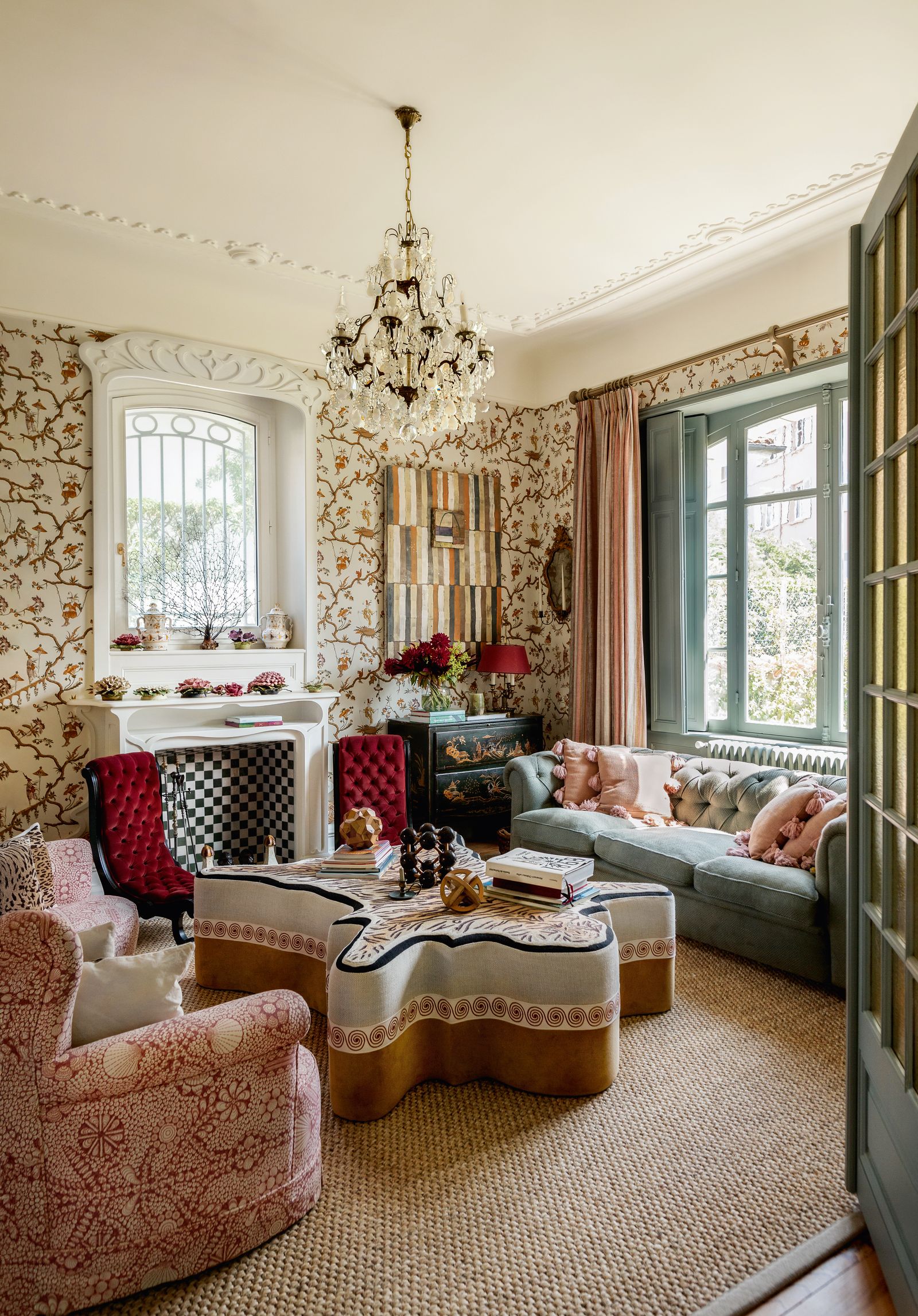
Marta is known for her ability to create spaces perfectly suited to modern life that feel already deeply lived in, conjuring rich comfort out of seemingly disparate styles and blending new pieces with antiques. ‘Layers and layers. And an understanding that houses are not static’, she says when asked the key to a good scheme. 'Oh, and having fun.'
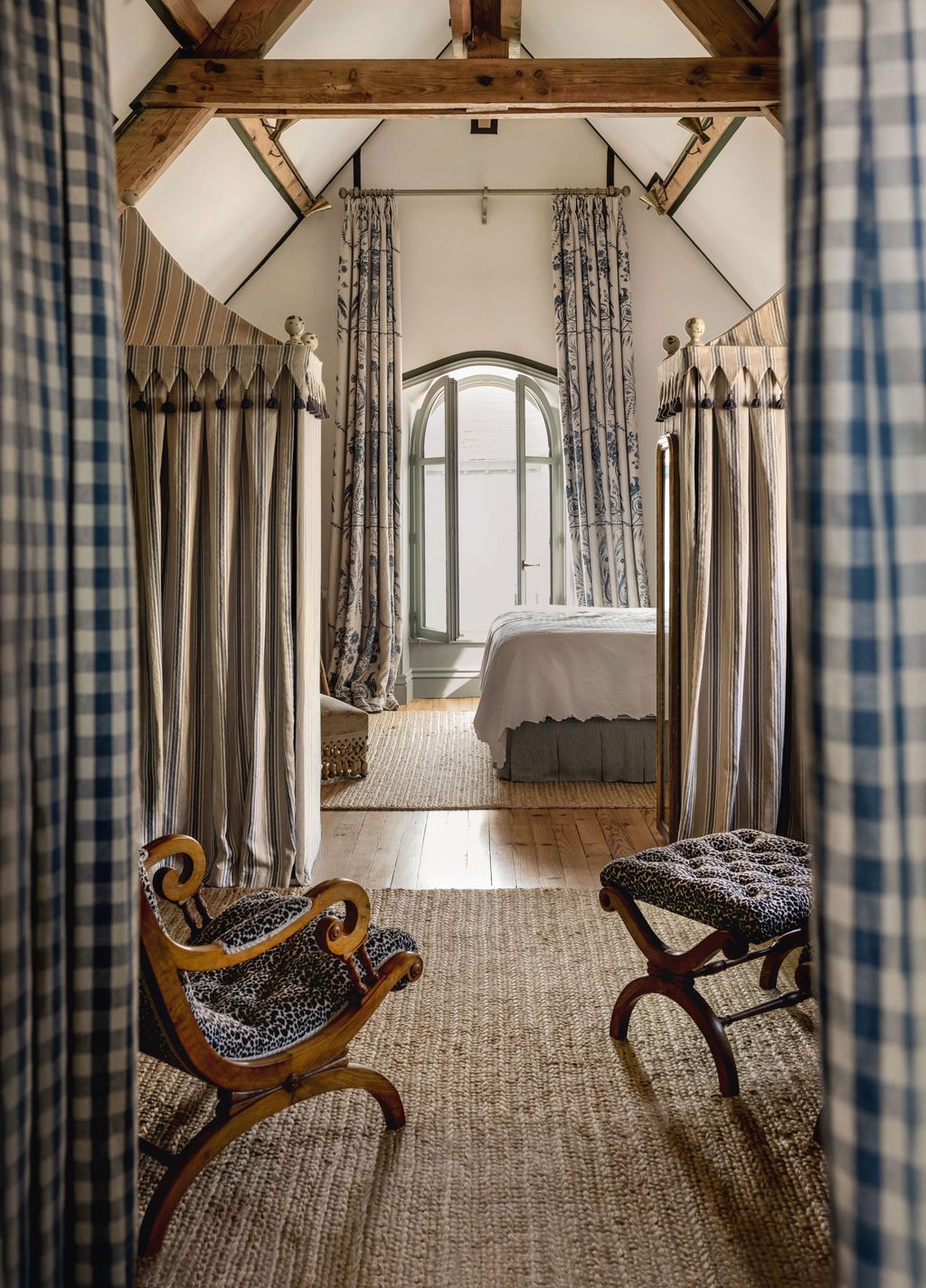
Fun drives the best bits of this house, playing into the eccentricity and romance that Marta was so keen to draw out. In the main bedroom, for instance, she has installed a pair of striped tents that ingeniously disguise wardrobes. Beyond, more fabric - this time swathes of blue gingham - conceals shelving and the entrance to the bathroom. Part fairy-tale castle, part royal encampment, complete whimsy. Yet, of course, it is more considered than capricious. Marta explains how such decorative drama would not have been successful had she not reworked the architecture, removing a low ceiling that covered the nexus of A-frame rafters to give the space the majesty it needed.
Similarly, while the shell-encrusted walls of the staircase, created by muralist Johina García-Concheso, feel like a playful and pretty reinterpretation of a standard seaside motif, they are also aesthetically useful, enlivening a space that Marta felt was completely dominated by the 'heavy and almost tough' personality of the original woodwork.
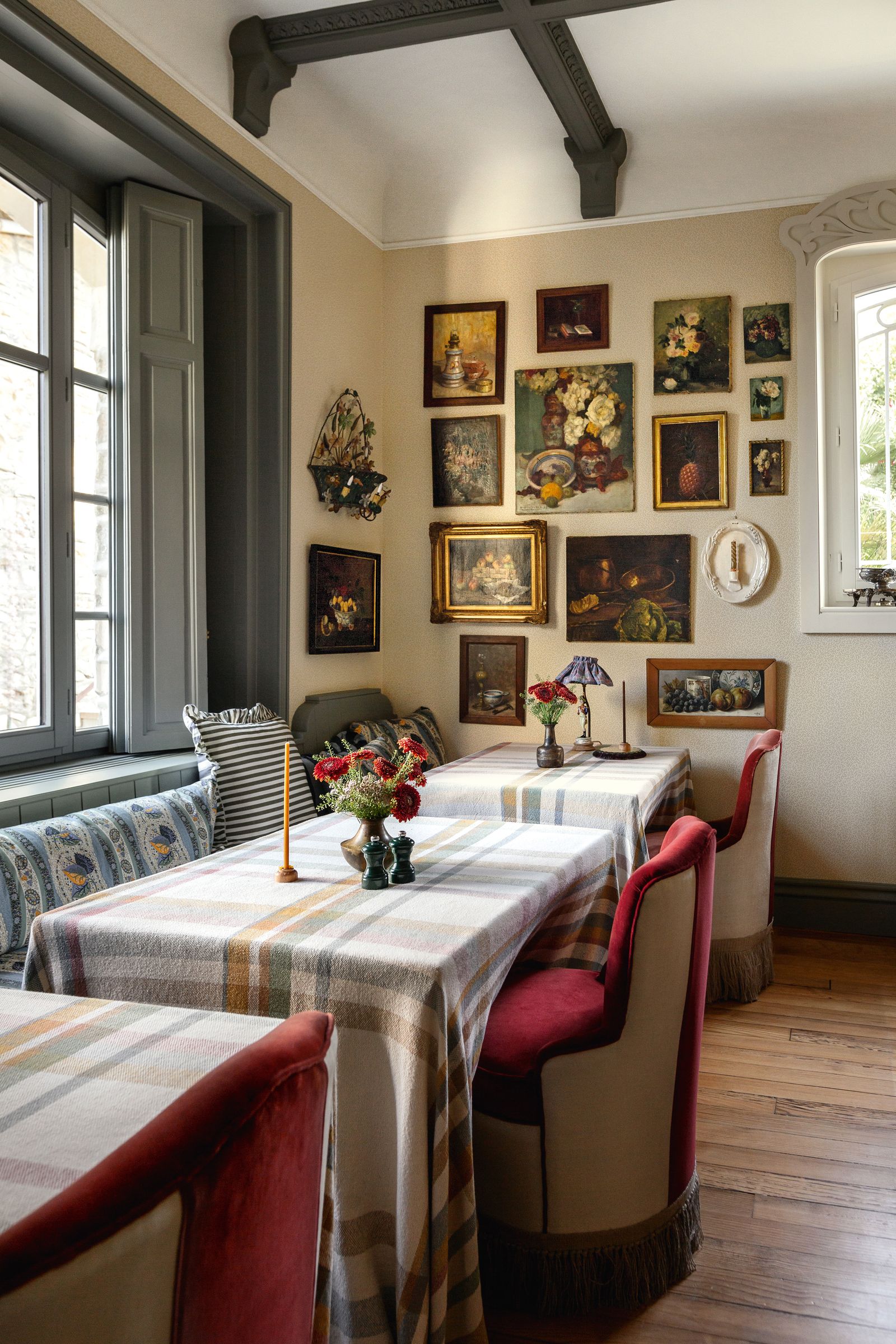
Marta has thought hard about how she wants to live. It is why the dining room is arranged almost like a bistro, with separate tables. 'Sometimes, it's just me and my husband, but we can also have 14 for dinner,' she explains. This room is also a perfect example of her layers and layers approach, with its patchwork of textiles and not-quite-jumble of art and furniture: 'I wanted a house where I can add and add.'
Nothing is saved for best (another thing Marta feels strongly about) and nothing is guarded too preciously - though her children have learned to be careful of the shells as they hurtle up and down the stairs. Only a few have fallen off, but, Marta is happy to admit, I've enjoyed getting my glue gun out. It reminds me that this house is a living thing'.
Marta de la Rica: martadelarica.es
 © Anna Malmberg1/8
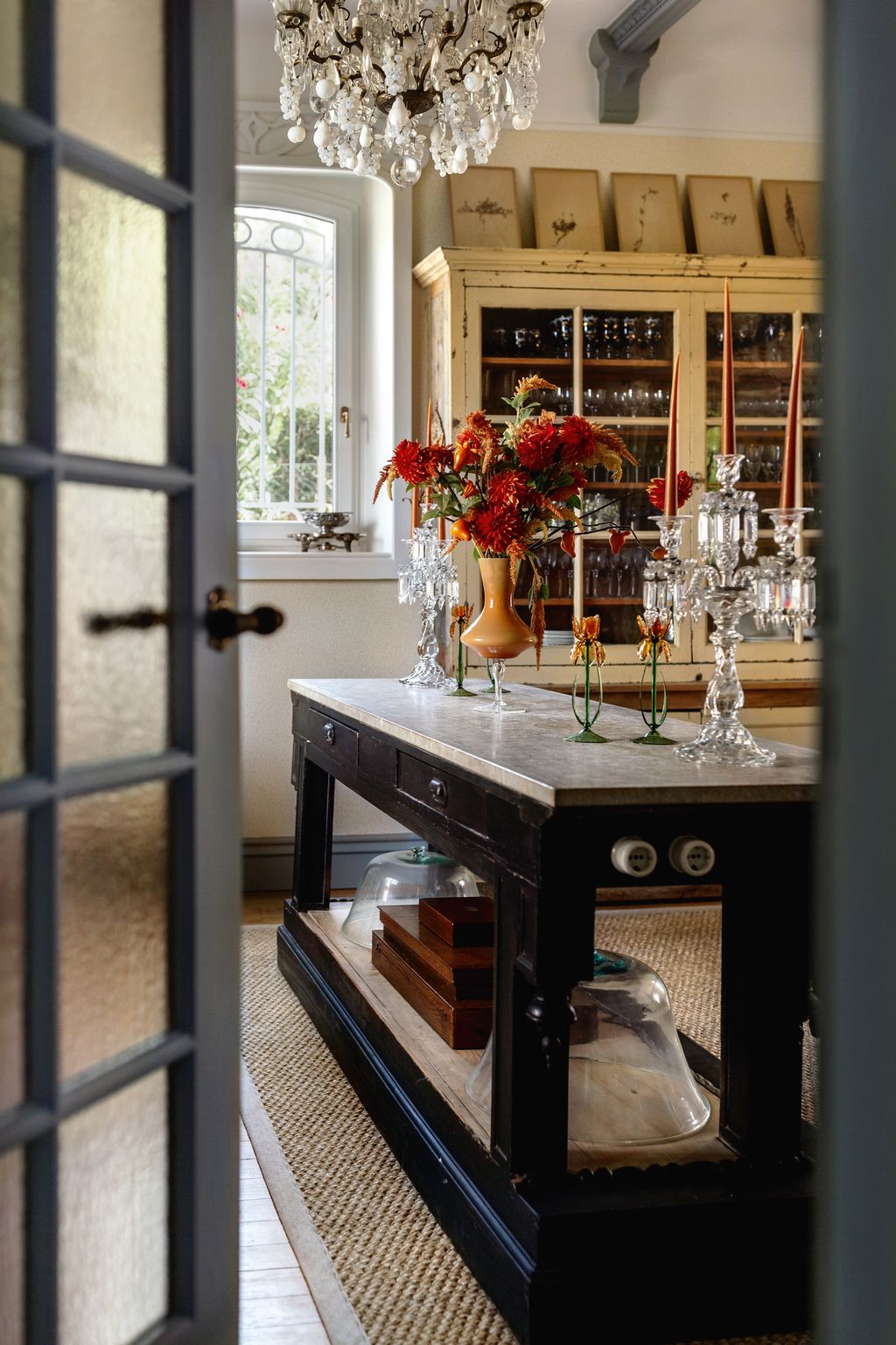
The door opens onto a sideboard with a Tina Menor stone top crafted in Spain, on which are antique Baccarat candelabras and flower candlesticks from Summerill & Bishop.
 © Anna Malmberg2/8
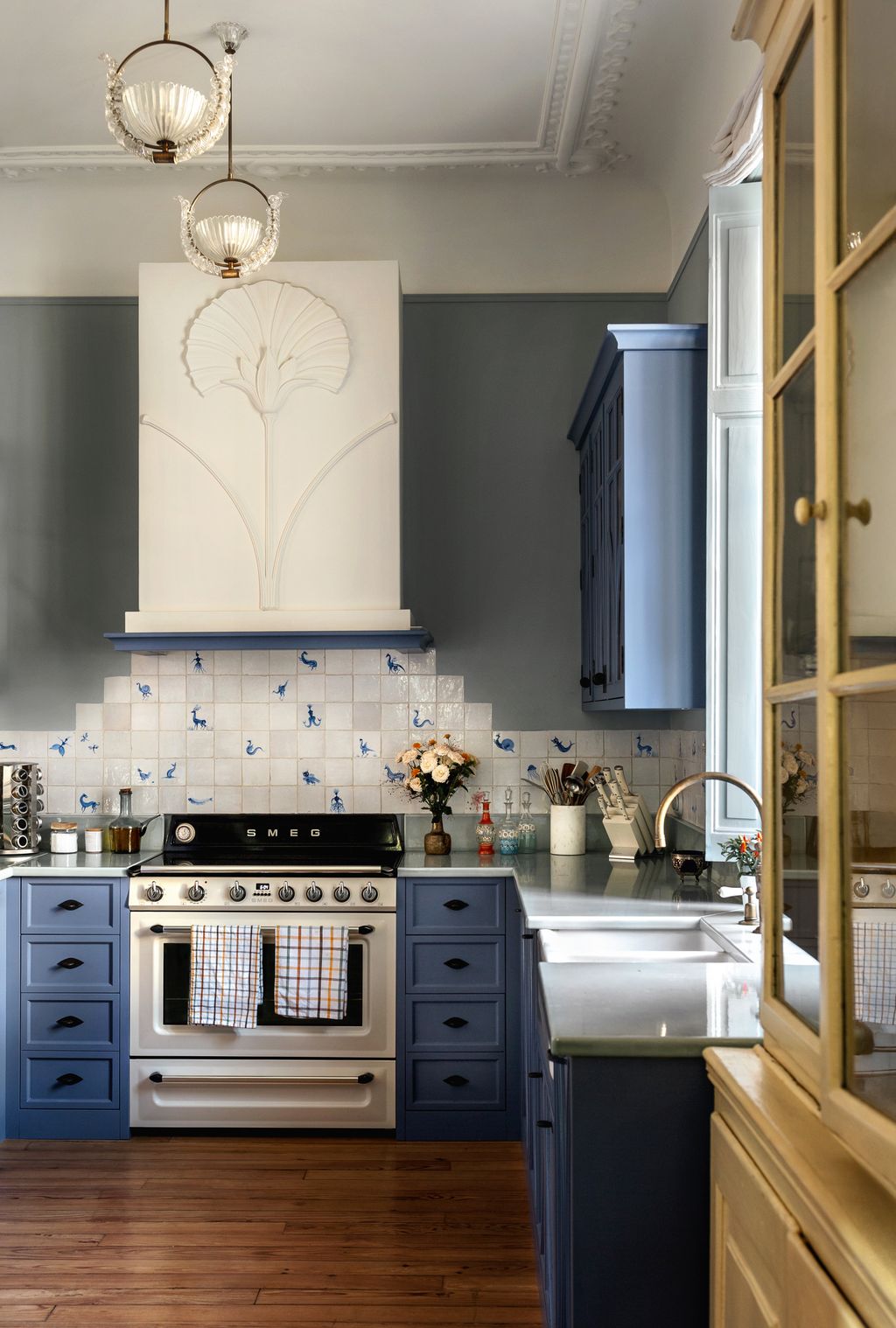
The kitchen features a plaster flower designed by Marta that adorns the cooker hood above a splashback in Delft-inspired tiles from Emery & Cie, which tones with units in Farrow & Ball's ‘Pitch Blue’.
 © Anna Malmberg3/8
Viewed from the bathroom, through blue gingham curtains, the main bedroom's impressive scale can be appreciated. The exposed rafters provide the perfect setting for a pair of theatrical tented wardrobes - in Colefax and Fowler's blue ‘Gillan Stripe’ - and sweeping curtains in Whiteworks' ‘Susi Arabesque’ linen at the windows.
 © Anna Malmberg4/8
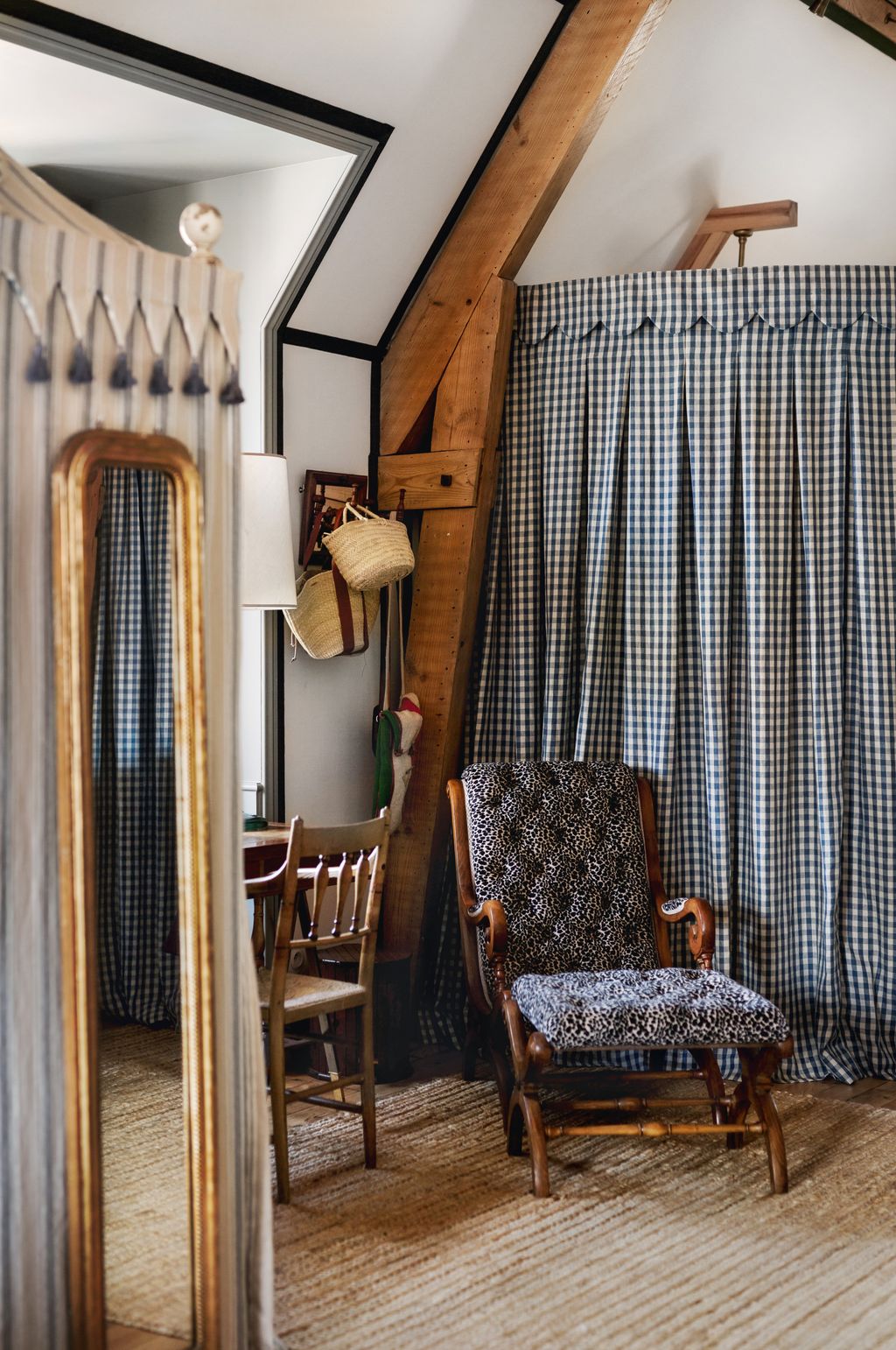
In the dressing area are a Napoleon III chair and a footstool sourced from Galerie Vauclair in Paris.


 © Anna Malmberg5/8
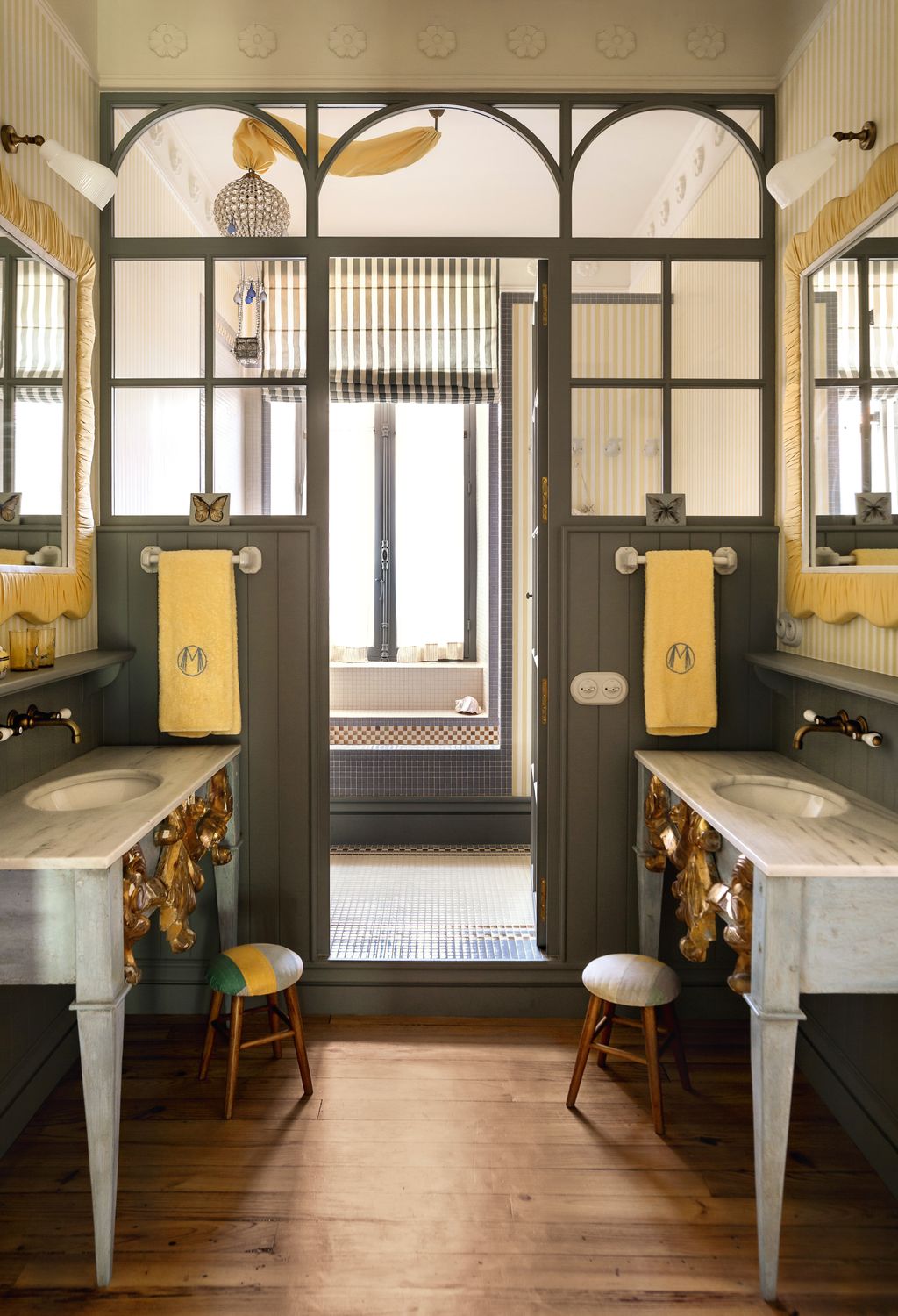
In the girls' shower room, Farrow & Ball's ‘Closet Stripe’ yellow wallpaper is set off by a blind in showerproof outdoor fabric from Flora Soames and Hisbalit mosaic tiles in the shower area. Mirrors upholstered in a yellow Whiteworks fabric - also used to cover the chain of the ceiling light - hang above antique consoles converted into basin stands.
 © Anna Malmberg6/8
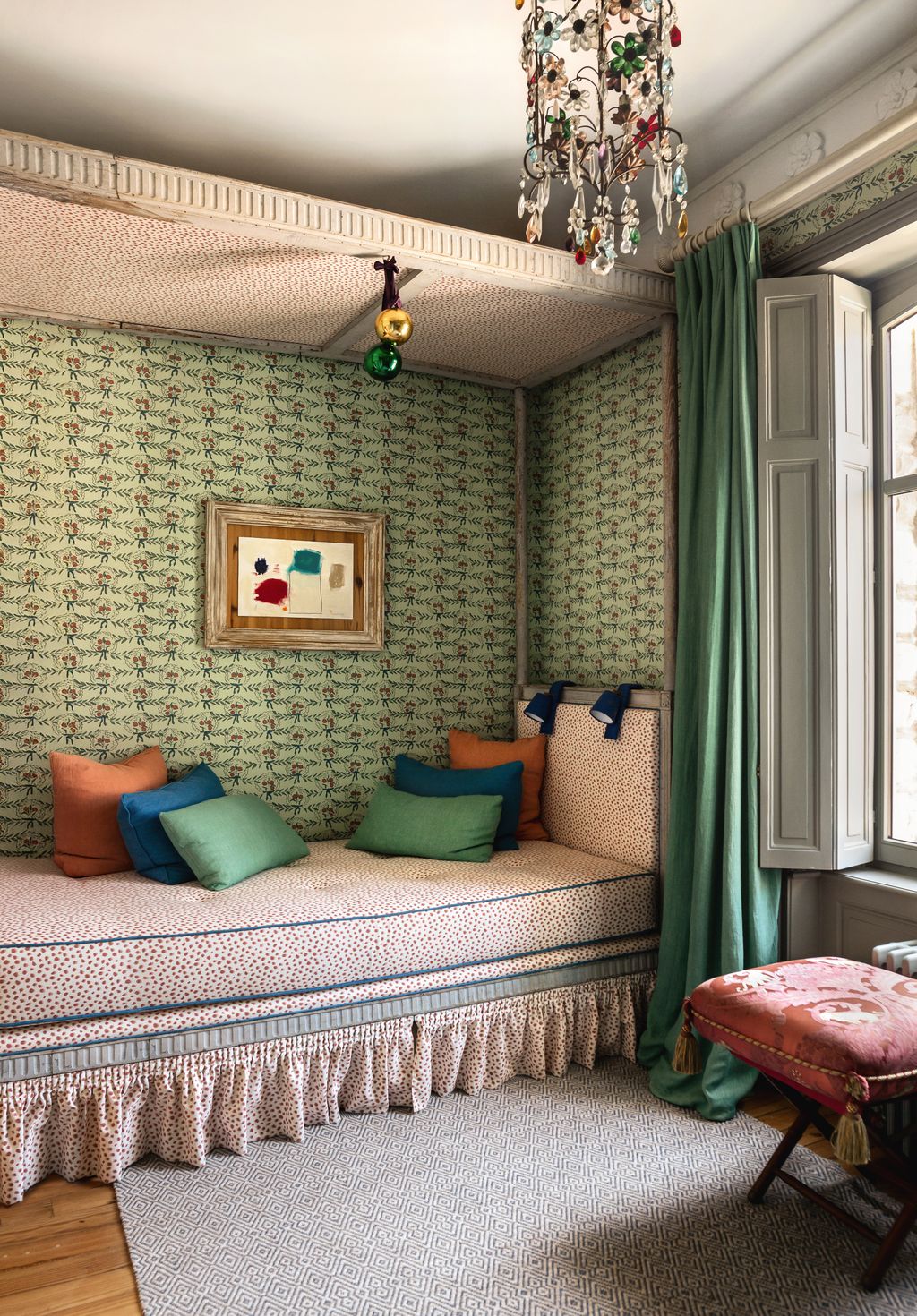
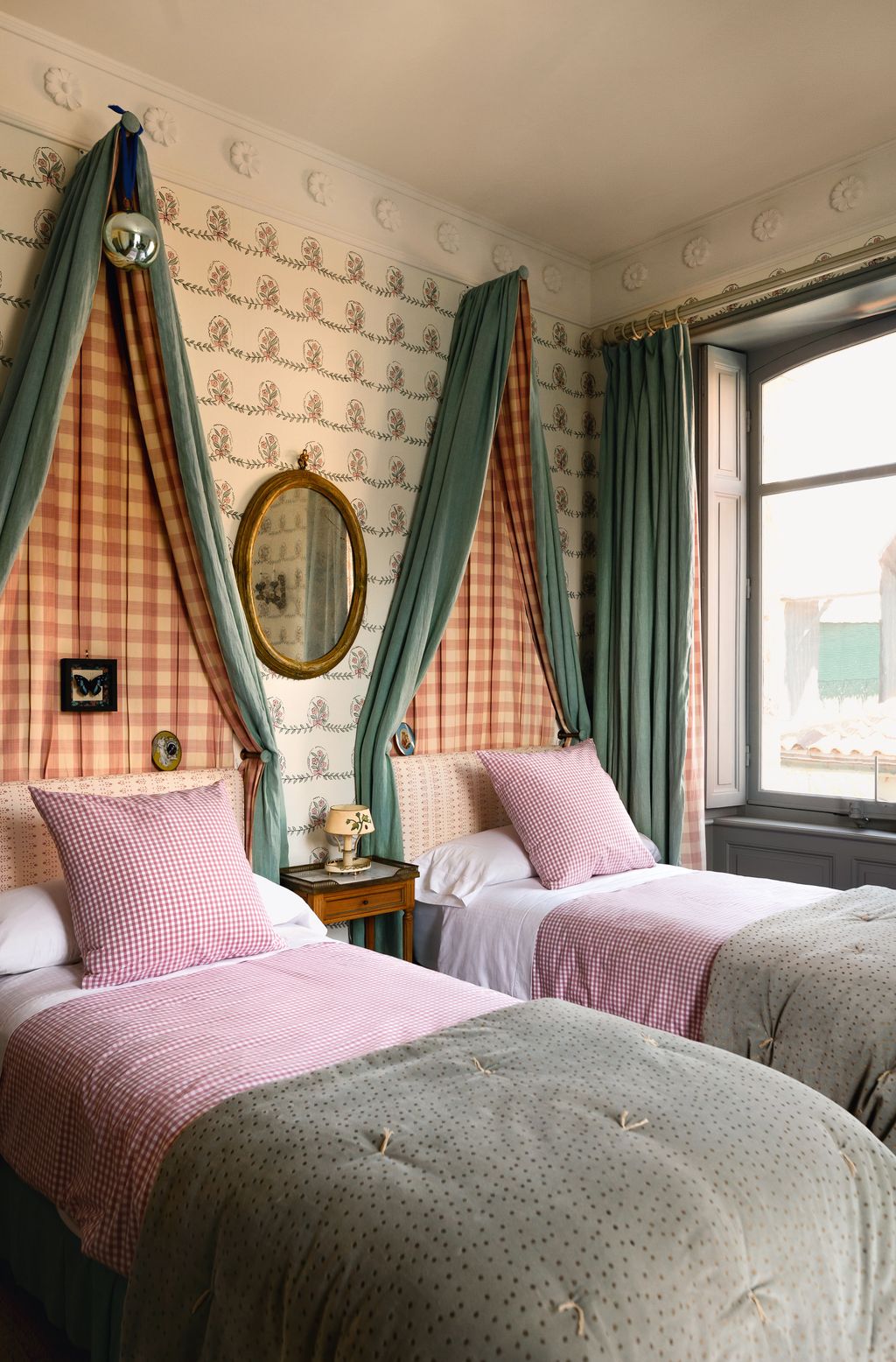
Whiteworks wallpaper, sea green ‘Posy’ in the single room and pink 'Fleurs en Posy' in the twin, has inspired two pretty schemes for the girls' rooms. The antique tester frames a daybed in ‘Lyme’ red spot fabric by Baker Lifestyle and a painting by Manuel Salinas.
 © Anna Malmberg7/8
Canopies lined in rosa 'Amalfi - Carreaux' from Pierre Frey are the backdrop for twin headboards in 'Najwa' by Alice Sergeant Textiles
 © Anna Malmberg8/8
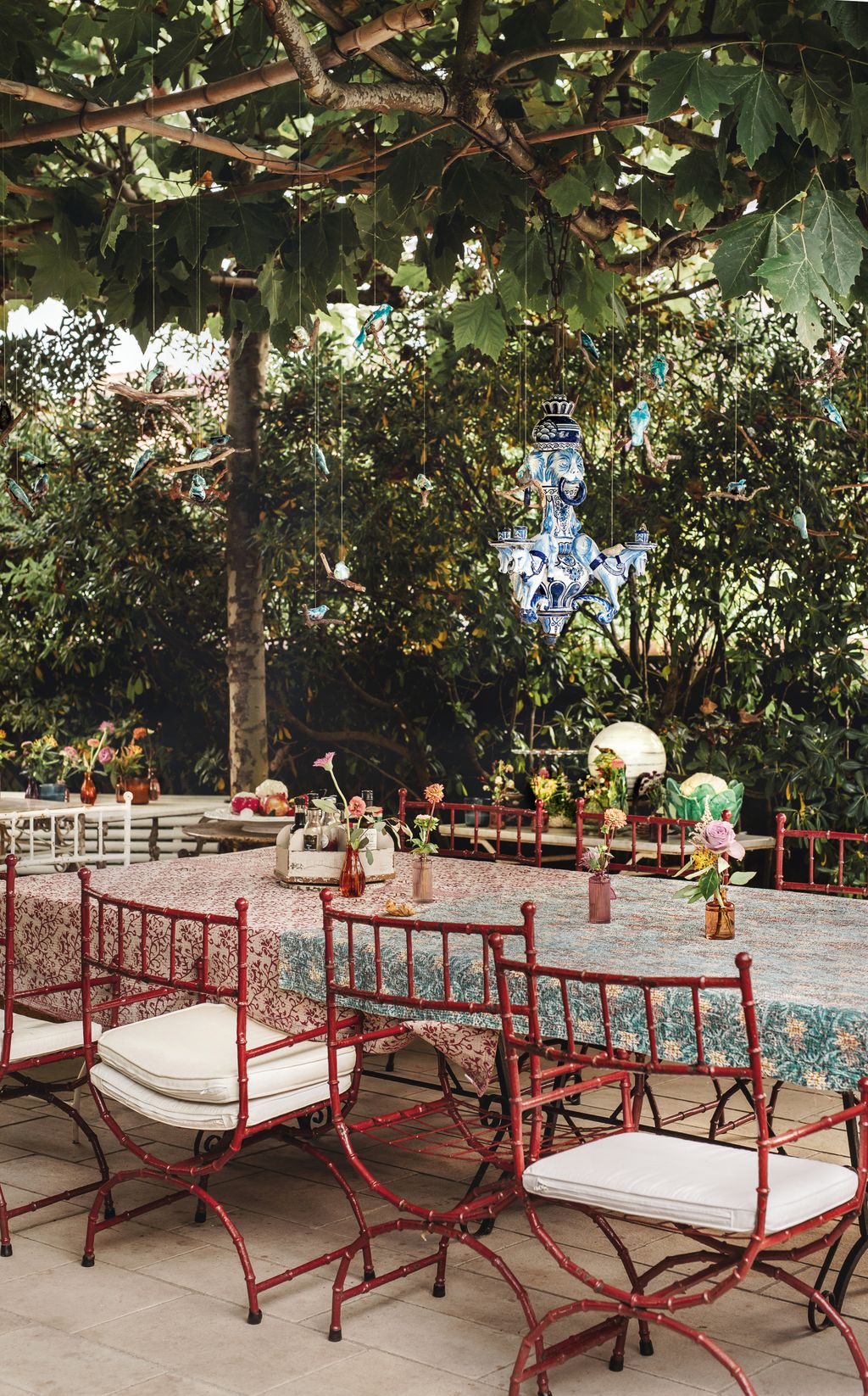
In the garden, a 19th-century Delft candelabra hangs over a table, covered in Indian cloths, and mid-century faux bamboo chairs.


