
In Snowdonia's harsh landscape, the fanciful charm of Plas Brondanw stands the test of time
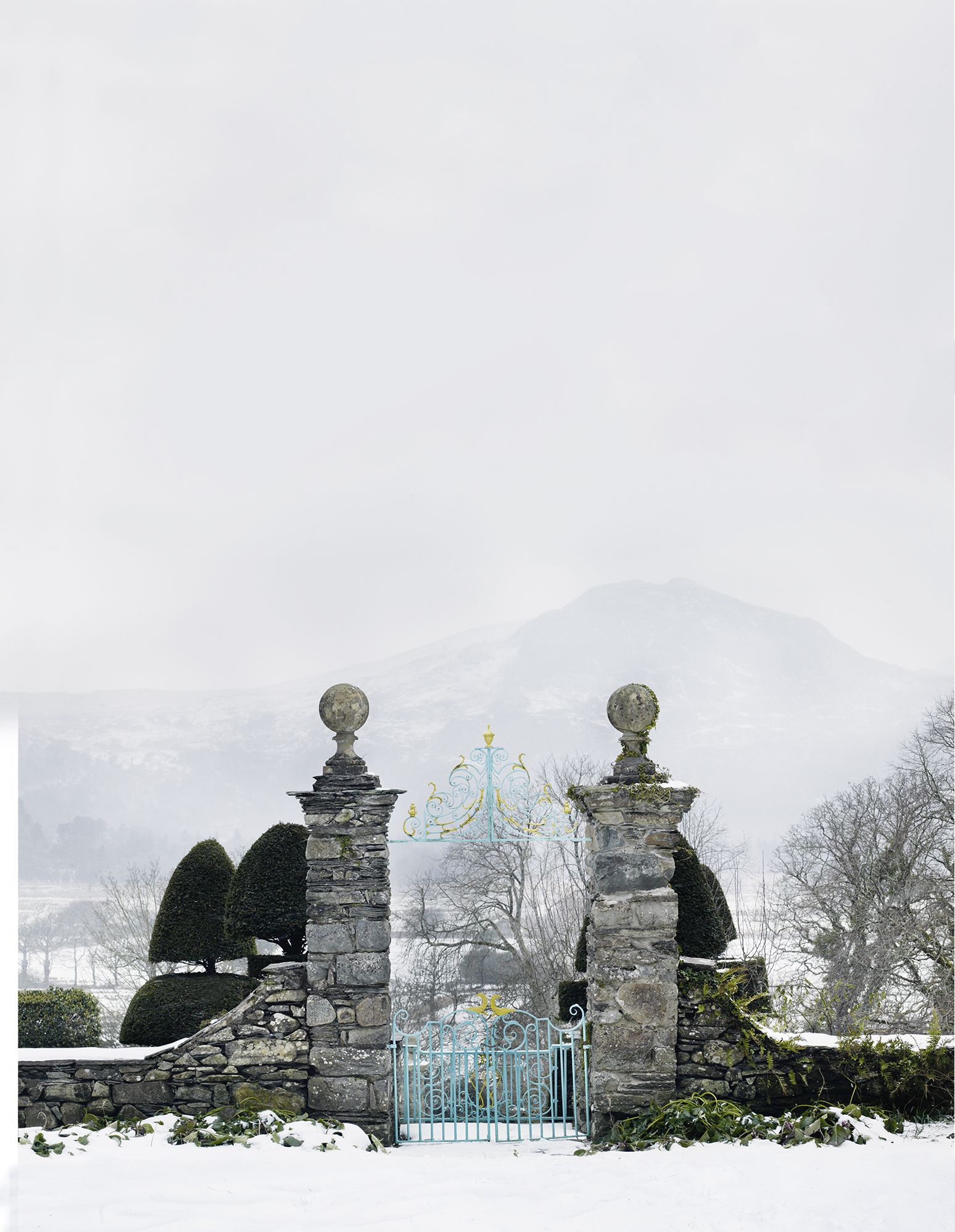
The architect Clough Williams-Ellis is perhaps best known for the whimsical fantasy he created at Portmeirion, near Penrhyndeudraeth in north Wales – a group of towers, follies and quixotic little houses that later had a starring role in a cult Sixties television series, The Prisoner. But, not far away, you can visit his own house, Plas Brondanw, which was given to him by his father on his 21st birthday in 1904. ‘Gradually,’ he would later write in his 1929 book, The Architect, ‘the old house and its rehabilitation became… a passion, an obsession if you like.’
That obsession lasted for more than 70 years as Williams-Ellis gradually transformed his rather dour and dark inheritance into a vision of Italy, introducing long vistas, hedges of yew and box and extravagant topiary, as well as pools and fountains – all set among the jagged peaks that lead up to Snowdon. The setting was his inspiration. Three of the long vistas that stretch across the garden end in breathtaking views of Cnicht. Looking west, through a cleverly manipulated series of steps, extravagant stone pillars and topiary, lies the great bulk of Moel Ddu.
So, in one sense, Plas Brondanw is a grand, formal garden. But it has something more unusual: wit and charm. The cherub in the centre of a rectangular pool has been turned into a fireman with an oversized helmet and holding a hosepipe through which the fountain erupts. On the finials on either side of the Sea Gates, two mermaids hold out their tresses with the kind of agonized expression that indicates a very bad hair day. And at the southernmost end of the garden, an imposing tall pillar is topped by a ridiculously undersized statue of a centurion.
The longest lines are drawn across the garden from south to north. The new entrance sets you at the beginning of one of them, a path of slate slabs that leads visitors under an arched three-storey porch on the west-facing front of the house. Beyond is a wide alley of yew and clipped beech, with ancient ‘Shirotae’ cherries planted on either side. After that comes a final circular enclosure, appropriately called The Full Stop. Here, water drips into a pool from a lion’s-mask fountain. Beyond is Cnicht.
This is not a garden defined and articulated by its planting. Williams-Ellis acknowledged that, in this respect, its advantages had never been fully exploited: ‘We just grow whatever seems most eager to oblige with the least trouble to ourselves.’ Huge old azaleas ramble round the walls of The Full Stop. Ancient apple trees march along a narrow border leading to the orangery, which was built by Williams-Ellis in 1913 and is now used for weddings. Welsh poppies seed into cracks in the paving. Ferns of all kinds flourish in the damp air.
The genius of the place lies in the restraint of the long, straight lines that draw the visitor on carefully calculated journeys through the garden, combined with the self-indulgent caprice of the decoration. Railings and gates are painted in a surprising and brilliant turquoise, with trimmings of fudgy mustard. The original vision, says head gardener Kimberley Davison, was for the ironwork to be finished in burnished copper and gold leaf – altogether more extravagant, but perhaps just too restrained for this magical place of fantasy and surprise.
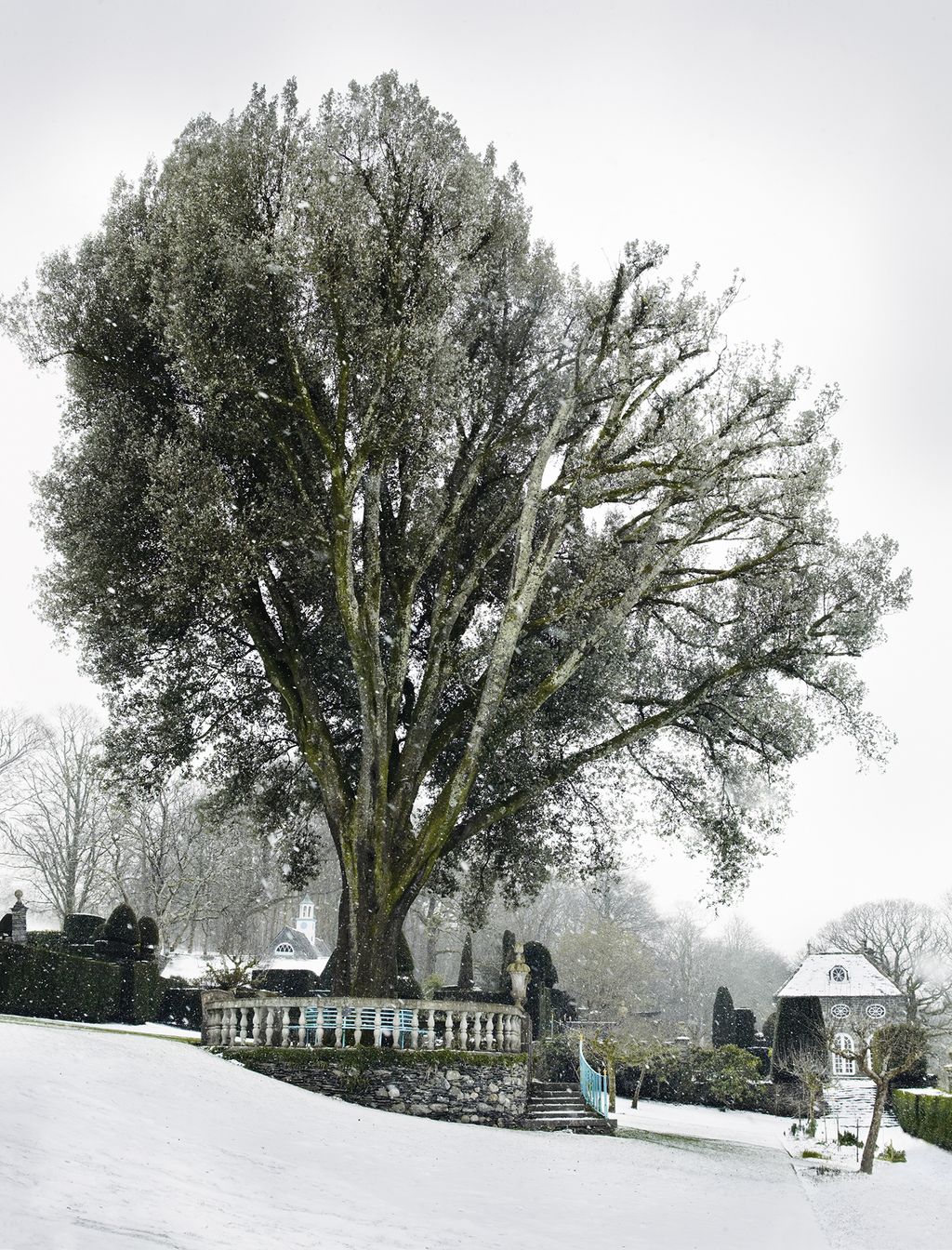
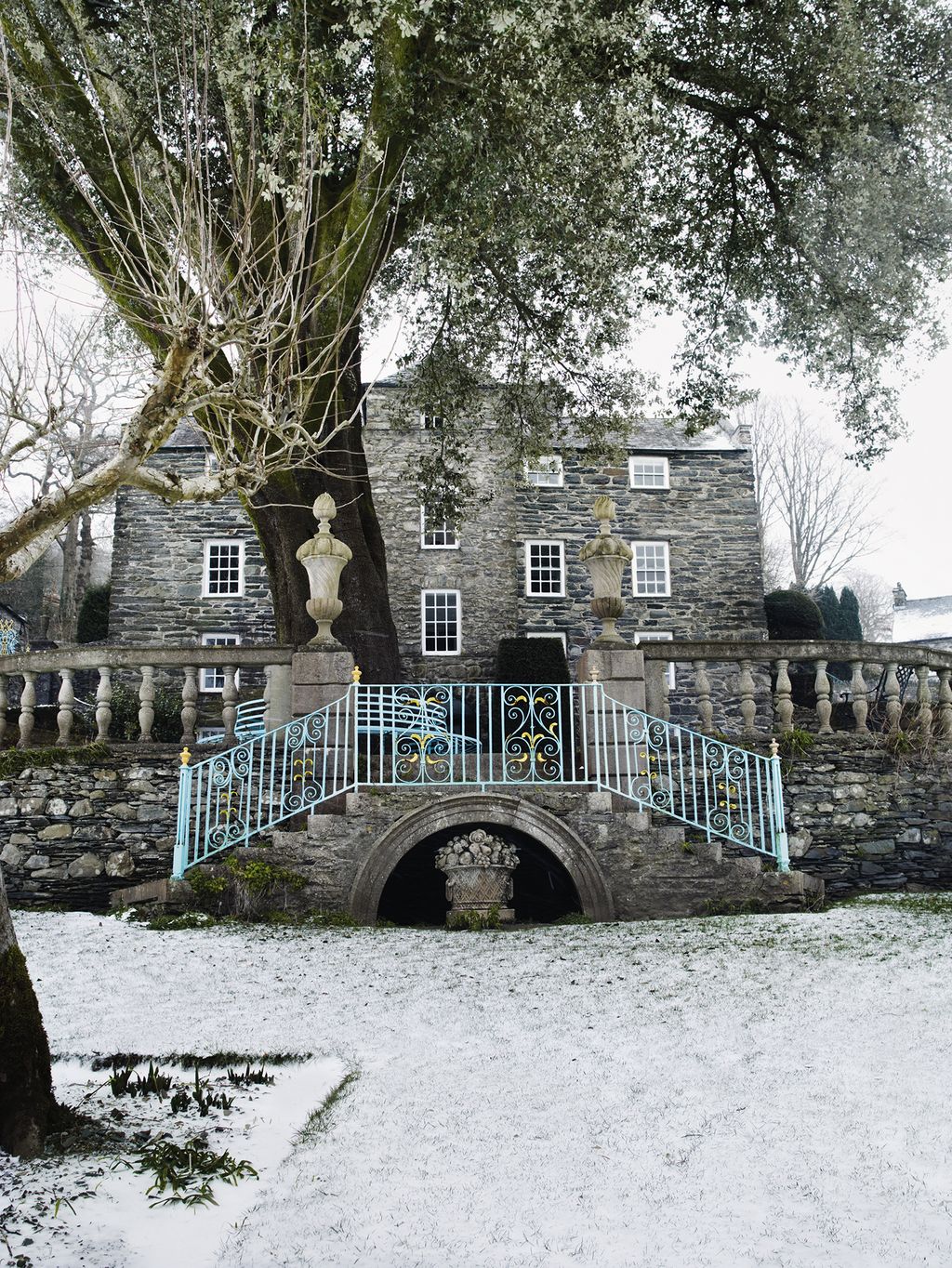
Below the house, in the centre of the wide, sloping lawn, stands an enormous evergreen oak, Quercus ilex, which is particularly impressive in winter and forms the majestic centrepiece of an elegant small, oval terrace, surrounded by a pillared balustrade. Steps sweep down either side of a semicircular niche with a pool underneath, a classic device taken from the gardens of Italy. Beyond, lining up with the large oak, lies one of the most extravagant gates in the whole domain with tassels, flowers, swags and curlicues of all sorts wrought in metal.
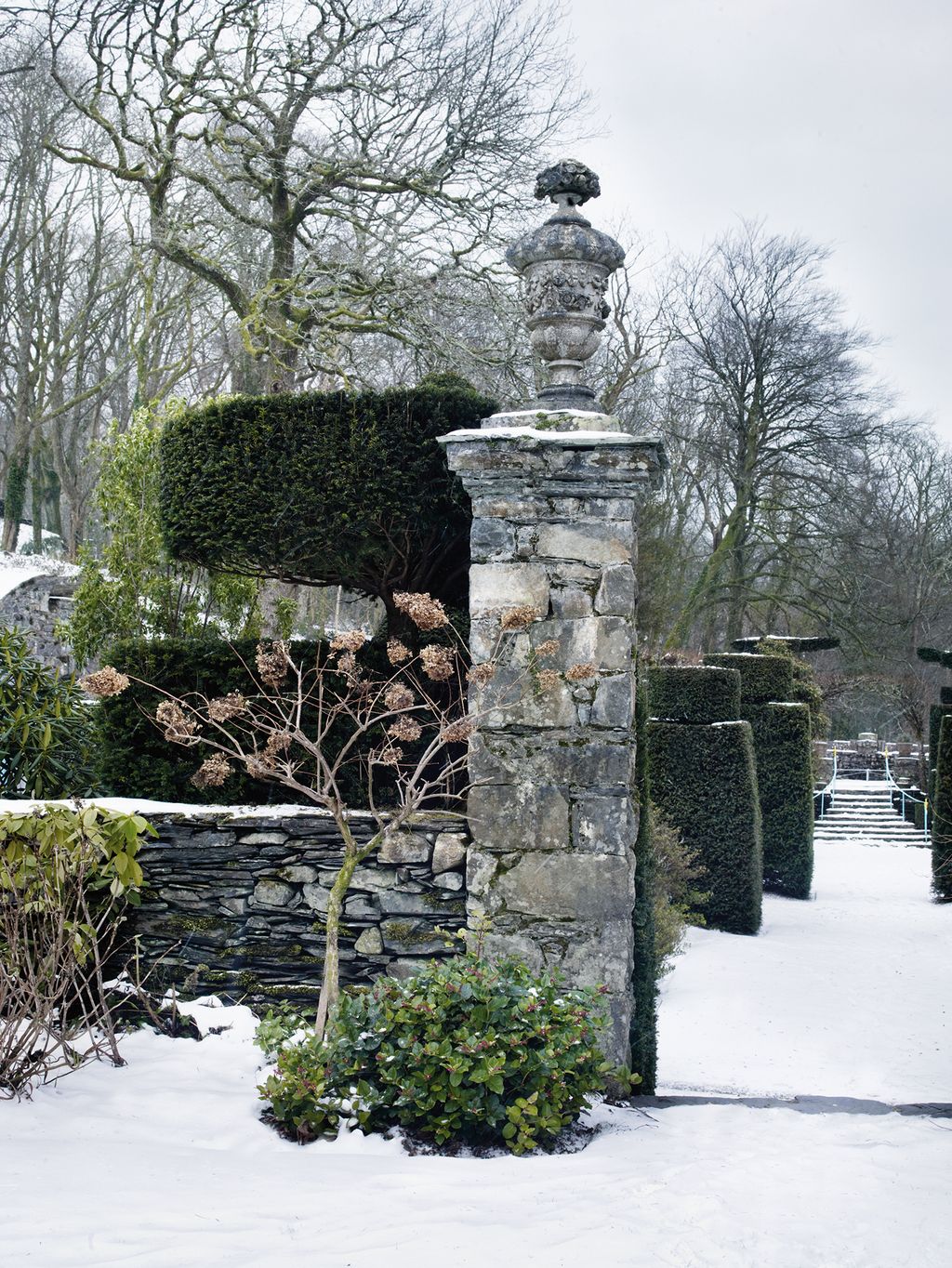
From the beginning, drama, delight and surprise drove the design of the garden and its setting. The original entrance to the house lies in a pretty little courtyard on the south-eastern edge of the site. But this turns out to be the beginning of another long vista, which leads out of the garden through oversized masonry pillars topped with urns on the opposite side of the lane. Flanked by an avenue of chestnuts, it heads up the hill to end at Pentwr, a folly built by Williams-Ellis in 1915. It was paid for by his fellow officers in the Welsh Guards, which he had joined at the outbreak of the First World War, as a wedding present on his marriage to Amabel Strachey. When the leaves have gone from the trees, it stands in magnificent silhouette against the sky.
Below the folly is The Flaming Urn, a monument erected when the house was rebuilt after a fire. It stands at the brink of an old quarry, a steep, narrow, rocky drop to a dark pool – an irresistible invitation for the architect-gardener to create another piece of theatre with a fountain and basin fed by a cascade. By these means, he created a setting for Plas Brondanw that extended far beyond the 2.5 acres of the garden itself.
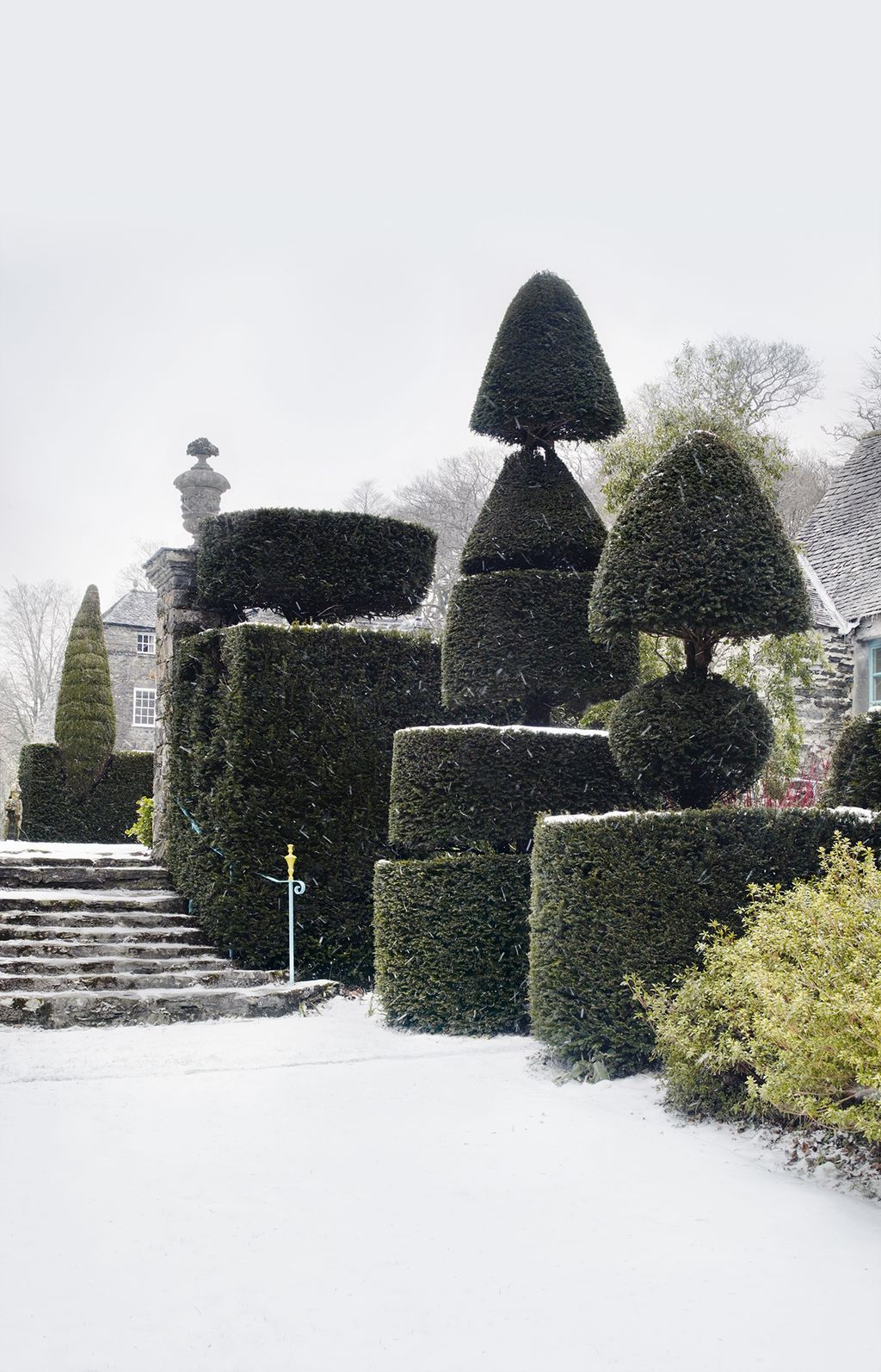
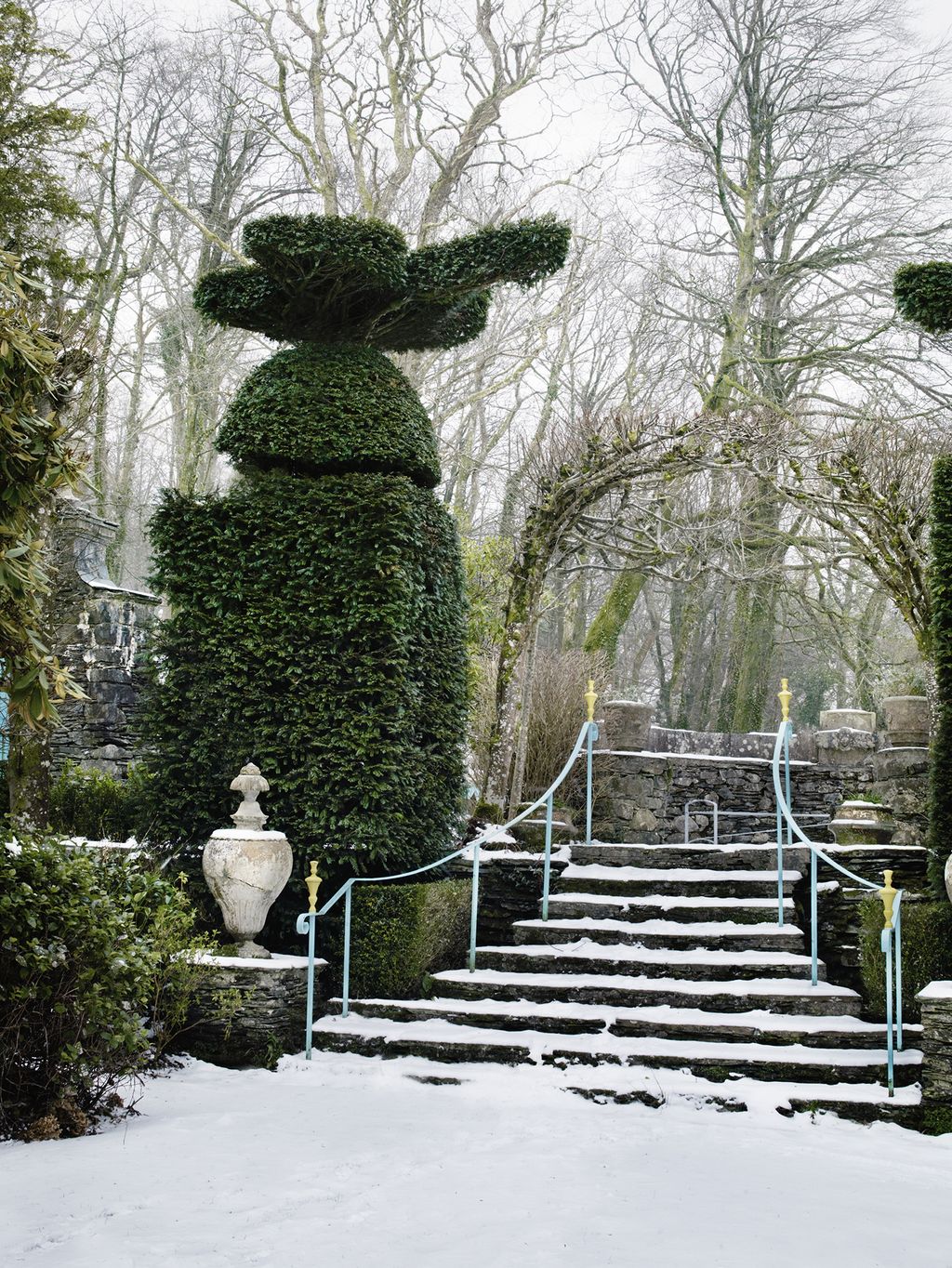
Topiary, both formal and fanciful, is an outstanding feature of the whole garden, and is particularly striking in winter. Then, as more ephemeral planting drifts away, the dark outlines of yew and box emphasise the strongly architectural nature of this garden. At the southern end, the ground is divided and subdivided by hedges of yew and pleached lime to create an intimate series of spaces, enclosing formal pools and statues, speaking to each other from one end of the cross alleys to the other. Tall thin cypress trees rear like exclamation marks from the clipped yew. Managing the hedges and topiary is a major enterprise that requires 12 weeks of clipping every year.
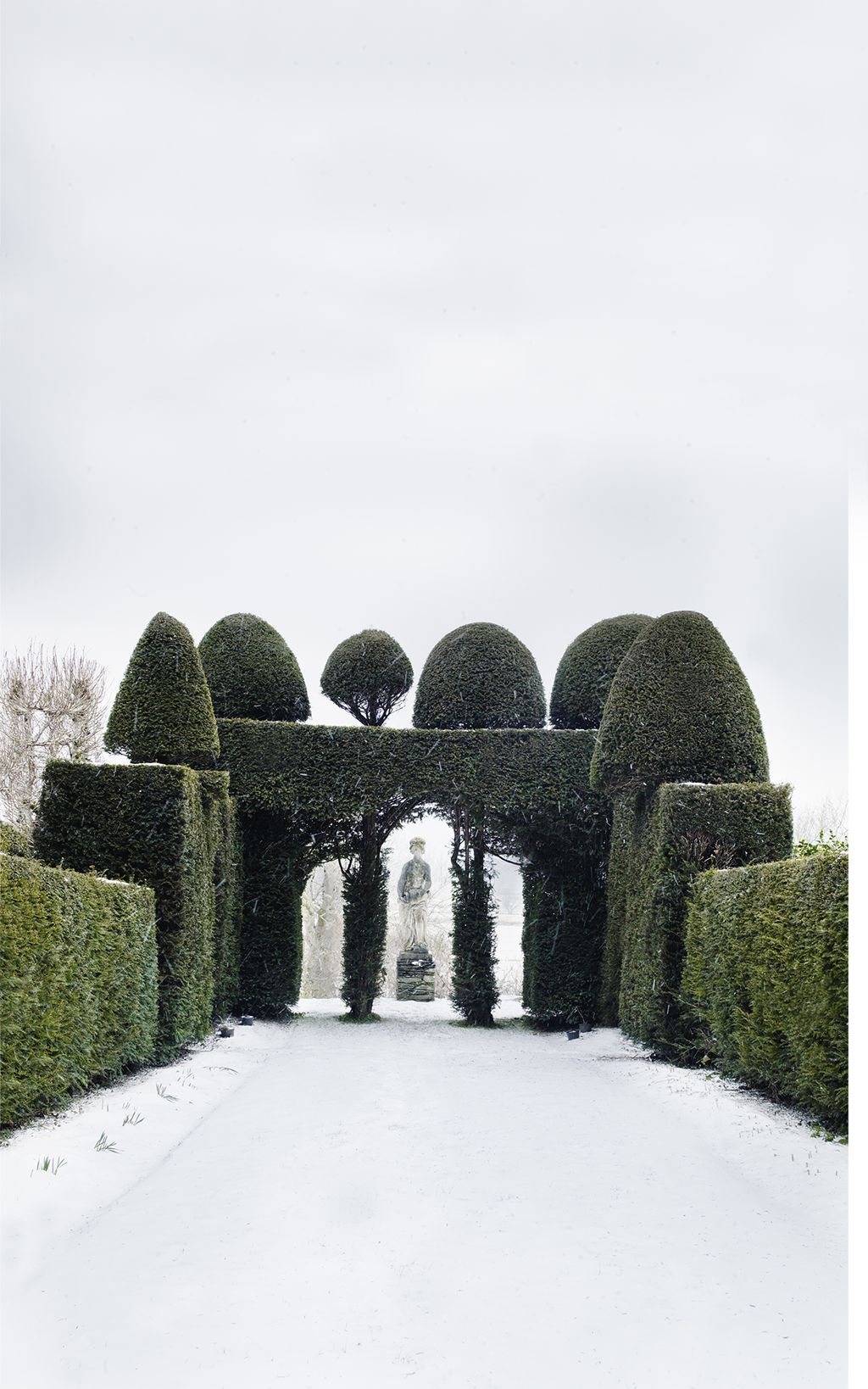
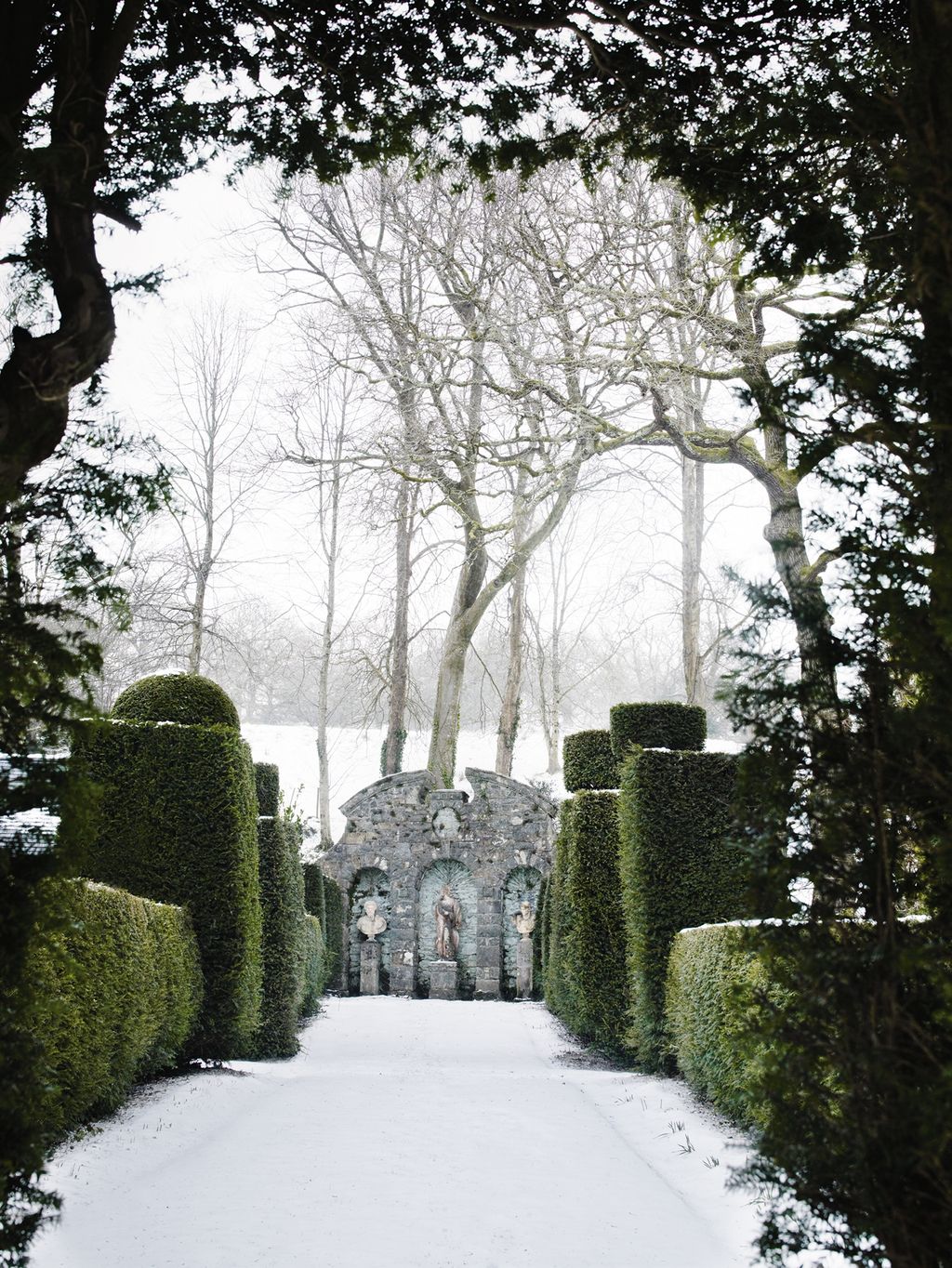
At this southern edge, the garden becomes narrower, so that the cross alleys reach right across from one boundary to another. Three statues are set in faded blue-washed niches in the stone boundary wall; they gaze impassively west through yew arches clipped into the hedge that closes off the far end of the grass walk. The alley that crosses it at right angles ends in a defiant gesture, a circular terrace that billows out over the sheep grazing peacefully in the pasture below.
Plas Brondanw Gardens, near Garreg Llanfrothen, is open daily, 10am–5pm, admission £5; plasbrondanw.com
 Andrew Montgomery1/9
Below the house is a large and impressive evergreen oak (Quercus ilex) on a terrace. The orangery, which dates from 1913, can be seen on the right.
 Andrew Montgomery2/9
Architectural yew topiary in a variety of shapes lines the path that leads to the house from the café at the entrance to the garden.
 Andrew Montgomery3/9
A yew hedge clipped into arches frames a statue of a faceless lady.
 Andrew Montgomery4/9
The terrace is accessed by steps with colourful painted railings on either side of a semicircular niche.


 Andrew Montgomery5/9
A stone pillar is topped with an elegant urn.
 Andrew Montgomery6/9
A snow-covered path beyond leads up a flight of stone steps towards the orangery at the southern end of the garden.
 Andrew Montgomery7/9
A trio of statues set in faded blue-washed alcoves in the boundary wall creates a striking focal point.
 Andrew Montgomery8/9
A path from the house leads out of the garden and up a hill to Pentwr, the imposing folly designed by Clough Williams-Ellis in 1915, which looks particularly dramatic in winter when the surrounding trees have lost their leaves


 Andrew Montgomery9/9
All the ironwork in the garden was originally painted a bright shade of turquoise with mustard yellow accents, including this elaborate gate that marks the boundary of the lawn. In front of the wall, on either side of the stone pillars, Acanthus mollis plants are partially hidden by the snow.


