
Salvesen Graham transforms a tired Victorian house into a light-filled family home

As interior designers Nicole Salvesen and Mary Graham open the front door of this nineteenth-century house in west London to show me round one of their projects, I am expecting to enter a home that shares the look and feel that has become synonymous with their work. Salvesen Graham is known for creating pretty interiors that are too brave with colour and pattern to be considered prim, but they are fabric-rich nonetheless – and full of classic-with-a-twist decorative detailing. It is a reputation that has garnered them a loyal clientele.
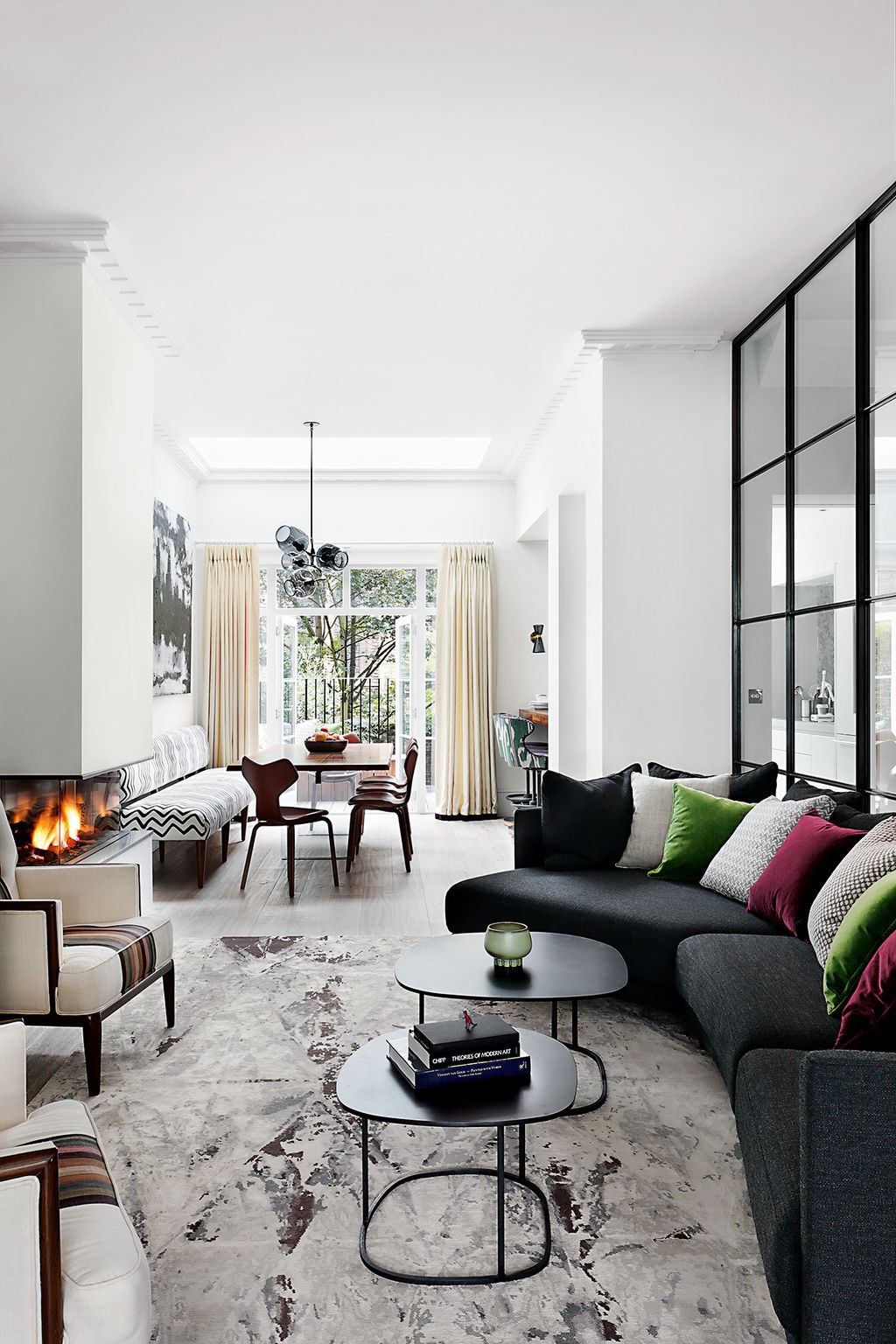
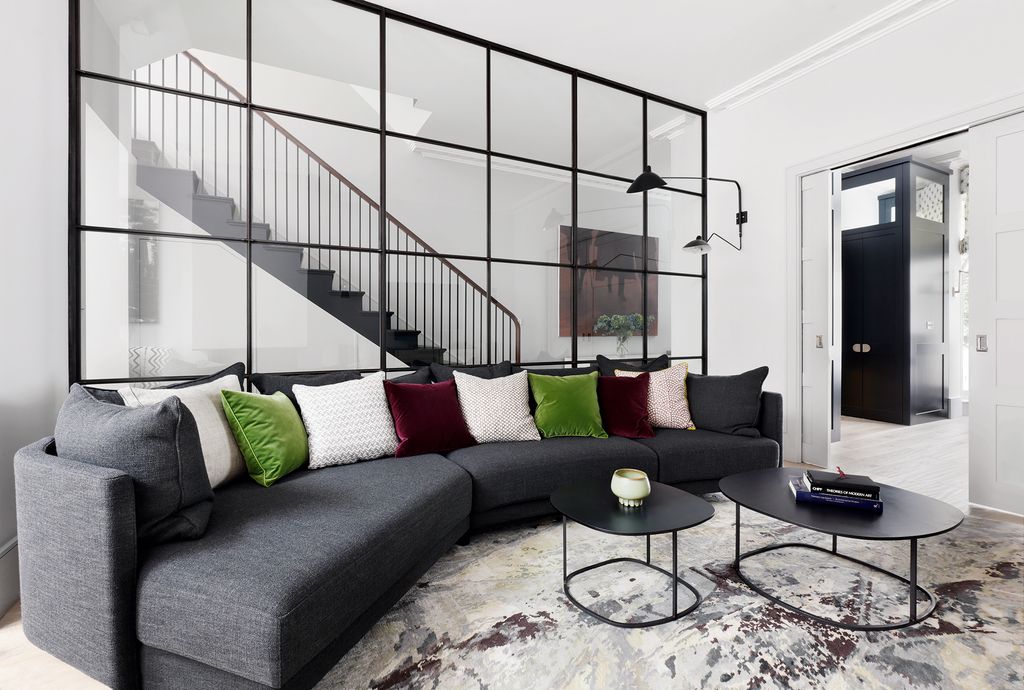
What they are not known for is Pop-industrial metal cabinets and curving modular sofas in rooms of palest grey. Or, for that matter, floor-to-ceiling glazed Crittall walls that seem to require Brunel-esque engineering skills to support the two storeys above. ‘This isn’t really a typical project for us,’ Nicole admits. ‘It took us outside our comfort zone, but we love that – it pushed us to think differently.’
MAY WE SUGGEST: Interior designer Nicole Salvesen of Salvesen Graham's idea-packed home
When their clients bought the house, it had been carved up into a series of bedsits and was devoid of any original details. This did have its benefits, however. ‘Working on period houses often requires a lighter touch and real sensitivity in terms of spatial planning,’ Mary explains. Here, they could design with far broader brushstrokes – moving and removing walls, specifying chunky, masculine cornicing that defies the twiddlier Victorian conversions, and designing extensive built-in joinery.
The owners – a Welshman and his American fiancée – had strong ideas of their own. An important part of the brief was to create a home that would encourage the family to spend time together. ‘He wanted the living and dining areas to be disproportionately big,’ Mary recalls. There would be no basement excavations and separate sitting rooms for children and grown-ups. In fact, they decided to turn the lower-ground floor into a separate flat, leaving the ground floor as a large and mostly open-plan communal space.
The room at the front of the house serves as a combined study and hall, and leads through to a long sitting and dining room with the kitchen tucked around the corner at the back of the house. ‘The good thing about the wall of Crittall windows isn’t just that it allows more light in,’ Nicole says. ‘It is also thinner than a standard wall, providing some useful extra centimetres of floor space in the sitting room.’
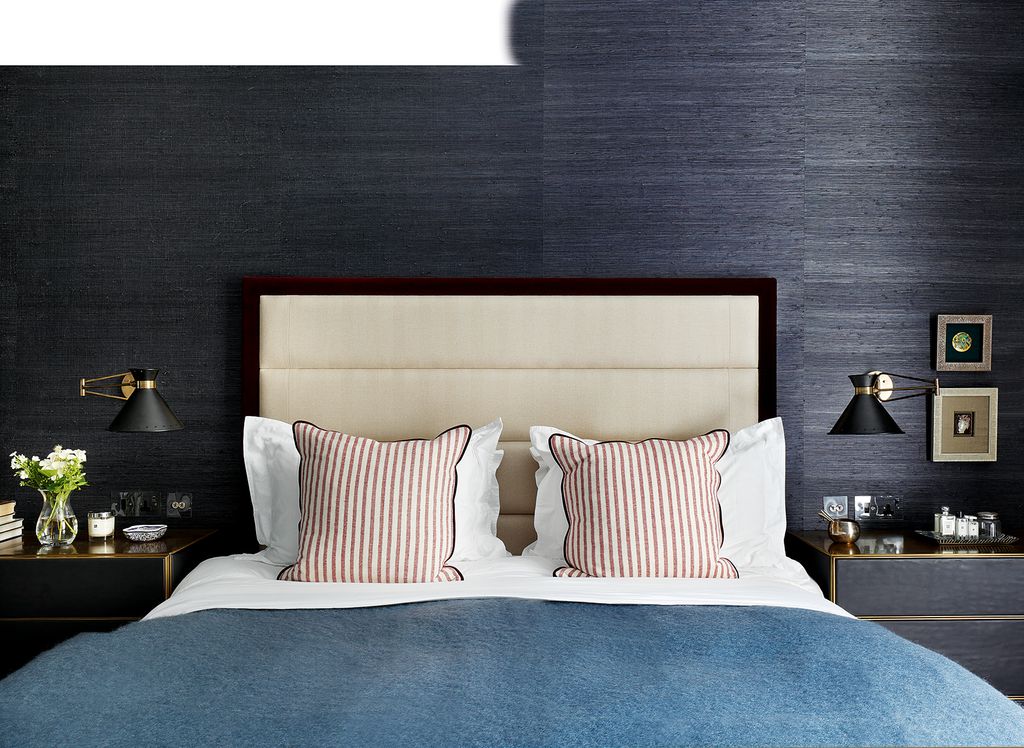
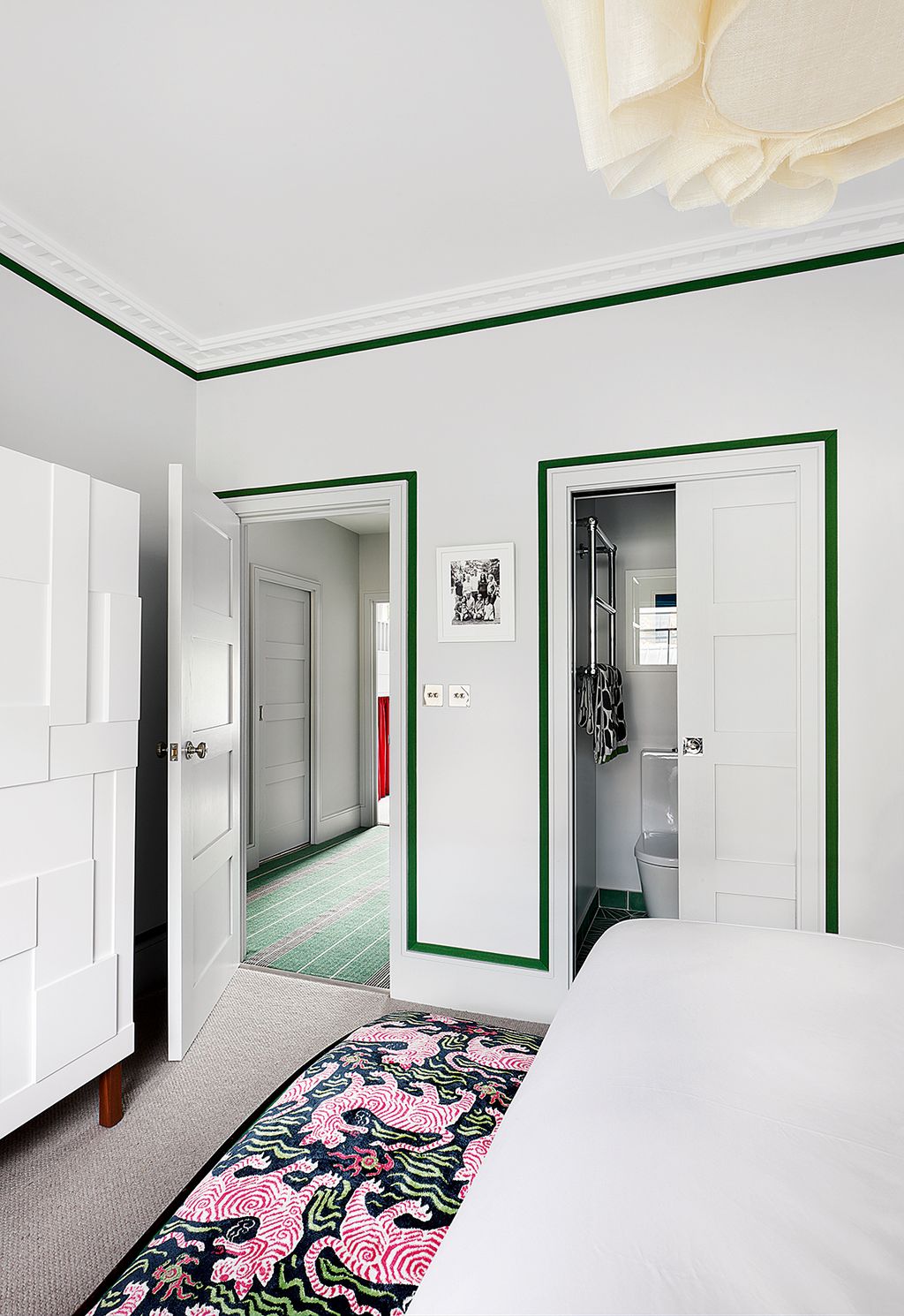
It transpires that this was one of Salvesen Graham’s first projects, so perhaps Mary and Nicole were unencumbered by any expectations other than to fulfil the clients’ brief. Upstairs, however, there are signs of the decorative handwriting for which they would become known. In one of the five bedrooms, a deep green grosgrain ribbon trim traces the perimeter of architraves and cornicing – a modern nod to David Hicks. The main bedroom is papered in navy blue grasscloth, and there is no shortage of smart fabrics by the likes of Clarence House, Christopher Farr Cloth and Penny Morrison. ‘We used a lot of the same fabric houses that we still love, but in a different way,’ Mary explains.
She and Nicole say they are as influenced by some of the current stars of American interior decoration as they are by the greats (past and present) of the British tradition. In particular, they admire the boldness of designers such as Steven Gambrel. ‘And Americans tend to be more open to the idea of fitted joinery,’ Nicole observes. There is plenty of that in this project, with two enormous built-in cupboards at the entrance and two sets of bunk beds in the children’s rooms – one of which also features a fitted desk and climbing wall.
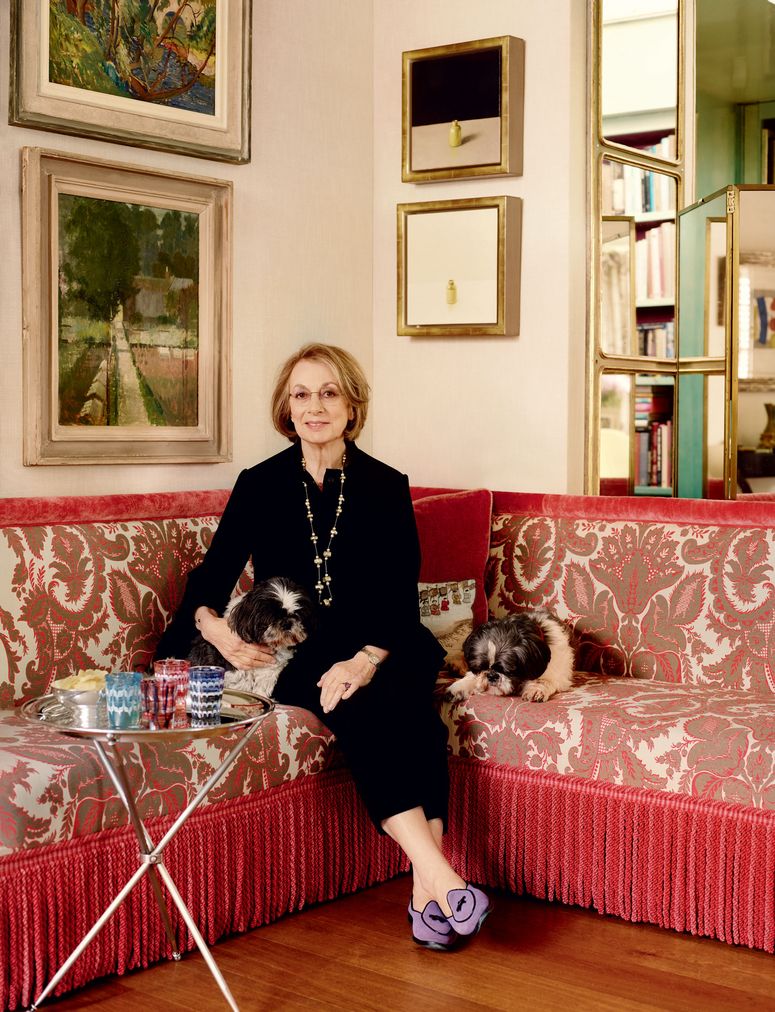
While Mary trained under Cindy Leveson, a doyenne of classic English decorating, Nicole’s background was with Nina Campbell, from whom she no doubt picked up a slightly sharper, more tailored approach. This combination of experiences has contributed to the appealing hybrid style that Salvesen Graham has developed, with perhaps its most significant quality being how liveable-in their projects seem. And that is one thing this house does have in common with so much of the design duo’s other work.
Salvesen Graham: salvesengraham.com. Salvesen Graham is a member of The List by House & Garden, our essential directory of design professionals. See the studio's profile here.
 Alexander James1/12
Walls were removed to create this open-plan room on the ground floor. The Rolf Benz sofa is from Chaplins and the coffee tables are from Caravane. A striped fabric from Christopher Farr Cloth can be seen on the chairs.
 Alexander James2/12
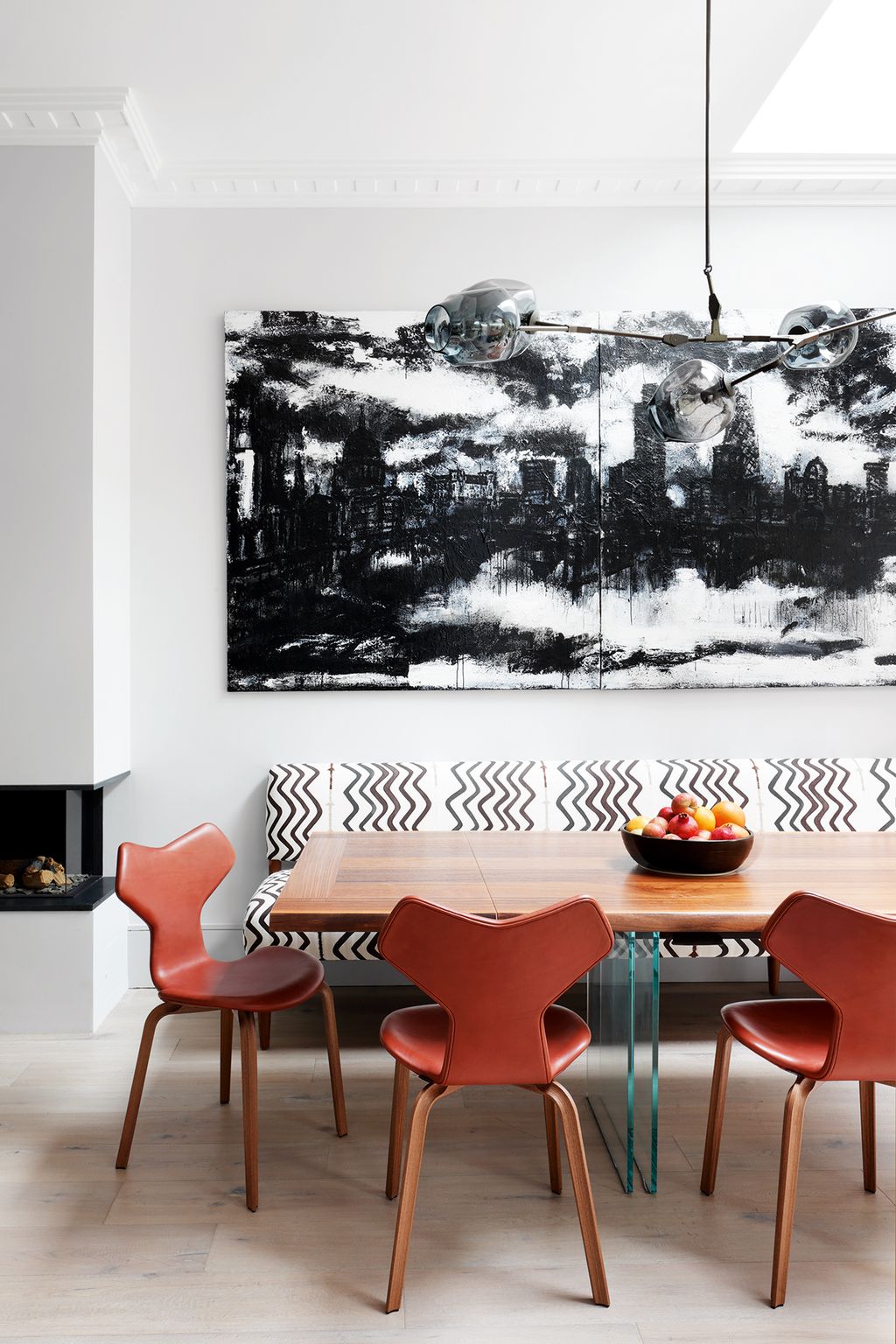
Seating here includes 'Grand Prix' chairs from Skandium and a banquette in Kit Kemp 'Rick Rack' linen from Christopher Farr Cloth. The chandelier is by Lindsey Adelman.
 Alexander James3/12
Holloways of Ludlow supplied the units.
 Alexander James4/12
The Berkshire-based firm Coolgardens designed the outdoor space.


 Alexander James5/12
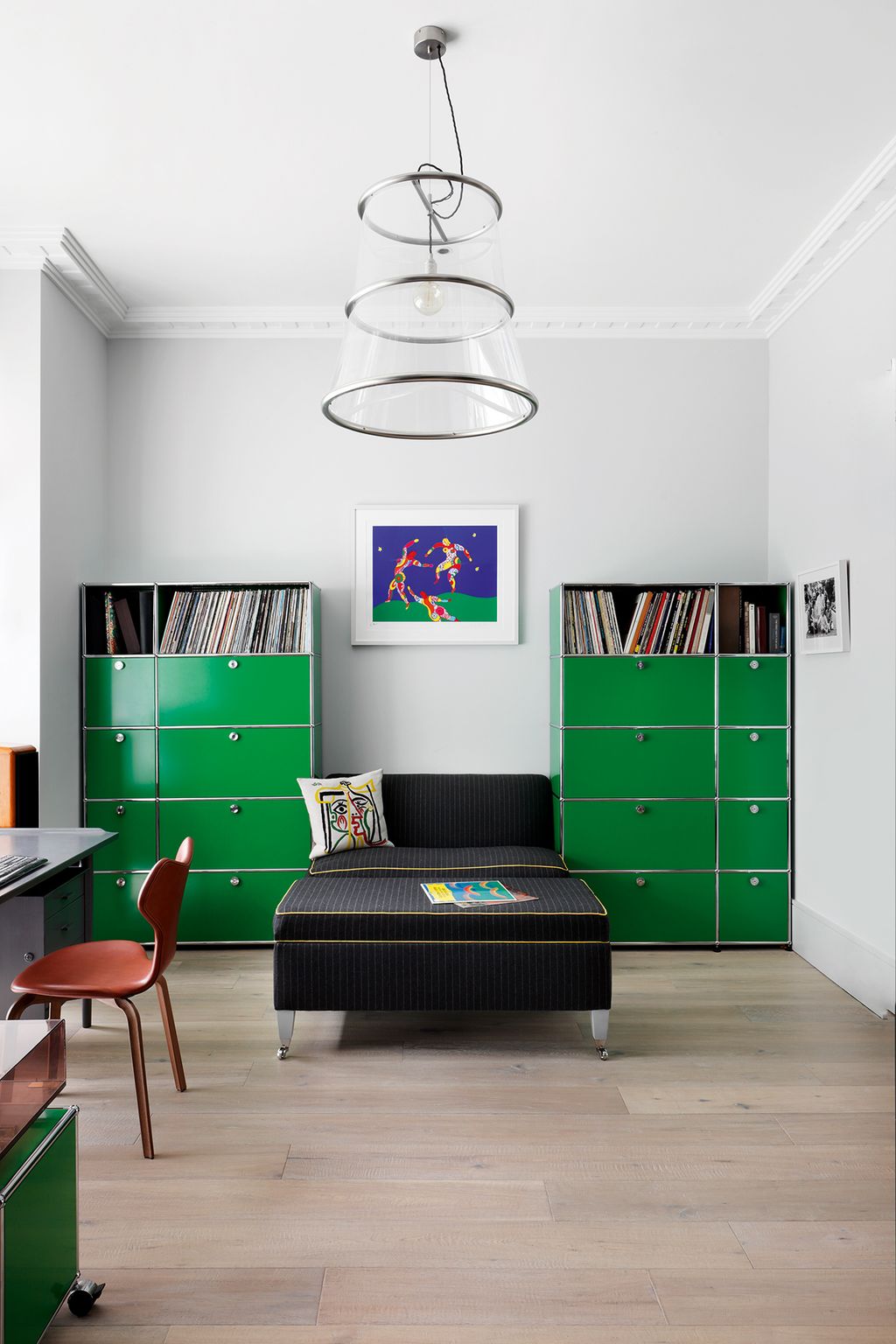
This ground-floor room has cabinets by USM.
 Alexander James6/12
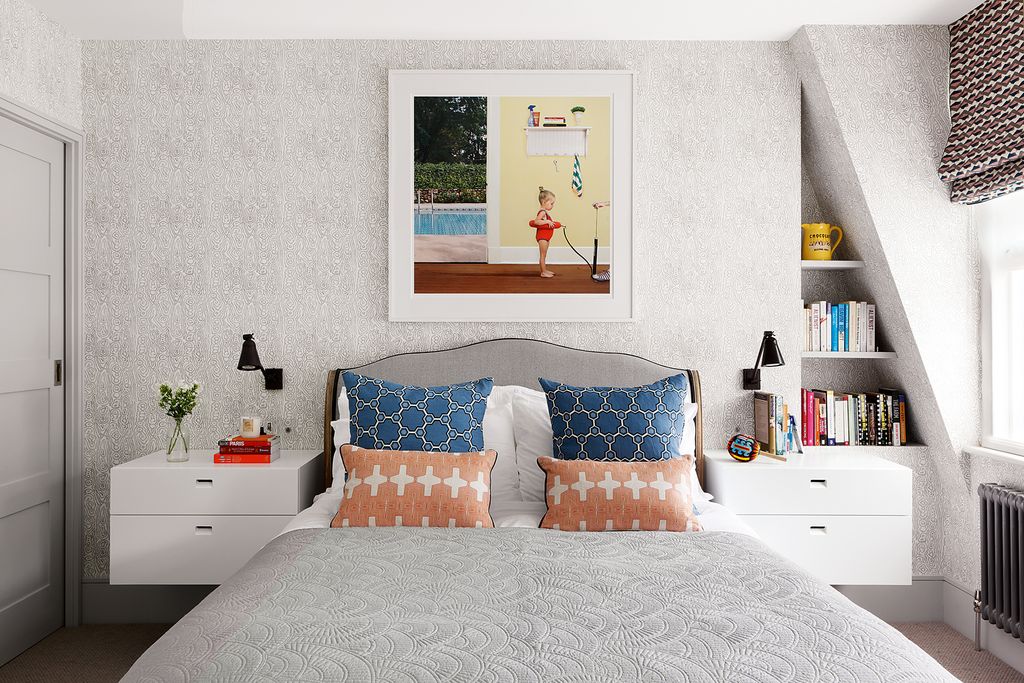
The sofa and ottoman are from David Seyfried.
 Alexander James7/12
Linen cushions were made from Vanderhurd's 'Cordoba' and Christopher Farr Cloth's 'Laguna'.
 Alexander James8/12
The basin unit is from Antonio Lupi.


 Alexander James9/12
In the youngest child's bedroom, the woodwork is painted in Farrow & Ball's 'Hague Blue'.
 Alexander James10/12
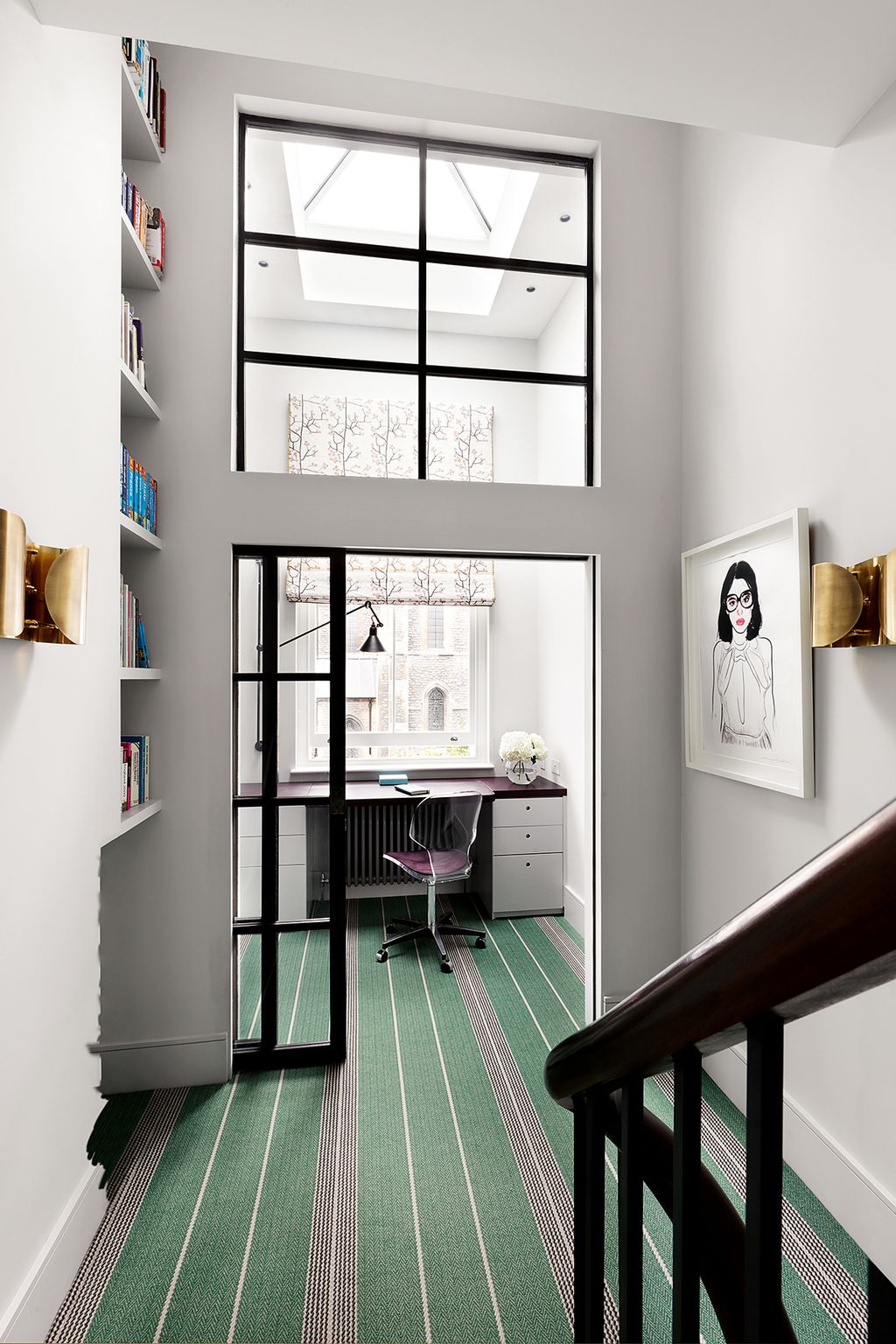
The first-floor landing and office are carpeted in Roger Oates' 'Swanson' in a bespoke colour.
 Alexander James11/12
Brass and aluminium wall lights from Hector Finch complement Phillip Jerries' 'Juicy Jute Grasscloth' in the main bedroom. The cushion fabric is 'Olive Sacking' from Guy Goodfellow Collection.
 Alexander James12/12
The designers trimmed the walls using 'Cambridge Strie Braid' from Samuel & Sons in spring green.


