
An architect's extraordinary, sustainable new build in Rutland

Having reached a time in life when most people might think of retiring to a cottage with roses over the door, Matthew and Nicky Lyttelton did the opposite. For some time, they had been exploring the idea of living in a contemporary and sustainable home. Since there seemed to be so few exciting projects being built, they began to consider commissioning such a house. When friends who had been running a plant nursery next to their house in a village decided to close the business and offered to sell them the land, they jumped at the chance.
They were detailed in their specification. They had been living in a neighbouring village, in a 19th-century farmhouse that had what they describe as a ‘difficult relationship with the garden’. As Nicky explains, ‘It was right on the road and felt very enclosed, with no views of the countryside and no means of accessing the garden from the living areas.’ So the new house needed to be much more connected to the outside space and nature. They also wanted a sheltered courtyard area in which they could sit and read. The house was to be reasonably open plan and Matthew, in particular, was emphatic about not wanting things to have too many straight lines or be ‘too squared-off ’. Areas that could be closed off when not in use – for example, when family members were not staying – was another requirement. And the house was to be built sustainably and be sustainable to run.
MAY WE SUGGEST: A stylish, sustainable Passivhaus in the depths of rural Somerset
The pair researched the work of different architectural practices and came across Baggy House, the clifftop property in North Devon designed by Hudson Architects in 1994, in which Sarah Featherstone was involved, and Baggy Pool, on which she was the lead. Finding her approach both distinctive and fun, they commissioned her to draw up some designs. Their site was on the edge of a village designated a conservation area and might have been considered by some to be small and poorly serviced. However to Sarah, who established the architectural practice Featherstone Young with Jeremy Young in 2002, it was ideal. She believes that houses carefully constructed on overlooked sites within town or village boundaries can better protect the countryside and are a preferable alternative to the sprawling, linear buildings so often seen.
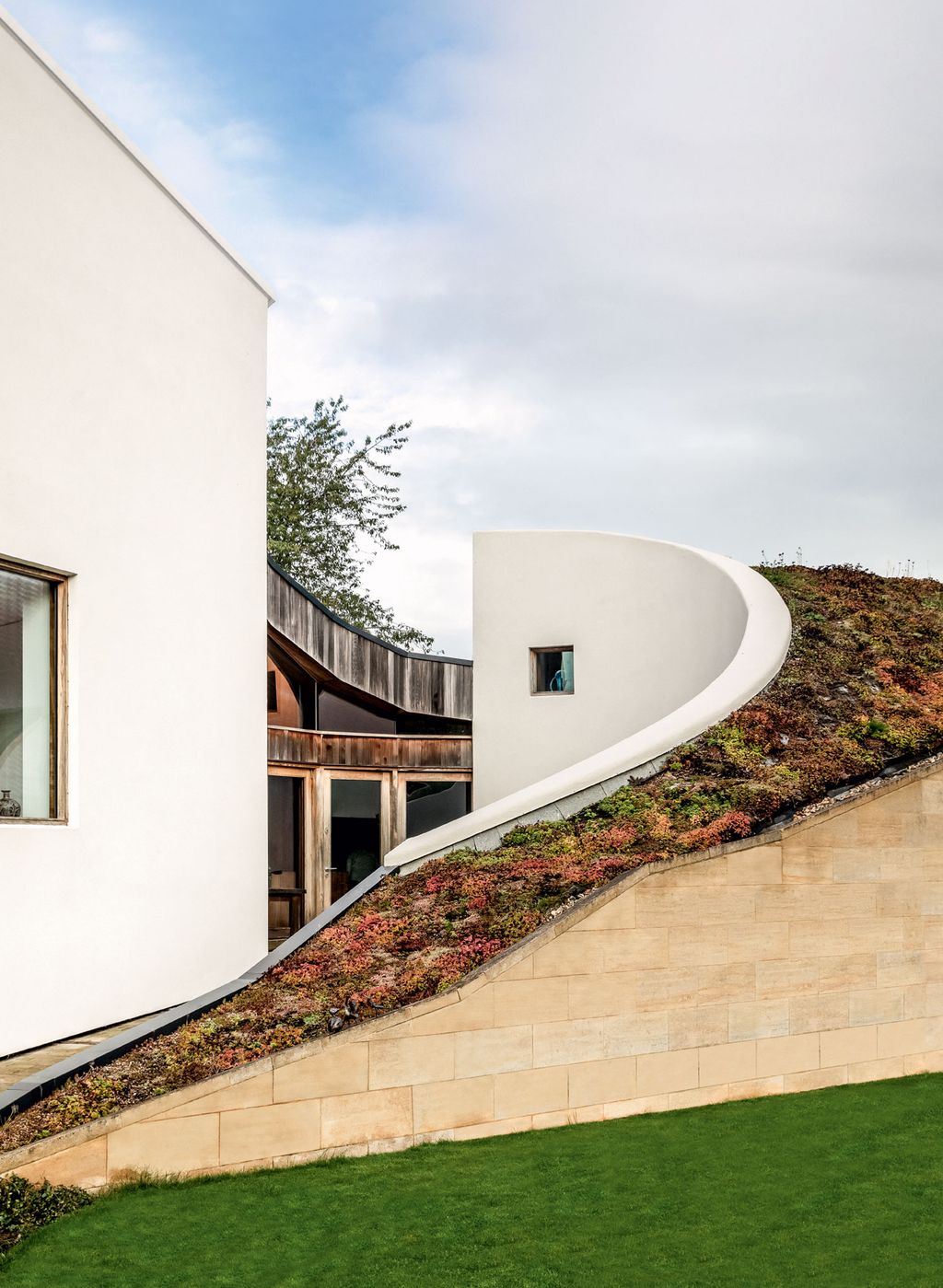
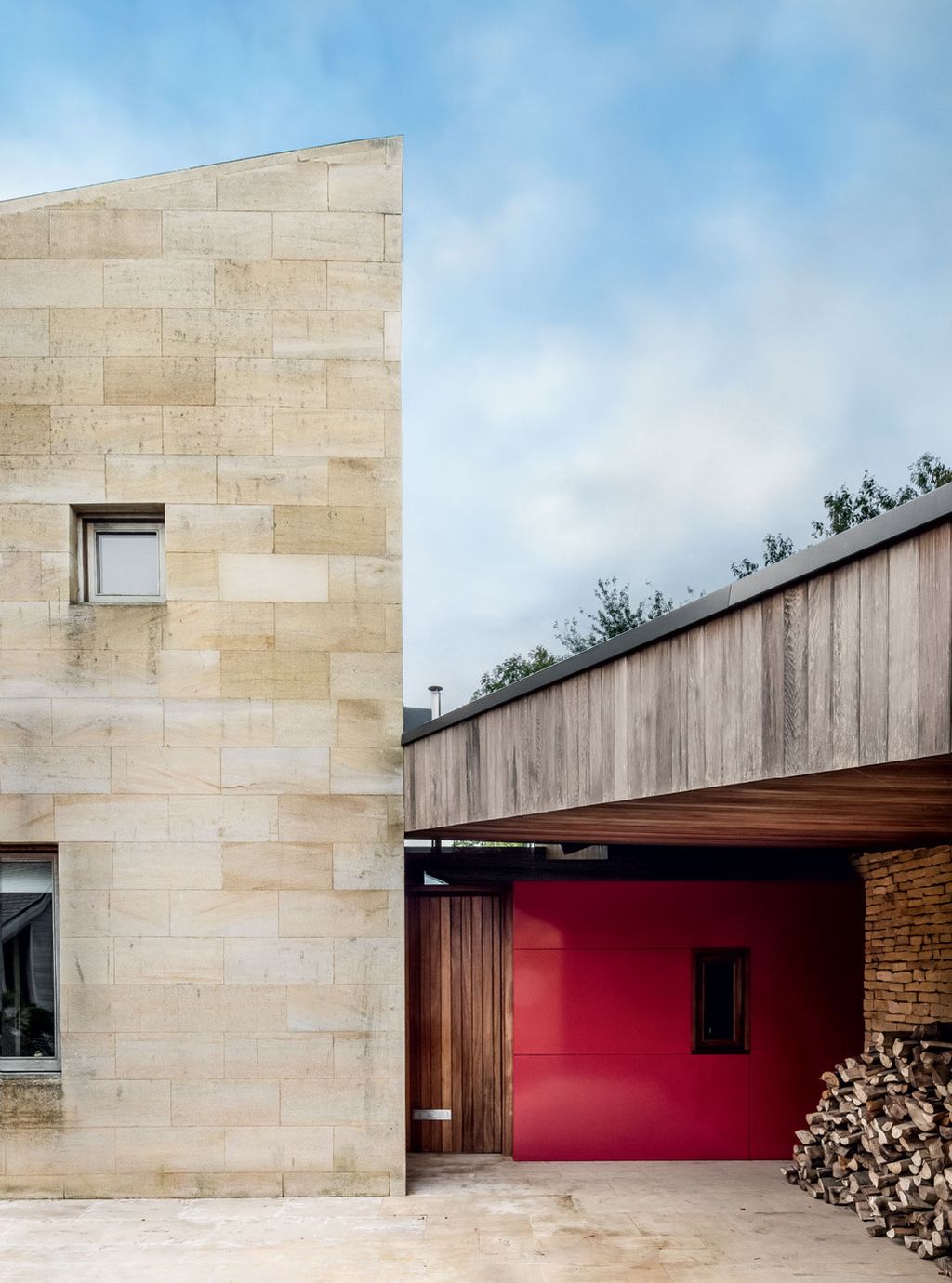
The design she created is a two-winged building, with a green roof that appears to rise out of the ground, unifying the structure with the landscape and curling round a courtyard that forms the nucleus of the house. They were lucky to have an enthusiastic planning officer and the fact that the plot was not immediately visible to anyone walking through the village was an advantage. However, approval was granted only when the entrance, which faces the village, was redesigned to be more discreet. Now, as planning demanded, the main entrance has a facing wall built of local Clipsham limestone, with a low, minimalist opening that provides privacy for the rest of the building. The house is essentially designed as two triangles, with each part of the green roof angled in opposite directions, forming walls around the courtyard, which gives access to a small private garden and a wildflower meadow with an orchard beyond.
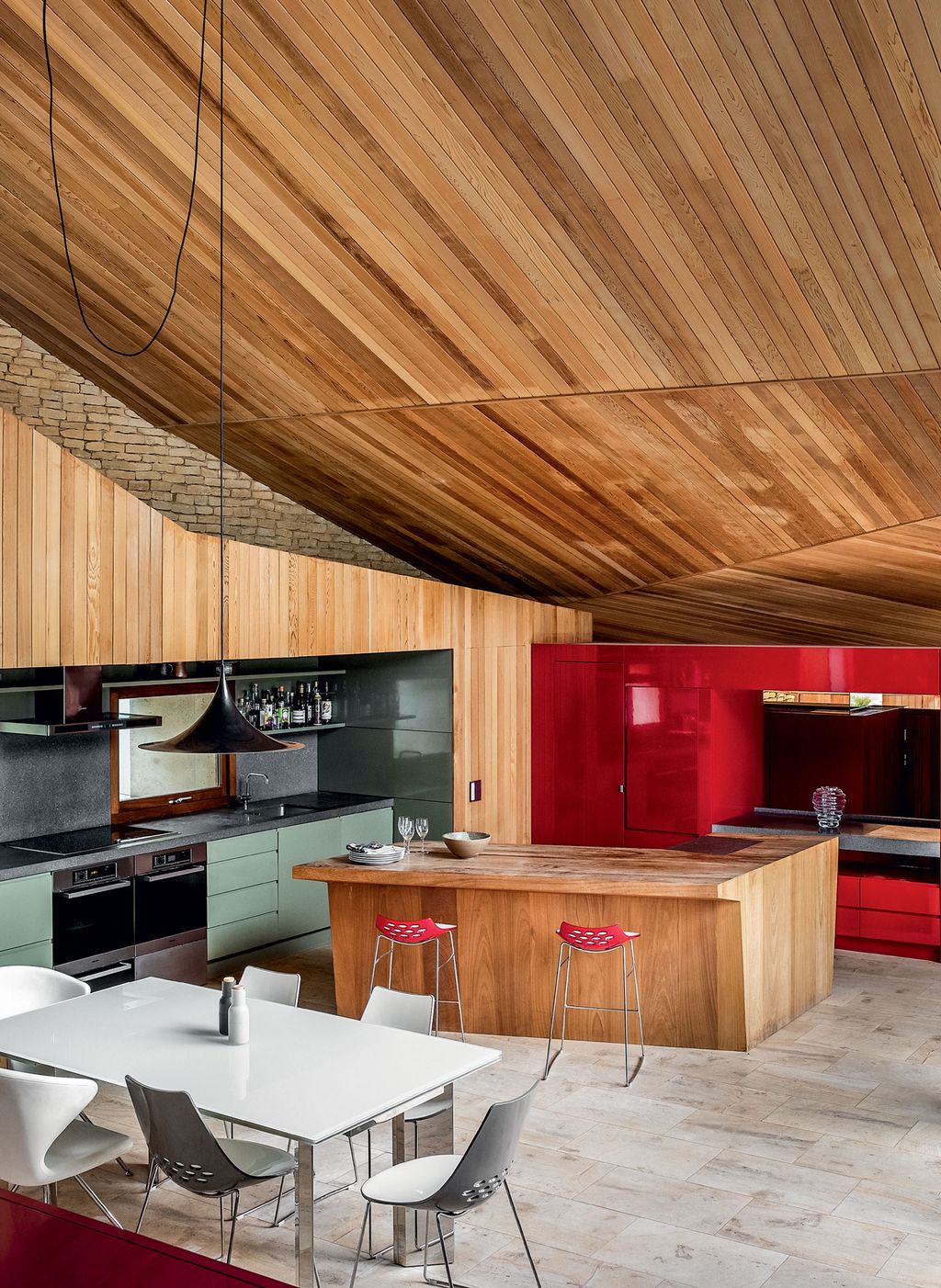
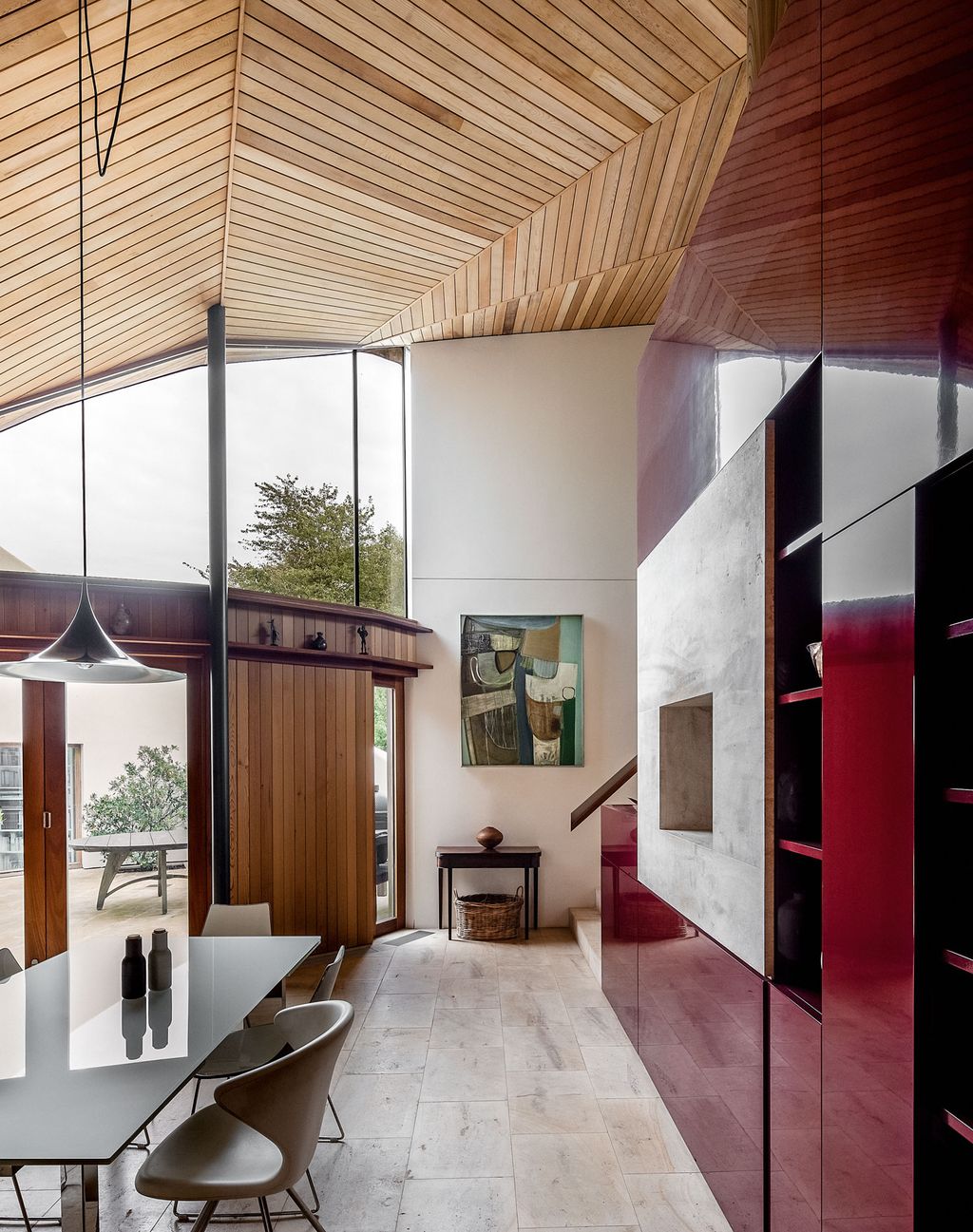
Entering the house, you go through a small hallway and up stairs before coming into the kitchen. Here a dramatically faceted cedar-panelled ceiling follows the line of the roof and rises to a double-height space, which encompasses the sitting room and a music and weaving room, then a study. Although the building is essentially open plan, Sarah’s design has ensured there are these separate areas, thanks to cleverly placed pocket doors. Nicky’s loom weaving is a pastime that only presented itself once the house was built. Finally, at the highest level, a small green-themed eyrie was created in response to the Lytteltons’ love of trees, which are showcased by the windows up there.
MAY WE SUGGEST: A new-build Suffolk house designed for mesmerising views
‘We can look from the eyrie across to the study,’ says Nicky. ‘One of the unexpected pleasures of living here are the internal views from one part of the house to another, framed beautifully by windows.’ Another source of delight is the large walk-in larder – one of three pods that extend out and contain the ‘working areas’ of the building (the others are a utility room and a boot room) but are made to feel fun with colourful paintwork in three shades of green.
The couple found that their existing furniture, which they had lived with happily for 25 years and thought was going to be suitable, looked shabby when finally in place. So they bought two new leather sofas from Heal’s and replaced their dining table with one in steel and glass by Calligaris. However, they discovered that one of the benefits of such architecture is that they did not need as much furniture as in their previous home. With glazing and wood panelling covering so much of the walls, there was not much space to hang paintings. There is, however, plenty to draw the eye.
So, how has this house changed their way of life? ‘We feel much more connected to the garden and to nature,’ Nicky says, ‘as each aspect of the house gives views or access to the outside.’ ‘The ground-source heating and insulating, seeded roofs mean running costs are less, too,’ adds Matthew. But what about the drawbacks? ‘With the underfloor heating, there is a two- or three-hour time lag in the operating of the thermostat,’ he says. This aside, it seems their decision to build from scratch has been a great success.
Featherstone Young: featherstoneyoung.com
 Taran Wilkhu1/13
Steps lead up to the sitting area, with views of the garden, and to the room used for weaving and music.
 Taran Wilkhu2/13
Bespoke kitchen units, some with a red high-gloss finish, create a colourful contrast with the cedar-clad walls and ceiling, and pale limestone floor. The steel and glass table is by Calligaris, as are the chairs and stools.
 Taran Wilkhu3/13
 Taran Wilkhu4/13


 Taran Wilkhu5/13
In the main open-plan space, a Paul Hawdon painting hangs on the wall behind a Heal’s leather sofa. Tom Dixon’s ‘Fan’ chair casts a graphic shadow and, in the far corner, a ‘Pallone’ armchair by Leolux sits under the Howard Hodgkin print.
 Taran Wilkhu6/13
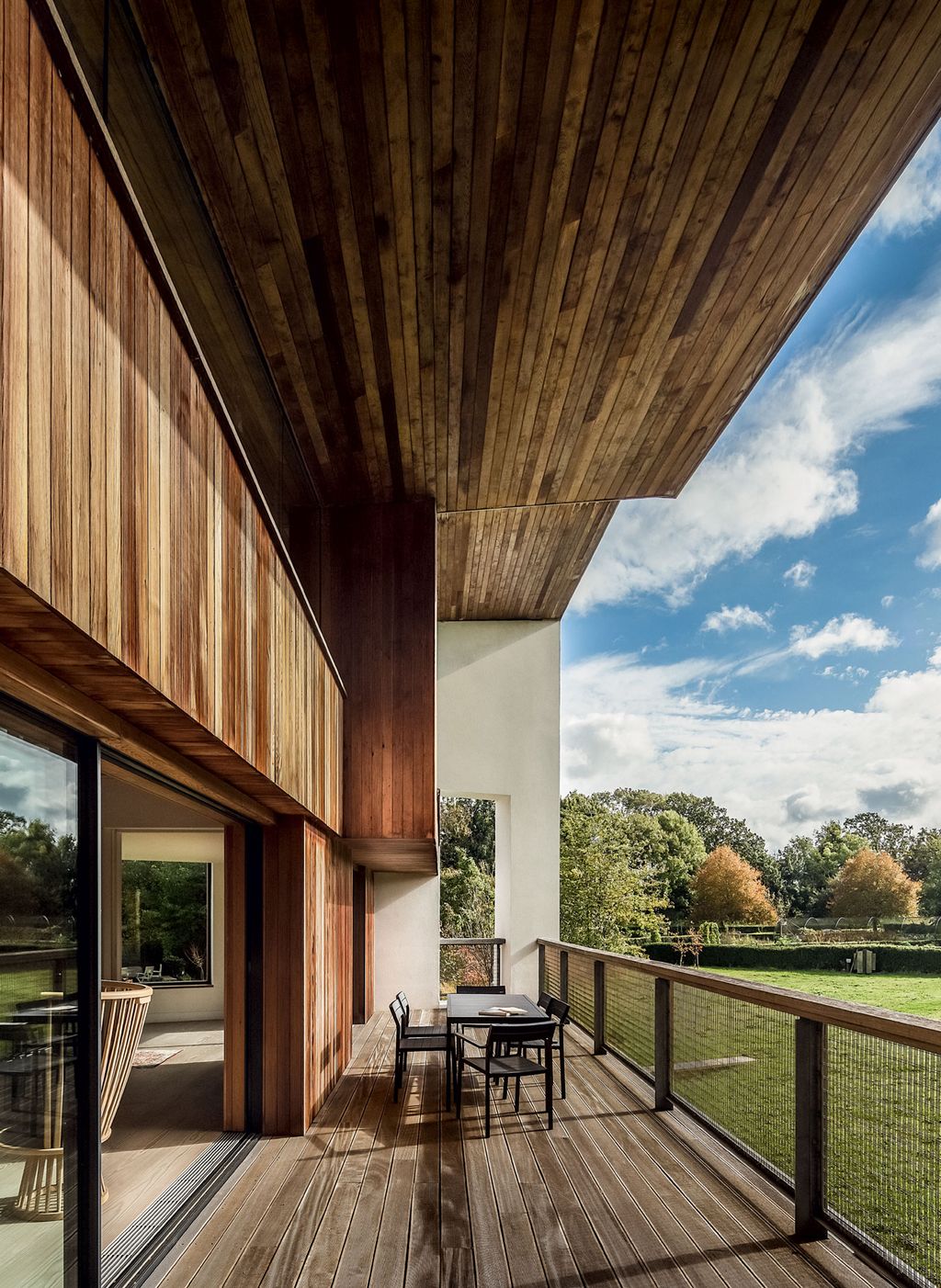
Pocket doors open onto a terrace, which spans the depth of the building, with ‘Eos’ garden furniture by Matthew Hilton.
 Taran Wilkhu7/13
 Taran Wilkhu8/13
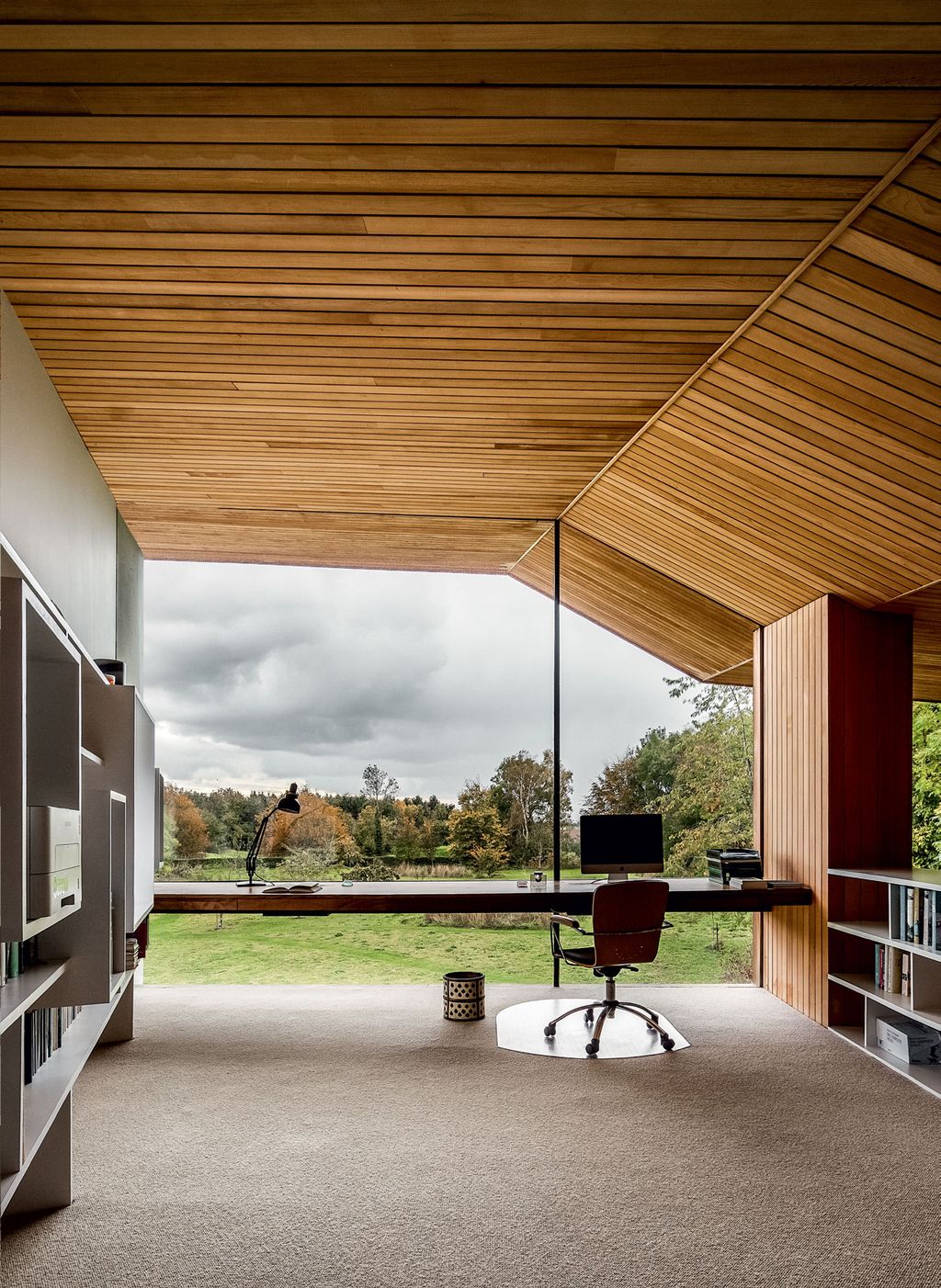
This first-floor room has extensive built-in shelving and a long iroko desk in front of the floor-to-ceiling window, which makes the most of the expansive view of the orchard and the surrounding countryside.


 Taran Wilkhu9/13
The colour scheme in this eyrie was inspired by trees and includes leather-covered built-in seating.
 Taran Wilkhu10/13
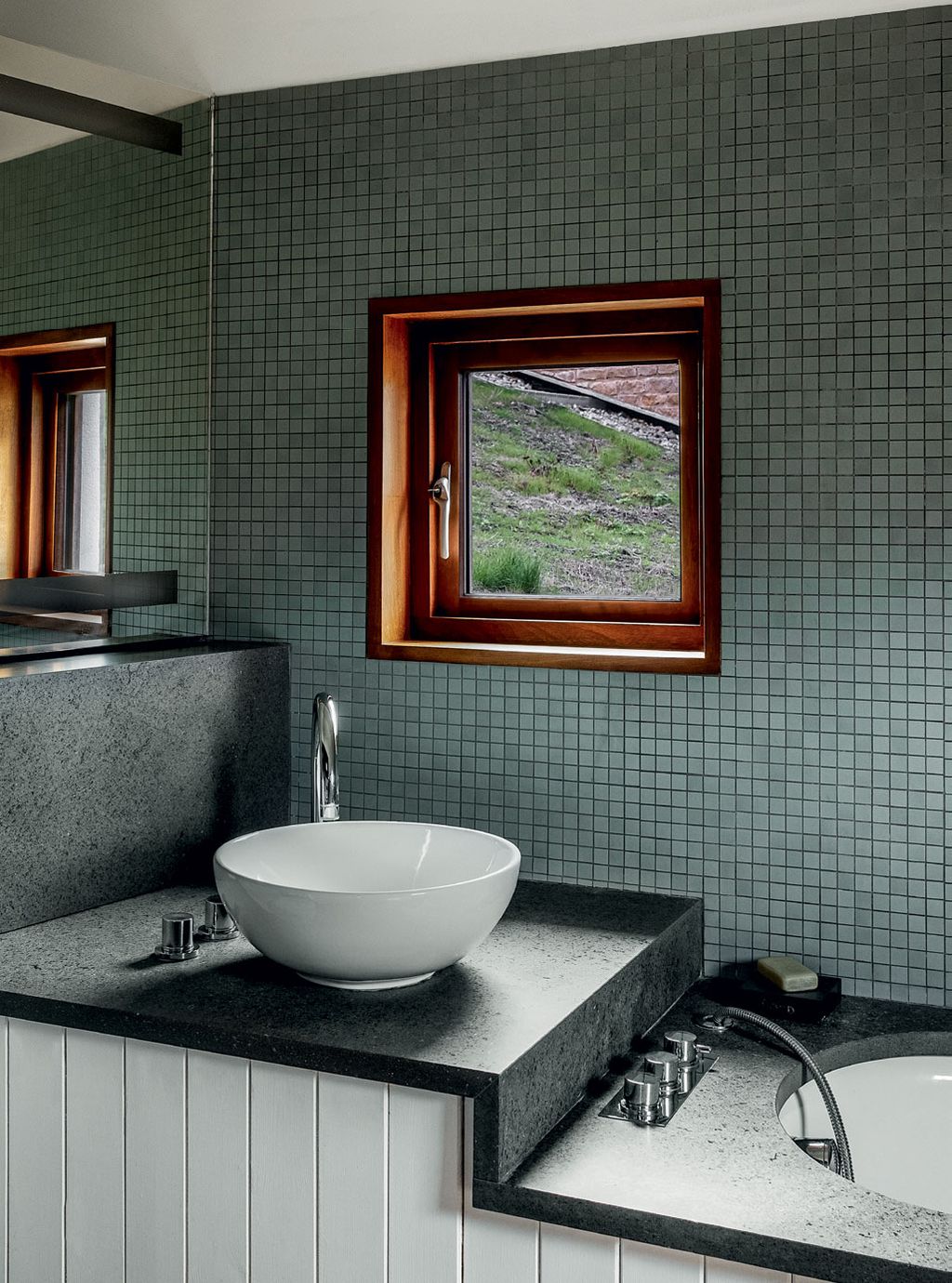
Walls in grey mosaic tiles, tiered surfaces in dark basalt and white tongue-and-groove panelling create a strong, graphic look.
 Taran Wilkhu11/13
The building is made up of a series of sections and, according to the owners, the most interesting view is from the back. The terrace is visible through the opening in the wall on the left. On the right is a guest wing clad in pale Clipsham limestone.
 Taran Wilkhu12/13
The various parts of the house are united by the central courtyard area, around which they appear to wrap. The two-winged house has a green roof that appears to rise out of the ground, unifying the structure with the landscape and curling round a central open courtyard.


 Taran Wilkhu13/13
The deliberately unobtrusive and minimalist design of the main entrance to the house was dictated by planning requirements. Logs are stored under the cedar-clad living roof that sweeps down to ground level. The wall on the left is made of Clipsham stone, a Jurassic limestone quarried locally in Rutland.


