
Artist Sarah Graham's London home and studio
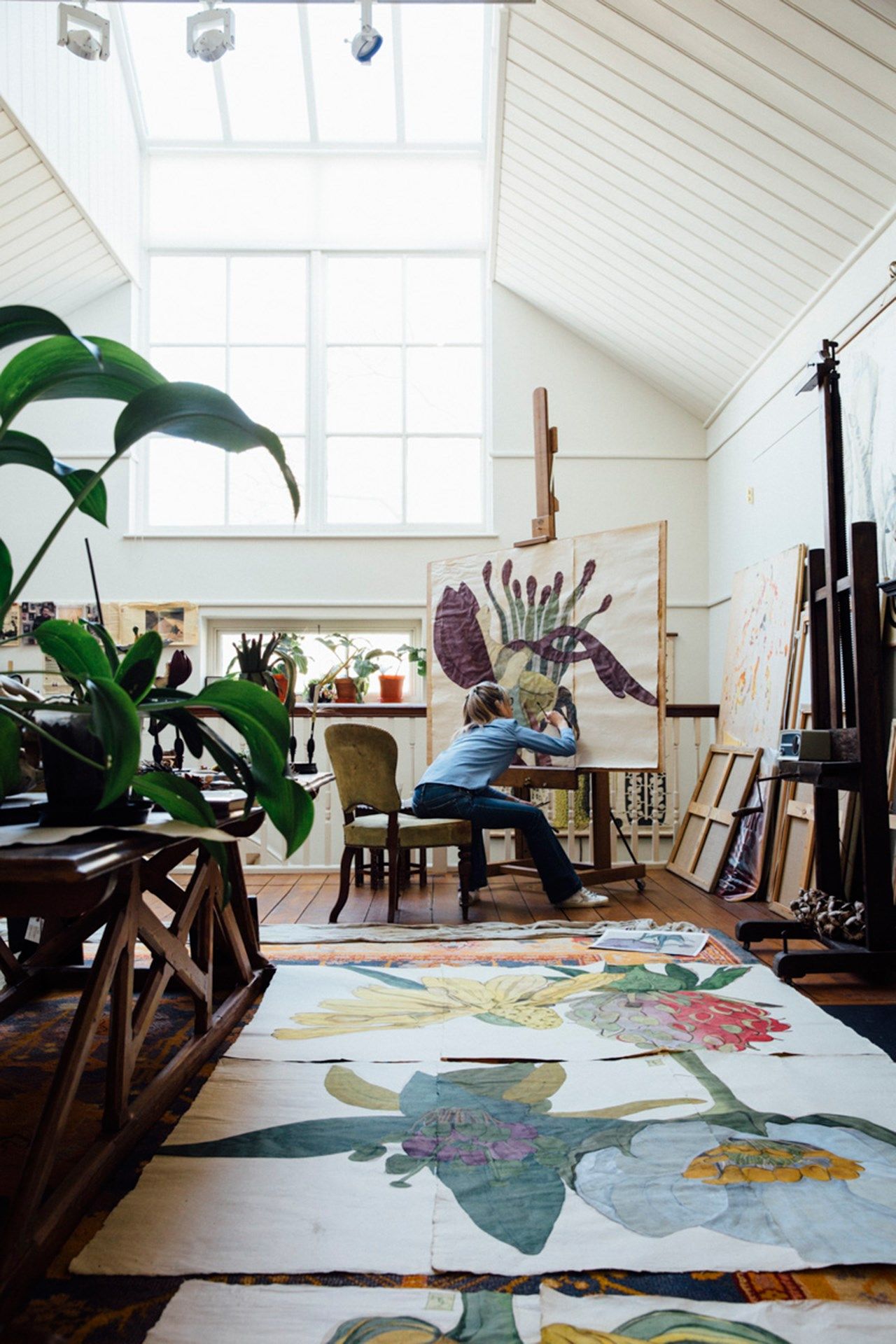
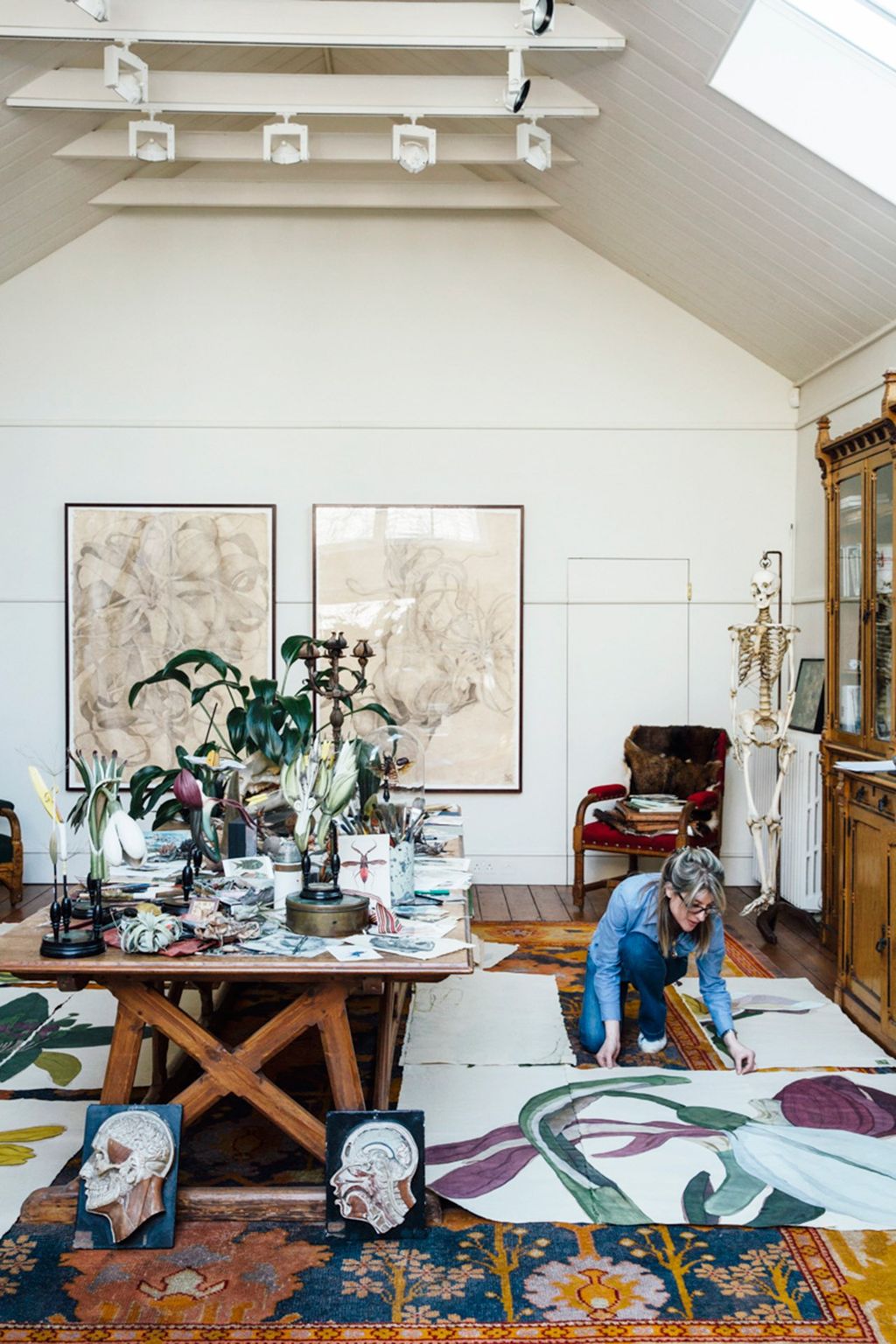
It would upset me greatly if someone said my work was pretty,' declares painter Sarah Graham. If pretty is defined as fine and delicate, the adjective certainly does not apply. The works in her upcoming exhibition are nearly two metres wide and one metre high. They have a majestic, muscular quality, an almost abstract and surreal feel in their magnificence. These are not, as she is keen to stress, botanical paintings, but expansive and personal interpretations of colourful specimens, such as lilies, orchids and artichokes.
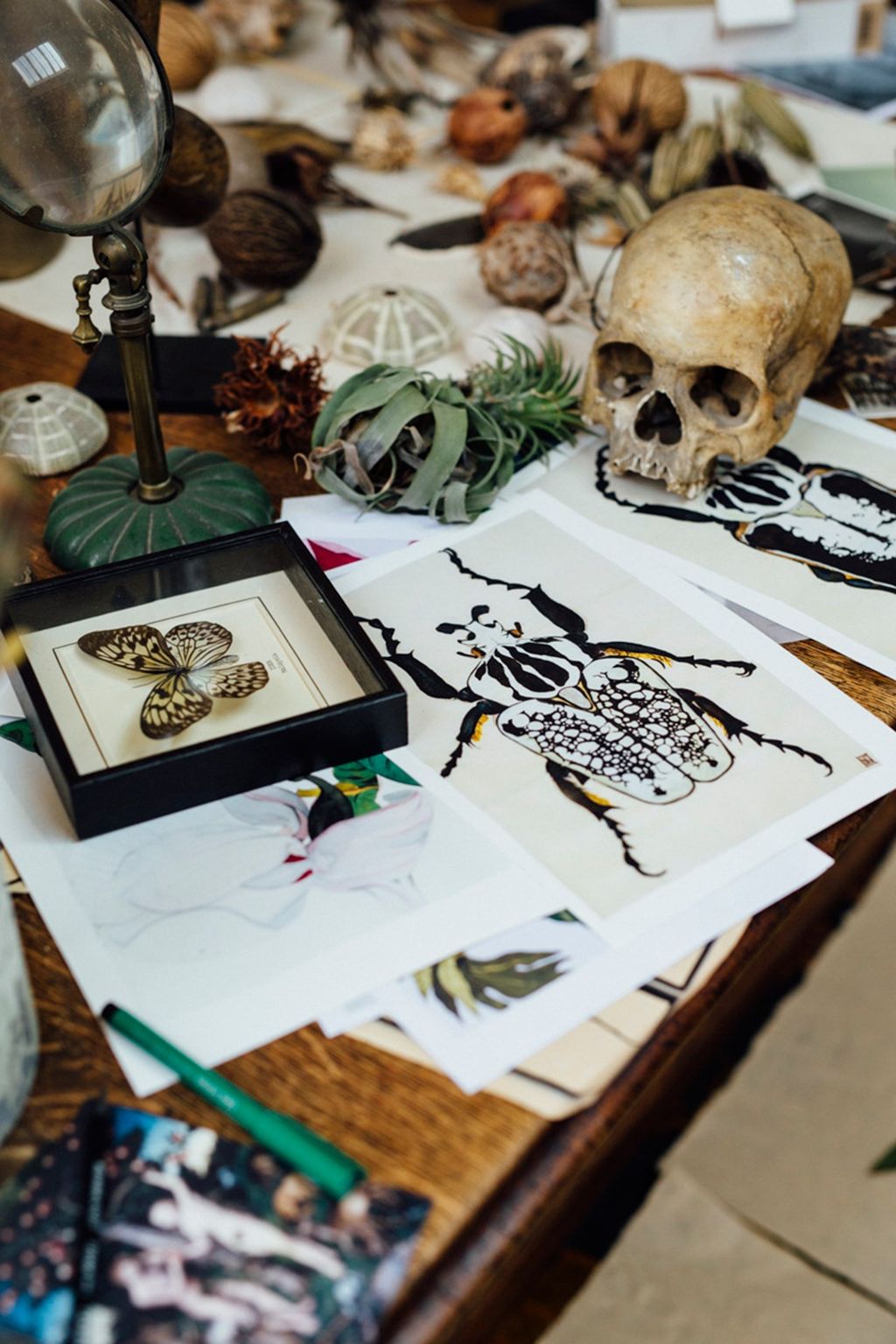
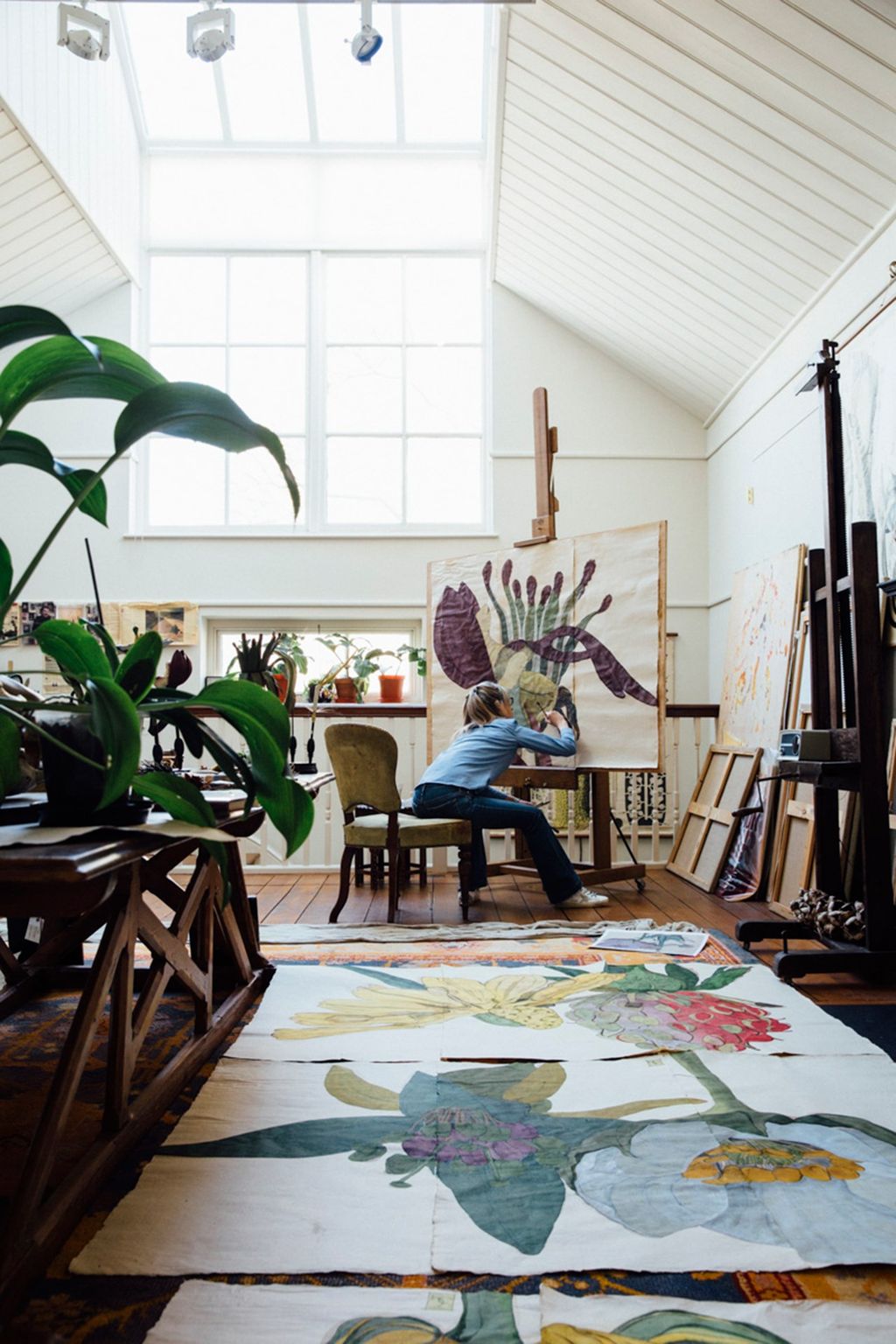
She works from a nineteenth-century artist's studio in Chelsea, where light floods in from the two-metre windows onto an Arts and Crafts Puginesque table displaying her found objects: dried seed pods, fossils and animal skulls. A long dried amaryllis branch propped up against the turquoise-tiled chimneypiece seems almost triffidian. She is currently preparing for her first New York show, having had sell-out shows in Aspen, Colorado and at Sims Reed Gallery in London. 'Plants are my main subject, but I am very drawn to the forms of insects, too,' she says. In 2010, for the exhibition in Aspen, she tentatively submitted large-scale drawings of beetles, cicadas and butterflies among her flower pictures. 'I expected buyers to recoil, but to my surprise the insect pictures were snapped up immediately.' Thus emboldened, for a London show a year later, she submitted a giant leaf-eating mantid, a whip scorpion and a stag beetle, which also sold.
The natural world was very much part of Sarah's childhood. She recalls her mother's luxurious magnolias and her father's vivarium full of grass snakes and stag beetles. At Saltwood Castle in Kent, the home of her godmother Jane Clark, she saw the landscapes of artist Graham Sutherland. She found 'his dark and mysterious paraphrases of nature' compelling and was fascinated by the ambiguity between plant and animal forms. 'Sutherland always sits on my shoulder as a lodestar. If I feel lost with finding something to draw, I will turn to one of his images.'
Her other influence is early-twentieth-century German photographer Karl Blossfeldt, whose photographically enlarged plants highlight their structure and become almost surreal. For the New York show, Sarah is drawing inspiration from eighteenth-century German papier mâché models of plants used to instruct botany students, which were lent to her by antique dealer Peter Petrou.
A lower second-class degree in fine art at Edinburgh in 1996 was a disappointment for Sarah. 'It depressed me so much, I decided to give up painting.' A garret lifestyle didn't appeal. 'I had majored in lithography, considered old fashioned by my contemporaries, most of whom had studied video and installation.' An advertisement in the Royal Geographical Society for someone to make a film about the Old Silk Road did however take her fancy. 'It was at times very risky, but surviving it gave me a certain confidence in my physical and emotional stamina.'
She returned to London to work with legendary Pimlico Road antique dealer John Hobbs. 'He was quite scary, but his enthusiasm and exuberance were infectious. He thought big and sold gigantic marble-top tables from Italy and breakfront bookcases from English country houses.' She found the lifestyle intoxicating and enjoyed the financial security, but her desire to paint remained. So, after three years, she quit the job to become a full-time artist, rented a studio in the freezing cold (now demolished) Great Western Studios in Paddington, donned a boiler suit and switched on Radio 4 to keep her company.
With no formal representation or gallery and only the encouragement of her boyfriend, the art dealer James Holland-Hibbert, 'it took a steely nerve to persist'. After nine months of studio work, she borrowed from the bank and gambled all her chips by investing in a stand at a House & Garden fair, where she showed eight large charcoal drawings of sunflowers and artichokes. To her amazement and joy, Ken Bolan from Talisman bought the lot in the first five minutes.
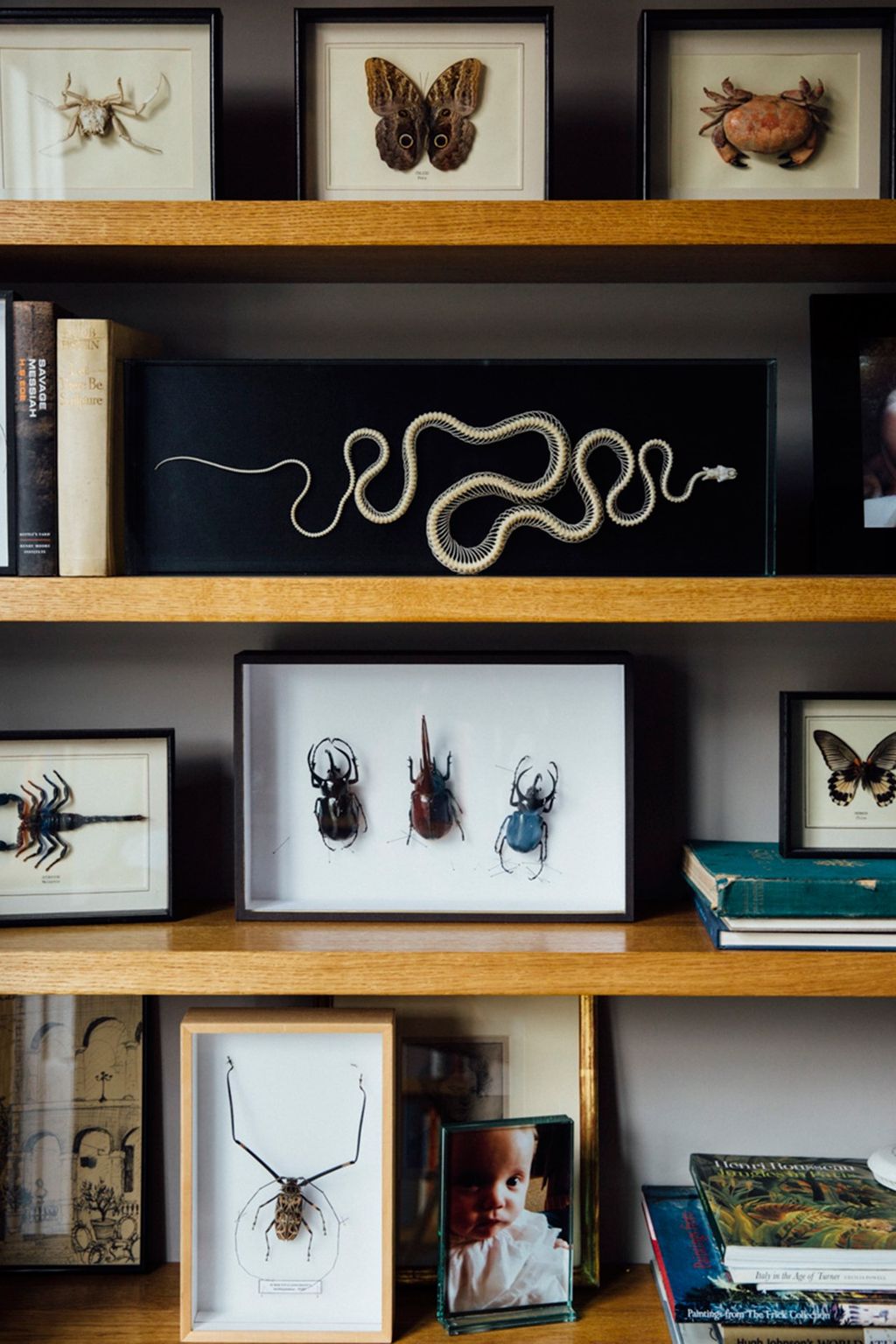
Ten years and nine shows later, she is Mrs Holland Hibbert, living in west London with two little girls, Daisy and Molly, surrounded by the couple's shared acquisitions. Furniture by father and son Chester and Toby Jones sits among Oceanic sculpture, contemporary drawings by Glenn Brown, period furniture and lighting by Serge Mouille. A shelf in the drawing room is crowded with glass boxes containing scorpions, tarantulas and a snake skeleton, all interspersed with photographs of the girls.
Every weekday, after Sarah has dropped off Daisy and Molly at school, she will race to the studio in Chelsea's Glebe Place to get back into the drawing she had to leave the previous evening. 'It is highly addictive and requires total absorption. Eight hours alone each day can be torture, but then there is that euphoric moment when something has worked. When it hasn't, you have to be tough on yourself and keep going.' Some days, she admits, she needs a break and goes to lunch at the Chelsea Arts Club with other artists.
Originally, Sarah worked with charcoal on brown paper: 'It was cheap and sold in large rolls, enabling compositions of unlimited scale.' Now she draws on handwoven calligraphy paper in graphite and ink from plants and fish; the brown ink is from birch, the purple from elderberries and the green from a plant called dyer's broom (Genista tinctoria), which is extracted by artists' material supplier Pip Seymour in Yorkshire. 'The sepia, made from cuttlefish, has a distinctive smell,' Sarah explains. 'Ink is a merciless medium - once it's on the paper it's there for good. But I love how it dries, often in uneven pools. Both the mistakes and the variables become part of the work.'
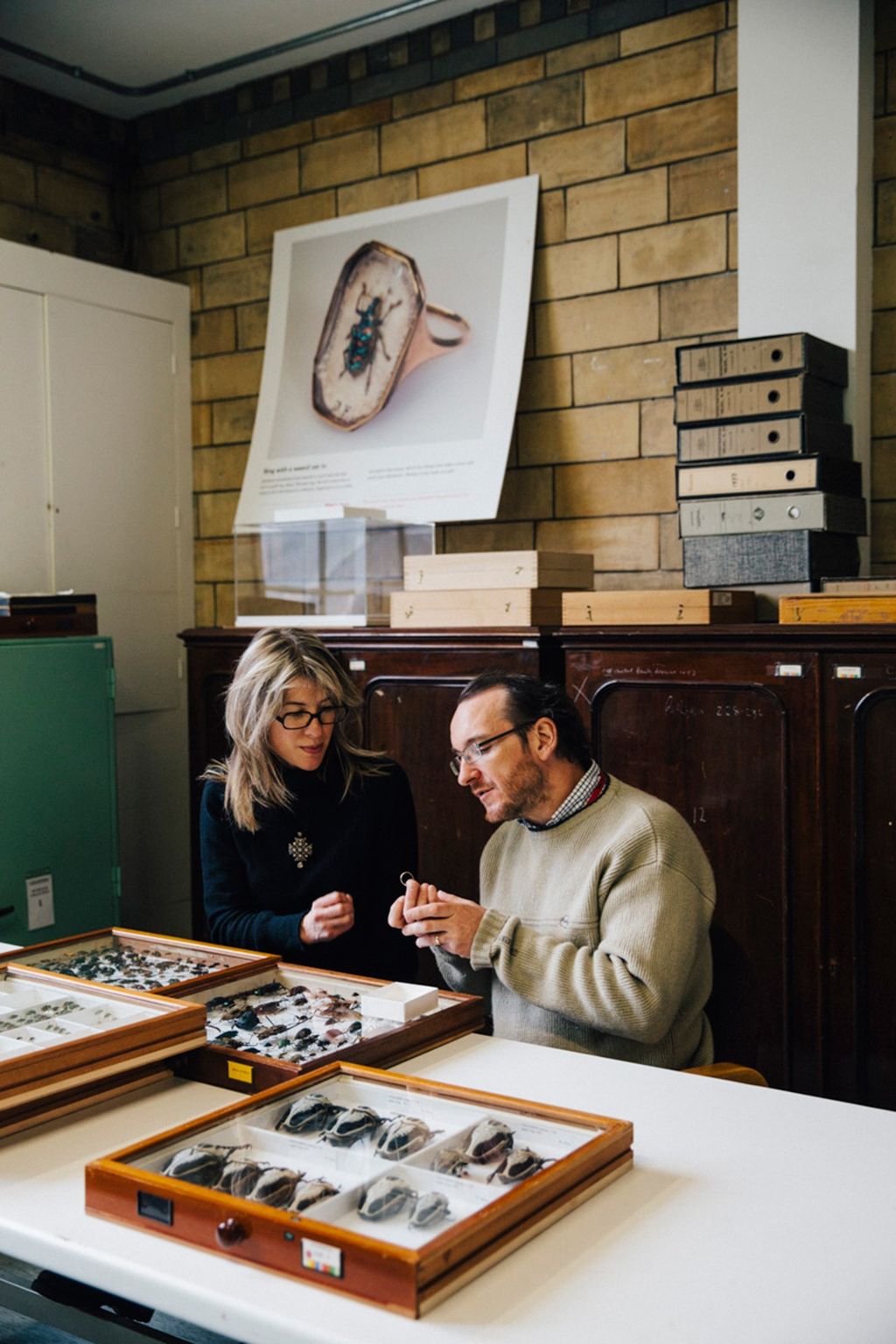
Field work could be a trip to Hackney to visit the Viktor Wynd Museum of Curiosities, Fine Art & Natural History. Closer to the studio, Sarah spends hours looking through the entomology archives in the Natural History Museum, where approximately 10 million beetles are ranked in drawers beneath the arches of Alfred Waterhouse's neo-romanesque building.
Weekends are spent at the family's house in Wiltshire. 'I don't really garden. I am afraid I'm not naturally a nurturing person, although having children has made me more so,' says Sarah. The weekends are her chance to focus exclusively on Daisy and Molly. 'I endeavour to teach them as much about the natural world as my father taught me.' A treat is to accompany James to auction-house sales in New York and smaller private views in European cities. Museums, markets and book or print fairs are added attractions. 'I seek out any shop selling taxidermy and unusual objects when I travel. In Paris, I always make a beeline to Deyrolle on rue du Bac. On rue de l'Université, I once bought a full human skeleton of "unknown provenance",' she says with a laugh. 'I realise how lucky I am. I feel that painting makes me a better mother and having children makes me a better painter'.
 Greg Funnell1/14
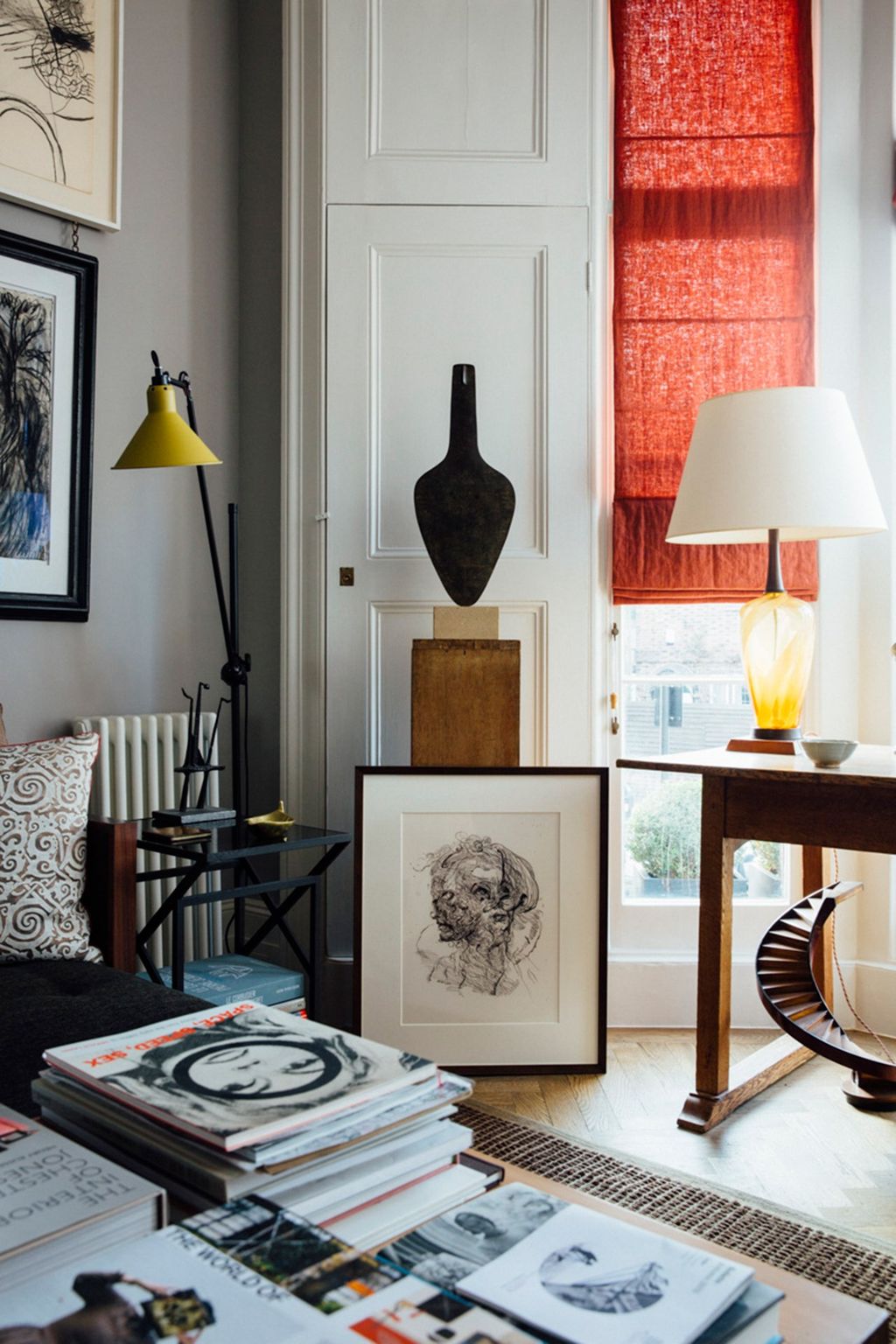
Art is everywhere in the living spaces of Sarah's home. Red blinds make the most of the light coming through the large bay windows in the sitting room.
 Greg Funnell2/14
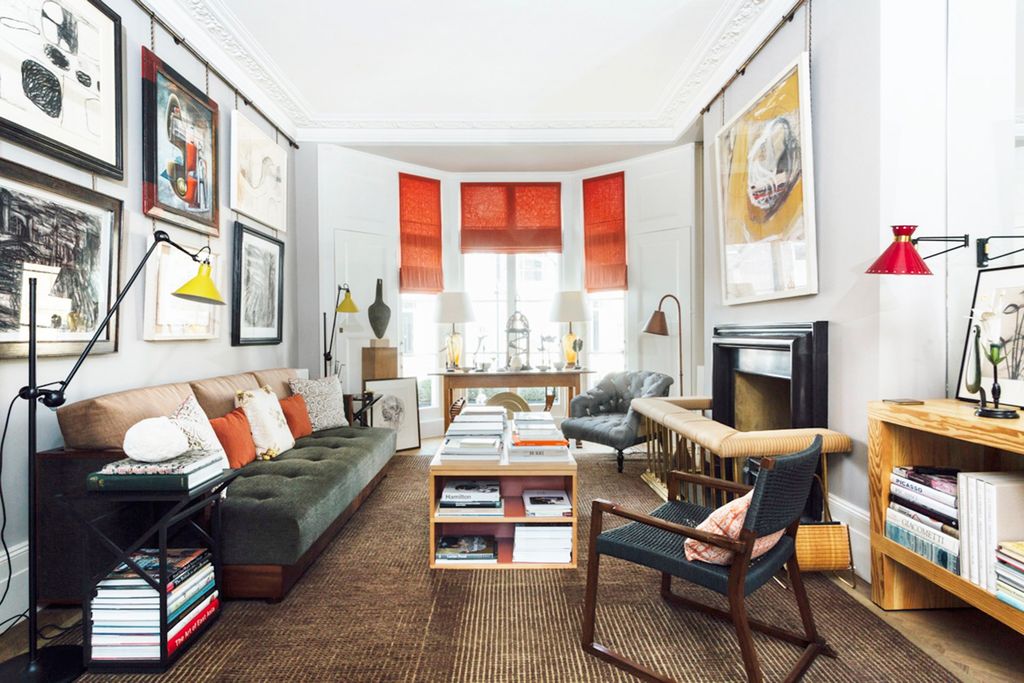
In the sitting room of Sarah and James's London house, abstract artwork brings sophistication to this comfortable space. Plenty of art books fill every nook and cranny of storage space.
 Greg Funnell3/14
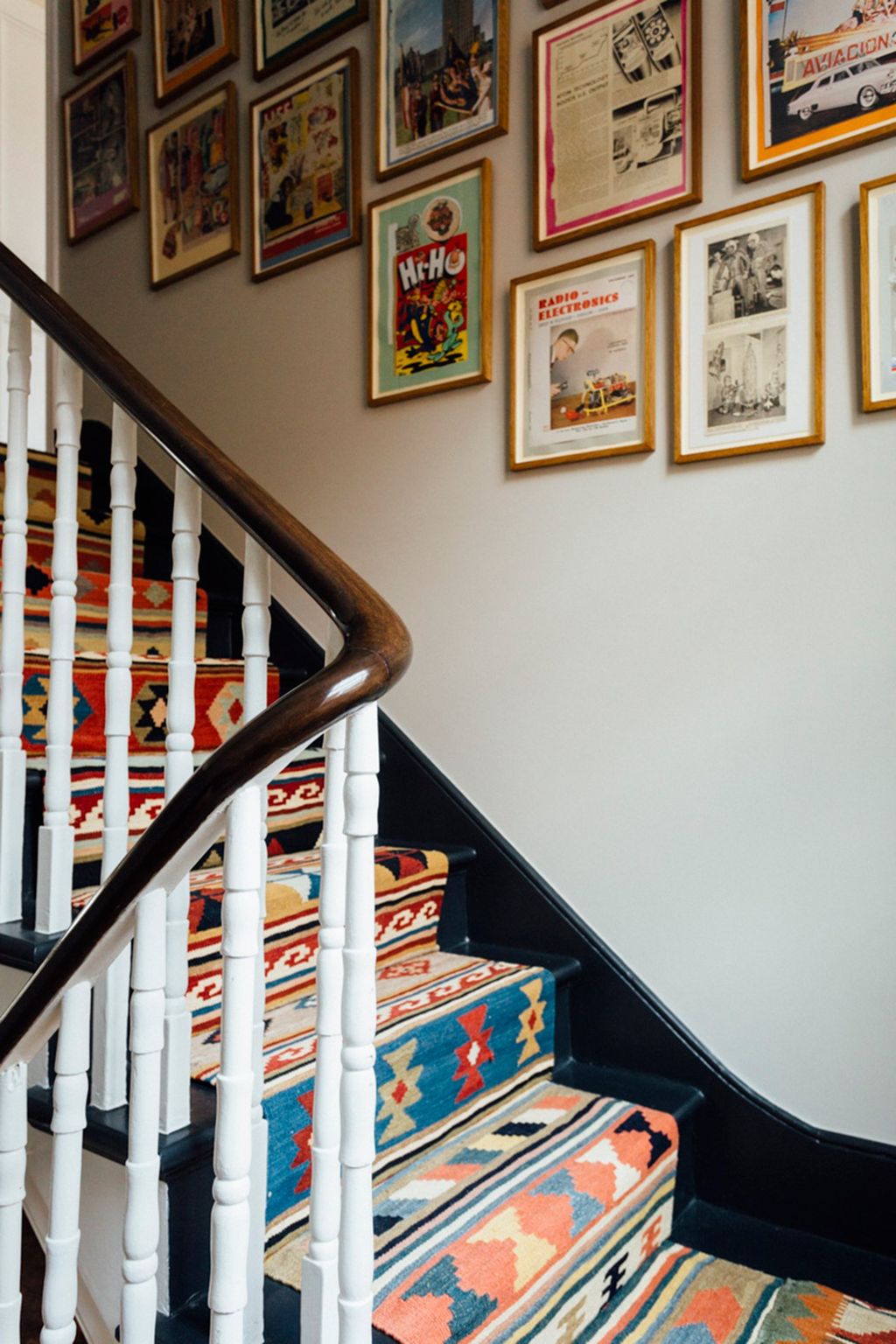
The staircase features a bright and colourful runner with an Aztec pattern. Multiple prints and photographs run the length of the staircase.
 Greg Funnell4/14
The bathroom is furnished with an Italian vellum screen from Rose Uniacke, a side table from James Graham-Stewart and a rug from Shahbaz Afridi, who provided all the rugs in the house.


 Greg Funnell5/14
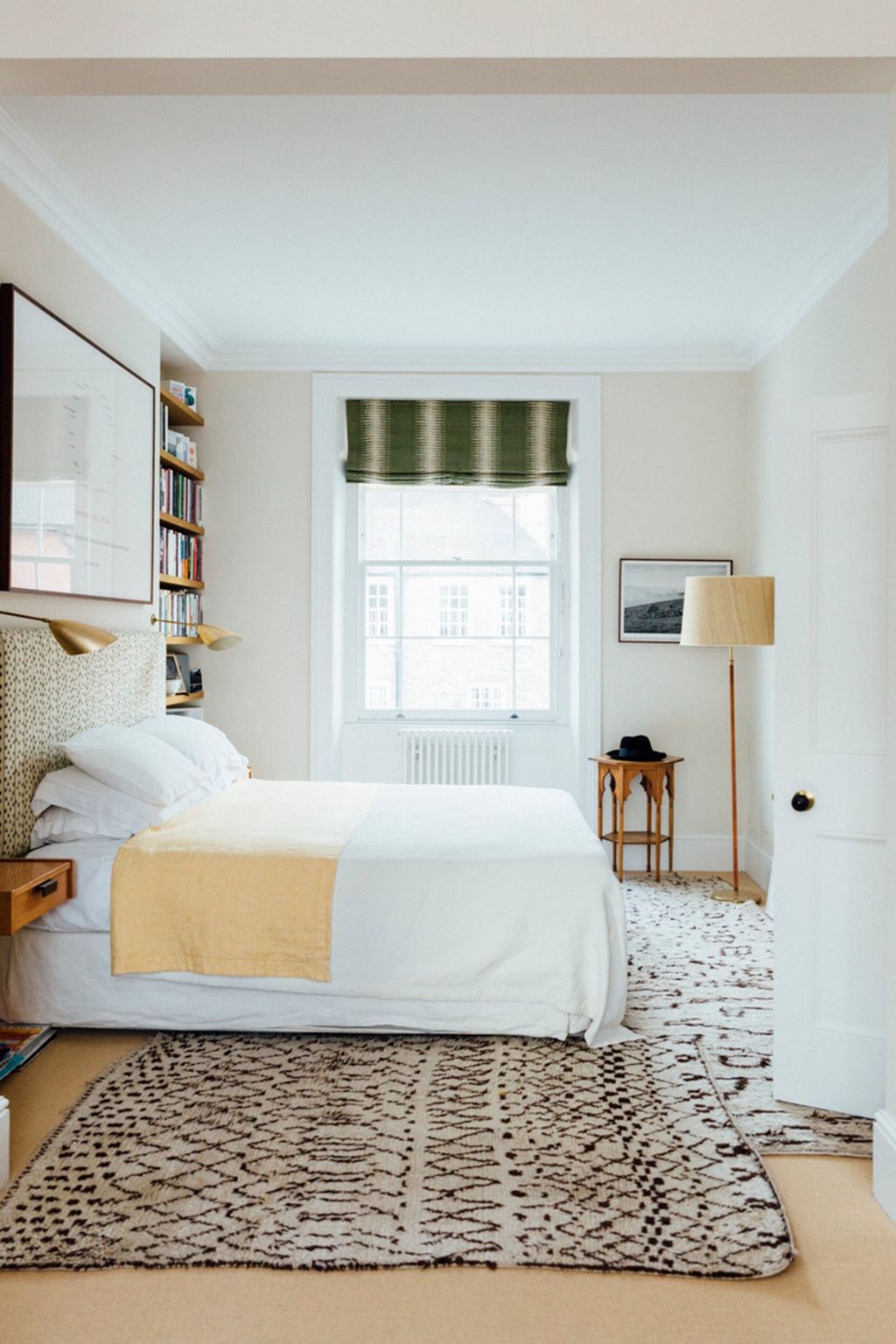
The bedroom is decorated with a neutral colour palette. The detailed rug adds interest, and the space is tied together with the carpet matching the throw on the bed.
 Greg Funnell6/14
A shelf in the drawing room is crowded with glass boxes containing scorpions, tarantulas and a snake skeleton, all interspersed with photographs of Sarah's daughters.
 Greg Funnell7/14
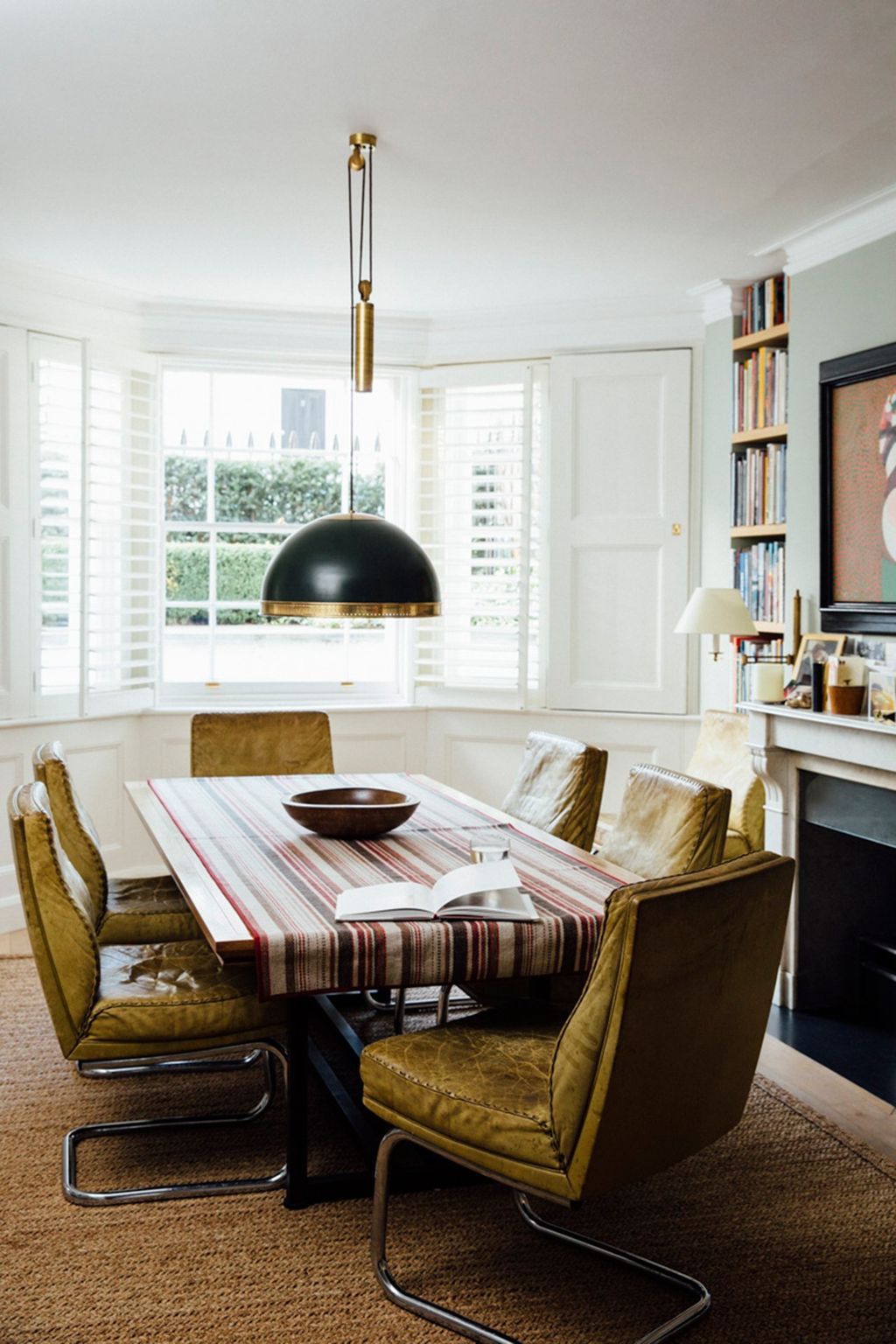
The dining chairs in Sarah's relaxed dining area are converted Fifties Miami car seats from Robert Kime. A pendant light hanging directly above an ornamental bowl creates a pleasing mirror effect.
 Greg Funnell8/14
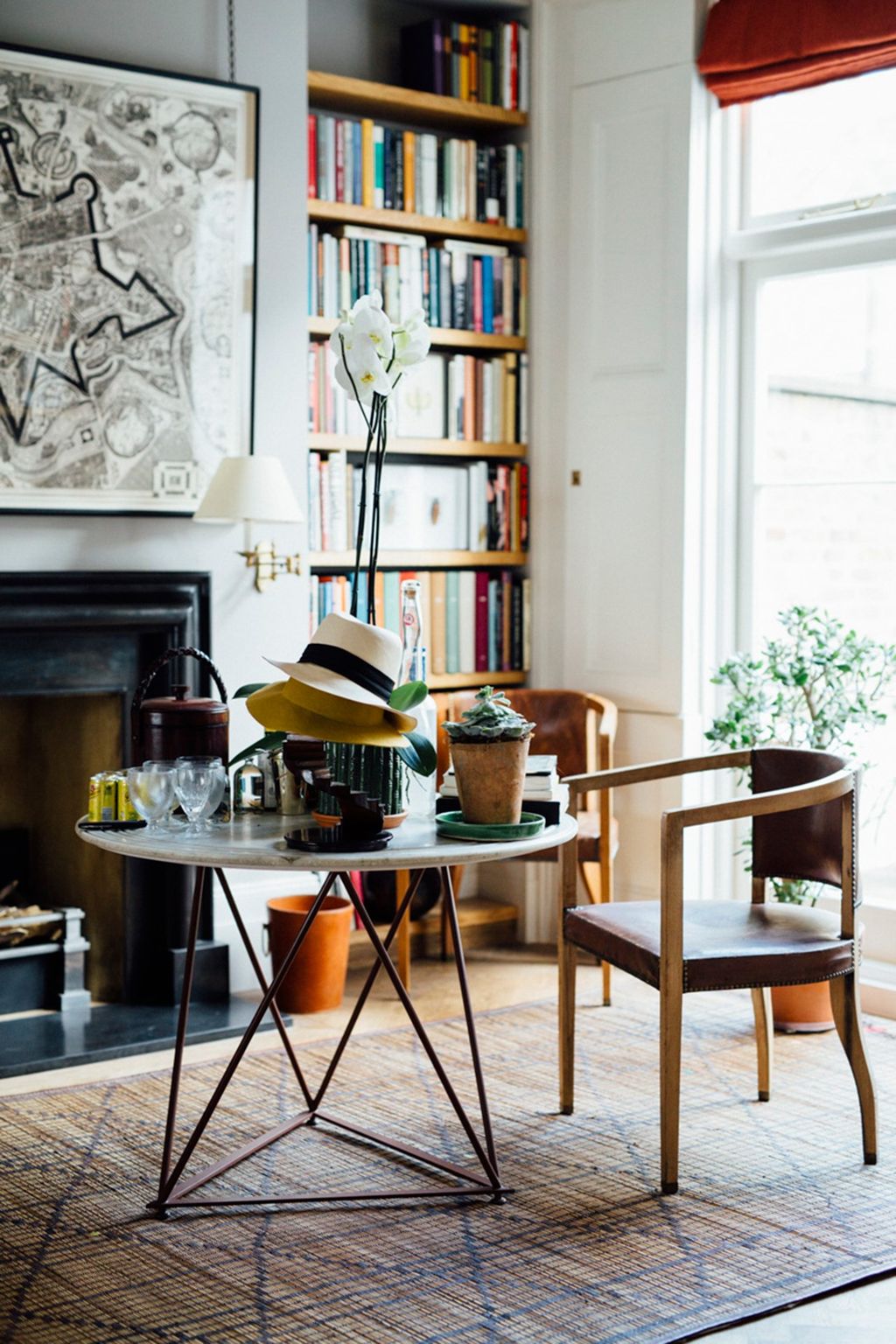
In the sitting area of Sarah's home, a marble tabletop from Howe sits on top of a base by Chester and Toby Jones, which mirrors the rug pattern.


 Greg Funnell9/14
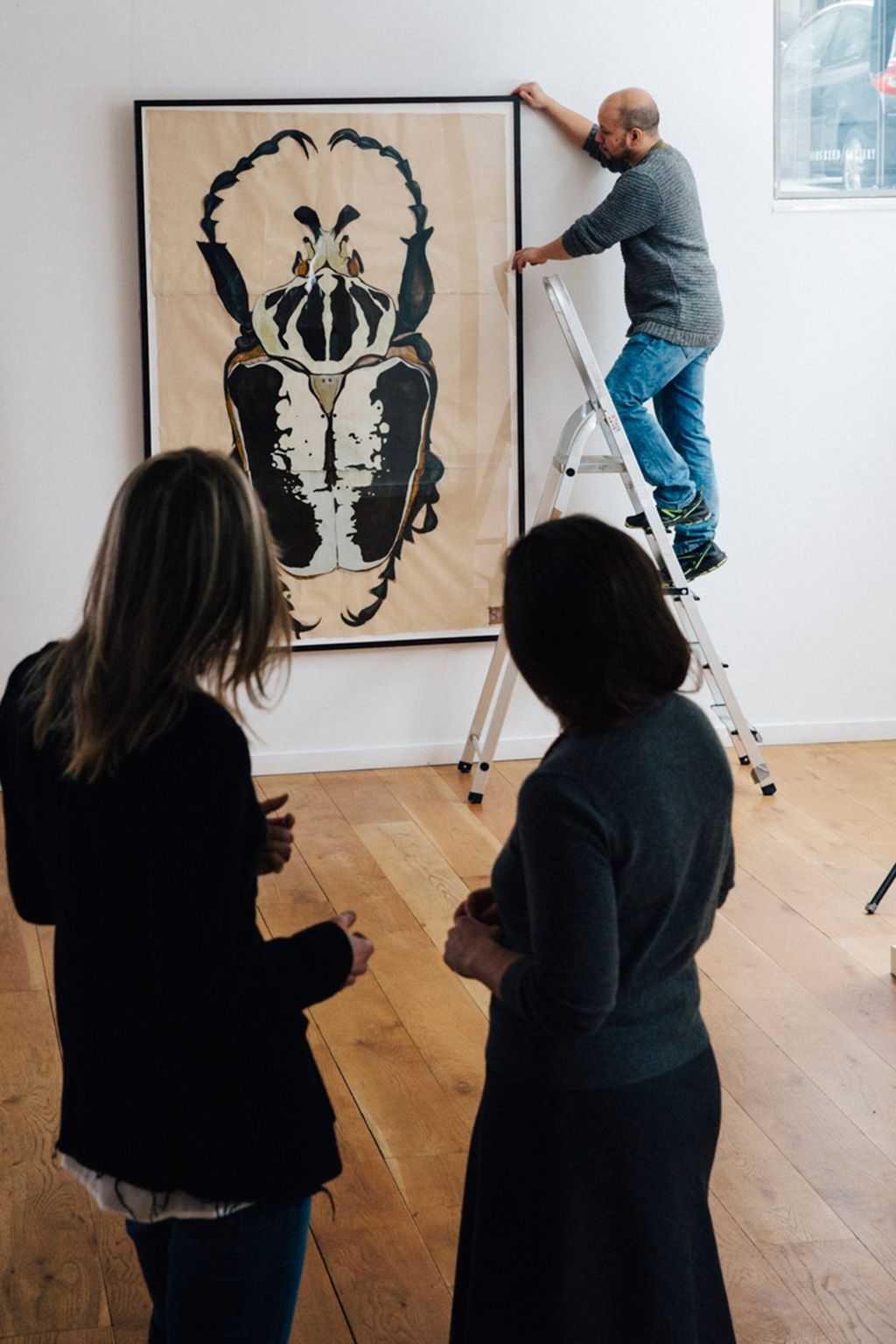
Sarah and her dealer, Lyndsey Ingram, oversee the hanging of Royal Goliath for her Aspen exhibition in 2015; the piece was inspired by three royal goliath beetles lent to her by the Natural History Museum.
 Greg Funnell10/14
Sarah often finds inspiration on her visits to the Natural History Museum during her breaks from painting. Sarah and Max Barclay, collections manager of coleoptera and hemiptera, look through the museum's entomology archives for new subjects for her paintings.
 Greg Funnell11/14
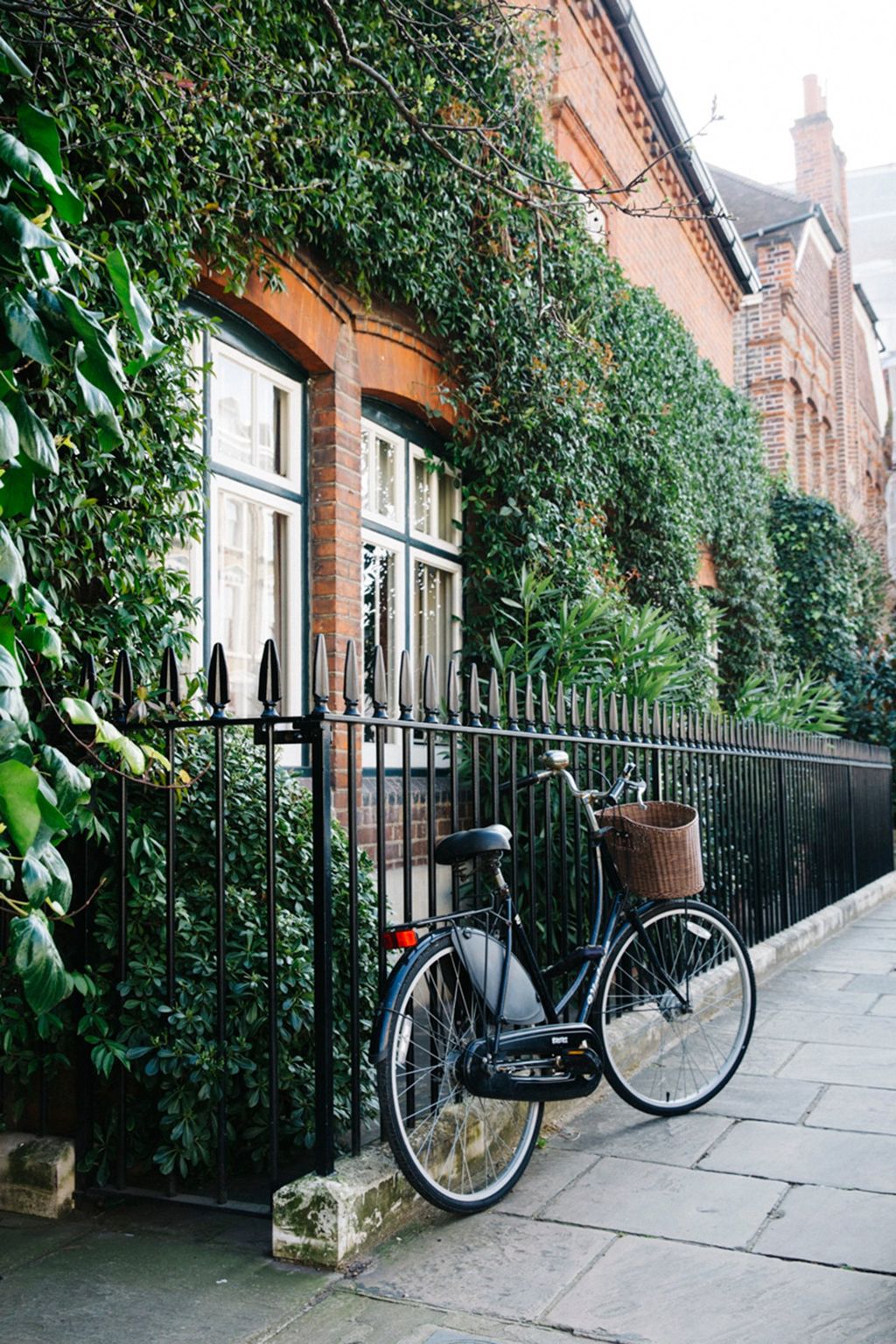
Sarah's bike parked outside her studio in Chelsea. Every weekday, after Sarah has dropped her children off at school, she will race to the studio to get back into the drawing she had to leave the previous evening. 'It is highly addictive and requires total absorption. Eight hours alone each day can be torture, but then there is that euphoric moment when something has worked. When it hasn't, you have to be tough on yourself and keep going.'
 Greg Funnell12/14
In her studio an Arts and Crafts Puginesque table displays her found objects: dried seed pods, fossils and animal skulls. A long dried amaryllis branch propped up against the turquoise-tiled chimneypiece seems almost triffidian.


 Greg Funnell13/14
The studio is filled with books on Georgia O'Keeffe, Albrecht Dürer and Shirley Sherwood from which Sarah draws inspiration. In this picture she is working on Orchis and Taraxacum*, pieces for her upcoming New York show which drew inspiration from eighteenth-century German papier mâché models of plants used to instruct botany students, which were lent to her by antique dealer Peter Petrou.*
 Greg Funnell14/14
Sarah in her nineteenth-century studio, looking at paintings for her upcoming exhibition. The space is furnished with an Arts and Crafts rug and table, the latter of which is home to Sarah's found objects. Sarah declares, 'it would upset me greatly if someone said my work was pretty'. If pretty is defined as fine and delicate, the adjective certainly does not apply. The works in her upcoming exhibition are nearly two metres wide and one metre high. They have a majestic, muscular quality, an almost abstract and surreal feel in their magnificence.


