
Sarah Price's idyllic Abergavenny garden, filled with her experiments in resilient and low-intervention planting
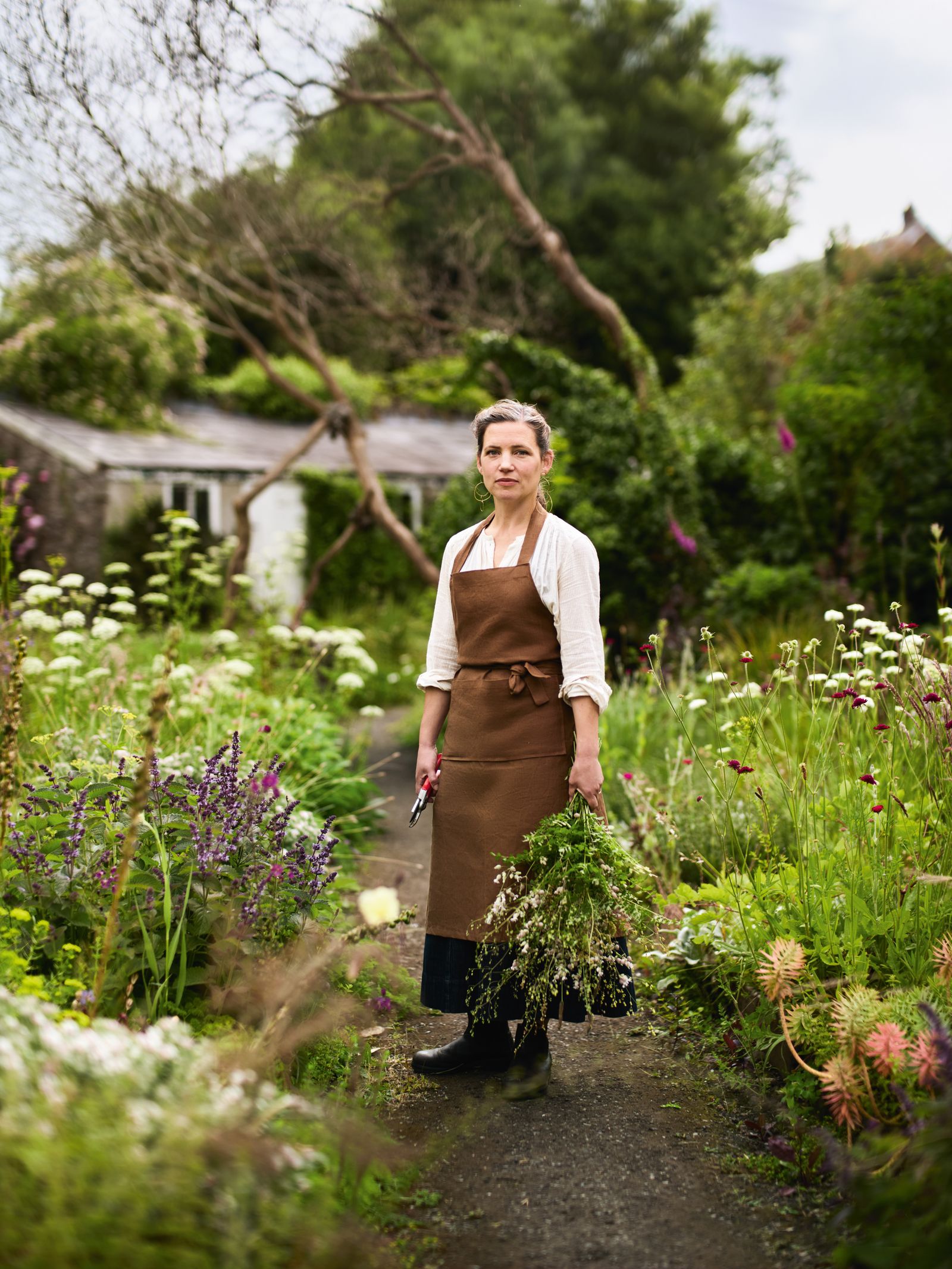
Visitors were queuing up at the gate last summer to see Sarah Price’s garden, when it opened for the first time as part of the National Garden Scheme. I, like everyone else, was intrigued to see what this famously discreet and unassuming designer had done, having first visited the garden in 2015, two years after she moved there from London. Situated on the outskirts of Abergavenny with views of the Blorenge mountain, the house had belonged to Sarah’s grandparents, so the garden had a certain character that she was keen to retain. For several years, she simply lived with it, creating a vibrant ornamental kitchen garden within its walls, and managing existing shrubs and trees in the wider garden by clipping and gently shaping them.
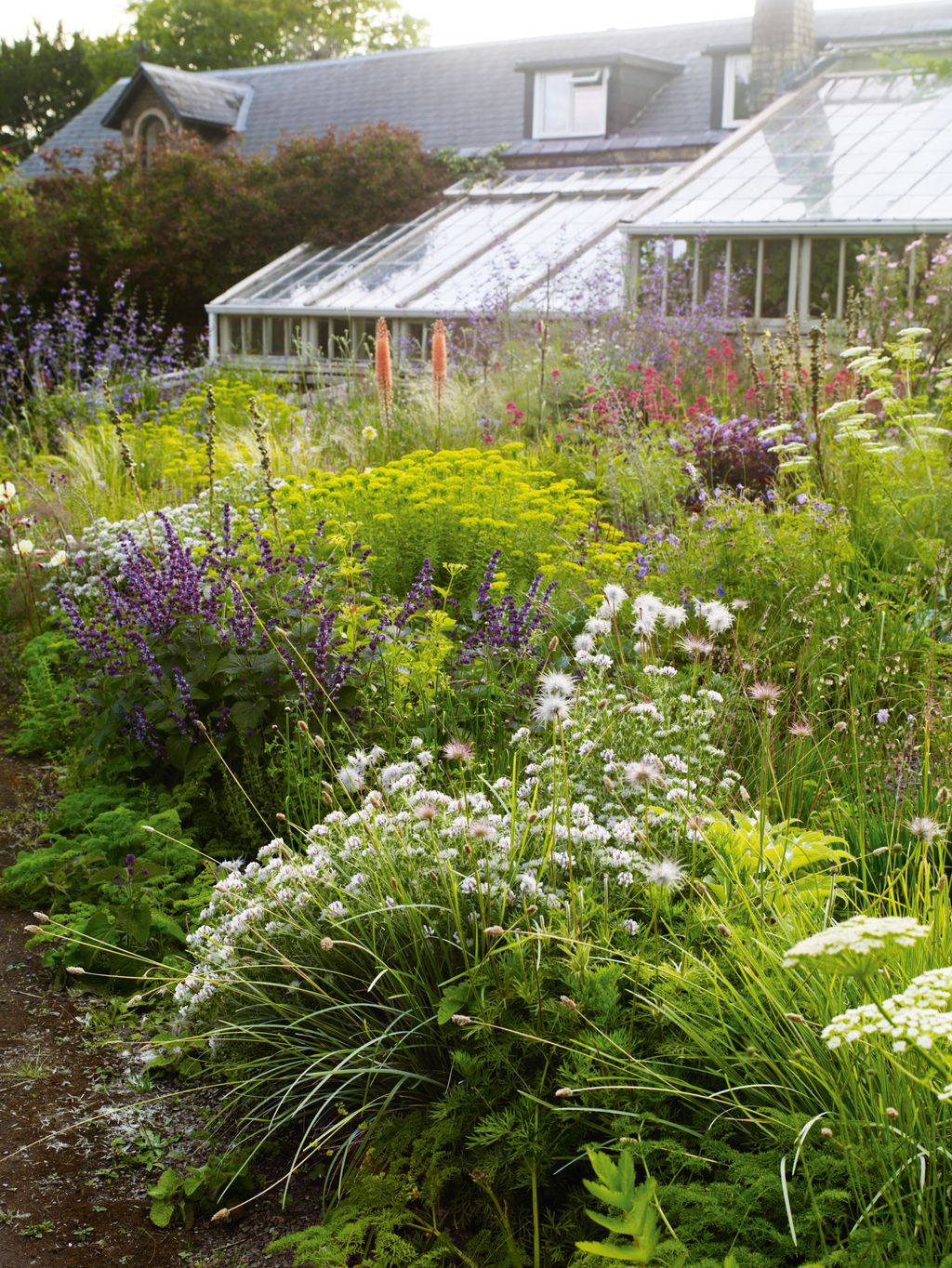
In the walled garden, Sarah wanted initially to recreate the ethos of Priona, an interesting and beautiful garden created by the late Dutch plantsman Henk Gerritsen in the Netherlands. There, nature and all its processes were embraced within a structured framework of hedges, brickwork and mown paths. But she found managing it in this way was too labour intensive: ‘It needed a constant gardening presence to stop it looking too wild.’ So, in 2016, she redesigned this area, adding a top layer of crushed rubble, gravel and sand to create a low-nutrient substrate in which drought-tolerant plants could thrive. The result is breathtaking – a remarkable, ever-changing work of art with a community of plants interacting in a fine-spun mix of subtle colours and textures, alive with insects and birds.
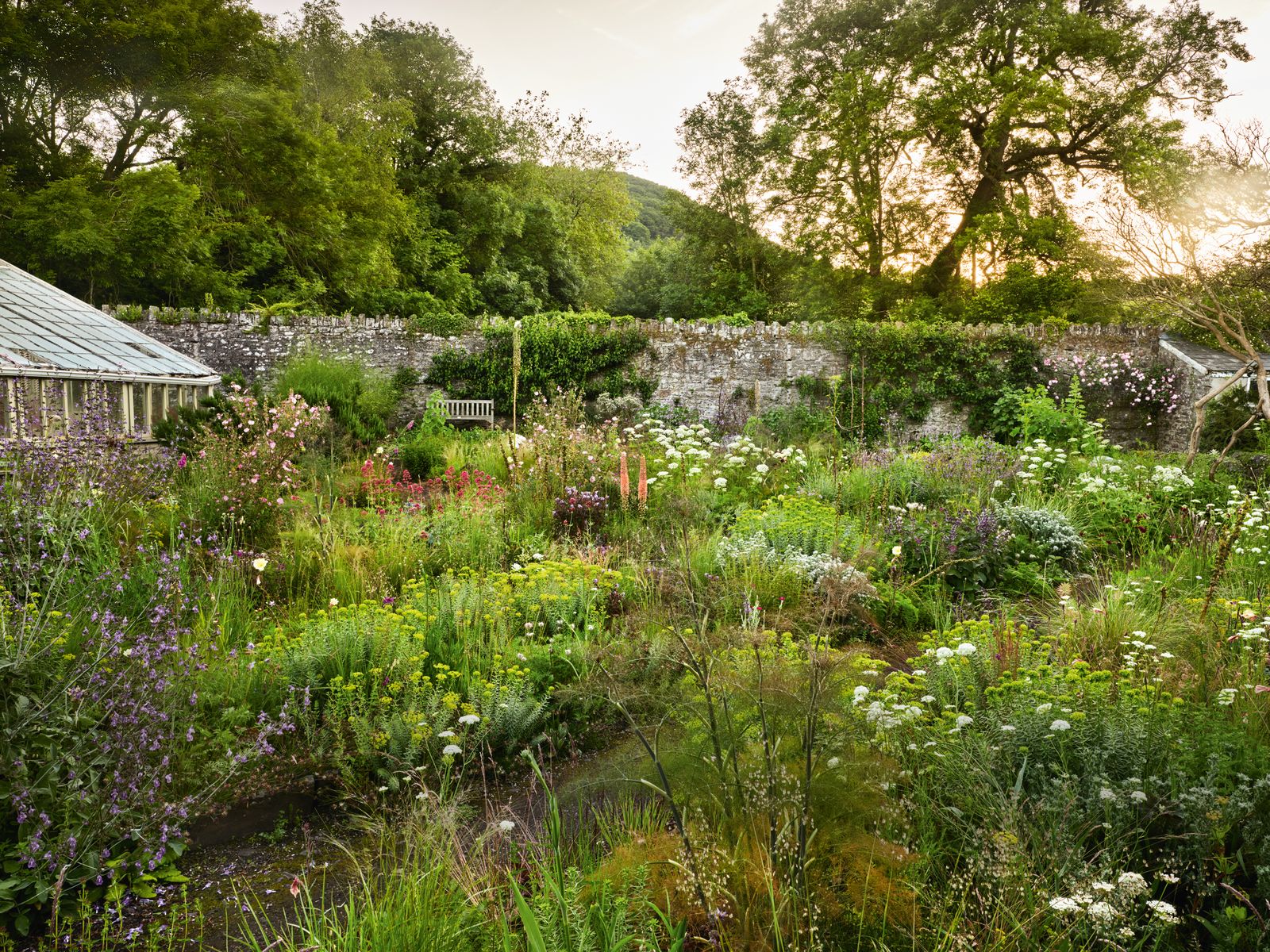
‘I wanted to experiment with plants that grow in really dry conditions,’ says Sarah. ‘I laid it out like a mosaic with different depths of recycled sand, gravel and rubble, and I observe which plants self seed where. Because of the lack of nutrients, you can create really complex plant communities.’ She has found that plants that grow lush and tall in normal or rich soil are shorter and more robust in these harsher conditions. Some flower for longer; others that might flop in a rich soil make compact, domed shapes. ‘Generally, the plants are better behaved,’ she observes. ‘Field scabious flowers all summer long here, and the hollyhocks are shorter and stockier and don’t have rust.’
Designed with the look of a wild perennial meadow, the walled garden is planted with both native wildflowers and Mediterranean species, anchored with a few core plants that are repeated across the garden to hold the scene together and create unity. Sea kale, Crambe maritima, is one of these key plants, happy to grow in the coarser rubble, while Euphorbia seguieriana subsp. niciciana has a similar presence, its lime-green flowers blooming through summer to form ribbons that link all the other plants together. Grasses of different textures, such as airy Oryzopsis miliacea and bottlebrush Pennisetum macrourum, as well as umbellifers like Ligusticum lucidum, fill the gaps and emphasise the meadowy feel.
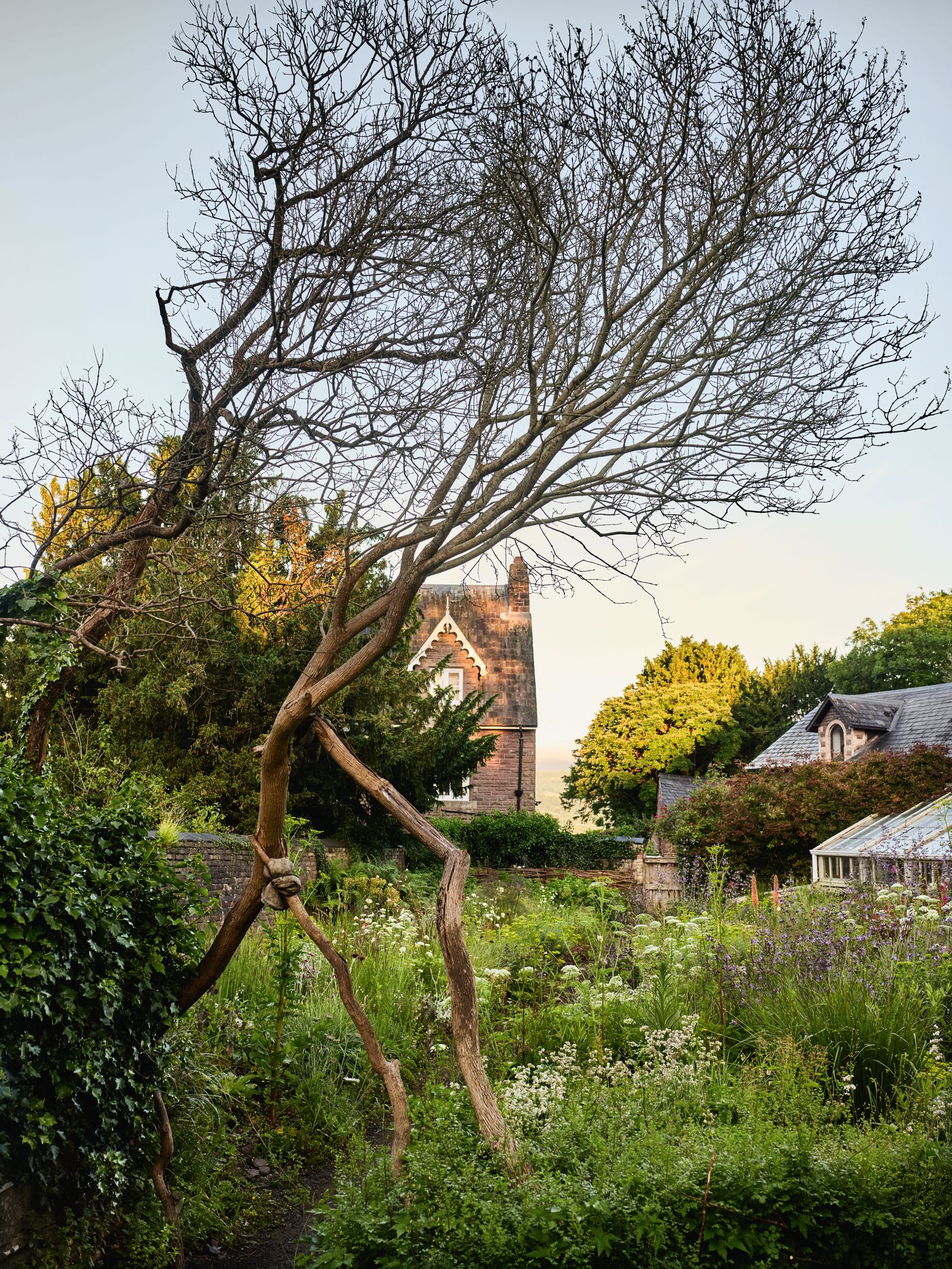
Then, through this fluid understorey comes an emergence of spires, including Digitalis ferruginea, Asphodelus lutea and Verbascum phoeniceum ‘Violetta’ – as well as striking orange Eremurus ‘Cleopatra’. Self-seeding species are part of the ephemeral nature of the composition, changing year by year and adding an unpredictability that makes each season exciting.
Although lower maintenance than it used to be, this is not the type of garden that can be left to its own devices: constant observation and editing is needed to make sure the balance of plants retains its intricacy. For this, Sarah has the help of Jacky Mills and Ian Mannall, both experienced horticulturists who understand this nuanced type of gardening. Watering is no longer on the agenda. ‘Many herbaceous borders look sad in a drought, but this garden looks amazing with no irrigation.’
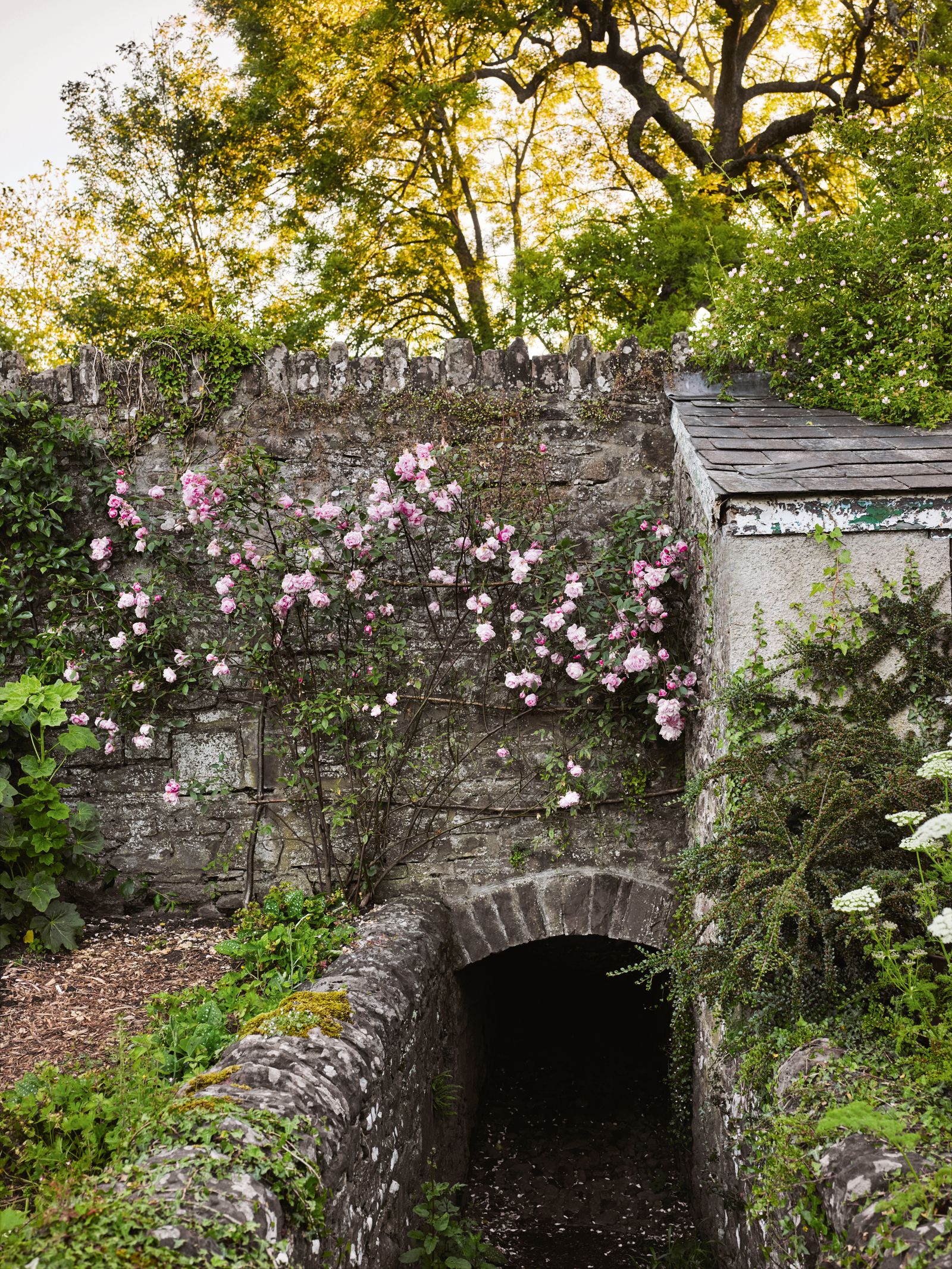
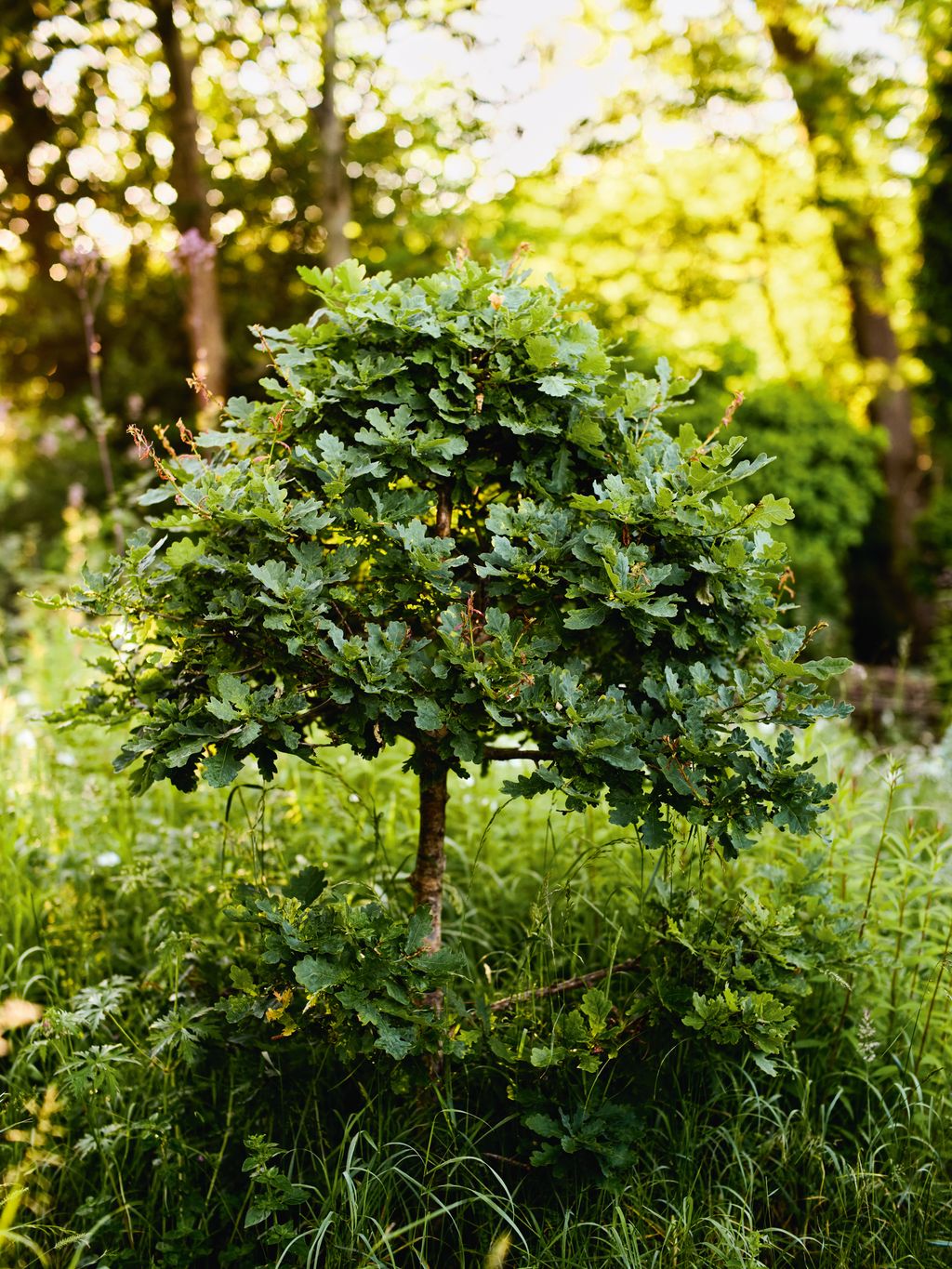
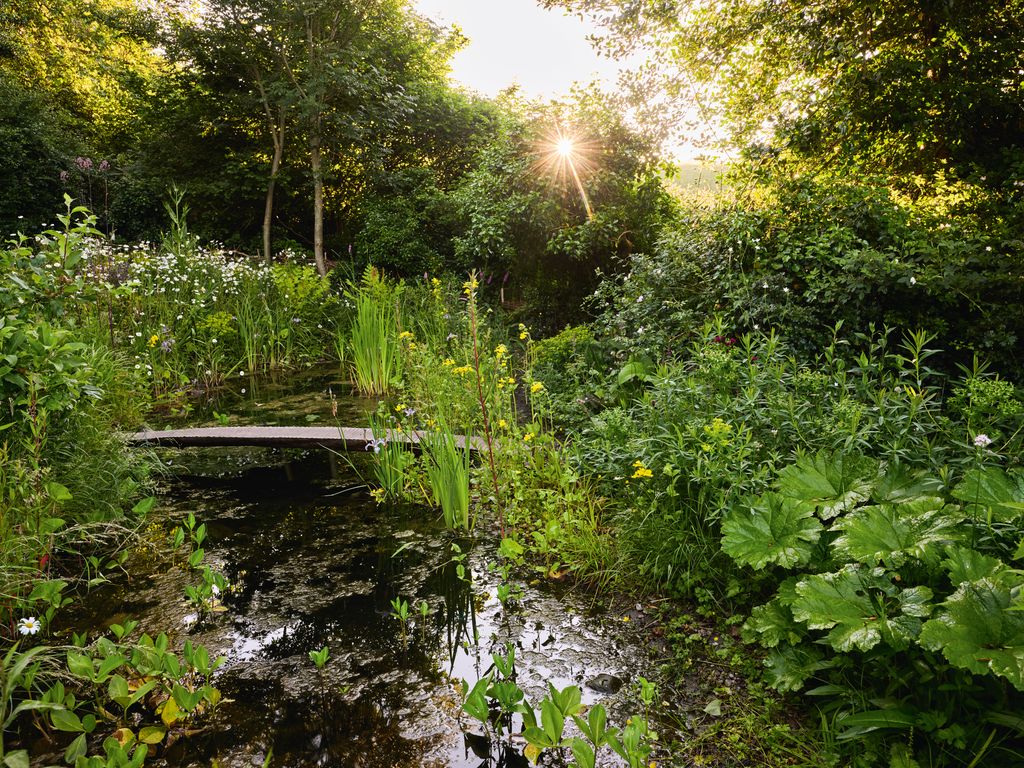
Now that the walled garden is less time consuming, Sarah can give more attention to other areas. She has been enjoying developing what she refers to as the secret garden, accessed via a tunnel that runs under the lane next to her house. Using top-soil removed from the walled garden, she levelled the sloping site to make a new pond. She is gently shaping and adding to the wild flora here to make a secluded haven to share with the wildlife that have made the garden their home. ‘It felt wrong to disturb the existing ecosystem, so I’ve been planting perennials into the sward and cloud-pruning self-seeded saplings into interesting shapes. I work in quite an instinctive way,’ she says.
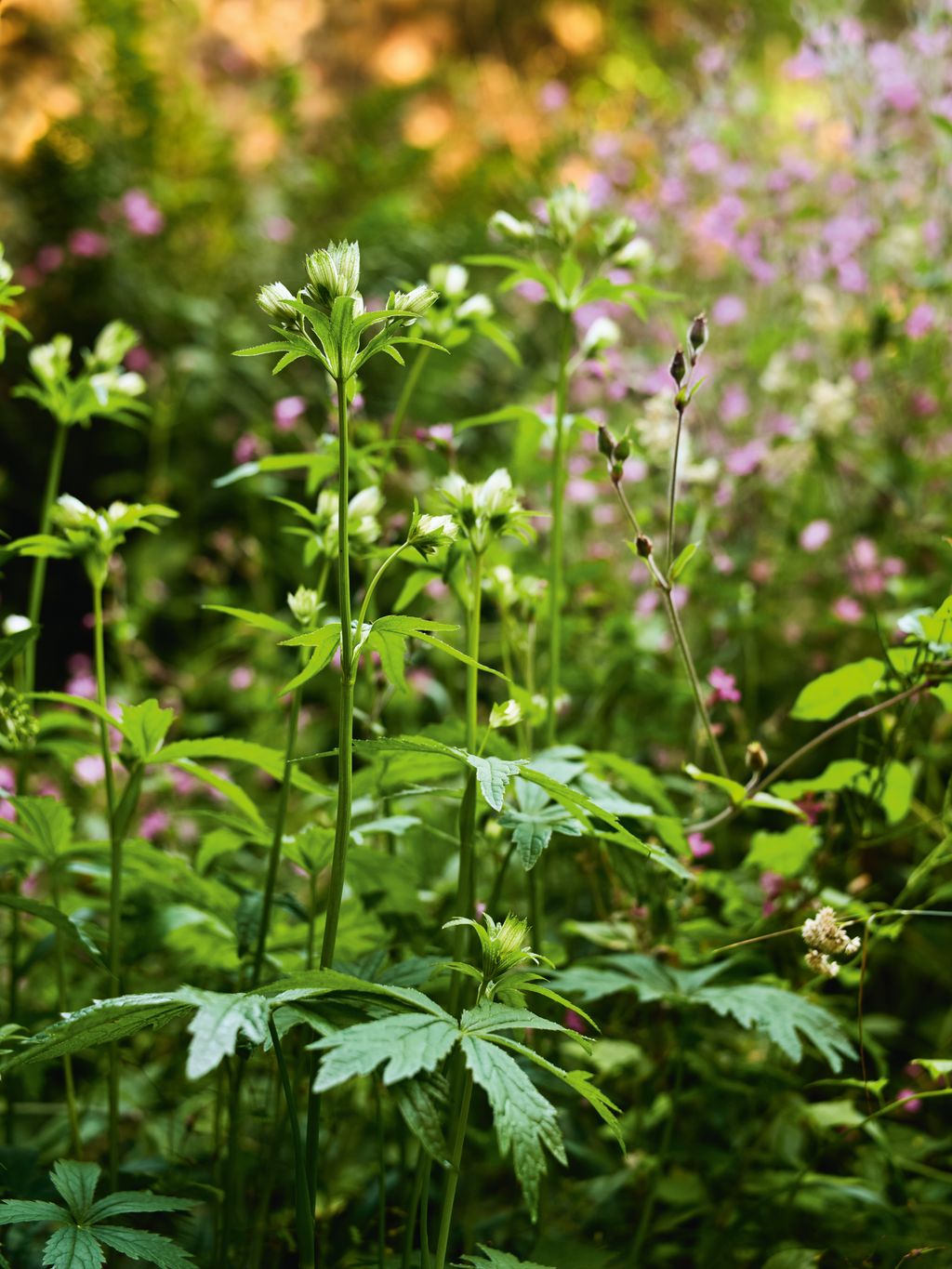
Like the no-dig method for vegetables, this low-intervention way of gardening is all about minimum soil disturbance. Planted into the long grass, perennials such as thalictrums, asters and wild peonies grow tougher and shorter than in a border. Emerging from the tunnel into the light feels like walking into a different world, the luminous pond reflecting the sky and mountain to give this enclosed space a dreamlike perspective. This is an intriguing garden that is all about nature leading the way; about subtle interventions rather than grand gestures; about gardening sustainably and sensitively rather than using precious resources. It could so easily revert to a blur of wilderness, but Sarah’s artistry prevents this from happening. ‘I’m always trying to work out ways to frame this style of planting, whether it’s the siting of a bench or piece of sculpture, or the creation of a sculptural hedge,’ she explains. ‘It requires areas of tidiness to offset the wildness.’
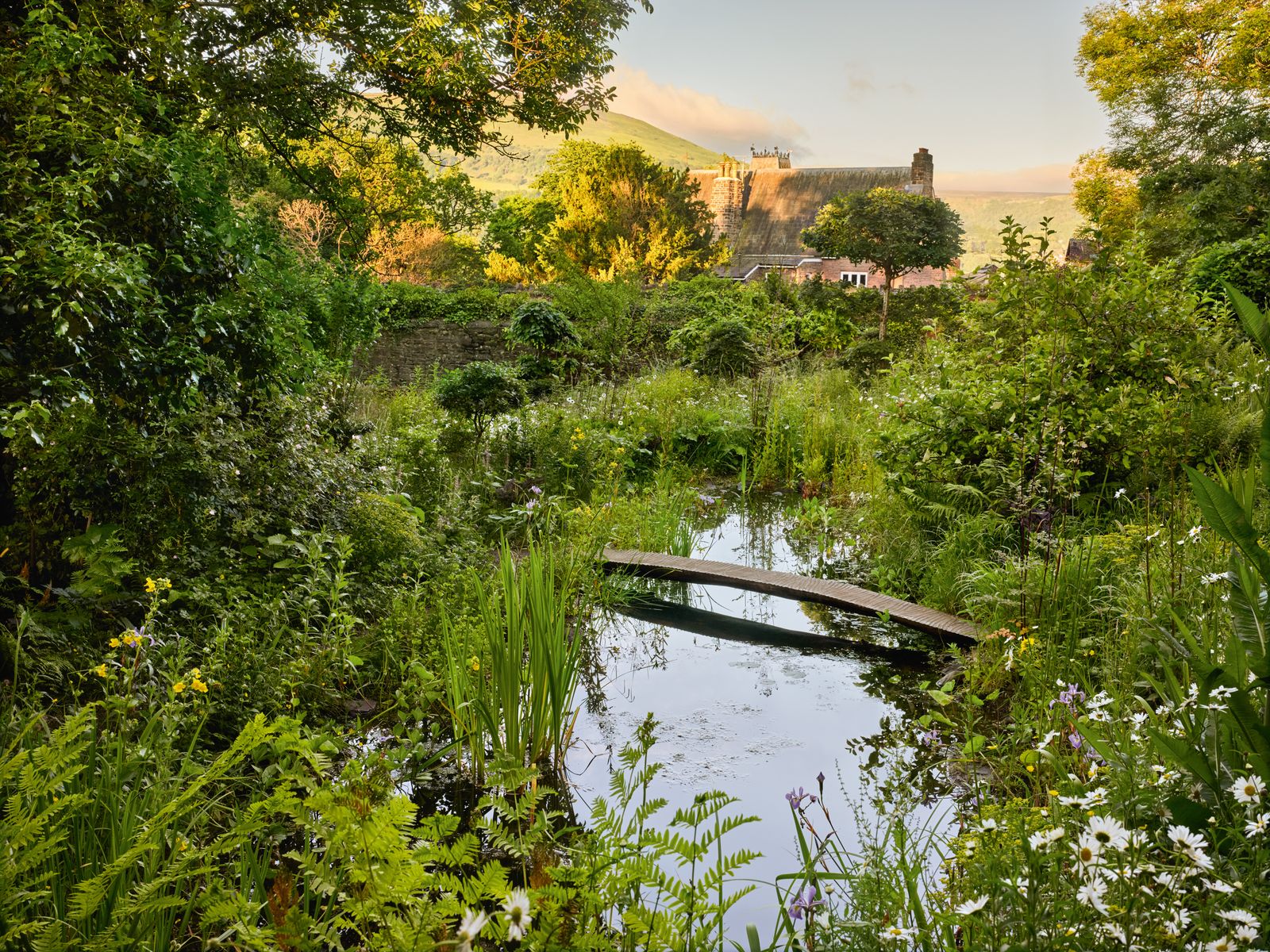
Modulating through the seasons, the planting in both areas brings different periods of intensity and quietness. ‘It’s the type of planting that you have to sit down and observe, and then the intricacies can be seen,’ says Sarah. ‘Gardening like this is all about being open to the opportunities that nature offers’
sarahpricelandscapes.com | This garden is featured in ‘Pastoral Gardens’ (Montgomery Press, £55).
 Andrew Montgomery1/4
The pale flowers of hairy canary clover (Lotus hirsutus) mingle with fluffy seed heads of Pulsatilla vulgaris, set off by purple Salvia verticillata and lime green Euphorbia seguieriana subsp. niciciana
 Andrew Montgomery2/4
An oak sapling is one of several self-seeded trees that Sarah is gently pruning into sculptural shapes in this area.
 Andrew Montgomery3/4
Sarah is experimenting by planting tough perennials such as this white astrantia, along with cranesbill, thalictrum and actaea into the meadowgrass round the pond in the secret garden.
 Andrew Montgomery4/4
A simple bridge made by local landscape artist Mick Petts from a nearby felled wych elm spans the water.


