
Spring bulbs to plant for a pretty smattering of colour

One of the most rewarding ways to use bulbs is to naturalise them in drifts under trees, in meadows and in woodlands. Naturalising means introducing a plant to an area where it is not native and where, given the right conditions, it will spread to create the illusion that it has always been there, appearing to grow as it would in the wild. Over time, the results can be spectacular but, as with all garden projects, you have to choose the right bulbs for the right place. Perhaps the most obvious and easiest bulb to naturalise in grass is the daffodil, but as I will be covering narcissus in the May issue, we focus here on a different range of spring bulbs, which – if you plan well – can take you through the season from snowdrops to camassias.
The key to creating these schemes is to keep them looking as natural as possible, in drifts rather than blocks, mimicking the patterns of nature. Use either subtle sweeps of a single species, such as Crocus tommasinianus, or create a jewelled meadow effect with miniature bulbs scattered randomly around an area of short grass. For this, you can use a mixture of bulbs like scillas, aconites, miniature narcissus and tulips, such as T. humilis or T. sprengeri, and perhaps some lesser-known ones such as Ipheion uniflorum and Ornithogalum nutans. A member of the allium family, ipheion has sweet star-shaped blooms that look rather delicate, but it is actually pretty tough and clumps up well in grass. Ornithogalum is similarly robust and easy-going, with greeny-white striped flowers.
Muscari are especially useful for areas where other things may not grow. They make very few demands and the most common species, M. armeniacum, will thrive almost anywhere – in shallow soil, around tree roots or in the deep shade of a large shrub. In fact, it spreads so readily that it is sometimes accused of being invasive. The tastefully pale ‘Valerie Finnis’ or ice-blue ‘Baby’s Breath’ may be easier to keep under control and both have neater, less tatty leaves than M. armeniacum. ‘Blue Spike’ is particularly good for growing in grass, as its large flowers make more of an impact. Even taller is the unusual Bellevalia paradoxa (also known as Muscari paradoxa), which has distinctive two-tone flowers: almost turquoise at the top before they have fully opened and purple as they open from the bottom. For scent, you could try tracking down the rare musk hyacinth, Muscari muscarimi, which has ghostly white blooms and the most delicious sweet perfume, or the fragrant bright yellow M. macrocarpum.
MAY WE SUGGEST: Space-saving ideas for small gardens
The Holy Grail of many a gardener is a meadow full of nodding snake’s head fritillaries (Fritillaria meleagris), but they can be tricky to naturalise. I always think of the fritillaries at Magdalen College, Oxford, one of the only remaining truly wild colonies in Britain, where they grow in a damp water meadow next to the River Cherwell. This is the kind of landscape they like to inhabit. Rather than planting bulbs directly into the ground in autumn, try starting them off in small pots – three or five bulbs to a 10cm pot – and then planting them out in a clump in early spring, just as the leaves start to show above the compost. You could also try Fritillaria uva-vulpis in grass, in similar conditions to F. meleagris. Like the snake’s head fritillary, it is not showy, but it is charming nonetheless, with small nodding flowers that are maroon-brown with mustard-yellow tips.
At Pettifers garden in Oxfordshire, I have seen fritillaries mixing happily with the blue windflower Anemone blanda, fringed by swathes of narcissus. Hailing from the eastern Mediterranean, windflowers come in shades of white, blue and pink, and will flourish in short grass in a good humus-rich soil. Our native wood anemone, A. nemorosa, is suitable for more shady areas, with delicate, six-petalled flowers in creamy whites and pale pinks. If you are after the wild look, this is the plant to naturalise in a woodland glade, where you can allow it to wander around the base of trees. Discovered in 1870 at the Oxford Botanic Garden, ‘Robinsoniana’ is one of the loveliest cultivars, with large blooms in palest lavender-blue. Alongside wood anemones, you could plant clumps of erythroniums. Try E. californicum ‘White Beauty’, which is one of the easiest and most likely to spread, or the yellow E. ‘Pagoda’.
How to cultivate spring bulbs
When and how to plant depends on the type of bulb or tuber. Spring-flowering plants that grow from dry bulbs, such as crocus, scilla, tulips, narcissus and muscari, can be planted in the traditional way in autumn. For larger bulbs, it is best to use a long-handled bulb planter. For smaller bulbs, you can use either a sharp, narrow trowel, or a metal pole or dibber to make planting holes. If you cannot face hours on your hands and knees planting individual bulbs, you can follow the Kew Gardens method of lifting squares of turf, planting underneath and then firming the turf back down on top. The general rule is to plant the bulbs at a depth of twice their height and, although it is not absolutely crucial, you should try to plant them the right way up, with the shoot end uppermost.
Some plants, such as erythroniums, do not grow well if the bulb has been allowed to dry out, so they are best bought in pots to be planted out in late spring or summer. Others, such as Anemone blanda, have corms that should be soaked overnight before planting, while Anemone nemorosa grows from tiny stick-like tubers that should be planted flat (rather than vertically) and covered with 5-7cm of soil.
The final thing to try to remember when naturalising bulbs is to keep everything as beautifully random as possible. Someone once told me to throw handfuls of bulbs up in the air and plant them where they land, but the main point is not to overthink things. After flowering, it is important not to cut any bulb back or mow too early, as the fading foliage is needed to feed back nutrients into the plant, and each plant requires time to ripen and produce seed. If you are able to leave the plants to die back naturally like this, you will see how they increase incrementally year by year.
 Sabina Rüber1/11
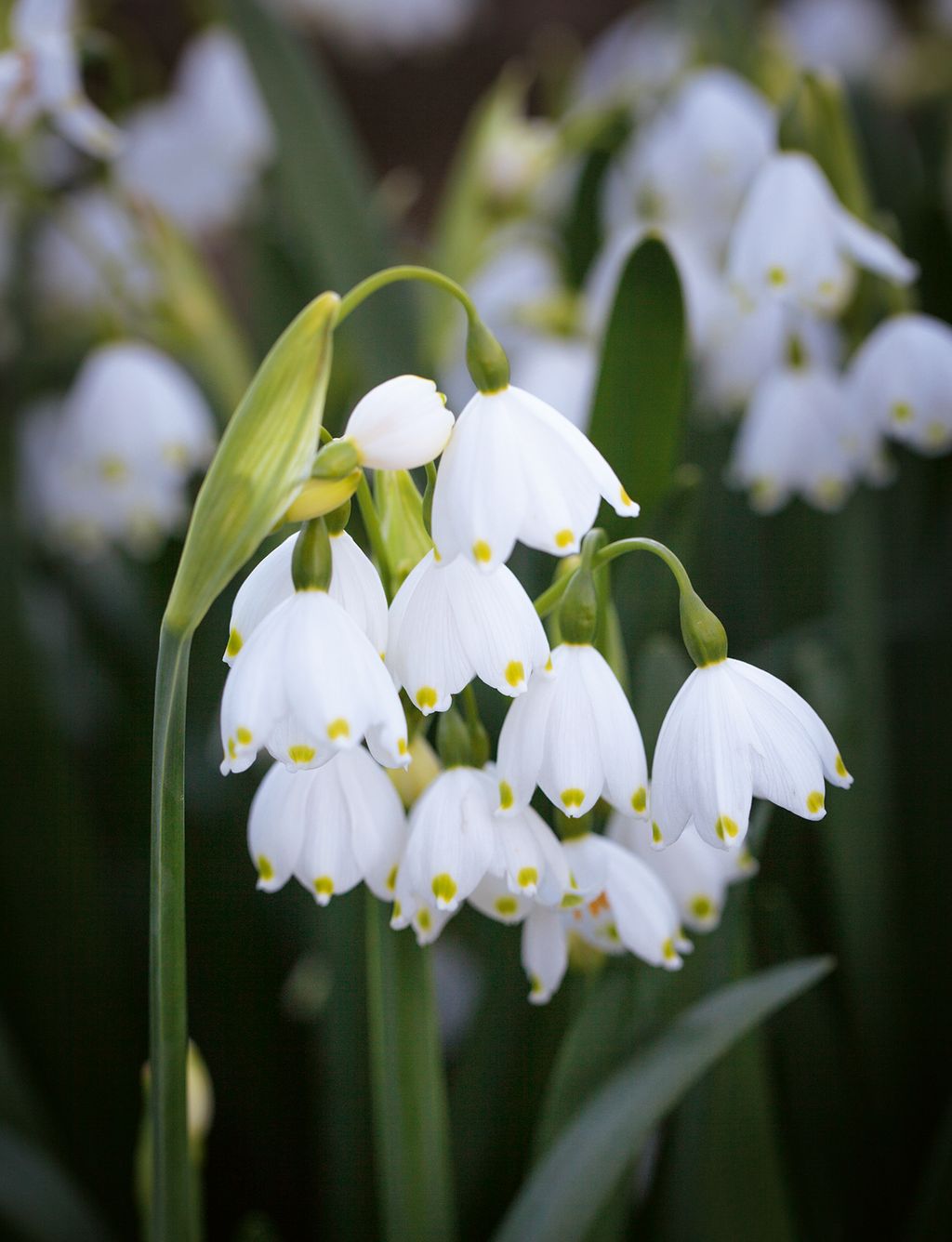
Leucojum aestivum‘Gravetye Giant’ blooms from March to April.
 Sabina Rüber2/11
The two-tone flowers of grape hyacinth Bellevalia paradoxa
 Sabina Rüber3/11
Standard and white-flowered versions of Fritillaria meleagris.
 Sabina Rüber4/11
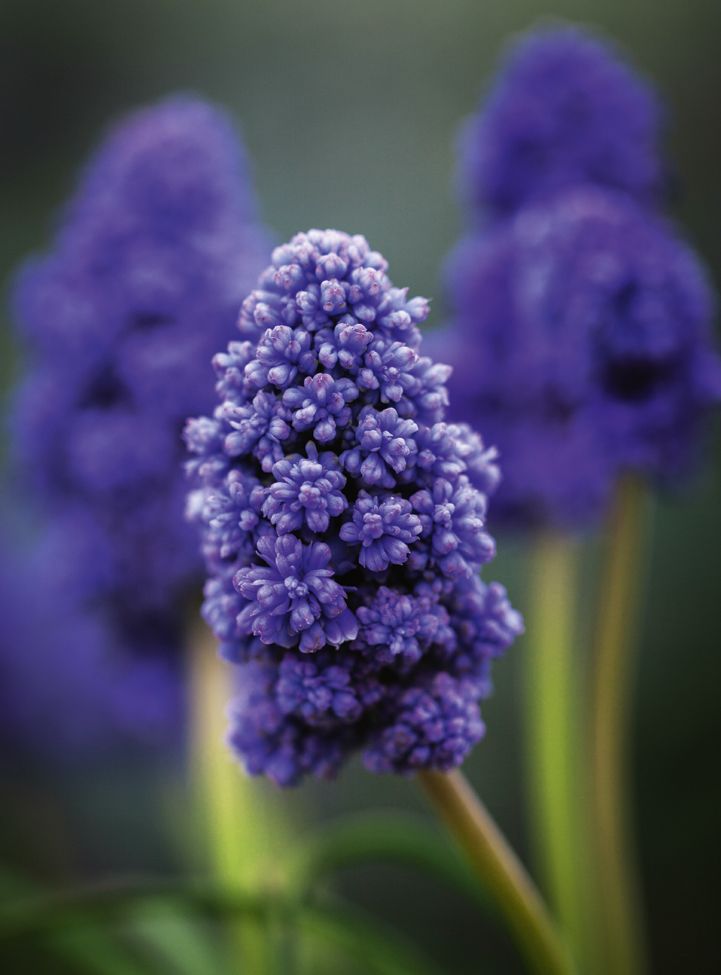
Grape hyacinth Muscari armeniacum ‘Blue Spike’.


 Sabina Rüber5/11
Anemone nemorosa, the native wood anemone, will thrive in more shady areas.
 Sabina Rüber6/11
Spring starflower Ipheion uniflorum.
 Sabina Rüber7/11
The nodding bell-shaped heads of Fritillaria meleagris among white and blue windflowers – Anemone blanda.
 Sabina Rüber8/11
The pale ice-blue Muscari ‘Baby’s Breath’.


 Sabina Rüber9/11
Fritillaria uva-vulpis has delicate maroon-brown flowers with mustard yellow tips.
 Sabina Rüber10/11
The reflexed petals of Erythronium californicum ‘White Beauty’.
 Sabina Rüber11/11
Drooping star of Bethlehem Ornithogalum nutans.


