
An artist's Bayswater house, which shares the same measured approach as her art

There’s a composed serenity to the Bayswater terrace that the artist Tarka Kings has been living in with her husband, singer-songwriter David Ogilvy, for almost twenty-five years. Those who know Tarka’s intricate drawings that seek to ‘capture the beauty and the quietness in the ordinary,’ might see parallels between them, and her home. For the rooms have been put together with a distinct vision that, Tarka says, has been informed by an appreciation for ‘space and order’, and moulded by memory as much as instinct. With this, there are occasional elements that speak to the work of other creatives, as well as her own.
Tarka grew up in Hammersmith, where the width of the Thames affords a marked openness. The artists Julian Trevelyan and Mary Fedden were also living there, and, though older, were friends. She would visit them in their riverside studio at Durham Wharf, fashioned from an ex-coal store, and was struck by ‘the bed being in the sitting room, and the incorporation of work and living in one.’ Hers and David’s first married home was Tom Dixon’s former studio in Kensal Rise, which had an open-plan layout. When, in 2001, they moved to this house, built in the mid-19th century as a railway worker’s cottage, Tarka’s initial preoccupation was ‘transforming it into something that felt bigger, and more like a warehouse.’

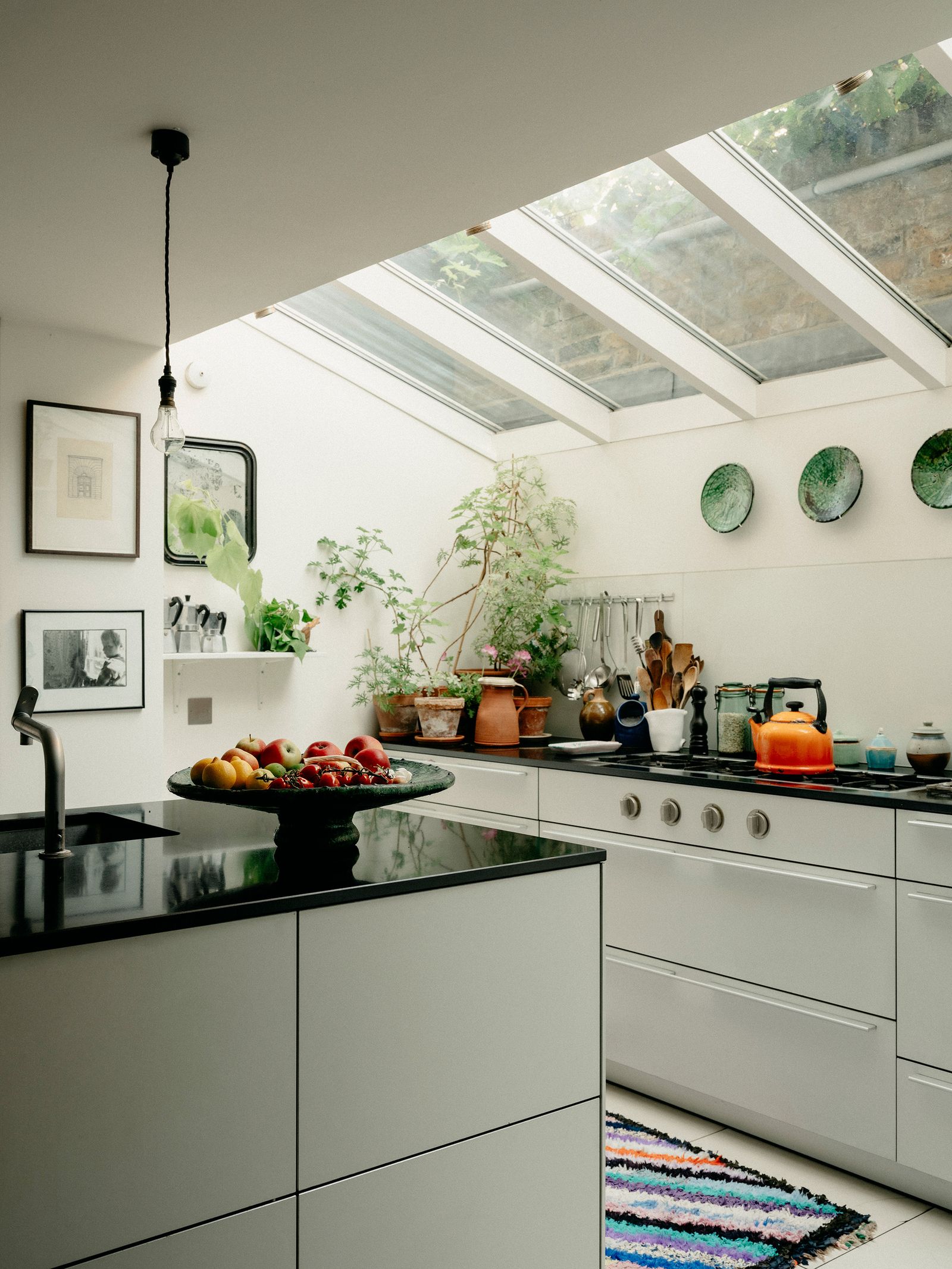
They extended the basement kitchen-diner out into the yard and put in a skylight. The attic became a bedroom and bathroom for herself and David, the raised ground floor a double sitting room, and their three sons – then pre-teens – were awarded a bedroom each on the first floor. The house’s corner position meant further windows could be added, and the ensuing triple-aspect flow of light has been enhanced by the removal of dividing walls and doors in the living areas, as well as the introduction of internal apertures – which has simultaneously increased the depth of sight lines.
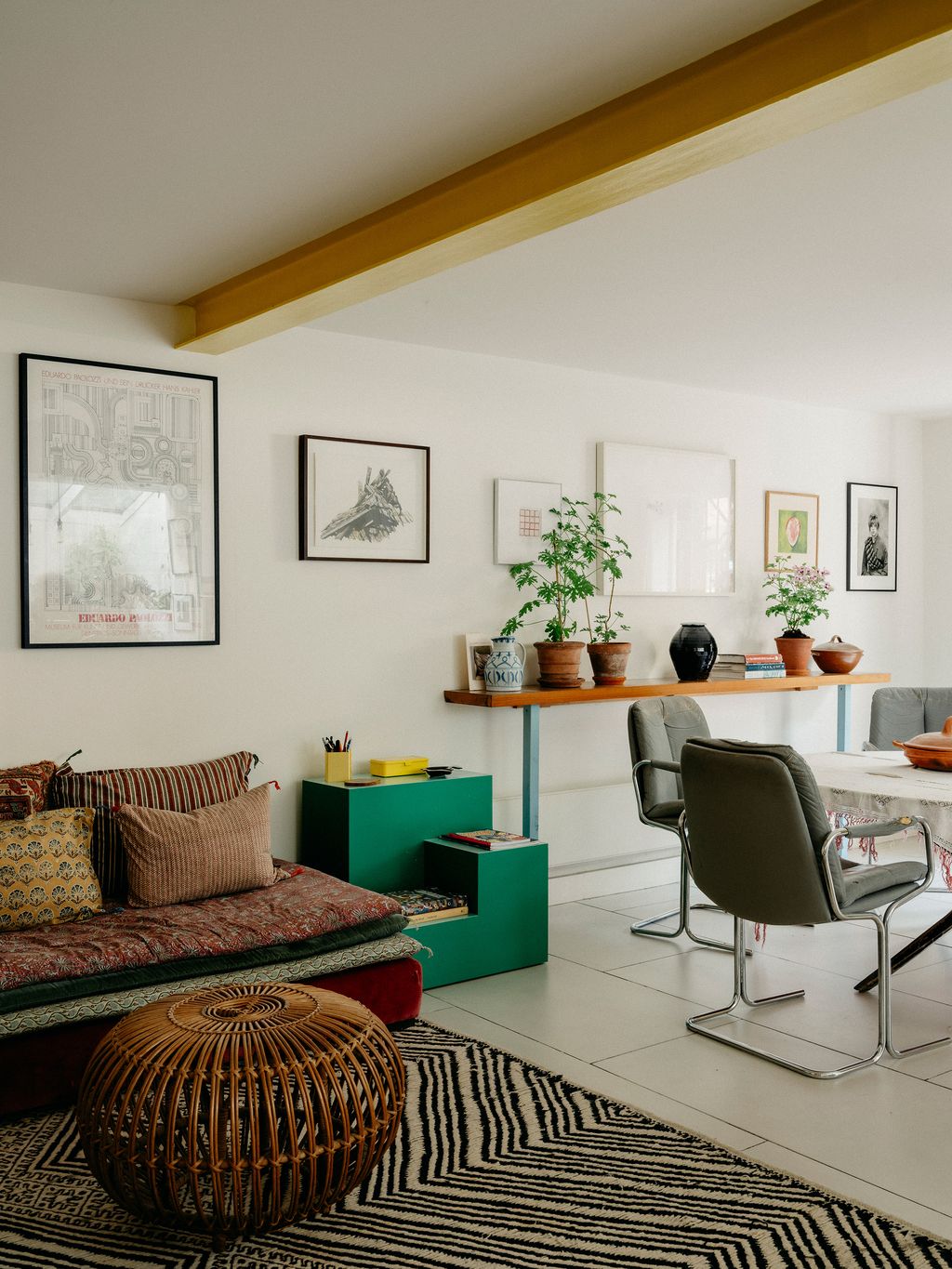
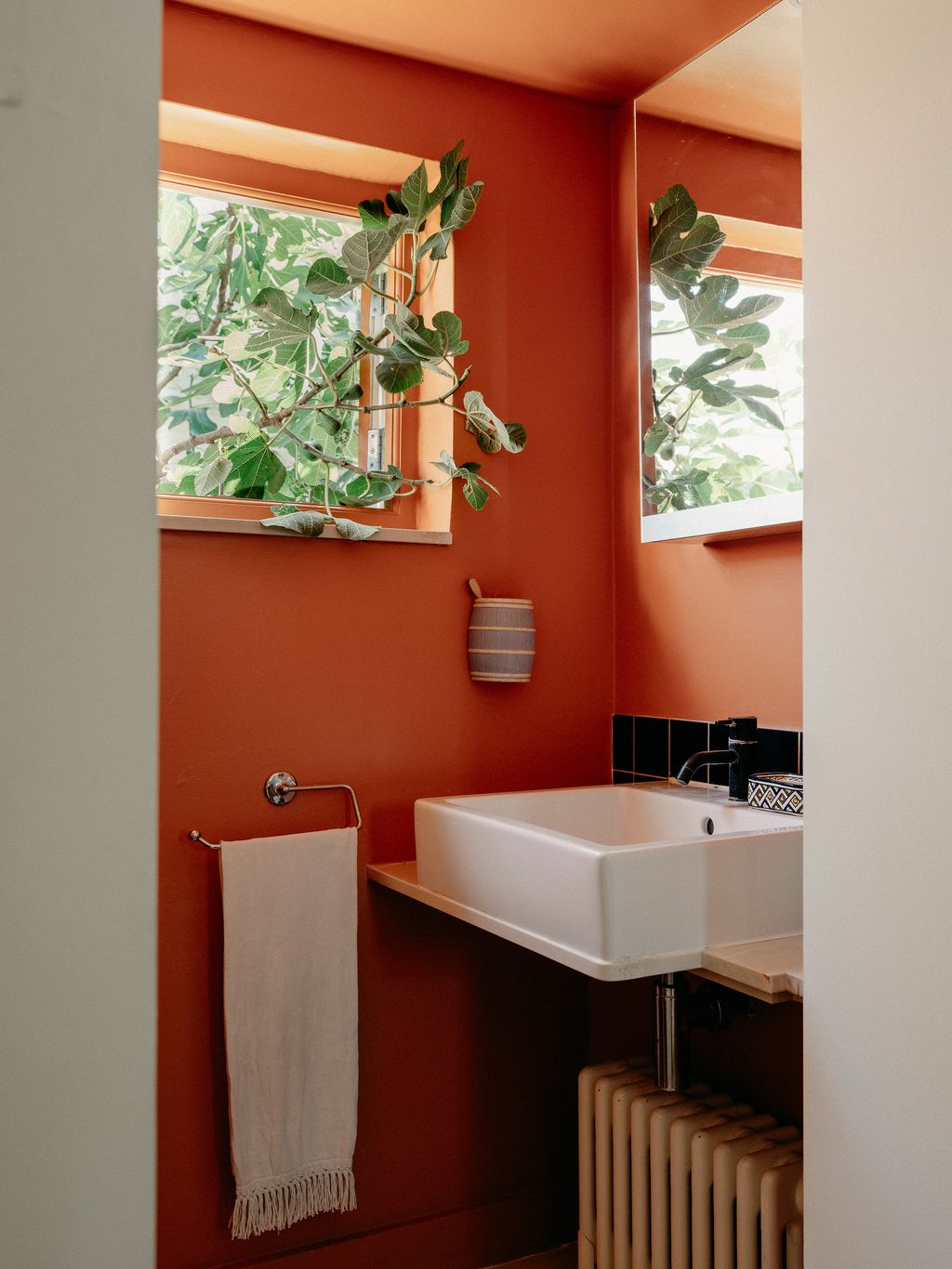
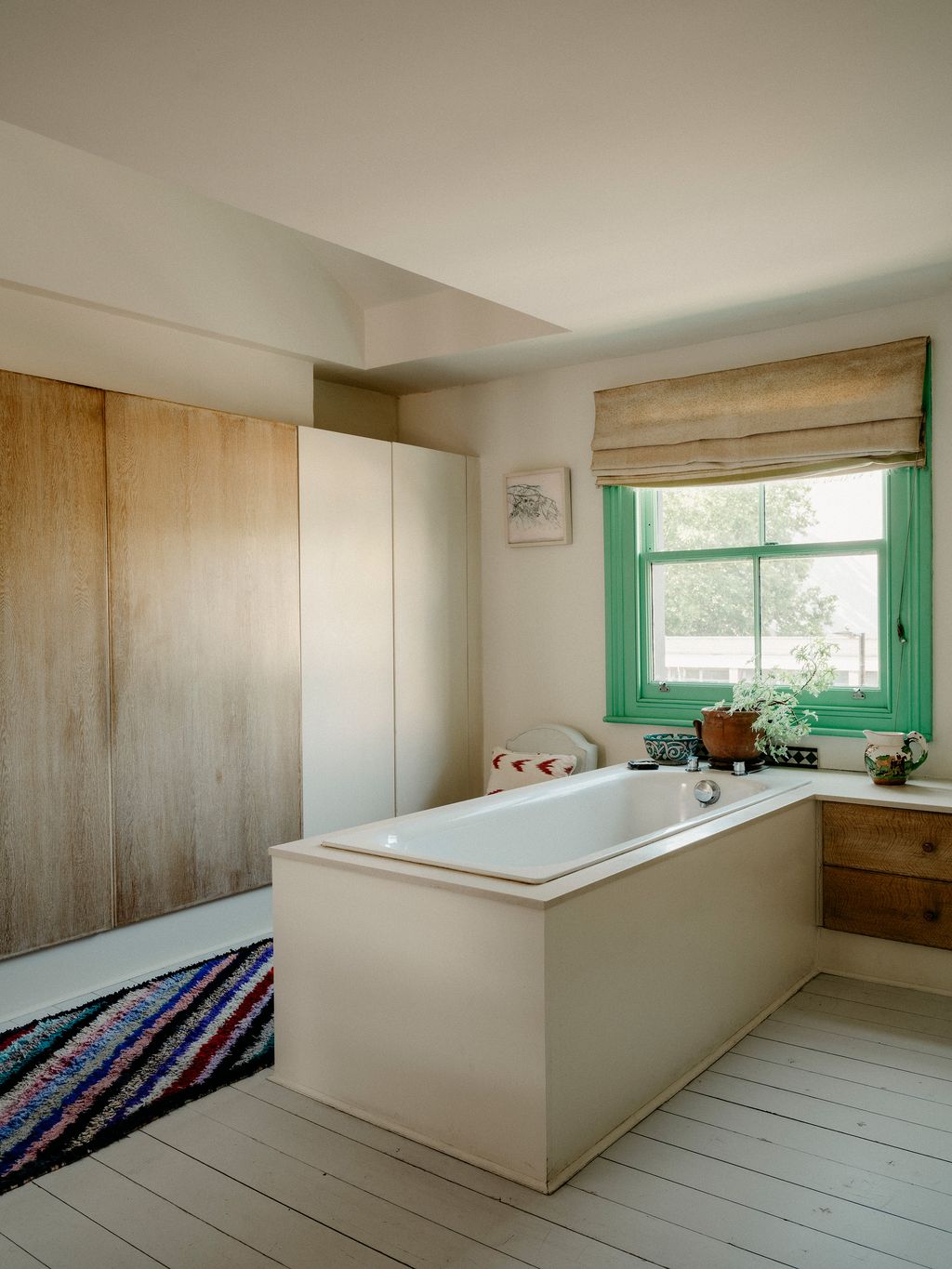
Calm is wrought by creamy walls and curtains, floorboards painted in Farrow & Ball’s ‘Blackened’, and monochrome kitchen cabinets. The canvas thus primed, colour has been applied sparingly, and over time. Tarka mentions the Trevelyans’ use of blocks of turquoise, and there are comparable moments of bold, solid hue. The Dulux ‘Buttercup Fool’ steel support in the kitchen, a Papers & Paints ‘Pale green’ surround to the window in the upstairs bathroom, and, most recently, the repainting of the loo on the landing in a russet by Morris & Co russet.

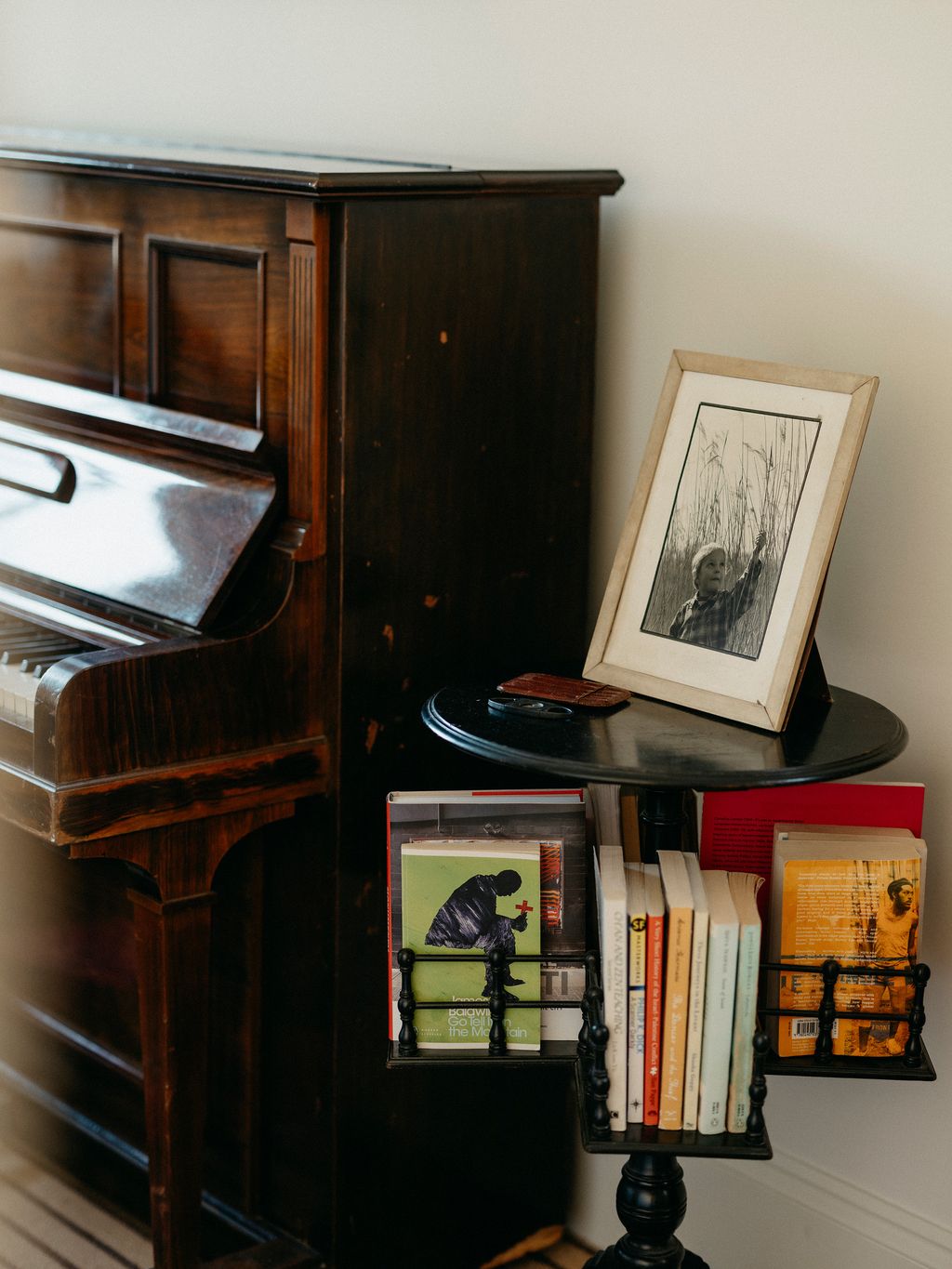
Other times, colour comes via the chosen art, and the furniture and furnishings that have variously been inherited, found in the markets and antiques shops of west London, or – in the case of the useful, stepped tables that are in almost every room – designed by Tarka, and made by her friend Mitch Herbert. In the sitting room, a crimson B&B Italia sofa carries cushions made up in an Indigo fabric taken from a roll once owned by Howard Hodgkin, and the tones are mirrored in prints by Philip Guston and Keith Haring. ‘It's inherent predilection,’ Tarka explains – mentioning that the combination of red and blue is one she often favours in her work.
Pattern, too, is paramount, albeit of a particular type. Still in the sitting room, an ottoman is topped by a Moroccan rug that the late gallerist Nigel Greenwood, ‘sold me off his own floor,’ while the flatweaves come from Fez Bazaar on Golborne Road. ‘The stripes link them to my cut-outs,’ says Tarka, referring to her abstract works assembled from strips of Chiyogami paper and Balsa wood. ‘I like strong lines and strong shapes,’ she continues, and a chair is upholstered in spots, while diamonds adorn the hall rug. The contours of both motifs and furniture can be clearly seen, because books aside, ‘there’s nothing extra here,’ points out Tarka. ‘I’m less of a bringer-inner than a clearer.’
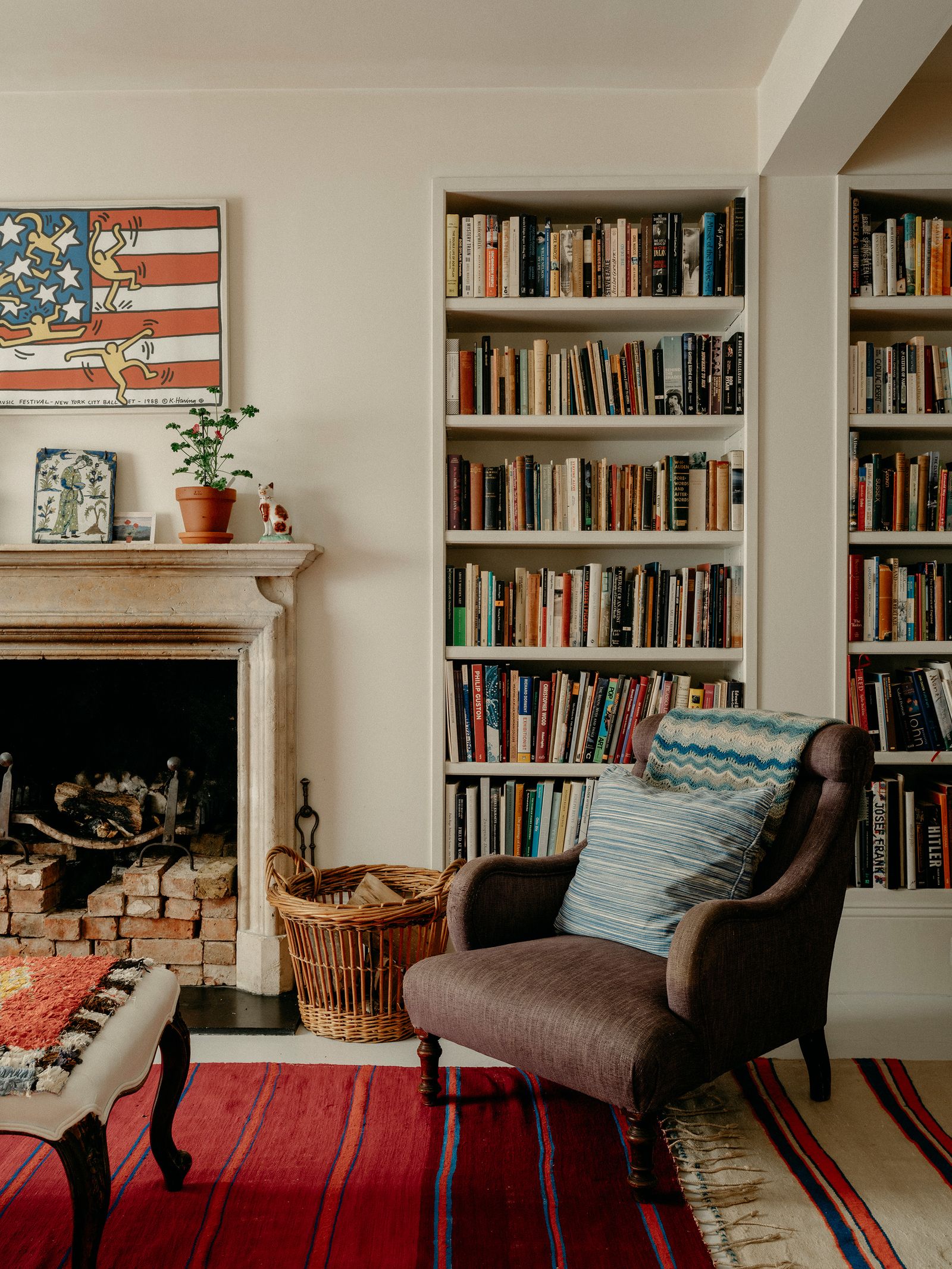
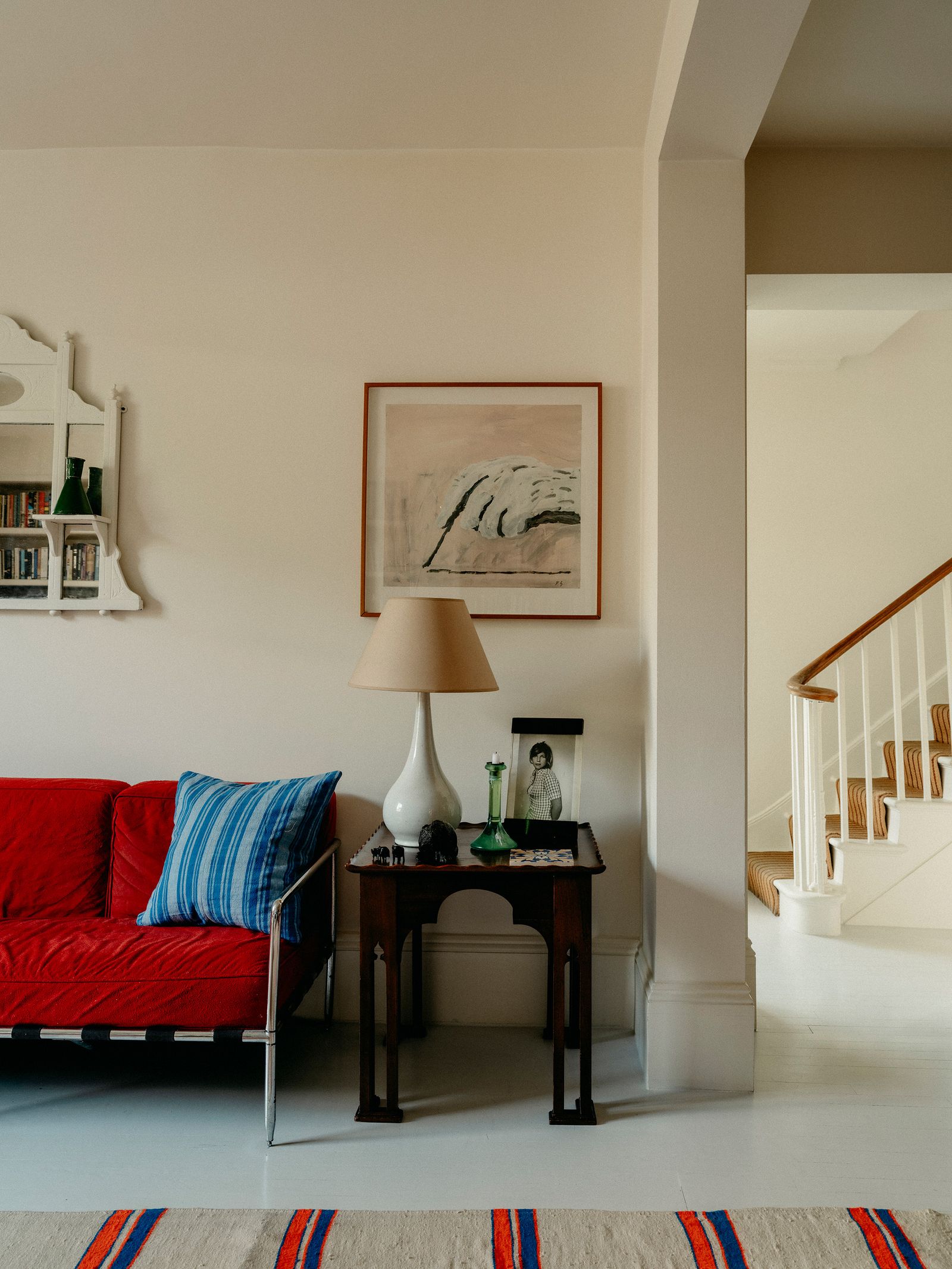
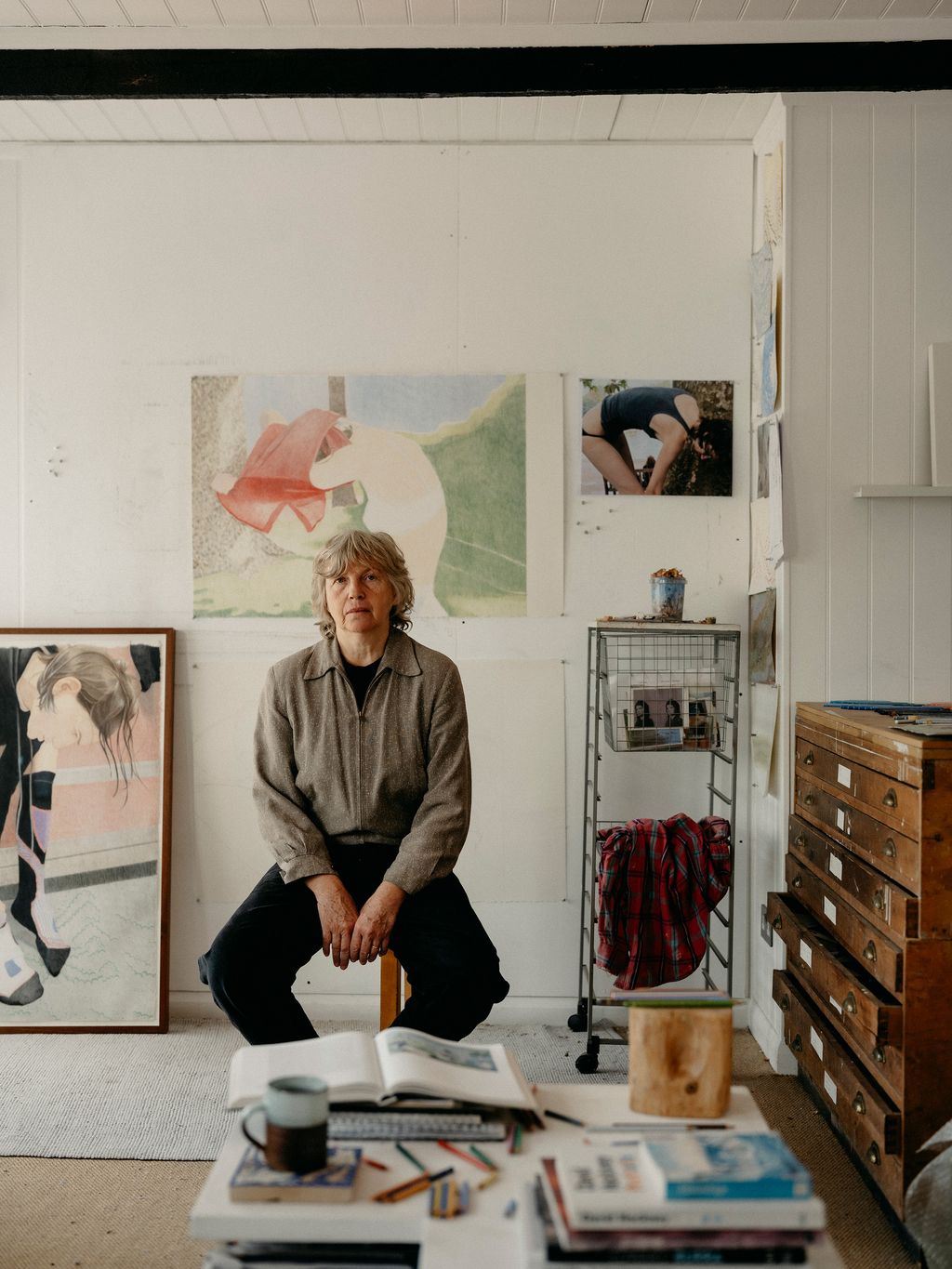
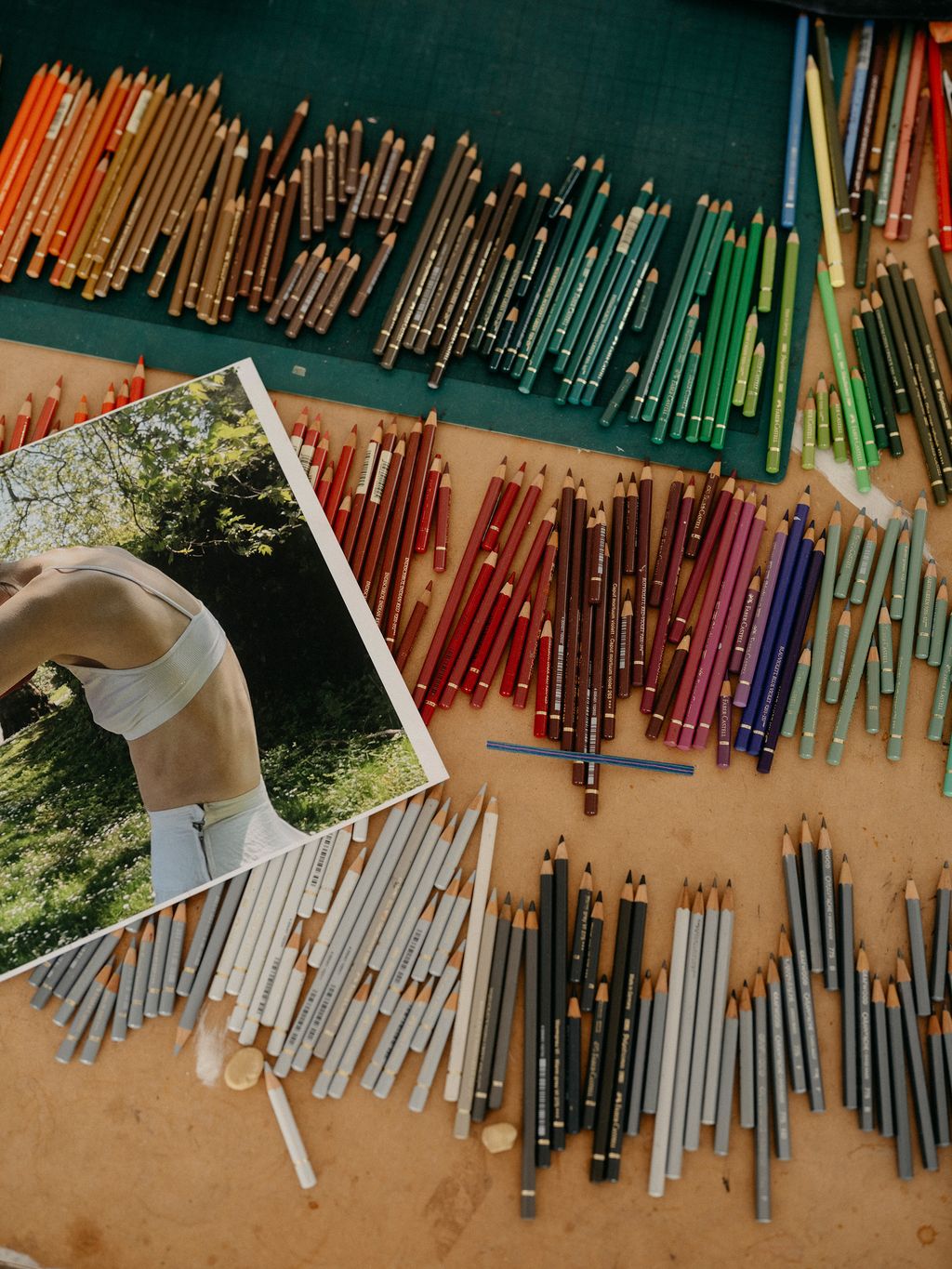
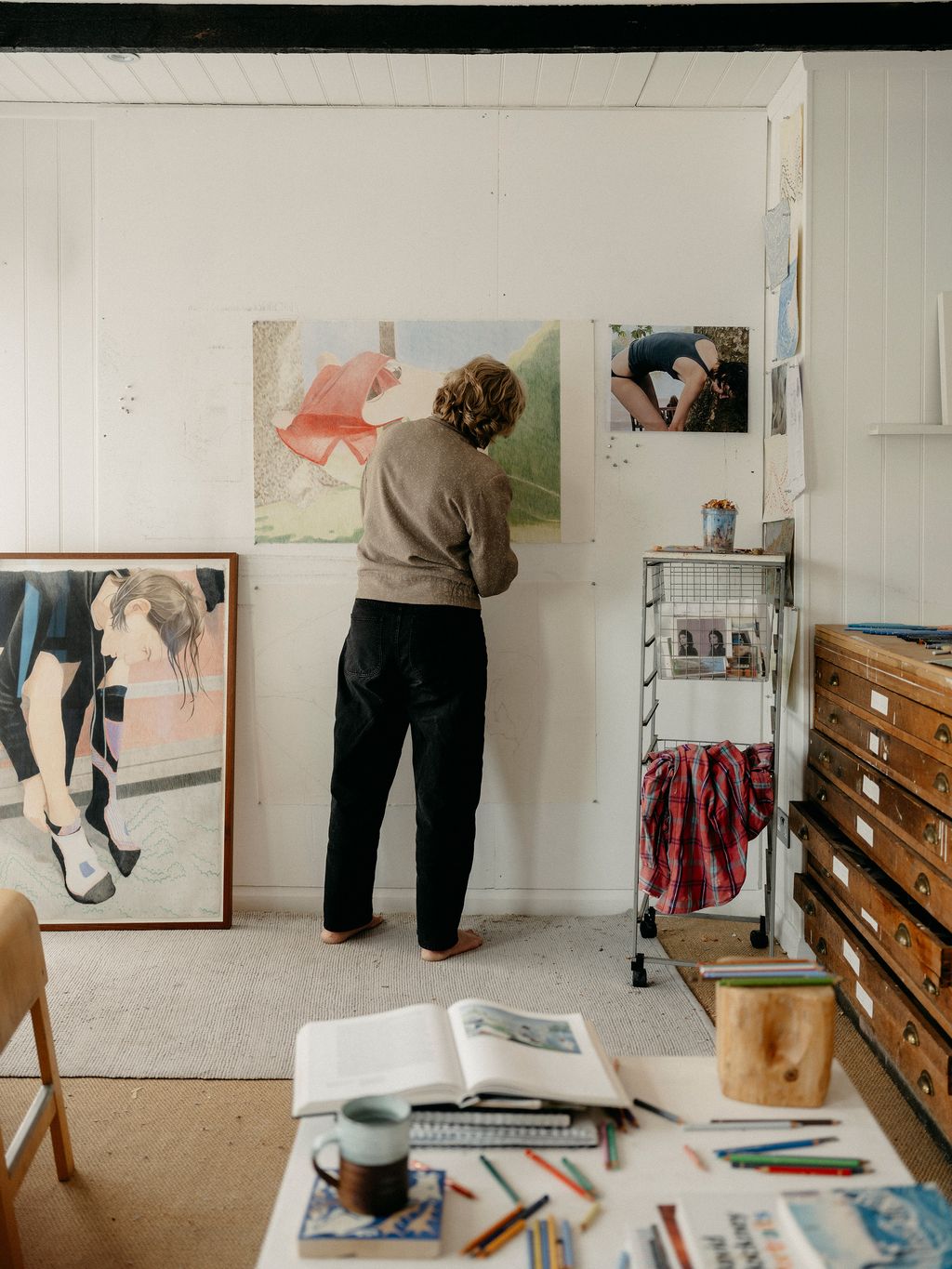
With this, her work ‘is sold, and disperses’ – to the extent that there is almost none in the house. However, when we visited, some could be seen in her new studio, which she cycles to and from almost every day. For the past eighteen months she’s been preparing a series of drawings to be shown at Offer Waterman, W1. Based on the rituals around her morning swim in Hyde Park’s Serpentine, the Seurat-like subject matter is delivered through careful mark-making. Engaging a process that is reminiscent of the Neo-Impressionists’ pointillism, Tarka uses coloured crayons in place of paint to conjure up recognisable and relatable situations, stripped to their essence.
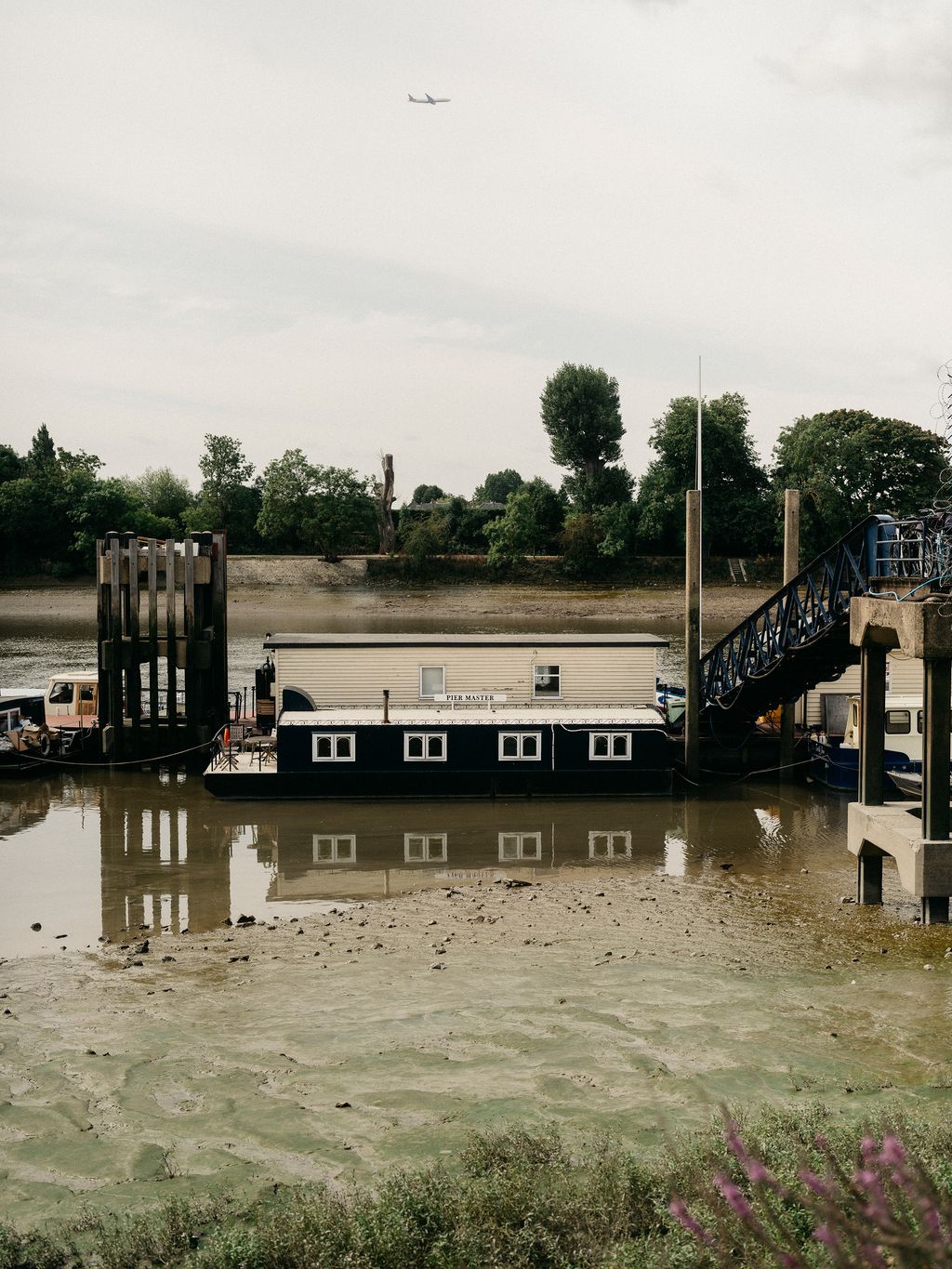
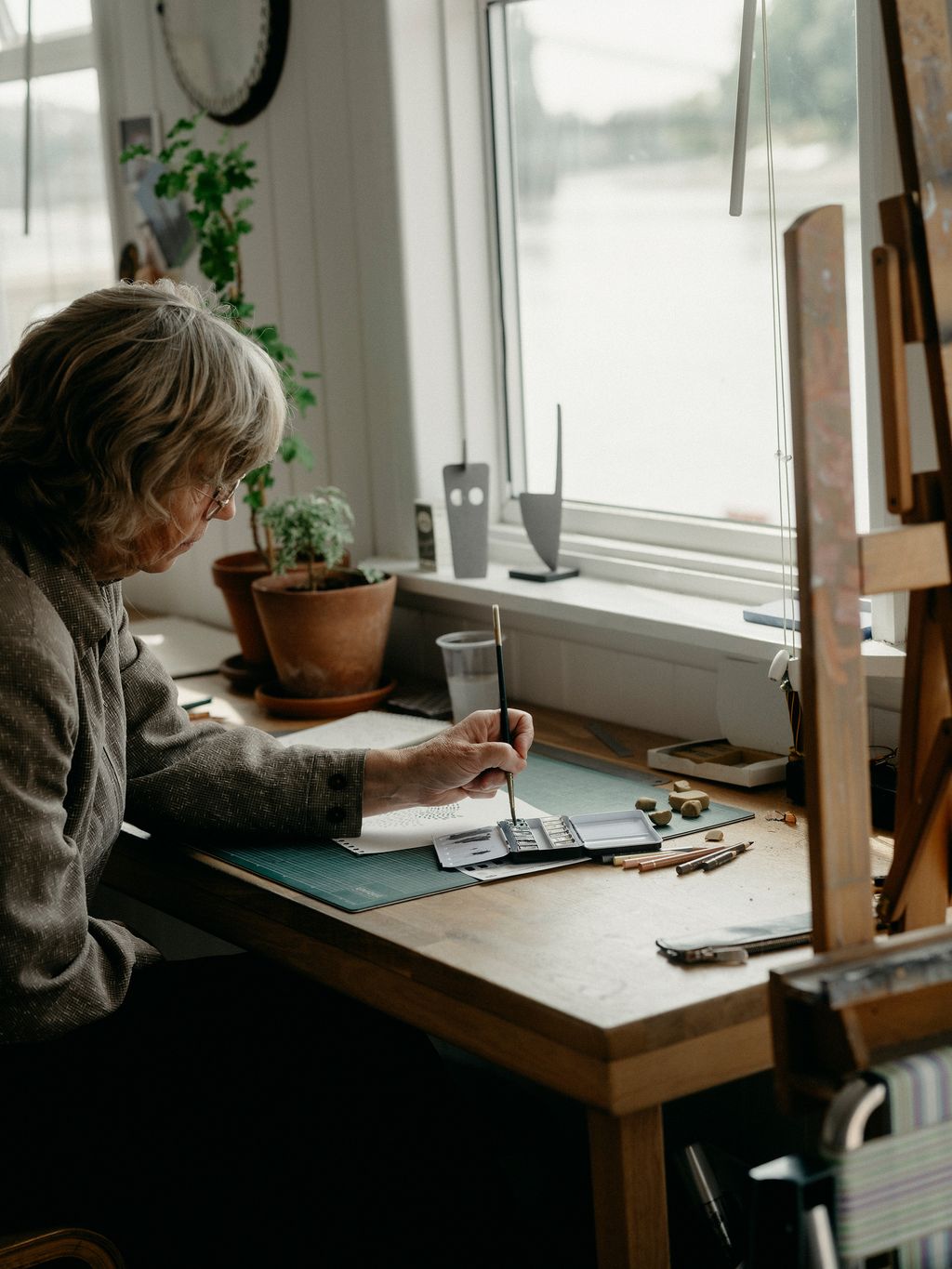
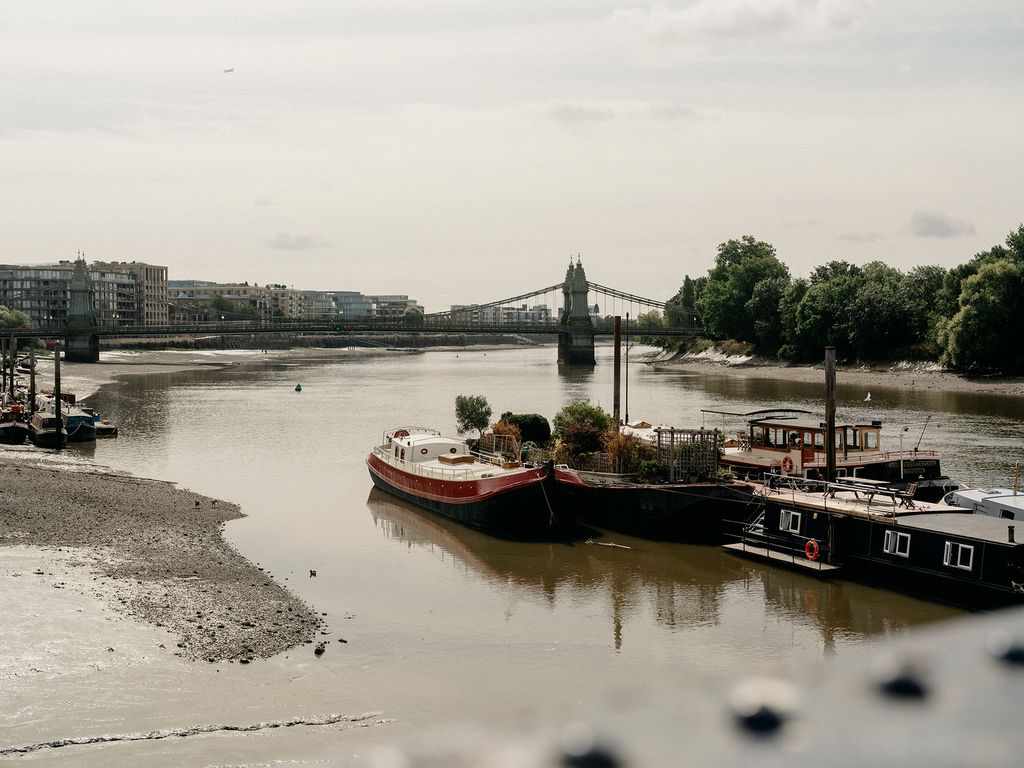
The studio is back in Hammersmith, positioned on a pontoon in the middle of the Thames on the stretch of river that Tarka has known all her life. ‘It was a strange serendipity that I found this studio when I was half way through doing this series, so I then had water around me all day from the morning to the evening,’ she explains. ‘It’s a very strange contradiction between it being very peaceful, but the river being incredibly active because the tide is constantly moving.’ As tidily arranged as the house, the studio is considerably smaller than her previous workspace, and it has, she explains, impacted her opinion on scale: ‘I’ve realised there is something very comfortable about smaller spaces – which is something to think about for the future.’ Such a reduction would require discipline and restraint – but we know that under Tarka’s hand, such stipulations become covetable qualities, and bearers of beauty.
Tarka Kings: Mornings at the Lido is at Offer Waterman, W1, from September 26 – October 24; waterman.co.uk
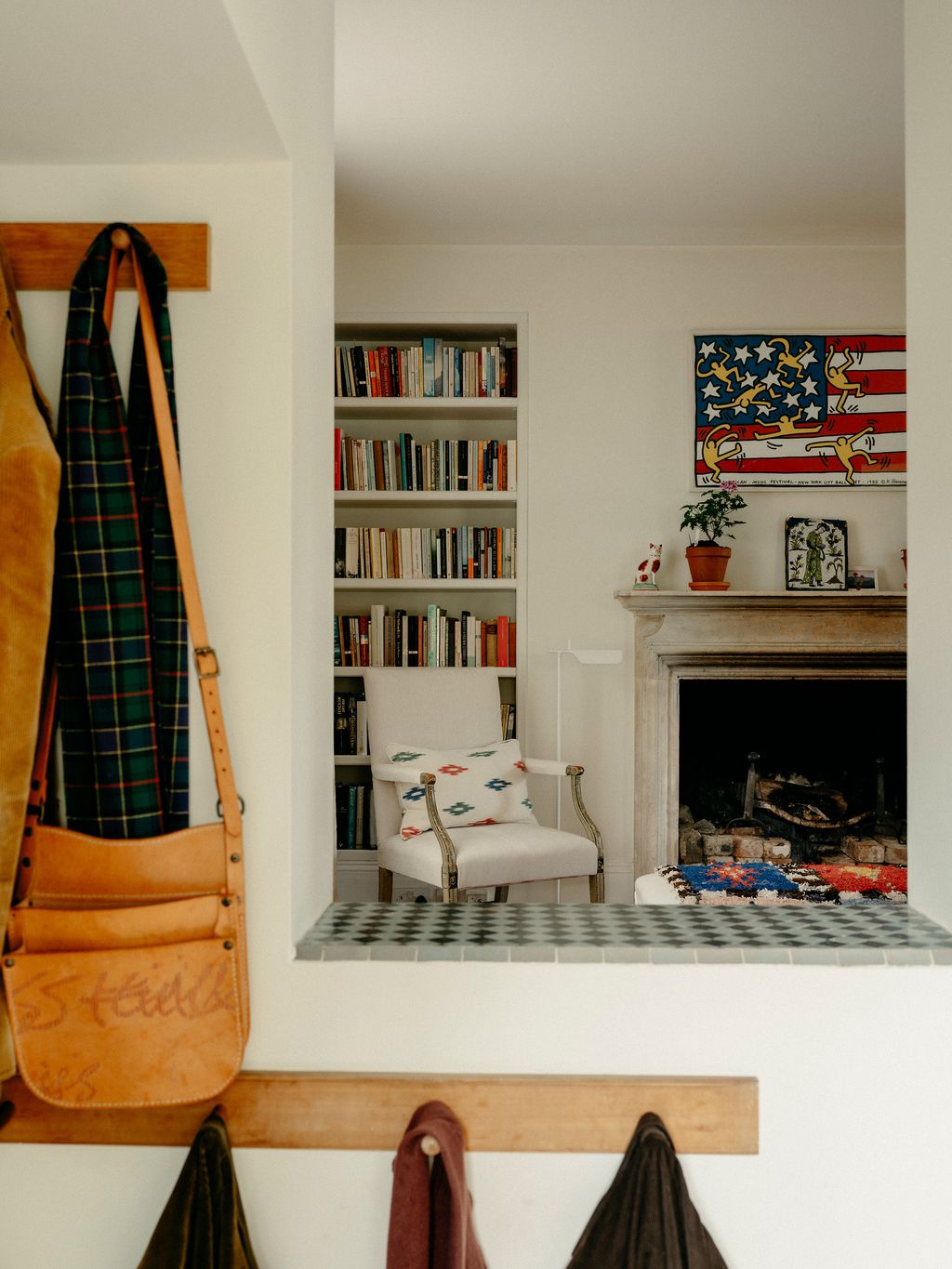 Mark Anthony Fox1/23
An internal window was put into the wall between the sitting room and the hall, to increase the sense of openness, and the depth of the views. The bag hanging on the hook is a copy of a bus conductor’s bag, and was designed by Tarka.
 Mark Anthony Fox2/23
The dining room end of the kitchen contains a sofa from Caravane, and another green side table designed by Tarka. The top of this one is a paler green than the sides; the colours are taken from a painting by David Hockney. 1970s office chairs surround the table that they eat at, which once belonged to Tarka’s mother. Among the pictures on the walls are a print by Eduardo Paolozzi, an etching by Rory McEwan, and a work in pencil by Kate Atkin. ‘I was on a residency with her, and it was she who got me into drawing rather than painting,’ recounts Tarka. The steel beam is painted in Dulux ‘Buttercup Fool’.
 Mark Anthony Fox3/23
Recently Tarka painted the little bathroom on the landing in a Morris & Co russet.
 Mark Anthony Fox4/23
Tarka and David’s top floor open plan bedroom and bathroom is divided by the staircase – and wooden poles made from trees at their estate in Scotland that they use to hang their clothes from. The green paint on the bathroom window is a Papers and Paints shade.


 Mark Anthony Fox5/23
 Mark Anthony Fox6/23
Another one of the tables Tarka designed is used as a bedside table here, while the resin lamp is by Marianna Kennedy.
 Mark Anthony Fox7/23
 Mark Anthony Fox8/23
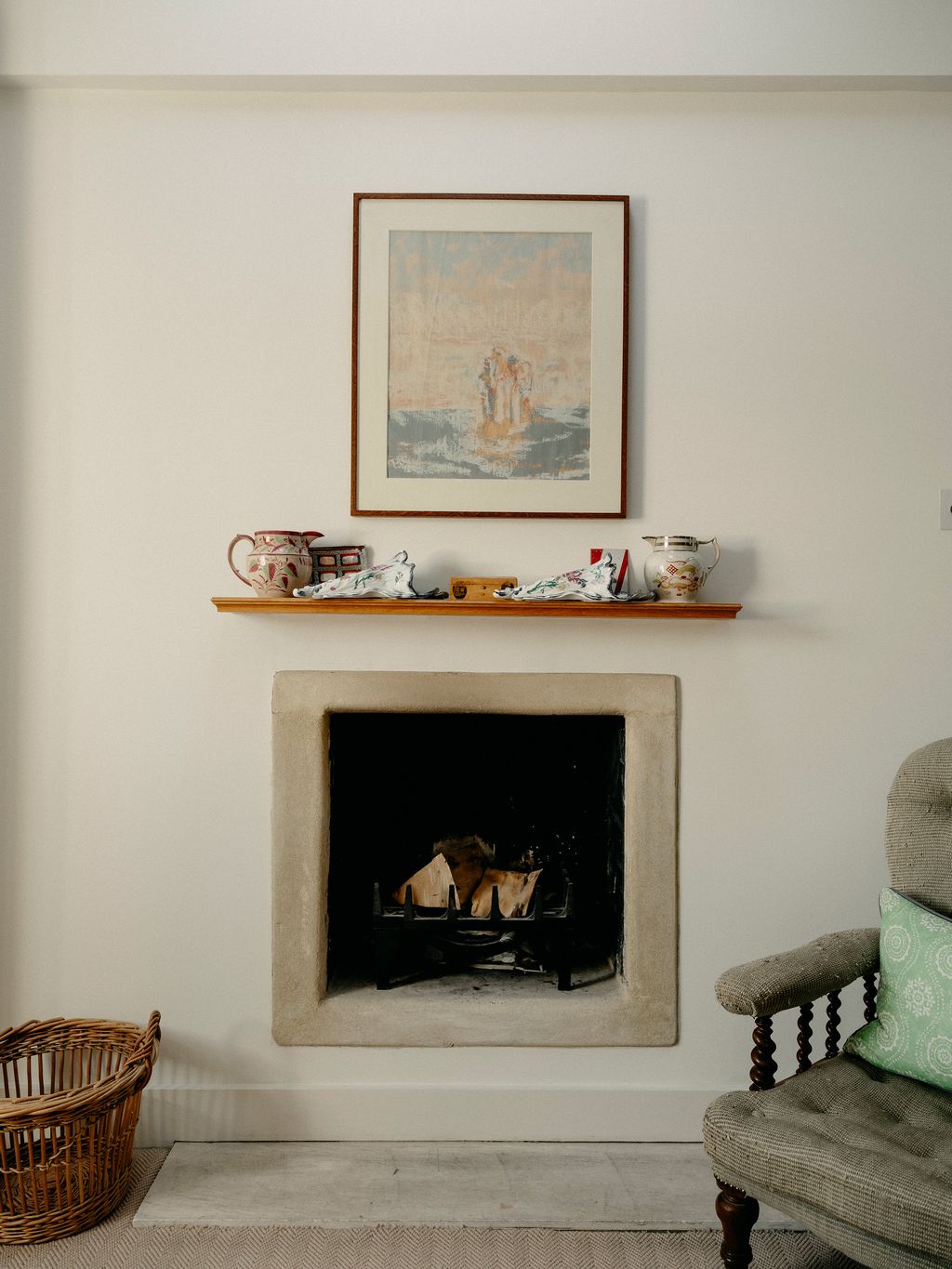
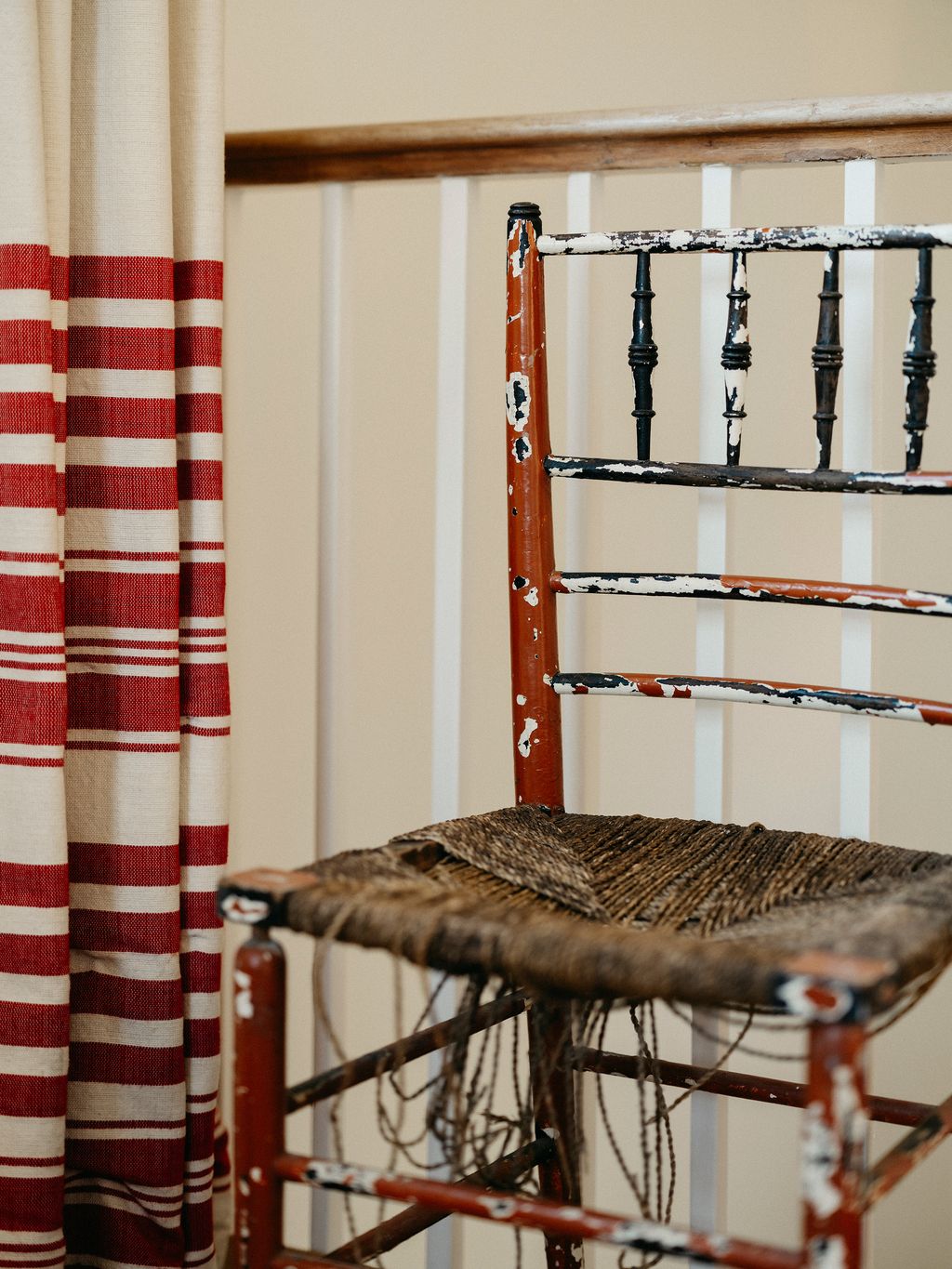
An original Morris & Co chair that once belonged to Tarka's mother.


 Mark Anthony Fox9/23
 Mark Anthony Fox10/23
 Mark Anthony Fox11/23
 Mark Anthony Fox12/23


 Mark Anthony Fox13/23
Tarka’s studio is situated on a pontoon on the Thames at Hammersmith
 Mark Anthony Fox14/23
Tarka, on the Thames beach by her studio, at low tide.
 Mark Anthony Fox15/23
Tarka Kings with Red Flag, 2025, being shown at Offer Waterman, W1, as part of her show, Mornings at the Lido
 Mark Anthony Fox16/23
The coloured pencils that Tarka uses to create her intricate drawings.


 Mark Anthony Fox17/23
Coloured pencils, arranged by colour, pictured alongside a photograph from her visits to the Serpentine for an early morning swim.
 Mark Anthony Fox18/23
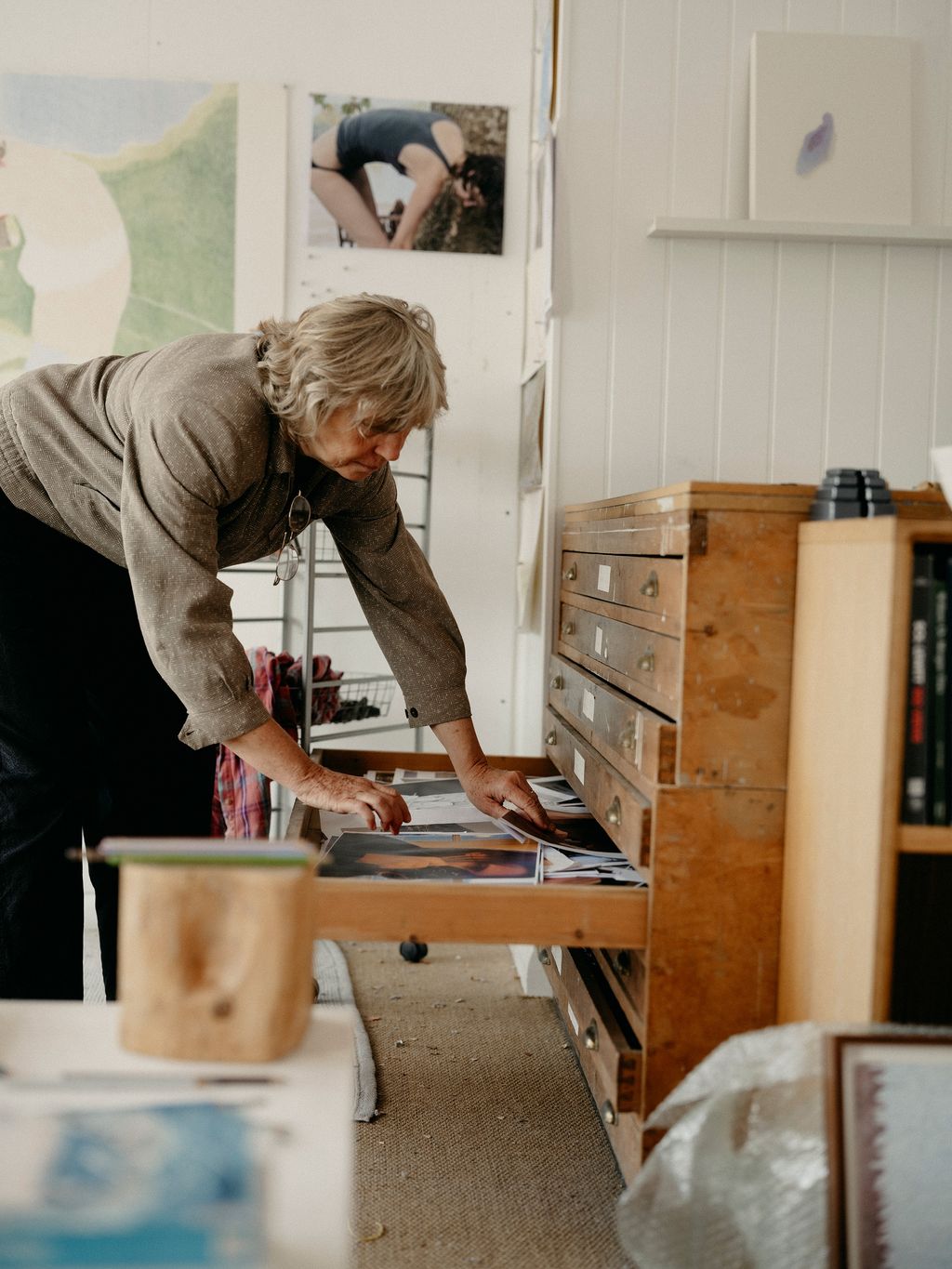
Tarka stores the photographs that she based her new body of work on in a chest in her studio.
 Mark Anthony Fox19/23
 Mark Anthony Fox20/23
Tarka at her desk in her Hammersmith studio


 Mark Anthony Fox21/23
Tarka Kings with Red Flag, 2025, being shown at Offer Waterman, W1, as part of her show, Mornings at the Lido
 Mark Anthony Fox22/23
A detail of Tarka’s mark making.
 Mark Anthony Fox23/23


