
Urquhart and Hunt bring lush and bountiful planting to a garden in south west London
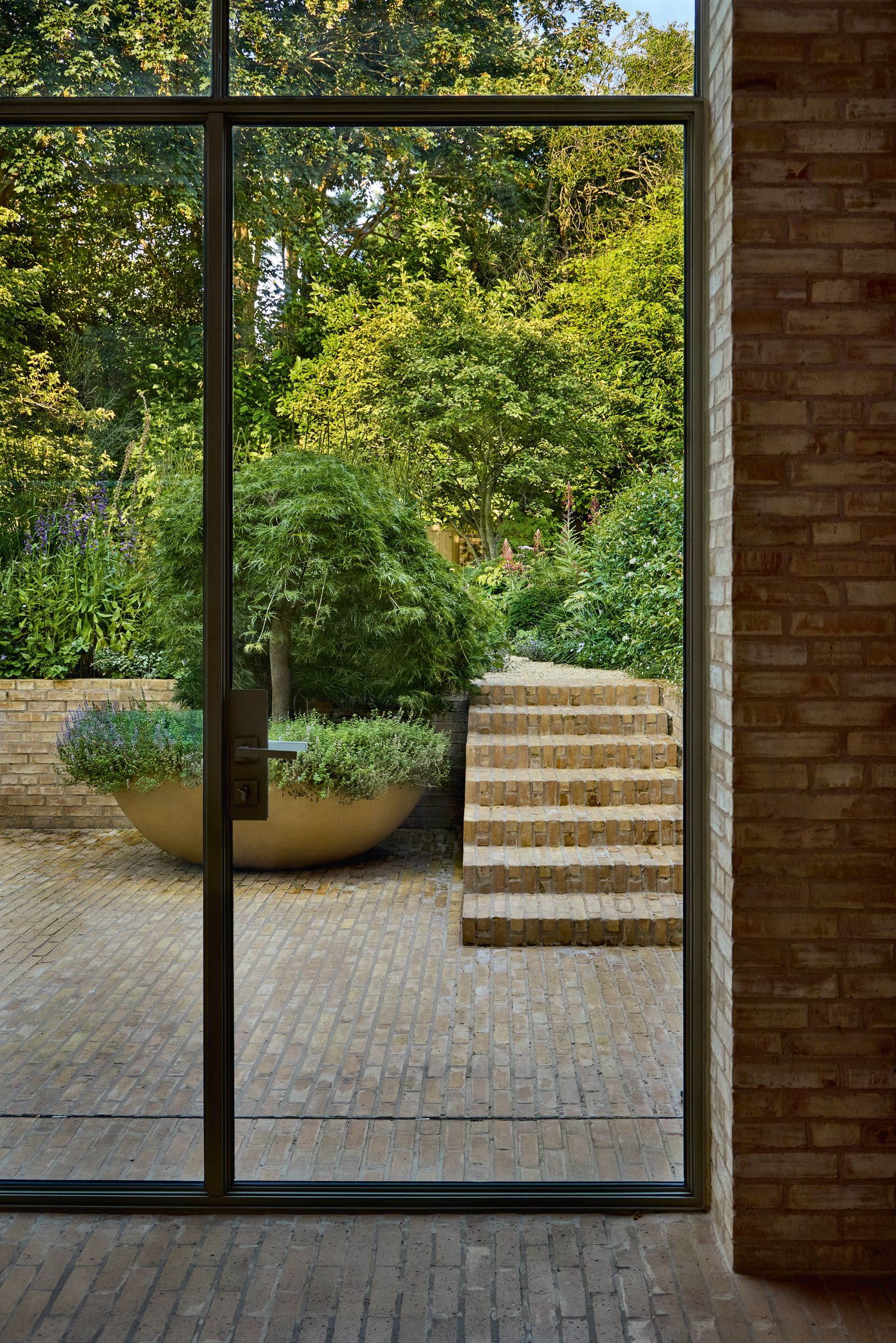
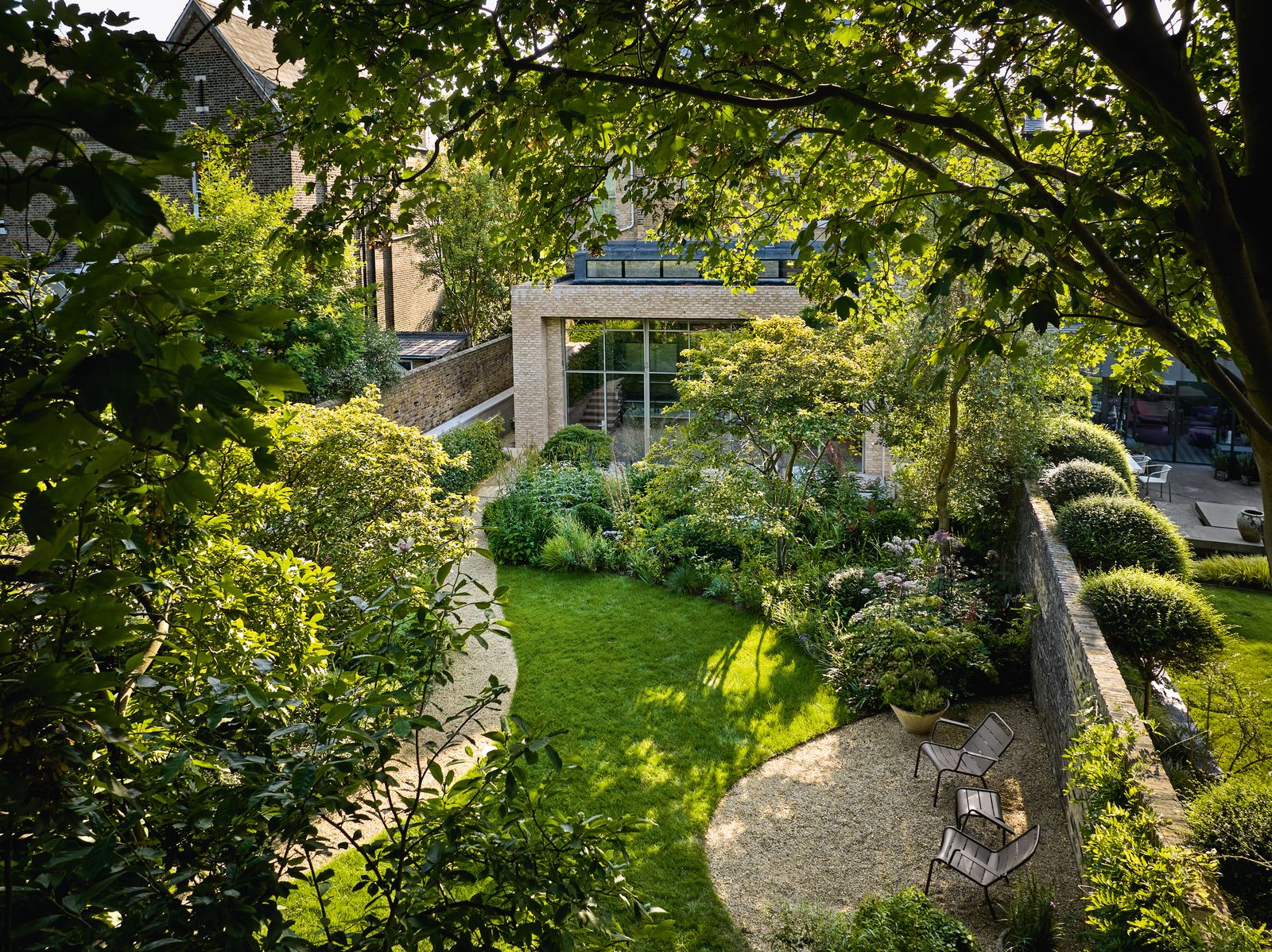
At the back of a generous Victorian house in south west London is a garden that revels in plants, both familiar and unusual, which give the owners a succession of both blooms and eye-catching foliage for them to enjoy all through the year. Its transformation from a lawn-and-shrub-borders garden to this biodiverse haven, by Lulu Urquhart & Adam Hunt’s landscape design practice Urquhart & Hunt, was occasioned by the addition of a large glazed extension, plus a subterranean series of rooms that reduced the outside space to 28 x 14 metres.
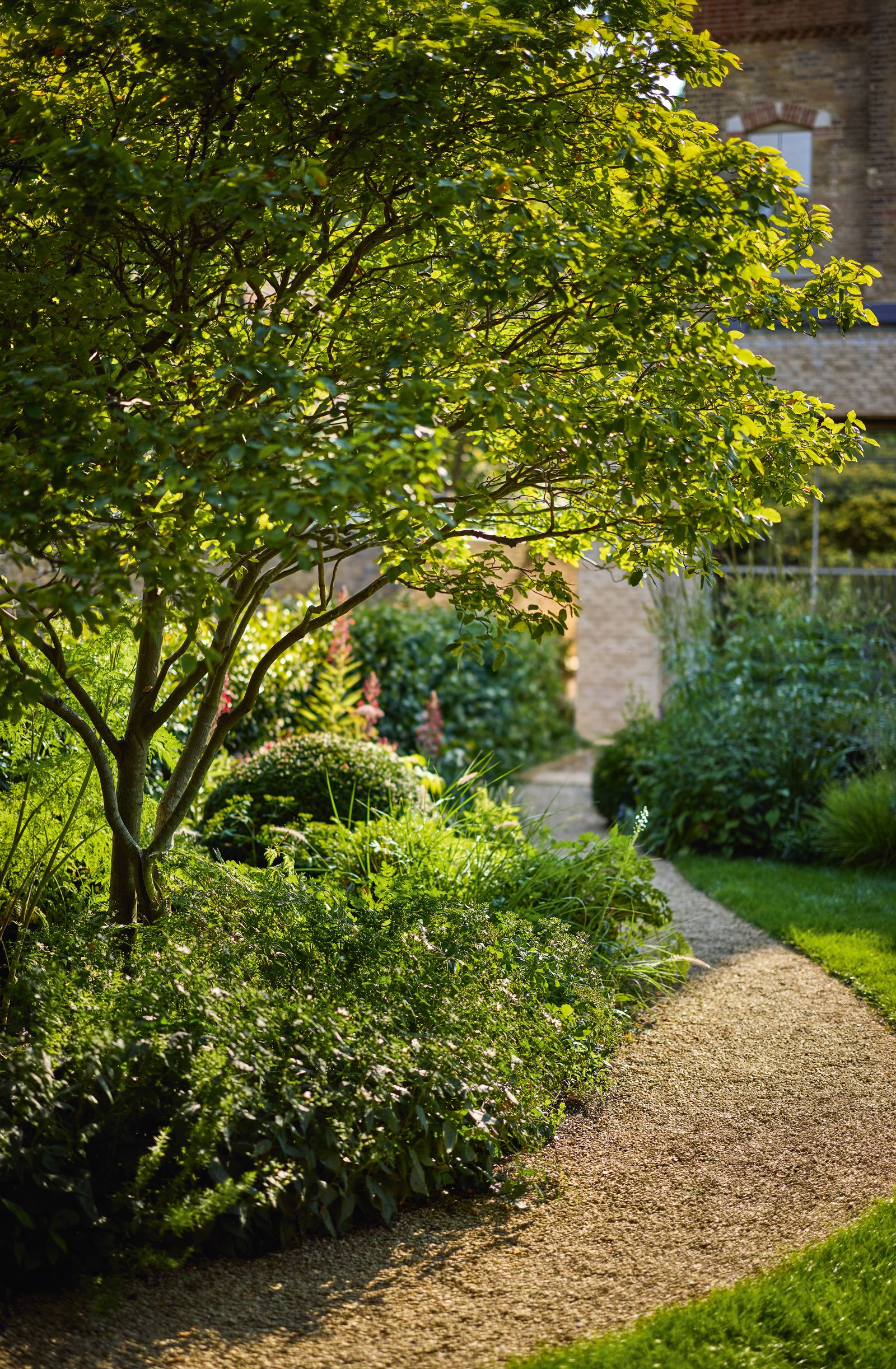
Beyond the garden’s end wall is a park full of mature trees, a backdrop that is rare for London. Key to the design intention was to connect the house to this woodland canopy and to keep the plants that would enhance that link. This includes two mature magnolia that frame the route to the back gate and a tall olive tree screening a neighbouring property. Retaining these trees, explains Lulu, not only grounds the new garden, but also helps to hold on to the mycorrhizal fungi of the older garden. Two Amelanchier lamarkii, an Acer palmatum ‘Sango-kaku’ (selected for its leaning habit) and a Zelkova serrata ‘Flekova’ (also known as Green Vase) with biochar added to the planting holes to boost fungal take-up, were introduced in order to create seasonal highlights (the zelkova has striking burnished autumn foliage) and to provide visual stepping stones to the treescape of the park beyond.
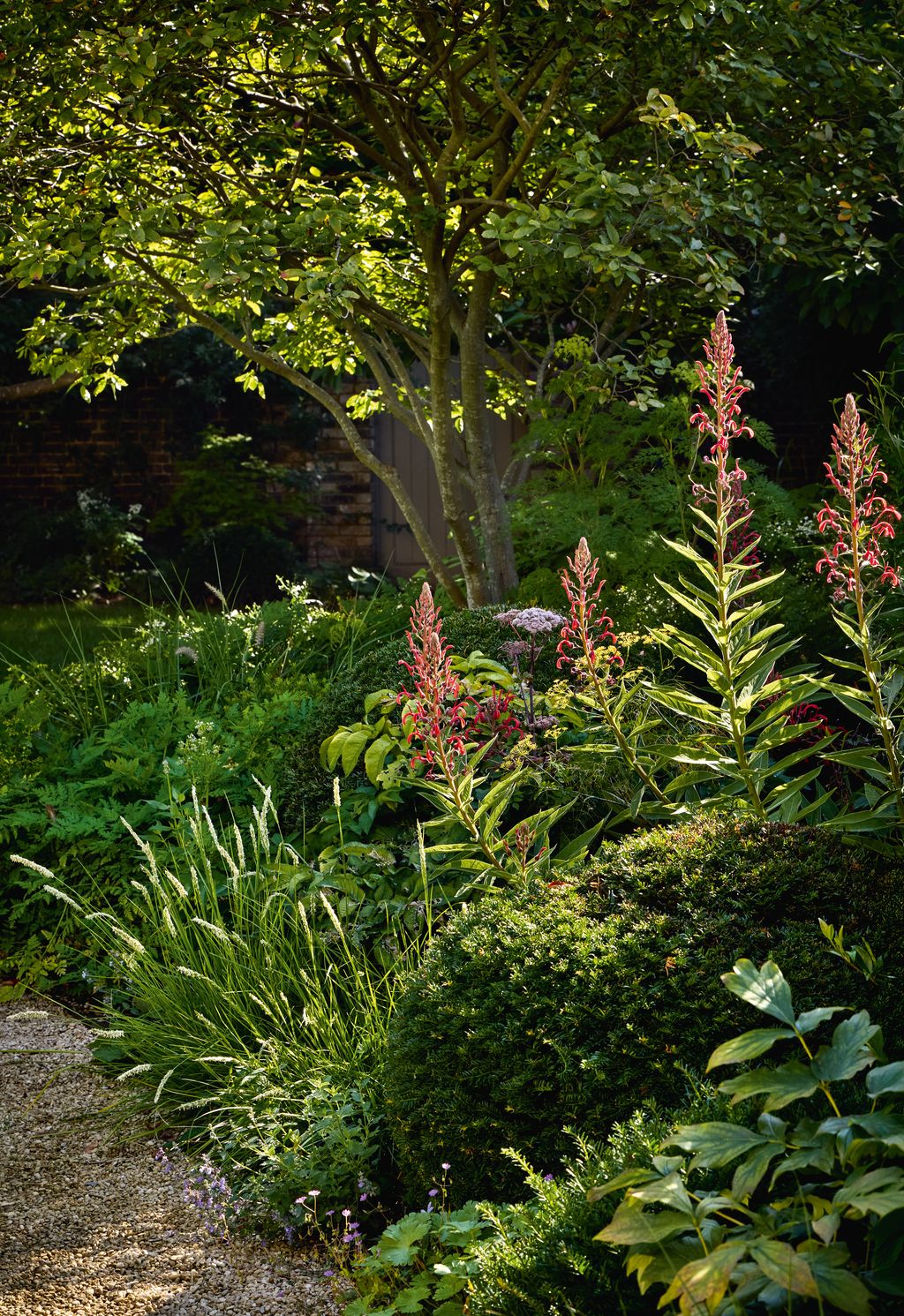
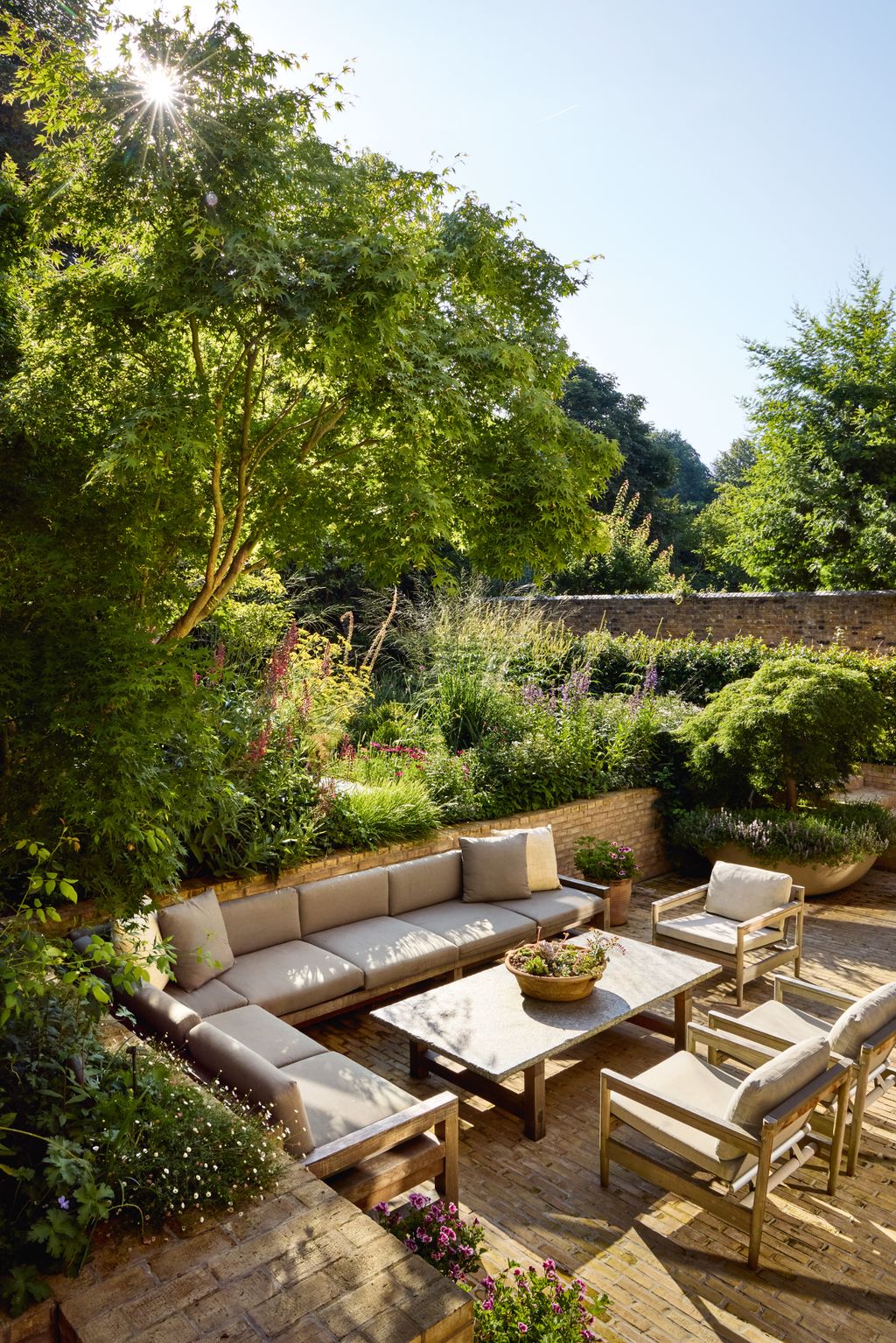
The excavated soil from the groundworks was used for the new borders, topped with 10cm of rich imported soil. In the largest of these, which sweeps across two thirds of the garden and encloses the sunken terrace, the soil is gently mounded up to form a bank of perennials and grasses. These reach a climax in the sunlit spires and umbels around yew domes in late summer, from plants such as Foeniculum vulgare ‘Purpureum’, Lobelia tupa, Veronicastum virginicum, Agastache ‘Blackadder’ and Molinia caerulea subsp. arundinacea ‘Transparent’.
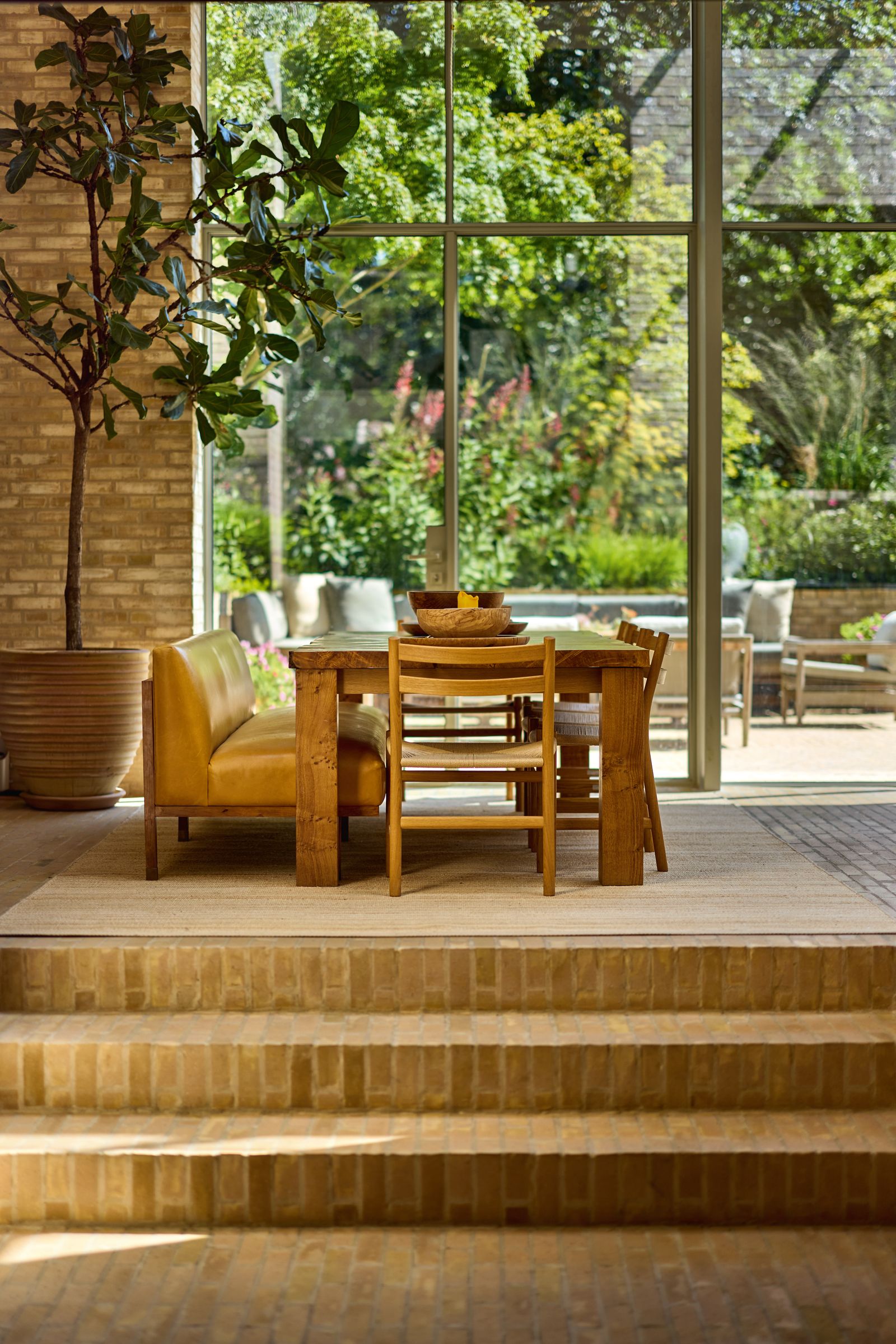
Viewed through the glazed doors of the kitchen, the rest of the garden is hidden behind this exuberant planting. Steps between the end of this border and a scented screen of trained trachelospermums – obscuring a deep lightwell, where tree ferns and moisture-loving groundcover plants create a Jurassic vista for the subterranean rooms – lead to a curving gravel path. This continues the journey down the garden to an expanse of lawn, where the owners’ children play, and also a second, gravel terrace that catches the evening sun.
From here, the view back to the house is through yet more perennials and grasses. Some are repeated: Digitalis ferruginea, Lobelia x speciosa ‘Vedrariensis’ and Sporobolus heterolepis; some are new: Iris chrysographes, Linaria ‘Peachy’ and Dierama pulcherrimum ‘Blackbird’ on the other side of the mounded border. Towards the shadier beds under the existing magnolias and the new zelkova and also along the back wall below a Cercidiphyllum japonicum, a palette of shade-loving plants is revealed, including Disporum viridescens, Persicaria filiformis ‘Lance Corporal’, Uvularia grandiflora var. pallida and Maianthemum stellatum, many of them rare botanical species.
With over 200 varieties of perennials, climbers and annuals, 4,000 in total, and 5,000 bulbs of 60 varieties making up the plant list of this garden, its biodiversity is ensured. Adam explains that birds particularly benefit from the shrub and small tree layer, where they can roost and nest in safety and, in the case of the amelanchiers, feast on the June berries. Seed eaters appreciate the wintertime standing stems in the borders, which are not cut down until February as new growth emerges. Pollinating insects such as bees have a succession of blooms to feed on, from early bulbs like snowdrops, crocus, Iris reticulata and cyclamen, to late-autumn dahlias and asters.
Given the profusion of the borders, it is remarkable to think that the planting of this garden was only completed in 2021. The particularly hot and dry summer of 2022 meant that temporary irrigation had to be installed. But thanks to twice-yearly mulching of the borders and, since 2023, applications of worm compost (available from Soil Nurture), which infuses the soil with nutrients and beneficial microbes, spot watering is now restricted once more to any new plantings, which is the designers’ preferred, sustainable practice.
Urquhart & Hunt: urquharthunt.com
 Alister Thorpe1/3
In this border, white Phlox divaricata ‘May Breeze’, lilac Aster ‘Primrose Path’ and (seen from the opposite direction) red Lobelia tupa and pale panicles of Sesleria autumnalis are set off by yew mounds.
 Alister Thorpe2/3
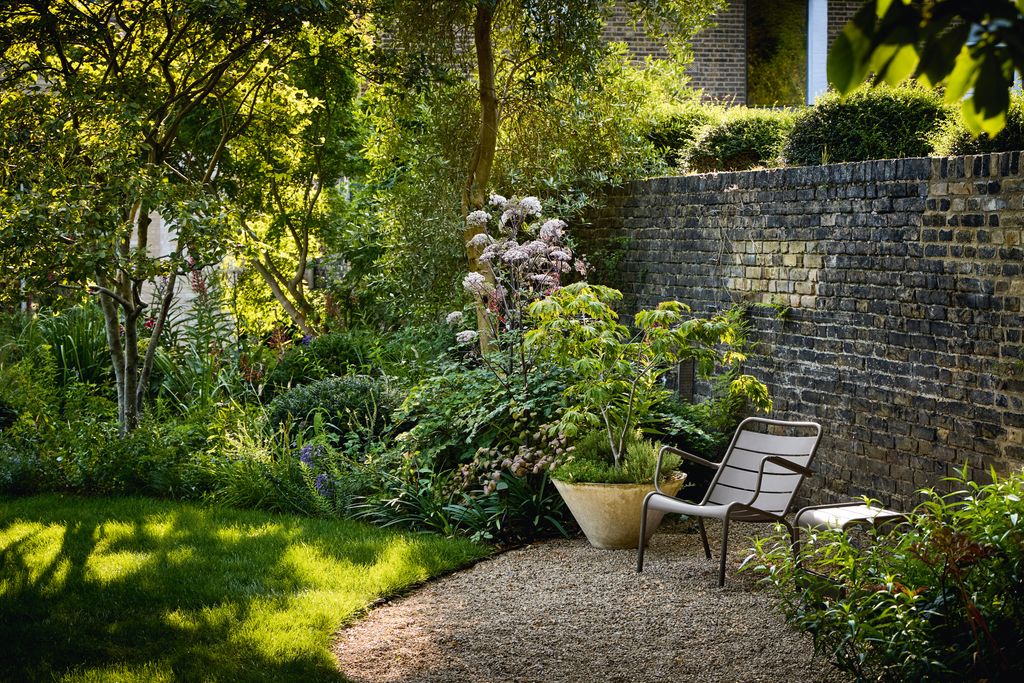
Tall mauve Angelica gigas and Acer japonicum ‘Aconitifolium’ in a vintage Willy Guhl planter catch the evening light.
 Alister Thorpe3/3
Dense plantings frame the sunken terrace, with its Jerome Shorter furniture, creating a secluded feel.


