
What to plant in March (and other gardening tasks for the month)
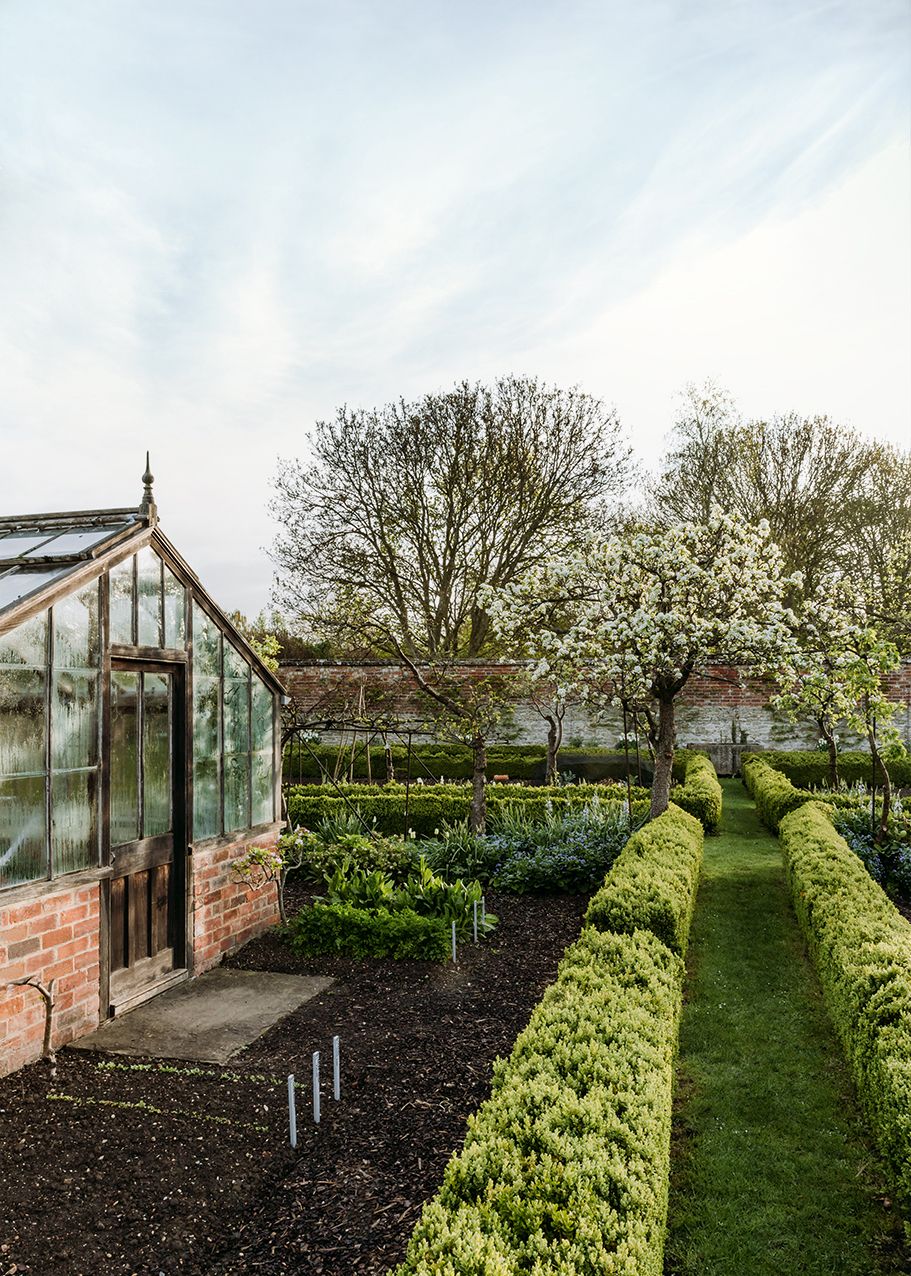
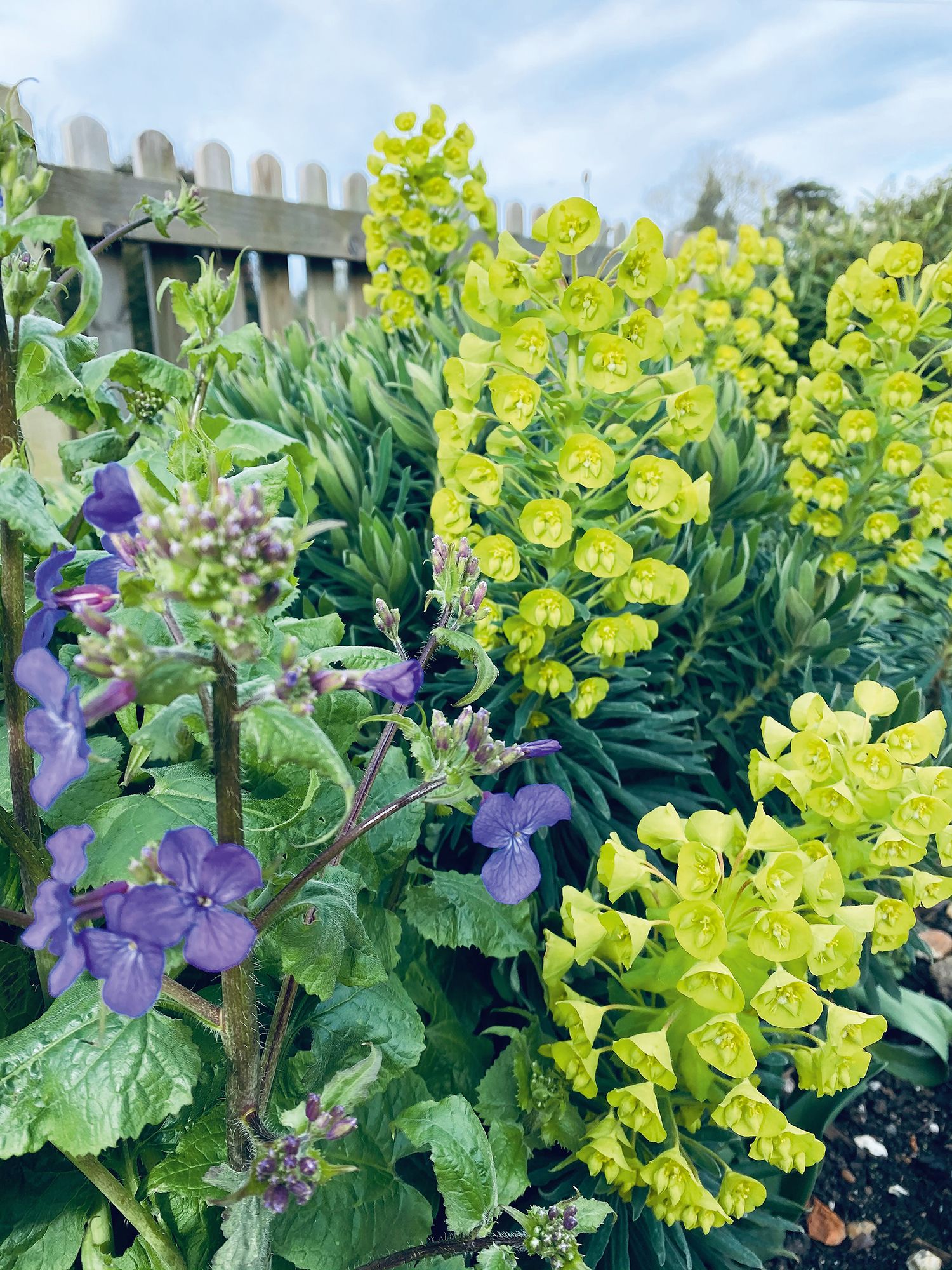
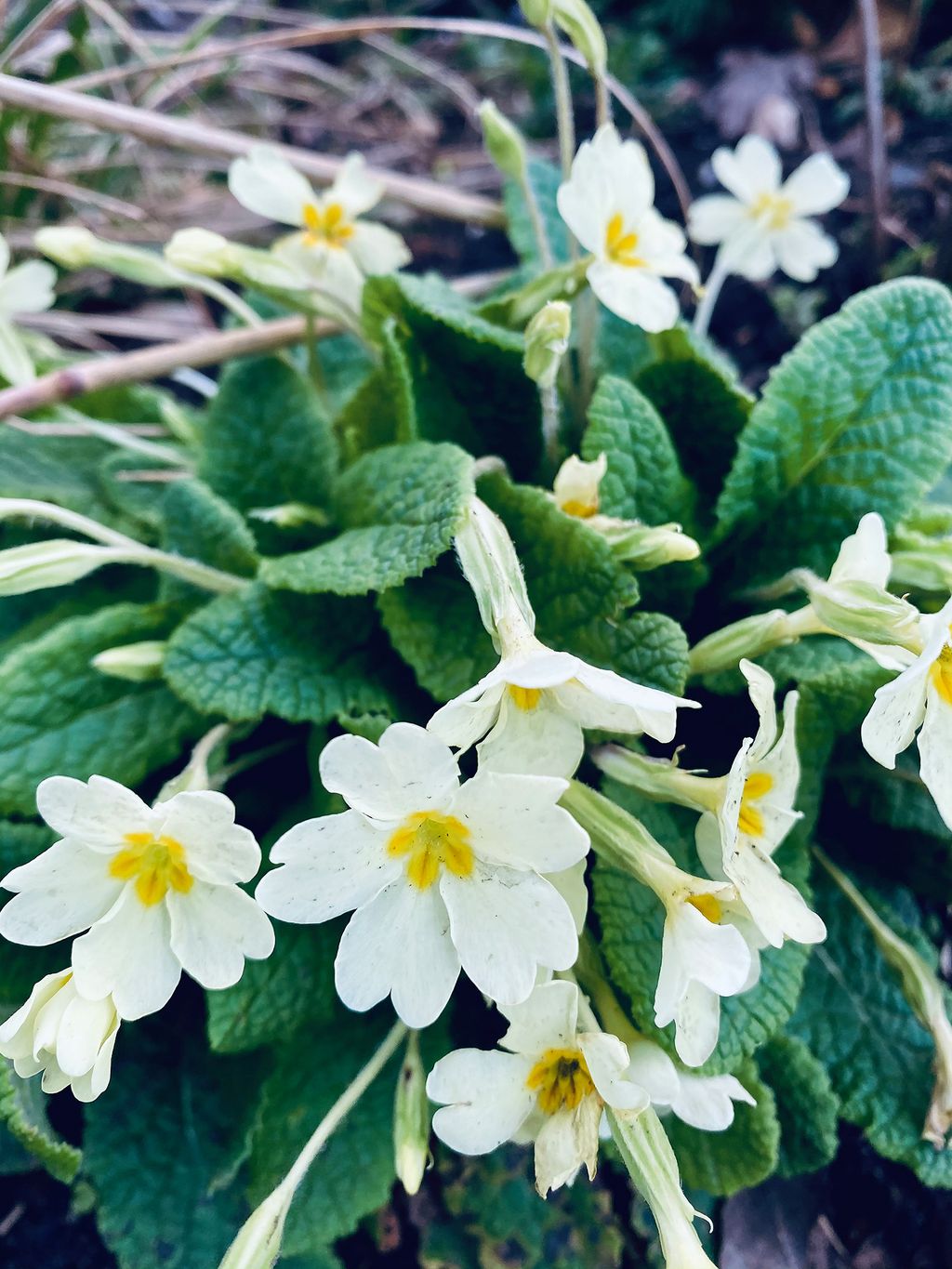
I love March. It’s the beginning of spring and growth is accelerating quickly in the garden. Primroses are flowering, apple blossom bursting and perennials thrusting upwards in vivid green. The colour of the month has to be the lime green of Euphorbia characias wulfenii – even better when it is offset by purple-flowered Lunaria ‘Corfu Blue’. Smaller Euphorbia epithymoides also flowers in March, forming rounded hummocks in the border that are the perfect foil for the emerging tulips.
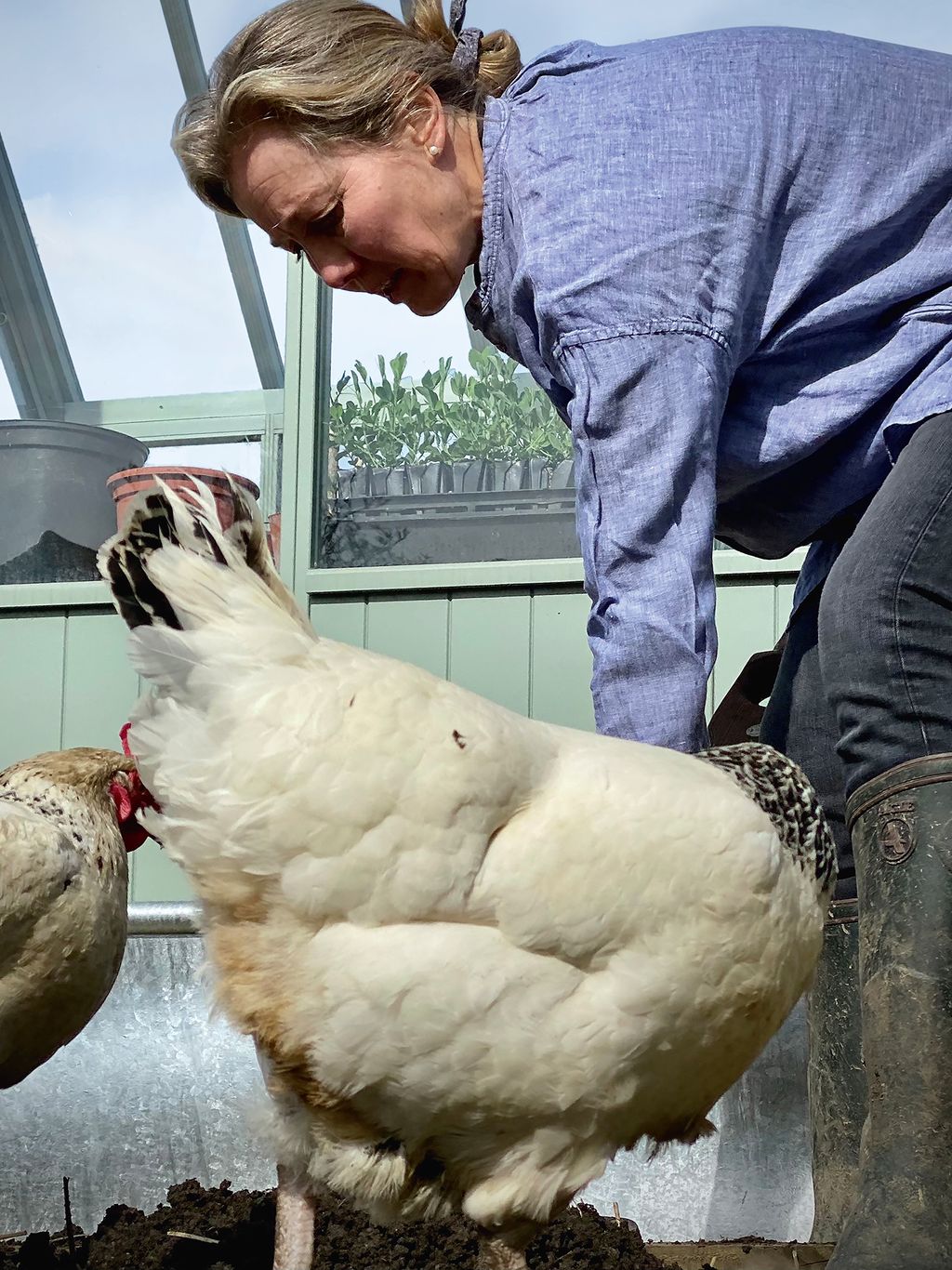
One of the most important tasks is to mulch the flower borders with coarse-grade compost. This improves the soil structure, locks in moisture and suppresses weeds. I work methodically, the chickens around my feet, forking compost from the wheel-barrow and spreading it round the plants using my hands. Once this is done, I feel ready for spring.
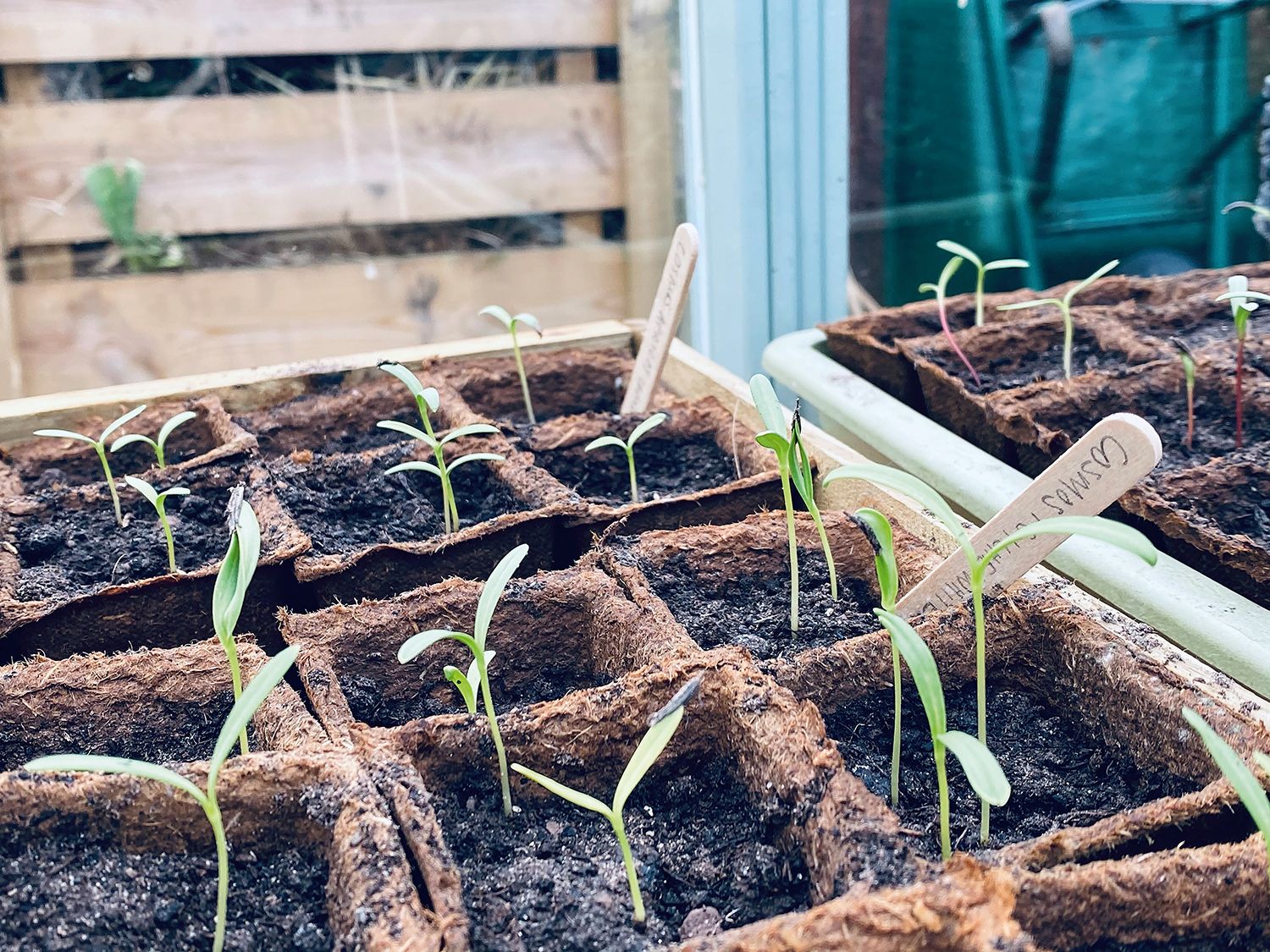
Seed-sowing can start now in earnest. I have been experimenting with wood and bamboo-fibre seed trays and plant-fibre or coir modules. Results were good, but non-plastic inserts wick water away fast, so you have to make sure the seedlings don’t dry out.

The other thing that I love doing this month is potting up dahlia tubers. I leave some in the ground each winter, protected by a mulch, but lift half of them to overwinter in a box of sand or straw in the shed. In March, I get them out, dividing some of the bigger tubers to create more plants. Put the tubers in pots with multipurpose compost, setting them fairly high up in the pot with the tops of the tubers just showing. Then keep them well watered – but not waterlogged – and enjoy watching them as they put on masses of growth over the next couple of months before you plant them out in May or June.
This month’s garden tasks
- Plant potatoes 30cm apart in trenches 15cm deep.
- Sow hardy annuals under cover and directly into the soil if it is warm enough.
- Sow half-hardy annuals if you have a greenhouse.
- Sow spinach, chard and beetroot seeds outdoors.
- Sow more tender vegetables – such as tomatoes and chillies – indoors.
- Start hoeing beds to keep annual weeds under control.
- Reinvigorate perennials in pots by top-dressing with new compost.
What to plant in March
Early spring is all about blossom and bulbs, but some perennials and biennials also flower at this time of year. Ensure you have at least one statement blossom tree or shrub to give you colour as the garden starts to wake up.
- Dahlias
- Ranunculus
- Anemones
- Potatoes
- Spinach
- Chard
- Beetroot
- Tomatoes
- Chillies
- Planting and dividing herbaceous perennials
Now is an ideal time to plant herbaceous perennials. Garden centres will take stock of a huge range right now, so make sure you choose the appropriate plant for the location. Lift and divide established perennial plants now to improve their vigour and create new plants for your garden. - Starting dahlia tubers in pots
Dahlia tubers can be planted in pots under cover. A large 2 or 3 litre sized pot is ideal for getting them going, potted up with a good, moist multi-purpose compost. Place them in a bright, frost free location and they will begin to sprout in two to three weeks. Avoid over-watering, as this will cause the tubers to rot. They can then be planted out into the garden once the danger of frost has passed (late May). - Establishing a cut flower border with ranunculus and anemones
For the cut flower border, ranunculus and anemones can be planted into borders now that the soil has warmed up. Ensure that the corms are soaked overnight in room temperature water for at least 10-12 hours before planting. Both will flower in around three months, rewarding you with beautiful blooms for your home. - Nurturing sweet pea seedlings and encouraging bushier growth
Sweet pea seedlings that have been sown earlier in the year will be putting on a growth spurt. Young plants will become stronger by pinching out the tips, which encourages side shoots and avoids plants becoming weak and leggy. It is still not too late to sow sweet peas under cover - choose a heavily scented old-fashioned variety such as 'Noel Sutton', 'Prince Edward of York' and 'Lord Nelson'. - Pruning hydrangeas for new blooms
Hydrangeas will require some attention during March. Remove the dead flower heads in early spring, cutting back the stem to the first strong, healthy pair of buds down from the faded bloom. Hydrangeas flower on new growth, so avoid cutting into 'old wood', as this can reduce flowering for the next couple of summers. - Managing slug activity and garden cleanliness
As the soil warms up, slugs will begin their annual banquet on fresh new growth. Nematodes are a simple, organic method of keeping them at bay - they are available online and they are more effective than any chemical treatment (which should be avoided at all costs!). Continue to remove any decaying foliage or leaf litter from borders, as this will give slugs an ideal place to hide out. - Reseeding and caring for your lawn
Prepare and reseed any bare patches on your lawn that may have appeared during winter - rake off any leaves and add a layer of lawn compost before sowing. It is a good idea to net and protect larger patches once seeds have been scattered, as pigeons are particularly partial to them! If the weather is dry enough, you may be able to cut your lawn; make sure the blade of your lawnmower is not too low and cut long grass with a strimmer before mowing. - Chitting seed potatoes for an early harvest
Seed potatoes should be set out in trays or egg boxes in a bright but cool, frost-free location so that shoots will form. This process is called 'chitting' where you start the growing process prior to planting. Once you then plant the potatoes out in the soil you've already given them a head start. In an ideal world, this also means that you will get an earlier harvest, and a slightly better crop as well. Plantings of early varieties can be made during March; however, main crop varieties are best planted in April. - Bringing spring indoors with seasonal blooms
Fill your house with flowers - plucking blooms from the garden or hedgerow is irresistible during spring. Bud vases filled with primroses scattered across a dining table, create the most magical Sunday lunch setting; vessels of daffodils and grape hyacinths fill the home with bright contrasting colour and large vases filled with architectural branches of blossom, create impact in any entrance hall. The season should be enjoyed both inside and out. - Embracing the beauty of spring in your garden
Enjoy spring… March is a busy time of year in the garden and, before you know it, summer has arrived. Make time to take in the beauty of the season - visit a garden, take a bracing walk, or simply sit in your garden and listen to the birdsong.
Planting for March colour
Ornamental quinces such as ‘Moerloosei’ flower in early spring on bare branches before their glossy leaves appear. Grown in full sun or partial shade in moderately fertile soil, this variety can be trained up a wall or will form a medium-sized shrub.
The blooms of this hellebore hold themselves facing outwards instead of nodding down and they are produced in quantity in February and March. Hellebores grow best in partial shade in humus-rich soil.
Described by Beth Chatto as ‘a good allrounder’, this grows well as ground cover in most soils in full sun or partial shade.
 Eva Nemeth1/3
In the garden…
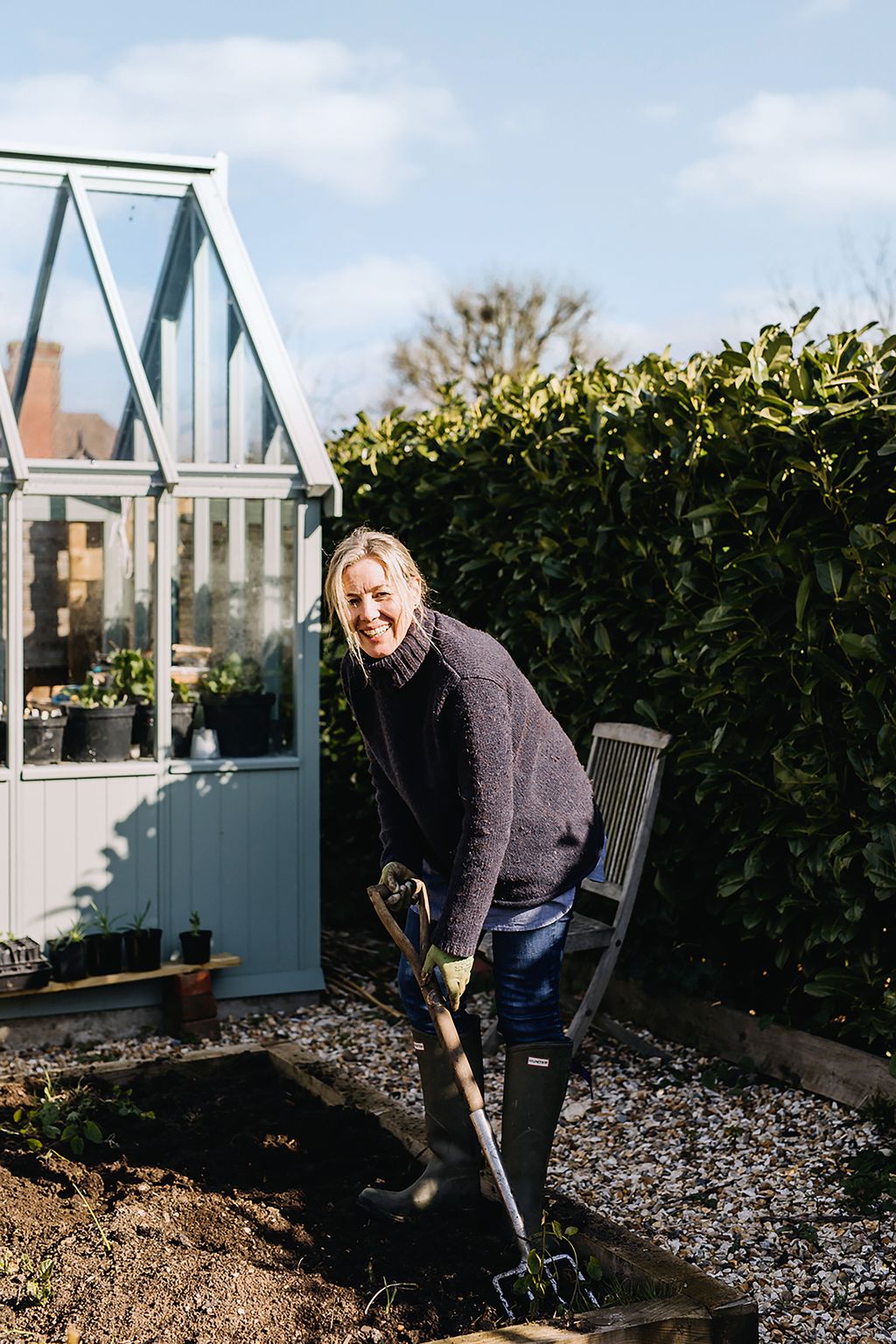
Digging over the vegetable beds to get everything ready for planting.
 2/3
2/3Primroses in bloom.
 3/3
3/3Clare and her chickens.


