

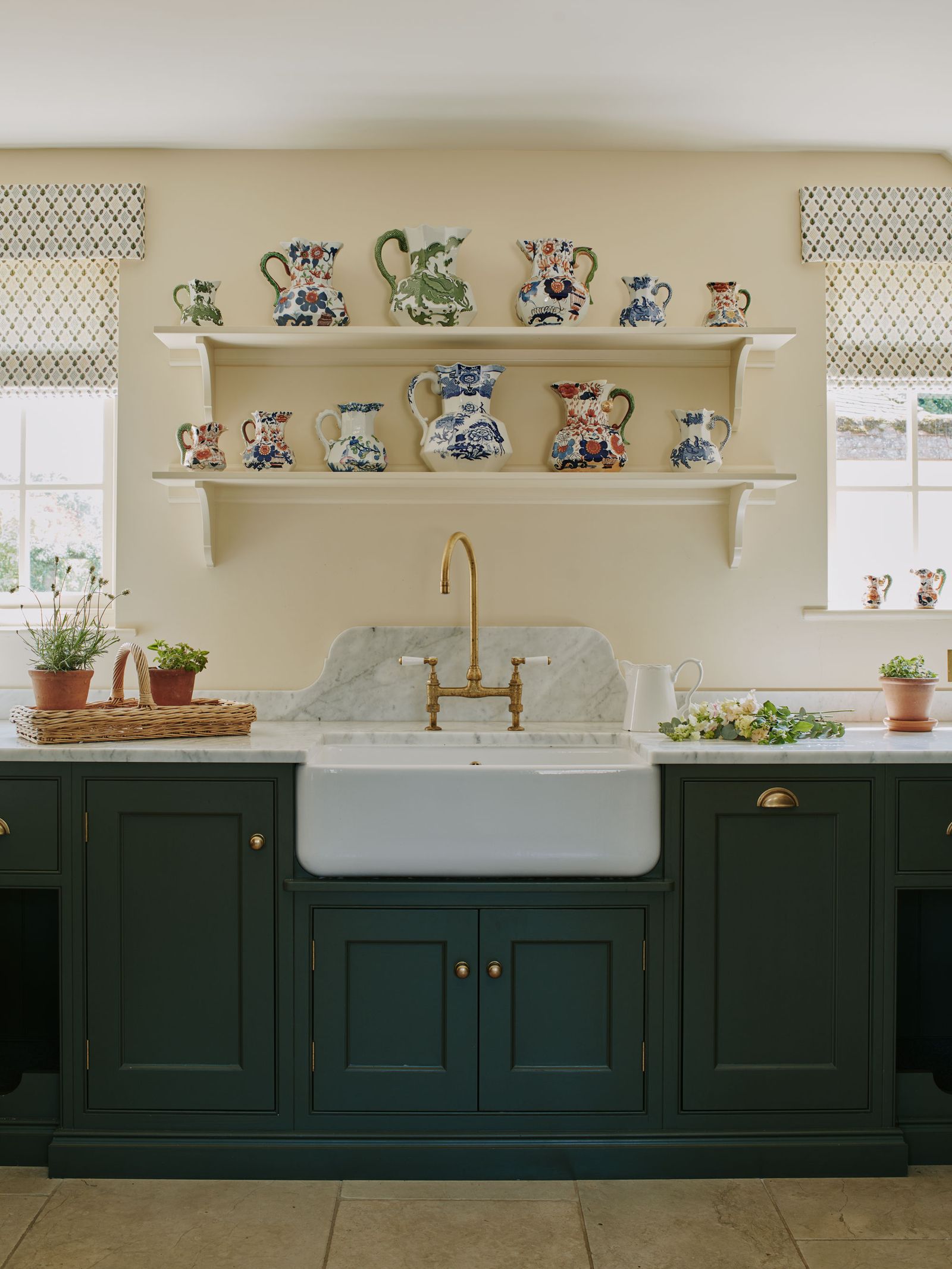
If you look back at the kitchens and utility rooms in even a handful of the traditional houses featured by House & Garden, you will probably notice a recurring feature: the Belfast or butler sink. These wide, deep, apron-fronted ceramic sinks lend themselves to washing pots and pans in the kitchen, soaking laundry or arranging flowers in the utility room, and rinsing off muddy footwear (or even small dogs) in the boot room. Today, the terms Belfast and butler (or butler’s) tend to be used interchangeably and their designs look pretty much identical. However, they are in fact two distinct designs with their own key characteristics. We’ve asked the experts to give us a rundown on everything from etymology to modern variations, so there’s plenty to sink your teeth into here.
What’s the difference between a Belfast and a butler sink?
‘Although both the terms are often used to describe a ceramic farmhouse sink, strictly speaking they are different designs,’ says Nigel Palmer, head of communications marketing at House of Rohl, the parent company of traditional British sink manufacturer Shaws of Darwen. ‘A butler sink is a simple, rectangular bowl with a thick ceramic wall and a lustrous glaze. The Belfast is a variation of the butler, with the addition of an overflow weir. Instead of any excess water draining through a hole under the taps, you can fill the sink higher, as the Belfast overflow is built into the inside of the sink with an outlet right at the top.’
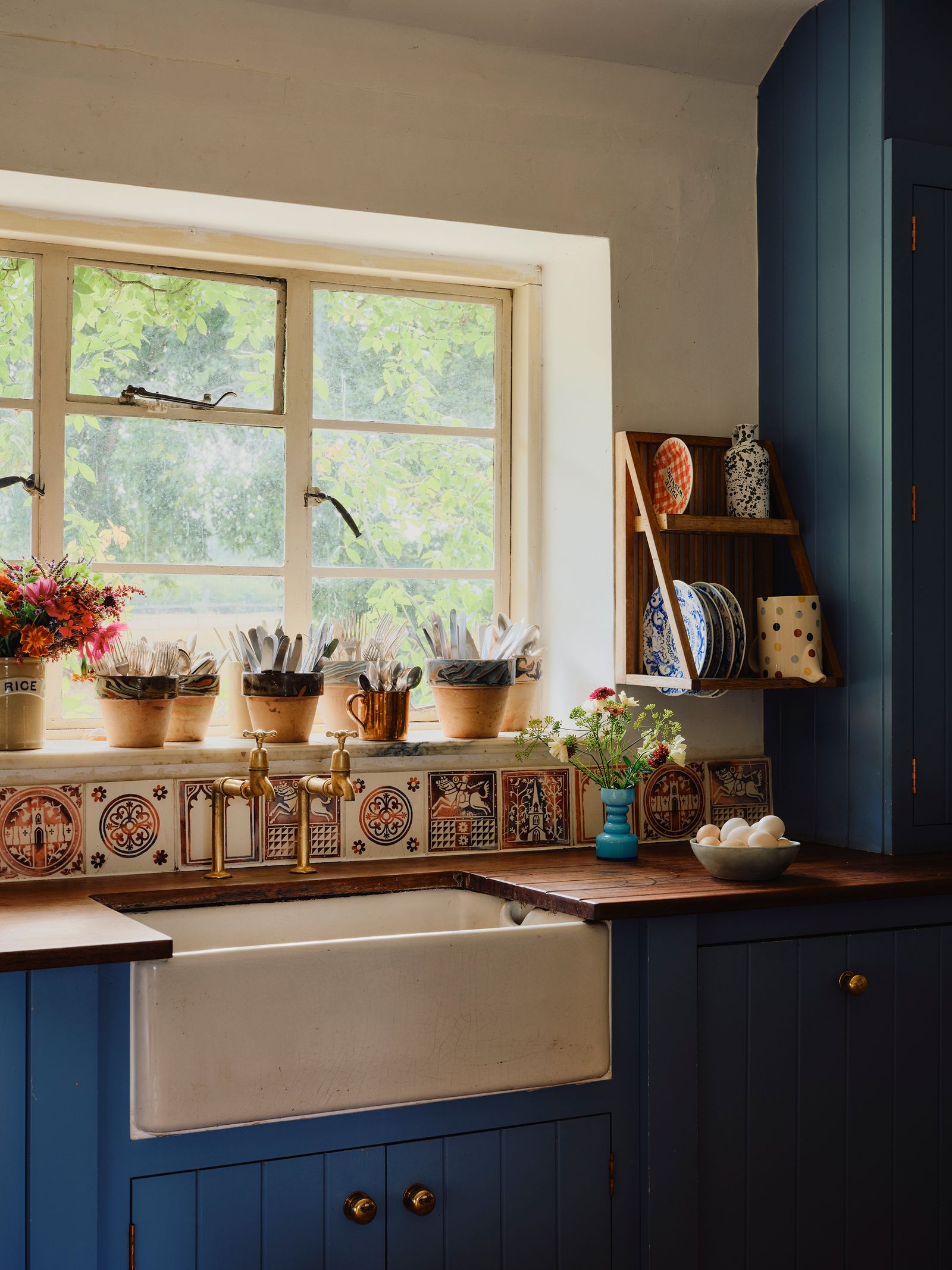
Butler and Belfast sinks are typically apron-fronted, meaning the front panel is exposed and often extends slightly beyond the edge of the countertop. This allows you to stand closer to the sink and prevents too much water from splashing on your woodwork. If you prefer a more streamlined look, you might want to opt for for an inset or undermounted ceramic sink (Shaws has a good range).

Despite being known colloquially as farmhouse sinks, both designs are believed to have urban origins. ‘The butler sink originated in Victorian London, where water was scarce and water waste discouraged,’ says Neptune’s design director Fred Horlock. ‘It is typically shallower, with a wider basin, but without an overflow to ensure minimal water is used. The Belfast sink looks very similar, but as it originated in a coastal city where fresh water was more readily available, it has a deeper basin and an overflow to catch excess water.’
As its name suggests, the butler or butler’s sink was designed for cleaning crockery and other household items in the butler’s pantry, while the Belfast sink is thought to have been created for use in Belfast’s booming linen industry. ‘Both are outcomes of the industrial revolution when plumbing became widely available,’ adds Anthony Earle, lead concept designer at Artichoke. ‘Previous to this, a farmhouse sink usually would have been carved out of a single block of stone.’
Should you choose a Belfast or a butler sink?
‘We find the Belfast is popular for its traditionally deeper basin, with more space for large pots and pans, making it a great choice for hardworking kitchens and family homes,’ says Fred from Neptune. Meanwhile, Nigel reveals that Shaws’ bestselling models are the classic ‘Butler 600’ and ‘Butler 800’ thanks to ‘their craftsmanship, versatility and suitability across both traditional and modern kitchens’.
However, as they both go on to explain, the differences are not always so clear cut. ‘Butler and Belfast sinks have changed over the years to further their appeal, from seeing deeper basins in the butler version, to double sinks ideal for busy family homes,’ says Fred. ‘The two styles are now very similar and often mistaken for each other.’ Nigel agrees: ‘Originally Belfast sinks tended to have deeper bowls, but today you can get both styles in different sizes, so the choice is a matter of personal taste.’
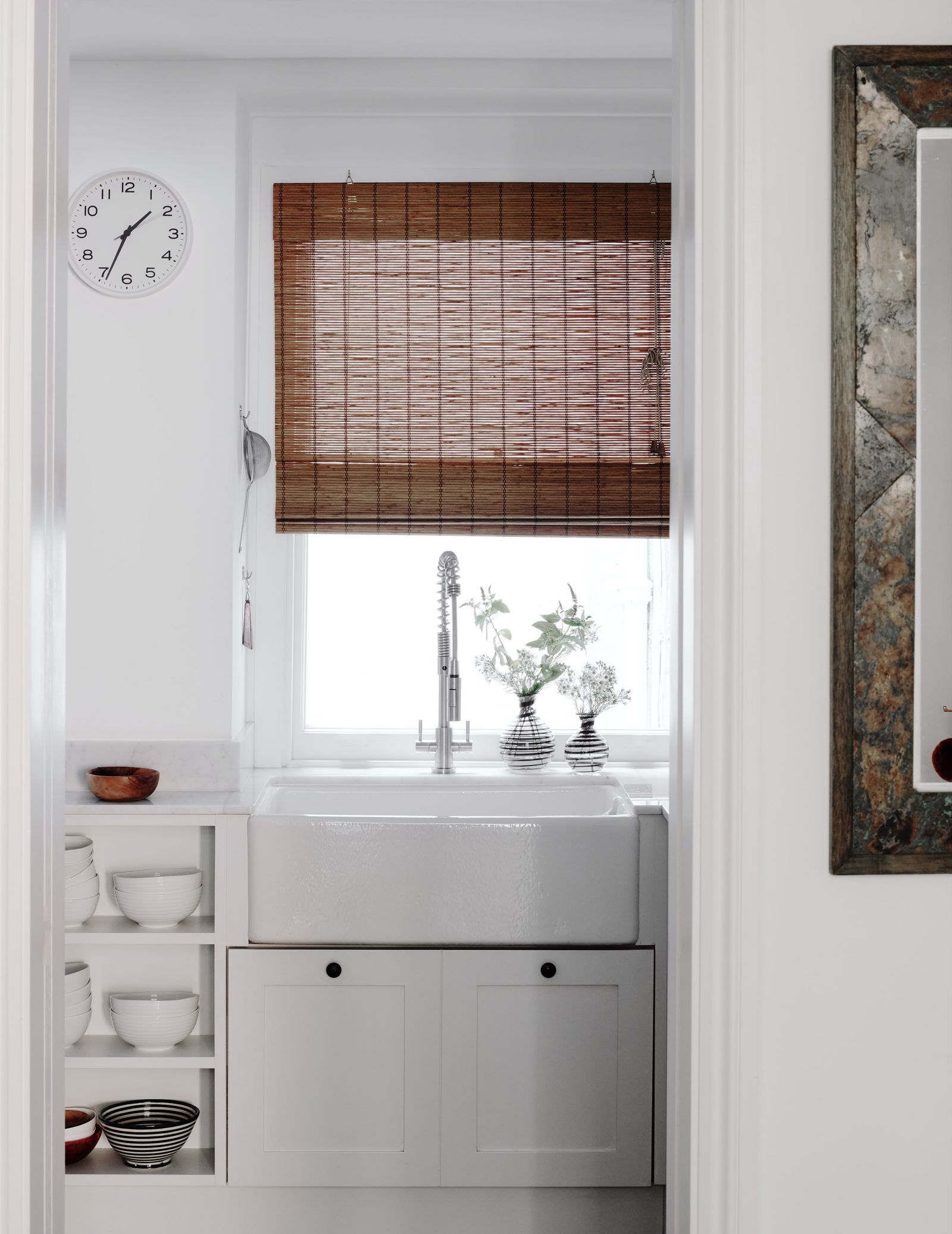
If you need a particularly durable finish, Nigel recommends looking for a traditional fireclay sink rather than one made of vitreous china. ‘They are fired for longer, at higher temperatures, making them tougher for heavy-duty kitchen use,’ he explains. ‘Shaws is the oldest manufacturer still producing these sinks using traditional methods, offering a range of butler, Belfast and other original models. Each one is made from a unique blend of French clay and English “Devon Ball” clay – the exact formula is a closely guarded secret.’
Anthony from Artichoke also highlights the importance of context when choosing your sink. ‘We start by looking at the age of the house with longevity in mind, ensuring it will endure visually and be there for generations to come,’ he says. ‘It’s also important to consider the function of the space and the sink – be it a kitchen, boot room or pantry. For a boot room, large-scale sinks are useful for arranging cut flowers, washing fresh garden produce, cleaning Wellington boots or washing down the dog. Whereas a statement sink in the kitchen is another way to add materiality, interest and presence.’
Are there different styles of Belfast and butler sinks?
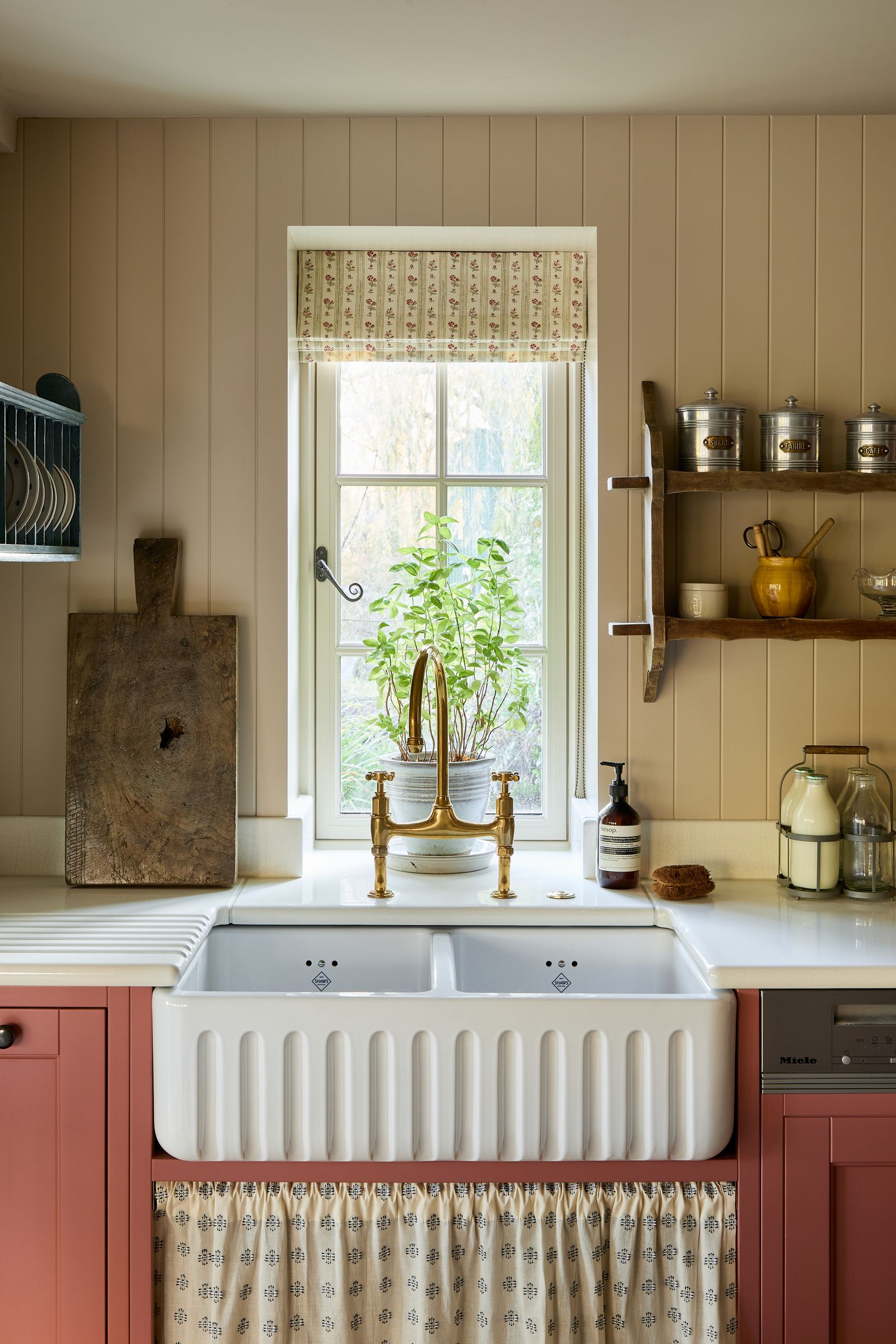
If you are looking to make a statement, there are numerous variations to consider, particularly when it comes to materials and decorative finishes. ‘Fluted edging details really elevate the sink’s profile,’ says Neptune’s design director Fred and Nigel recommends the ‘Bowland’ or ‘Ribchester’ models from Shaws, both of which have fluted apron fronts. For a contemporary alternative, there is Shaws’ Gallery collection of nature-inspired artwork that can be applied to five of its sinks, including the ‘Butler 600’ and ‘Butler 800’.
Swapping traditional fireclay or china for a more unusual material is another great way to mix things up. ‘We love to celebrate the domesticity of historic houses with vernacular, natural materials,’ says Anthony from Artichoke, who regularly works on special bespoke designs. ‘For example, we recently designed a solid fluted Carrara marble sink for a kitchen in Italy – we chose a lower-grade Carrara for its character, honesty and connection to the region.’ He goes on to describe an incredible Belgian blue soapstone sink carved from a single block for a private Regency country estate – ‘it weighed a quarter of a tonne and we called it the megalith’. Other options include timber and even enamelled cast iron, which Anthony says ‘is pretty much bullet proof and looks great over time’.
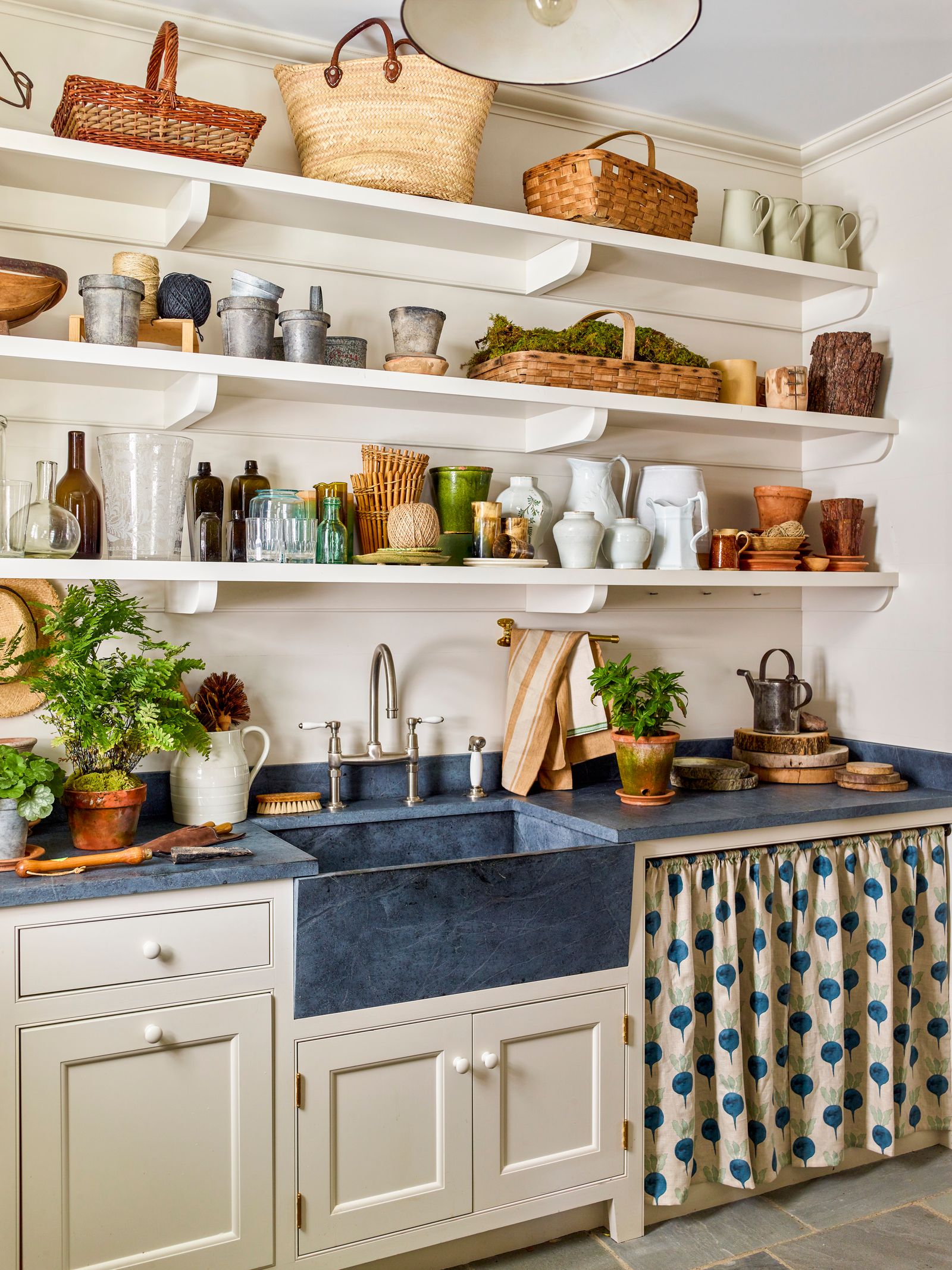
Finally, think about the position of your sink. Anthony recommends installing the sink ‘on a stand or plinth of the same material – there are some fantastic reclaimed pieces out there too’. Artichoke has also had success with gently slanted designs that make the sink more comfortable to stand at, which is particularly important if you will be spending longer periods of time washing up or carrying out other household tasks. As with any key element of your kitchen design, it is all about finding the perfect balance between functionality and style.


