
Imagine seeing a house you like, doing a bit of due diligence, deciding on your maximum budget and, if you are the top bidder on a prearranged date, holding the keys in your hands within the month. No gazumping, no ambiguity, no chasing lawyers and estate agents. You might even bag a bargain – although don’t assume you will. Such, in theory, is the reality if you decide on buying a house at auction.
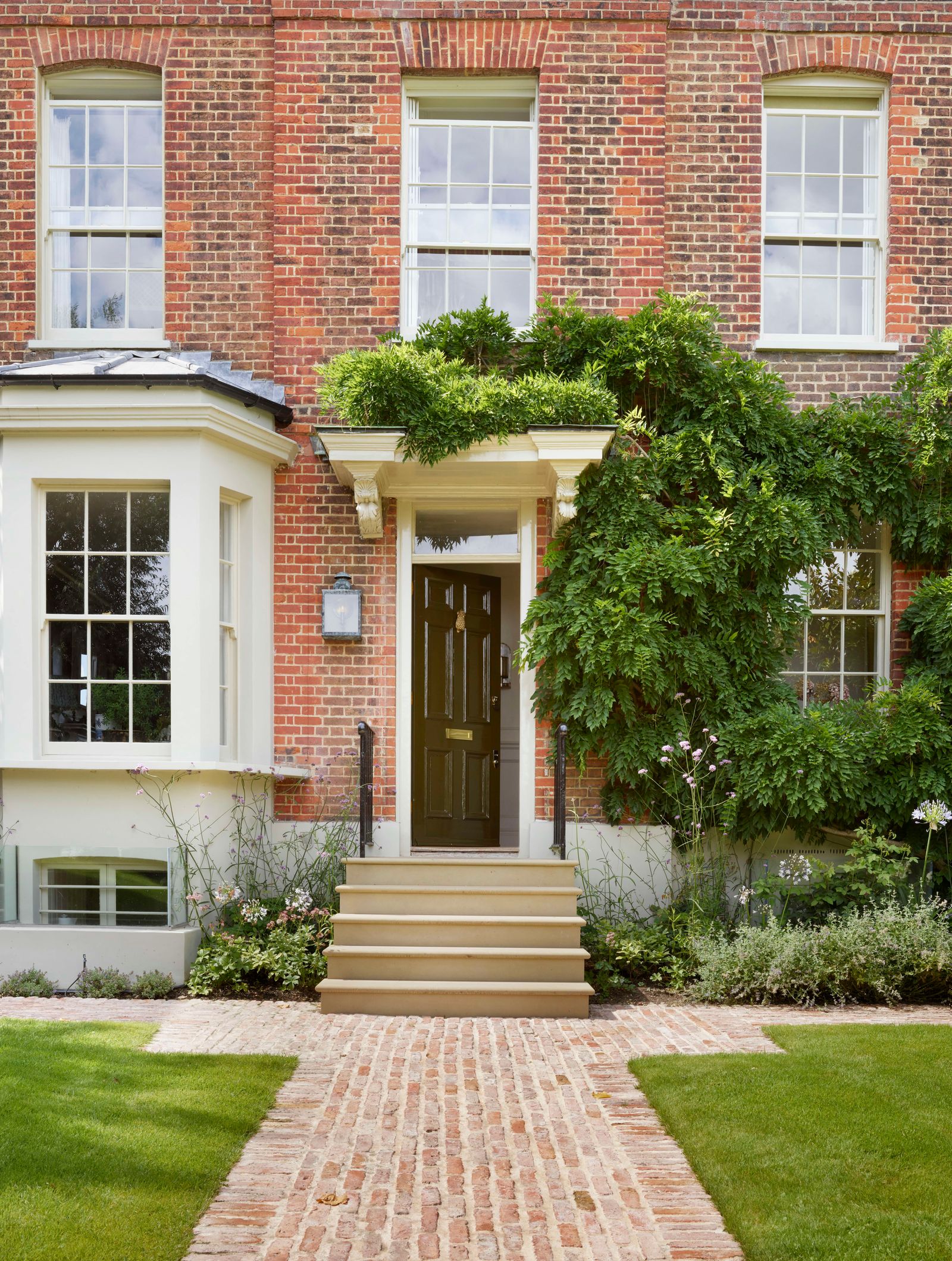
For India Cardona (@theindiaedit) buying a house at auction offered her the chance to purchase a property she would not have imagined would be an option otherwise – a Georgian house in Stockwell, which she and her husband won at online auction for £15,000 under their maximum budget. ‘There was a lot of anxiety leading up to the auction but once it was ours there was no worry about anyone coming in and outbidding us, or the buyer pulling out. There wasn’t a chain. There were a lot of benefits to it – I’ve heard so many miseries with the normal house-buying process,’ she says. India is now documenting the renovation of her house through a new Instagram account, @theinteriorsedit.
Instagram content
Of course, there are reasons why not everyone opts to buy and sell this way and they are worth heeding. ‘There’s a level of adrenaline so if that’s not your thing it’s probably not right for you,’ says India. And it’s not a forum where you should put heart over head or go with your gut, caution architect Rupert Scott of Open Practice Architecture, and interior designer Leo Wood of Kinder Design (@leo_kinderdesign), who bought a derelict garage in East Dulwich at auction, which they have since turned into their family home.
But if the idea of a speedy sale without the angst of traditional home buying appeals to you, here’s everything you need to know to guide you through the process of buying at auction, while avoiding any nasty surprises.
Where to start
First up you need to find a property. Major auction houses have online catalogues for their upcoming sales. Check out options such as Savills, Allsop, Auction House London and McHugh & Co., Rightmove and Zoopla also have the option to filter to browse only auction properties.
Due diligence
Once you’ve found a lot – or a few lots – that you might be interested in bidding on you need to find out as much as you can about it. Scrutinise the auction pack and look for any gaps in the information. Ask as many questions as you can – these are usually made public to everyone. Bear in mind information can change at any point before the auction. Leo and Rupert’s home initially said it was being sold with vacant possession – what they wanted – which then changed to a sitting tenant about a week before the auction. Rupert also points out that while there is a requirement to disclose information when selling via auction, some people use the method as a way to let issues slip through the net.
Some properties might have viewing days, which you should absolutely attend. Some might not, for various reasons, some more above board than others. Claire Segeren (@whathavewedunoon) who ended up accidentally bidding on – and winning – part of a derelict Victorian mansion in the west of Scotland says that auction houses don’t always advertise places very honestly. ‘The auction house we bought through had used old photos of our property and described it as needing updates, whereas our structural engineer advised us to knock it down it was in such a bad state,’ she says. Meanwhile, Claire had done significant research on the property she had intended to purchase, a fire-damaged middle-floor flat in Glasgow, with occupied units on the floors above and below. ‘We went and looked at the outside of the property, we couldn’t gain access so we borrowed a drone to check the condition of the roof and guttering, and we spoke to people in the neighbourhood and looked up old newspaper reports to see what the fire might have been caused by so we felt comfortable bidding on that property,’ she says.
Set your maximum budget
For anything other than a fully inhabitable property – and bear in mind properties most often go to auction because they are difficult to sell via normal channels – you need a very clear estimation of your absolute maximum bid, for which you need a spreadsheet detailing the worst case scenario cost of any works you might need to do and any fees plus contingency to see if the project stacks up, says Rupert. And stick to that budget like glue.
Do a trial run
If this is your first time buying at auction it is a good idea to attend a live auction, or watch one online depending on how your planned property is being sold. Hopefully that way you won’t find yourself overwhelmed and carried away on the day. It might help you avoid a similar mix up to Claire and her husband, who fell foul of a last-minute listing added with the same starting price as the one they wanted, leading to their unwitting and uncontested bid on a total wreck.
Get your finances in order
A winning auction bid is a legally binding contract at which point you will need to pay 10 per cent on the day, with the balance due within a set period, usually 20 working days. If you are going to need a mortgage to finance your purchase get that agreed in principle on the property you want to buy in advance of the auction – bear in mind that many properties that make it to auction will not be mortgageable if they’re in too decrepit a state or have a short lease, for example.
India also got a bridging loan in principle agreed, just in case anything fell through with the mortgage. ‘Luckily it didn’t because the interest was going to be something like 17 per cent,’ she says.
Know when not to pursue an auction purchase
Leo and Rupert have bought three properties at auction now, but estimate they have probably invested time researching as many as 100 lots, and have bid on 20 or so. Rupert says your bidding success is likely about one purchase for every three properties you eventually bid on. ‘Time spent analysing a site is a very cost-effective use of your time,’ says Rupert. ‘If you buy the wrong site you’re in a world of pain right from the beginning. That includes pushing your budget, it’s far easier to spend £20,000 extra than it is to make it back.’
Enlist professional advice
The first professional you need on your side is your solicitor to do all fundamental checks: are there any rights of way or prohibitive legal issues like restricted covenant, for example. There will be instances where they can’t go inside (at which point, own risk and proceed with caution) ideally you would also commission a survey as you would with any property purchase to flag up any potential issues.If you can't access the property, a solicitor will always be able to do legal checks and there are aspects of a survey that involve looking at things like development in the area and flood risk that don’t involve seeing inside a property. If you’re planning a self build or major renovation or extension or change of use then you will also want to enlist a planning consultant or an architect with substantial planning experience.
Once you’ve got your crack team in place, have worked out your budget and flexed your auction muscles once or twice, then you don’t need to feel daunted at the prospect of buying at auction. ‘Any house-buying process is anxiety inducing,’ says India. ‘It was such a nice feeling when we won it and it was ours. I would definitely do it again.’


