

‘Christmas time!’ Charles Dickens once wrote. ‘That man must be a misanthrope indeed, in whose breast something like a jovial feeling is not roused—in whose mind some pleasant associations are not awakened—by the recurrence of Christmas.’ And Dickens, though he could be scathing when he wanted to, was anything but a misanthrope when it came to the Christmas season. The Victorians bequeathed us a huge swathe of the traditions we associate with the holiday today, including dozens of carols and the raising and decoration of pine trees, and Dickens was among their chief evangelists. He wrote five festive novellas centred on Christmas in the 1840s, the most famous of which is A Christmas Carol, but which also included The Chimes, The Battle of Life, The Cricket on the Hearth and The Haunted Man and the Ghost’s Bargain.
It wouldn’t necessarily be an outrageous claim to suggest that Dickens himself is the person most responsible for the invention of modern Christmas (we can perhaps include him in a festive triumvirate with Prince Albert and Richard Curtis). And although ‘being visited by three ghosts in succession who scare you into being less hardnosed’ might not be a regular festive occurrence for most of us, there are all sorts of Dickensian Christmas traditions which we take for granted but which the author himself helped revive at a time when celebration of the holiday was, perhaps surprisingly, in decline. To understand why, one needs to understand the context in which Dickens was writing.

Victorian society from the 1840s onwards was relatively newly industrialised and urban. Though this meant there was a middle class who, for the first time, had the disposable income and leisure time to invest in Christmas festivities, it also meant that workers in the cities had less time to celebrate Christmas in their traditional ancient ways. Most traditions survived in rural areas, where farming communities were poor but had lots of spare time, with relatively little work to do in midwinter. It is also worth noting that Christmas was seen by strict Christians as a less important liturgical holiday than Easter. All these factors combined to mean that someone in the 18th century wouldn’t really have considered the holiday particularly more or less important than any other annual occasion.
Dickens, however, thought that Christmas could be a powerful moment for both communal good cheer and for the rich to show compassion for the poor in the coldest part of the year. Born the son of a Portsmouth debtor, he worked for three years from the age of 12 in a factory blackening shoes, and maintained a commitment to progressive social reforms for the rest of his life.
Dickens’s genius was to take ancient traditions with roots in historic cultural practice and modernise them for the mass Victorian public, some of the best examples of which come from A Christmas Carol. Shortly after one in the morning, for example, the Ghost of Christmas Present appears to Scrooge in the form of ‘a jolly giant, glorious to see…clothed in one simple deep green robe, or mantle, bordered with white fur.’ The genial Ghost is barefoot, and wears a wreath of holly and icicles on top of his brown, curly hair. This is Father Christmas before Coca-Cola popularised imagery of him in fur-lined red robes (though they didn’t invent the red robes themselves, the company ran a thirty-year ad campaign from the 1930s through to the 1960s which all but formalised the idea that Santa = red). More significantly, though, the Ghost clearly resembles the Green Man, the mysterious symbol found carved throughout British churches for thousands of years, a possibly pre-Christian icon thought to have embodied plenty.
Likewise, the Cratchits eat a goose, a more traditional bird to eat up until, per most sources, the turkey overtook it in the mid-20th century in Britain, possibly because it was easier to mass-raise turkeys, and possibly as an American influence. Incidentally, Dickens was a serious admirer of Washington Irving, who himself had codified Christmas traditions in his native USA thirty-odd years before A Christmas Carol with The Sketchbook of Geoffrey Crayon, Gent. Among other things, Irving’s book chronicled and popularised traditional English Christmas practices and informed American readers about traditional life back in the Old Country.
Even the idea of Christmas as a time when the streets and fields of England are blanketed with white snow might well owe its origins to Charles Dickens. Although December is typically not a snowy time of year in Britain – January and February are far more likely to be white – Dickens wrote during what is known as the Little Ice Age, a colder-than-average period of several hundred years whose final inflection point was around the 1850s. In practice, the winters of A Christmas Carol and the other novellas could have been almost a degree and a half Celsius colder than ours are now. In February 1814, when Dickens was two, the Thames froze over so thickly that an elephant was led across the ice beside Blackfriars Bridge. It hasn’t frozen since. In short, Dickens covered his Christmas scenes in heavy snow which might have been less unusual for him than us, cementing the idea in the British cultural consciousness.
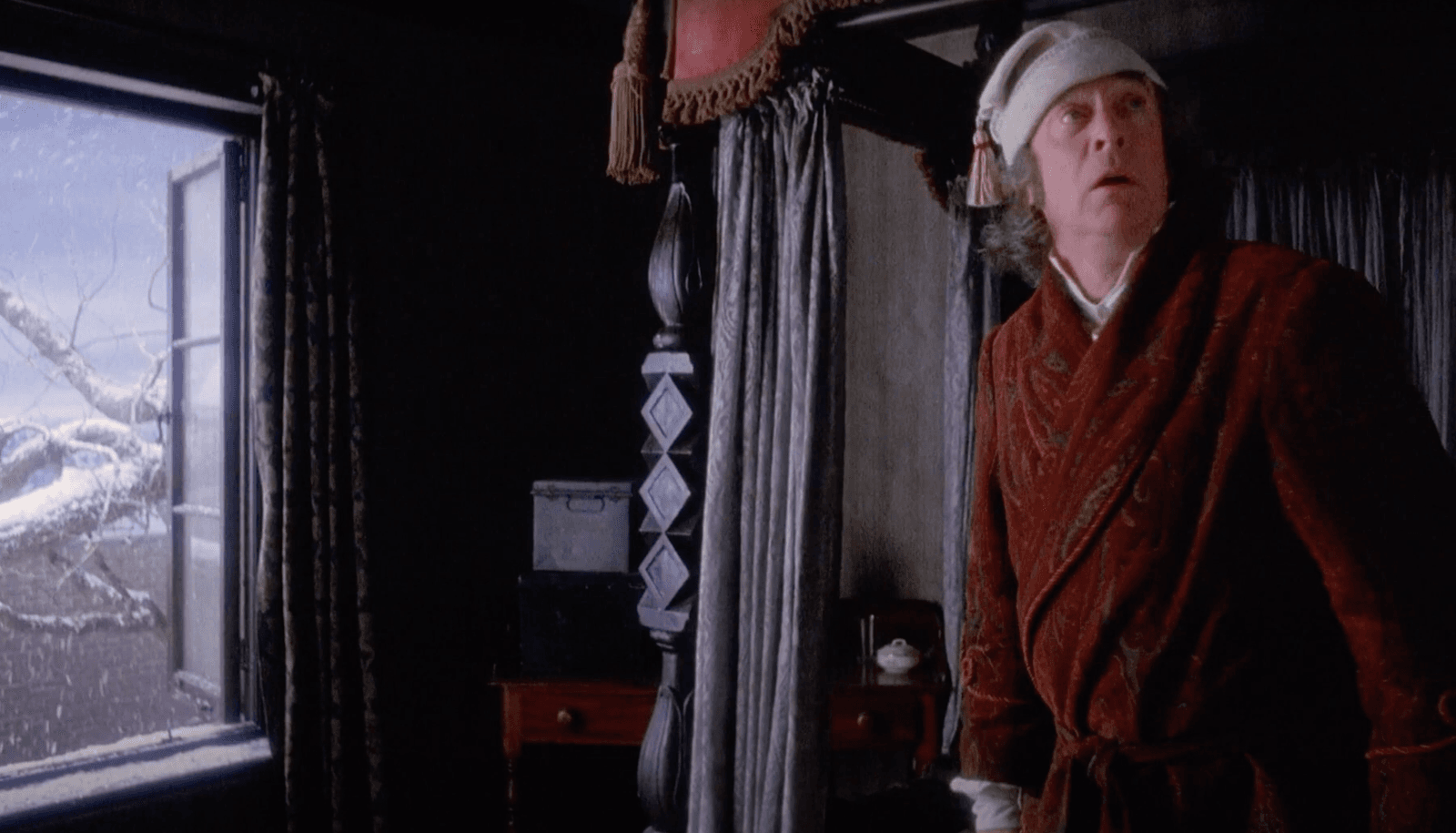
Unfairly, the word ‘Dickensian’ has come to signify hardship and cruelty. On the contrary, perhaps more than anything, Dickens simply popularised the idea that Christmas was a time for happiness, celebration, feasting and gift-giving. Even in Great Expectations, it is on a dreary and frozen Christmas Eve that Pip first encounters the terrifying escaped convict Magwitch in the Kent marshes – but Pip’s act of Christian charity in stealing a pie and brandy for Magwitch sets in motion the novel’s whole course of action and Pip’s eventual elevation to a gentleman. Dickens strongly believed in the betterment of society through charitable giving and Christian goodwill. He made the holiday more sentimental, and arguably less religious; each of his five Christmas novellas had a moral lesson, as anyone who has read A Christmas Carol (or, yes, seen the Muppet version) will know.
Really, Dickens’ own Christmas traditions are less specific practices and more a move into a truly modern vein. And they’re still perfectly recognisable today. In The Pickwick Papers, there can be found a description of the holiday that will ring true to anyone who has enjoyed a merry Christmas. ‘Happy, happy Christmas,’ Dickens writes, ‘that can win us back to the delusions of our childish days; that can recall to the old man the pleasures of his youth; that can transport the sailor and the traveller, thousands of miles away, back to his own fireside and his quiet home!’


