

Humans are contradictory creatures. The widely accepted mood in interior design right now is maximalism—and what does maximalism require? Stuff. However, we simultaneously stress about the need to declutter, organise, and remove our stuff. It’s human nature to want to collect, and perhaps that goes back to the cave days when having more things—food, tools, etc.—meant a greater sense of security in a harsher world. In other words: we are seemingly hardwired to want stuff. Bric-a-brac, trinkets, tchotchkes, and tat; we all have our share. So, how do we find that balance of keeping our knickknacks and collectables while also keeping a sense of visual order? How can we keep our homes filled with all the little things we love without our friends nominating us for an episode of Hoarders? For some sage advice, we have consulted with the experts: garden designer Butter Wakefield, interiors stylist Gabby Deeming, interior designer Rita Konig, and designers Russell Pinch and Oona Bannon of Pinch.
Intentional grouping—a sense of curation—can go a long way when it comes to displaying large amounts of objects. Landscape designer Butter Wakefield considers colour when showcasing her collections. Her west London home is filled to the brim with all sorts of treasures, yet it doesn’t feel overwhelming or like an antique store. “A lot of my starting points come from the colour of something—that’s almost the first requirement for me,” says Butter. “For instance, in my sitting room, I have lots of lusterware jugs that all go nicely together, so there’s always some sort of general theme.” Her love of a colour theme can be seen in many instances, including her arrangement of orange Staffordshire figurines on a side table in her drawing room and her green, glass apothecary bottles in her bathroom. This gives the eye something to rest on and make sense of—it makes all of your pieces easy to visually digest.

When intentionally grouping your beloved objects, it’s also important to pay attention to scale. “Size and scale are very important when you’re looking at the overall shelf—shelfscapes are a ‘thing’,” says Gabby. Having your objects speckled about here-and-there can leave a shelf or vignette looking cluttered. Arranging collectables in a straight line is a safe and effective mode of curation; Butter Wakefield’s Staffordshire dogs over her range are displayed in this manner. The biggest dogs are placed on the ends, while the dogs get progressively smaller in the middle, forming a V-shape; the key here is symmetry. However, symmetry isn’t always necessary, as balance can be achieved by playing around with height, weight, and the visual sense of weight that comes from colour. A credenza in Gabby’s dining area exemplifies this well; there are no two items which are alike. Two lamps of completely different styles and proportions flank each other on a credenza—it’s their distribution of colour and the visual weight of the objects closest to them that make them balanced. “When you’re dealing with lots of different objects, you just want to have different heights,” advises Gabby. “Lean things against the wall, prop a postcard against a candlestick, bring in a tall lamp for some height, or maybe a plant—just think about how the objects connect to each other.” Also, dig deeply into your brain to retrieve your memories from art class in school—do you remember talking about the triangular formation of figures in Renaissance paintings? The figures were hardly ever the same size, but nothing looked out of proportion because they were staggered in front of the tallest figure and didn’t stray too far from each other. What worked for Renaissance painters and their masterpieces can work for you and your bric-a-brac, too. When you’re ready to arrange your objects, there’s no need to overthink it; you just need to step back and think about what it all looks like from afar and ask yourself; “Is this balanced?”
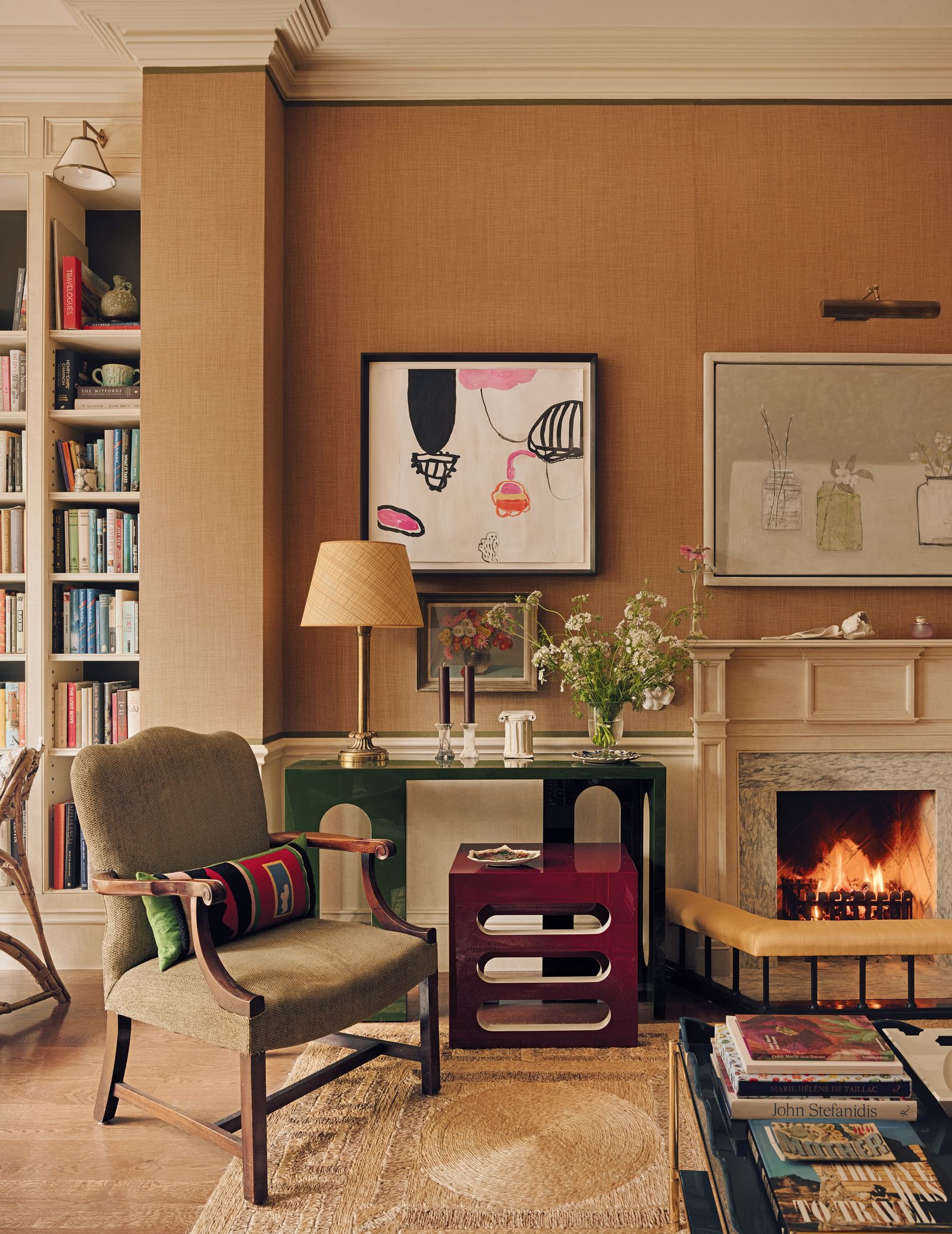
When going through your baubles and bibelots, you need be a little ruthless. “The things that you don’t choose are often as important as the things that you do,” says Rita. “Things are brought into our houses all the time. You have to be very disciplined about throwing out or putting away what you don’t need or want.” Although the thought of parting with our trinkets (or even resisting purchasing them in the first place) might evoke instant panic within the magpie community, she has a point; too many things can be overpowering “Sometimes it’s just about having a bit of a tidy—hide the stuff you don’t like that always builds up,” Gabby suggests. “Put it in the ‘drawer of doom’ that we all have with the staples, rubber bands, and Christmas cracker toys.” Permission to keep that junk drawer: granted. If you have the storage for it, things can come in and out of hiding, as well. “Lots of things are put away, and then they come out when the time is right,” says Butter. This could be most applicable to heirlooms and holiday-themed objects; things you love, but only need sparingly. As for the little things you just can’t put away our feature as part of a bigger scene, the art of corralling might need to be employed. Look at images of just about any room in Rita’s homes; she keeps her smalls in order by keeping them confined to a tray, dish, or basket.

Having pieces that are multifunctional also help keep things at bay—things you need in your everyday life that just happen to be pretty. For instance, Butter uses her glass bottles as flower vases and her buckets as bulb storage and Gabby’s box of matches on her credenza double as an intriguing decorative piece. “By the time things become an antique, they’re often no good for their original use because they’ve lost their mate, or they have a use that no longer exists,” says Rita. So next time you have the urge to haunt your local charity shop, be inventive and think of a new use for an old thing. Pro tip: Rita uses orphaned dishes instead of coasters.
None of this matters if you’re not buying things because they truly speak to you. “I think the most important thing about collecting is collecting what you actually like,” says Butter. In a world of social media and its constant micro trends, it’s tempting to buy things because they’re the thing-to-buy-du-jour. Russell Pinch and Oona Bannon of Pinch have a very minimal style compared to the adorned spaces of Butter, Gabby, and Rita, but they somehow manage to keep a clean aesthetic while still having plenty of objects. “The reason it works is because they’re personal objects and they’re not bought to show,” says Russell. “We have brought home plenty of trinkets from all around the world in our hand luggage,” Oona adds. “There is a total disregard for historical references, in that we mix everything together: from a 1980s print to a turn-of-the-century portrait.” In other words, if you buy what you love, it’ll work—just as long as you approach displaying them with the same sense of curatorial discernment that our pros apply to their own homes.


