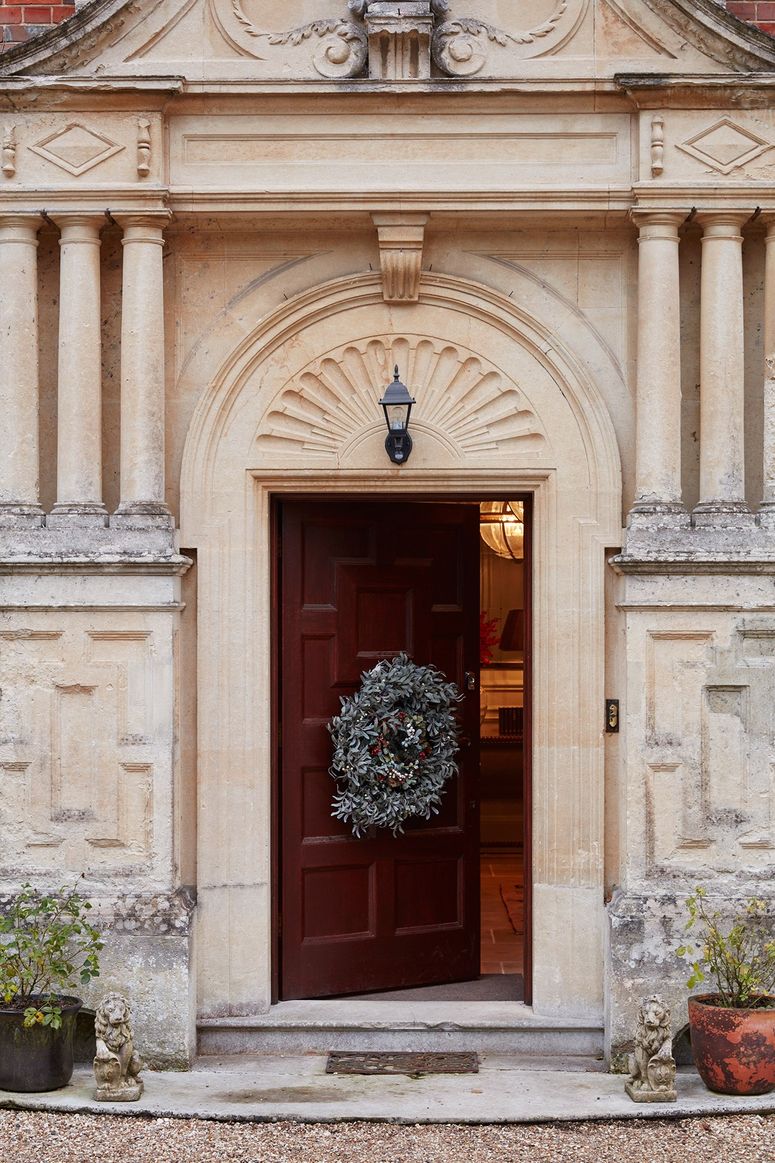


When we read features in House & Garden, follow interior designers on Instagram, or watch A-listers showcase their renovation project, are we merely there for decorating inspiration? Or is our interest in the homes of others more complex than that? Our compulsion to look at (and judge) other people's homes isn’t limited to tastemakers or celebrities. We crane our necks to glance into open front doors as we walk by, we peek into front rooms on dark winter afternoons when the lights are on but the curtains not yet closed. We form a snap judgement on not just the decoration inside but also who might live there and what their family life might be like. Would we want to live there?
In a conversation about this article with interiors writer, podcast host and founder of Mad About The House, Kate Watson-Smyth, she commented that one of the most popular features on her Substack is called ‘Househunter’. “I take a tour around a house that is currently on the market and I think it works well because it’s a real home. You can see – via the floorplan – any awkward room shapes and how the owners have chosen to light the space. Magazine photoshoots don’t usually show you the laundry basket in the corner or boxes of plastic toys. Every time my own house has been featured in the press, ugly spotlights have been airbrushed from my ceilings and I was once asked by a reader how I flushed the loo, as the chrome button had been removed in the picture editing. I think people want to view real houses that have received nothing more than a tidy-up for the photographer. We do want to know how the other half lives, but we’d also quite like to see if they’ve got any practical ideas that can inspire our own homes.”
Our relationship with the homes of others has progressed as technology has evolved. The 1980s had us hooked to Through The Keyhole, but today’s myriad streaming services offer reality shows on everything from obsessive cleaning through to estate agents selling eight-figure houses. If the homes we’re watching on our screens don’t provide anything useful beyond light entertainment, does our fascination with how others live go beyond aesthetics?
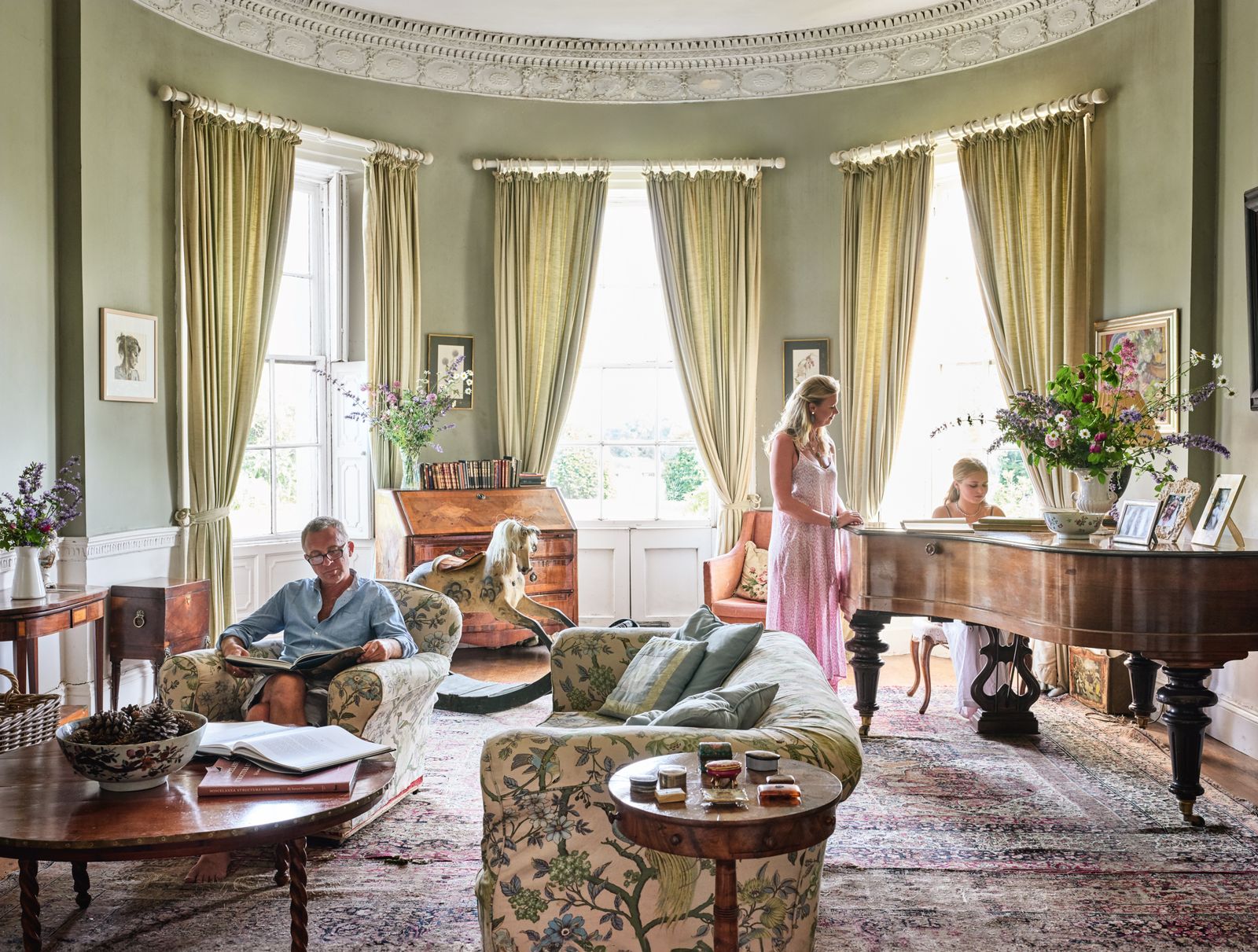
To better understand what’s going on in our brains while we’re snooping at the flat upstairs via Rightmove (a ‘for sale’ sign is catnip for nosy neighbours everywhere), we quizzed an expert on human behaviour. Dr Sophie Mort – also known as Dr Soph to her 89,000 Instagram followers – is a clinical psychologist, Sunday Times bestselling author and Mental Health Expert for the Headspace app.
Speaking on our fixation with the homes of others, Dr Sophie explained that “while many people engage with homes magazines and house tours primarily for decorating inspiration, the interest often goes deeper. Fascination with others' homes can also reflect a desire to understand how people live and how their spaces reflect their personalities, values, and lifestyles. That’s interesting to us because we might want to imagine a different way of living, or we might want to gain insight into the choices of those we admire. It’s a way for us to explore our own identities, understand societal norms, and measure our own lives against those of others.”
Forming a subjective opinion about someone’s home seems human – we all have our preferences and biases – but the internet has facilitated offending or influencing others by making it normal to voice our opinions publicly. Where people might once have gossiped about their neighbour’s new wallpaper or kitchen extension over a cup of tea, now we turn to online comments sections, where it’s alarmingly easy to remain anonymous and feel detached from reality when passing our (unsolicited) judgement. It’s not causing any harm when we’re heaping praise on someone’s choice to build a pantry, but people can feel surprisingly comfortable leaving negative comments about a home that isn’t theirs. Taking an interest in someone else’s living space can descend into cruelty. Where does that thought process and entitlement come from?
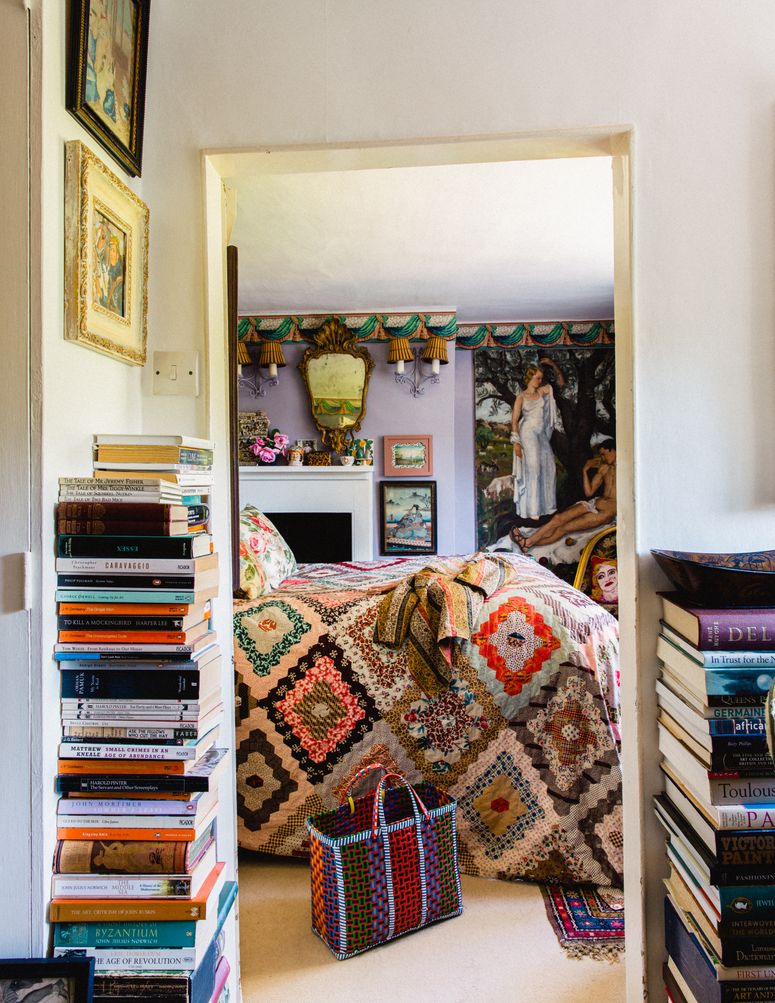
Dr Sophie explains that “our response to another person’s living situation can reveal much about our aspirations and insecurities. When we admire someone’s home, it often reflects our desires and ideals – whether it's a longing for more space, a minimalist lifestyle, or a cosy environment. Admiration can also stem from a desire to connect with others who share our tastes and values. Conversely, feelings of discomfort or judgment toward someone’s living space might indicate our anxieties. For example, a cluttered home might trigger discomfort in someone who values order, reflecting an internal need for control. Our unease or inclination to critique may also be down to something else entirely, such as the desire to make ourselves feel better in a scenario where we feel (whether we’re conscious of it or not) insecure or ‘less than’ in some way. In the UK, we have ‘tall poppy syndrome’, which is the desire to chop down to size any poppy (in this case, person) who grows too tall. Some of us, even if we’re not aware of it, will find an excuse to point out the failings of those we deem too successful or happy.”
On keyboard critics, Kate comments “in the early part of the 20th century, the only way to see inside other peoples’ homes was by invitation or through the pages of society magazines. This gave rise to the perception of English country house style as being the most aspirational because that was how the upper classes (those most likely to appear in magazines) decorated. When Instagram came along, suddenly you could see a house that might resemble your own and you could ask the owner about the colour of the paint, where they bought the sofa, and how the carpet was wearing. A whole new world of interior design opened up. We were inspired and educated. And then, of course, as social media is wont to do – an edge crept in. Suddenly, it seemed OK to criticise other peoples’ homes, if only to prove to ourselves that what we had done was better. Not only do we have good taste, but it’s better than everyone else’s.”
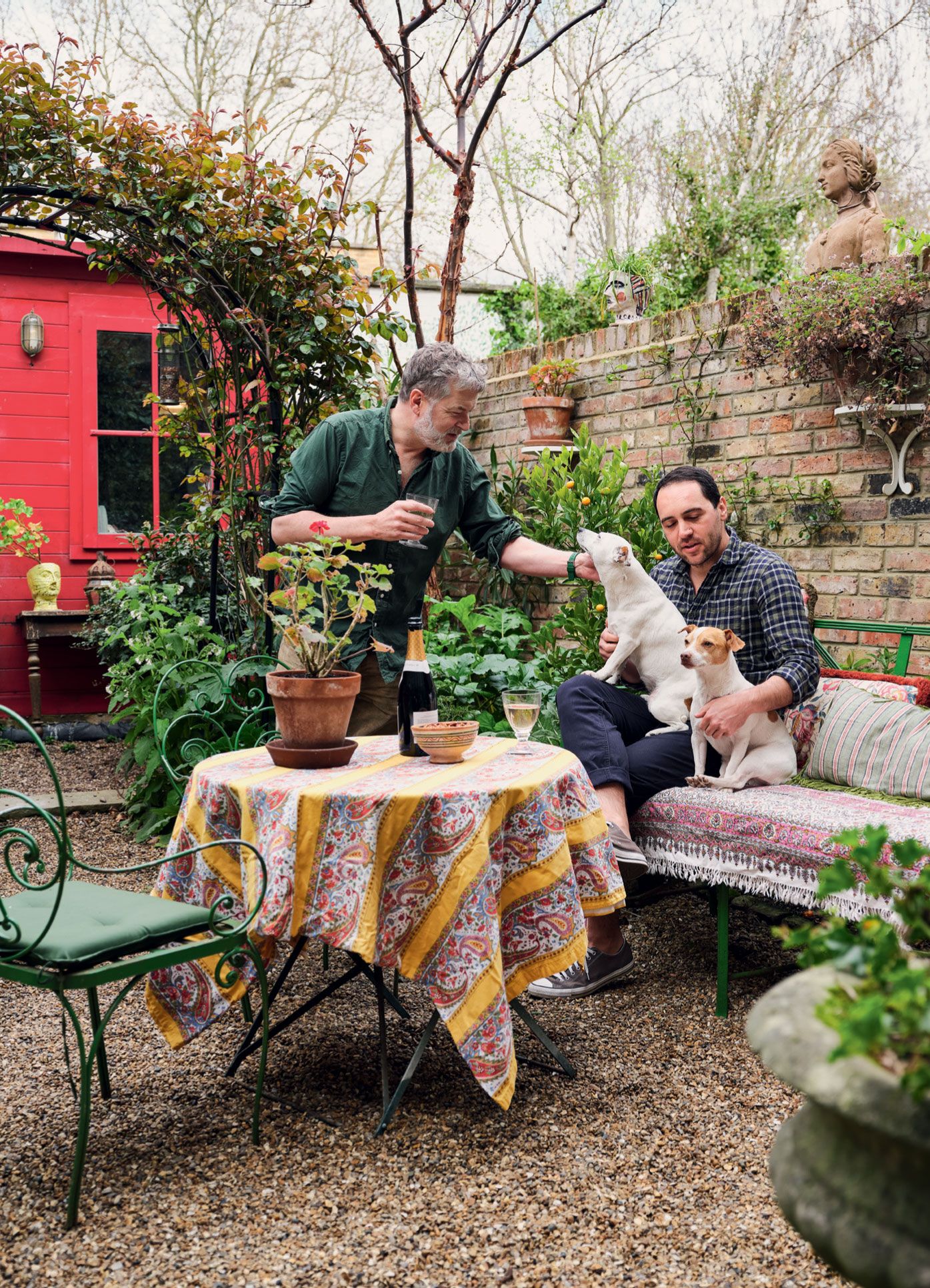
For readers who struggle with feelings of failure or hopelessness when comparing their life or home with their friends and peers, it might be interesting to learn more about ‘social comparison theory’. As Dr Sophie describes, this is “the process of making sense of our position in society, as well as what is expected of us and our lives, by comparing ourselves to those around us. If we find ourselves similar to the people we compare ourselves to, we may feel motivated by that. If the discrepancy is large, we tend to feel demotivated and possibly like we are failing. This can play out when looking at the homes of others.”
If we seek connection and relatability, why do we also take an interest in the homes and lifestyle choices of people who live very differently to us? What do we hope to take from that? For example, watching reality TV shows such as How Clean Is Your House when our own home is spotless, or Tidying Up with Marie Kondo when we’re an unashamed maximalist and collector. Why take guided tours of exceptional private homes and lavish country estates when we own a tiny flat and couldn’t possibly implement any of what we’ve seen?
“Humans are naturally drawn to extremes because these situations evoke strong emotions and provide a window into vastly different lifestyles”, Dr Sophie says. “Watching shows about hoarders or the ultra-wealthy offers a safe way to explore these extremes, allowing us to confront and also entertain our fears, curiosities, and beliefs about societal norms from a distance. This fascination is tied to a psychological need to understand and categorise the world, even if the result is discomfort or envy.”

Dr Sophie continues; “The obsession with decluttering is interesting because it often goes beyond seeking practical advice. While the desire for an organised, clutter-free space is a key motivator, this trend also taps into deeper psychological needs. For many, decluttering is a way to assert control over their environment and, by extension, their lives. The act of tidying up becomes symbolic, representing the ability to simplify and focus on what truly matters. Additionally, in a society that values minimalism and efficiency, having less can become a badge of honour – a way to demonstrate discipline, mindfulness, or even moral superiority. As someone who is a messy maximalist, I can say however, that not all people feel the same about this!”
Dr Sophie goes on to add that “in the case of extreme wealth, seeing ‘how the other half lives’ can be a form of escapism or a way to experience luxury and power vicariously. It may also reflect a deeper interest in social comparison, where people gauge their own success, happiness, or moral standing by contrasting their life with those at the other end of the spectrum.”
Might this escapism or social comparison also explain why we’re particularly curious about the homes of the rich and famous? Dr Sophie explains that “research into the culture of ‘celebrity worshipping’ states that the more attached we feel to a celebrity, the more likely we are to follow their beliefs and try to adopt their way of living. Therefore, looking at their home is not only a way to feel closer to that person and understand them, but it can also be a way for us to emulate them and guide our behaviours and choices to be more in line with theirs.”

Dr Sophie points out that our fascination with the homes of those in the public eye isn’t always positive or coming from a good place. “Sometimes, on a darker note, we snoop so we can make judgements and leave comments about design aesthetics that we would ‘never choose’, and how ‘money can't buy taste’. Having insight into a celebrity’s personal taste is a way for us to make ourselves feel validated by, equal to, or even superior to, someone we view as having ‘more’ than us. This comes back to tall poppy syndrome.”
On the subject of personal taste, our homes are becoming increasingly homogeneous as we fight to retain a sense of personal style that isn’t an accidental blueprint of – or heavily influenced by – the spaces we’ve seen in magazines or on social media. Our fascination with looking outwards at the homes and choices of others means less time examining and developing our own tastes and preferences. Platforms such as Instagram, where validation and popularity are pivotal, offer more home decorating insight and inspiration than we could ever need, while simultaneously putting us at risk of losing our identity.
“This is all so true”, Dr Sophie agrees, “we’re drawn to the same brands and objects now, whether they’re the best option or not. I have friends in different parts of the world and we all own the same things in our homes for no reason other than how we are marketed to and who we follow online. This is also backed by groupthink theory, the bandwagon effect phenomenon and social proof theory. The heuristics make us believe that if enough people (or if one person who already has social proof because of the number of people who follow them) do something then it must be the right thing to do.”
In a final thought about what we find so appealing in examining the homes of others, Kate quoted Diana Vreeland, former editor of US Vogue, who once said: ‘Few things are more fascinating than the opportunity to see how other people live during their private hours’. Kate adds “in essence, it’s that peek behind the Wizard of Oz’s curtain. Are we looking for inspiration? Maybe. Are we interested in the owner? If they’re well-known. Do we want to catch them out in a slip of taste, thereby validating our own décor choices? Well, that never hurts.”
For more of Dr Sophie Mort’s insight into behavioural patterns, read her latest book, (Un)Stuck.