


Few franchises have dazzled interior design and architecture lovers in the way that Downton Abbey has. Perhaps the only character more camera-worthy than the upstairs-downstairs assemblage in the British historical drama was the Abbey itself, played beautifully by Grade 1-listed country house Highclere Castle. Over the course of six seasons and two movies, fans began to expect that level of elegance and verisimilitude in all of Downton’s sets: a tall order for longtime series production designer Donal Woods.
And now it all comes to a fantastic end with Downton Abbey: The Grand Finale, the third film and the official finale of the franchise, which premieres in theatres on September 12. While many of the series’ beloved filming locations make an appearance (you can’t have Downton without Downton, of course), there are three new sets which AD can reveal for the first time here. We also enlisted the expert commentary of director Simon Curtis and Woods to share more on the intricacies of scouting and filming places to stand in for 1930s England.
The Racecourse
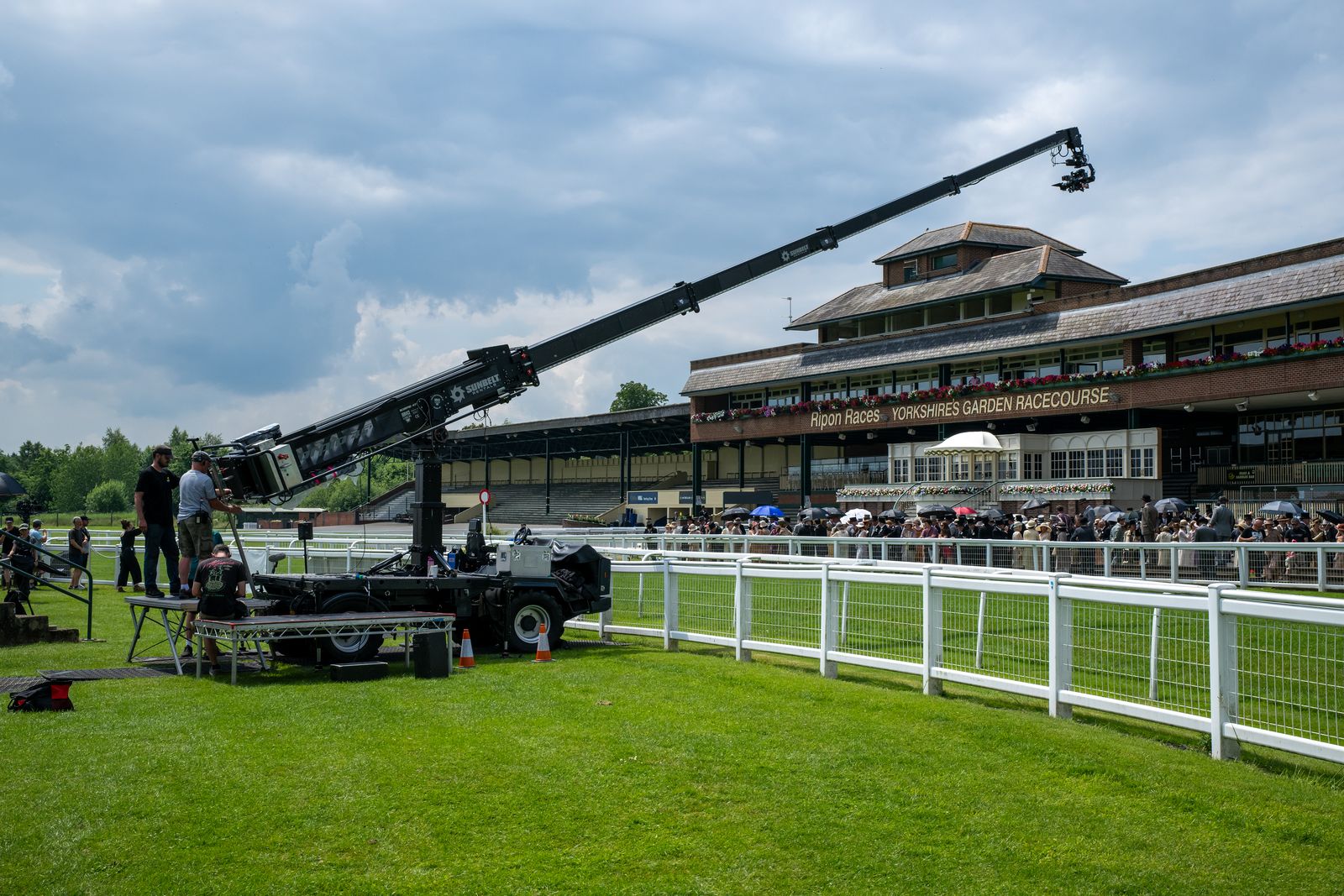
Few things scream upper-class Britain more loudly than the famed Royal Ascot horse race, which makes it an ideal setting for Downton Abbey: The Grand Finale. But the modern day Ascot Racecourse has been built out almost beyond recognition to what it looked like in the last century. “It’s a huge, glass modern building—like something out of an airport,” Woods tells AD. Further complicating matters was that the crew was shooting during June and July: prime flat racing season in the UK, which meant many tracks didn’t have eight to 10 days available to rent out the property. Woods and his team ended up looking at around 10 different courses, eventually landing on Ripon Races in North Yorkshire. Not only was its configuration with a long straightaway and righthand turn a match for Ascot, but the location also “had some lovely period buildings to work with,” Woods says.
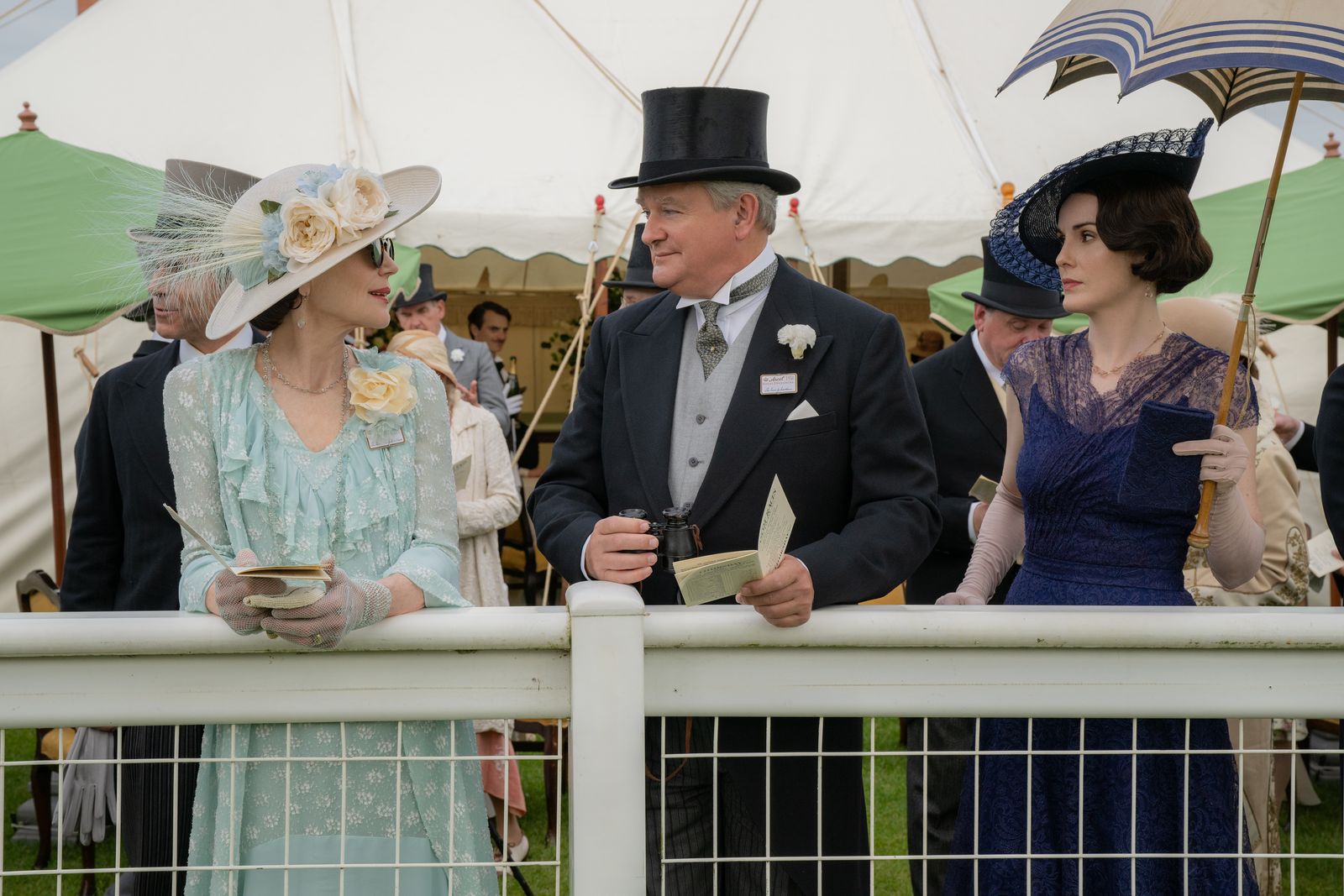
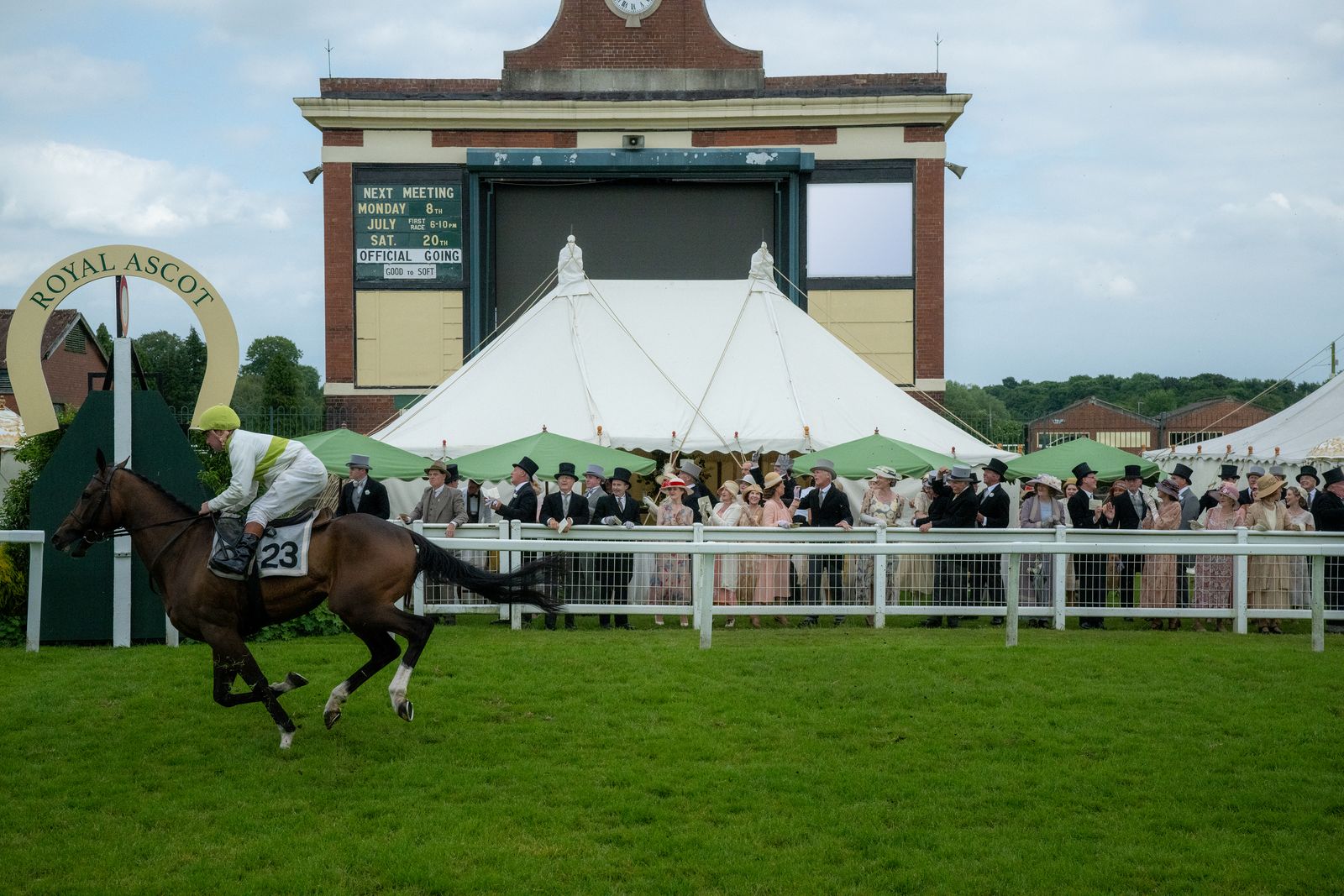
All the team needed to do to bring Ripon Races into the Downton universe was to construct the royal enclosure, which was pre-built on soundstages and then reassembled on site (the crowds, which would have numbered around 70,000 in 1930, were digitally added using CGI). Even with all that construction, the crew could only film the scene twice: Curtis used real jockeys and horses. “The reason you can only do it a few times is because they get tired and then they just won’t race!” Woods says of the animals. But there were insurance methods in place: “We had, I think, 12 cameras, so we were taking no chances,” Curtis adds.
The County Fair
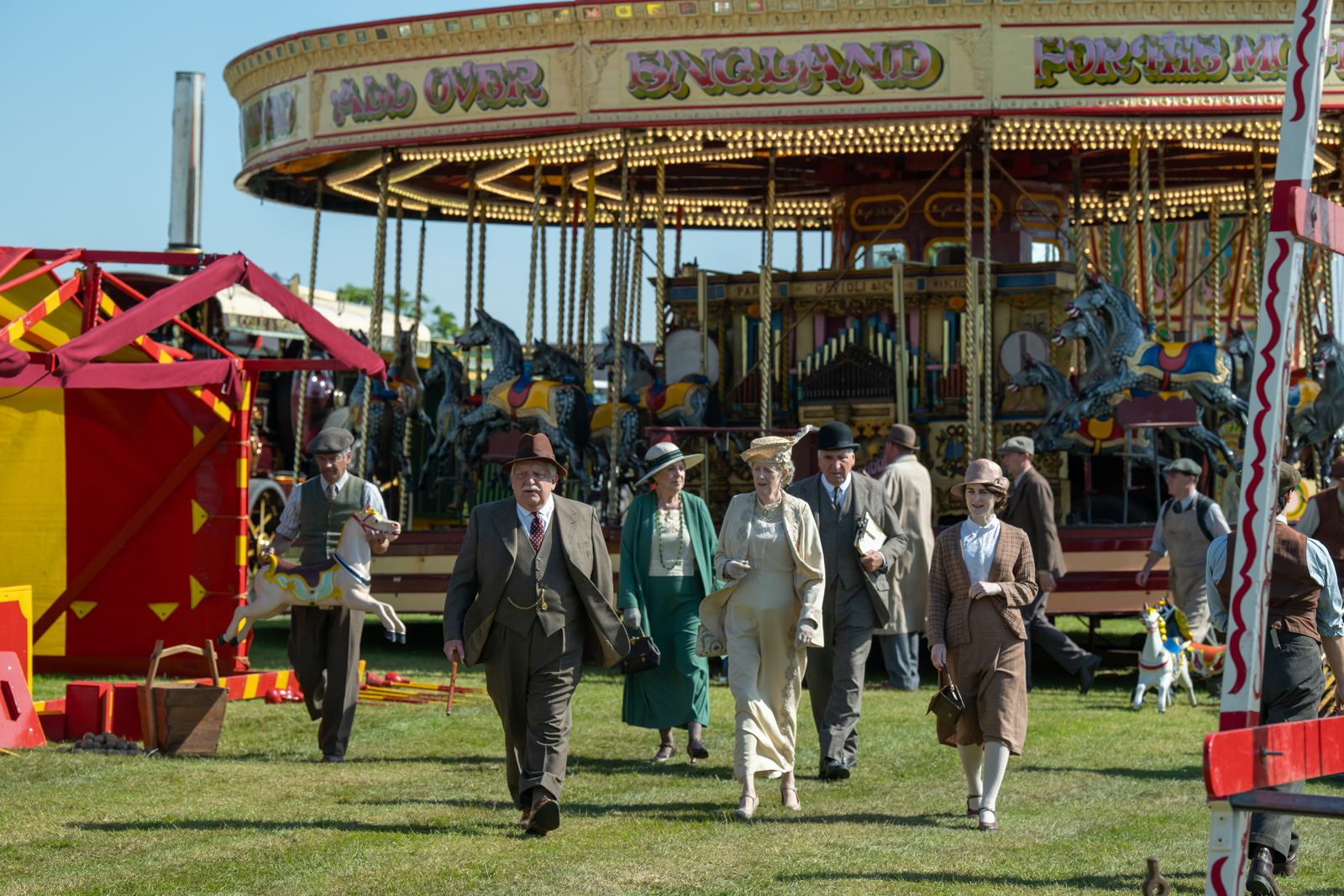
Similar to the racecourse, Woods and his team were able to find an actual county fairground that could be a stand-in for a 1930s-era model. And even better, the location was only 30 minutes from the Ripon racecourse and in good condition. “We wanted to find somewhere that had some structures, rather than just an open field that leaves you nothing,” Woods says. Luckily, the Great Yorkshire Events Centre was available and had cowsheds and buildings that were period-specific enough, if not exactly 1930.
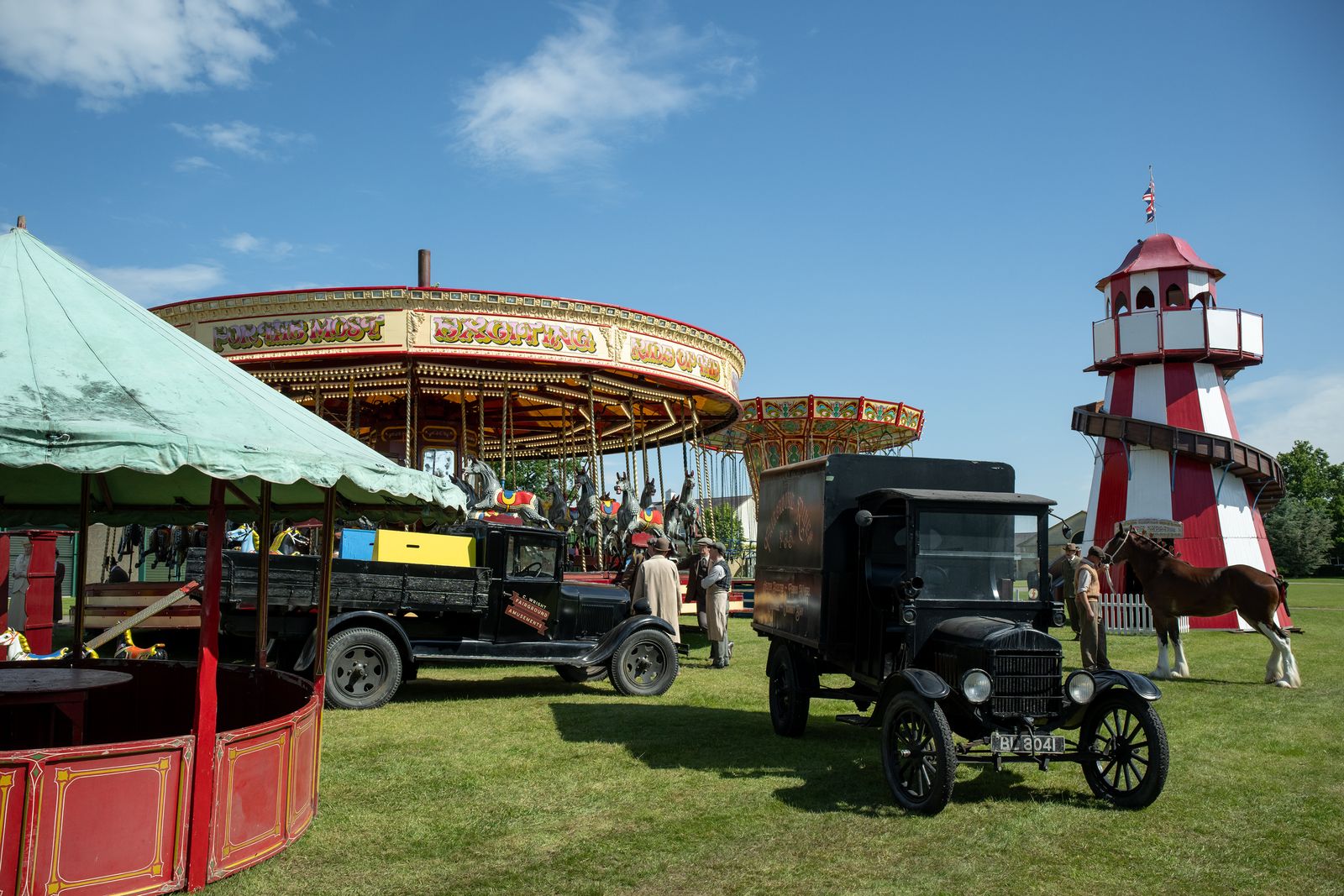
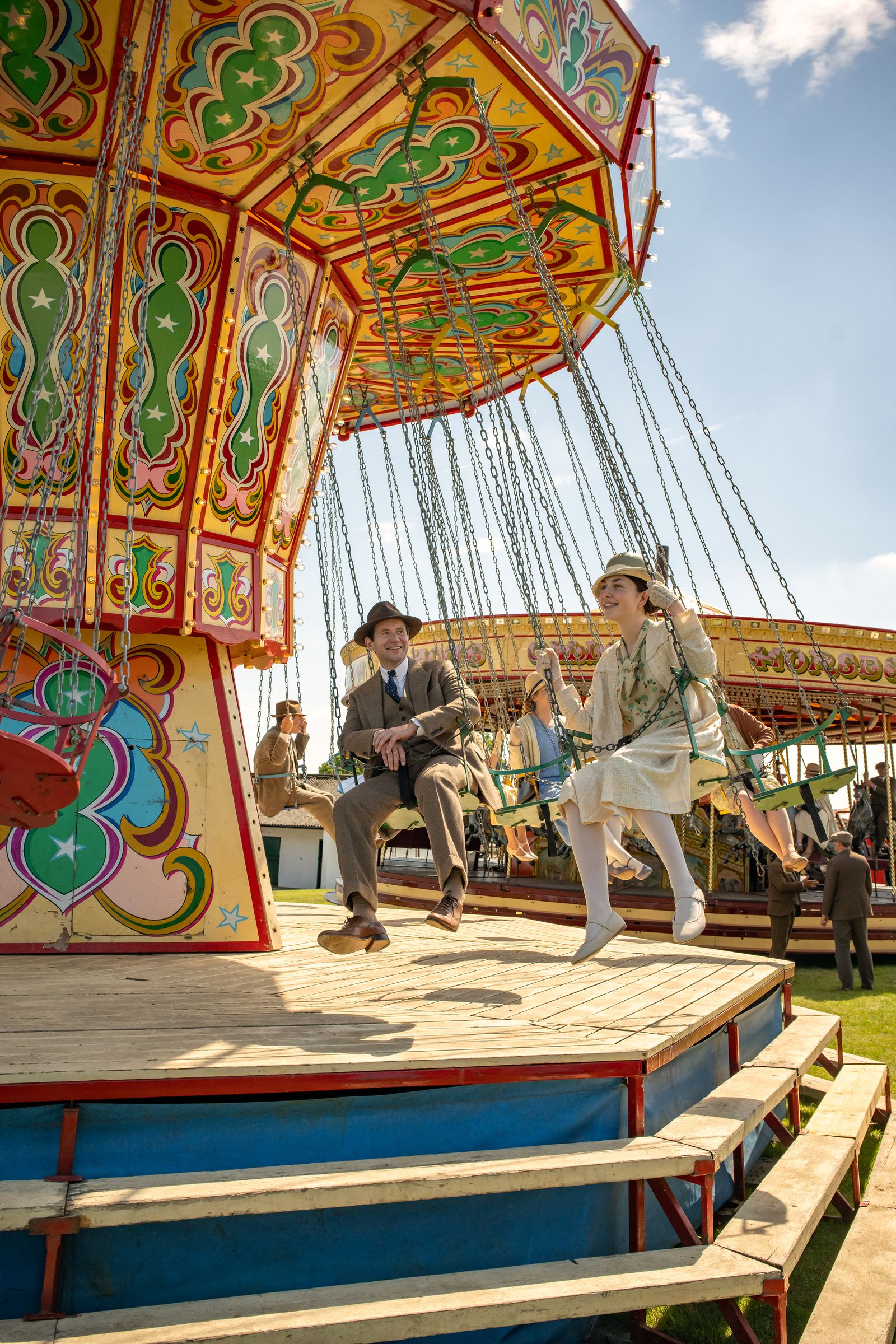
Woods sourced the exactingly 1930s appropriate vintage fairground rides from all over the country from a scout who specializes in finding the historic rides. The location also provided a charming full-circle moment for one of the principal actors: “Jim Carter, who plays Mr. Carson, was brought up right next to it,” says Curtis. “And the big event in his childhood was going to that very fairground.”
The Theatre
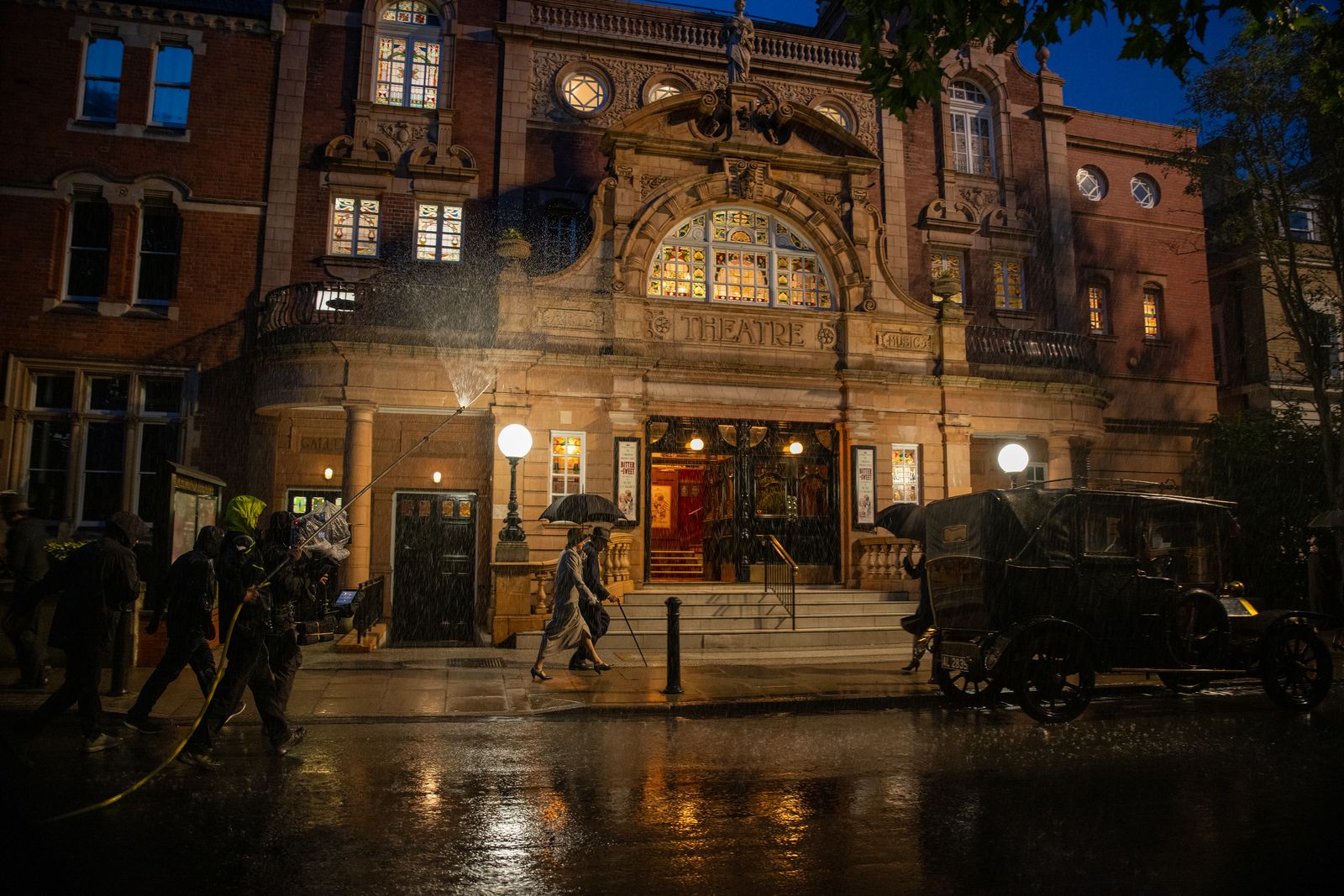
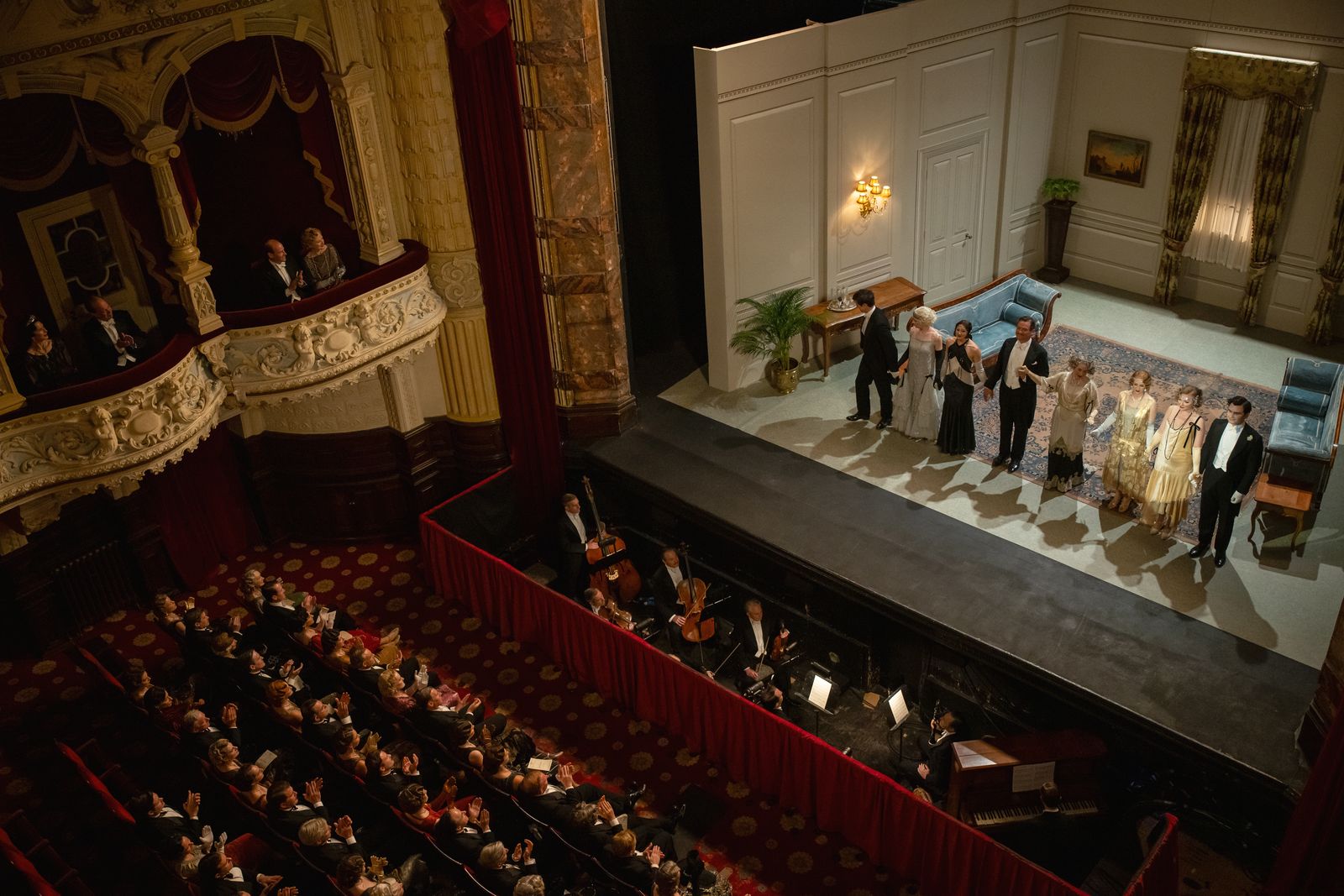
Curtis himself has a connection to the last new filming location, the Richmond Theatre in West London. “I used to go there as a kid,” he says. While Woods pinpointed three theatres to use—the choice dependent on the timing of when they filmed the scenes inside—Richmond was the crew’s favourite. “It had all the elements and was the right size,” Woods explains. The actual stage set, which features Noel Coward’s operetta Bitter Sweet, was constructed to match a 1929 production. “I found a very grainy photograph, and we based it off of that,” he says. As for the rest of the structure, not much needed to be done. “Those theatres feel like they’re still like in the 1920s or 1930s. I love the architecture of them,” Curtis says.

This article originally featured on Architecturaldigest.com


