


Trends. Let's talk about them. They are ubiquitous, insidious, sometimes fun, other times embarrassing. Some are to be embraced, others are to be run from. One thing is for certain, though, you will not go through life without falling for one or two.
In the fashion world, where cycles and seasons seem to pass at a faster rate, trends feel a little less perilous. Sure, you might regret getting married in a giant 1980s meringue, but other than the big moments, your brief love affair with skull adorned scarves will be forgotten soon enough.
However, accidentally buying into a trend in our homes poses a higher risk. Such purchases are often more costly and more difficult to change, so this is where you need to tread most carefully. But how do you avoid falling for a trend? To help solve that conundrum, we've compiled a list of questions to ask yourself–before you checkout–with comment from interior designers and tastemakers alike, so you can rest assured you're making the right choice.

One of the easiest ways to assess whether you're falling for a trend is to imagine a world in which no one else could see the object in question. If you're excited to show it off at a dinner party, or to hang it in your entrance hall for any passersby to see, then you might not be buying for the right reasons.
As interior designer Anna Haines says, 'I think a good barometer of how much you truly love something is whether you'd still want it if no one else ever saw it. Would you still be invested in that piece if it existed purely for your own enjoyment? If the answer is yes, then it’s probably the right choice. The best interiors are those that feel intimate and personal, and, to me, are not defined by a particular trend or for that matter confined to a single era of time.'
As House & Garden contributor Eleanor Cording-Booth advises, a quick fire way to tell whether you're falling for a trend is to open Instagram and see if that item or style features at least once on your feed. For jewellery designer Sandra Barrio Von Hurter, this question is the ‘personal test’ she sets herself when she senses she's ‘gravitating towards a trend'. As she explains, ‘I like to ask myself whether I would still love the object if I hadn’t seen it online one hundred times. If the answer is no, or if I hesitate too much, it usually means I'm more in love with the idea of the trend than the thing itself.'
Similarly for Anna Haines, ‘If a client suggests a fabric, light, or piece of furniture that’s become prevalent across social media platforms like Instagram or on Pinterest, I will try and steer them toward something quieter and, I hope, more personal. I will often ask myself if the client or I would still love it in five or ten years. If something feels too instantly recognisable I will likely pause. It’s not that I object to popular pieces. I appreciate what makes them appealing, but as a designer, I feel a responsibility to create homes that reflect the individual, and not an algorithm or social media platform.’
Another way to assess your interest is to ask whether or not the item or style fits with what you already own. As Sandra explains, ‘If we are talking about fashion, I’ll think, “can I wear it with my existing wardrobe?” If it’s interiors, I ask, “does it work with my current taste and pieces?” If the answer is no, it’s probably just a fleeting crush! For example, I bought a pair of silver bow-shaped candle holders. They are really pretty and I even joined a waiting list to get them. I love decorative objects and I’m always drawn to stainless steel, so I think the silver finish made me think they’d work. But the truth is that the kind of delicate, ‘princess-y’ bow detail isn’t really me. I haven’t used them more than once and they feel a bit out of step with the rest of my things.'
Still stuck? Here are some other things to consider
Tastemaker Lucy Williams, whose house has inspired many, suggests looking to antique markets and vintage dealers to find something similar, but not identical, to the item or style you like. ‘Trends can be fun for sure but they're fleeting,' Lucy says. 'If in doubt, buy vintage and think “replicate rather than copy." If you love something you've seen, think about how you could replicate or re-imagine that in your own way rather than trying to track down the exact item. If you want to buy into rattan or fish-decorated ceramics, go vintage. Once the trend has moved on, you'll still have a lovely piece that not everyone has. I find both of these strategies prevent “once on-trend” items from taking over your home.'
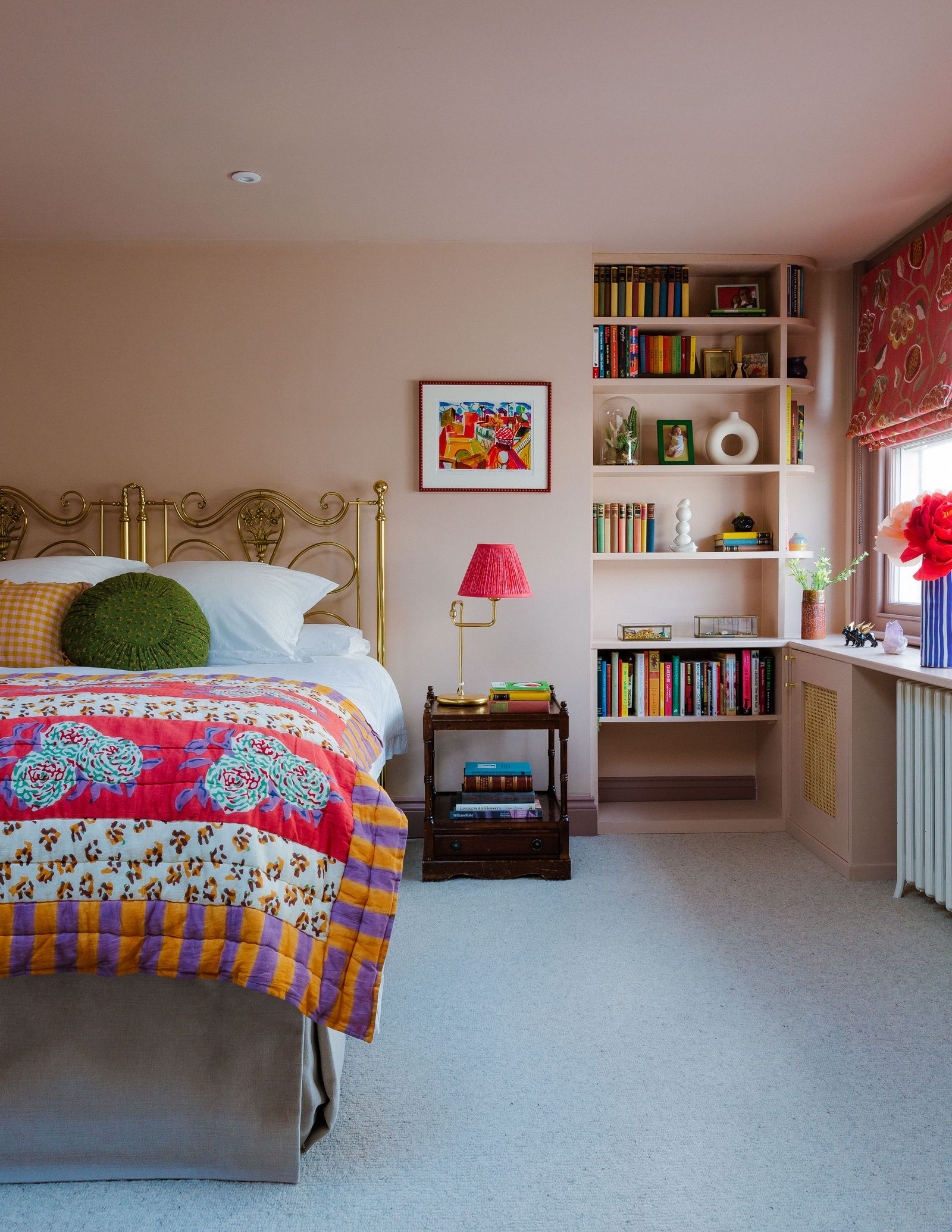
One trend area Lucy advises not to have fun with is anything led by a colour or 'it' paint shades. ‘Colour is so personal and the quickest thing to date so I would always choose colour according to what works with the feeling and light of the room in question.’ For Sandra, the mistake was just that. ‘I painted my bedroom in Farrow and Ball's ‘Setting Plaster’, a dusty pink that was absolutely everywhere at the time. It’s a lovely shade in the right space, but with my brass headboard it ended up looking a bit too dolly, not quite the feel I was going for. I’m now in the process of repainting the whole room.’
A final piece of advice from Lucy: 'I've got a few wavy edges in my home I might not rush to do again. Our headboard has a soft wave along the top and I have a few light fittings that reflect this trend too. From a purely aesthetic point of view, I still love them but it does feel like I see a lot of wavy edges everywhere. Too much of anything is a bad thing so I think trends can sometimes take the joy out of the things you genuinely love annoyingly. Trends always come and go though so as long as you like what's in your own home from a genuine place, it will stand the test of time.'


