
.jpg)
'I can’t explain,’ said Robert Kime when asked how he had put together his exquisite London flat so quickly. It took just one week – but also a lifetime of looking and collecting. Robert, interior decorator to His Majesty, King Charles III and at least five English dukes, plus pop stars and potentates, died on August 17, aged 76. He never made a room plan and was very clear he was not an interior designer. Robert believed in putting beautiful, old and curious things together, assembling the contents of a room to make it settled and comfortable: ‘I want my rooms to be lived in, not looked at.’
From childhood, Robert was fascinated by history. He collected coins from the age of five and, later, was happiest when rearranging the furniture in a shed in his mother’s garden. By the age of 16, he had won a place at the University of Oxford to read medieval history, but, too young to go up, spent 18 months working on archaeological digs in Greece and Israel.
During his first term at Oxford, his mother arrived to say he had to leave, as his stepfather had walked out and there was no money left. His tutor would not hear of it and gave Robert the rest of the year to sort things out. He always said that selling the furniture his grandmother and his mother, an avid collector, had amassed was how he learnt his trade. He researched each piece and he learnt where to sell it to get the best price. ‘I had to – we needed the money,’ he explained.
By the time he returned to Oxford, he was an experienced dealer, taking the bus every Thursday to the antique and junk shops in the Cotswolds. In typically self-deprecating fashion, hea dmitted to making quite a few mistakes in those early days, but he learned to be decisive. His friend Alastair Langlands, who wrote the 2015 monograph Robert Kime (Frances Lincoln), was astonished when he saw the habitually gentle, soft-voiced Robert in operation at antique fairs: ‘He was extraordinary, always first at the gate as it opened, deciding instantly what he wanted, concluding deals at lightning speed.’
After Oxford, a chance meeting at a student house party at Ashton Wold, the Northamptonshire home of the scientist Miriam Rothschild, led to his first shop. She had a mass of furniture she wanted to clear, but had fallen out with the two great auction houses. Robert persuaded her to let him sell it for her, and she set him up in a shop in Oundle.
The party also brought him his wife, Helen Nicoll. They married when he was 23 and moved to a gothic schoolhouse at Mildenhall, near Marlborough, using two wings of the cruciform building as his shop. Wiltshire remained the centre of their family and work lives, though in the course of a long and happy marriage, they also had homes in Cumbria, the Luberon, Ireland and Faiyum, in Egypt. Helen, the author of the acclaimed Meg and Mog series of children’s books, died in 2012.
Robert was frequently asked by his customers to decorate their houses. At first, he would give only Fridays over to decoration, but the clamour became insistent. In time, he built up a prestigious worldwide clientele, about whom he remained discreet. His mantra ‘Every room begins with the rug’ meant he travelled constantly to Turkey and Egypt in search of antique rugs and textiles. Once, on a Turkish bus, he bought the headscarf of the lady in front of him – a kandili print with a pattern of pea pods. When, in 1983, he realised that the supply of antique fabrics he had been using for curtains and upholstery was drying up, he turned to fabric expert Gisella Milne-Watson. Together they began to create a range of fabrics – including one inspired by the pea pods. A collection she had discussed with Robert before he died is under way.
Swangrove, a hunting lodge on the Duke of Beaufort’s estate was described by Robert as ‘the happiest and jolliest job I have ever done’. It is certainly among his most beautiful. But Clarence House, the official residence of King Charles III when Prince of Wales, was the most prestigious. It afforded Robert the bliss of rooting through the royal attics at Windsor on behalf of a client who shared many of his tastes, including a love of Near Eastern fabrics. As King Charles wrote of Robert, ‘You often hear of people who are said to have “a good eye”, but Robert Kime’s must surely be one of the best’.
MAY WE SUGGEST: From the archive: Christopher Gibbs on Robert Kime
Tessa Traeger, photographer
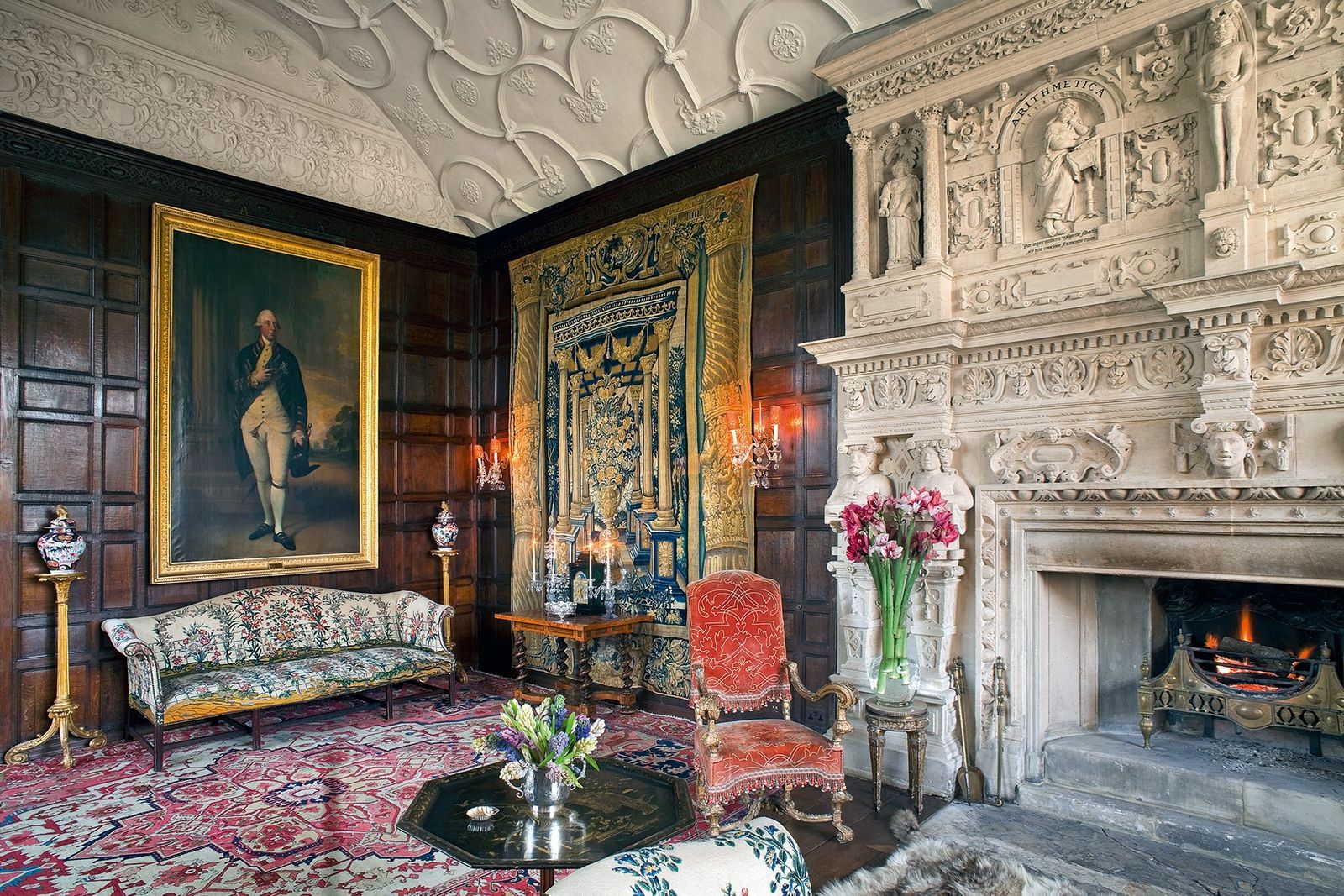
When Frances Lincoln asked Robert Kime to make a book about his work in 2014, naturally I was both delighted and daunted when he rang and said that after much thought he had settled on me as his first choice for the new photography. We had already become friends due to his collaboration with my husband Patrick on South Wraxall Manor, an extraordinary house they restored and transformed together, so I knew what a pair of thoughtful perfectionists I needed to satisfy.
Stimulating, occasionally heavy duty, delightful and testing in equal measure, Robert asked us to work as a team and we set about recording five of his own houses and several others he had created for exceptional clients he particularly loved, in England, France and the Caribbean. Robert was always at my elbow patiently explaining everything as he saw it, pointing out the significance of the rooms to him, why things needed to be as they were and constantly referring to his wife Helen whose highly developed taste in interiors was his touchstone.
His huge artistic and historical knowledge, well-travelled curiosity, and passion for early furniture and antique fabrics was at the root of his skill of bringing rooms to life. Italy, France, England and Egypt where we all travelled together down the Nile in a beautiful boat, were the core of his inspirations.
Every morning he looked minutely at his catalogues and turned down the corners before handing in a list of lots to the auction houses. As he drove his car they would ring him as something he had spotted came up and he would bid as he went along, always clear as to exactly what he was prepared to pay. He truffled out wonderful and exceptional things on a daily basis, especially the carpets and rugs he felt were the basis of a scheme.
By the time he worked on a project he always made a point of getting to know his clients in the most perceptive and psychological manner, working out what would make them feel nurtured, comfortable and safe in their houses. I tried to show this empathy in my pictures, often working at dawn in the soft early light to show how lovely it was to wake up in the morning in one of the bedrooms he had designed.
One day I asked him how you can tell a fake from a genuine thing. He said that you have to study the piece as you would a person and feel as much as see anything which does not feel “right.” I used this advice when photographing his rooms... I would study the image on my screen and continue to work on it until everything looked understood, and settled and true.
Robert was very decisive about changing his life, and was always ready to move on, and let go of the past, even his own. I shall never forget spending happy days photographing and living in his Irish house, Patrick and I making cosy fires to sit by and watching the sunset from our bedroom window and becoming a part of the furniture. More or less immediately after I had taken my final picture a huge furniture van turned up and by lunchtime the house was stripped bare ... even the fireplace was removed still warm from the night before. He had sold it and everything in it. All that remained were the pictures we had taken and the memories of that exquisitely designed and furnished place, which like my memories of him, are indelible.
Christopher Payne, Head of Antique Sales at Robert Kime
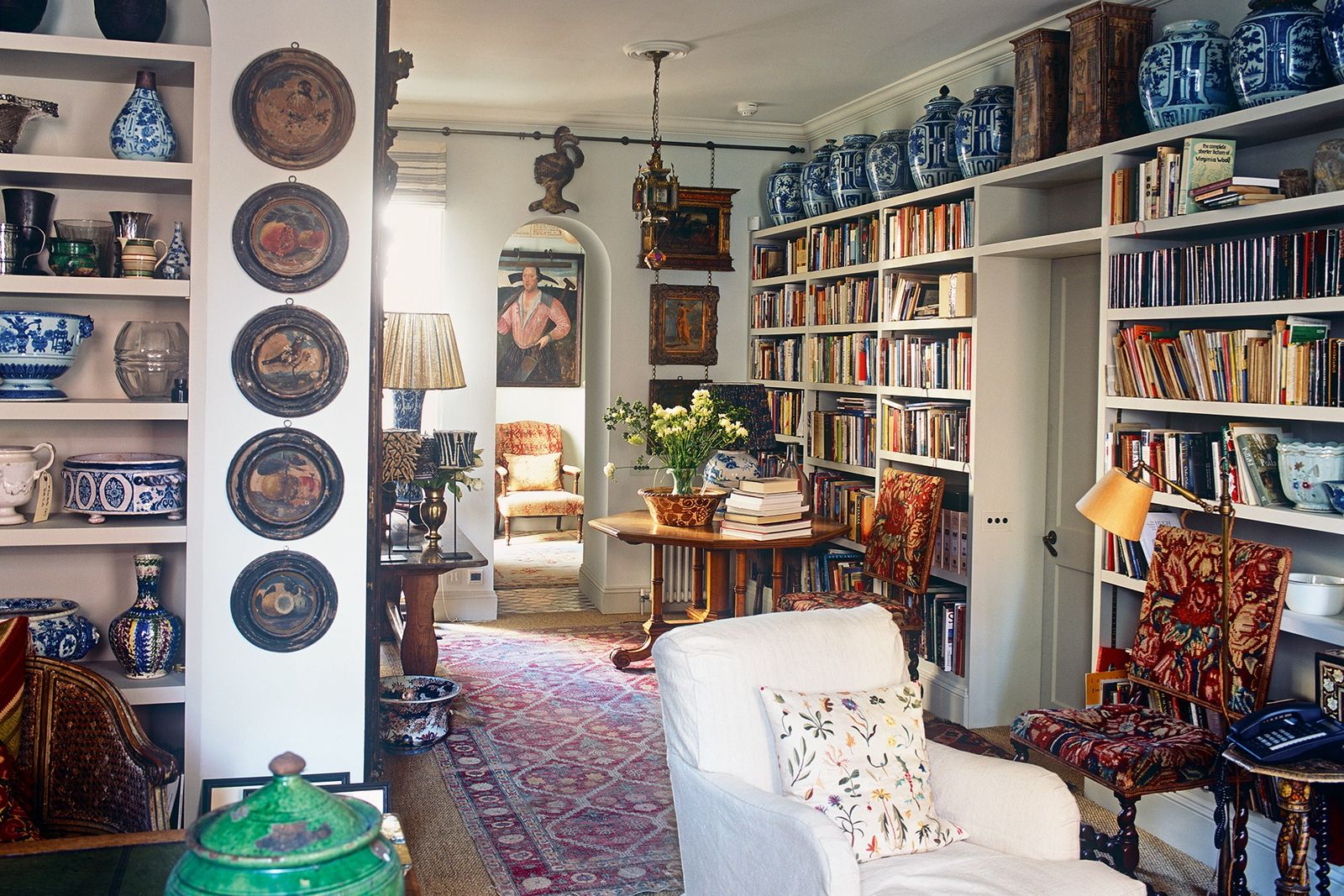
After my first encounter with Robert, some fifteen years ago, having shown me around his offices and workshops in converted barns at Beacon Farm near Hungerford, he turned to me and said, “I like your atmosphere.” A disarming but touching compliment. So much of Robert was about ‘atmosphere’ whether perceived in an object, a house, a room, painting or person.
He had a wonderful and often self-deprecating humour. Very often overawed clients would come into the shop and on seeing Robert would declare, “are you the great Robert Kime – I so admire everything you do,” to which Robert would invariably wince, wave them away and say, “oh, you’ll get over it”.
In 2008, Robert was renovating the building he had bought in Museum Street into a London flat for Helen and himself and with a shop below. He was looking for someone to run the shop and I seemed to fit the bill. Several months into the works I rang him on site and he told me, “it looks like a rather bad shipwreck, I can see from the third floor to the basement through the joists!”
Early in 2009, a team from Christie’s came down to view the proposed lots for the first of his sales, one of them rather cheekily asked, “who are your best clients, Robert?” to which, with a mischievous look, Robert replied, “the ones I turn down”.
Another time, after a visit to the British Museum to see a Chinese exhibition, Robert went to the barber and said, “can you do me a Chinese warrior?”, to which the barber replied, “no, but I can do you a Roman emperor!” On another occasion he was looking at a chinoiserie decorated tôle coal bucket and remarked of the gilded pagoda, “I’m not sure if that’s the La Tour Eiffel or Blackpool Tower!”
I will remember Robert as a great enabler of people – he was very happy to let those around him just get on with what they did and earn the occasional reprimand but more often a quiet “well done” when he was pleased.It has been a privilege to have worked with, known and loved Robert these past years – the happiest of my working life. He leaves a huge void but also a wonderful legacy which lives on.
Rupert Thomas, former editor of The World of Interiors
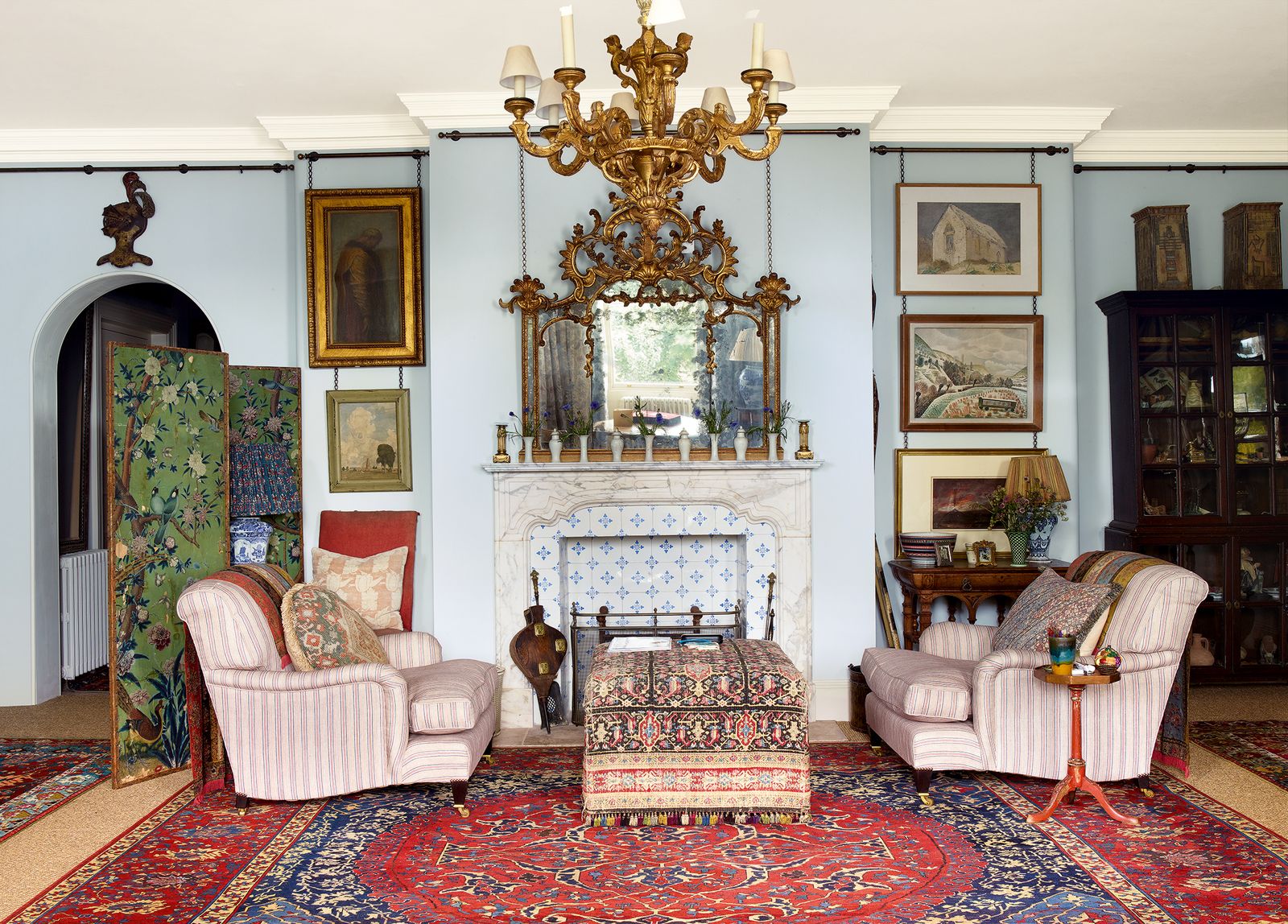
Making rooms seem as venerable as they are comfortable requires a skill and sensibility far beyond the reach of most decorators. Robert Kime had a (possibly unique) talent for imparting timeless lustre to all his schemes be it an apparently undistinguished bathroom or a fine panelled sitting room. Bringing style to an empty space is relatively easy; imbuing it with soul and a sense of history is far more complicated. Though every element was considered to the nth degree, in Robert’s hands a colour, a textile, or the placing of a lamp looked natural and unforced, as if those things had come together over years to create one happy whole. No one made rooms seem more elegantly inevitable.
Mary-Lou Arscott, architect
The spaces made by Robert are comfortable, delightful and endlessly rewarding. His compositions involve site, landscape, architecture, spatial sequence, historical reference, texture, material, colour, and function. All together this acts as a kind of alchemy. His collaborations with supremely talented and skilled practitioners were built up across decades, with all bringing their best work to the projects.
The production of his projects, which ran from first site visit and client meeting to the backing out for final occupation, was enormously complicated and involved a cast of thousands. The organization was fiendish. Every object was classified and labelled, every single task scheduled and coordinated with exquisite orchestration and terrifying pace. No-one was more aware of this than Robert, who never read any of the paperwork but would fire questions that unerringly found the one weak spot and brought it back in line with the whole. This was testament to his enormous memory and capacity for detail. (When quizzed last summer he knew exactly the colour of the watered silk covering four chairs he had sold to my parents in 1972.)
In all his travelling across the world and with all the items that he saw, Robert maintained an encyclopedic set of references, but had an amused take on conventional categories. He could summon any number of exceptions and variations with his fluid vocabulary of detail. He loved the Irish furniture he found whilst driving through West Cork. Once he screeched to a halt, having spied a gorgeous wreck of a serpentine fronted chest of drawers in a hedgerow.
To Robert, the lure of textiles was irresistible, and he would always bid on the linen cupboard. At the French fairs the dealer from Lyon would hold him rapt with her secret stock of ancient ragged fragments, hinting at a mysterious history. I have always loved exploring buildings with Robert, each of us trying to unravel the puzzle of the sequence of periods and with this understanding making the new work legible. The architecture was a document, just like the decorative objects, which all brought their referential history to the composition.
For every project we worked on together I was focused on the reveal through the construction process and Robert was ten steps ahead planting the landscape, which he adored doing, and performing the magic trick of finishing the project in a settled and recovered terroir. He had very green fingers. Robert had a great sense of humour and the kindest heart which made all our collaborations a delight.
Simon Upton, photographer
To my lasting regret, I never got to know Robert very well. Courteous and self-effacing when I arrived on a shoot, he would always make the best of the day, but it was clear that he didn’t really enjoy the scrutiny of his work through the lens of a camera, and at times seemed equally unsure of appearing in magazines. My favourite portrait of him was taken for House & Garden at Robert’s flat in Warwick Square – a moment of relaxed contemplation as he stood leaning against the back of a comfortable armchair in his living room, looking out of the window.


