

The interior designer Rita Konig Facetimes me from a kitchen in Southampton, Long Island. My phone screen shows an expanse of white joinery, tongue and groove panelling on the walls, a vast and industrial-looking stainless steel range cooker and in the middle of the room, an island into which you could easily fit my childhood bedroom. There is no mistaking that she is in an American kitchen. Not just because, as she says ‘American kitchens are very white’, but because there is something so distinctive about the way this room is designed in the US. But what is at the essence of an American kitchen that is so instantly recognisable?

‘Whenever I think of American kitchens, I think of films by Nancy Meyers’, says Rita. For anyone unfamiliar with the writer, producer and director’s opus, they are films which have become famed for their carefully constructed and hugely covetable sets. Among them, It’s Complicated, The Holiday and The Parent Trap have one thing in common: seriously enviable kitchens. There is rarely any clutter or mismatched crockery on display. Instead, everything is neatly tucked away behind liberal amounts of storage, and if there is anything out, it’s dry food in matching jars. The kind of kitchen you want to cook in.
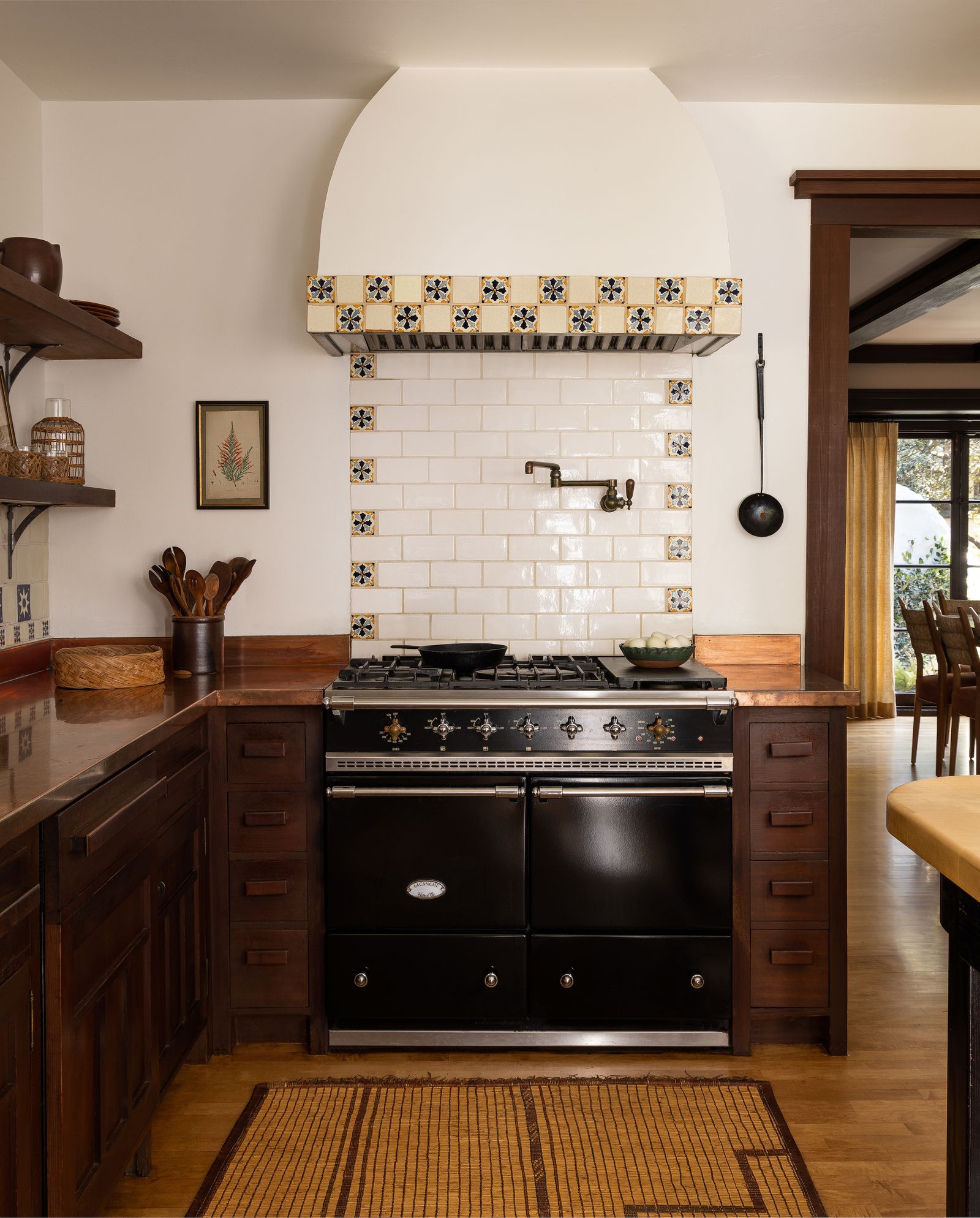
American houses tend to benefit from much more space than their typical British counterpart, which often has a kitchen slightly crammed into a small galley or extended by a few metres squared. English houses are also normally much older, and so what they lack in space they often make up for in architectural details such as cornicing, fireplaces and skirting boards. You’d be hard pressed to find such beautiful, centuries-old features in an American house.
What you will find, according to Gil Schafer, co-founder of New York-based Schafer Buccellato Architects, is that the space has to accommodate the whole family, and possibly several guests too.

‘They love endless amounts of storage. In England, there’s often a sense of age to the houses, and normally a dresser which is crammed full of personality. There will be plates and postcards and notes and pens scattered about. In America, my clients tend to want to keep this kind of clutter out of sight’, says Rita. The Southhampton kitchen in which she stands has cupboards above each counter, taking up every inch of wall space.
Gil put it simply when he said: ‘generally Americans have lots of stuff. We have so many different kinds of appliances and gadgets that need to be put away, and so storage is really important’.
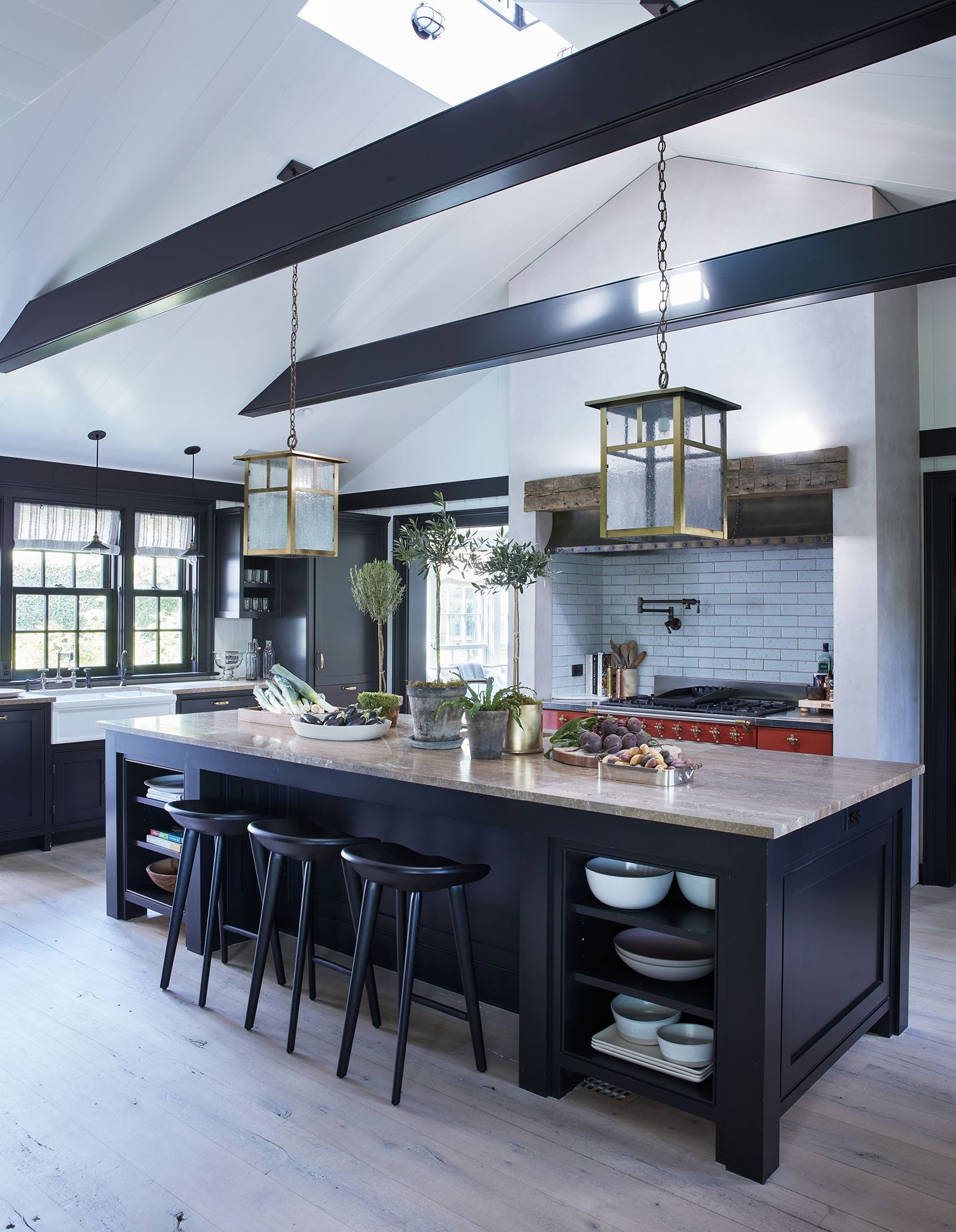
On appliances, large, industrial, restaurant-quality ones do seem to be a common thread among many of the houses found in House & Garden. ‘I don’t think that Americans necessarily cook more than we do in the UK, but their kitchens certainly feel like professional spaces’, adds Rita. Rita’s American clients favour Sub-Zero Wolf as the go-to brand, which sells several ranges of heavy-duty, high tech ovens and vast fridges which could double as a small, rather cold room.
In many of Gil’s projects the island provides much-needed additional storage for – you guessed it – more appliances. ‘Our islands tend to be very utilitarian and full of stuff. We cram them with dishwashers, warming drawers, and the latest craze, refrigerator drawers’, he says.
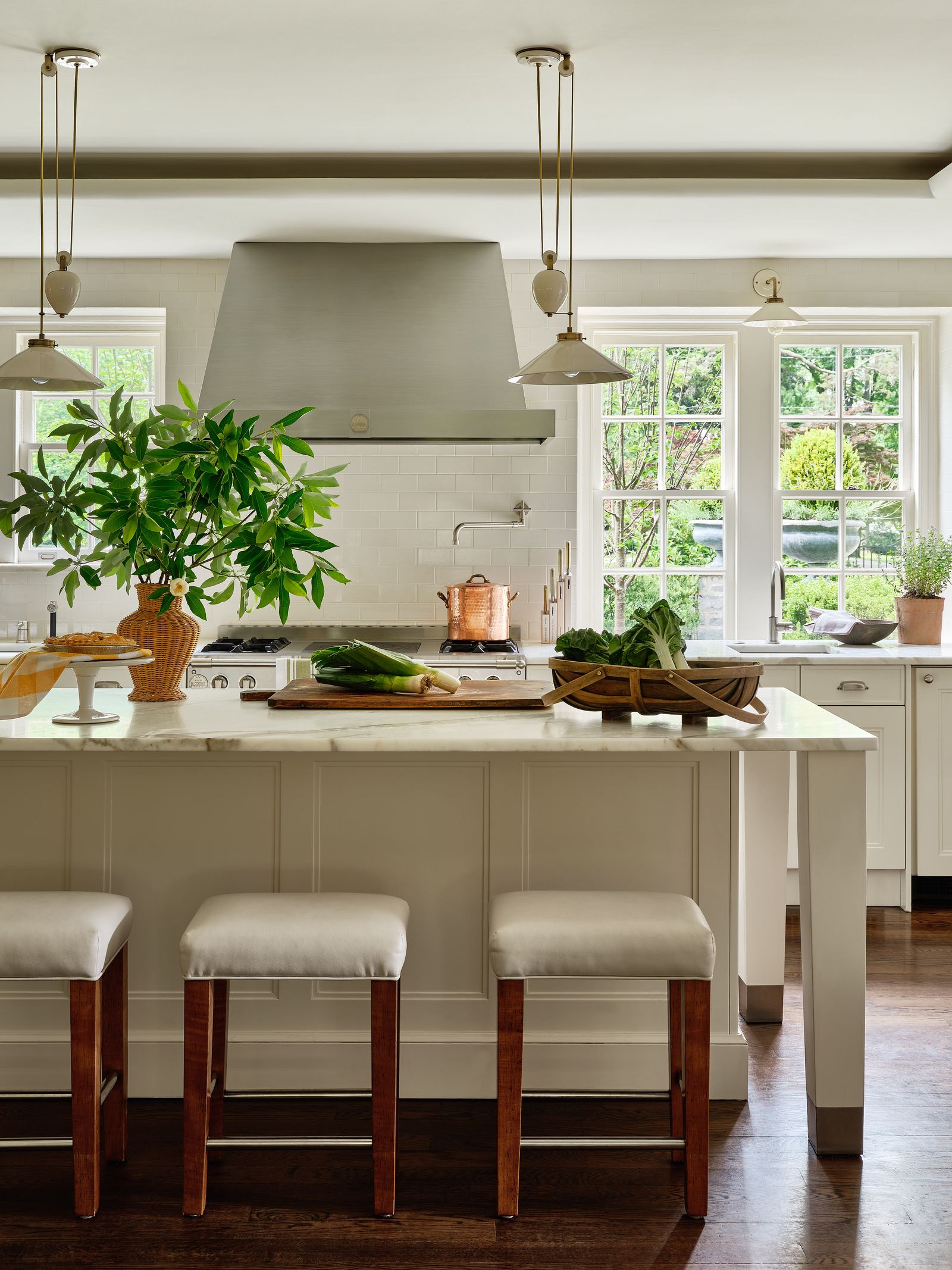
The mess-free aesthetic is one which has been noticed by Tony Niblock, co-founder of the kitchen design company Plain English, which this year opened its second US showroom in California. ‘Very large US spaces are now being split up into different areas’, he says, pointing out that many of the recently completed projects have incorporated ancillary rooms (bootrooms, larders, pantries and sculleries) into the blueprint of the kitchen: further evidence of the distaste for clutter. The origins of these rooms are in fact British, and are still typical of large country houses which have the space for them.
‘Plain English has had an influence on the style of kitchens in America’, says Gil Schafer, remarking on a recent movement towards a more eclectic, colourful style of decorating. The Utah-based designer Meta Coleman has built up a loyal clientele who turn to her for warm, personal spaces. She uses pattern, colour and an eclectic mixture of materials to soften what can often be ‘an inconveniently large space’, she says. 'I will always try to add in colour on the walls, or wallpaper and plants, art and window dressings, otherwise these huge kitchens can feel a bit too utilitarian'.
‘In America, the kitchen is the centre of life in the house’, says Gil. The appeal in this is manifold; from the sheer expanse of them, to the deeply covetable appliances which would make any home cook swoon. Perhaps it’s the neatness and tidiness of them – they present a visually clear and serene space. We may love our higgledy-piggledy, full-of-history little kitchens on this side of the pond, but there are certainly days when I can’t think of anything more satisfying than cooking in a great big American kitchen.


