


Taste and opinion are, for the most parts, highly personal – and varied. Notable is that it is often the outermost points of view that get most attention: look at politics – the Liberal Democrats, formed in 1981, have consistently been the third largest party since 1992. Lots of people agree with many of their centrist policies, but when it comes to voting they align themselves with the Conservatives or Labour. Similarly, people think of themselves as minimalists or maximalists, and for every design aficionado who goes weak at the knees for an Isamu Noguchi floor lamp there’s a frill fancier who loves nothing more than a ruffled chair skirt and Austrian blind. So is there a sweet spot between them all, somewhere the twain will in fact meet – an interiors equivalent of the Lib Dems, if you will? Is there a way of decorating that will appeal to, say, between 70 and 80 per cent of the population, or at least not offend anyone?
Laura Butler-Madden started her interior design career in property development in London, and recalls that “We were often told, by estate agents, that my particular décor seemed to have appeal across the board – and, when we sold the houses we’d developed, they always achieve a record price for the street, or immediate area.” A holiday house she decorated in Menorca was listed as one of Condé Nast Traveller’s Top 10 AirBnBs in Europe, while her cottage in the Cotswolds, also listed on AirBnB, is almost constantly booked. She explains that she sees decorating a holiday let and preparing a house for sale as being similar. “It’s about tapping into a certain taste that is universally appealing, that is calm and serene, and using furniture, furnishings and materials to create a vision of a lifestyle that people either want to live in permanently, or pay to spend time in.” So how do we ape that look and – if we are selling a house, or decorating a holiday let – that success?

Of primary importance, says Laura, is that all the standard decorating rules apply. The bones of the house matter, the quantity of natural light, the flow of rooms, and – if you’re advertising a holiday let for, say, 12 people, there’s got to be a large enough space for group congregation. Matt Gibberd of The Modern House – the estate agency that sells houses so beautiful that committed Londoners have been known to up sticks and go rural, and vice-versa – agrees, pointing out that everybody likes to be able to imagine themselves throwing impromptu parties or inviting friends over for dinner. Alongside this are materials, “the quality and finish of the flooring, cabinetry, tiling, and curtains” says Laura, to which Matt adds “light switches, cistern levers, door handles and kitchen worktops.” And in case you were in any doubt, they are not recommending plastic switches or laminate countertops. In fact, Laura almost always uses marble, even in holiday lets. “We get a lot of feedback on it, because who doesn’t like marble? It really elevates people’s experience – and being on holiday should be slightly better than your real life. It is expensive, but it lasts; we leave notes suggesting not marinating lamb chops directly on top, and our cleaners know how to look after it.”
Next comes content, which can be where it go wrong, for Laura points out that “decorating as a developer or decorating a holiday let is quite different to decorating your actual home. A home is built up of layers; in selling a house, or letting it, the suggestion you’re making is that the client can put their own layers on top, they can use the basis of what you’ve given them to make a home, whether permanent, or temporary.” What this translates to is a look that is, above all, “uncluttered, and clean,” says Laura (which, when you think of the popularity of the Marie Kondo method, makes sense). “You don’t want strong pattern, or strong colour because however much you might love them, there will be others who don’t. I might use a Pierre Frey wallpaper or fabric, but it will be in a muted colourway, nothing that’s going to dominate the space. And while you want every room to look different – especially bedrooms – you don’t want the difference to be too pronounced as you don’t want rooms to look themed.”
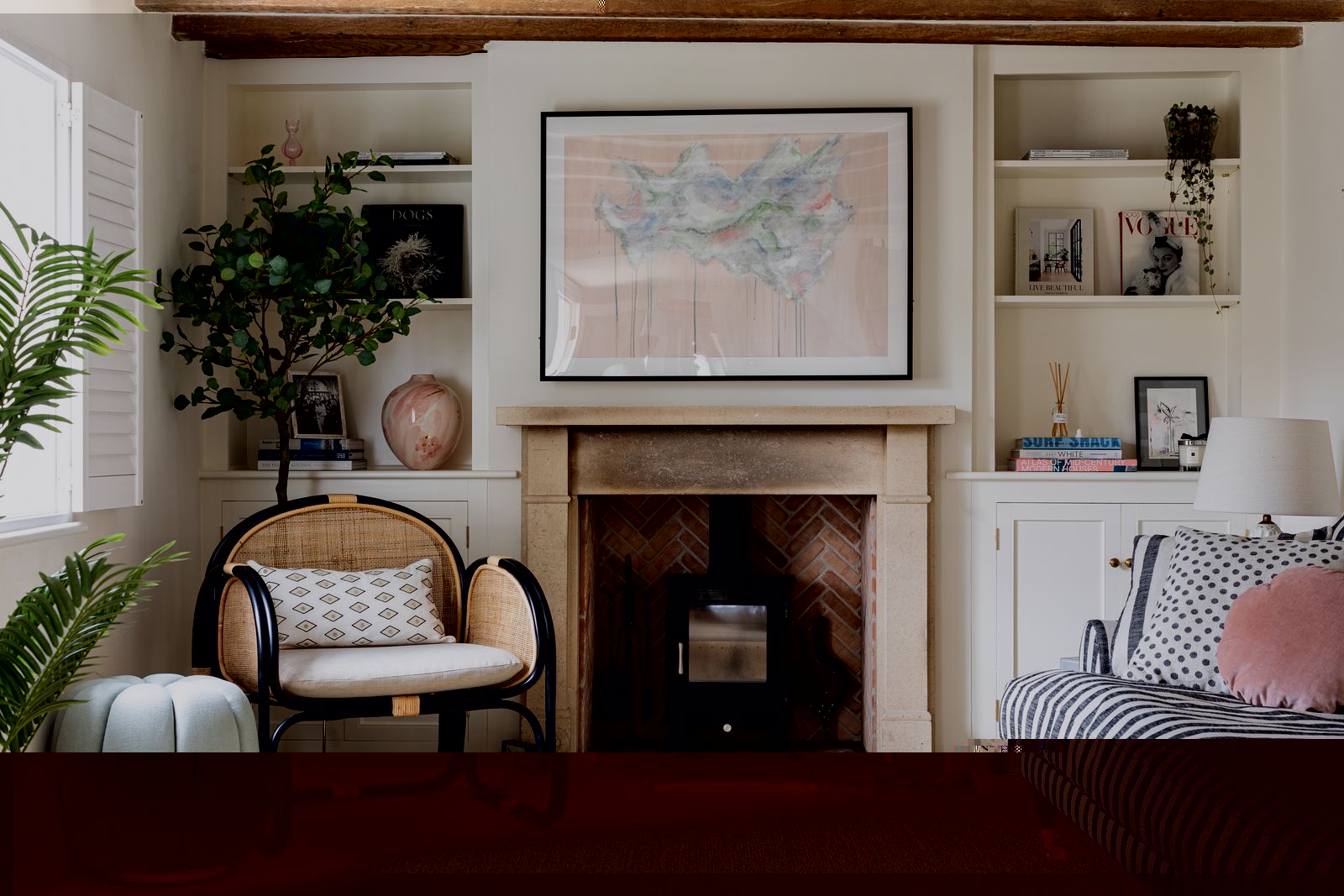
The good news, says Laura, is that spending a fortune on furniture is not compulsory – though king-sized beds always promise a better night’s sleep than a standard double. That said, although the three biggest homeware brands in this country are Dunelm, John Lewis and Ikea, they’re not necessarily the correct go-tos for wide appeal – unless you’re clever with how you use them. “Ideally, you want things that aren’t recognisable, that people can’t put an immediate price on,” says Laura. “Even within universal taste, there needs to be an element of individuality. I shop a lot from smaller brands, and also I’ll source as much vintage as I can, as long as it is in really good condition – I particularly look for vintage lamp bases and vases. And rooms do need some detail – they can’t be so pared back that they’re boring. Equally, the furniture has to be arranged sympathetically, and the proportion has to work.” For a holiday let, “you want to make it beautiful, but also, as much as possible, indestructible” – which means loose covers on sofas rather than wipe-clean pleather.

The final consideration is art. “Bare walls are not universally liked!” points out Laura – but nor does anybody want the standard landscape print that has become the hallmark of a three-star hotel chain. And at the other end of the spectrum, “very few people want to live with a Francis Bacon, even if they understand it’s worth and importance,” says Daisy Bell of art consultancy Cramer & Bell, which sources art for both private and corporate interiors. Her house in Yorkshire, Thirsk Hall, is in the November issue of House & Garden, on newsstands now. Within it is a self-contained AirBnB apartment, decorated with art from Daisy’s collection, including works by Norman Ackroyd and Howard Hodgkin. “But nothing dark or heavy, nothing too colourful, and nothing brash; most people are looking for something calm. Generally, realistic portraits of people or places are only attractive to people who have an affinity with them, so there needs to be ambiguity, which you get with more abstract art. People need to be able to make their own interpretations.”

So, is universal taste bland, if useful? It’s perhaps an unfair accusation to level when it is also beautiful, though “I think it’s hard for anyone to hate what I do, because I haven’t given it a strong point of view,” says Laura. “I try to create a basic – but attractive – template that someone can imprint with their own life, and taste.” She’s not alone, incidentally. There are many interior designers who deliberately do not ‘finish’ a project. Ben Pentreath has explained that “I rely on people to live in their houses and collect. I provide a framework and, over time, rugs, paintings, and books can be added.” He does use stronger colours and pattern, but so does Laura, when decorating for herself or a client who aims to live in their house. Perhaps it’s more appropriate to see universal taste as the bedrock of design – because, it transpires, we’re universally invested in applying our own opinion. (Which explains a lot about the current state of politics.)


