


It is known as the floating city, but is Venice sinking? Venice is made up of 118 islands separated by canals and connected by more than 400 bridges. Located in a lagoon on the Adriatic Sea, Venice serves as both the capital of the Venezia province and the Veneto region of northern Italy. Together with the lagoon, Venice was declared a UNESCO World Heritage Site in 1987. With a history that spans just over 1600 years, Venice, Italy, has had many lives—from a maritime empire and major seaport to a global centre of art and culture that draws approximately 25 to 30 million annual visitors to absorb its intriguing mix of Byzantine, Romanesque, Gothic, and Renaissance architecture.
And now, with the wedding of businessman, Jeff Bezos planned for Venice this June, the conversation about the threat of overtourism seems louder than ever, along with the belief that the city of canals is both literally and figuratively sinking under the weight of it. To understand both the human and environmental threats to the future of Venice, Architectural Digest spoke to historian of Renaissance Venice and associate professor at Saint Joseph’s College of Maine Michelle Laughran, and Anthony Berklich, founder of luxury travel platform Inspired Citizen. Here’s everything you need to know.
How was Venice built?
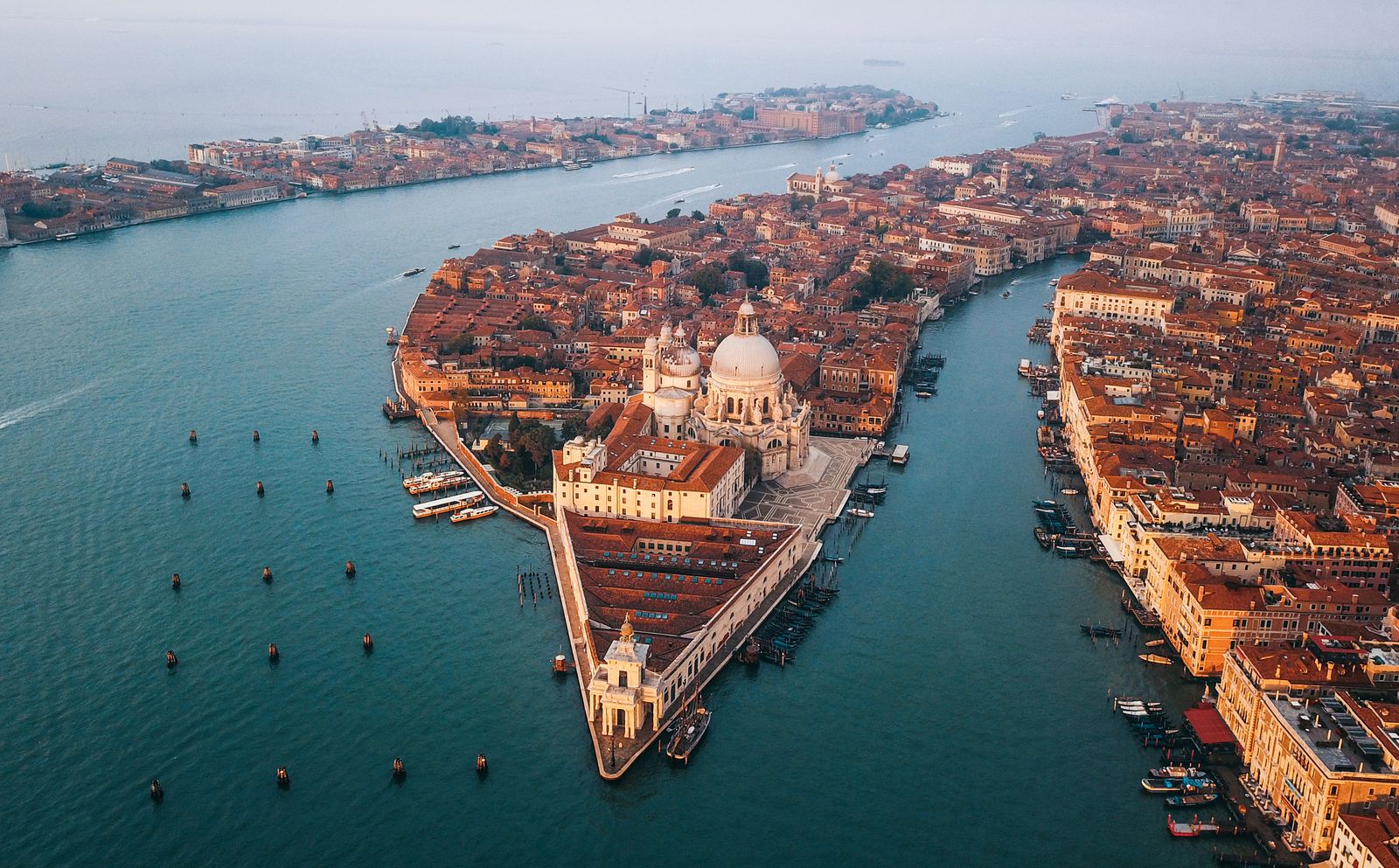
To understand how Venice was built, one needs to know why. When the Western Roman Empire fell in AD 476 due to both internal and external factors, Venetian merchants were left vulnerable. They needed a way to protect themselves from nearby nations and possible barbarian raids, so they built the barricaded, floating city that we now know as Venice. The city’s location at the northwestern end of the Adriatic Sea along a crescent-shaped lagoon served as the ideal place, as the shallow waters of the lagoon are protected by a line of sandbanks whose three gaps allow passage of the city’s maritime traffic, according to Britannica.
However, marshland is not a great foundation for a city, so ingenious Italian builders and engineers sourced a combination of larch, oak, alder, pine, spruce and elm trees from abroad to craft millions of sharp wooden poles, then drove them deep into the clay beneath the marsh lagoons with their tips facing downward.
According to a visually illustrated report from the BBC, the piles were hammered as deep as possible by workers known as the battipali (literally translated to “pile hitters”) until they were firm and sturdy—so much so that the friction between the piles and the soil was strong enough to support a building. The layout of the piles started at the outer edge of the structure and then moved toward the center of the foundation in a spiral shape, with the heads sawn off to obtain a flat surface that lay below sea level.
On top of the wooden poles (whose lengths range between 3 to 11.5 feet), workers built wooden platforms that have upheld Venice’s iconic sites like St. Mark’s Square and Basilica, St. Mark’s Campanile, and Doge’s Palace for centuries. It’s unclear exactly how many millions of wooden piles are under the city, but as a reference, the BBC reports that there are 14,000 wooden poles in the foundation of the Rialto Bridge and 10,000 oak trees under St Mark’s Basilica.
Venice’s forest foundation has avoided decay over the centuries thanks to the lack of oxygen exposure and the effects of saltwater on the wood; however, it hasn’t completely avoided damage. According to the BBC, anaerobic bacteria attack the cell walls of the wood fibers, causing damage to the wood. Fortunately, the bacteria are slow acting. Seawater fills the holes hollowed out by the bacteria, and the combination of wood, water, and silt creates a perfect pressure system that has kept the foundation standing for centuries.
Which leads us to arguably the most commonly asked question about Venice…
Is Venice sinking?
The better question: Is Venice sinking, or are sea levels rising? The best answer: a bit of both.
“While it is true that parts of Venice which were once the highest points of the city are now some of its lowest—the Rialto, for example, was originally called the ‘Rivo Alto’ or ‘high bank’—it is largely a misconception that Venice is sinking under the sea,” says Laughran. “For centuries, there has been some compacting of the underlying sediments under the weight of the city’s buildings, and then back during the 1950s and ’60s, there was subsidence from groundwater and natural gas extraction, which was halted in the early ’70s when its damage was noticed. Most of the water threatening Venice today, however, is from rising sea levels, not from the ongoing sinking of the city itself.”
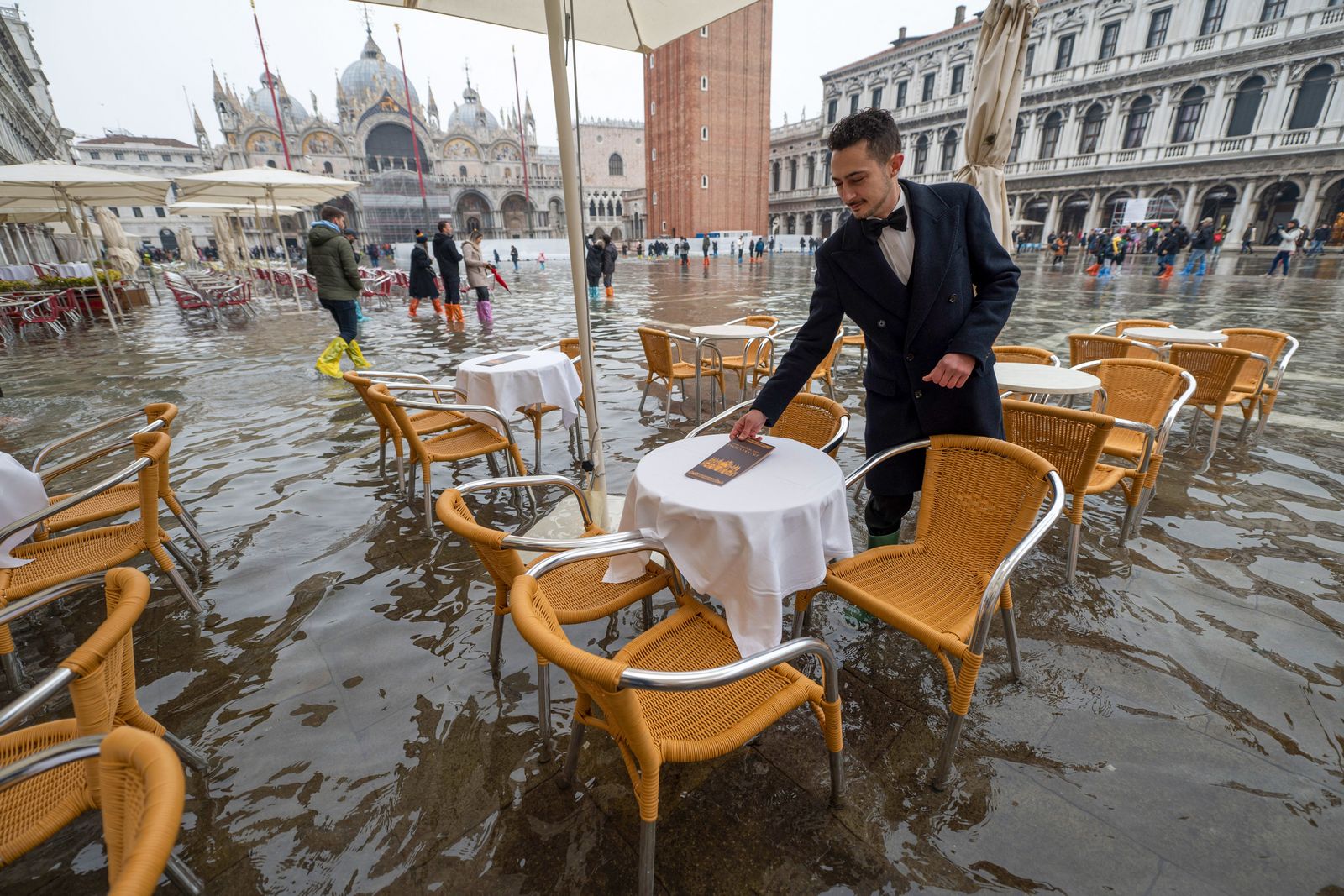
Venice has long battled with its irregular climate and lagoonal ecosystem, with flooding so frequent that raised wooden walkways are used to help people traverse the city during the acqua alta (“high water”) events. A particularly catastrophic flood occurred in 1966, when water levels rose to 6.4 feet above sea level.
The rising waters of climate change haven’t helped. As reported by the BBC, Venice suffered its second-worst flooding event recorded in November 2019, when the tide reached a peak height of more than six feet above sea level. More than 80% of the city was left underwater, causing an estimated $1.1 billion worth of damage.
Additionally, the buildings of Venice have actually sunk, but not nearly much as one may think. According to the BBC, the piles below the city’s foundation are being pushed further into a layer of compressed clay. “Many of the buildings built atop this unstable foundation have shifted position and, in numerous instances, started to sink into the mud. Historical groundwater extraction has enhanced this impact, and Venice has sunk roughly 15 cm (5.9in) over the past century.”
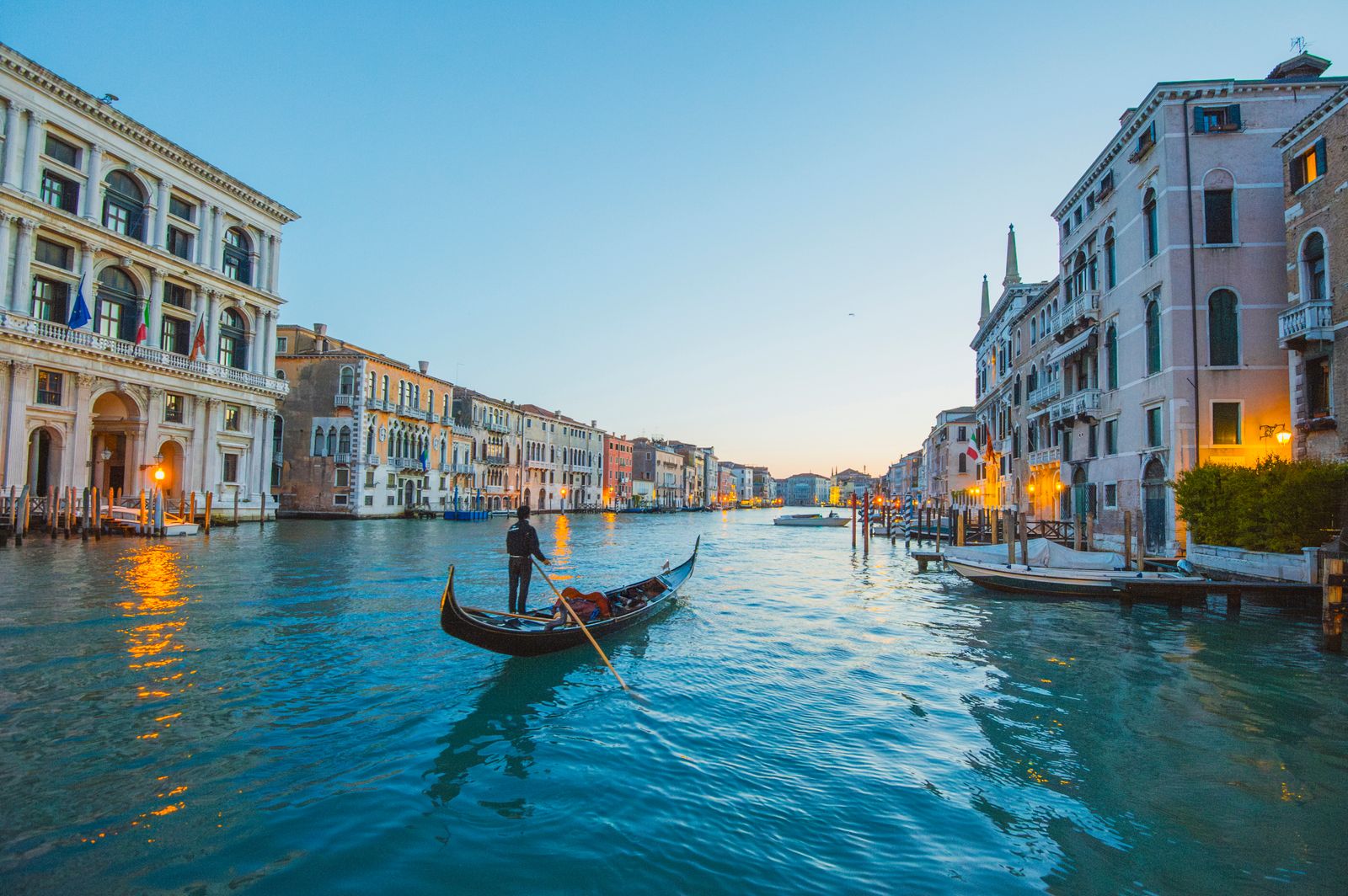
The idea that Venice could one day sink into the sea has also been perpetuated by pop culture references, “like the Bond film Casino Royale,” says Laughran. “In that movie, an entire palace on the Grand Canal disastrously sinks below the waterline in a matter of seconds, but in reality, that’s completely impossible, since all the buildings in Venice have actually been constructed on a solid foundation…. So, thankfully, Venice can never ever sink like that CGI building did!”
Will flood barriers save Venice?
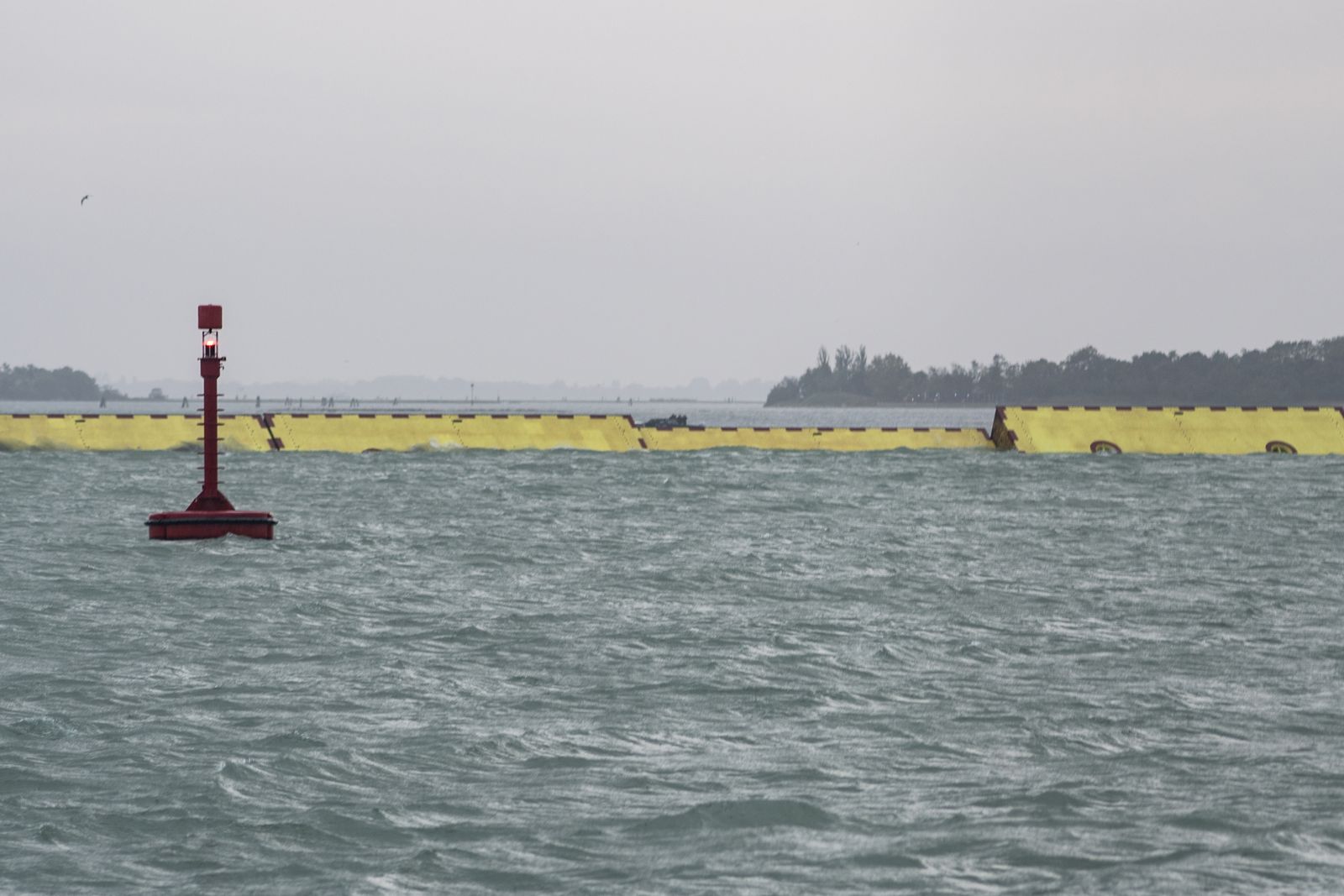
After a damning 2024 report by Italian scientists stated that Venice could be underwater by 2150, global attention turned to the MOSE project (Modulo Sperimentale Elettromeccanico), a flood barrier system designed to protect the city and the lagoon from flooding. The system is made up of 78 mobile gates situated at strategic locations that can be raised to temporarily isolate the lagoon from the Adriatic Sea during high tides and minimize major flooding events.
Due to complicated construction and less-than-speedy Italian bureaucracy, it has taken decades for the MOSE project to see the light of day. It was first conceived of in the 80s, and construction officially began in 2003, with the original aim for completion in 2011. The project has been riddled with soaring costs and delays, but was finally tested for the first time in 2020.
Though it may help prevent catastrophic flooding, it is widely not considered to be a permanent solution, and may potentially cause other unforeseen issues for the city and its residents. “Venice doesn’t have a modern waste treatment system. Greywater is released directly into the canals. For blackwater, the city uses septic tanks, and their leach field is also the canals, which—until now—had always been flushed twice daily by the Adriatic’s tides,” says Laughran, who has been living between the US and Venice for 30 years. “So, if rising sea levels eventually force the floodgates to be closed most of the time in order to preserve the city, not only will the Venetian lagoon be at risk, but Venice will also have to build an entire new waste treatment system.” Additionally, Laughran says that “the more the flood barriers have to be raised, the more the Venetian lagoon will be damaged, because they cut off its natural water exchange with the Adriatic Sea.”
So with all this knowledge of the fragility of Venice, the question remains…
Should I visit Venice?
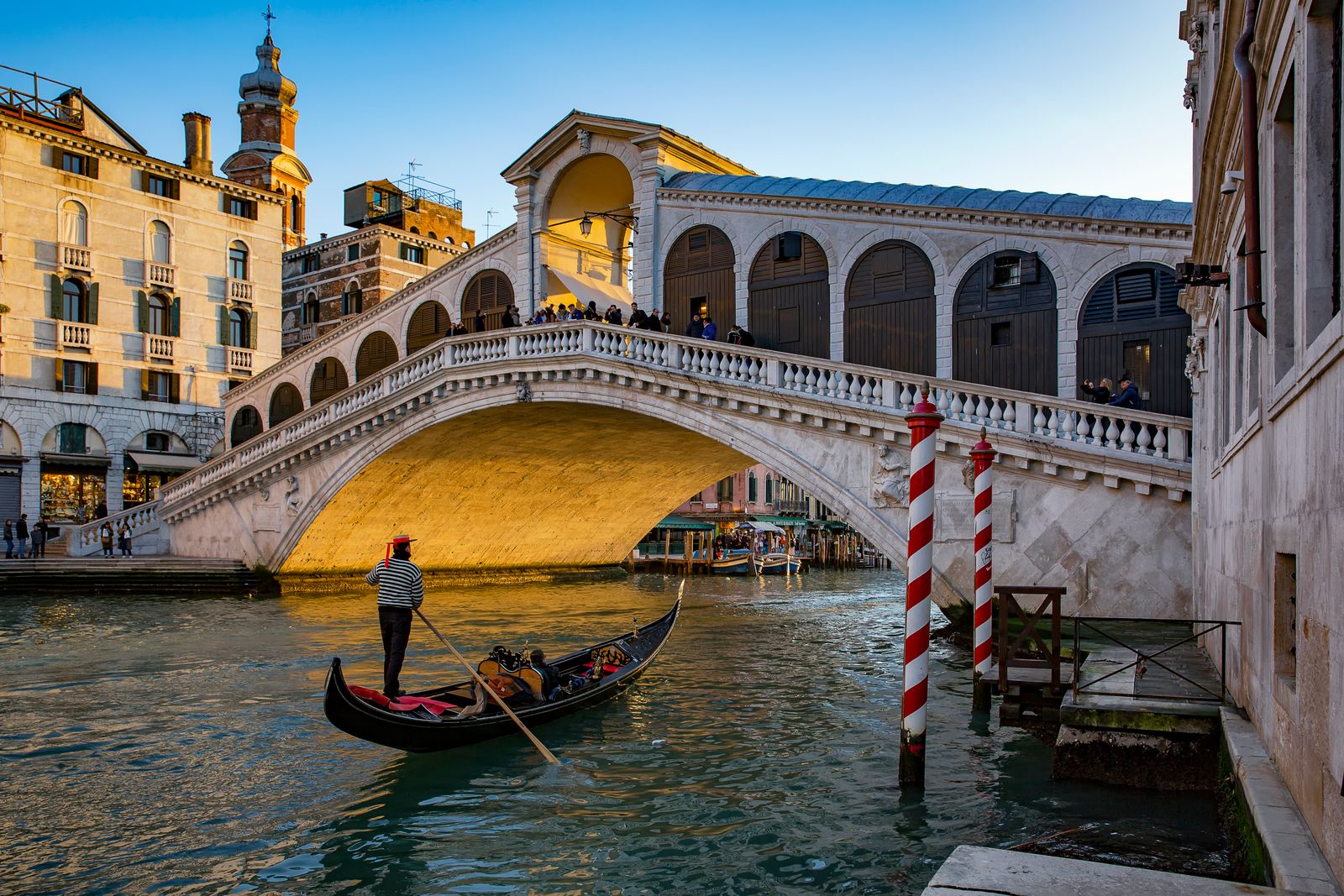
Of course, but there are ways to do it responsibly. First, consider the fact that tourists to Venice are estimated to average between 75,000 and 110,000 per day during peak season, and that the city has lost more than 60% of the resident population since the 1950s, much thanks to overtourism and high living costs. This means that there literally aren’t enough residents to welcome, serve, and accommodate that great of an influx of people on a daily basis.
“Venice is one of those destinations that is phenomenally majestic but suffers greatly from overtourism, and that can completely destroy something,” says Anthony Berklich, founder of luxury travel agency Inspired Citizen. In his work, Berklich books more than 200 Venice trips for clients each year, but he hasn’t booked a trip to Venice for a group of more than eight people. “When I plan a client trip, I always steer them towards more conscious ground partners that take more care and don’t do things en masse. These partners prefer to do things in small numbers, and it has an impact because it encourages that type of tourism.”
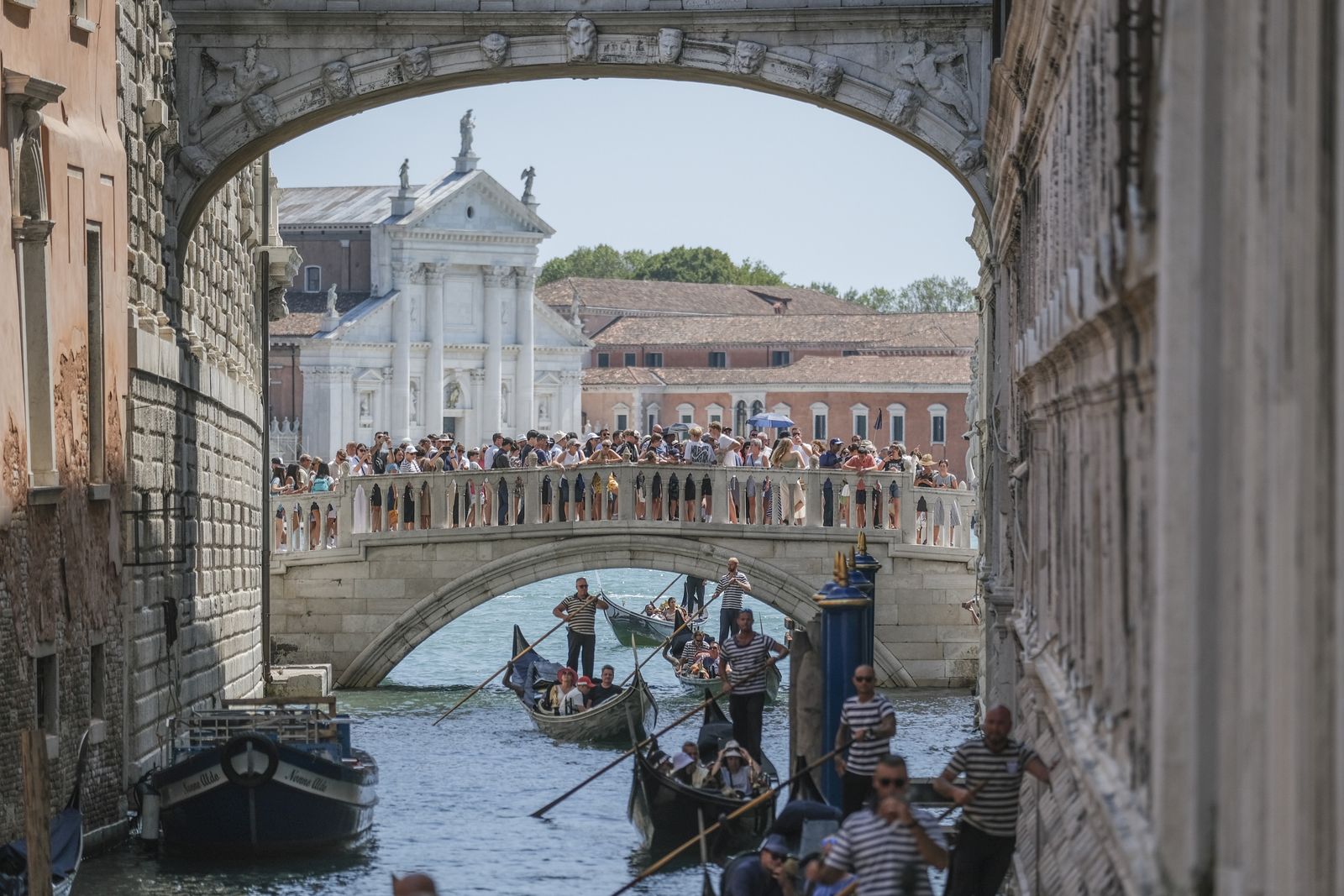
The city has attempted to control the tourist population to mixed results. In 2021, the Italian government banned large cruise ships from sailing through the city centre of Venice (specifically the Giudecca Canal after a 2019 crash), but ships under 25,000 gross tons are still allowed. Last year, a trial Venice access fee of five euros was charged to visitors who weren’t staying overnight in a Venetian hotel—including day-trippers and cruisers—in an attempt to curb crowds, but visitor numbers remained high. This year, the fee has doubled to 10 euros for last-minute travellers, with many residents arguing that it is not an effective means of deterring overtourism.
Conversely, Berklich says that the best way to be mindful of your impact is to focus on the timing of your trip and do your own research on vendors. “Venice is busy year-round…. I always say the best time to visit is from the beginning of October into the first couple weeks of December, and then again in March through the first two weeks of May.” Although he recognizes the higher costs, Berklich recommends choosing tour companies or travel agencies that have an “eco-conscious” mentality. “When you choose [a company] that prioritises quality over quantity, you’re enabling them to put more effort into actually making a difference and having an impact on [Venice].”
This article originally featured on architecturaldigest.com


