

The Canadian-American Frank O. Gehry was considered one of the most influential architects of the 20th century and is described by experts as the ‘Picasso of architecture’ and the ‘master of moving buildings’. And indeed, his deconstructivist buildings are greatly admired around the world, making cities such as Bilbao and, most recently, Arles in France a Mecca for fans of contemporary art.
How Frank O. Gehry's career began
Frank O. Gehry was born Ephraim Owen Goldberg on February 28, 1929 in the Canadian port city of Toronto. Through his grandfather's hardware store, who immigrated to Canada from Poland shortly before the First World War, the young Frank O. Gehry came into contact with a wide variety of materials at an early age and used them to construct miniature buildings and even small interconnected cities.
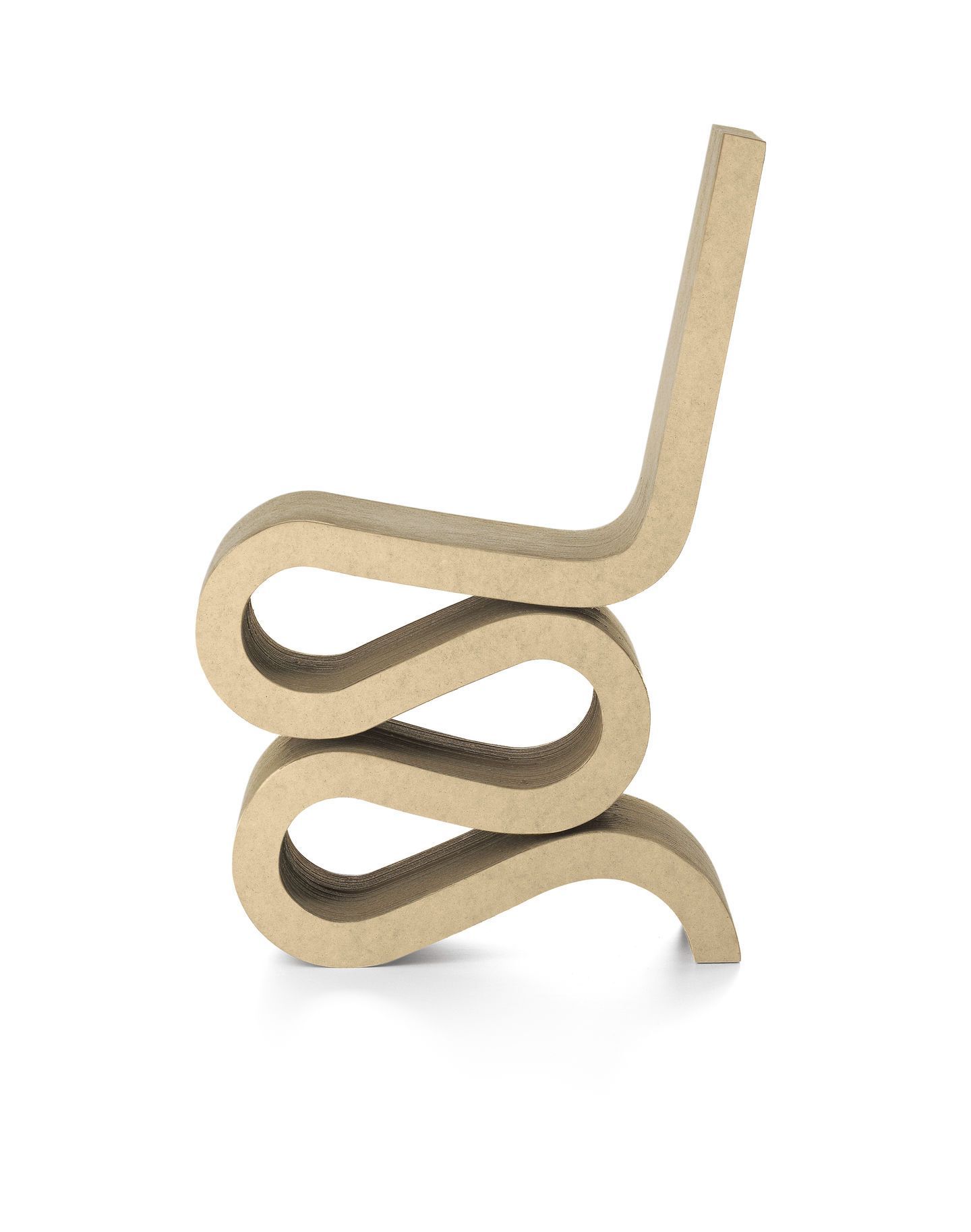
Frank O. Gehry attended school in Toronto, but moved to Los Angeles with his parents in 1947. In 1952, he married his first wife Anita Snyder, whose secretary's salary enabled him to finance his architectural studies at the University of Southern California. It was also Gehry's wife who suggested that he change their surname in 1954, as she feared the disadvantages of the Jewish name Goldberg. After completing his bachelor's degree in the same year, Frank O. Gehry first did his military service, pursued a number of projects and completed further training in urban planning at the Harvard Graduate School of Design in Cambridge from 1956 to 1957. After his return, the architect worked for Studio Gruen Associates in Los Angeles and founded his own architectural firm, Frank Gehry & Associates, in 1962, around five years after graduating. In 1972, Frank O. Gehry, who incidentally officially opted for American citizenship, designed for Vitra. Under the heading ‘Easy Edges’, he created a sculptural side table and chair made of sturdy cardboard.
Gehry's marriage to Anita Snyder, from which they had two daughters, ended in divorce in 1968. In 1975, he married Berta Isabel Aguilera, with whom he had two sons and lived in a converted 1920s bungalow, the Gehry Residence, in Santa Monica. The house is considered a kind of prototype of deconstructivism, as the conversion was Frank O. Gehry's first departure from the familiar construction methods and static conditions.
Germany as the first stop on the way to international recognition
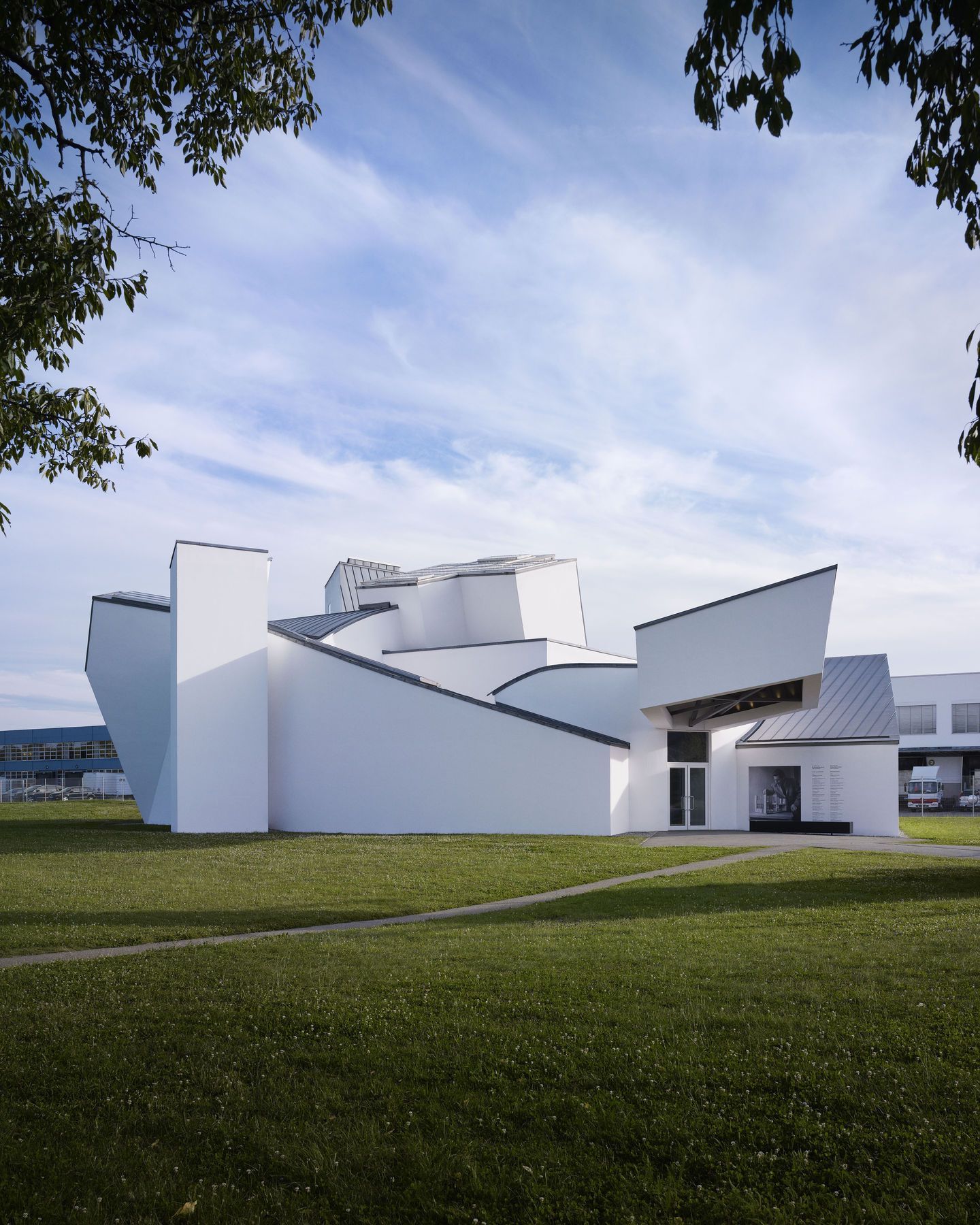
In 1989, the Vitra Design Museum in Weil am Rhein, Germany, just a few kilometers from the French and Swiss borders, was the first European project to be completed by the then 60-year-old architect, ushering in a new design era in his career. The sculptural building, in which around 700 square meters of exhibition space are spread over four spacious rooms, is made up of basic geometric shapes that are determined by their function. For example, the rectangular column at the edge houses the elevator, while the staircase is located in the spiral on the opposite side. In order to create optimal lighting conditions, the windows were integrated into the roof in various shapes. The building, with its white plaster façade and zinc roof, now serves the well-known furniture manufacturer Vitra not only as a museum, exhibition and event space, but also as an administrative building. Gehry's works can also be admired in other German cities such as Hanover, Düsseldorf, Berlin and Frankfurt.
How Frank O. Gehry triggered the Bilbao effect
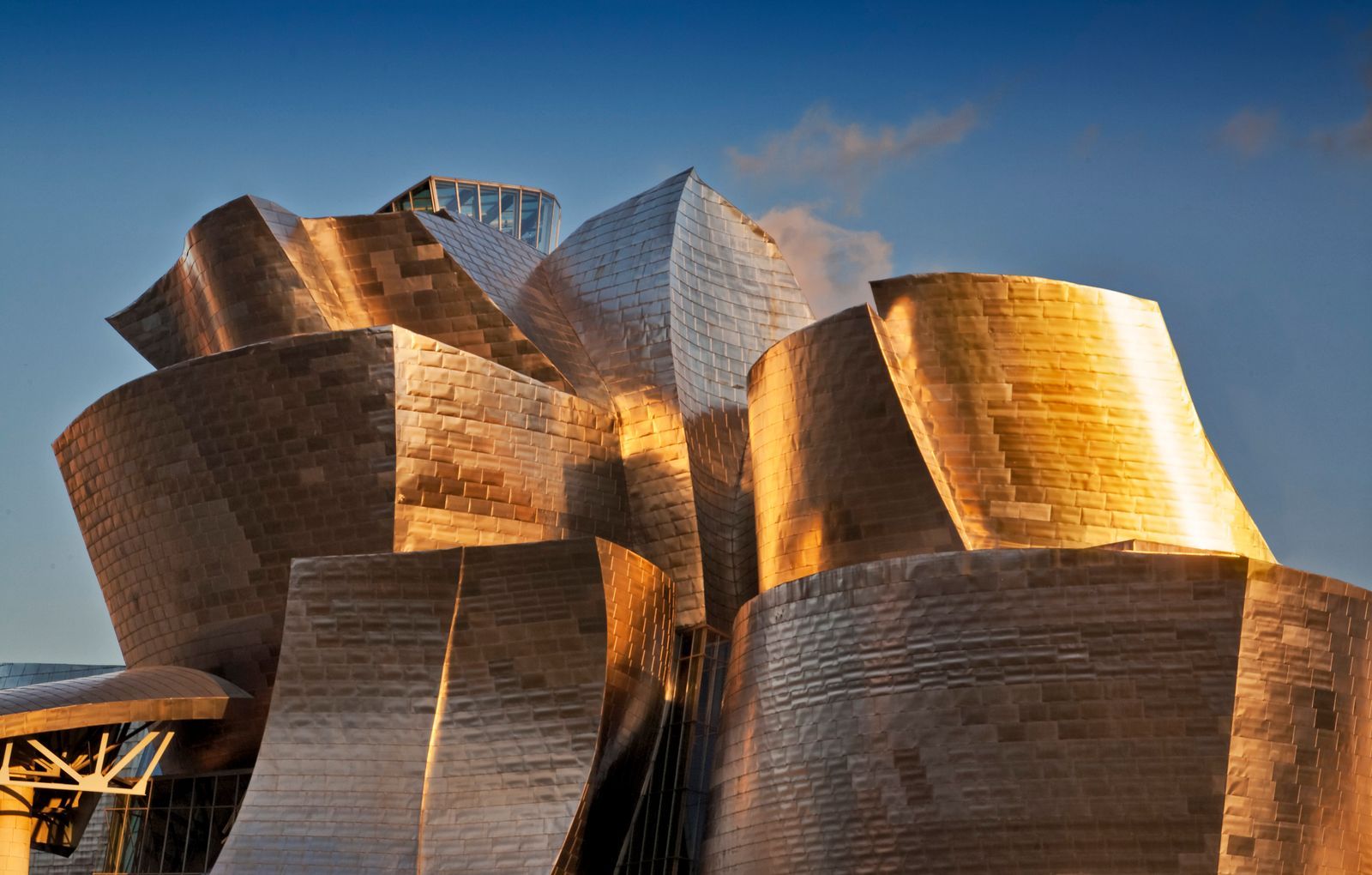
With the opening of the Guggenheim Museum in Bilbao, Spain, in 1997, Frank O. Gehry finally achieved his international breakthrough. When Frank O. Gehry presented his concept to the Solomon R. Guggenheim Foundation New York in 1993, which was looking for a European location for its collection, the once flourishing industrial and port city of Bilbao had almost fallen into oblivion. The city authorities hoped that the construction of a museum would bring new splendour and, of course, lasting success for the city and its inhabitants.
And indeed, the response from experts and visitors exceeded all expectations and quickly silenced skeptical residents. Instead of the 500,000 visitors expected in the first year, around one million art lovers from all over the world made the pilgrimage to the rust-red steel museum, which is dominated by playful, organic shapes such as waves and curves. With his building, Frank O. Gehry proved, as he had already done with the Vitra Design Museum, that an art museum can be more than a simple white box and does not have to hide behind its exhibits. The Guggenheim Foundation is currently planning further locations in New York City and Abu Dhabi, where Frank Ghery will also be in charge.
Even after 25 years, the Guggenheim Museum still makes Bilbao a popular tourist destination. The positive impact that Gehry's design had on the economically depressed city, the surrounding region and the whole of Spain is also known as the Bilbao effect. The city of Hamburg also wanted to take advantage of this effect a few years ago and considered commissioning Gehry to design the Elbphilharmonie. However, due to differences of opinion regarding the budget, other architects took on the project.
Frank O. Gehry combines art and architecture
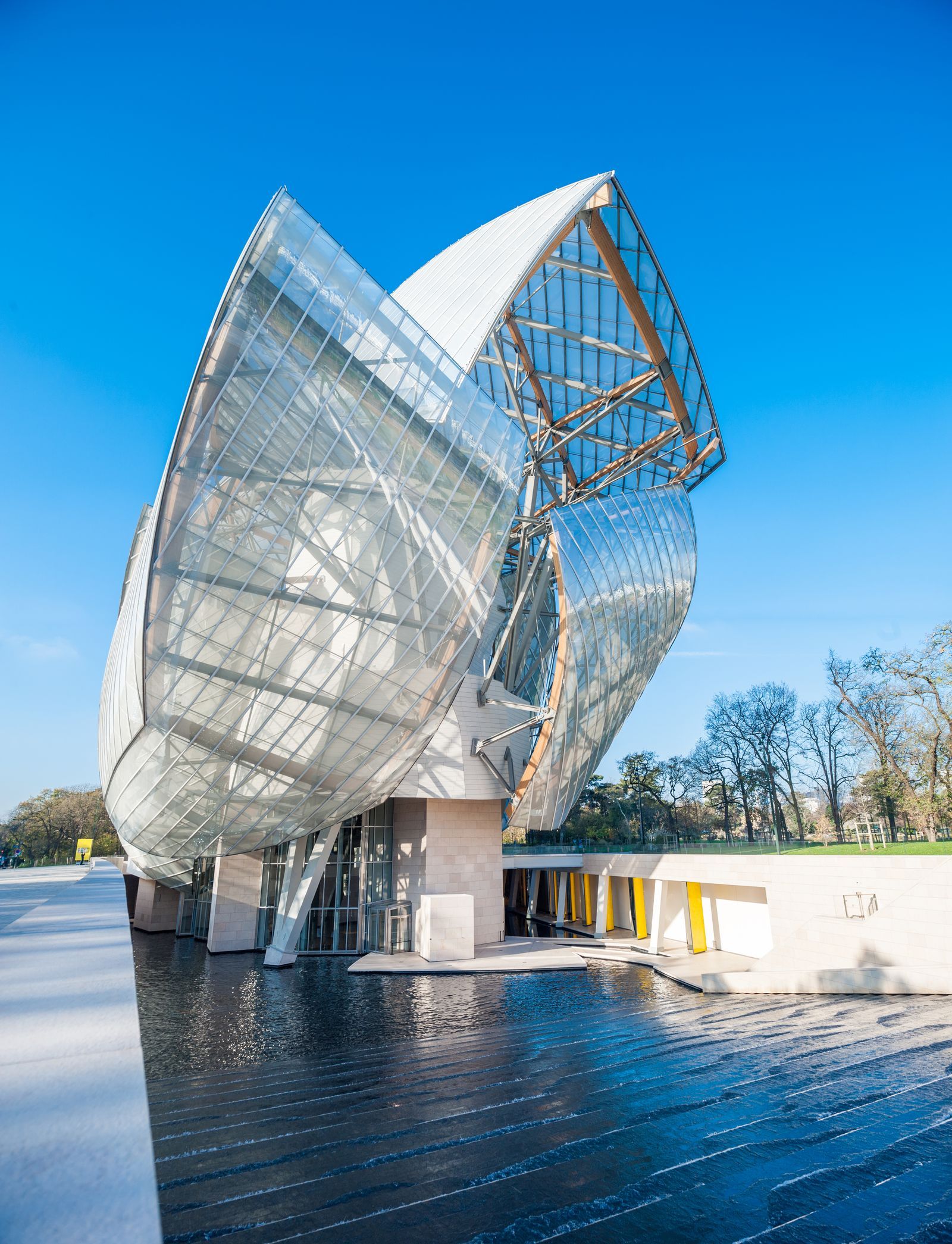
In October 2014, the Fondation Louis Vuitton opened in western Paris, another art museum whose building was designed by Frank O. Gehry. Bernard Arnault, CEO of the LVMH Group (short for Louis Vuitton Moët Hennessy), commissioned the designer with the project a few years earlier because he was so impressed by his concept for the Guggenheim Museum in Bilbao. The result: an imposing glass and steel complex measuring around 11,000 square meters with eleven galleries and a total exhibition space of almost 4,000 square meters. The private museum also houses an auditorium and various event rooms. According to Frank O. Gehry, the design of the huge glass cloud, also known as an iceberg, was inspired by sailing boats and translated their appearance into twelve curved glass surfaces measuring between 500 and 3000 square meters. Inside the Fondation Louis Vuitton, works of art from Arnault's private collection are on display alongside temporary exhibitions. And outside, there is a waterfall and various terraces from which visitors can catch a very special view of Paris.
Frank O. Gehry's Luma Arles
In June 2021, one of Europe's largest private art projects opened its doors in Arles, a town of around 50,000 inhabitants in the south of France. The initiator is the Swiss art collector and founder of the Luma Foundation Maja Hoffmann, who wanted to create a cultural centre with the eleven-hectare complex. In Arles, artists find the opportunity for interdisciplinary collaboration with like-minded people, curators and scientists. In addition to exhibition spaces and an artist residency, the site also includes laboratories, a café and a restaurant, which have created new jobs in the economically struggling city and region.
The most spectacular building, however, is the 15,000 square meter, 56 meter high tower designed by Frank O. Gehry and officially named the ‘Arts Resource Building’. The 11,000 shimmering aluminium panels that make up the façade reflect the sunlight and the surrounding nature of southern France in an impressive way and offer a special kind of photo opportunity for countless international visitors.
Awards received by Frank O. Gehry:
- Pritzker Prize (1989)
- Honorary member of the "Association of German Architects" (1989)
- Praemium Imperiale for Architecture (1992)
- Wolf Prize for Architecture (1992)
- Dorothy and Lillian Gish Prize (1994)
- Prince of Asturias Prize for the Arts (2014)
- Honorary doctorate at the University of Toronto, the University of Southern California, Yale University, Harvard University and the University of Edinburgh


