

In a world in which traditional collecting can feel exclusionary or aloof, decorative art offers something gentler: a way to celebrate what we find beautiful, without pretence or pedigree. These aren’t our grand acquisitions, but our humble treasures, such as a row of antique plates, a framed textile or some travel sketches. They may be modest in value, but they are rich in meaning, speaking to lived experience, and bring a deeply personal rhythm to our interiors.
One of the joys of decorative art is that you can display the most ordinary items in a way that makes them extraordinary. In my mother-in-law’s kitchen, a colourful 1920s men’s bathing suit once worn by her grandfather has been cleverly framed. It’s personal to her and the starting point for conversations in a way that more formal artworks rarely would be. But it’s important not to get carried away: there’s a fine line before things feel gimmicky – and a sort of delirium that comes from realising you can frame anything – so approach with restraint.

If, like me, you’ve been rearranging rooms since you were a child, experimenting with decorative art is a great way to regularly change up the look of your home. We often hang plates from Etsy in an interesting layout, or add plaster casts around a doorway. I’ve a collection of antique hand-held face screens, collected on family holidays, hanging above the off-centre fireplace in my bedroom. Their irregular form is so much more forgiving than the rigidity of a rectangular piece of art or a mirror.
Using a picture rail can aid with flexibility and makes hanging a disparate group of pieces so much easier – and more intentional. In my drawing room, I have a grid of antique architectural prints (bought mainly because I liked the frames) surrounding a mid-century Spanish landscape from an antique dealer (my husband loves Spain and I loved the colours used). There are also some contemporary en plein air landscapes and Swedish interior oils – all united and given a sense of intention by the fact that they hang from the same brass rail.
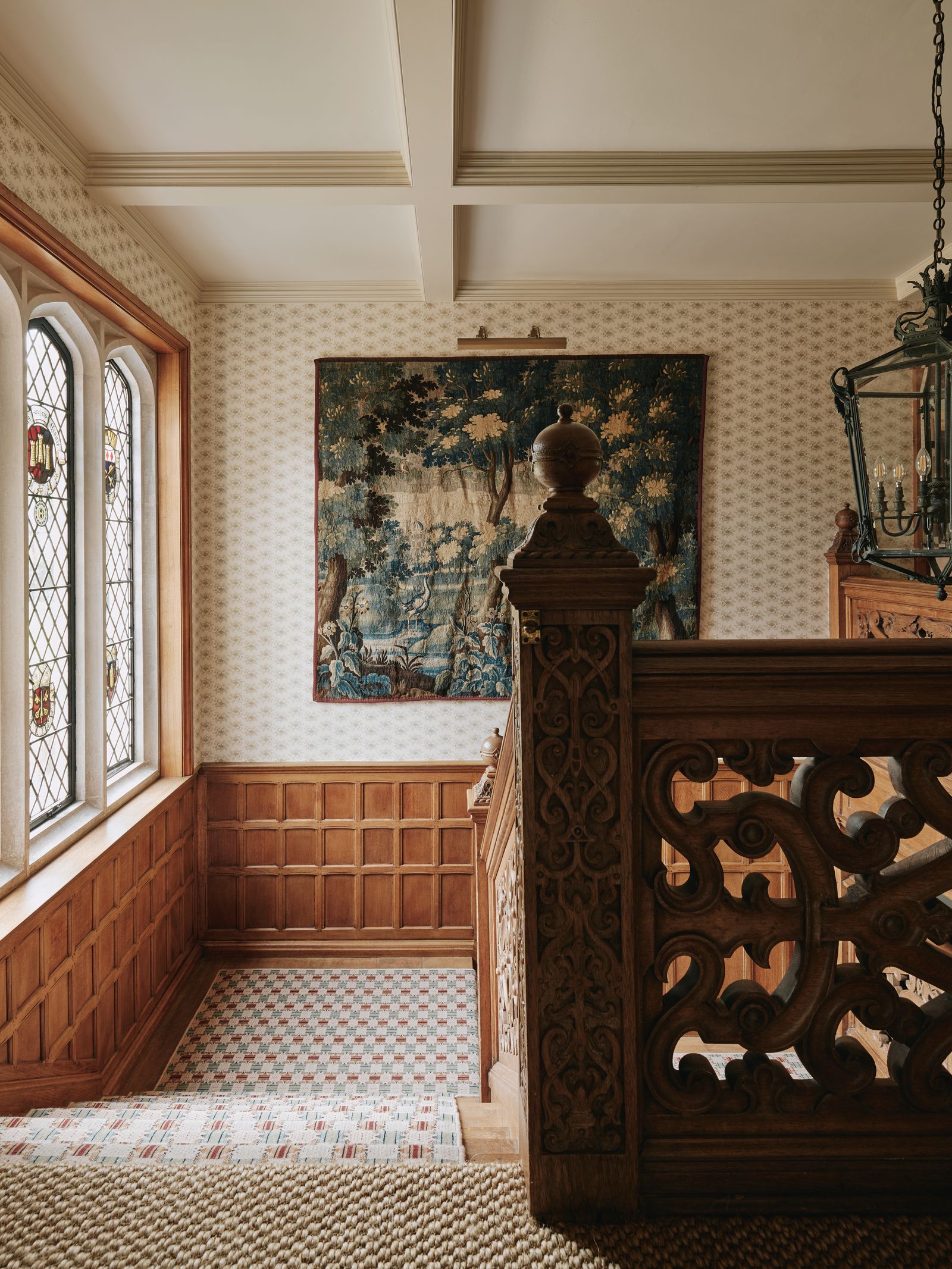
When the perfect piece for a large wall eludes you (for reasons of budget or serendipity), instead of letting the space be bare and unloved, use a beautiful placeholder. At home, we’ve just hung a pink and brown suzani bought from Francesca Gentilli because I needed a placeholder after the magnificent oil painting of ‘Aunt Rosy’ (borrowed from my in-laws for a photo shoot) had to return to her usual wall. Its job is to hold the space and, when the right piece finally appears, it can be repurposed elsewhere with ease.
Don’t worry about trying to unify a collection through colour palette or tone. That can feel too contrived, but a theme can be a good place to start. Our home is in Yorkshire and we like visiting Spain, so those are my two search terms on auction websites. Hence the mix of 1960s watercolours of the Dales, sketches of ruined abbeys and framed postcards from a Hockney exhibition, alongside vintage Spanish airline posters and a Swedish lithograph of a matador purchased from Tat London. The beauty of decorative art in an interior lies in choosing what you love and letting it enhance the space. My advice is simple: if you love it, it will work. Leave the rules to the serious collectors.


