

Gloucestershire’s Sezincote House – pronounced “seas in coat” – is one of the preeminent orientalist houses in England, whose greatest claim to fame is perhaps the turquoise, copper-covered onion dome atop its sandstone body. Inspired by Mughal architecture from the Indian subcontinent, the house is like an adapted, scaled-down version of the Taj Mahal or Humayun’s tomb melded with a traditional English country house. It also boasts extensive gardens in the “Hindu” style, again in reference to its designer Samuel Pepys Cockerell’s interest in India.
Cockerell designed the North Cotswolds house for his brother, Sir Charles Cockerell, after a career as a surveyor for the East India Company (though he never travelled to India himself, instead learning about Mughal architecture through drawings and engravings made by other enthusiasts). Sir Charles had made his fortune through the Company too; born in Somerset, he travelled to India in 1776, where he married and rose through the organisation’s ranks in Bengal, eventually returning to England in 1801 and becoming a politician. The brothers were the grandsons of the diarist Samuel Pepys.
Sir Charles commissioned the house after inheriting the estate in 1798, and it was completed by 1805. As well as the dome, the house features minarets, peacock-tail windows, jali-work railings and pavilions all in the Mughal style. In 1807, a visit to Sezincote inspired the Prince Regent (the future George IV) to change his plans for the Royal Pavilion in Brighton, itself another famous example of Eastern architecture transplanted to England. The interior of Sezincote, however, is classical in style and was never adapted to look more Indian.
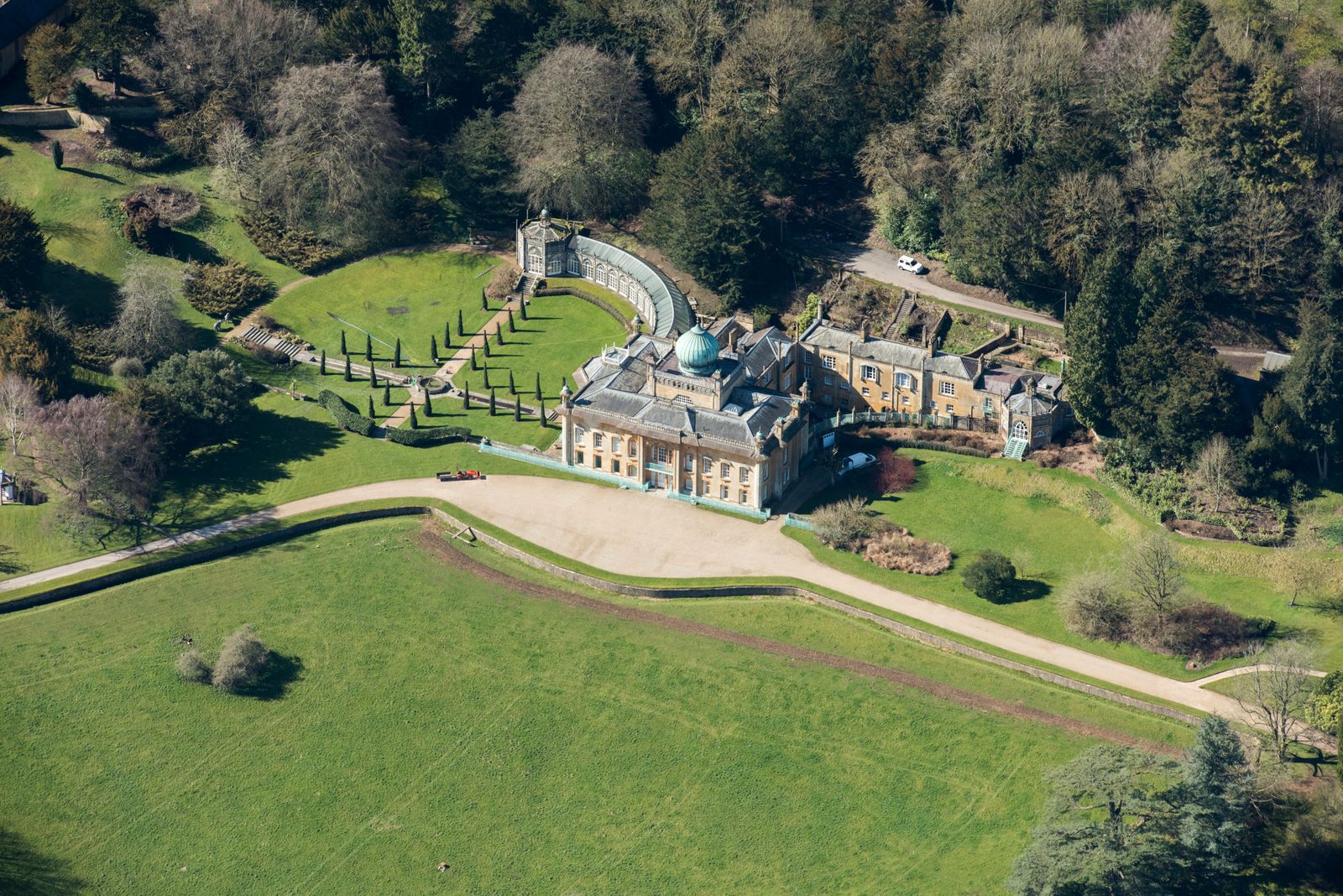
Gradually, tastes changed, and by the 19th century, Victorian attitudes towards self-made “nabobs” like Cockerell and his mentor, the former Governor-General of Bengal Warren Hastings, were more suspicious, with accusations of decadence levelled at them. That may be one reason the interiors are self-consciously Greek, and why some of the Humphrey Repton-designed gardens are typically English in contrast to the earlier Indian pleasure gardens, which feature an Indian bridge adorned with Brahmin bulls, as well as a temple to the god Surya and a snake coiled around a column in the Snake Pond.
Today, the house is still privately owned, but it is open along with the orangery and tea room for pre-booked tours every half-hour from May to September and also hosts six weddings a year. Billed as “India in the Cotswolds”, its gardens are open on Wednesdays, Thurdays, Fridays and Bank Holiday Mondays from January to November and do not require booking.
While the interiors of the house are sumptuous, they are not dissimilar to many of the other neoclassical houses around Britain; instead, head into the gardens to find the unique Indian bridge and the temple to Surya, the sun god.
Sezincote House, near Moreton-in-Marsh, Gloucestershire, GL56 9AW
- The most stylish hotels under £200 in the UK
- A charming boutique hotel on a hidden Greek island
- The loveliest walks in Sussex, according to locals
- The best AirBnBs in Cornwall to rent now
- Outdoor drinking in London - where to go now
- Seven of the best beach restaurants in Europe
- The 50 best restaurants in London right now
- Lesser-known country gardens to visit all year round


