
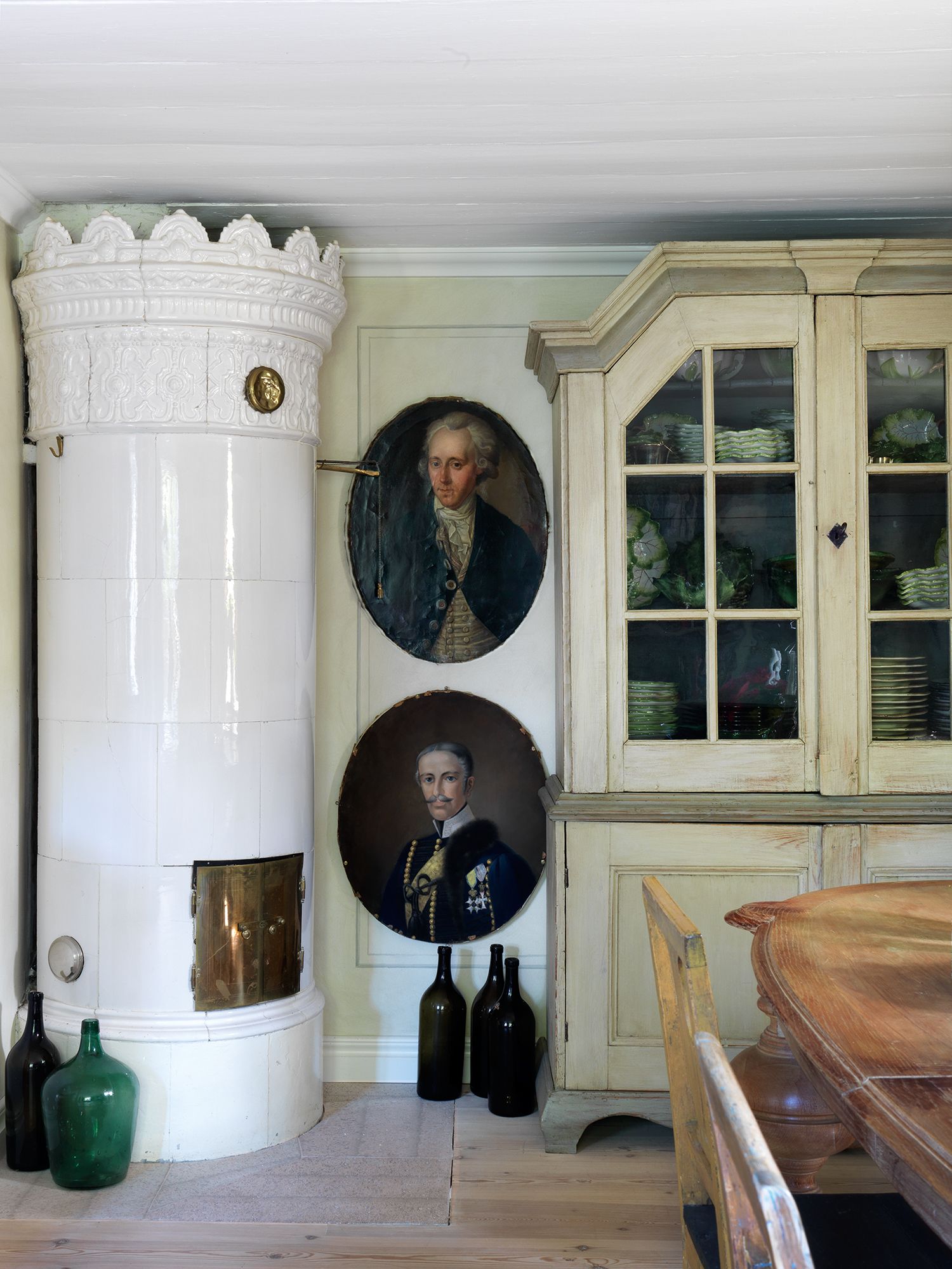
Constraint often leads to the smartest design solutions. Such was the case in 18th century Sweden when Scandinavia's wood supplies were short due to the carbon-hungry iron industry. Worried about his subjects in the cold climate, in 1767 the Swedish King launched a competition to inventors to design a more efficient kakelugn – a tiled stove with a labryinth inner system. The winner was Carl Johan Cronstedt, who, by turning the inner maze from horizontal to vertical, created a stove that needed only three pieces of wood a day.
Although today known as Swedish tiled stoves, kakelugn although popular across Scandinavia, are not unique to the region. Tiled covered masonry is a universal concept, dating back as far as the neolithic era. ‘Humans have known since the beginning of time that ceramic can preserve and sustain heat,’ says Svante Helmbaek Tirén, an expert in ornamentation history who has written a book about kakelugn. Whereas with a normal fireplace ‘90% of the heat goes up the chimney,’ says Svante, a ceramic stoves slow and contain the movement of smoke through its zigzag inner plumbing that allows for a more even, steady distribution of heat. The stoves – which were very common across Northern and Eastern Europe and arrived in Sweden in the Middle Ages, have always acted as aesthetic focal points. 'A fireplace is always an architecturally significant in a room,’ says Svante ‘so decorating them is an obvious choice.’
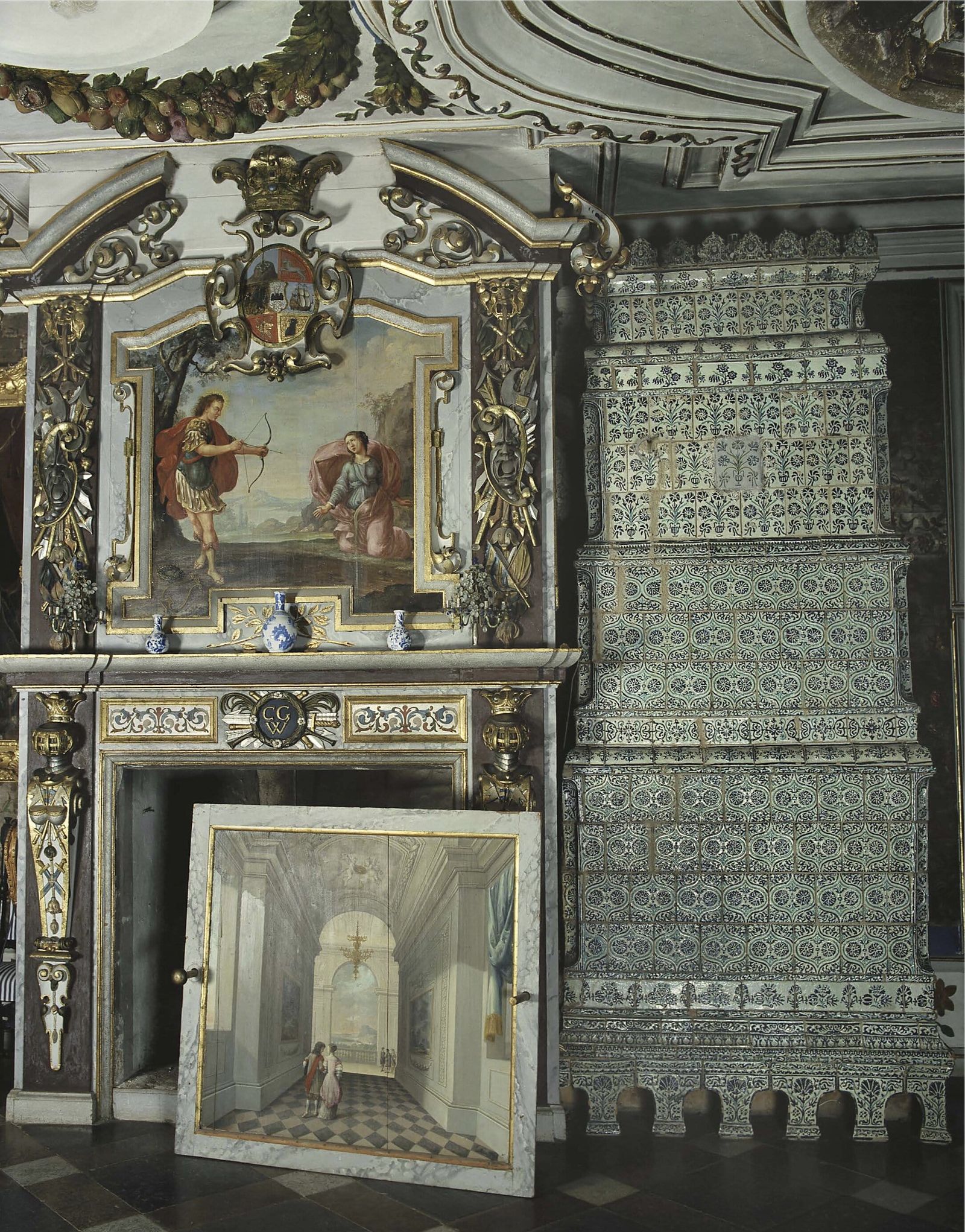
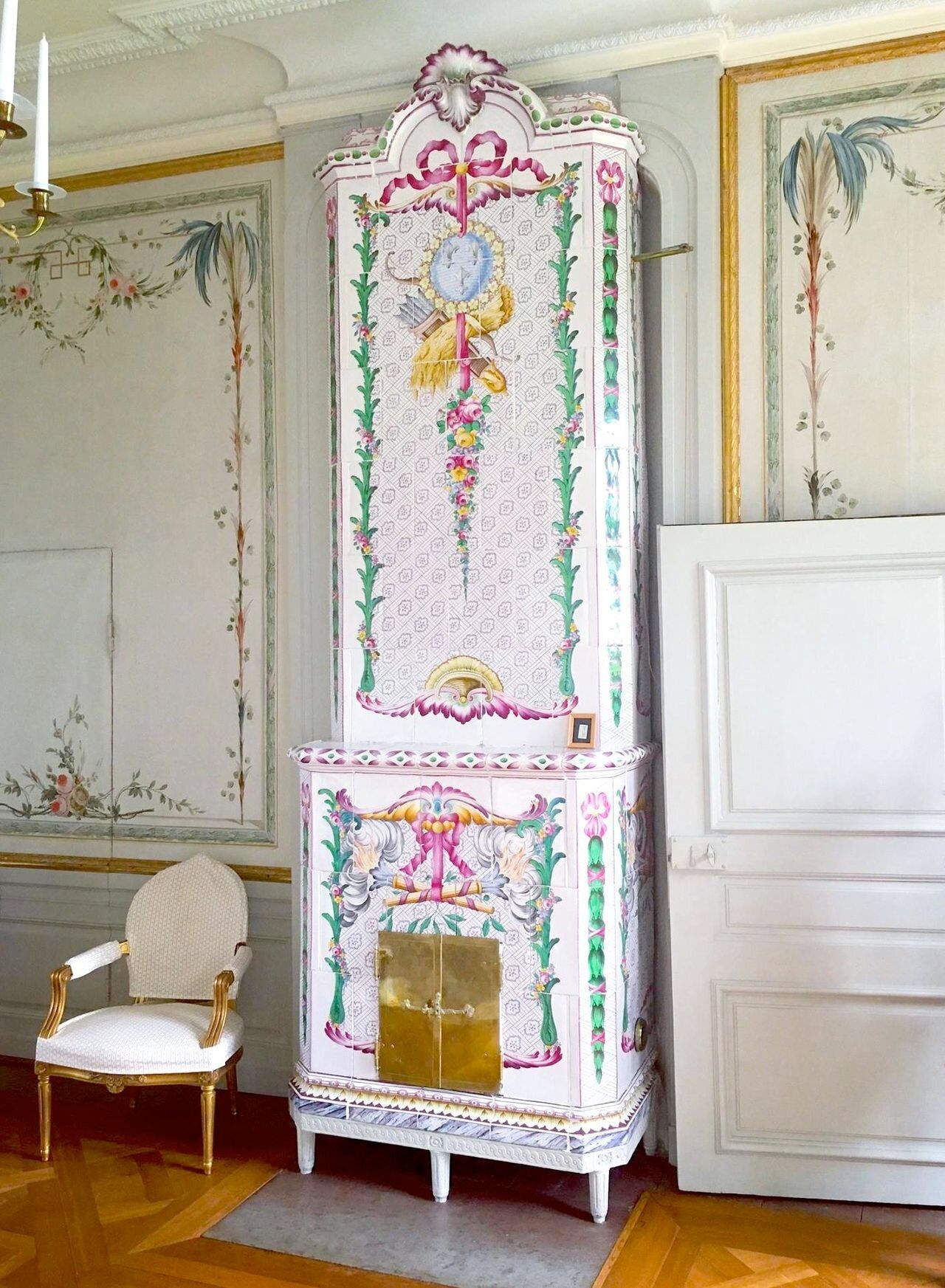
It was in the heady days of the 18th-century when the Swedish kakelugn really came into their own, not only with the new design by Cronstedt, but also with the emergence of the Rococo era and Francophile upper classes. For his book Svante travelled up and down Sweden to find the country's finest specimens, and explains how the stoves became highly confected interior pieces which mirrored contemporary trends such as Sèvre porcelain. The stoves – either round or rectangular – would often match or complement the wider colour scheme (he points out one made in the 1780s by the Marieberg porcelain factory whose shiny blue tiles have long outlasted the faded wallpaper). In the grandest homes, or palaces, kakelugn would sit aside a fireplace, the former providing the heat, the latter, light. These ornate stoves became perceived to be quintessentially Swedish, remarked upon by visitors. An American wife of a diplomat, so infatuated by the warm object, gave one a hug during a state visit. ‘She was told off sternly,’ says Svante.
It was in the 1840s that the Cronstedt kakelugn was produced cheaply, making its way to the masses as an efficient (and stylish) heating solution for all. ‘They became industrialised at the same time as wallpaper, so they were the first mass-produced product that poor people could use to express their taste,’ says Svante. Whilst plain white tiles was the most common (and still is), it was possible to buy these mass-produced versions with gilding or colour. As convenient as IKEA, they were also easily installed and dismantled. Despite the cruelly cold winters, when it came to the indoors Swedes were keeping cosier than most other Europeans. The new heating system also meant windows could be enlarged, allowing in more natural light. Yet after the boom, came bust. In the mid-20th century the majority of kakelugn were sadly destroyed to make way for central heating.
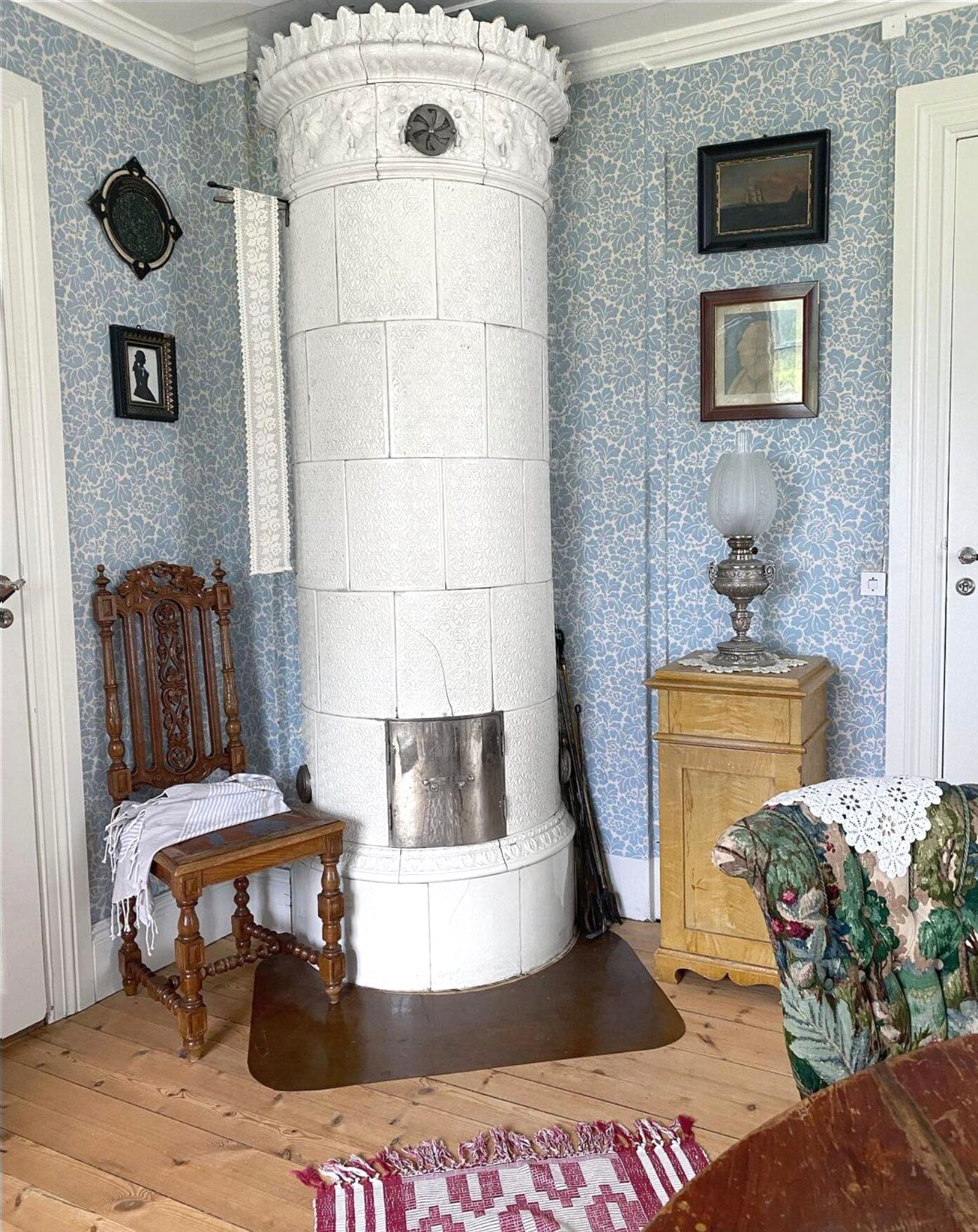
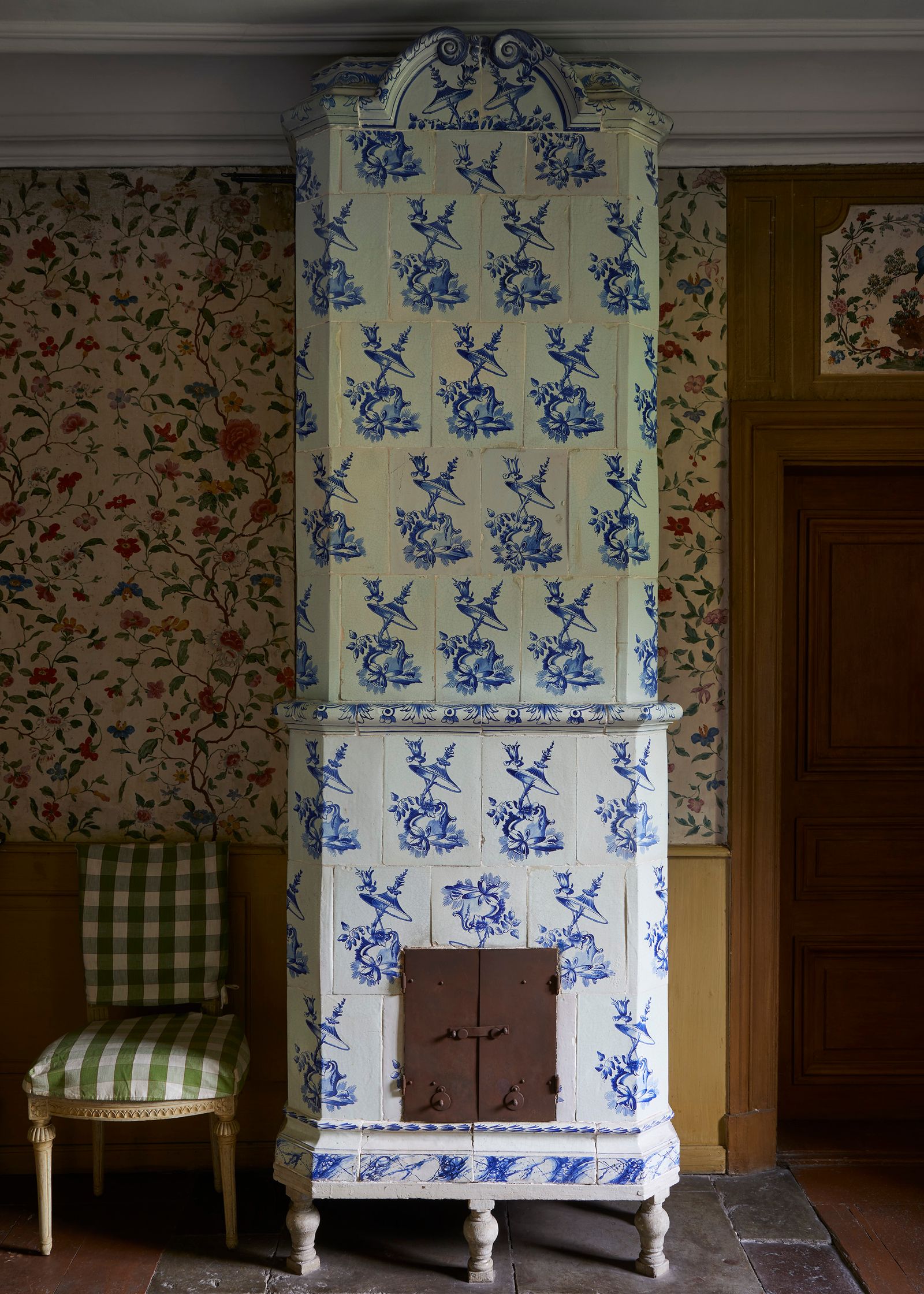
Yet the tradition has been making a comeback, and their ability to heat homes efficiently seems particularly relevant in the current energy crisis. Svante, who lives six hours north of Stockholm, shows me several ceramic stoves installed in his own house – which require as little as seven pieces of wood a day. He also praises their multi-functional nature: the stoves can dry and iron wet garments, and with their ventilator at the top, work like a fan in the summer. And, for a bonus feature: ‘If you put apple peel on the top of it it will give a very nice aroma to the room,’ he explains. ‘These objects, they are simply lovely.’


