

Walls have the power to make or break a room scheme, allowing your artwork, furniture and accessories to sing or leaving them to fall rather flat. Paint and wallpaper can work wonders, of course, but sometimes you want something a little more interesting. If the flawless, mirror-like effect of lacquer or high gloss isn’t really your thing, it’s time to consider the more naturalistic, nuanced aesthetic of a textured wall finish.

By this, we mean the sort of lime washes and plaster effects that lend a room an air of timeworn elegance. They might be all the rage in cool restaurants and holiday villas, but this is no mere fad as their roots lie in ancient Rome, Greece and Egypt. To help you decide which one to go for, we have asked decorative experts to give us a rundown of their most popular finishes. While you can attempt these yourself, it is often wise to call in the professionals. ‘I’m sure someone can have a go, but whether you’re going to be thrilled with the results is a different matter,’ says decorative arts specialist Matthew Collins of MBMC Studios.
For Gaby Gatacre and Emma Ridley of Rag Arts, it’s all about the lime-washed look. ‘Everyone wants that natural, nice but distressed, Ibiza sort of style,’ explains Gaby. ‘They also want something that has low or no VOCs so it’s better for their health and for the environment,’ adds Emma. They have found that what most people want is not actual texture, but an illusion of texture. ‘You want to be able to run your hands down a lovely smooth surface,’ says Gaby. ‘You don’t want it to feel like sandpaper.’

To achieve a textural appearance, they use their own hand-mixed casein-bound lime paint. They build up layers, sometimes four or five in total, before adding a colour wash using pigmented glazes. ‘If you break the glaze up, you can get even more movement and texture,’ continues Gaby. ‘You might have a white wall and colour wash in, say, a transparent red and you dab a wet sponge on the wall once it's applied, so you can see the white come through. You get these many layers, and that’s what gives the illusion of texture.’ It is critical that you have a good surface to work on. ‘People often think that if you've got a textural wall finish, it will mask any imperfections, but that’s just not the case,’ says Emma. ‘We create an illusion, but that’s just a delusion,’ adds Gaby, laughing.
For a simpler solution, you can buy ready-to-go lime wash paint, though there are specific instructions on how to apply it so you achieve the desired look with plenty of movement. Before getting started, we suggest taking a look at our handy guide to lime wash paint for all the tips and tricks.
Mathew Bray and Matthew Collins of MBMC Studios research, develop and fabricate many of their own plaster finishes that their team of 62 skilled artisans then create in clients’ homes. ‘Most plaster finishes come under the umbrella term of polished plaster,’ explains Matthew Collins. ‘But this has become associated with what I would call Venetian plaster, which is sometimes polished to such an extent that it almost looks like melamine.’ Some clients might request a highly polished plaster or tadelakt in a bathroom, for instance, but generally the focus is on more artful, complex finishes. One of the most popular is their ‘brushed fresco’ or ‘orangery’ finish.
.jpg)
‘It is applied in the same way that you apply any sort of plaster finish, on the trowel,’ explains Matthew. ‘Then while the plaster is still wet, we brush across with a really wide, six to nine inch brush, and add criss-cross strokes randomly across the whole surface. We wait until it's around 60 per cent dry and then we come back and carry on burnishing the surface, working with the brush to soften all that movement down.’
Watercolours can then be added over the top, before more burnishing, or even scrubbing the surface with a rag. This takes the sheen down a notch by lifting some of the colour and revealing the plaster beneath – not unlike Gaby and Emma’s approach with lime paint. ‘It works well in a contemporary house for a continuous plaster finish, but it also sits really well in a Georgian orangery, hence the name,’ adds Matthew. ‘It is the perfect backdrop for art as anything you put in front of it just looks amazing.’
Decorative lime-based plasters often contain some quantity of marble dust, but different grades and colours can be introduced for a unique finish. ‘You sort of whip it into the actual plaster itself, and you can't see it there,’ says Matthew. ‘You can't even really see it when you're applying it, but when you start polishing it, you're sort of crushing and condensing the surface of the plaster, and that brings that aggregate to the surface.’ Gaby and Emma take a similar approach with their casein lime paint, mixing in different amounts of sand, clay, chalk, quartz or marble to alter the level of graininess for a salt-and-pepper effect.
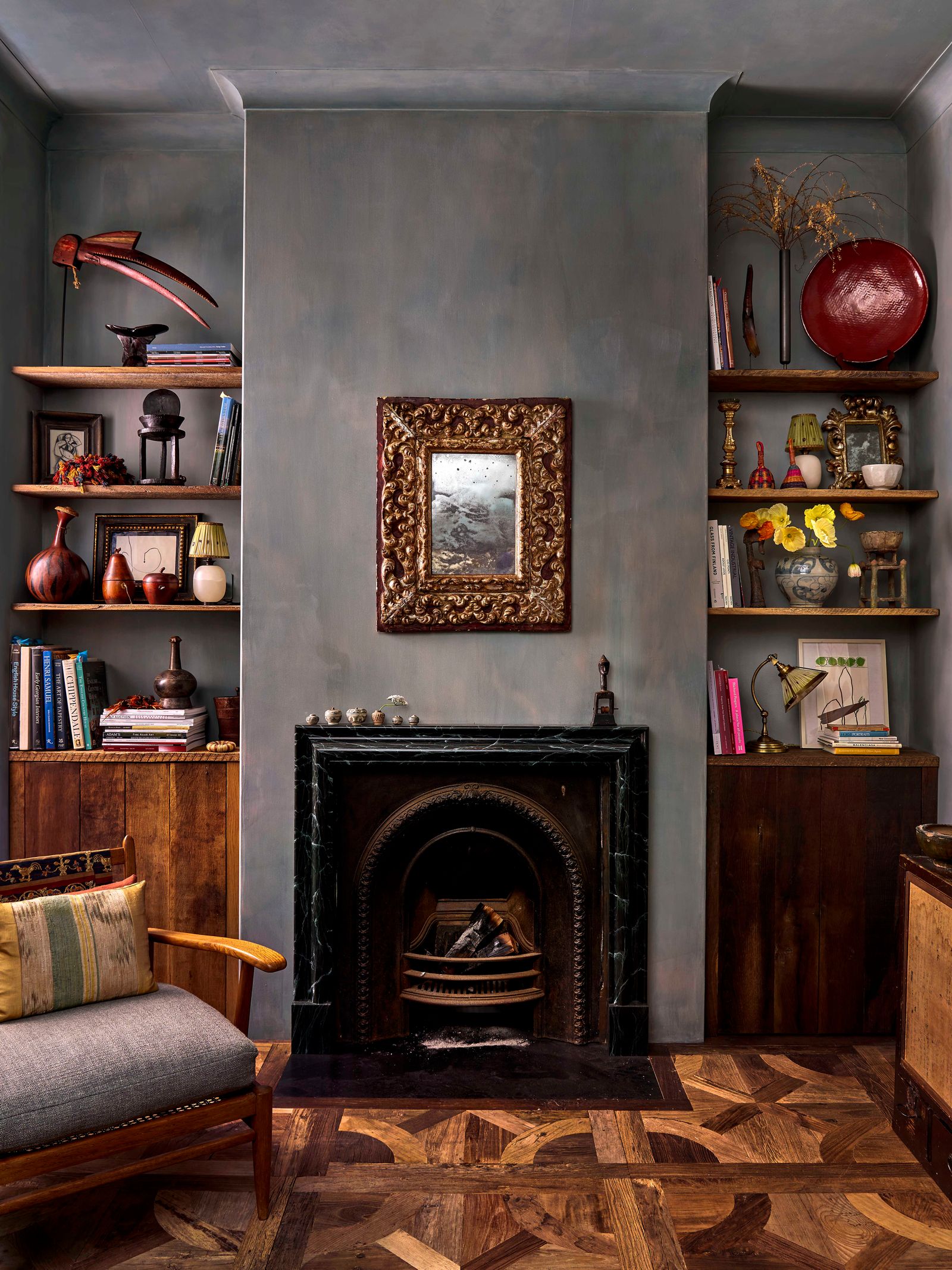
We were struck by the rather magical walls of the Thurstan x Hector Finch snug at WOW!house this year. For this, Thurstan teamed up with fine finish specialists Faberby. ‘We used marble dust bound with varnish and enriched with natural pigments,’ says founder James Thurstan Waterworth. ‘For depth and tonal richness, we layered three hues: a dusky pink base, gently overlaid with a deep royal blue, and finished with a delicate white wash. The process was painstakingly intricate, involving around eight hand-applied layers. Each stage had to be carefully timed, if a layer dried too quickly, it risked leaving marks that felt too pronounced.’ The results were certainly worth it: the walls had an incredibly atmospheric feel, reminiscent of the night sky.
You might have heard of dragged plaster, or strié to those in the know, which gives a more obviously textured, indented finish. The plaster is applied in the usual way and then a brush is dragged across it to create directional lines before it dries. ‘Sometimes we do a secondary application and drag it the other way so you end up with a cross drag, which gives you a fabric-like feel,’ says Matthew. As with the brushed plaster, colour washes or waxes can be applied over the plaster. ‘The washes can be very watery, so it’s almost running down the walls, then we work it into the dragged surface as it’s drying and we burnish it,’ he adds.
Very similar to dragging are fluting and reeding, for which MBMC Studios have created their own specialist squeegee-type tools (the exact configuration must remain a secret). For a more hardwearing, smoother result – and more defined fluting or reeding – they often like to use the resinous composite Jesmonite instead of normal plaster.
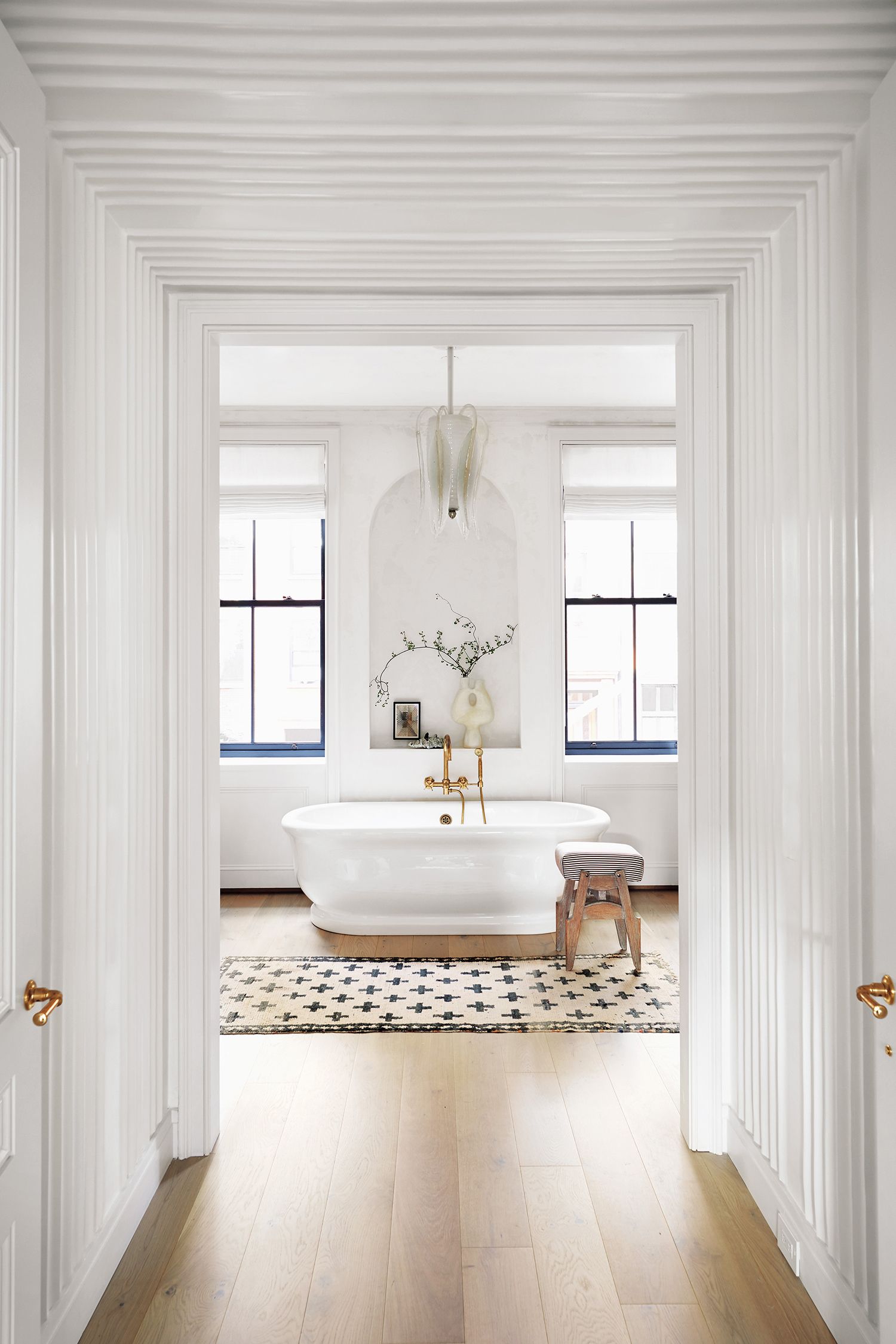
Perhaps the most decorative and intricate of these textured finishes is stencilled plaster. The stencil is placed on the wall, the plaster is trowelled through it and the stencil is removed while the plaster is still wet. ‘As it dries down, we’ll start polishing so you get a matte ground and then the raised ornament,’ explains Matthew. ‘Even if you don’t add a colour wash, in certain lights and at certain angles, it will look like a flat colour, then as you move around, suddenly you see all that variation and then the depth achieved by the stencil.’
These stencils can be cut in any design, from pretty florals to bold geometric patterns. Matthew has noticed two broad categories: clean and contemporary, and aged and antique (‘like something you might find in a really beautiful rundown palazzo’). Gaby and Emma recently executed a floral stencil design on top of their casein paint to create an almost Indian block-print effect. If this feels a little too daring on every wall, they suggest trying it on just the ceiling, as a modern take on traditional mouldings.
It is safe to say there is even more to textured wall finishes than meets the eye. But, when executed well, they can totally transform a room and the way you look at it.


