


“Absolutely everyone can be an interior designer,” declared Laurence Llewellyn-Bowen, master of the MDF makeover and presenter of the highly divisive interior design television show, Changing Rooms. He was speaking at Cheltenham Literary Festival, and continued his discourse by pointing out that all it takes is “doing some really nice stuff and putting it on Instagram and getting it liked.”
Arguably, Laurence has got a point: social media is awash with home influencers, and the interior design business is not regulated, i.e. technically, absolutely everyone really can list it as their profession. And yet, every year, this magazine painstakingly compiles a list of the Top 100 in the business – the majority of whom studied the discipline at one of the best interior design schools and then spent several years undertaking further training in the office of a more established designer, before starting to work with their own clients. Further muddying the waters, points out one of those designers on the list, Brandon Schubert (who trained at the Inchbald School of Design before working for Ben Pentreath), is that “it’s now possible, via social media, to compare and contrast a room decorated by a professional and another by an amateur, side by side. And if we use Instagram engagement as a way of assessing the quality of a design, then it seems that DIY or amateur designers can create work that is every bit as wonderful as professionals at the top of their games.”
But – and it is a big ‘but’ – should we be judging three-dimensional interiors on two-dimensional images? We know that at House & Garden we ask our readers to do this all the time, but we have visited every interior that is photographed, either for the magazine or online; the same cannot be said for absolutely everything that is posted on Instagram. “You might see a bathroom basin, with thousands and thousands of likes, and you decide to recreate it at home. And then you discover that the spacing of the taps isn’t actually satisfying in three-dimensions, and the position of the lights makes it difficult to get close enough to the mirror to see yourself when you want to shave or put on make-up, while the cute curtain hanging below has an upstand that pops over the top of the marble surround, becoming filthy as soon as anyone brushes their teeth. Yes, it looks lovely – but whoever designed it put form over function,” describes Brandon. “It can be very easy to pull a scheme from Instagram without considering how somebody lives,” agrees Nicole Salvesen of Salvesen Graham (who studied at KLC School of Design and then worked for Nina Campbell for three years).
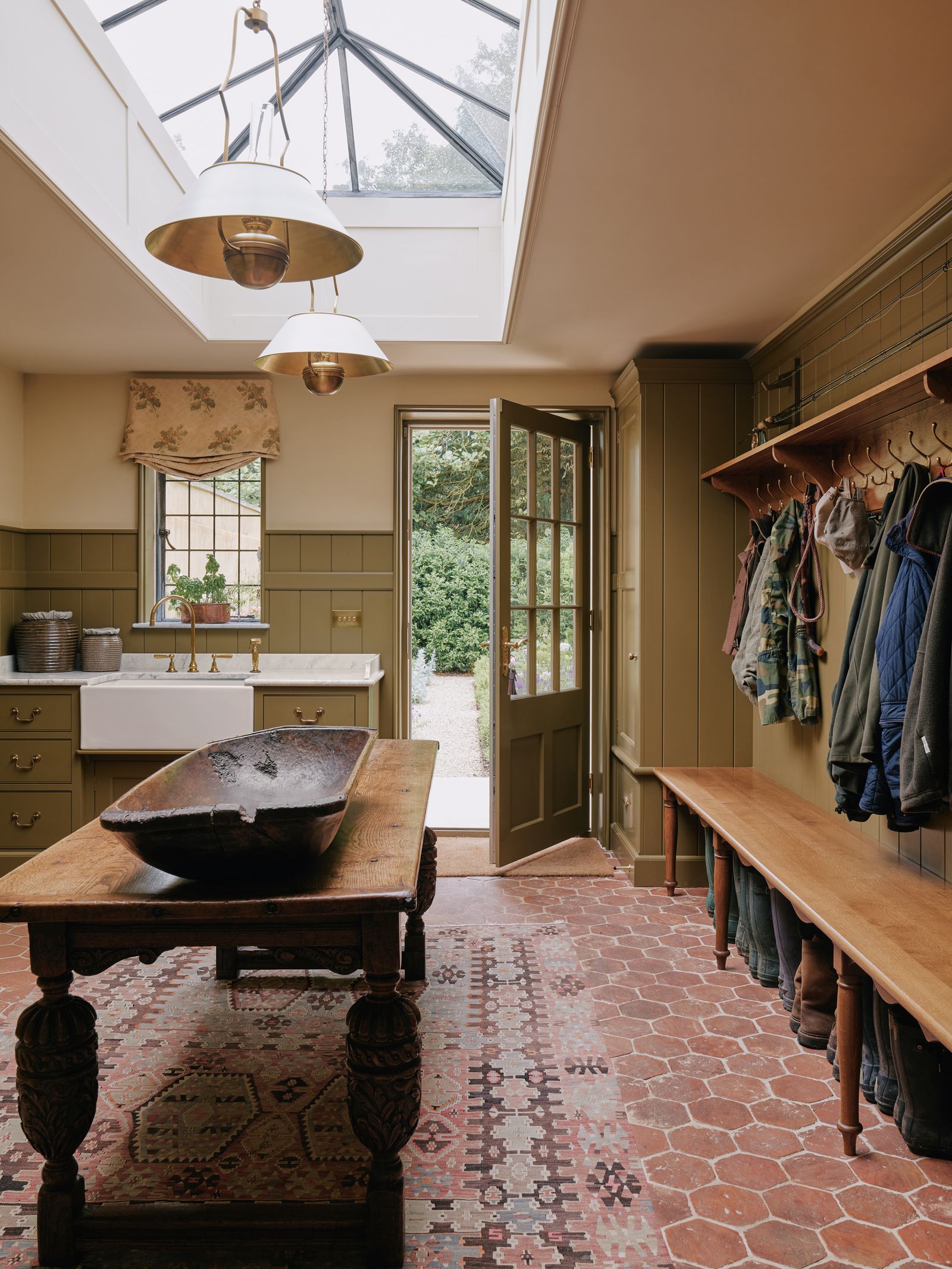
This brings us neatly onto the next point. Interior design isn’t just making a room look lovely; it is also - and perhaps more importantly - a service. “My favourite projects to work on are with clients who have wonderful ideas and could well be an interior designer – if they had time,” says Lucy Hammond Giles of Sibyl Colefax & John Fowler (who, less usually, read History of Art at Edinburgh – before training under Emma Burns and Wendy Nicholls.) “The amount of administration required to pull off a detailed scheme is enormous,” affirms Brandon. “And it’s unusual to find someone who likes to manage that level of detail as a DIY hobby, and who has the stamina to complete the job they started,” he continues (identifying exactly why it is that so many of us amateur enthusiasts are living in houses where nothing is finished.) “What’s more, we aim to give clients more than what they’ve asked for – maybe something that they didn’t even know that they wanted, but which significantly elevates how they live in their home,” says Olivia Outred (who studied at Chelsea College of Art & Design, before working first for Philip Hooper at Sibyl Colefax & John Fowler, and then at Soane.)
“Our experience helps us ask questions about how people live – or would like to live,” says Lucy. “We tease it out in lengthy dialogue and offer help as a sort of translator; a client might know what they want, but can’t quite describe it, or else can’t shoehorn the images that they admire into the space that exists. Because sometimes we discover that it’s the turn of the table leg they have fallen for, rather than the whole ensemble, and to get to the heart of the feeling they want for the room, they in fact need a completely different scheme,” she explains, mentioning that on some projects an interior designer might arrive when the client has come to a halt, having bought things they then find don’t work together. “It’s extremely personal,” confirms Brandon. “There aren’t many services where the person providing the service learns so much about his or her clients’ personal lives.”

Also worth considering is the contacts and know-how that interior designers have amassed. “We each have a little black book of carpenters, curtain makers, rattan weavers, tile designers, specialist painters, stone carvers, upholsterers – and more,” lists Olivia. “If you’re looking to enlarge your house, we know the architects and planning consultants. We – as a society – are constantly being encouraged to shop from independent brands, and that’s exactly what good interior designers do. We also know the terminology – and we have an encyclopaedic knowledge of what’s possible, and what’s available,” she finishes. Lucy picks up: “We know how different sizes of furniture work together, how colour and pattern build up a room, how a yellow lampshade could make a scheme, but a red cushion break it. We’re a short cut for clients to those years of looking.”
And, interjects Brandon, “that continues. We’re on call all the time. If a doorknob breaks two years after we’ve finished a job, we’ll arrange to get it fixed. And, if a client is having a wobble about a decision, we’ll often offer to change it, or buy whatever it is back from them and find a replacement.” Finally, “we get everything to come together at the same time,” says Olivia. “We organise the electrics before the plastering, the laying of the carpet after the plastering but before the furniture is installed, we make sure that new sash windows are in place before the curtains are hung.” Enlarging on that, every lamp will have a discreet but appropriately placed plug socket, you’ll be able to charge your phone where you need to, and there’ll be a linen cupboard of sufficient size for the number of bedrooms you have. Then you’ll notice, while lying on the sofa, reading the weekend papers by the last light of a dying day, that the pink paint your interior designer identified for your sitting room flushes like a desert rose in the setting sun, and, happily, that you barely have to shift to flick on a lamp when the light does finally fade.
Which isn’t to say that Instagram – and indeed all images – aren’t important sources for inspiration. “It’s helped do-it-yourself designers find inspiration and new techniques by seeing what other people have done – and that’s undoubtedly a good thing,” says Brandon. “And it’s wonderful for people to be taking more active interest in their domestic surroundings, and finding new ways to feel good about their homes.”
But it’s good to know that there are real professionals who can help when it all goes wrong. Also worth remembering is that, impeccable as Laurence L-B’s references almost always are, his Changing Room clients have occasionally been known to cry when they’re introduced to their new room schemes – and they’re not always tears of gratitude or delight.


