


In Britain, we have a tricky relationship with air conditioning. For decades, we’ve dismissed it as noisy, drying, unsightly and a ridiculous extravagance. Some non-Brits are baffled, horrified even, by this lack of comfort; others understand it as a peculiar part of the British psyche. Designer Brandon Schubert, who grew up in Texas, notes that ‘British people like to make do when they can, and there’s nothing that symbolises that more than air conditioning’. South African-born Christian Bense wonders whether ‘air con simply isn’t the British thing to do, and there is a hangover of what’s right and classic’.
But our climate is changing and the chance of exceeding 40°C is now over 20 times more likely than it was in the 1960s. The heat disrupts our sleep, impairs our performance and leads to a spike in hospital visits and deaths. So is air con the answer, and can our homes accommodate it? Let’s try to clear the air.
Due to our historically mild climate, our building principles have prioritised heat retention over ventilation and sun protection. As we have the oldest housing stock in Europe, with 38 per cent built before 1946, air con is rarely already installed and retrofitting can be problematic.
‘Many British houses are older, with solid walls, limited ceiling voids or strict aesthetic requirements,’ explains Savva Zacharia, managing director at London-based air-conditioning company Cool You. ‘In urban areas, space is at a premium and traditional systems with bulky external condensers are generally not permitted. Access to outside walls, sound constraints and the visual impact of external units can also be problematic.’ Planning permission isn’t usually required, as it is covered under permitted development rights, but there are restrictions for conversation areas, flats and homes with restricted covenants, as well as listed buildings.

‘Some households might find the upfront cost of installing AC a challenge,’ adds Adam Knight, lead engineer at heating and cooling company BOXT. ‘Though it is becoming much more accessible. At BOXT, the cost of installing a fitted unit in one room starts from £2,199, which includes professional installation.’ In terms of our energy bills, a small 2.7 kilowatt unit will cost from 73p an hour to run, which could stack up during a prolonged heatwave.
There are the environmental costs, too. If we respond to global warming with cooling systems powered by non-renewable sources, aren’t we stuck in a vicious cycle? Worryingly, a government-backed piece of research also revealed that home cooling could put unprecedented strain on our national grid, which is designed to meet peak demand in the winter, potentially leading to blackouts.
Despite the challenges, recent studies indicate a sevenfold increase in air con usage in the UK over the past decade, with it now installed in over 20 per cent of homes. That is still tiny compared to 90 per cent in the US, but it does suggest that the rising mercury might be starting to move the dial. Adam tells us that installations are up 182 per cent year-on-year and designers report more clients opting for installation during a project.
Perhaps this is due, in part, to the variety of options now available. ‘We offer compact, wall-mounted systems that take up minimal space inside and out, and multi-split systems that use one outdoor unit to power multiple indoor units,’ says Adam. Companies like Cool You, meanwhile, focus on providing internal, water-cooled systems that require no external condenser or visible outside unit. ‘These systems can be installed discreetly, with minimal disruption and are ideal for retrofitting into apartments and period properties,’ says Savva. This can even work well in listed houses as it can be carefully integrated without compromising the building’s character.
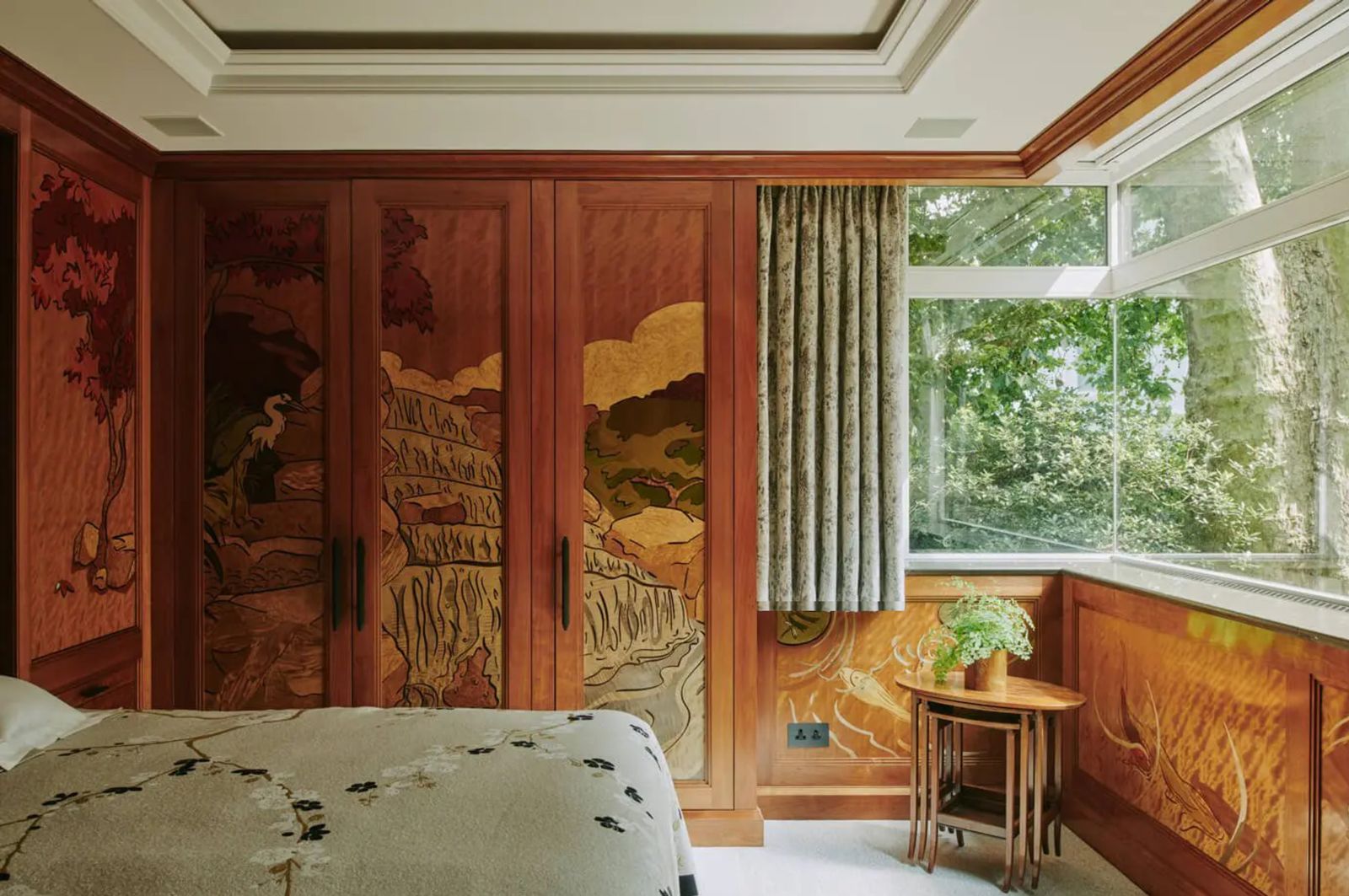
Those who live in timber-framed buildings, or have lots of timber furniture or joinery, might need to consider a more comprehensive approach. As Tim Hellier, technical director at luxury design and joinery firm Artichoke, explains, ‘Air con has a drying effect that needs to be countered. It is strongly advised to consider full climate control that maintains humidity.’
There are sustainable alternatives, too. Air- and ground-source heat pumps, often used in conjunction with solar panels, can be run in reverse to provide cooling. Baufritz pairs heat pumps with mechanical heat recovery ventilation systems in its modular houses, to manage air flow and remove heat. CEO Oliver Rehm is also keen to emphasise the importance of improving our design principles to prevent the need for additional air conditioning in future.
If you do decide to take the plunge and have air con installed, it need not be an eyesore, as there are clever tricks to disguise and conceal equipment. Tim has found that ‘subtle use of joinery louvres is a great solution as their angle helps separate inlet from outlet air flows and prevent recirculation. Hidden panels to access the serviceable parts are also critical since filters need to be cleaned and inspected.’

Elizabeth Hay recommends painting the grilles in with the ceiling if you have a ducted system, but admits lowering ceilings for such set-ups is not always ideal. ‘Alternatively you can have a condenser with a cassette that is fixed inside each room,’ she says. ‘They’re not the most attractive so you have to be strategic in your placement.’
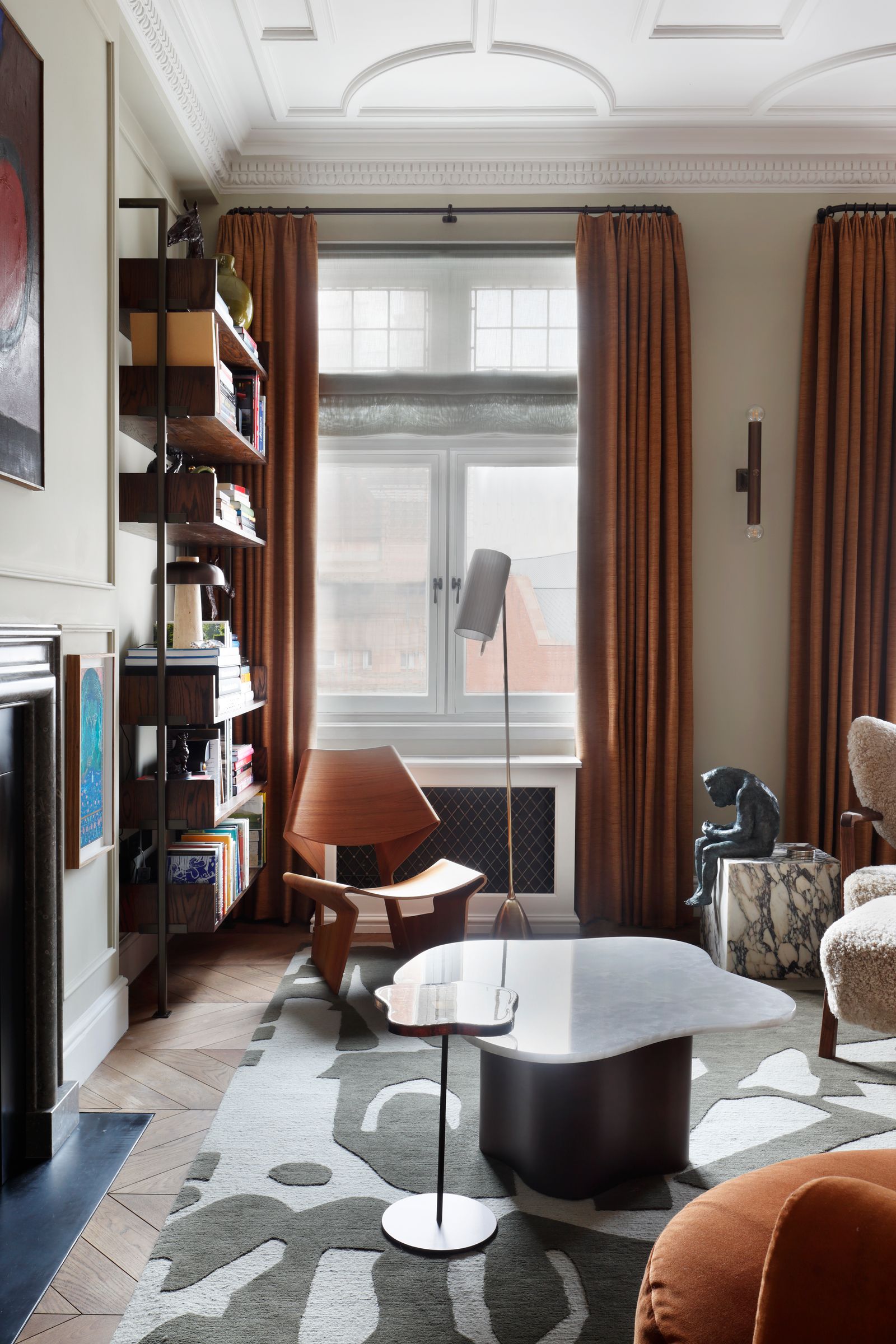
Brandon Schubert is seeing more air con in bedrooms. ‘If we can, we’ll do something clever like drop the ceiling in an adjacent space to conceal a unit in the void. Or we might design a piece of joinery that encloses the unit and has integrated vents.’ Christian Bense likes to ‘treat internal units like radiators, placing them under a window. These can be boxed in with joinery to disguise them’. He has also noticed more clients considering air conditioning in relation to property resale values, because ‘whilst they may not need it, somebody else will’.
So are Brits embracing air conditioning? I think we will always blow hot and cold, as almost everyone I spoke to could see both sides. However, it is reassuring to know that if we do choose to install it, there are ways to do it, and do it well.


