
A colourful Singapore apartment that reflects the city's cosmopolitan history
During last summer’s lockdown, as palm-rustling breezes swept her home office in Singapore, Amy Long had pause to reflect. After a successful career in the energy industry, darting between its global headquarters, she decided that it was time to trade her corporate life for creativity. ‘Covid made me focus on what is important – doing what you love versus work that needs doing,’ she says. ‘I wanted to find a job that would reconcile the commercial and artistic sides of my personality.’ For this lifelong lover of architecture and decoration, the answer became obvious: a career in interior design beckoned.
A few weeks later, she landed an apprenticeship with one of Singapore’s leading interior designers, Elizabeth Hay. Now swatches, not spreadsheets, are her milieu. The pair first met when Amy commissioned Elizabeth, who trained in the UK under the influential designer Veere Grenney, to create a bespoke dining table for her previous home. Drawn by Elizabeth’s distinctive style – in which ebullient layers of pattern and texture are underpinned by hawk-eyed precision – Amy asked Elizabeth to redesign the family apartment, which she and her husband bought in 2018. The project proved to be a masterclass in interior design – and resourcefulness.
MAY WE SUGGEST: A young American couple's fresh, comfortable Notting Hill townhouse
In a city fixated by modernity, the apartment, which the couple share with their two daughters, has vintage appeal. The 28-storey block, with its distant forest views, was built in 1985. ‘By Singaporean standards it is old, which is what we prefer. Compared with new buildings, it has high ceil-ings and the floorplan is sensible,’ explains Amy, who says properties like this rarely linger on the market. ‘I was on a business trip when my husband texted me a photo of the place. I immediately said, “Let’s do it.” ’
Some elements of the decoration, a palimpsest of owners past, were less appealing. False ceilings obscured the lofty, elegant proportions. Wooden floors stretched from end to end of the apartment in a sea of lurid orange wood stain and the walls were clad in stone, creating what Amy describes as a ‘Nineties Balinese effect’.
Faced with the scale of the interior (4,100 square feet on one floor), it would have been very easy to default to polite neutrals. But designer and client shared a different vision. ‘We wanted it to look like a jewel box, where every room feels like a discovery. Amy has some great art and furniture – she has lived all over the world. The design had to reflect those cosmopolitan influences,’ says Elizabeth, who moved from Britain to Singapore in 2013.
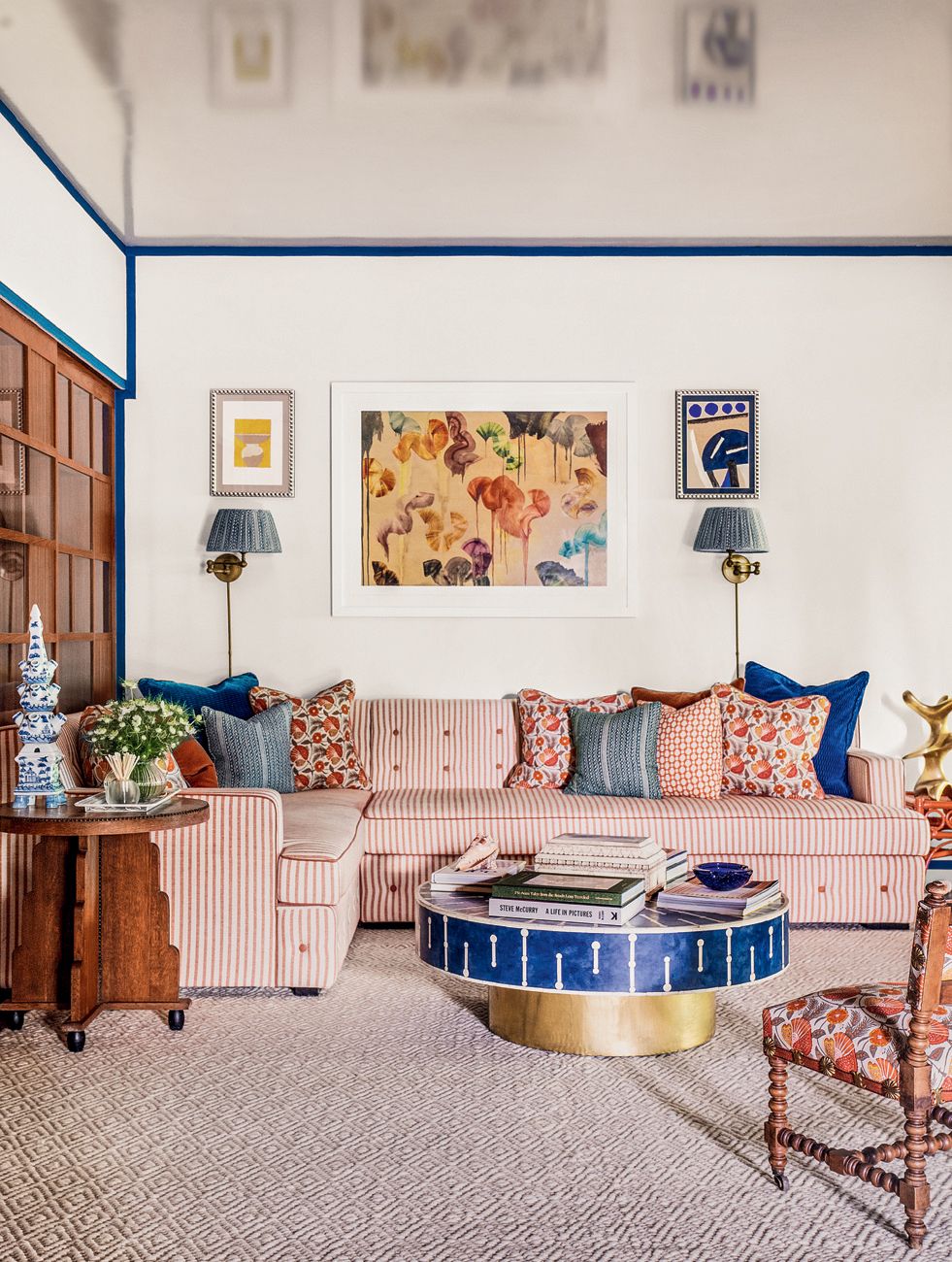
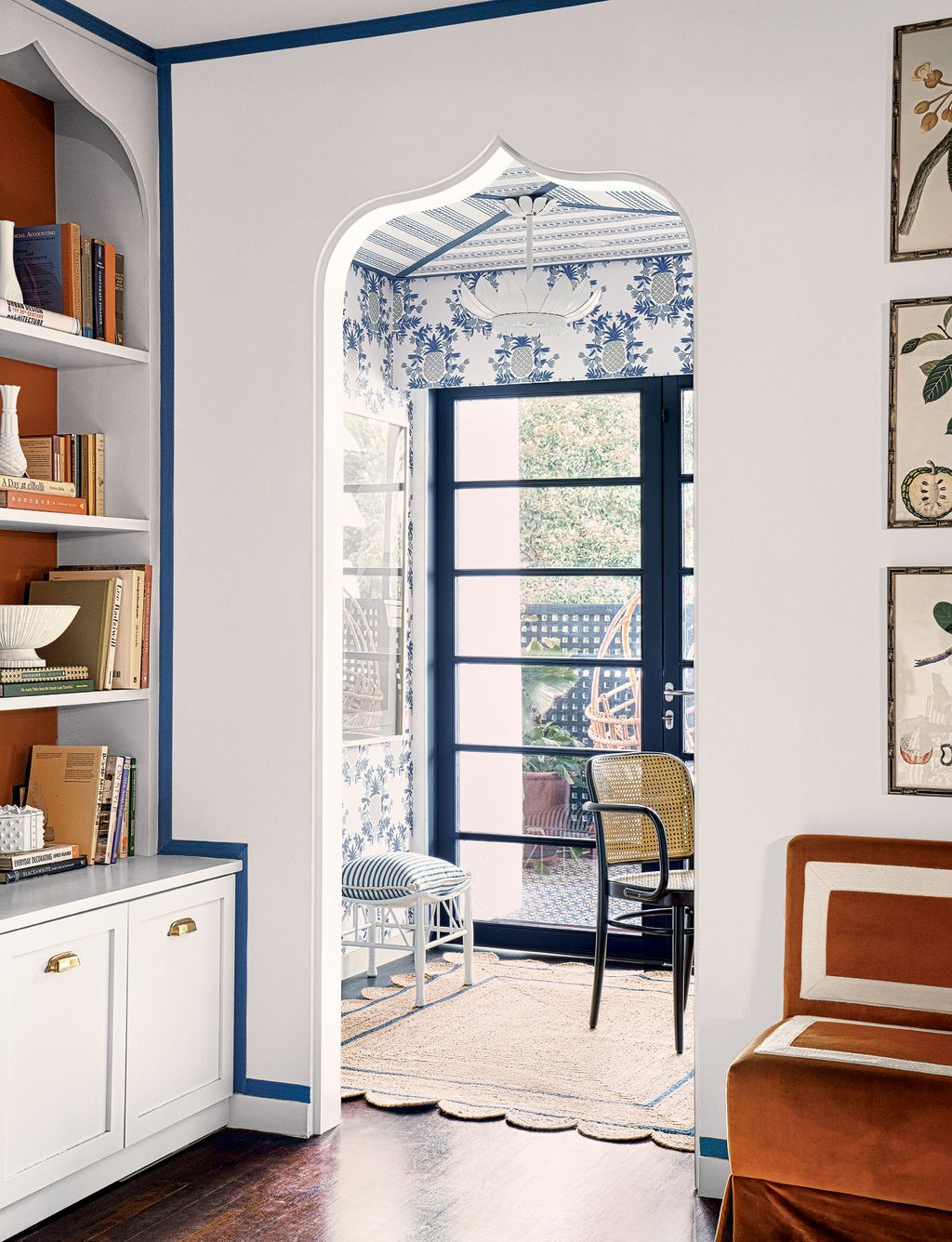
In place of straight lines, whimsical Moghul arches draw your gaze to rooms with walls wrapped in seagrass or block prints. Chintz mingles happily with grass matting, and a faux tented ceiling brings Raj-style romance to Amy’s study. There is no glare of the flatscreen to detract from the look of the family room. Instead, a candy-striped sofa illuminated by glowing sconces was chosen as the ideal spot for bedtime stories. It all adds to the atmosphere: inviting, cultured, non-prescriptive.
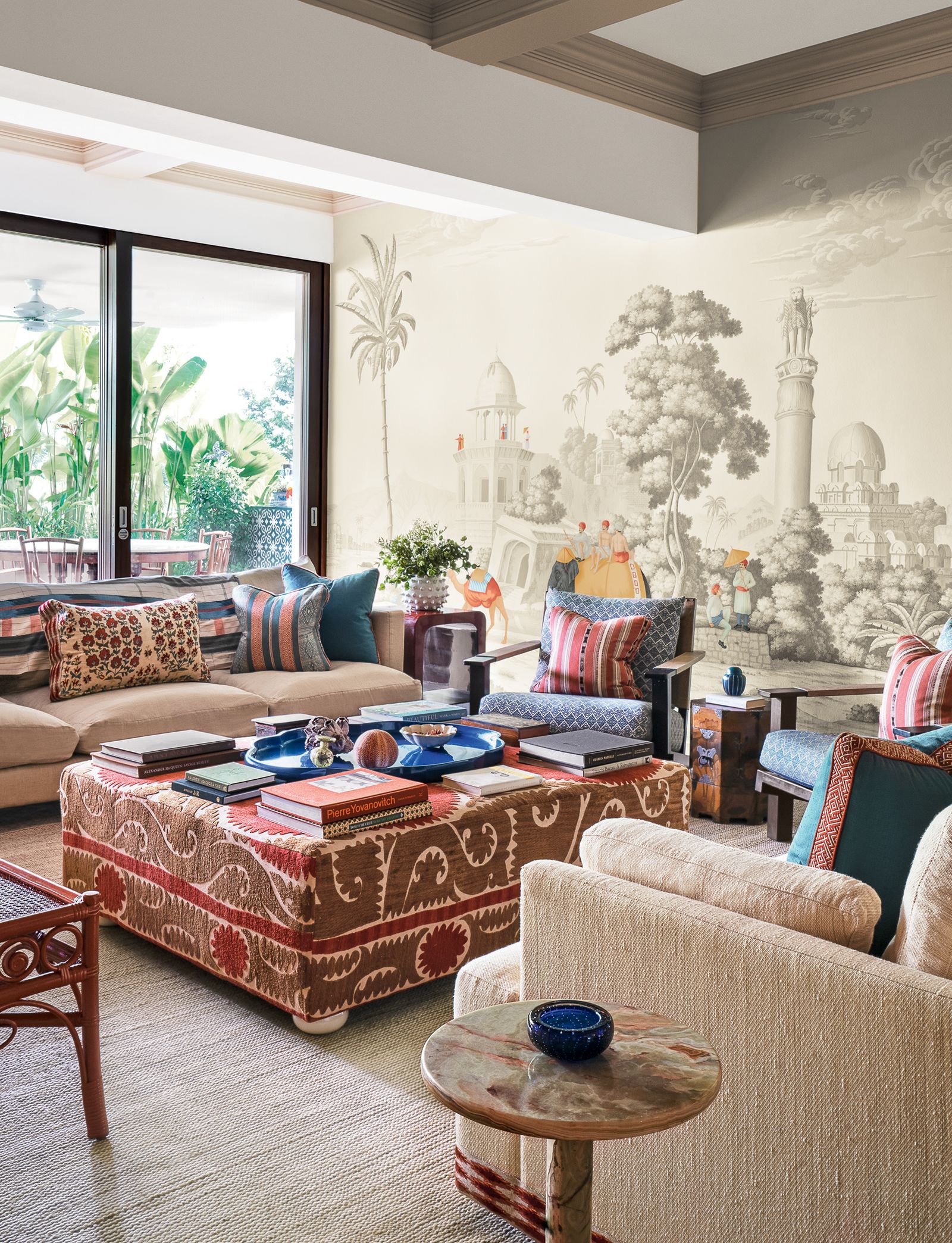
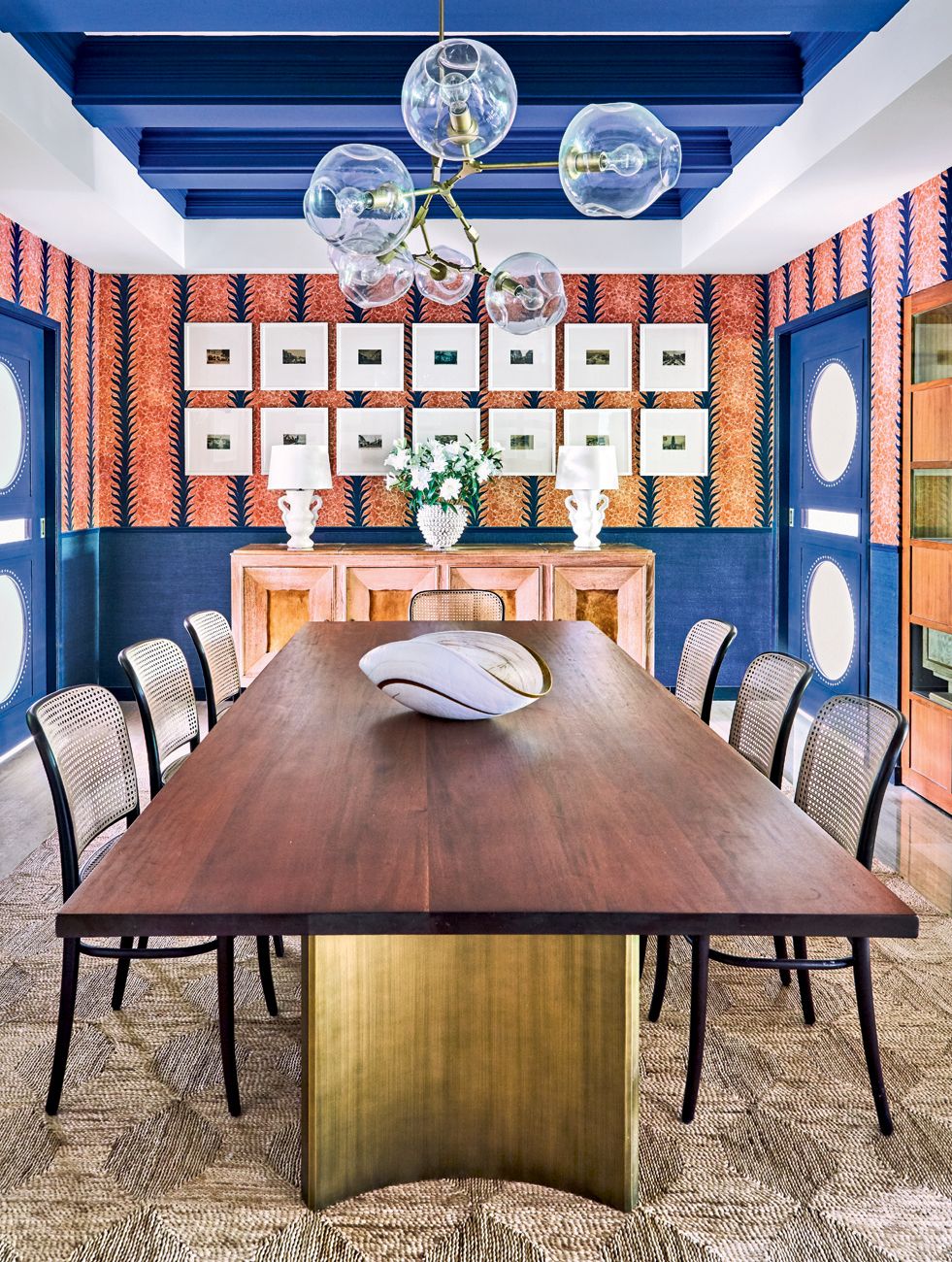
The jumping-off point for the sitting room was the scenic wallpaper, ‘Early Views of India’ by de Gournay – all sway-ing elephants and temples – scaled up with the addition of billowing clouds to fit the space. ‘It’s immersive and trans-portive. We don’t have a television, so the girls love making up stories about the characters in the wallpaper,’ explains Amy. Elizabeth drew on its palette – lapis blue, terracotta and marigold – to knit the open-plan spaces together like the weft of a tapestry. At night, when the lights of the chandelier seem to sparkle like stars against the navy beams, the win-dowless dining room becomes a moonlit chamber. ‘It feels soaring and intimate at the same time,’ says Elizabeth.
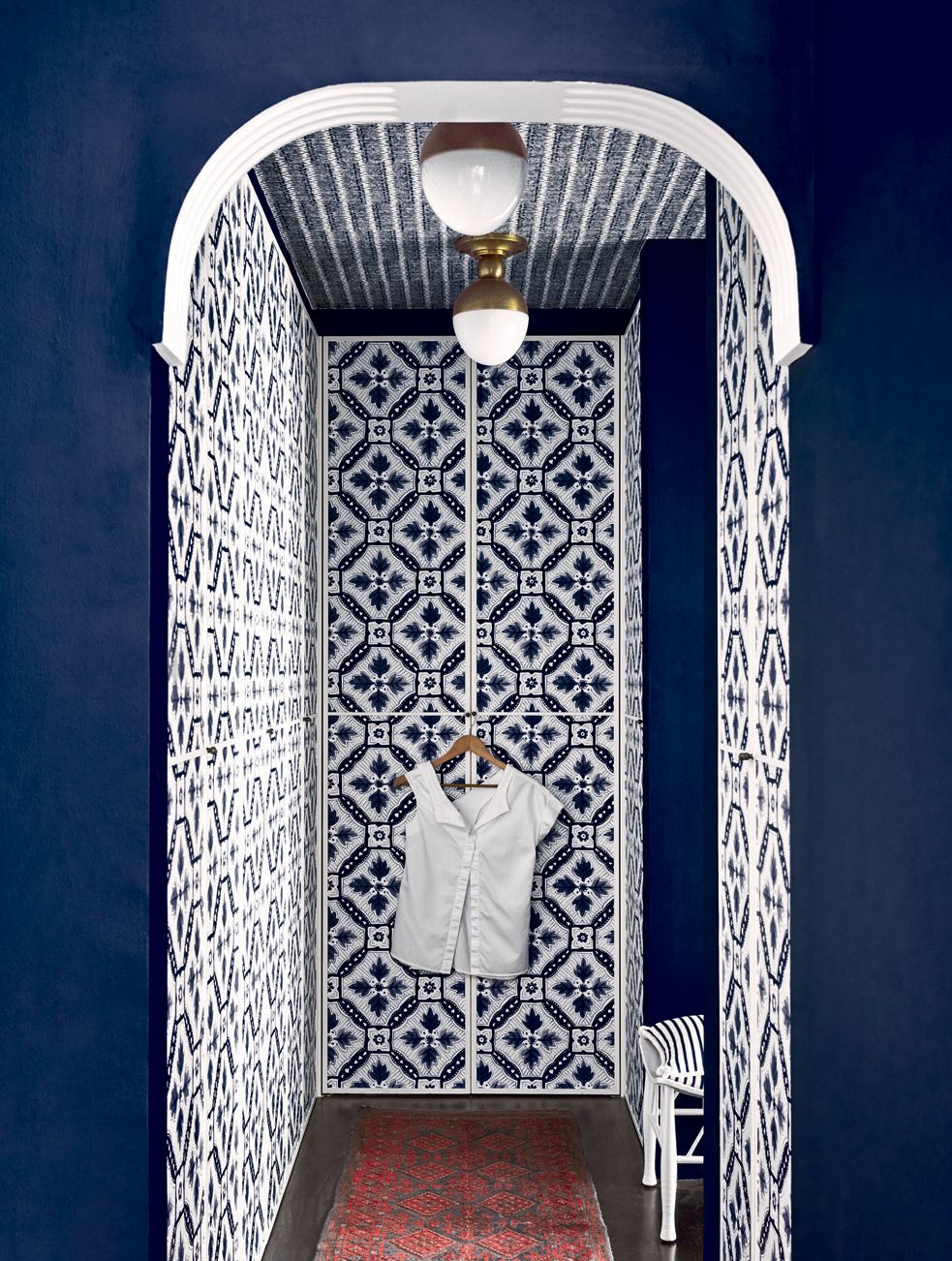
The project was also an education in making-do. ‘There’s so much construction and waste in Singapore,’ says Amy. ‘A lot of the decoration here was in good condition, so I wanted to reuse as much as possible.’ A slab of blue quartz brings dazzle to a built-in desk in her study, and formerly bland built-in wardrobes were reinvented with geometric patterned wallpaper on the doors and brass knobs. The family’s existing furniture has taken on a new lease of life, too: a pair of mid-century chairs was reupholstered with a deep weave in the sitting room; and a contemporary wooden bedside table was stripped back to mellower tones.
Both Amy and Elizabeth are fans of traditional Asian pieces in faux bamboo or rattan that have a modern edge. ‘On business trips in Korea or Japan, I would take an extra half day to explore a museum or market,’ says Amy. ‘It felt like a luxury.’ With some fellow Harvard Business School alumni and a team of former executives from LVMH and Marriott, she is setting up the online platform Vermillion Lifestyle, to connect artisans with international designers.
MAY WE SUGGEST: A joyfully colourful cottage in Sydney with hints of English country style
Elizabeth, too, has a network of makers adept at realising her ideas. In the family room, the inlaid coffee table was made in India; a Thebes-inspired bench finished in deep-red lacquer in the main bedroom is from a local workshop. Later this year, she is launching a range of tole lights that are influenced by the 18th-century Chinese enamelware on display at Singapore’s Asian Civilisations Museum.
Now that the patron has become the pupil, how is the partnership going? Amy compares the alliance to a Venn diagram: ‘You can pinpoint where our skills overlap and, where they don’t, our differences are complementary.’ They do diverge on one point. ‘I sometimes have to restrain Amy from making a spreadsheet,’ says Elizabeth with a laugh. Some things, of course, are hard to change.
Elizabeth Hay: elizabethhaydesign.com
 Lauryn Ishak1/13
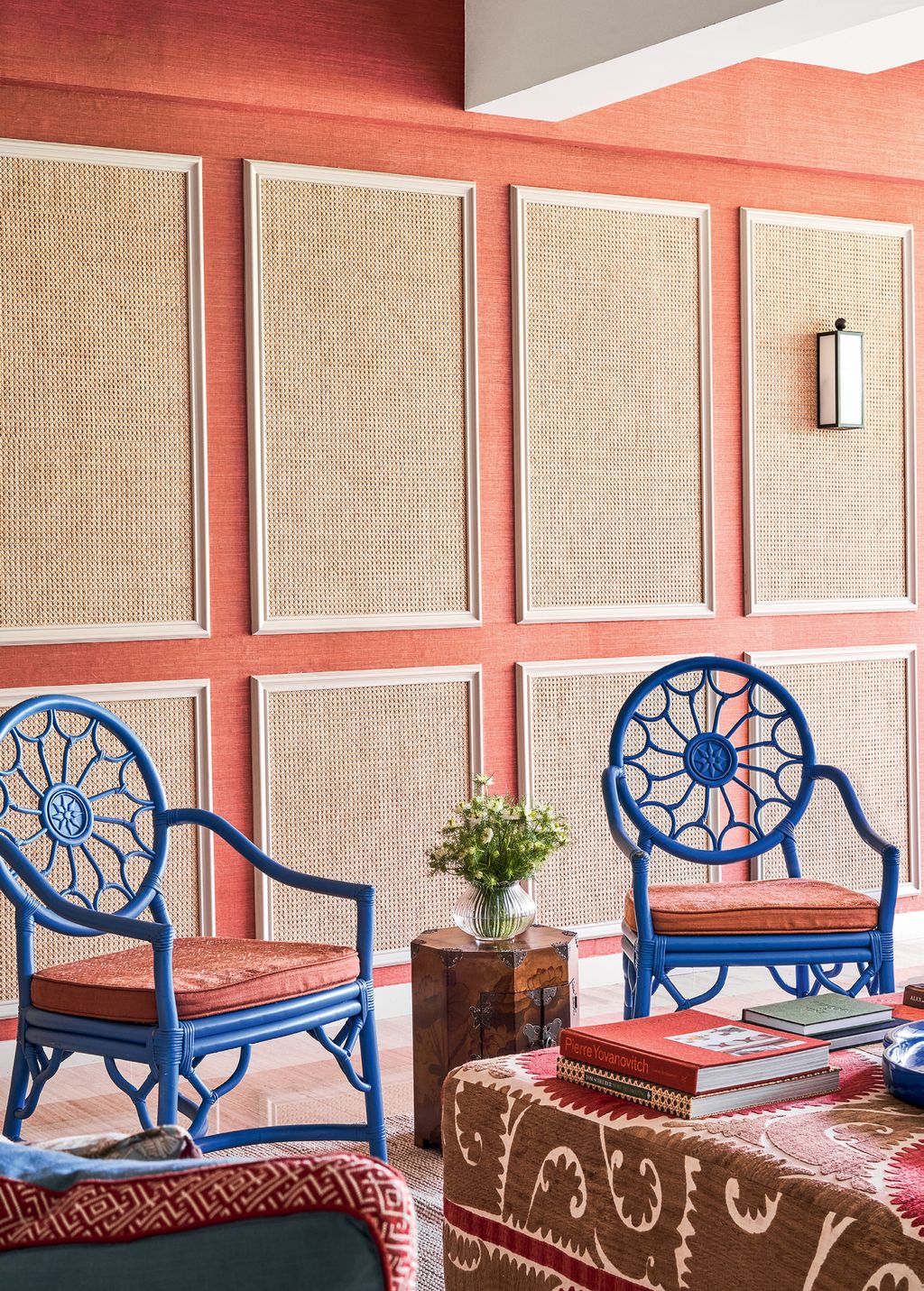
On the opposite wall, woven panels are set against a seagrass wallcovering from Stereo. The chairs were found locally and resprayed in a vibrant shade of blue.
 Lauryn Ishak2/13
On the walls, a navy blue grasscloth by Stereo is offset by Beata Heuman’s ‘Palm Drop’ fabric. Dining chairs from Ton surround a table designed by Elizabeth. The wall sconce is by Aerin Lauder and the ‘Branching Bubble’ chandelier is by Lindsey Adelman.
 Lauryn Ishak3/13
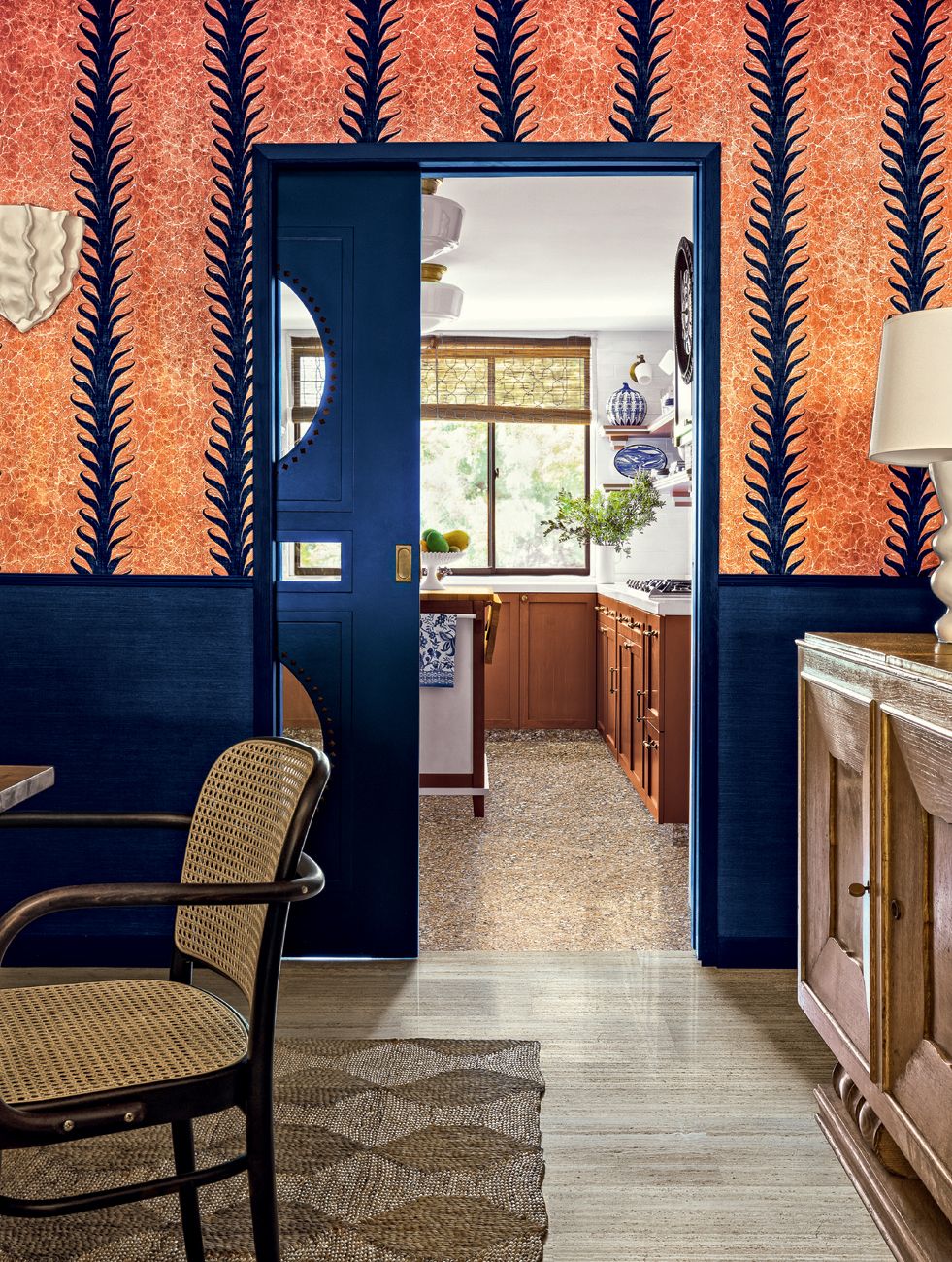
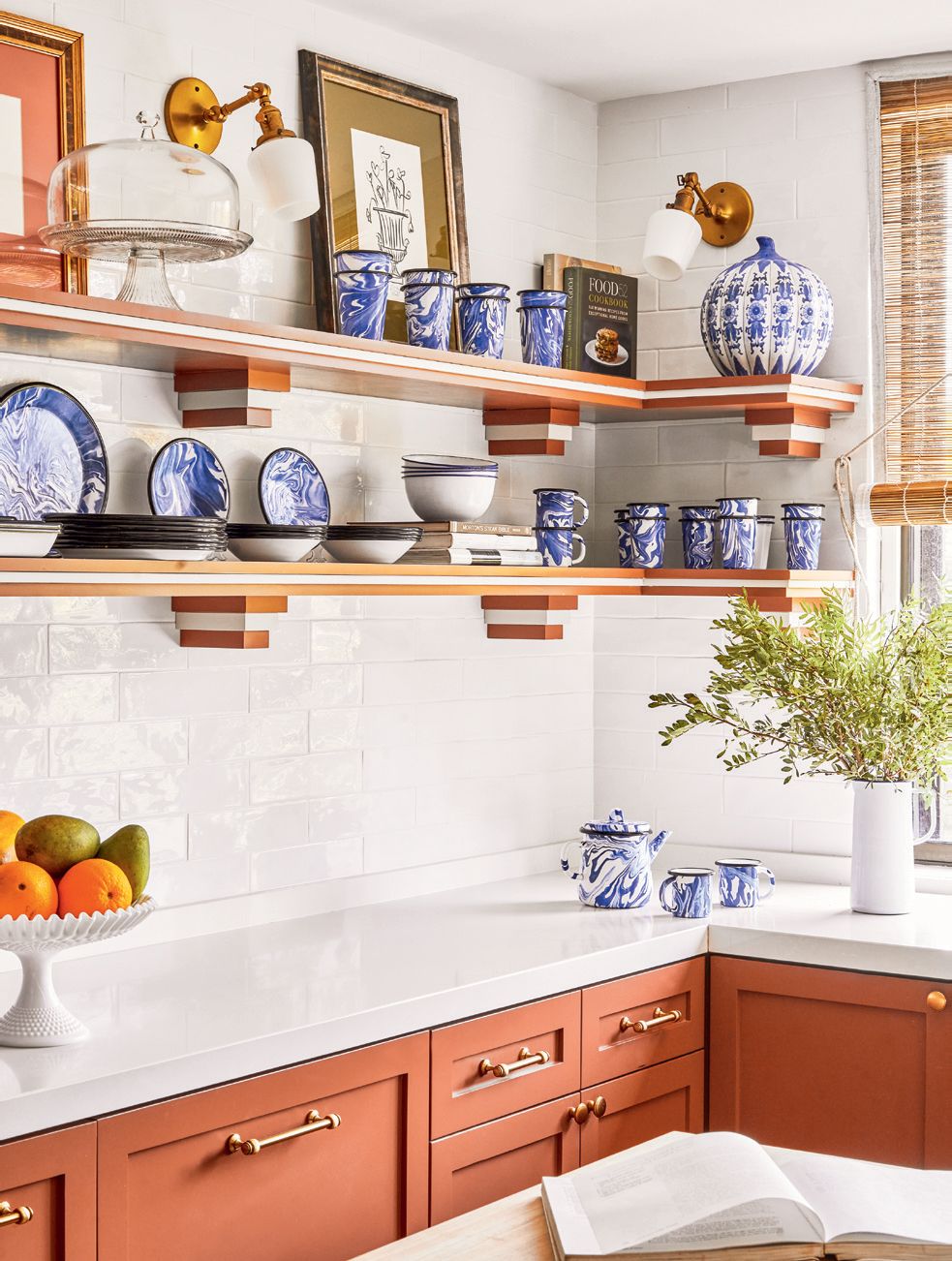
A new pocket door leads into the redesigned kitchen, which features bespoke joinery in the terracotta tones that unify the main living areas.
 Lauryn Ishak4/13
The scenic wallpaper is ‘Early Views of India’ by de Gournay. Interior designer Elizabeth Hay used an Uzbek suzani to upholster the ottoman.


 Lauryn Ishak5/13
The wall lights in the kitchen are from Schoolhouse in New York; the enamelware is from Bornn and Falcon.
 Lauryn Ishak6/13
Elizabeth designed the sofa in the family room, which is upholstered in a ticking from Guy Goodfellow Collection. The bespoke inlaid coffee table was made in India.
 Lauryn Ishak7/13
Indian-inspired arches bring a touch of whimsy to the apartment. In the study beyond, the rug is a bespoke design and ‘The Leafy Pendant’ is from Coleen and Company
 Lauryn Ishak8/13
The existing built-in joinery in the study was reinvented with a mix of bold patterns in shades of blue, including ‘Pineapple’ wallpaper from Hygge & West on the walls and Thibaut’s ‘New Haven Stripe’ wallpaper on the faux tented ceiling.


 Lauryn Ishak9/13
Elizabeth designed the new arched entrance to the dressing room, updated the existing wardrobes with a geometric wallpaper by Anna Spiro and added a Thibaut wallpaper on the ceiling. The ‘Clark’ ceiling lights are by Thomas O’Brien.
 Lauryn Ishak10/13
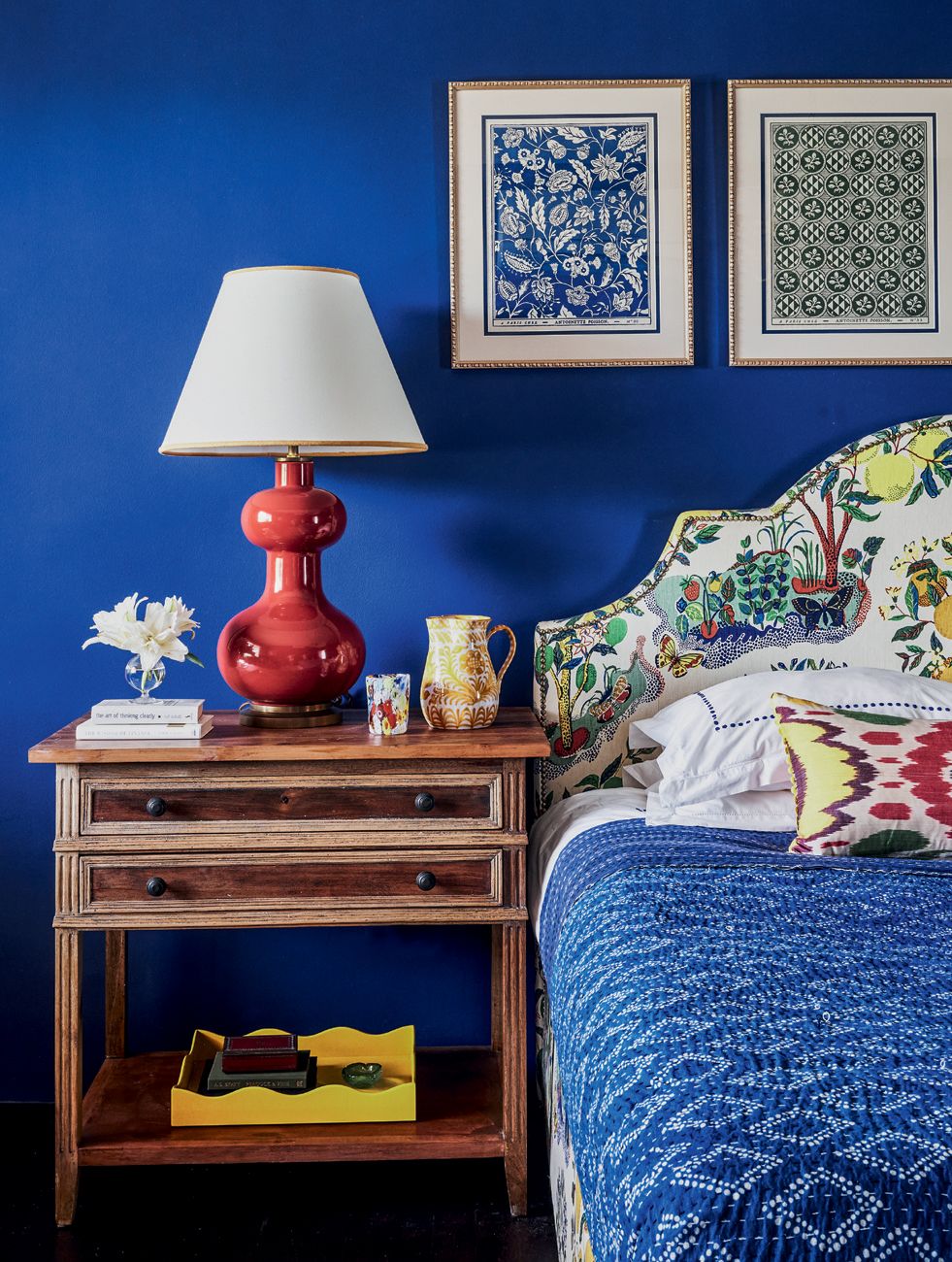
A headboard in ‘Citrus Garden’ by Schumacher was the starting point for the decoration in the main bedroom. The bedside lamp is by Christopher Spitzmiller.
 Lauryn Ishak11/13
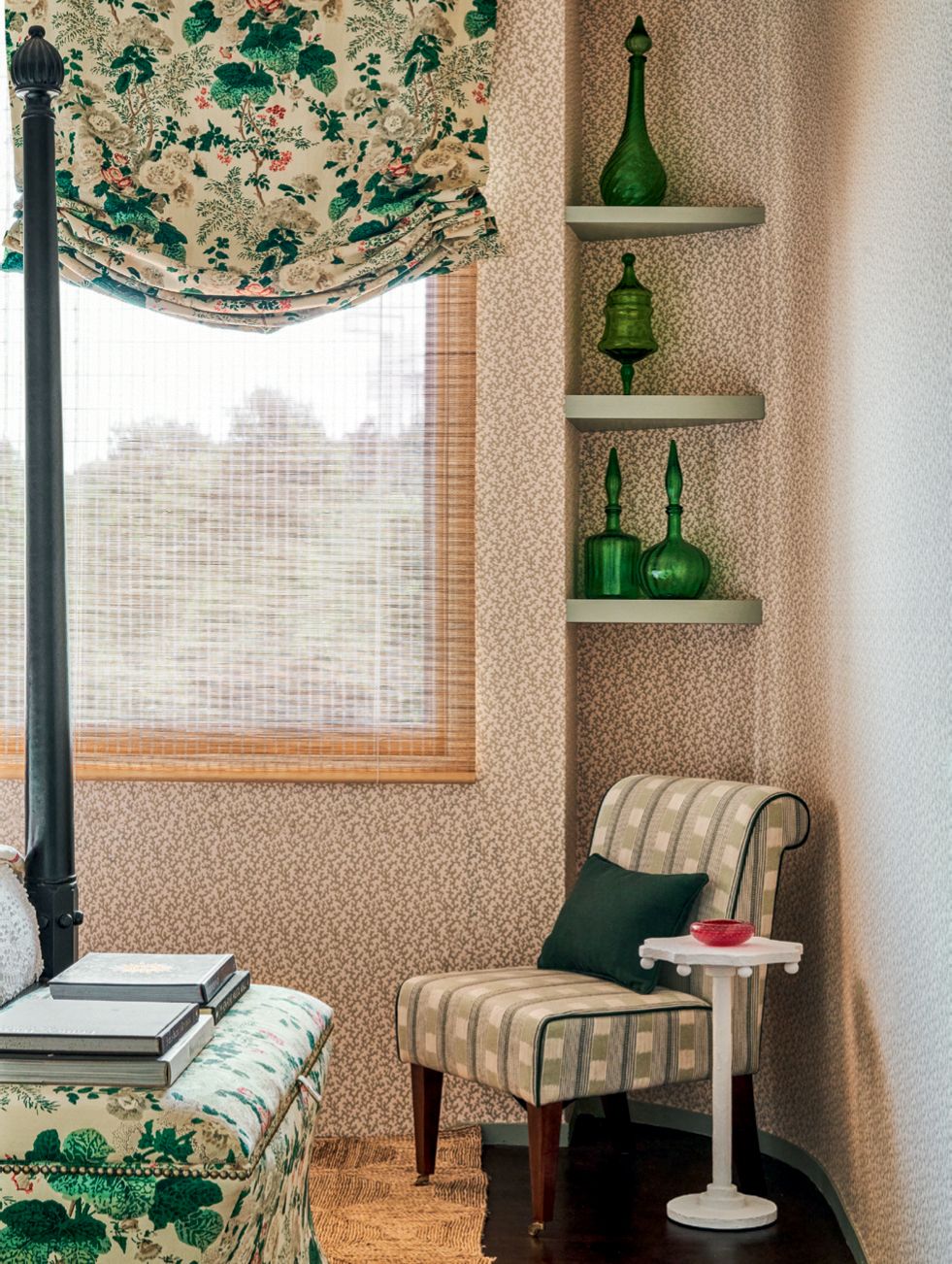
Veere Grenney’s ‘Folly’ wallpaper is the background for a green scheme in the spare room featuring a blind and ottoman in ‘Althea’ by Lee Jofa.
 Lauryn Ishak12/13
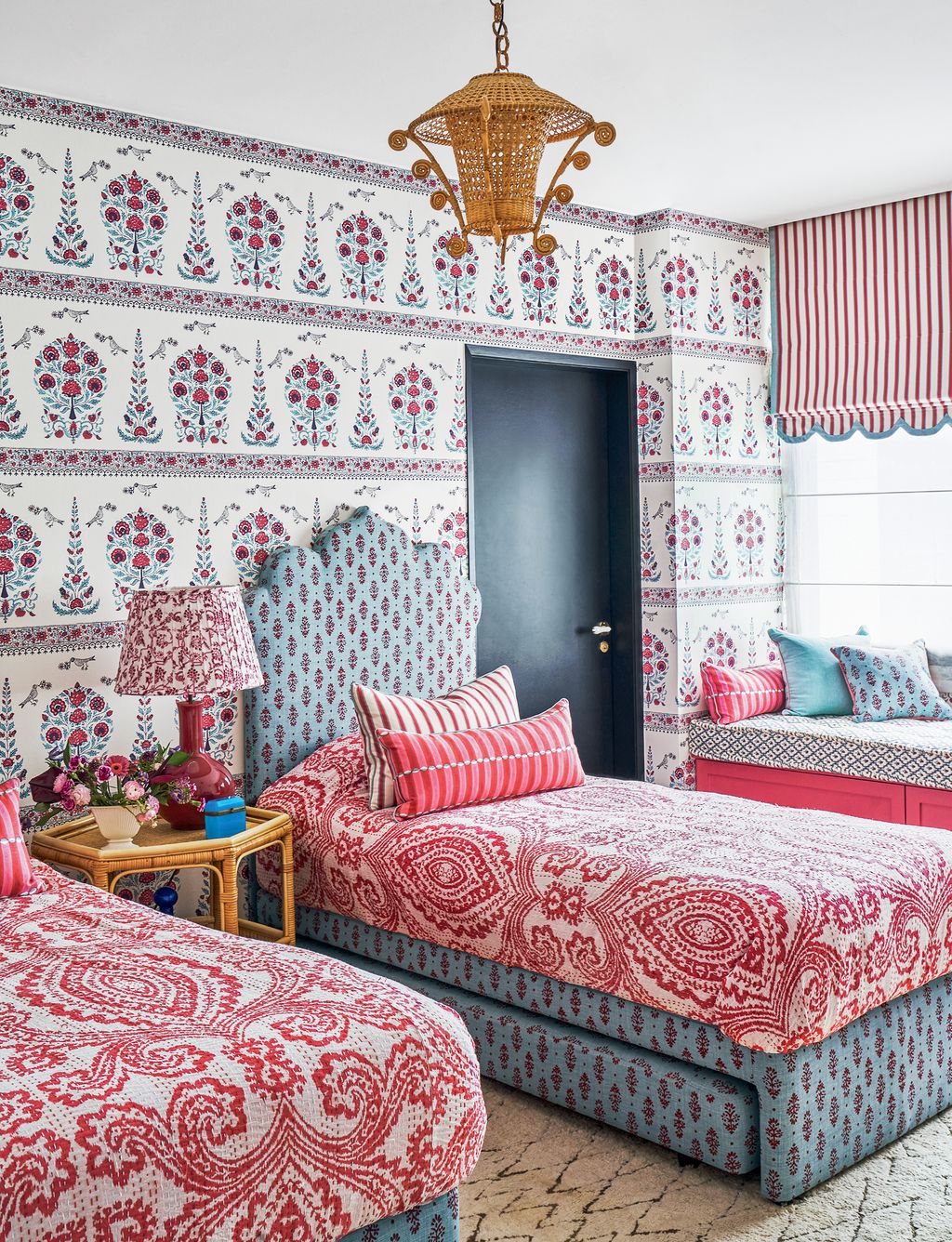
Quadrille’s ‘Kalamkari’ wallpaper inspired the ebullient scheme in the girls' bedroom. The beds are upholstered in ‘Rajkot’ from Lisa Fine Textiles. The rattan pendant light is from Indonesia.


 Lauryn Ishak13/13
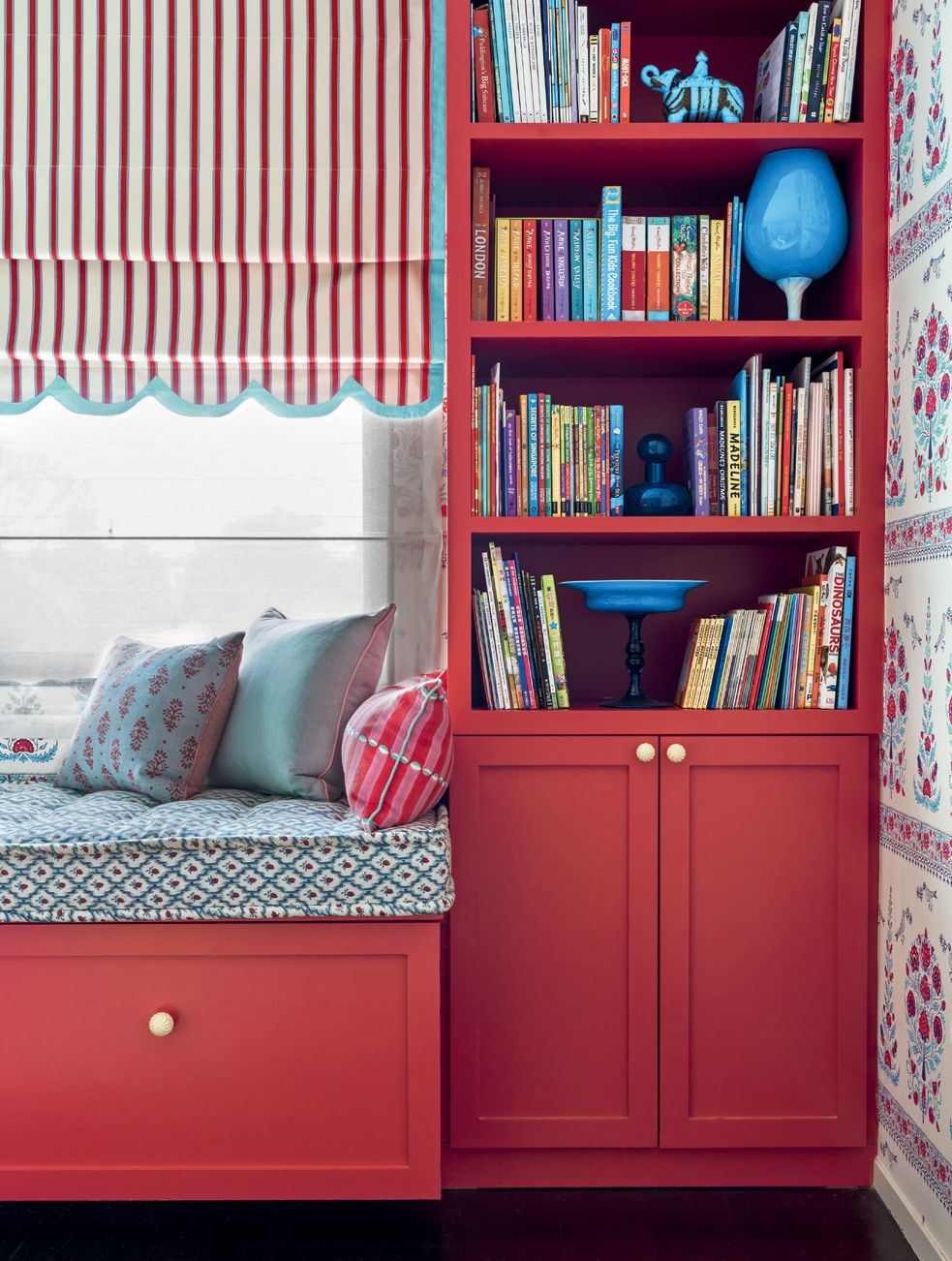
A scalloped blind made from ‘Blazer Stripe’ by Ian Mankin picks up on the joinery painted in ‘Bright Garnet’ by Dulux


