
A Cotswold barn given a quietly elegant interior by Berkeley Hawkes
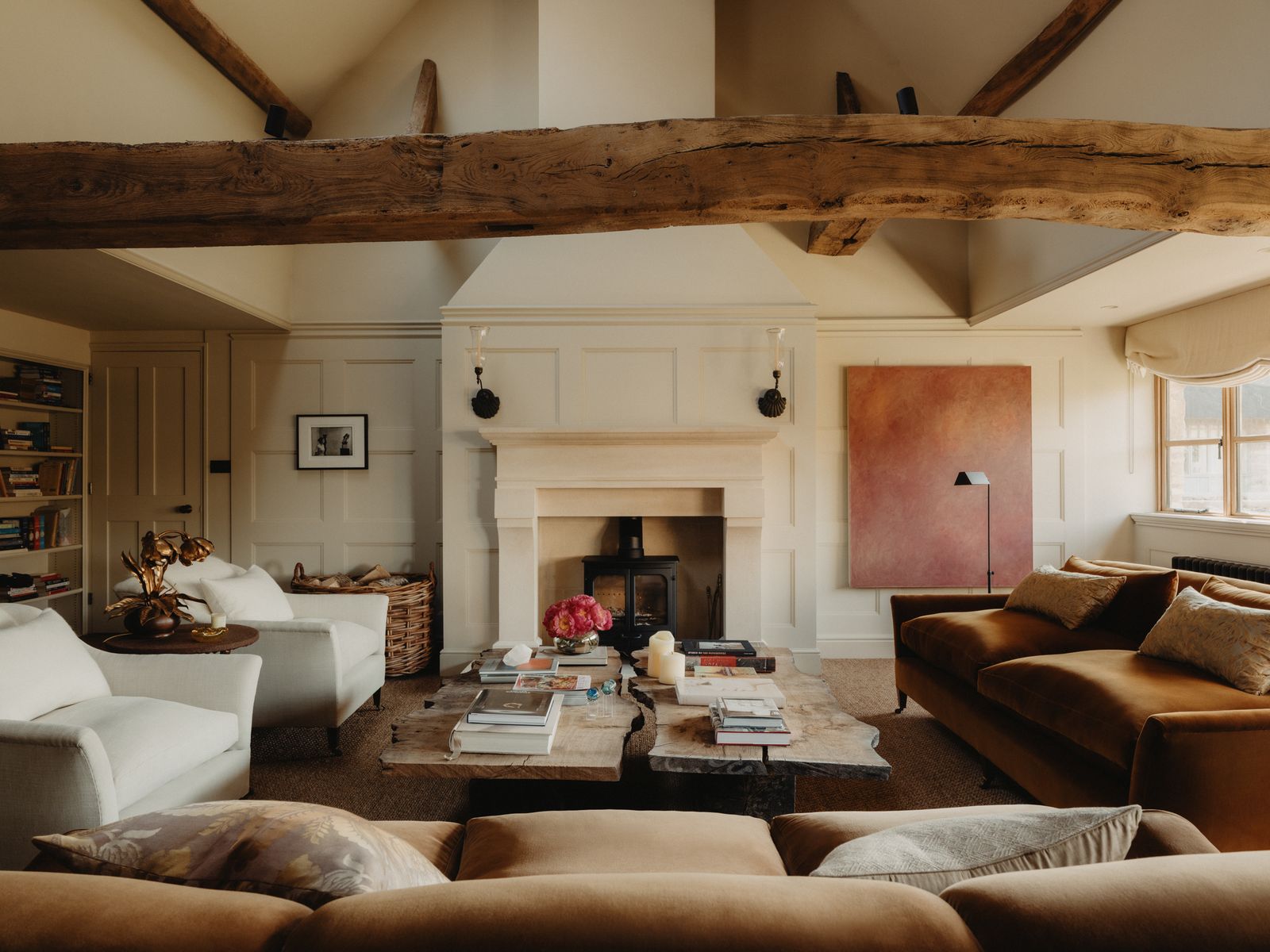
Many of us had the fantasy of starting a new life during the pandemic, taking on a country house and perhaps even launching a new career, but few of us had the nerve to make it into a reality. Laura Berkeley-Hawkes and her daughter Gracy, however, were among the few who did, and did so triumphantly. When Laura and her husband Gary J Hawkes, a feng shui consultant, decided to leave London during the pandemic, the move to the country became a catalyst for Gracy and Laura, lovers of interior design both, to join forces and set up their own eponymous studio, Berkeley Hawkes, taking on the new house as their first project and a showcase for their taste and skills.
Laura and Gary had looked at more than 50 houses in various areas, aiming for somewhere within two hours of London so they could be within reach of Gracy and their two sons. As soon as they drove through the gates of this property, however, they knew it was the one. It's an unusual place, a former farm in which all of the buildings have been converted into separate houses. ‘It has the feeling of a little hamlet,’ explains Laura. ‘Even as I drove down, before we’d been inside the building, we fell in love.’
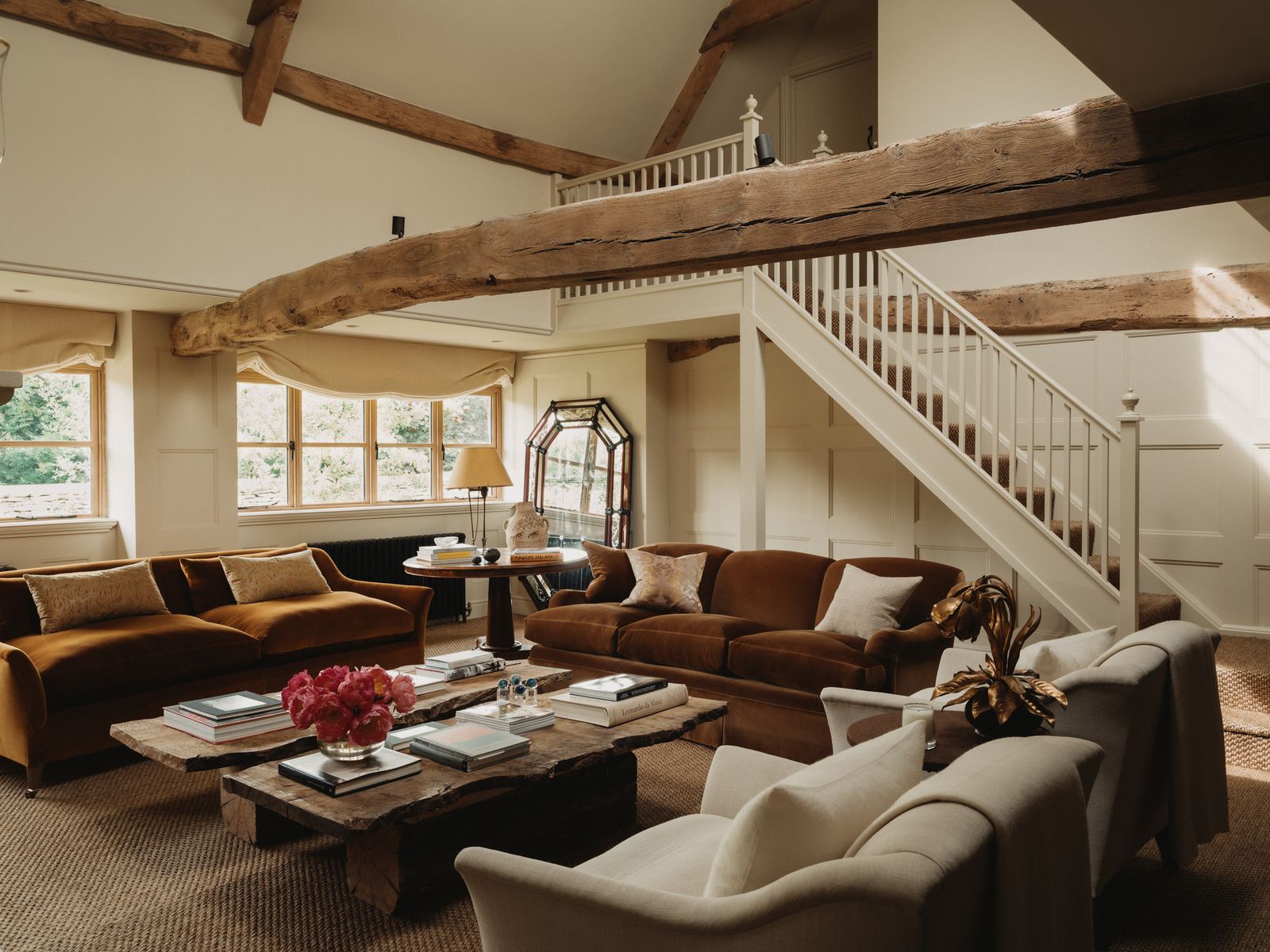
For Gracy, the timing of the move couldn't have been better, since she had been drawn to a career in interior design for some time, and had been immersing herself in the decoration of her own flat in London. Laura, meanwhile, had years of experience renovating her own houses and making them available as shoot locations. ‘We were sitting together one day and it just struck me that we needed to go for it,’ remembers Gracy. ‘We both love this so much, it's a passion, and there we were with a readymade project.’ The combination of her own fresh design vision with Laura's abundant experience decorating houses gave them a natural impetus to start their own studio.
Taking on a former agricultural building posed a different set of challenges to the London townhouses they had lived in before. The structure is Grade-II-listed, and though it had been converted into a house in the 1990s, there had been and still were limitations to what could be changed. The original conversion had been done with small windows, and the bedrooms were all in the steeply pitched attic space. ‘We couldn't get permission to enlarge the windows, except in the kitchen,’ explains Gracy, ‘so we had to lean into the darkness of some spaces and go for a more cosy, enveloping look.’
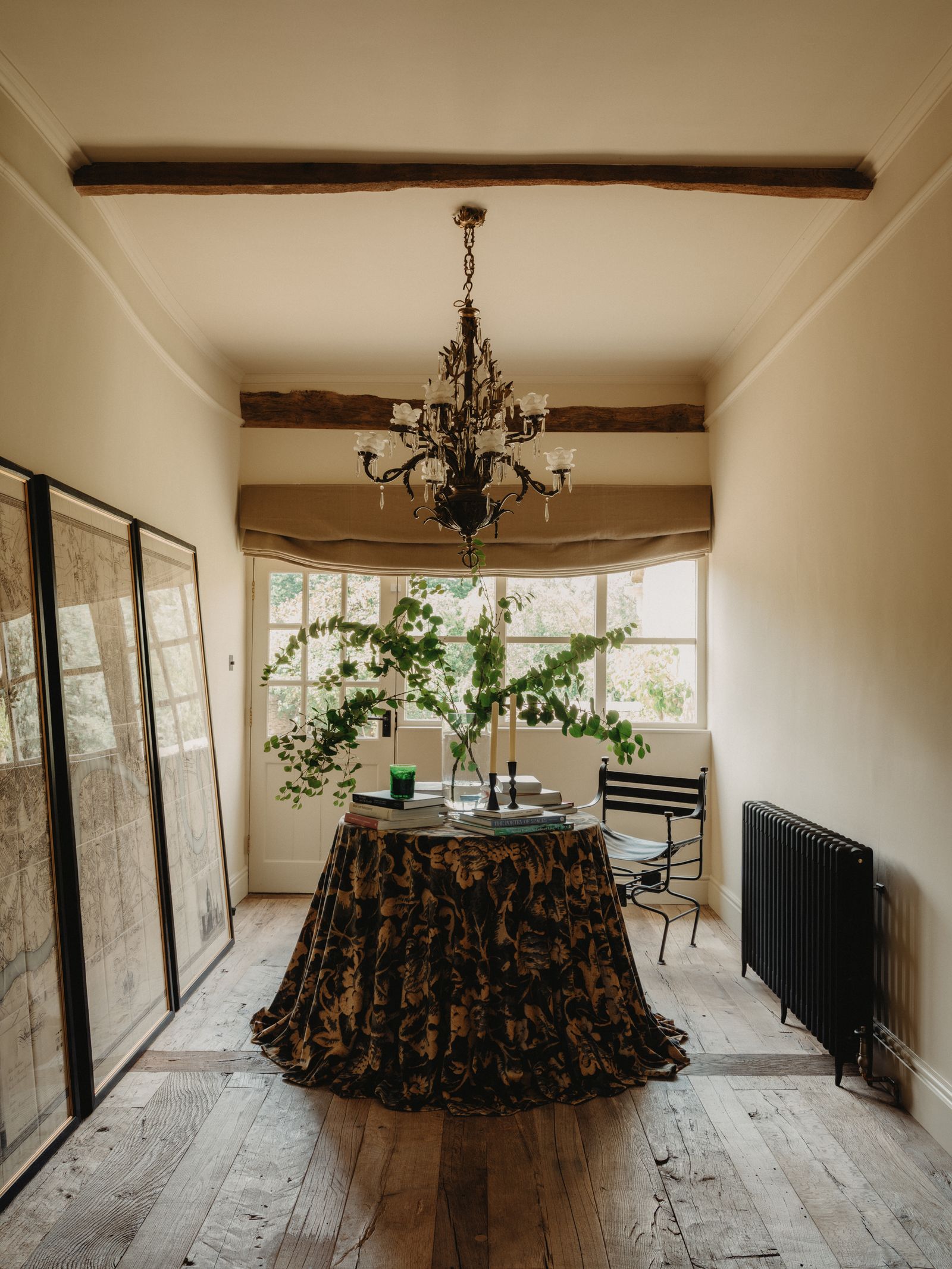
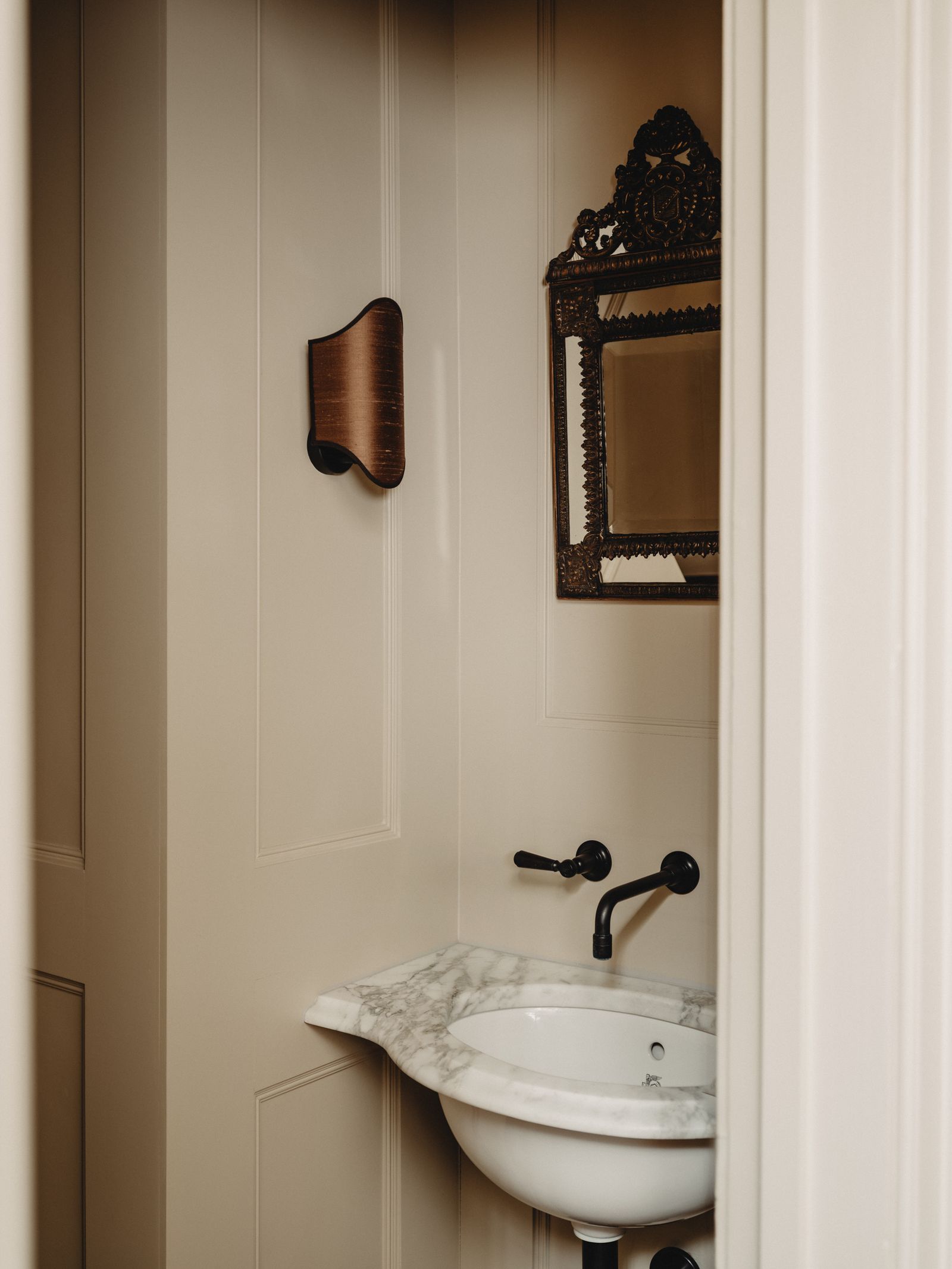
They did manage to change the layout of the ground floor to make for a large, ‘broken-plan’ kitchen and dining room, incorporating a poky back corridor into the kitchen to allow space for a pantry. They also added a guest bedroom and bathroom plus a guest loo downstairs, and opened up the master bedroom, taking it from a confusing warren of small spaces into a generous suite with an adjoining bathroom. While the building is an agricultural one, they were keen to give a sense of the Georgian origins of the farm at large, adding panelling to the main rooms and installing understated kitchen cabinetry that nods to the period. The ancient origins of Cirencester in Roman Britain also had their influence on the serene classicism of the interior as it evolved.

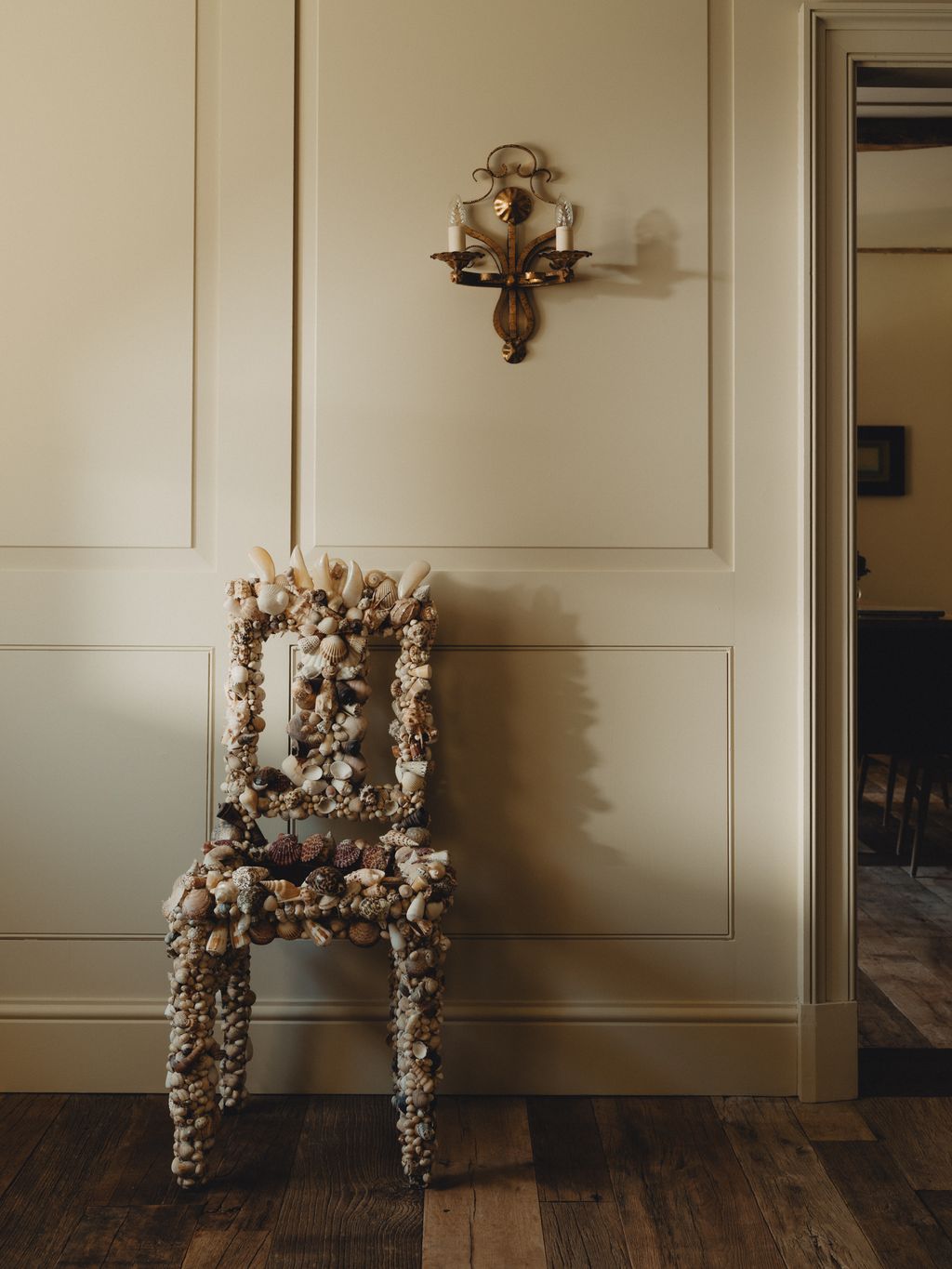
Aesthetically, much of what Gracy and Laura were trying to do also revolved around the idea of creating space. ‘We love every single thing that we choose,’ says Gracy, ‘and then we don't choose too many of them. We give each thing its own space so that we can see it and remember that we love it.’ This considered approach began with the floor, where they laid beautiful reclaimed oak floorboards from Lubelska, breaking up large expanses on the ground floor by running some boards in opposite directions. The boards were all reclaimed from agricultural buildings around Europe and have a pleasingly rough texture, easily visible since they have been left bare to make the most of their character. Laura and Gracy have a sharp eye for equally characterful antiques and unique pieces of furniture, such as an unusual shellwork chair they snapped up from an auction of the Belgian antique dealer Paul De Grande’s stock, and which is so delicate that they had to drive to Bruges to collect it, swathed in duvets for the ride home.
What makes this a particularly satisfying interior is the clever contrasts the duo have created throughout. While there is a quiet restraint to the arrangement of furniture and art, there is also plenty of comfort and warmth. The rusticity of the building, its beams and flooring are countered with acres of deeply inviting velvet-upholstered seating, largely created by Lorfords Contemporary. A bedroom with charming ruffled curtains also contains a set of angular metal lamps; the roughness of the bare oak floor in the kitchen is countered by the gorgeous gloss of the red cabinets. Neutral walls throughout are the backdrop to a wonderfully warm colour scheme of reds and browns, partly informed by Gary's work as a feng shui master.
The project has only confirmed how well Gracy and Laura work together, and the pair are now at work on an apartment in Little Venice, London. If this project is anything to go by, we'll be excited to see what's next.
 Mark Anthony Fox1/22
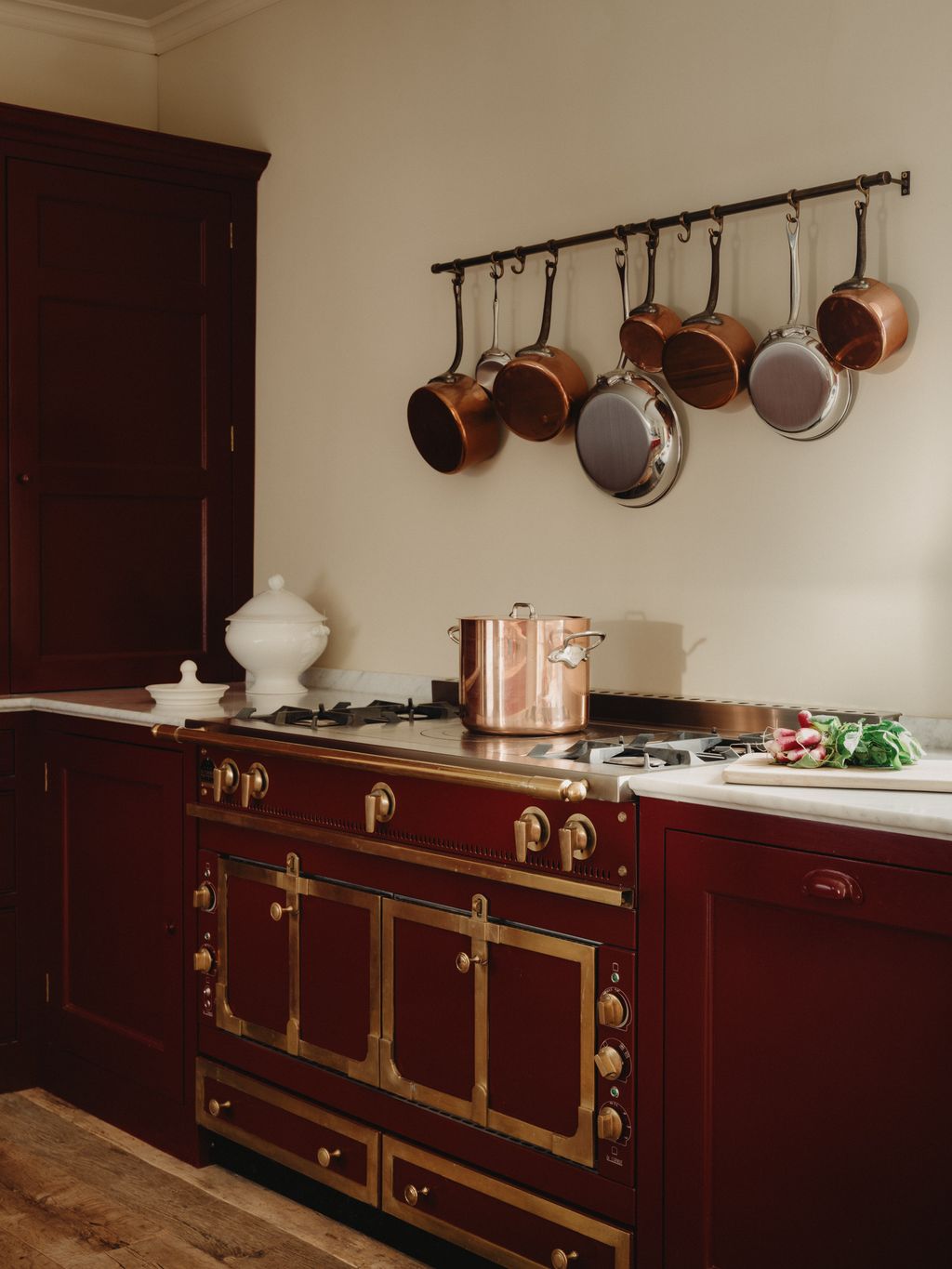
The kitchen cabinets, designed by Laura and Gracy and made by a local joiner, are hand-painted in a custom red burgundy gloss to match the La Cornue cooker. A double fridge is hidden in the cabinet just visible in the left corner, painted in ‘Chocolate Colour’ by Little Greene. Honed Carrara marble worktops contrast with the simple light oak on the prep table.
 Mark Anthony Fox2/22
A burgundy ‘Le Château 120’ range by La Cornue takes centre stage.
 Mark Anthony Fox3/22
Looking back into the kitchen from the dining room. A Pair of ‘Imo’ bar stools in oak by Pinch stand at the island, where a pair of ‘Large Chattered Skullcap’ porcelain pendant lights by deVOL hang above. An Akari ‘UF1-H’ paper table lamp from Vitra stands on the counter in the far right. In the dining room the 1970s Italian gilt metal wall lights are from Brownrigg.
 Mark Anthony Fox4/22
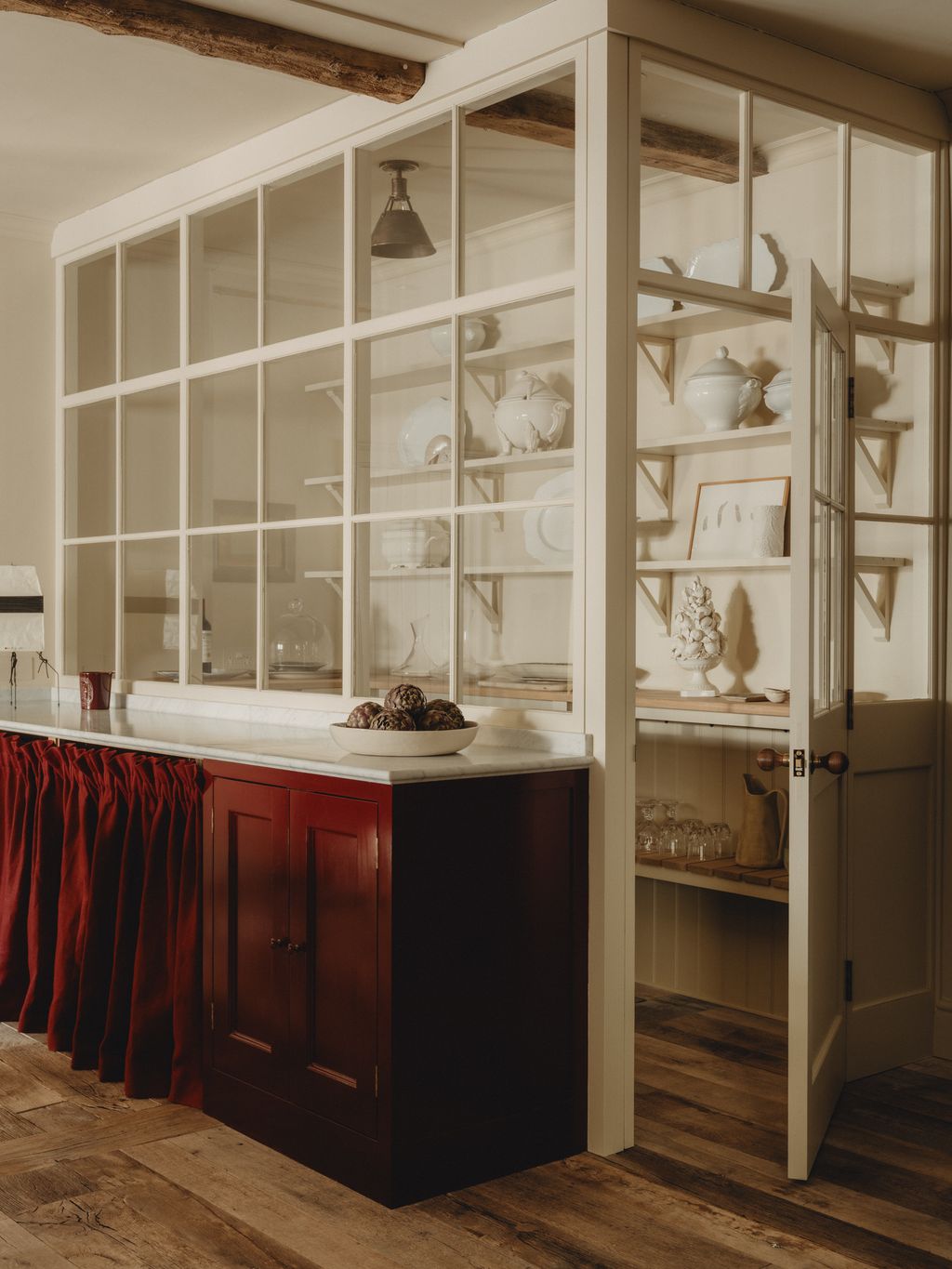
The pantry was carved from the corridor which used to run alongside the kitchen. A curtain made from Designers Guild's ‘Conway’ linen in chilli by was chosen to match the paint on the kitchen cabinetry. An ’Annapolis Flush Ceiling Light' by The Limehouse Lamp Company hangs within, over a selection of ceramics including platters by Astier De Villatte.


 Mark Anthony Fox5/22
The dining room is painted in ‘Canvas IV’ from Paint & Paper Library on raised and fielded panelling and ceiling. An antique Catalan refectory table is both elegant and hardy enough to withstand family dinners, while the Regency rosewood and parcel-gilt carver chairs by John Gee are the perfect blend of comfort and elegance. To the left is a 17th-century Dutch Kast cupboard sourced from Pappilon.
 Mark Anthony Fox6/22
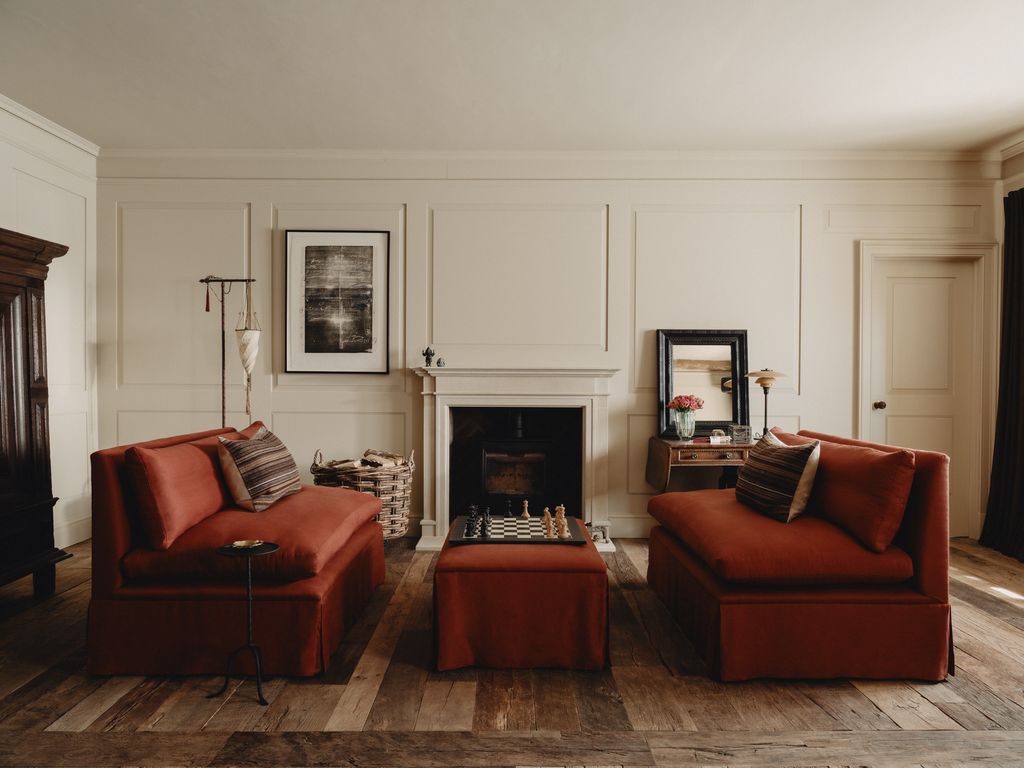
The ‘Slipper’ sofas and matching ottoman by Lorfords Contemporary are covered in ‘Nore’ in santal by Larsen. An original 1930s Poul Henningsen yellow painted glass PH 3/2 table lamp on the right contrasts with the Fortuny silk ‘Cesendello’ floor lamp.
 Mark Anthony Fox7/22
A 20th century shell chair from Paul De Grande Antiques, stands under a 1970s Italian gilt metal wall light from Brownrigg.
.jpg) Mark Anthony Fox8/22
Mark Anthony Fox8/22Gracy and Laura in the dining room.


.jpg)
 Mark Anthony Fox9/22
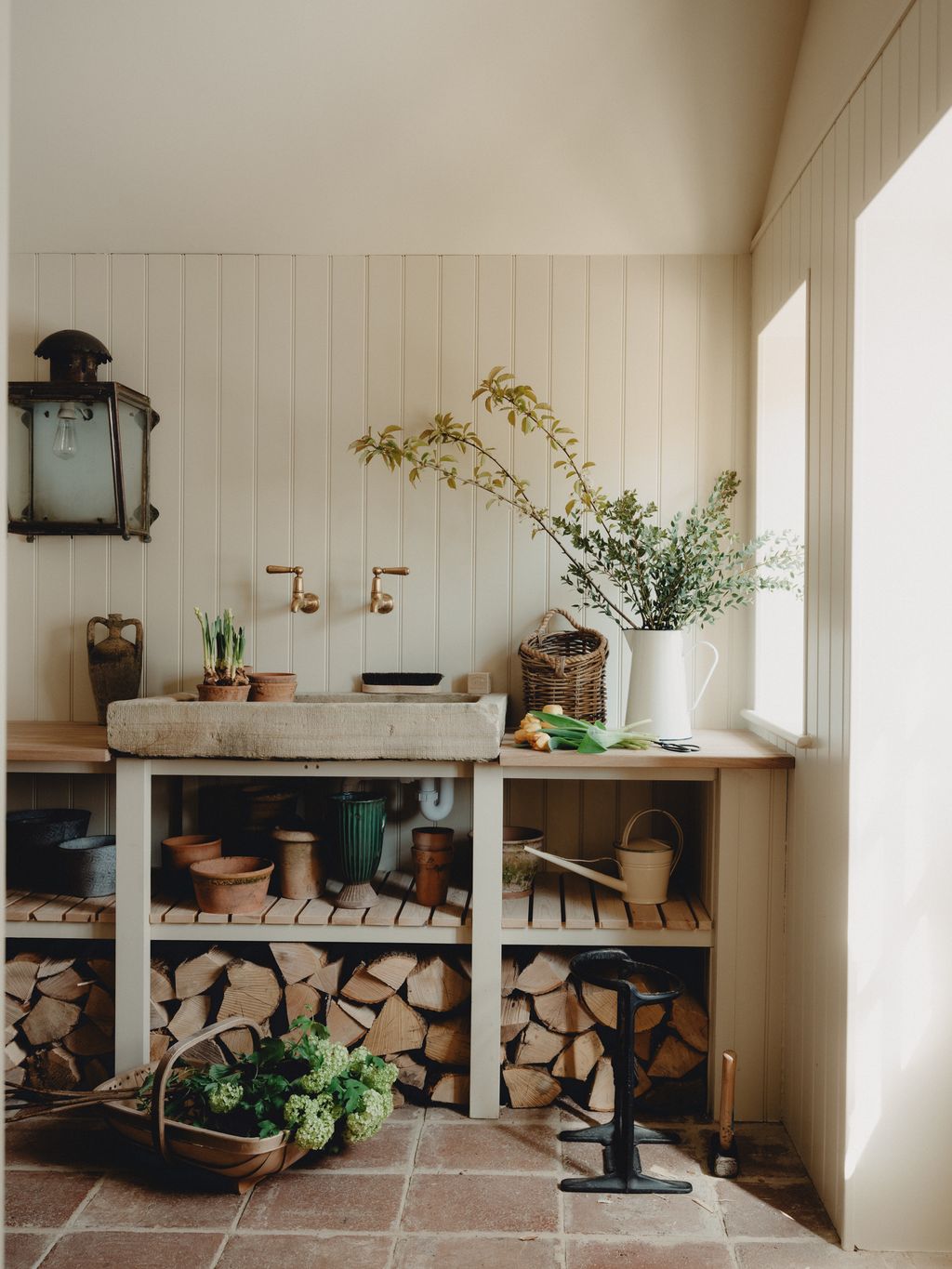
The boot room has a reclaimed antique stone trough with Barber Wilsons taps in brass, under a 19th-century copper station platform wall lamp. To the left of the sink is a vessel, thought to be Roman, found during restoration work in the stream that runs beside the house.
 Mark Anthony Fox10/22
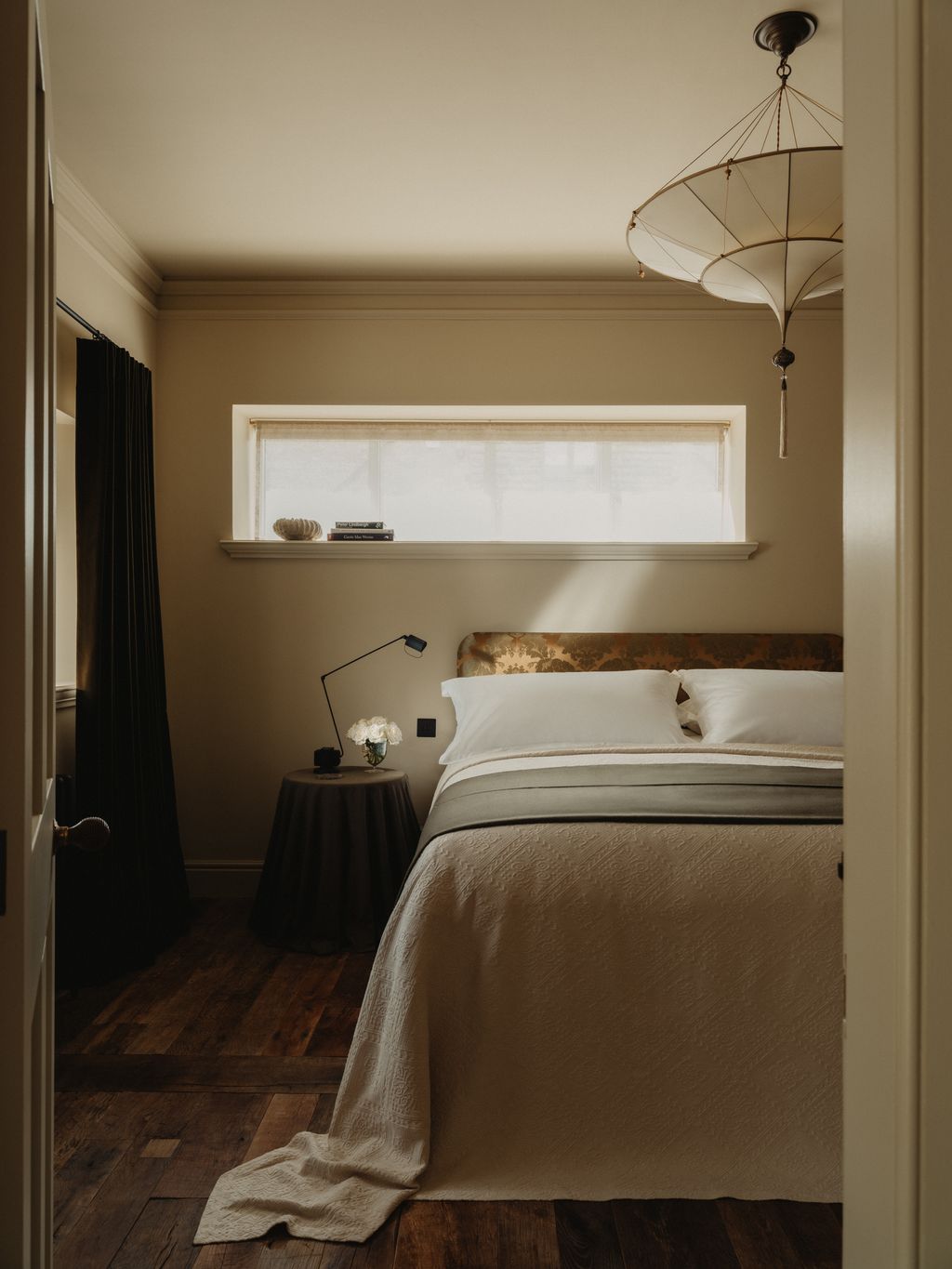
The downstairs bedroom is painted in ‘Canvas IV’ from Paint & Paper Library. A Fortuny ‘Scheherazade’ silk lamp hangs overhead. The bed has a headboard made by Lorfords Contemporary covered in ‘Cymbeline’ in gold verdigris from Watts 1874. The curtains were made by Studio Blackwell in Cotton Velvet in moss from Rose Uniacke. ‘Daphine’ table lamps from Lumina stand on the bedside tables.
 Mark Anthony Fox11/22
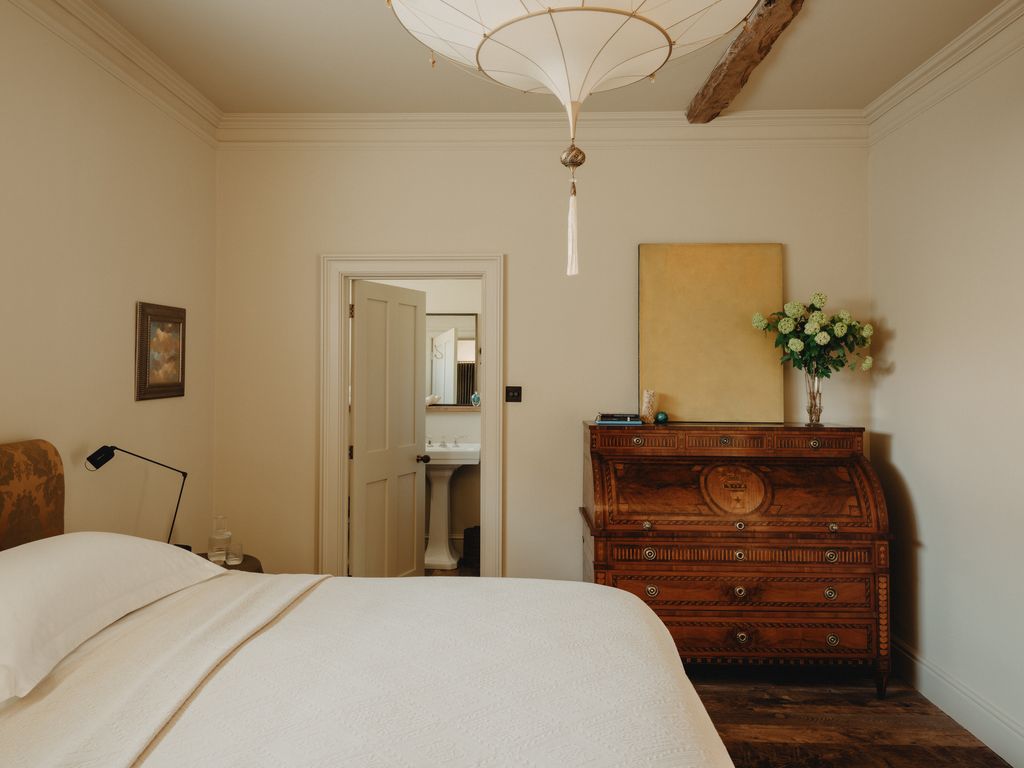
An 18th-century Louis XVI cylinder secretaire was sourced at auction and restored. A ‘Meditation’ painting by J B Wiskey leans against the wall on top.
 Mark Anthony Fox12/22
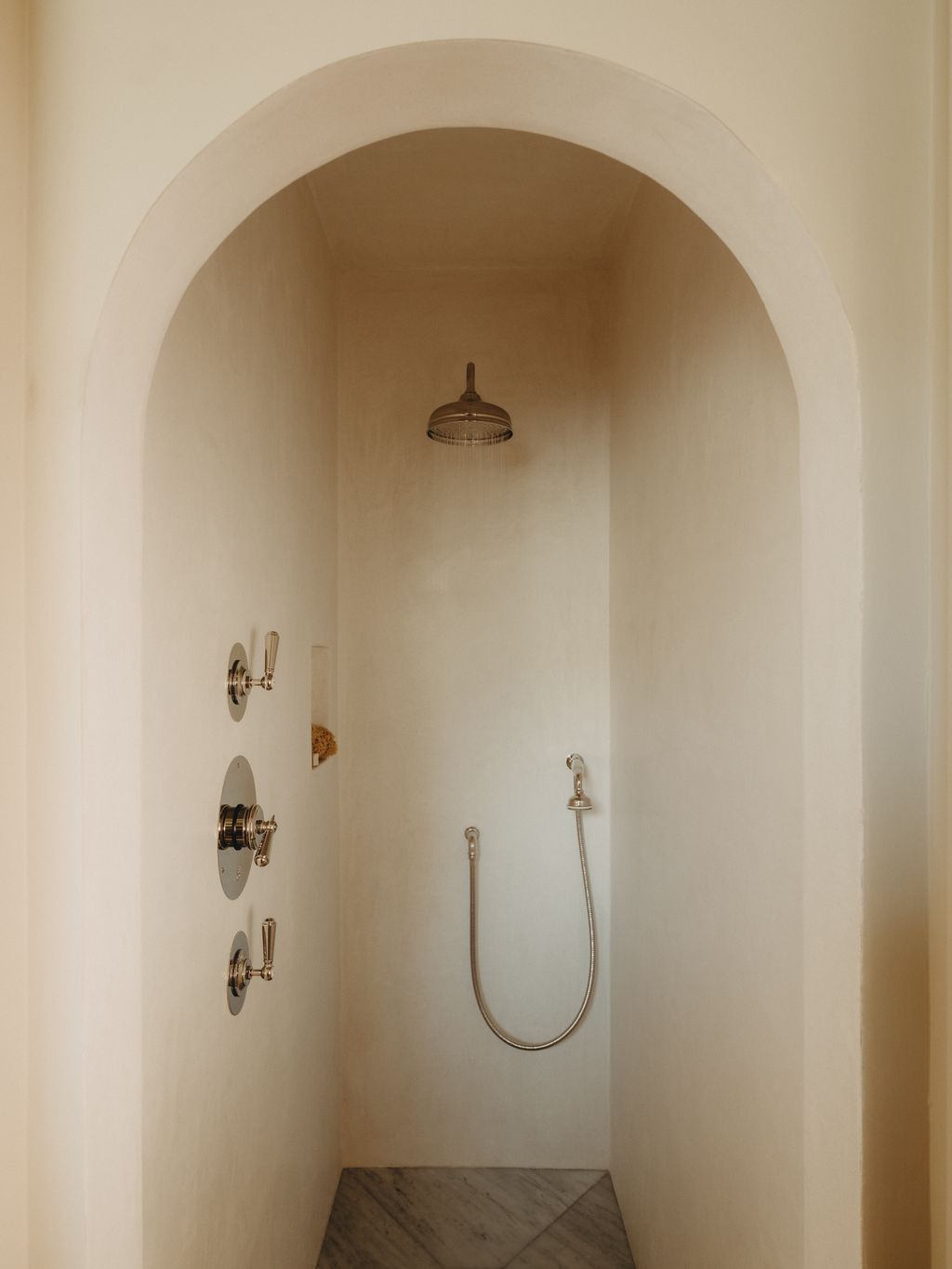
The shower was lined in tadelakt by the local plasters, Cotswold Bespoke Interiors. The fixtures are by Barber Wilsons.


 Mark Anthony Fox13/22
Upstairs, the main bedroom has been opened up to flow into the bathroom, with wardrobes forming a divider between the rooms. A ‘Camden’ armchair’ by Lorfords Contemporary is covered in ‘Nore’ in Saffron by Larsen, with a cushion made from Fortuny's ‘Corone’ fabric. Gracy and Laura designed clever roman blinds for the new skylights.
 Mark Anthony Fox14/22
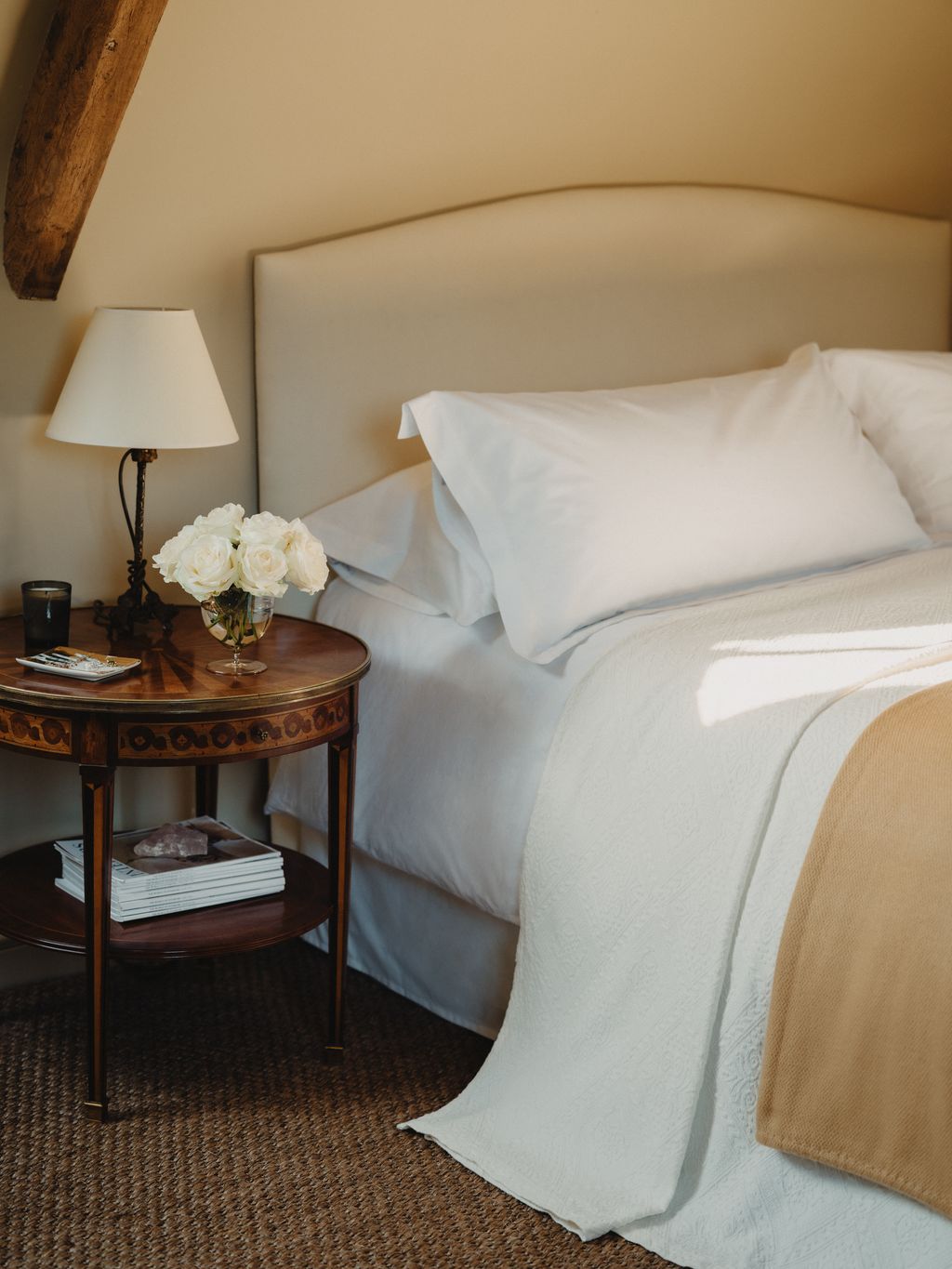
1950s Spanish occasional tables by Hermanos Garcia from Brownrigg stand on either side of the bed, with c.1880 gilt bronze French candlesticks sourced at auction and converted into table lamps. The headboard made by Lorfords Contemporary in a Rose Uniacke wool in ricotta.
 Mark Anthony Fox15/22
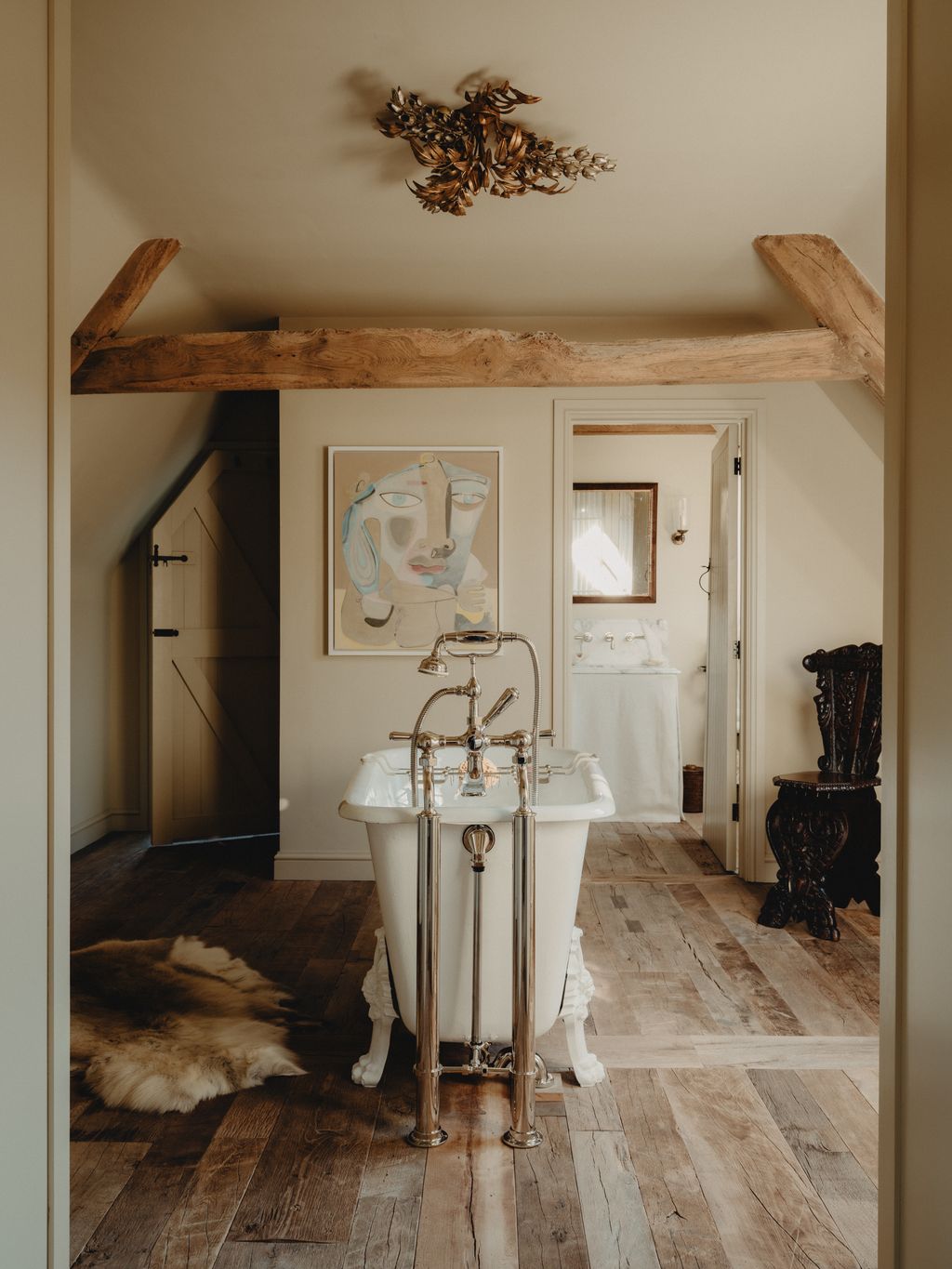
The bath is a French antique, sourced and restored by Antique France Design, with taps by Barber Wilsons in polished nickel. A 20th century Hans Kögl flush pendant hangs overhead, while an 18th-century Italian walnut sgabello chair adds texture. The painting is by Henrietta Dubrey.
 Mark Anthony Fox16/22
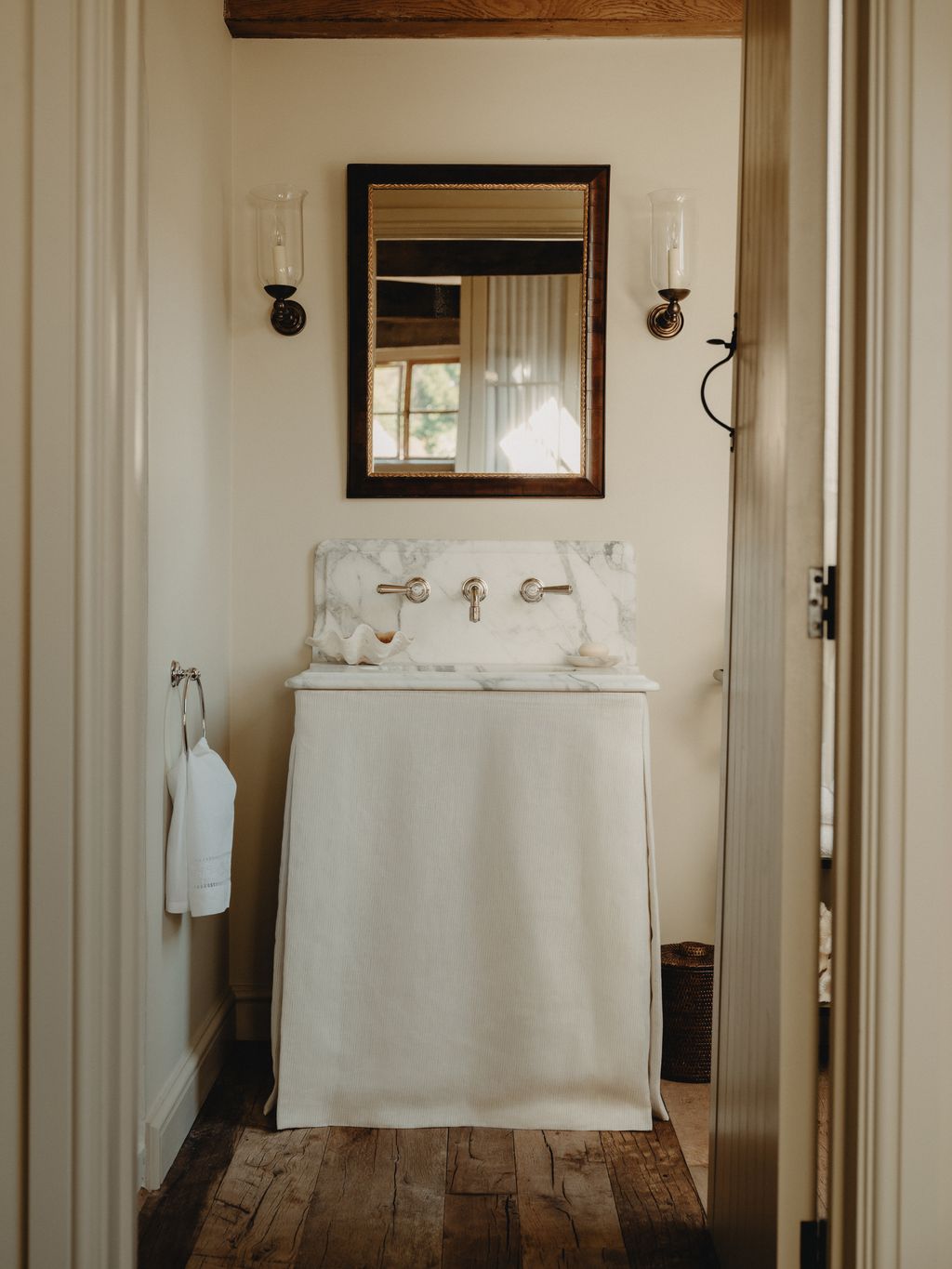
The sink has a splashback and surround in Arabescato marble and a skirt made from ‘Pampas’ in ivory by Threads. An 18th-century walnut mirror bought at auction is surrounded by wall lights designed by Gracy and Laura and made by The Limehouse Lamp Company.


 Mark Anthony Fox17/22
This bedroom is painted in ‘Canvas V’ from Paint & Paper Library. Gracy and Laura designed a special headboard to bring the bed out of the eaves, which was then made by Lorfords Contemporary in ‘Conway’ in cocoa by Designers Guild. A 19th-century French bath was sourced and restored by Antique France Design and painted in ‘Scarlet N' Rust’ by Paint & Paper Library. The curtains were made by Studio Blackwell in ‘Ultimate Herringbone’ wool in bourneville by Moon. ‘Tizio’ lamps by Artemide stand on vintage leather trunks used as bedside tables.
 Mark Anthony Fox18/22
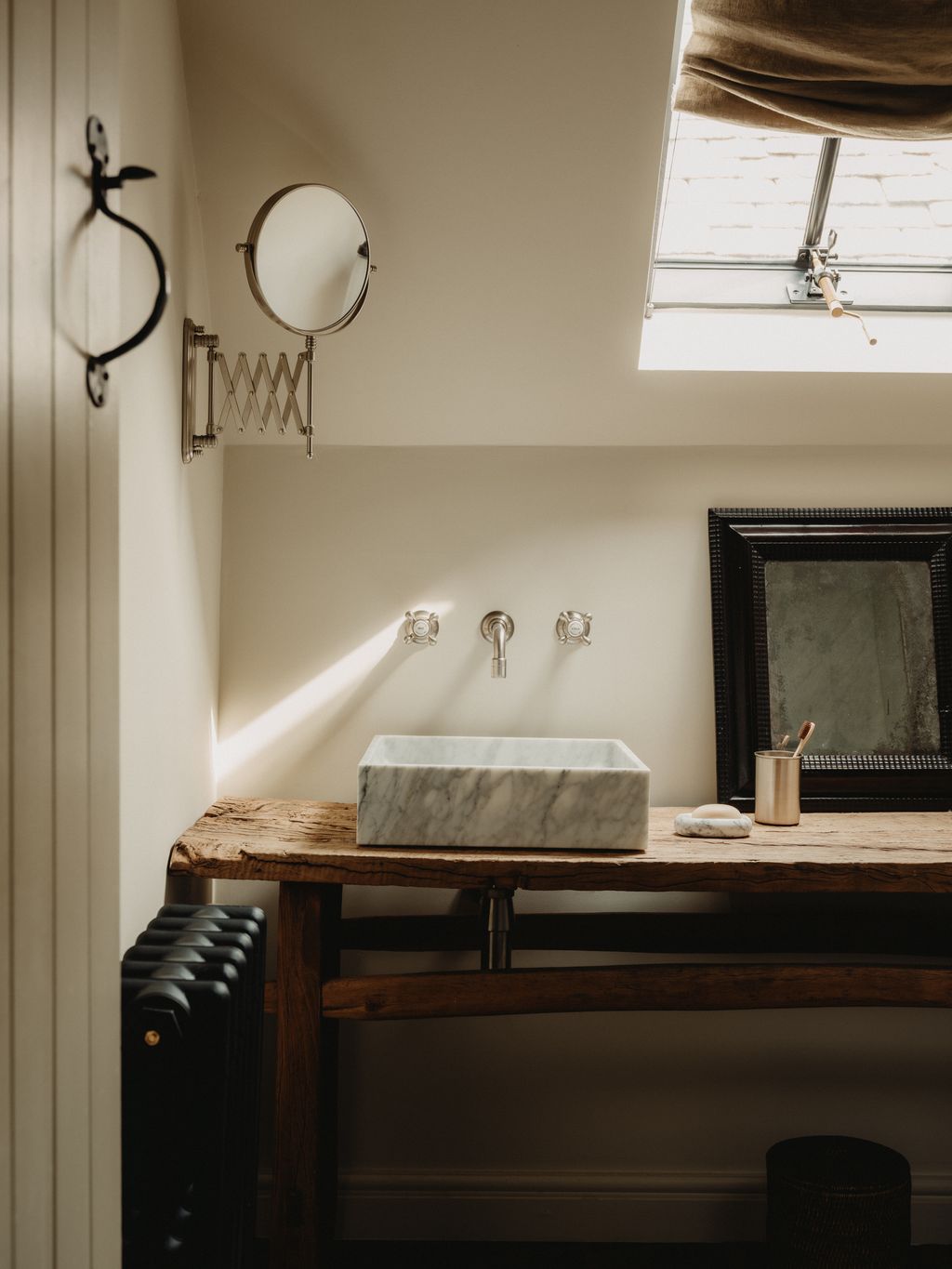
A tiny bathroom has been squeezed in under the eaves, with the shower occupying the only full height corner. Laura and Gracy installed a table to act as a vanity in the lowest part of the room, with custom made roman blinds on the rooflight.
 Mark Anthony Fox19/22
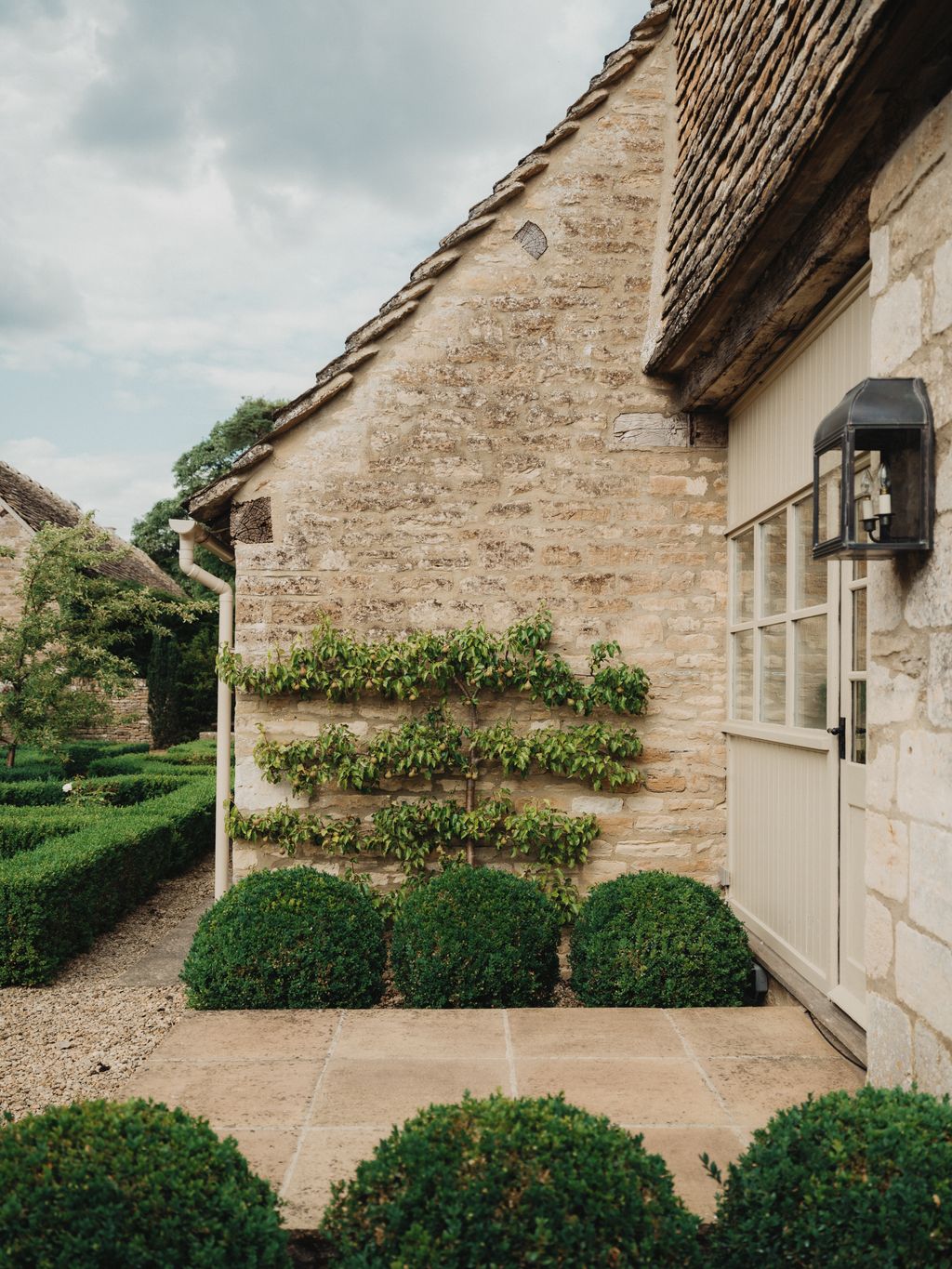
A glimpse of the parterre garden outside the house. The lantern is by The Limehouse Lamp Company.
 Mark Anthony Fox20/22
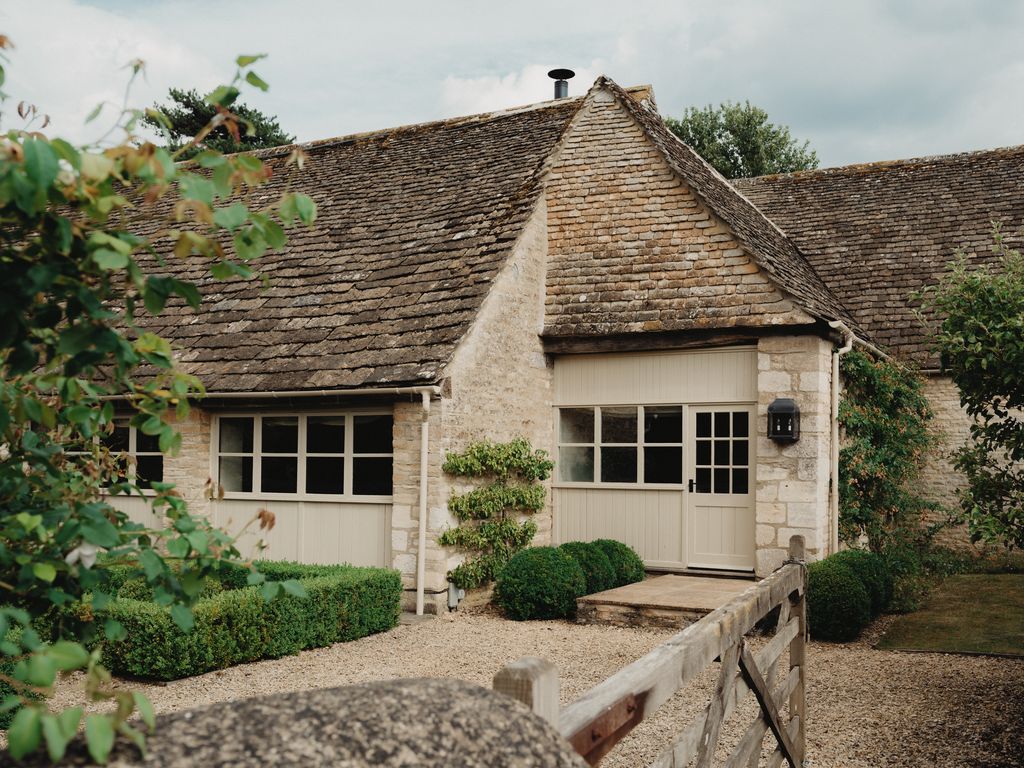
This side of the ban was originally the cart shed. The exterior trim is painted in ‘Canvas V’ by Paint & Paper Library.


 Mark Anthony Fox21/22
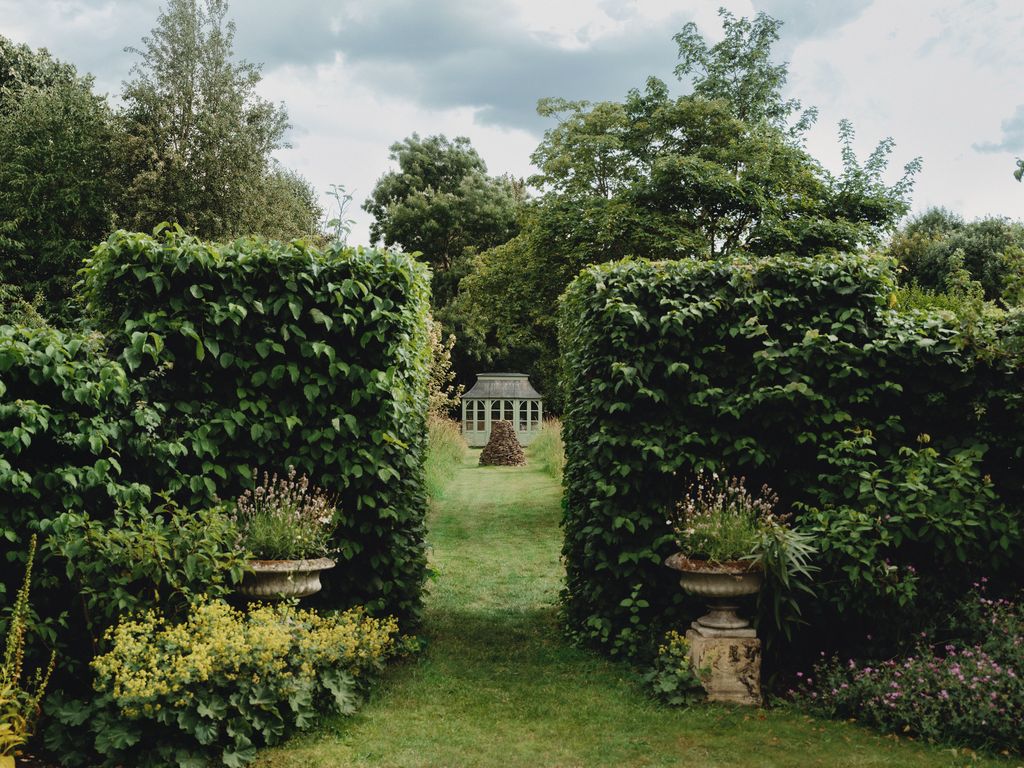
A ‘Braemar’ summerhouse by HSP Garden Buildings stands in the garden.
 Mark Anthony Fox22/22


